artists in residence

For much of March and April (and some of may) we have been lucky enough (with support from Arts Council of Wales and the Heritage Lottery Fund) to have four artists in residence in St Fagans. The artists we appointed are Melissa Appleton, James Parkinson, Claire Prosser and Bedwyr Williams.

As the residencies are quite short we were interested more in the artists' process rather than the finished product, and therefore weren't expecting the aritsts to come up wiht an exhibition or any finished pieces of work at the end of it. The artists have all been up to lots of different things - researching, working with staff, looking through the sound and film archive, filming and 3d scanning the site.  There's also been lots of meetings and discussions with staff, and generally getting involved with day to day life in the museum.

Claire Prosser has been keeping a blog about her work, which you can read right here and I'll keep you up to date about what everyone else has been up to in my next blog.

John Dillwyn Llewelyn — Welsh Pioneer Photographer

The John Dillwyn Llewelyn Collection at Amgueddfa Cymru – National Museum Wales contains some of the earliest images ever taken in Wales. The collection comprises of approximately 850 photographic prints (mainly salted paper), 230 Calotype paper negatives and 160 Collodion glass negatives. It also includes some documents and photographic equipment. As well as negatives and prints taken by the Llewelyn family, the collection also contains many prints by other photographers (including some by Calvert Richard Jones and Roger Fenton) that were collected by the family.

All the photographs and negatives from the John Dillwyn Llewelyn Collection can be viewed on Amgueddfa Cymru’s Collections Online catalogue.

John Dillwyn Llewelyn (1810 – 1882)

John Dillwyn Llewelyn was born at The Willows, Swansea on 12 January 1810. The family had lived at Penllergare (four miles north of Swansea) since 1817, however on coming of age John inherited this estate from his maternal grandfather and took on the additional surname Llewelyn. It was at Penllergare where many of the photographs in this collection were taken in the 1850s.

On 18th June 1833 John married Emma Thomasina Talbot, the youngest daughter of Thomas Mansel Talbot of Margam and Penrice. Importantly Emma was first cousin to the pioneer photographer William Henry Fox Talbot who contended with Daguerre in 1839 for the title of inventor of photography, and who invented the negative process.

He died on 24 August 1882 at Atherton Grange, his London home, and is buried with his wife Emma at Penllergare.

Collodion glass negative of John Dillwyn Llewelyn, c.1853

Collodion glass negative of John Dillwyn Llewelyn, c.1853

Collodion glass negative showing the south front of Penllergare House, 1858

Collodion glass negative showing the south front of Penllergare House, 1858

Scientist, Botanist & Astronomer

John was from a very wealthy background, his father Lewis Weston Dillwyn managed the family-owned Cambrian Pottery in Swansea. This meant he was in the very lucky position of being able to pursue his interests in science, botany and astronomy without having to work.

He was a gifted amateur scientist and a member of the Royal Institution of South Wales. He built an orchid house and observatory (which still stands) in the grounds at Penllergare .

Salted paper print showing a vase of roses on the porch at Penllergare House, 1850s

Salted paper print showing a vase of roses on the porch at Penllergare House, 1850s

Calotype paper negative of the observatory at Penllergare, 1850s

Calotype paper negative of the observatory at Penllergare, 1850s

Pioneer Photographer

With such an interest in science, and with his wife’s family connections to Fox Talbot it seems natural that John took up photography almost from its inception in 1839. However he wasn’t very successful at this point with either Talbot’s process or Daguerre’s. Unable to overcome some of the technical difficulties he gave up and didn’t return to photography until the early 1850s. Most of the collection the Museum holds dates from the 1850s.

He was a founder member of the Photographic Society of London (which later became the Royal Photographic Society), and in 1853 he attended the inaugural meeting. He exhibited regularly in the early exhibitions of the Society as well as in Dundee, the Manchester Art Treasures exhibition and Paris exhibition in 1855.

John was especially talented at capturing fleeting moments, such as waves, cloud movement and steam. At the Paris exhibition in 1855 he was awarded a silver medal for his ‘Motion’ series, a series of four images - breaking waves in Caswell Bay, sailing ship off Caswell, the steamer JUNO blowing off steam at Tenby, and clouds over St. Catherine’s, Tenby.

This Collodion glass negative is from the ‘Motion’ series showing the steamer JUNO at Tenby, c.1855

This Collodion glass negative is from the ‘Motion’ series showing the steamer JUNO at Tenby, c.1855

Collodion glass negative showing John with his calotype camera in 1853

Collodion glass negative showing John with his calotype camera in 1853

This photograph was made using the Oxymel process. It was taken on 15 March 1858 at 1pm with an exposure of 15 minutes. It shows Swansea from St. Thomas, and sailing vessels can be seen in the background.

This photograph was made using the Oxymel process. It was taken on 15 March 1858 at 1pm with an exposure of 15 minutes. It shows Swansea from St. Thomas, and sailing vessels can be seen in the background.

Invention of the Oxymel Process

His invention of the Oxymel process in 1856 was a development of the collodion process which used a solution of acetic acid, water & honey to preserve images. This meant that glass negatives could be prepared in advance and exposed in the camera as required. As a result landscape photographers no longer needed to carry around portable laboratories and darkroom tents. The Illustrated London News in 1856 wrote that:

“The plates may be prepared at home and a boxful taken out and think of this ye tourists, as you travel along and a fine prospect meets your eye you have nothing to do but to stop your carriage, get out your camera, and in a few minutes you may secure a picture, drawn by Nature herself, that would have taken you hours to sketch."
Salted paper print showing John with all the apparatus needed to take a collodion negative

Salted paper print showing John with all the apparatus needed to take a collodion negative

Is this the first ever photograph of a snowman taken in Wales? This photograph was taken about 1853/54 and is probably by Mary Dillwyn or Thereza Llewelyn.

Is this the first ever photograph of a snowman taken in Wales? This photograph was taken about 1853/54 and is probably by Mary Dillwyn or Thereza Llewelyn.

The Llewelyn Family

John and Emma had seven children, six of whom survived into adulthood. Various members of the family seem also to have been interested in photography. His daughter Thereza took a number of the images, and we know that both Thereza and John’s wife Emma also helped print some of his photographs. John’s youngest sister Mary Dillwyn was also an early photographer, and is generally regarded as the first woman photographer in Wales.

This photographs shows the Llewelyn children having a picnic on the Goppa near Swansea in 1855. It is one of a series of photographs of the children taken by John on the 23rd September each year for his wife’s birthday.

This photographs shows the Llewelyn children having a picnic on the Goppa near Swansea in 1855. It is one of a series of photographs of the children taken by John on the 23rd September each year for his wife’s birthday.

The Historic Photography Collection

Further Reading

Penllergare A Victoria Paradise by Richard Morris, 1999.

The Photographer of Penllergare A Life of John Dillwyn Llewelyn 1810-1882 by Noel Chanan, 2013.

DyddiadurKate – Gwersyll Carcharorion Frongoch

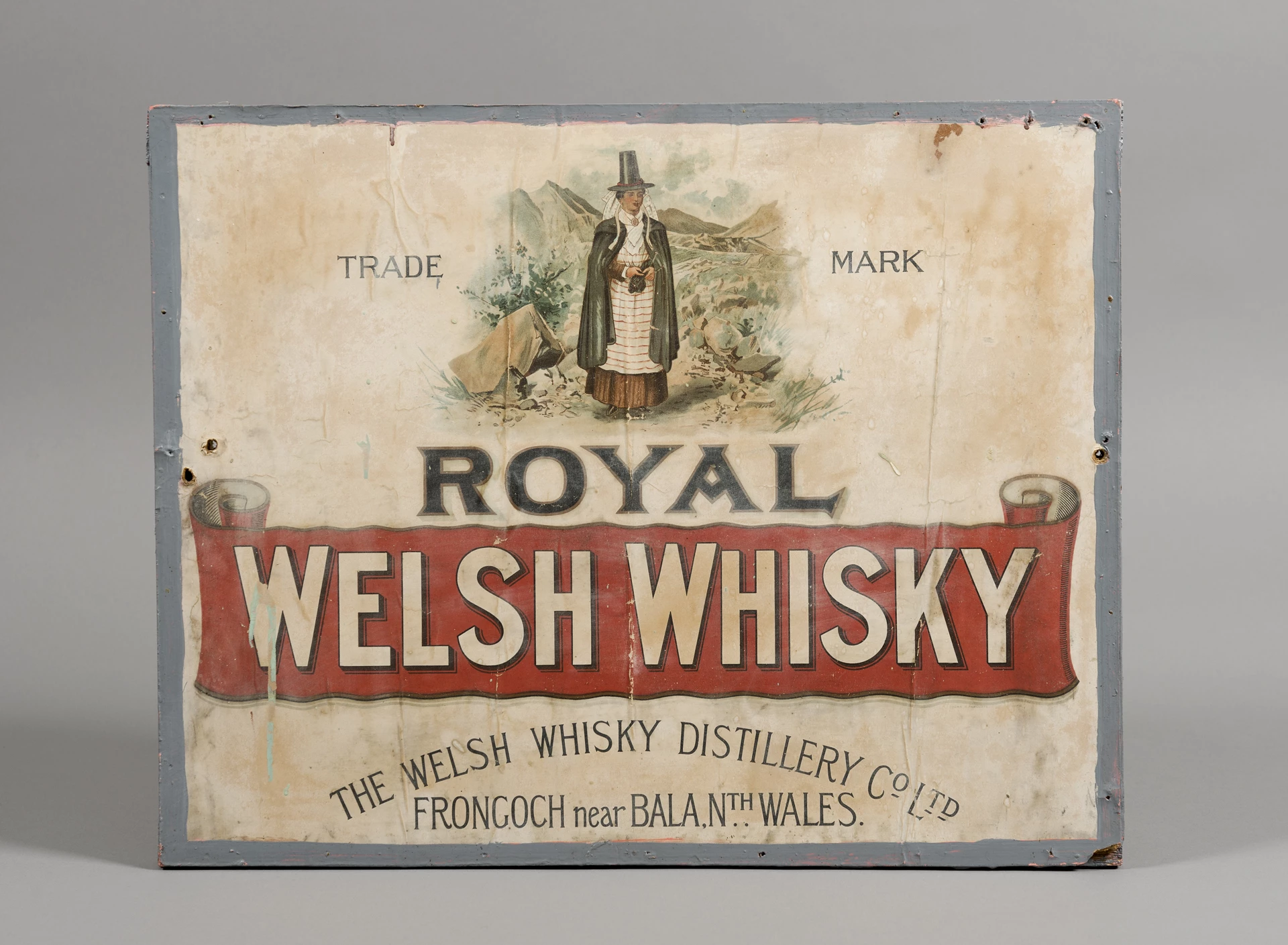
Erbyn Ebrill 1915, roedd sgil effeithiau’r Rhyfel Mawr i’w gweld a’u teimlo ar lawr gwlad Meirionnydd. Nepell o gartref Kate a’i theulu, fe agorwyd gwersyll i garcharorion rhyfel ar gyn safle distylldy whisgi yn Frongoch – rhyw ddwy filltir o’r Bala.

Yn y cof cenedlaethol, rydym yn dueddol o gysylltu Frongoch â’r Gwyddelod. Yma y carcharwyd arweinwyr blaenllaw Gwrthryfel y Pasg ym 1916. Ond yn wreiddiol, carchar i Almaenwyr oedd Frongoch. Bu’r awdurdodau wrthi am wythnosau yn gweddnewid yr hen ddistylldy ar eu cyfer.

Y Germans – Prysurdeb di-ail a welir yn hen waith whisgi Fron Goch, yn darparu lle i giwaid y fath sydd i ddyfod yma mewn rhyw fis eto. Wrth syllu oddeutu’r adeilad, a gweled rhwyd-waith o wifrau sydd yn ei amgylchu, gallai dyn feddwl mai haid o greaduriaid gwylltion a mileinig ydynt, ac yn ol a welaf, bydd yn haws i lygoden fynd o gêg cath nag i’r un o honynt ddiengyd. Diolch am hyny; y maent yn ddigon agos atom lle y maent, heb son am gartrefu yn ein hymyl fel hyn. Y Llan 1 Ionawr 1915

Yn naturiol, roedd y wasg leol yn llawn erthyglau am ddyfodiad yr Almaenwyr i Frongoch. Wedi’r cyfan, hwn oedd un o’r gwersylloedd cyntaf o’i fath ym Mhrydain yn y cyfnod dan sylw. Gallwn ond ddychmygu chwilfrydedd a gofid y boblogaeth leol pan gyrhaeddodd yr Amlaenwyr cyntaf ar 25 Mawrth 1915.

Bydd dydd Iau diweddaf yn ddiwrnod i’w hir gofio yn ardaloedd y Bala, a bydd yr argraffiadau a wnaed ar feddyliau y cannoedd plant ac ereill yn rhwym o aros ar eu cof tra byddant byw, oblegid yr oedd amgylchiad yn un mor eithriadol, sef dyfodiad yn agos i bedwar cant o garcharorion rhyfel i wersyllfa Frongoch, yr hwn sydd o fewn dwy filltir a hanner i’r Bala… Deallwn fod llawer o’r carcharorion uchod wedi eu dal ar ol y frwydr fawr yn Neuve Chapelle. Y Cymro (Lerpwl a’r Wyddgrug) 7 Ebrill 1915

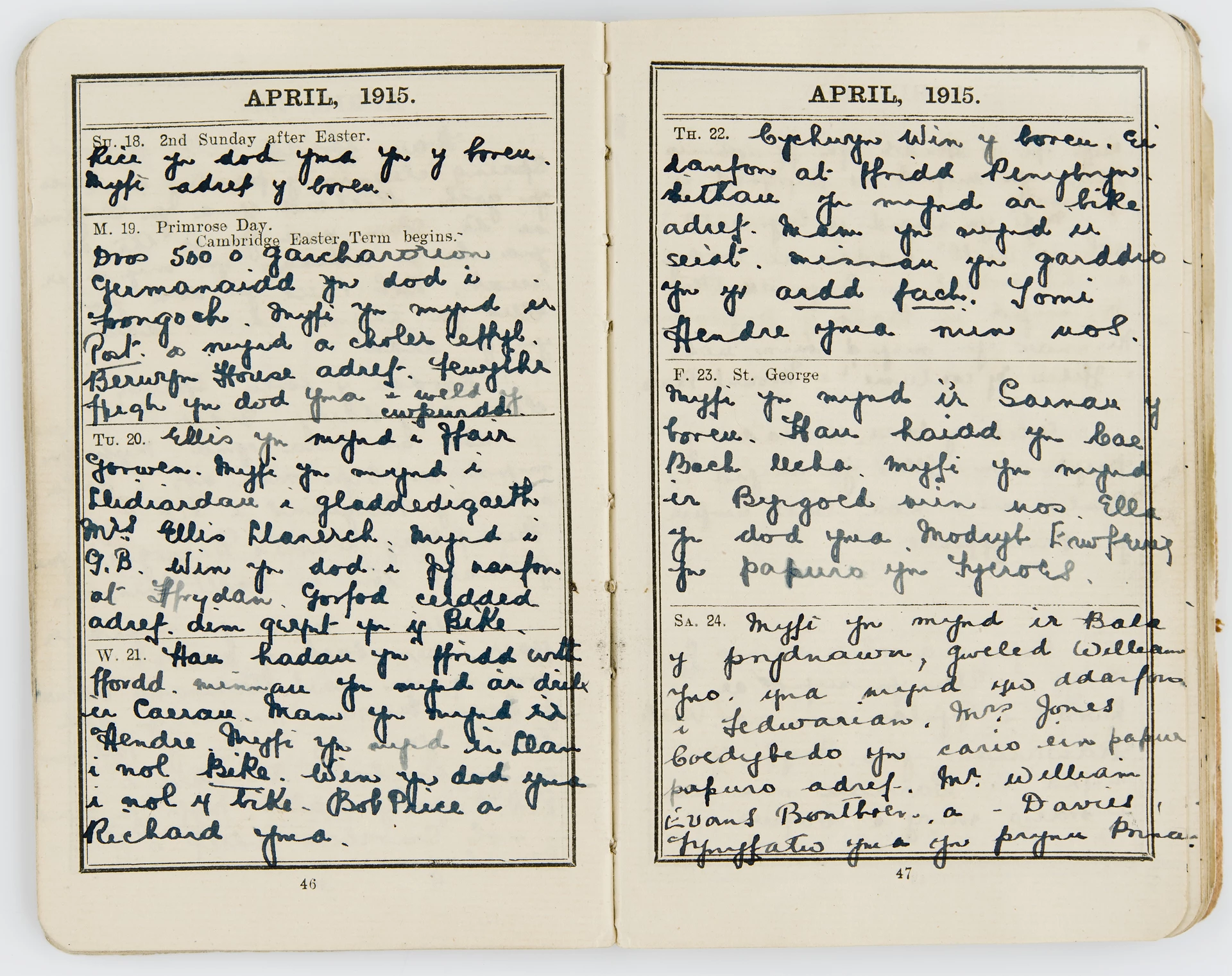
Er nad oedd Kate yn un i gofnodi cerrig milltir y rhyfel, mae cyfeiriad byr at yr Almaenwyr yn cyrraedd Frongoch yn ei dyddiadur (hynny a hanes coler ceffyl a'i chwpwrdd newydd!)

19 Ebrill – Dros 500 o garcharorion Germanaidd yn dod i Frongoch. Myfi yn mynd ir Post a mynd a choler ceffyl Berwyn House adref. Fewythr Hugh yn dod yma i weld y cwpwrdd.

Dyma un o'r ychydig gyfeiriadau uniongyrchol at y rhyfel yn y dyddiadur.


Update - Brinley the boy soldier

Back in February, I blogged about Brinley Rhys Edmunds – a teenager from Barry who died during the First World War. If you recall, he signed-up when he was under the legal recruitment age, re-enlisted soon after his 18th birthday, but lost his life to dysentery at Konigsbruck Prisoner of War Camp on 5 September 1918.

In recent weeks – thanks to a well-known genealogy website – I have been corresponding with two of Brinley’s descendants in the United States – one in Seattle, the other in Pennsylvania. As a curator, it’s always a thrill to reunite families with objects once owned by their ancestors. Better still if they in turn provide additional information for our records.

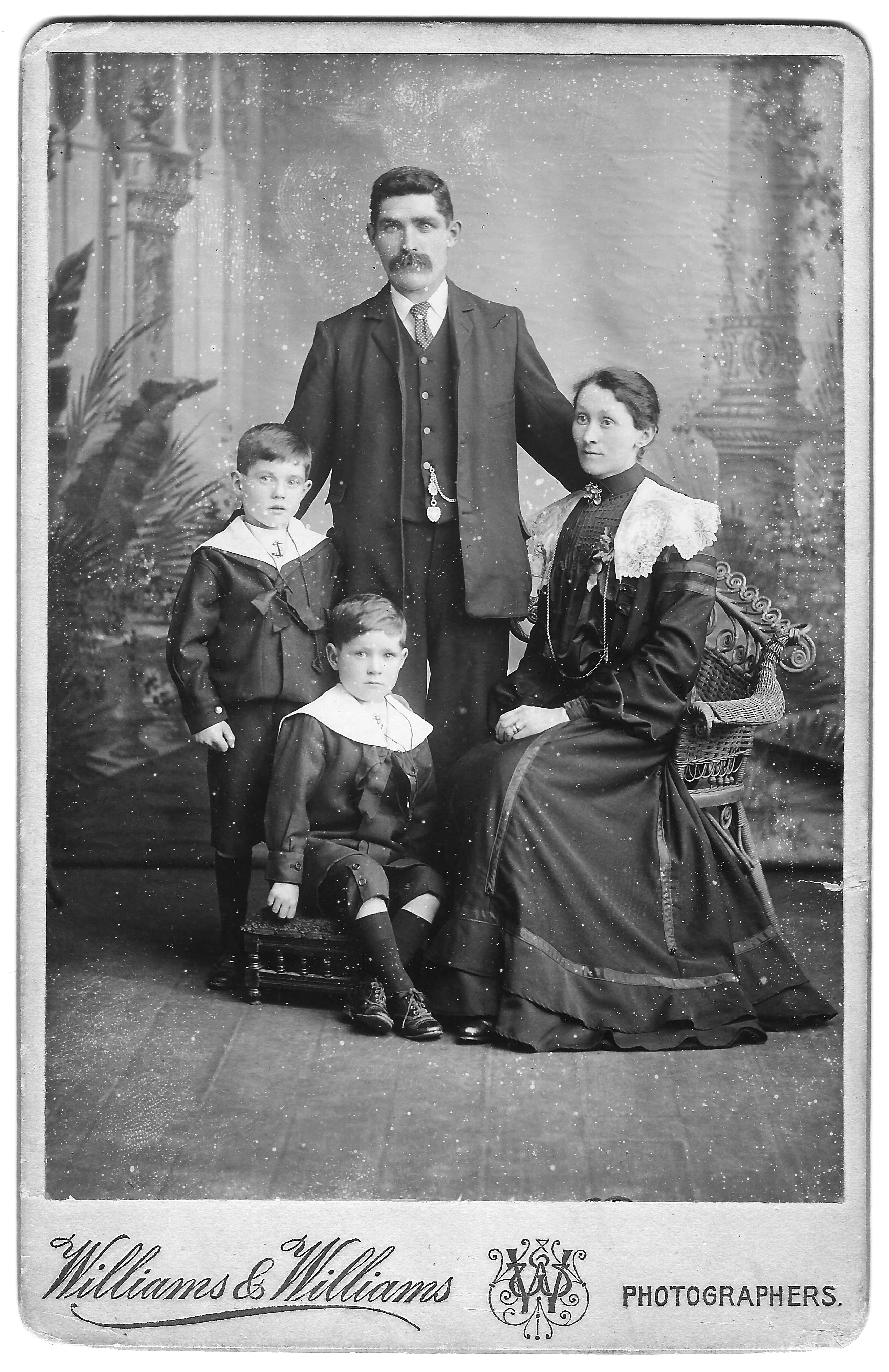
I was so pleased to receive from Brinley’s American relatives a scanned copy of this beautiful image

photograph

of the Edmunds family in about 1905. The photograph shows six year old Brinley (seated) with his elder brother, William, in matching sailor suits, together with their parents, Evan and Christine. I’ve been researching Brinley and his family on-and-off for a number of years. It’s amazing to finally put faces to their names.


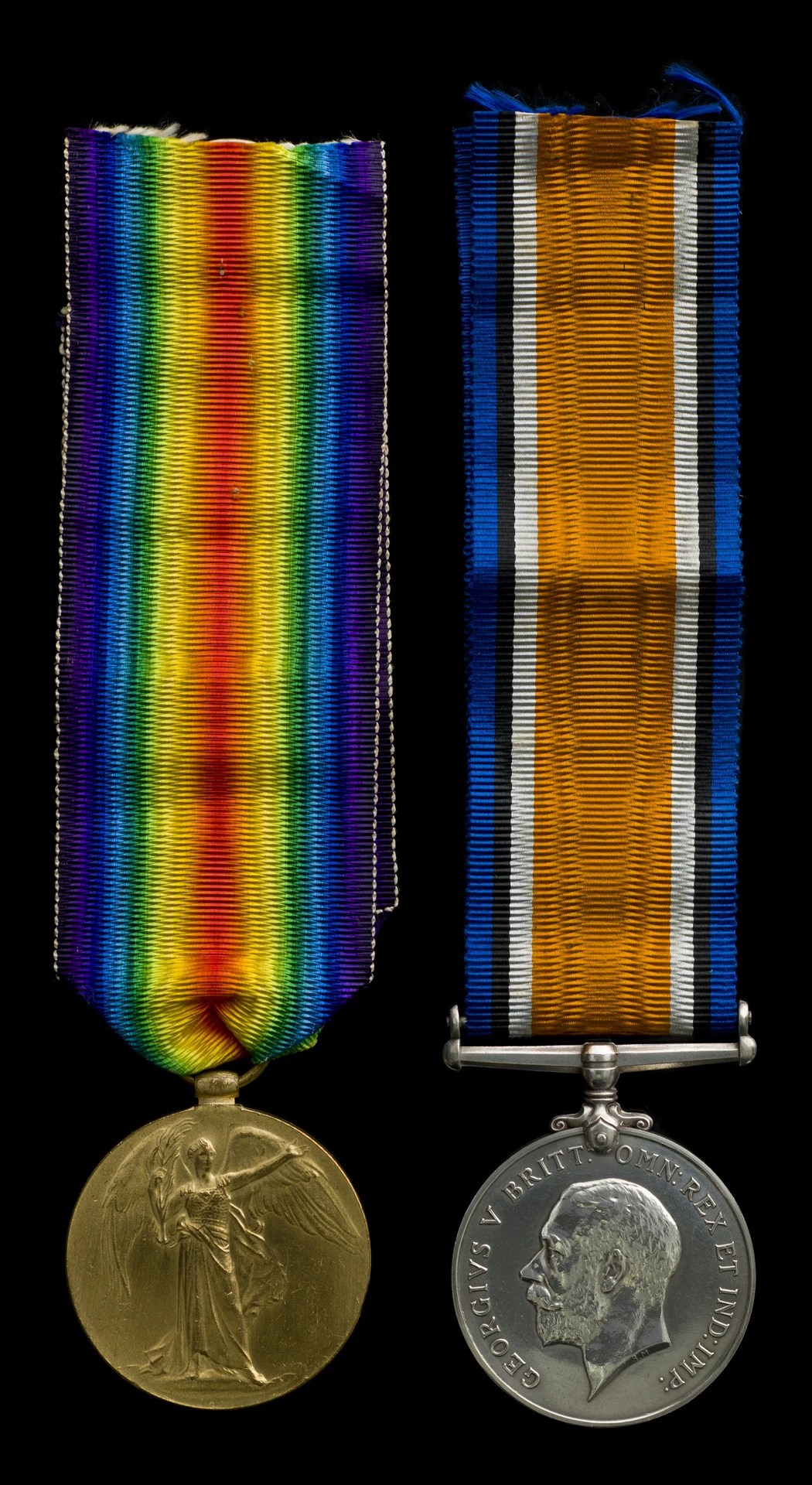
Here at St Fagans, we have several objects in the collection associated with Brinley’s wartime experiences, some of which will be on display in our redeveloped galleries in 2017. In addition to the pincushion, next of kin plaque and postcard I mentioned last time, we also have his service medals in the collection. The British War Medal and Victory Medal were awarded to him posthumously and sent in an envelope marked ‘On His Majesty’s Service’ to his father in about 1919-20.

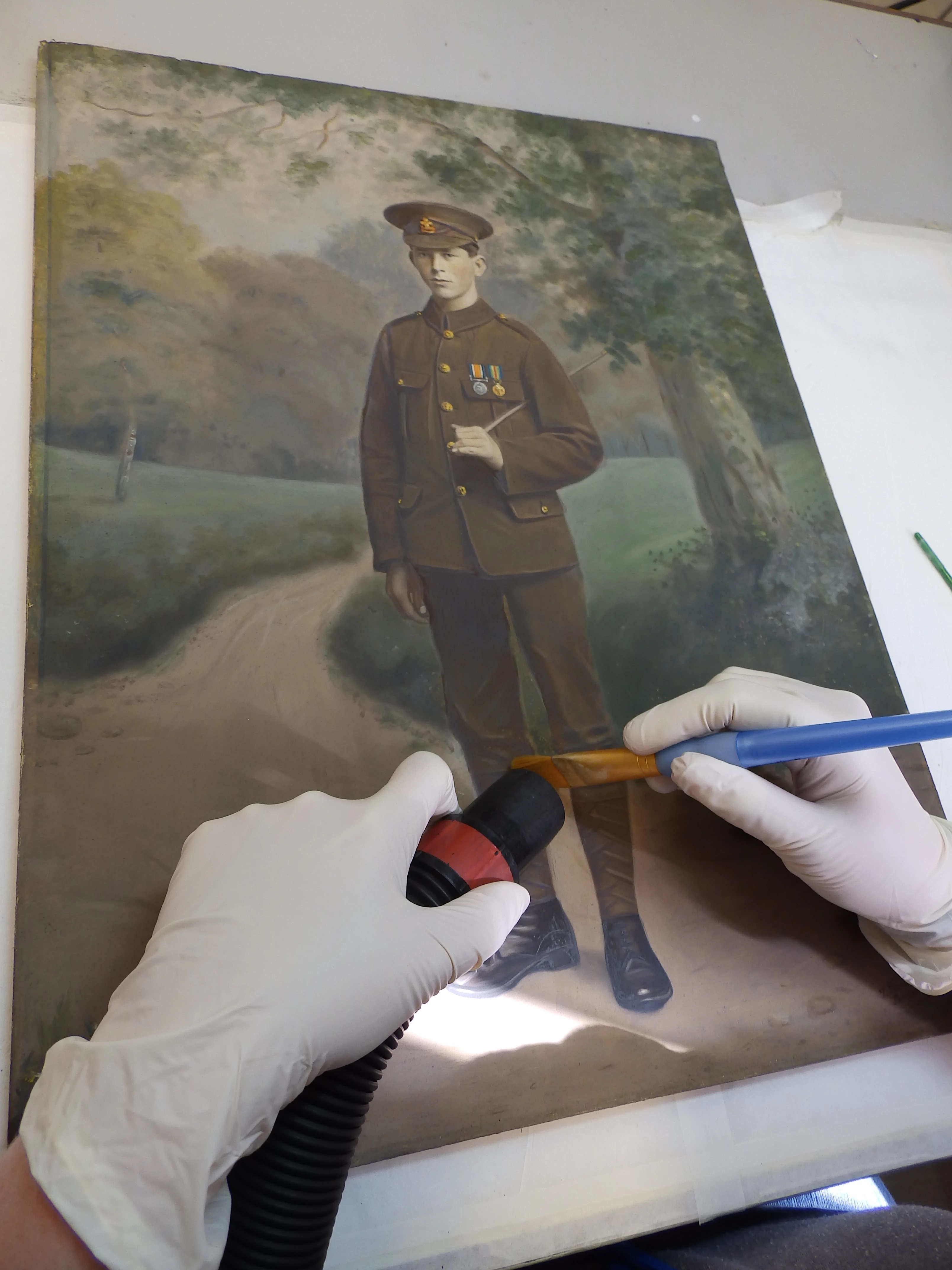
He is wearing the medals in the portrait shown here which is currently being prepared for photography by Ruth James, Social History Conservator. The portrait was commissioned by Brinley’s parents after his death and was bequeathed to the Museum in 1989 by Eunice Edmunds, his younger sister. We will be using this image, along with the newly-discovered family photograph in America, in the new displays. Contemporary military voices and experiences will also be included in the gallery interpretation. I’ll be focussing on our exciting co-curation programme with the Armed Forces Community Covenant Grant Scheme in the next instalment of this blog.

Adrian in the Amazon - part 4

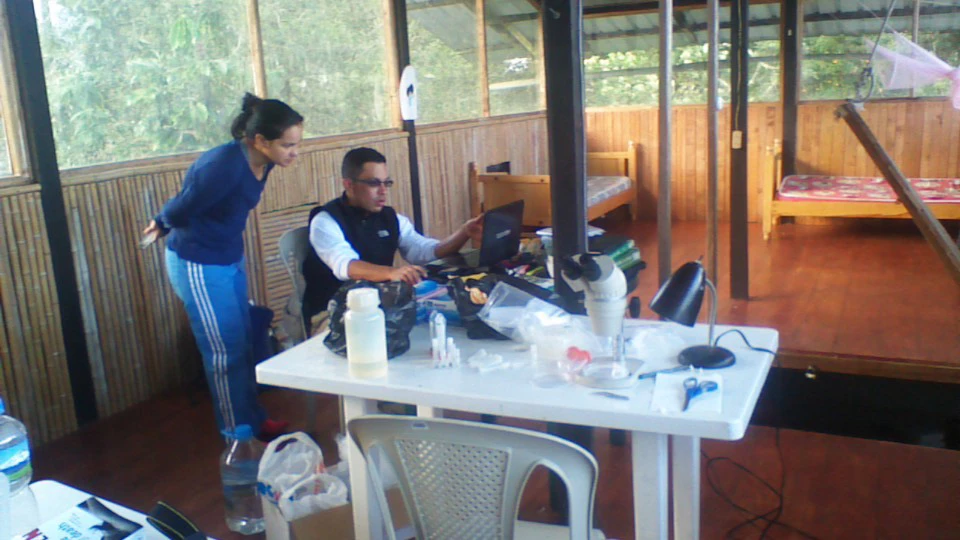
We have now settled into a routine at the Yanayacu Biological Station. Our days are spent out in the forest collecting flies and in the evenings we examine the results of the days efforts, preserving the specimens and collating data about where and how we found them. Josenir and I are especially interested in a group of flies known as Hemerodromiinae and in our fieldwork efforts we mostly target streams, rivers and springs where we expect to find them.

The terrain in this part of the Andes is generally very steep and many of the stream banks have washed-out and slipped allowing a dense understorey of bamboo to grow. Because of this, simply getting into the streams can involve much machete work hacking through the vegetation and a slithering half-controlled descent of muddy slopes until we finally splash into the stream bed and can begin work. Our general procedure is to wade upstream using a net to sweep insects off surrounding vegetation, or selectively picking flies off wet rocks, wet moss etc. It is hard, dirty and wet work and we inevitably return soaked to the skin and mud-splattered but we have been rewarded by many interesting finds.

Yesterday we found perhaps 30-50 species (it’s not really possible to be more precise until we begin detailed examinations back in Cardiff and Manaus) and we think that around 90% of these will be completely new species that have yet to be described. I was particularly delighted to find no less than 5 new species of the genus Chelipoda. I have studied this genus intensively in the past and attempted to construct a ‘phylogenetic tree’ showing the systematic relationships between the living species and inferring the sequence of their evolution.

It is not yet clear if most South American species of Chelipoda evolved from ancestors that migrated south from North America in the distant past or if they have developed from so-called ‘Gondwanan’ species - ones which originated on the ancient supercontinent of Gondwana before it broke apart and its fragments drifted apart to form modern day New Zealand, South Africa and Patagonia for example. Careful examination of the Ecuadorian species should reveal clues hidden in their anatomy as to which theory (if any) is correct.