Frozen in time: the National Bird Collection at Amgueddfa Cymru

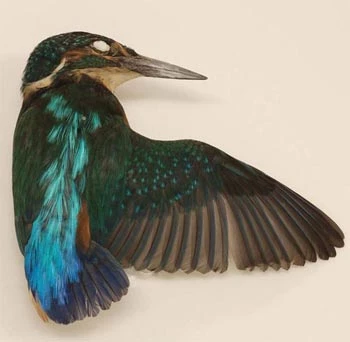
Kingfisher: one of the new freeze-dried bird specimens

Kingfisher: one of the new freeze-dried bird specimens

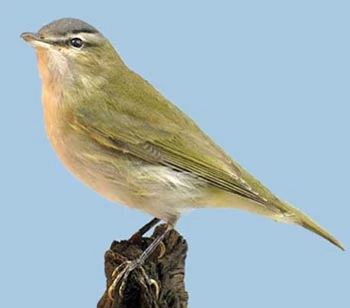
Red-eyed Vireo: a rare migrant from North America killed at Bardsey lighthouse

Red-eyed Vireo: a rare migrant from North America killed at Bardsey lighthouse

Dotterel: a scarce migrant in Wale, killed at Bardsey Lighthouse

Dotterel: a scarce migrant in Wale, killed at Bardsey Lighthouse

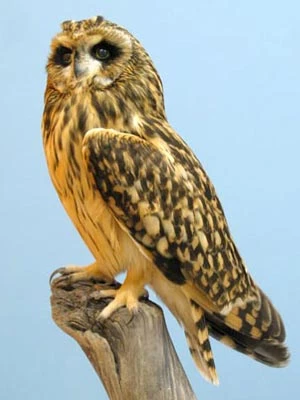
Short-eared Owl: a scarce breeding bird and winter visitor to Wales, killed by a car

Short-eared Owl: a scarce breeding bird and winter visitor to Wales, killed by a car

One of the founding collections of Amgueddfa Cymru back in 1915 was the Cardiff Museum's collection of birds. These were displayed in cases, along with their nests and eggs in small dioramas of their habitat.

This collection continued to form a major part of the Museum's galleries until as recently as 1992. Over the years, the Museum has become a centre for many bird studies, such as the Red Kite — in conjunction with the Royal Society for the Protection of Birds (R.S.P.B.) and the Countryside Council for Wales (C.C.W.)

Deep freeze

Today, Amgueddfa Cymru has large-capacity freeze drying facilities in order to preserve new additions to the collections. Specimens are frozen in a vacuum chamber at about -20°C.

Under these conditions the frozen water in the specimen is forced out as a vapour rather than becoming a liquid. This leaves the specimen completely dried out and, importantly, its shape and size are more or less unchanged from when it was living.

Freeze-drying is also a much simpler procedure than skinning - the traditional method of preserving most museum specimens.

The birds are arranged to allow the plumage detail on the wings and tail to be examined. This determines the age and sex of specimens. The collection is aimed at field ornithologists and artists alike and adds to the existing skin collections at the Museum.

Bardsey Island

The primary source of specimens for this collection is Bardsey Island, off the Lleyn Peninsular, North Wales.

Birds migrating at night need clear skies to find their way, should it become cloudy or foggy they can become disorientated and under these conditions are attracted by the light from the lighthouse on the island.

They circle or fly down the beams of light and are killed hitting the tower. The island warden checks the base of the tower every morning and any casualties are picked up and frozen before being transferred to the Museum in Cardiff.

The focus is on British birds but also includes some rare species from around the world.

These and other casualties received from the public are used for display and education, encouraging a deeper interest in birds and making people look harder at their surroundings.

The collection is used to highlight current biodiversity and environmental issues, including raising awareness of the effects climate change and loss of habitat can have on birds migrating between Britain and Africa.
Scattered by war and revolution

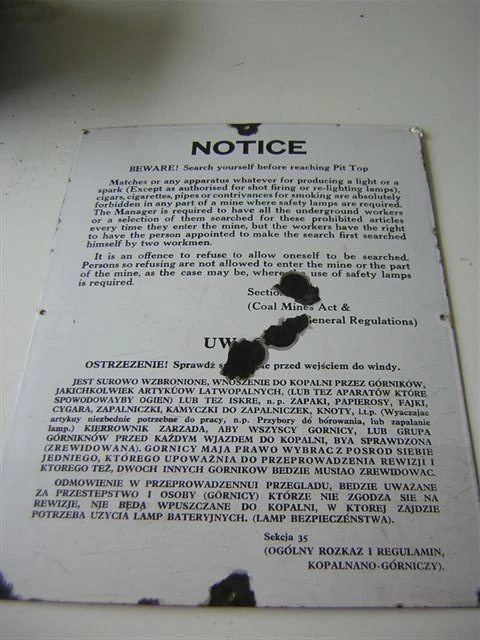
Colliery sign in English and Polish

Colliery sign in English and Polish

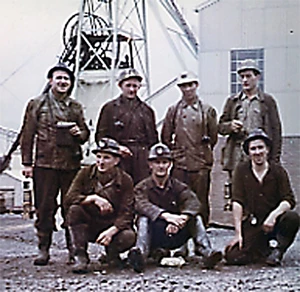
German mine workers at a south Wales coal pit

German mine workers at a south Wales coal pit

After the Second World War the demand for coal was high and there was a need to recruit new miners. One source for these was amongst the thousands of Europeans who had to flee their home countries during the Second World War.

In January 1947, a national agreement was made between the National Union of Mineworkers (NUM) and the National Coal Board (NCB) to recruit from the large number of Polish soldiers who had fought with the Allies during the war.

However, there was much resistance amongst local unions. By the end of May 1947 there were Poles whose training was complete but no collieries willing to take them.

The NCB appealed for help from the NUM who put a strong resolution to a delegate conference in favour of the acceptance of the Poles and most found places eventually.

A scheme to recruit other eastern European displaced persons began in September 1947. There was again fierce opposition from local unions and by the winter only a minority found collieries willing to take them.

By 1951 only 10,000 of the 18,000 foreign workers still remained in the mines and a new scheme to recruit Italians was launched. Again there was local opposition, only 400 found placements and the recruitment stopped in April 1952.

It was no better when the National Coal Board tried to recruit amongst refugees who had fled from Hungary during the 1956 revolution. There were over 4,000 volunteers but under a third of them found places, the rest went to other industries.

The 'foreign workers' came to Wales after years of hardship and danger. The ones that found employment in the coal industry eventually gained a reputation for hard work and respectability. Wales should be proud of them and the part they played in its industrial history.

Portuguese Man-of-War Navigator

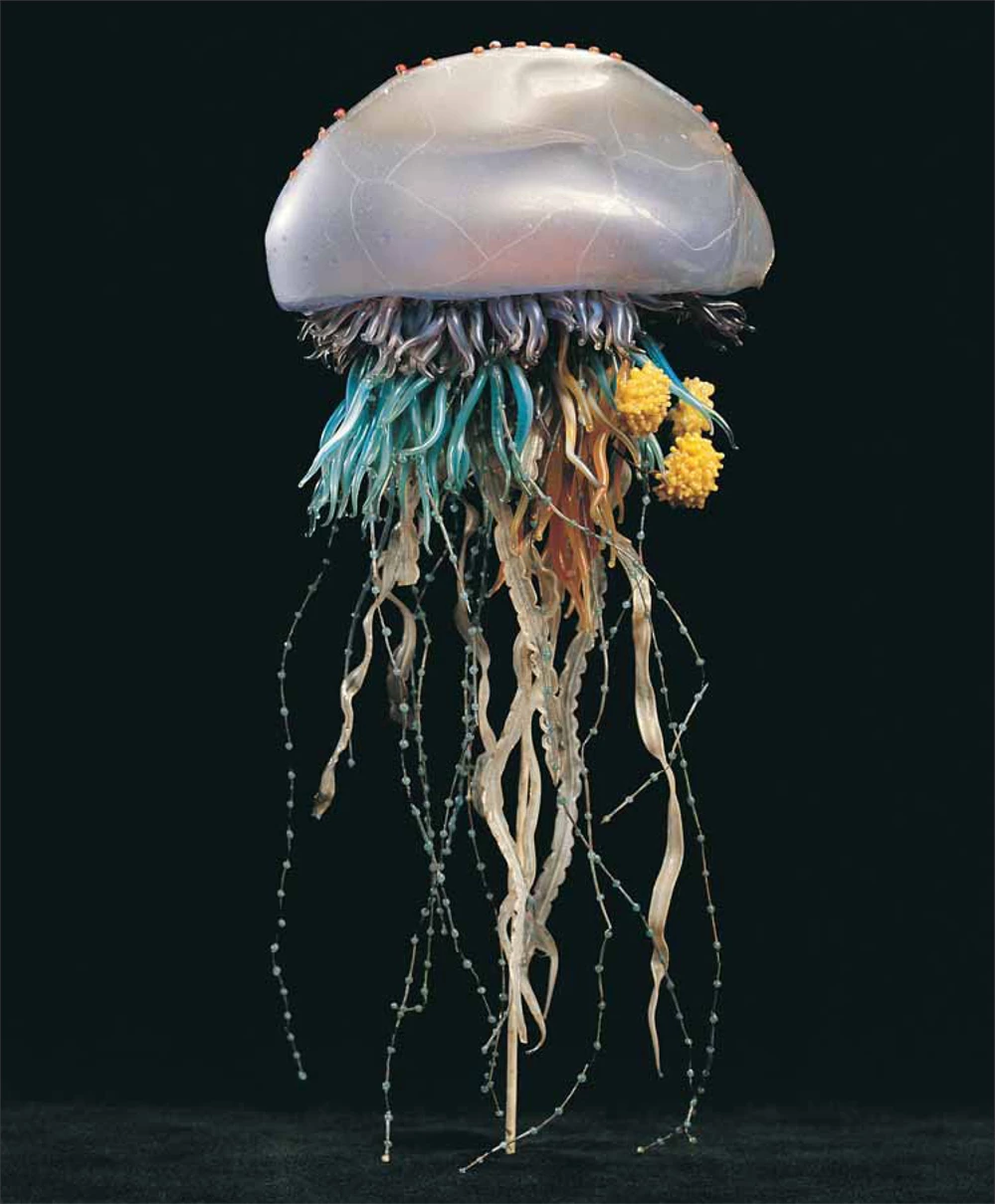
Portuguese Man-of-War sea creature - Physalia arethusa.

A colourful model of the Portuguese Man-of-War sea creature - Physalia arethusa.

Dragons, zebras and doorstops - building a collection of Welsh computers

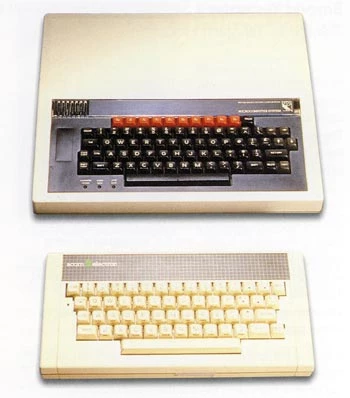
The BBC model B (top) and the Acorn Electron.

The BBC model B (top) and the Acorn Electron.

The Dragon 32 (left) and the Spectrum Plus.

The Dragon 32 (left) and the Spectrum Plus.

In the early 1980s Wales produced many of the world's home computers. Over the years, Amgueddfa Cymru has been trying to add an example of every computer manufactured in Wales to its collection.

In 1943, Thomas Watson snr, Chairman of IBM, imagined that the future world computer market would be made up of only five different computers. However, in the 1980s, there were at least six different models being manufactured in Wales alone.

Zebras and Dragons

The 'Zebra' and 'Dragon' were both types of early computers.

The 'Zebra' was produced in the 1960s. Only forty were ever made and most of them were exported overseas. The Zebra machine in the Museum's collection was manufactured in Newport, south Wales and was donated by Cardiff University.

The 'Dragon' was available in two versions, the thirty-two and the sixty-four. These numbers refer to the amount of memory each machine had. Although this is much less memory than computers today, this was considered very powerful in the 1980s.

Tracking down information about where early computers were made has proved difficult. However, a number of scrapbooks providing useful information were discovered in the Glamorgan Record Office, and were donated to the museum by 'AB Electronics' of Abercynon. The scrapbooks revealed that AB Electronics had produced most of the computer models made in Wales, and also provided information about other Welsh manufacturers.

The Electron & The BBC

The Electron was made by the Acorn Company, best known for producing the BBC computer. It was much cheaper and less powerful than the BBC, which was the most powerful and expensive home computer available in the 1980s. Although primarily used as an educational machine some of the games written for the BBC are some of the best produced for any computer of any era.

The scrapbooks showed that a number of Electron machines were manufactured by AB Electronics and a Welsh made machine was kindly given to the museum by the Chairman of the Electron User Group.

The books also showed that three firms had manufactured the BBC in Wales: AB Electronics of Abercynon, Race Electronics of Llantrisant and ICL of Kidsgrove. A dealer in vintage Acorn hardware gave the museum a BBC computer, for its collection, that had been manufactured by Race Electronics.

ZX Spectrum

Despite the Spectrum's popularity and availability, locating a Welsh-built model was difficult. Once again AB Electronics at Abercynon had made the Spectrum, but the majority had been produced by the Timex factory in Dundee. Eventually the Museum did manage to obtain an example of a Spectrum Plus built by AB Electronics and added it to its collection.

Torch Computers

The AB scrapbooks referred to 'Torch Computers of Cambridge' who had a factory in Caernarfon and built machines aimed at the business market. After contacting the company, they generously offered us an example of a machine built in North Wales.

The Museum now only needs three machines to complete its collection of computers made in Wales. One of these is the Apple iMac manufactured by the LG Corporation of Newport.

There are many websites on the internet which can give you more information about early computers. Some sites also offer software for the early machines and there are even programs to run on your modern PC which mimic the behaviour of the old machines, allowing you to see how much computers have moved on.

Largest collection of south Wales porcelain in the world up for auction

Auctions are usually fairly discreet affairs attended by a few dozen people. This was not the case in the sale of the late Sir Leslie Joseph's collection of Welsh pottery and porcelain held by Sotheby's in 1992. Over 2,000 objects were sold in some 900 lots and made in excess of £1.1 million. The success of the sale was no surprise, for this was the largest and richest collection of Swansea and Nantgarw porcelain in the world.

Sir Leslie Joseph

Porcelain collection.

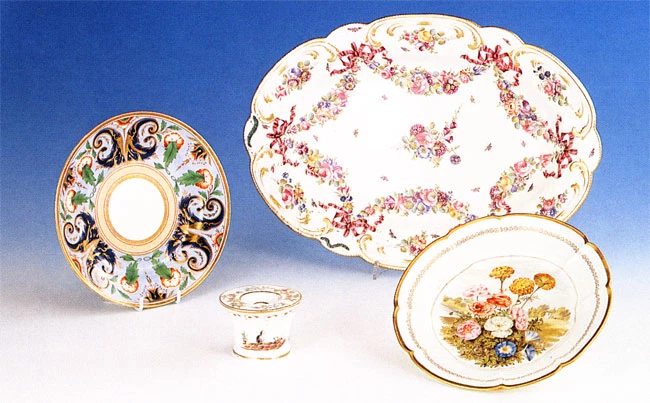
A Swansea porcelain plate from the Garden Scenery service, a large Nantgarw porcelain dish from the Vernon service, a Nantgarw porcelain inkwell, painted for Caroline Goodrich of Caerphilly, and a Swansea porcelain set pattern plate, all of c. 1816-25, and presented by the Friends of Amgueddfa Cymru.

Sir Leslie Joseph was born in Swansea and had a long business career, which saw him eventually becoming vice-chairman of the Trusthouse Forte group. He had bought his first piece of Welsh porcelain before the Second World War. In the 1950s he began to assemble a collection that would eventually fill the display cabinets that lined five attic rooms in his house near Porthcawl.

Nantgarw and Swansea ceramics

His aim was to secure examples of every shape and pattern made at the Swansea and Nantgarw potteries. Unlike many collectors he was prepared to buy damaged pieces if they helped him learn more about the variety of porcelain produced at the two factories. Over the years he built up a vast knowledge of Welsh ceramics and, in particular, of the script marks used on Swansea porcelain. In 1988 he published the book Swansea Porcelain: Shapes and Decoration with A.E. Jones, which is an invaluable record of that factory's achievements.

Sir Leslie, who served on Amgueddfa Cymru's Art Committee for several years, was very generous and allowed many collectors and scholars access to the collection and his vast knowledge.

The sale of the Joseph collection represented both a challenge and an opportunity for Amgueddfa Cymru. The Museum has the largest public collection of Welsh pottery and porcelain in the world, with over 3,000 pieces. In recent years the Museum has tried to make the ceramics collection as comprehensive as possible. There were many objects in the Joseph collection of interest to the Museum, but the budget meant that choices had to be made about which were more important to the collection.

Prices at the sale were very high. Amgueddfa Cymru acquired 33 lots, at a total cost of £98,000. Nearly a third of the costs were paid for by external grants, and the three most expensive individual pieces were paid by other buyers on behalf of the Museum.

A small number of other rare and beautiful objects were bought at a high cost. One was an ice-cream pail from the Gosford Castle service. This was a well-known Swansea dessert service decorated in London with botanical specimens. The Museum also purchased a Nantgarw plate, exquisitely painted with doves perched on the edge of a basin of water, also decorated in London.

The Welsh Ceramics Gallery, at National Museum Cardiff, is named the Joseph Gallery in memory of Sir Leslie, one of Amgueddfa Cymru's great benefactors.