Spectacular glass sea creatures of the deep

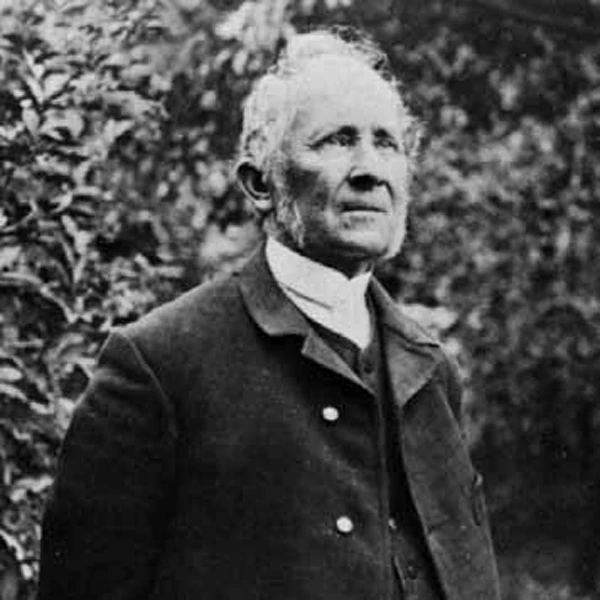
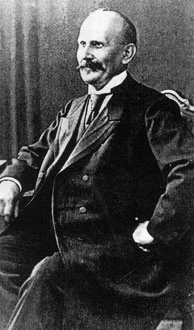
Rudolf Blaschka c 1913. Image courtesy of the Botanical Museum, Harvard University, Cambridge, MA.

Rudolf Blaschka c 1913. Image courtesy of the Botanical Museum, Harvard University, Cambridge, MA.

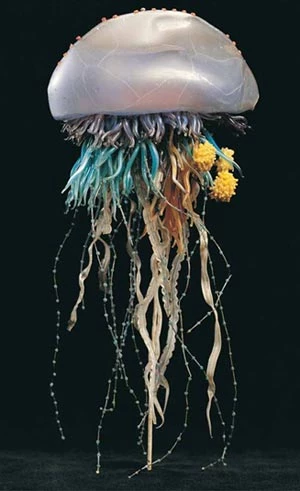
Portuguese Man-of-War sea creature - Physalia arethusa.

A colourful model of the Portuguese Man-of-War sea creature - Physalia arethusa.

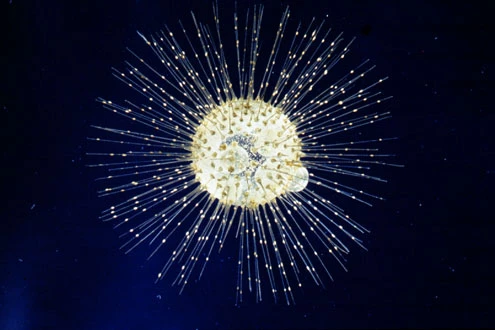
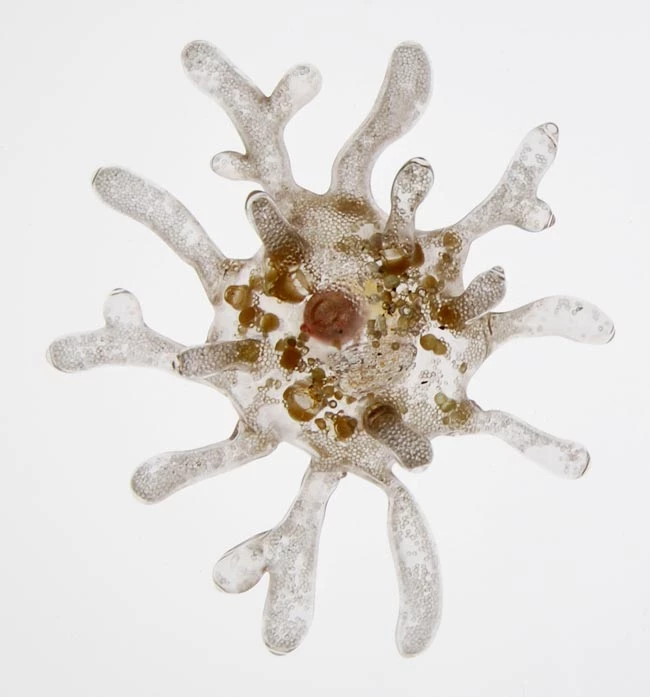
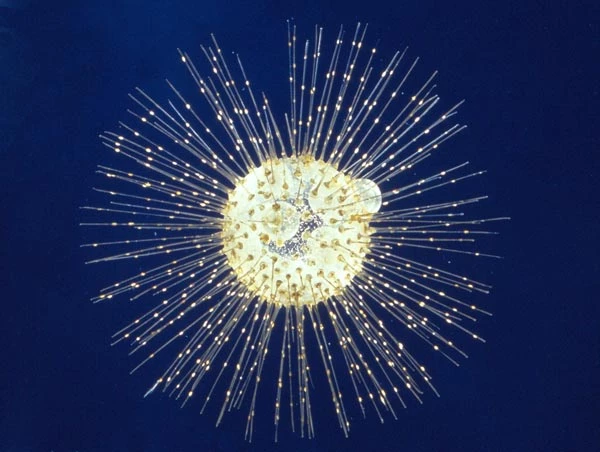
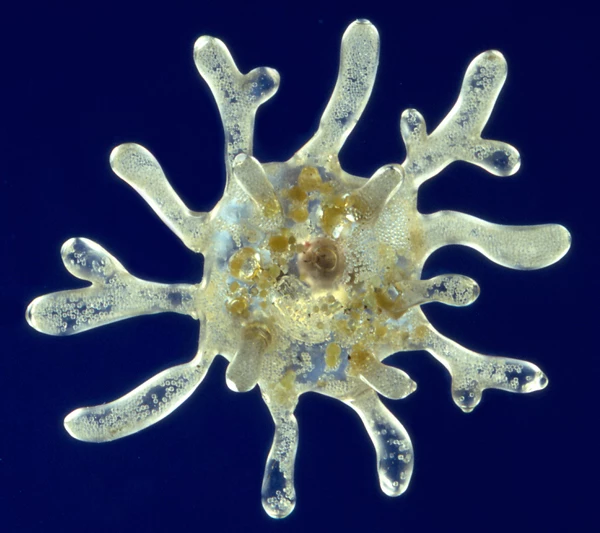
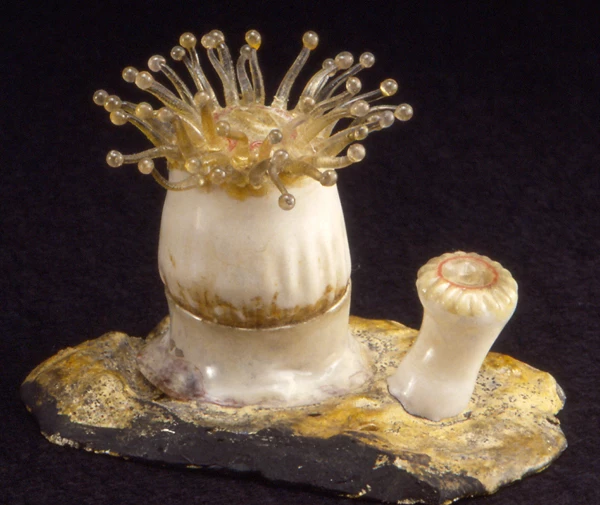
Actinophrys sol.
Actinophrys sol
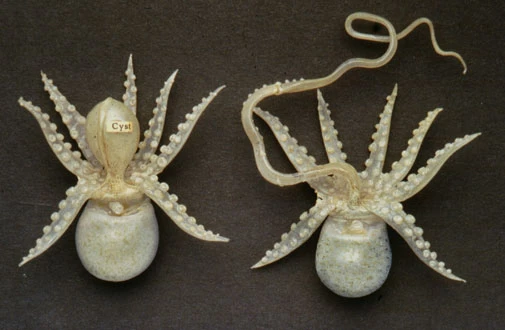
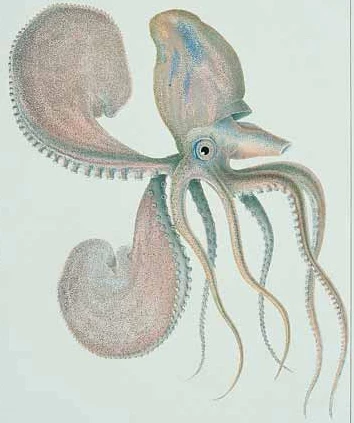
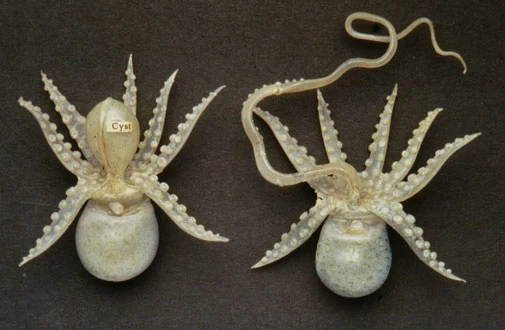
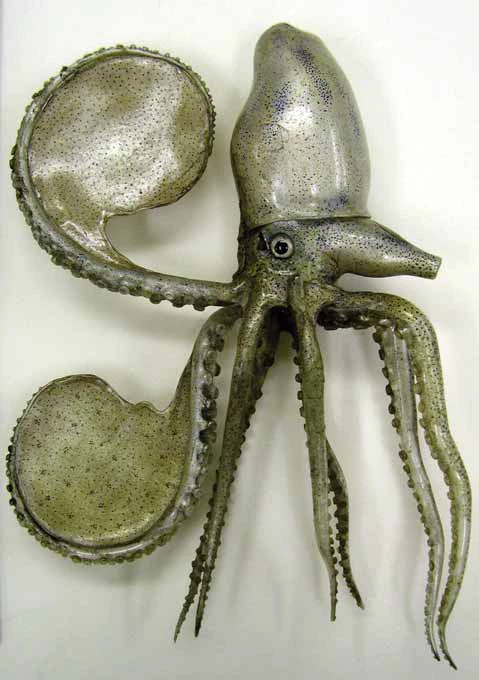
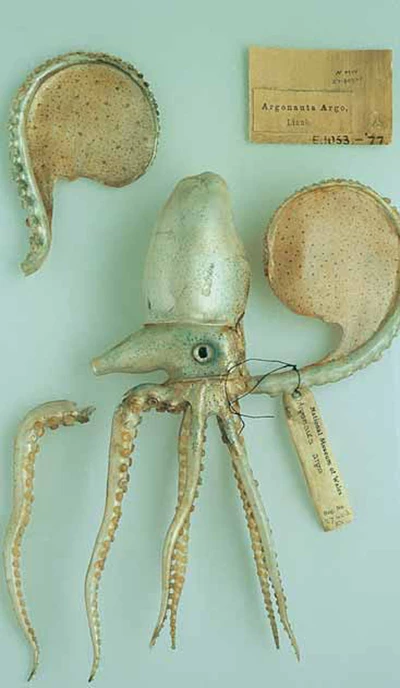
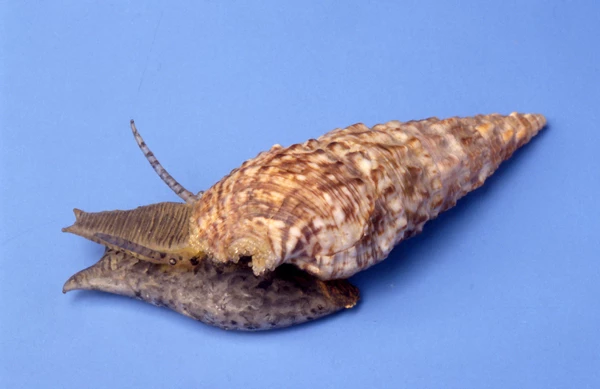
Argonauta argo.
Argonauta argo
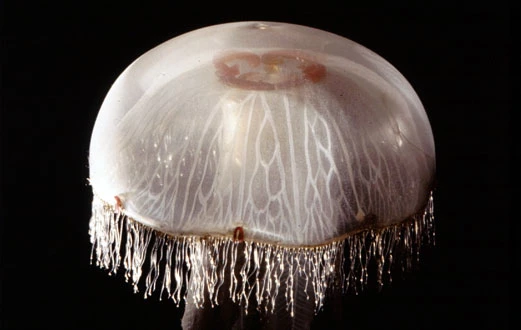
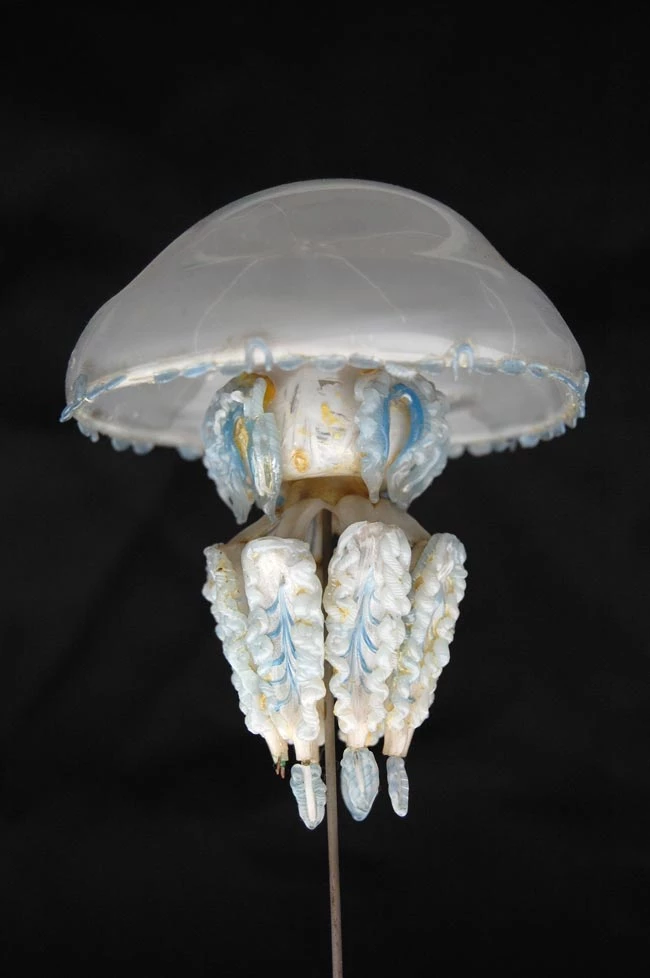
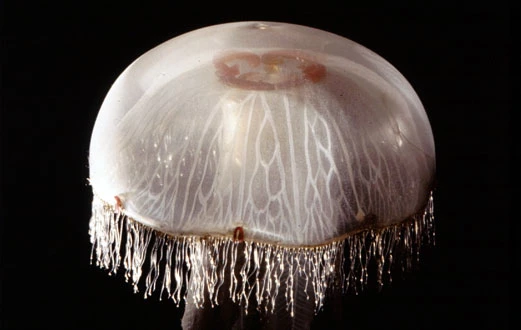
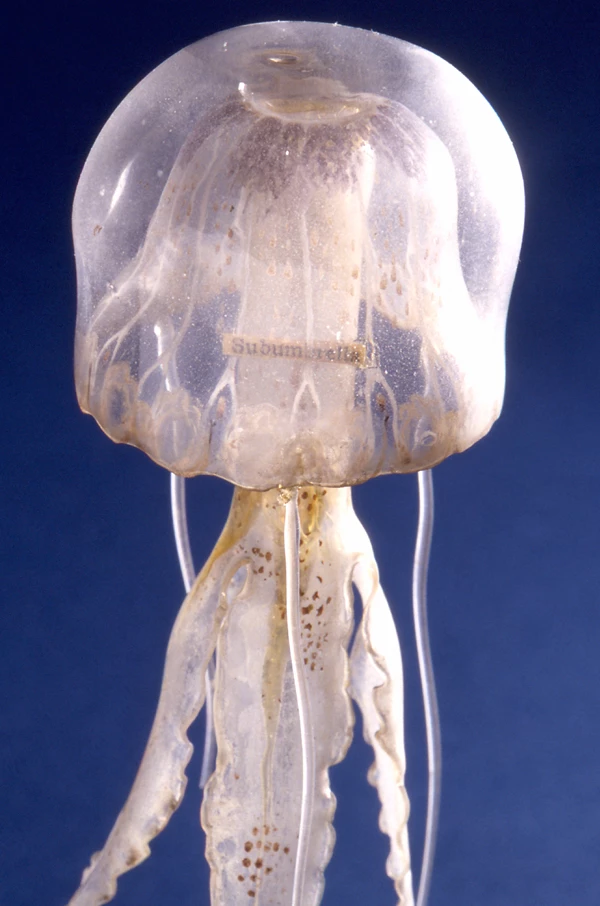
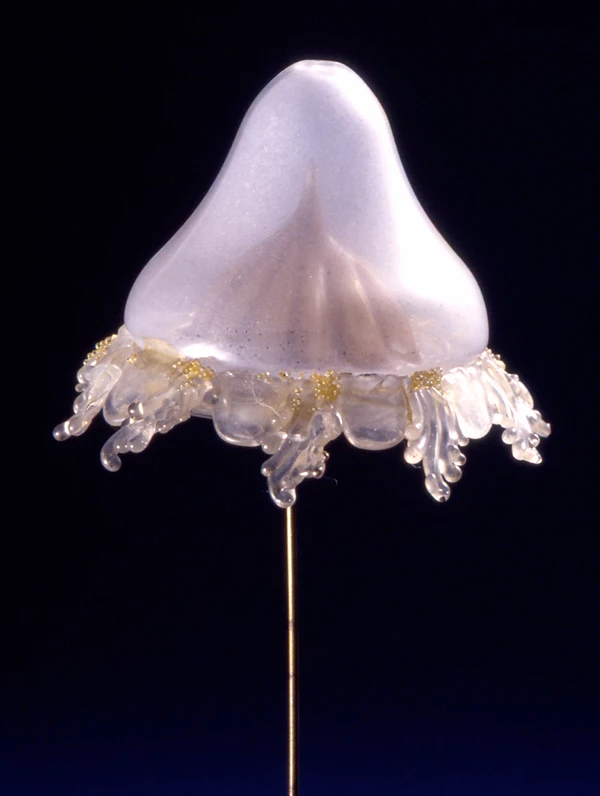
Aurelia aurita.
Aurelia aurita
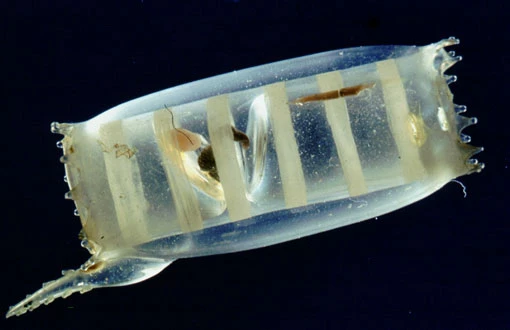
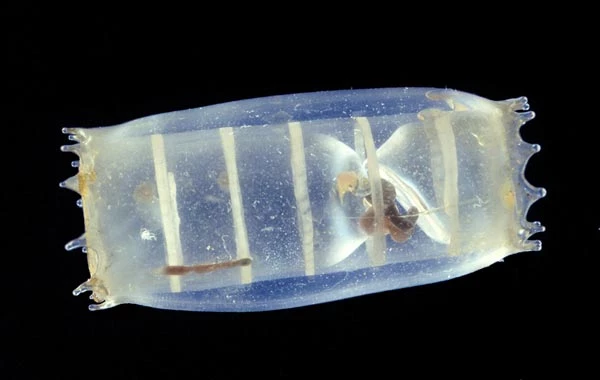
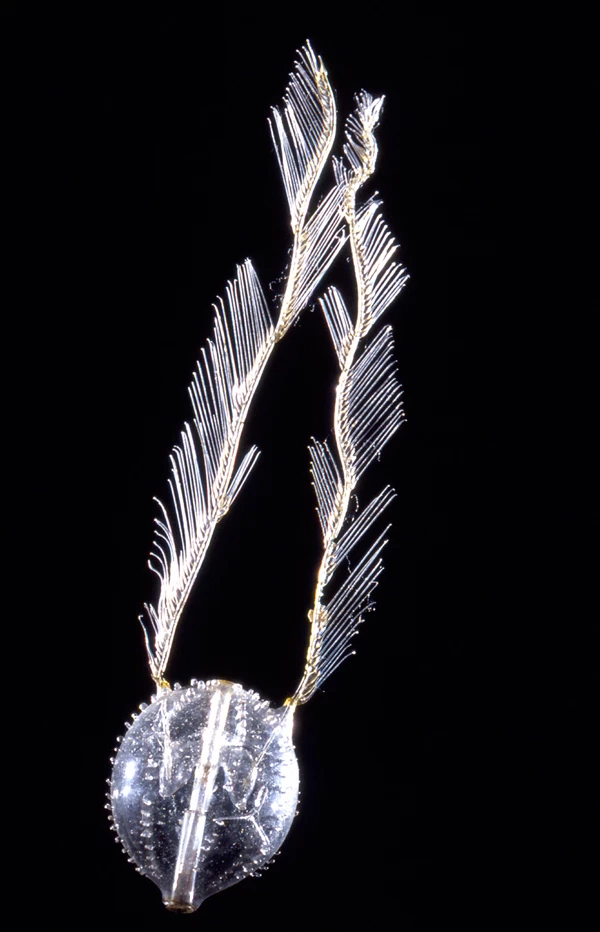
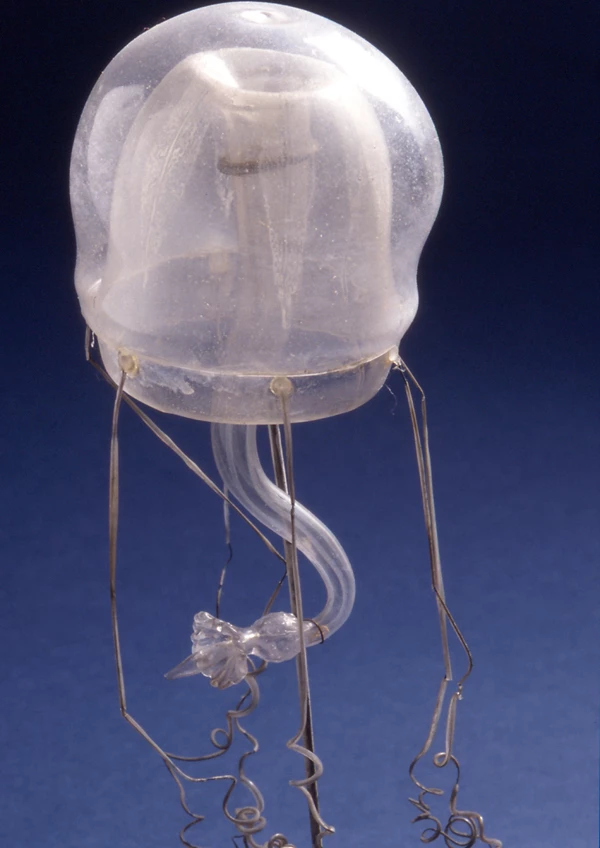
Doliolum mulleri.
Doliolum mulleri

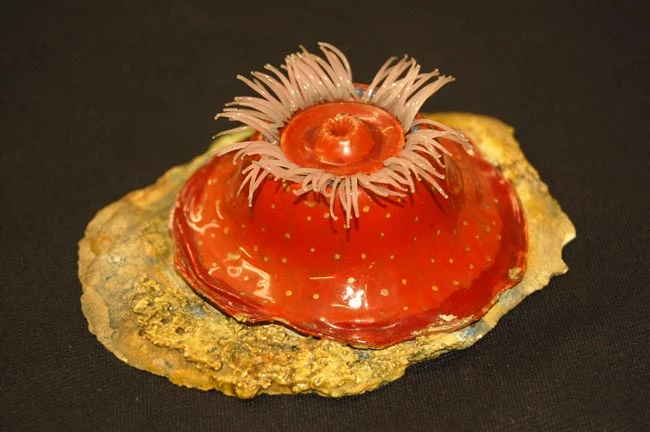
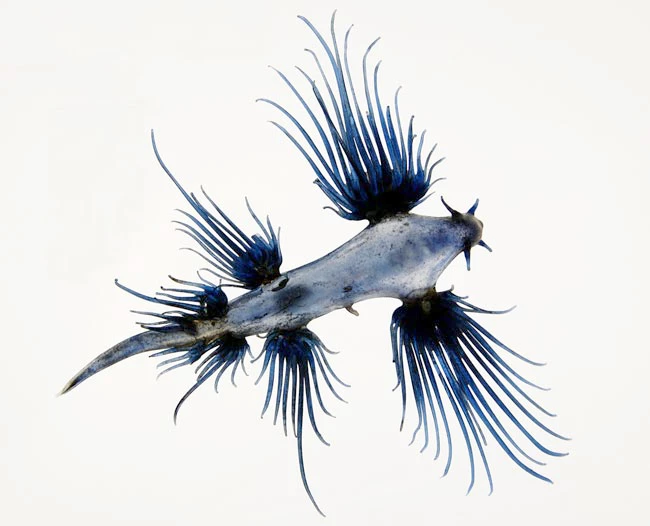
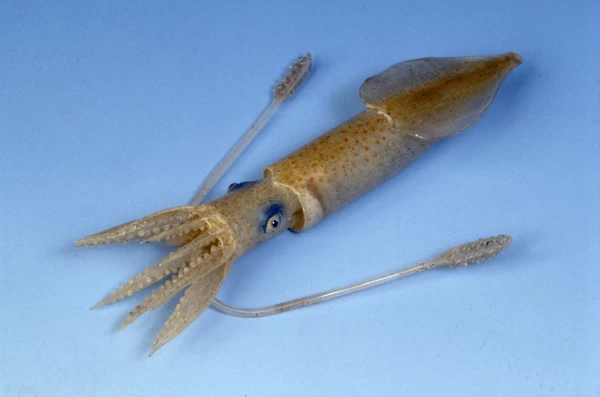
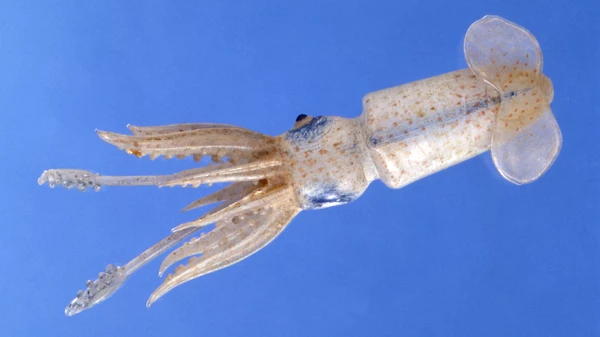
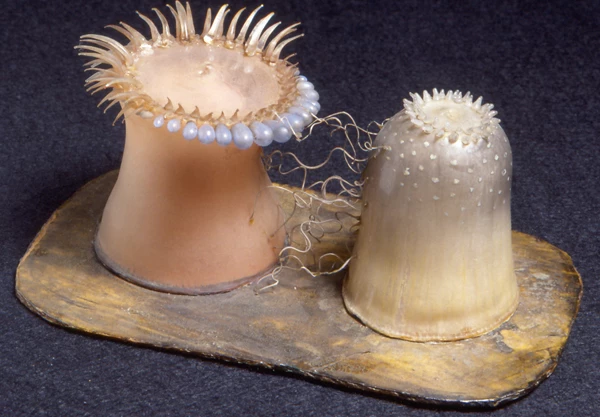
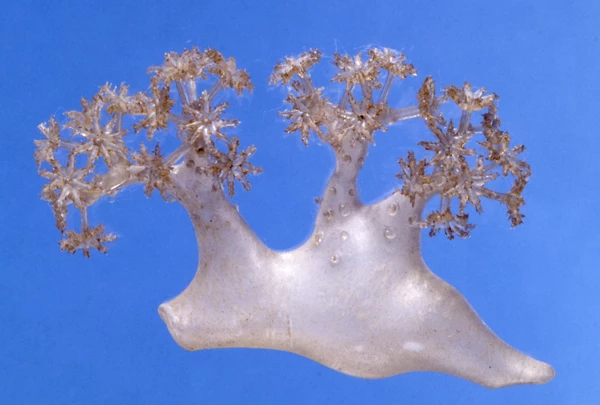
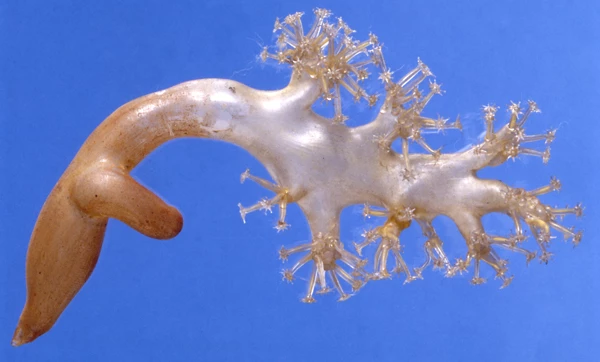
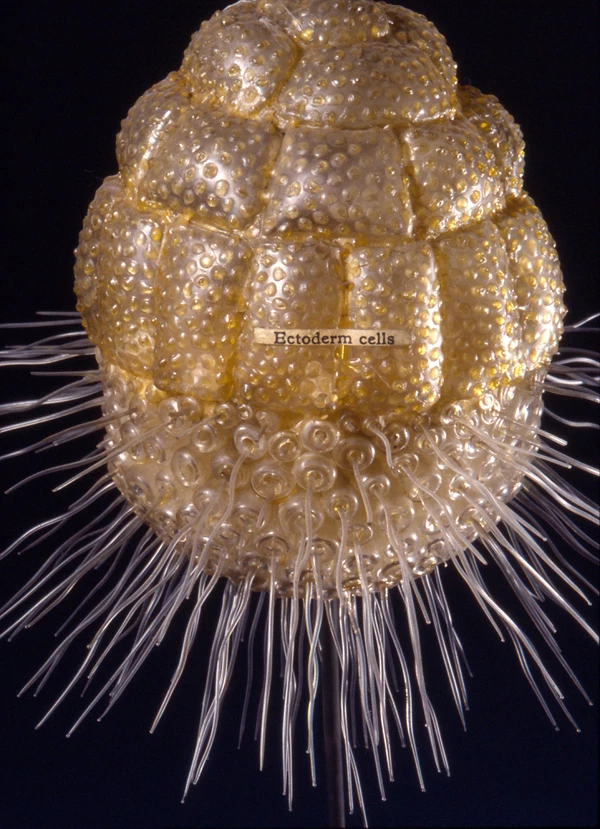
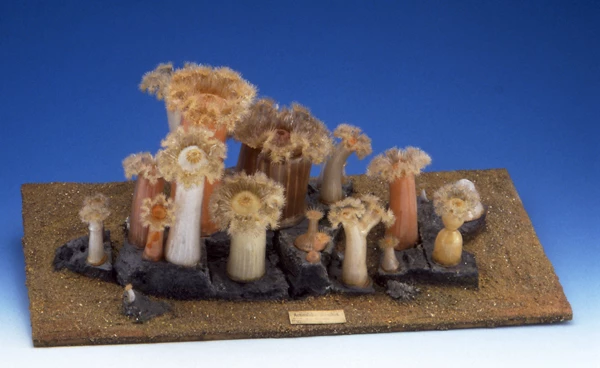
Amgueddfa Cymru holds a remarkable collection of beautifully detailed glass models of sea creatures made, in the latter half of the 19th century, by the uniquely skilled glass-worker and naturalist Leopold Blaschka.

Plants and animals for new museums

The second half of the 19th century was a time of great scientific discovery. New museums were opening to the public with their galleries displaying plants and animals from across the globe. For many groups of animals this was easily done. Birds, mammals, reptiles and even fish could be skinned and mounted to produce lifelike representations.

But what about soft-bodied animals, such as jellyfish and sea anemones, which were preserved in spirit? Their colours quickly faded and their shapes became distorted. The German glass-worker and naturalist Leopold Blaschka devised a solution to this problem. Together with his son, Rudolf, he established a successful business supplying glass models, mostly of marine animals, to museums worldwide during the latter half of the 19th century.

Leopold Blaschka

Leopold Blaschka was born in 1822 in Bohemia, now the Czech Republic. The Blaschka family, originally from Venice, were skilled workers in decorative glass, and Leopold showed artistic skill from an early age. Soon after leaving school, he joined his fathers' business crafting ornaments from metal and glass.

Leopold experimented with making glass models of flowers. Later, in 1863, he made models of sea-anemones which were exhibited in the Dresden Museum, Germany. These attracted the attention of curators of natural history museums who ordered sets of anemone models. Soon Leopold added models of jellyfish and snails to his repertoire. His son Rudolf was by this time working with him.

The Blaschkas were keen to keep up with the demand from museums. An early catalogue dating from 1871 listed nearly three hundred models. By 1888 the catalogue published by Henry Ward, their American agent, listed seven hundred!

The Blaschkas relied on illustrations in books as sources of reference for the glass animals. Many of the models are three dimensional representations of animals that they never saw in reality. However, in later years they increasingly based models on observations of real animals, either during field trips or from live specimens in specially built aquariums in their house.

Their early work was described in their catalogues as 'decoration for elegant rooms'. Comparison between early and later models made in the 1880s shows a distinct tendency towards scientific accuracy and away from the more showy earlier style.

Complex structures

The models varied greatly in complexity and their construction. Component parts were made from both clear and coloured glass, using a combination of glass blowing and lamp working techniques. Other materials were also used where appropriate. Fine copper wires reinforced or attached delicate tentacles and gills, and painted paper cleverly represented internal structures. They also made use of the actual shells of snails to which the modelled glass bodies of the animals were attached.

Production of the glass animals ended in 1890 when they were offered an exclusive contract to supply plant models for the Botanical Museum of Harvard University in the United States.

Leopold died in 1895, at the age of seventy-three. Rudolf continued working single-handedly until he retired in 1936. He died three years later at the age of eighty-two. By that time their collection consisted of 847 life-sized model plants and over 3,000 enlarged flowers and anatomical sections.

Their plant models remain on display at Harvard University to this day, attracting over 100,000 visitors annually.

The Glass model collection held at Amgueddfa Cymru were acquired in two batches. One hundred and thirty eight models were purchased from the Blaschkas by the old Cardiff City Museum in 1890. A further sixty two models came to the museum in 1927 from the Science Museum in South Kensington, London. Examples range from the early 'showy' forms, to more scientifically accurate examples of jellyfish and sea anemonies.

View a selection of these remarkable glass models held at Amgueddfa Cymru
Repairing the irreplaceable - Conserving the Blaschka glass models

Leopold Blaschka, about 1895. Image courtesy of The Botanical Museum, Harvard University, Cambridge, MA.

Leopold Blaschka, about 1895. Image courtesy of The Botanical Museum, Harvard University, Cambridge, MA.

Rudolf Blaschka, about 1895. Image courtesy of The Botanical Museum, Harvard University, Cambridge, MA.

Rudolf Blaschka, about 1895. Image courtesy of The Botanical Museum, Harvard University, Cambridge, MA.

A source picture of the Paper Nautilus (Argonata argo) model.

A source picture of the Paper Nautilus (Argonata argo) model.

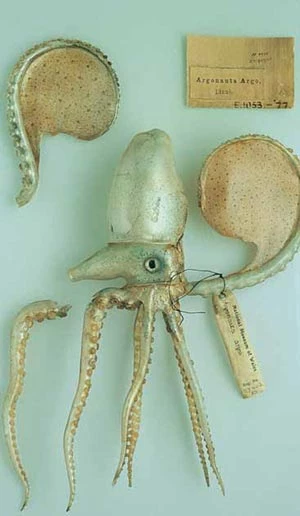
A broken Paper Nautilus model.

A broken Paper Nautilus model.

The Paper Nautilus model after conservation.

The Paper Nautilus model after conservation.

Amgueddfa Cymru holds around 200 beautifully detailed glass models of sea creatures created by Leopold and Rudolf Blaschka. Made in the latter half of the 19th century, these intricate and extremely fragile items have been subject to years of open display and poor storage conditions, causing them to become damaged and dirty.

Irreplaceable works of art

These beautiful glass representations of marine animals were originally developed as educational models. Now they are now considered to be works of art, with a value that makes them irreplaceable.

Conserving the Blaschka models is fraught with difficulties. Given their age and complexity, great care has to be taken before attempting to clean or repair the models. The accumulation of decades of dirt, and damage from past repairs must be rectified without damaging or altering the original model.

The first stage of any conservation project is to understand what the object represents, and then to understand how it is made. The Blaschka models are an intricate blend of glass, paint and textured coatings that have been put together to show the textures and colours of the animal in life.

Shifting decades of dirt

Firstly, a suitable way of cleaning the models had to be found, then methods had to be developed for removing previous repairs. Finally, where required, the models needed to be repaired.

The models proved to be very difficult to clean. Surface paint had been applied to many of the specimens to add texture and colour. These had attracted surface dirt over the years, which was very hard to remove.

A range of solvents and cleaning solutions were carefully tested. Whilst water (with a non-ionic detergent) proved effective for removing the dirt, the surface paint was soluble and was in danger of being washed away. Eventually white spirit was found to shift the dirt without damaging the original surface paints.

Removing past repairs

Many of the specimens, especially the cephalopods, had become repeatedly broken and repaired over time. Many of these repairs were now discoloured or failing. Some parts, for example tentacles, had been re-attached in the wrong place.

The older repairs tended to use animal glue that could easily be softened in water, but this required care where the surface paint was present as this was water soluble. Other glues were dissolved by acetone. Once the old glues had been removed, the models then had to be reassembled.

Re-repairing correctly

The glass used to manufacture most of the models was very thin and brittle. Some of the collection had been broken into numerous pieces, and, in the past, detached pieces were fitted back in the wrong place.

Firstly, any new repairs made to the models needed to be reversible in the future. Epoxy resin based adhesives were quickly ruled out due to their strength, lack of reversibility and long-term stability problems. The consolidant, Paraloid B-72TM, was chosen because it is a stable material that remains reversible and can be removed if required. It is also forms a weak repair that will fail before the glass, reducing the chances of damaging the models further. This material is also slightly visible in certain lights, allowing future curators of the collection to identify previous conservation work.

The conservation work was developed to improve the visual appearance and integrity of the models, without further altering the original structure. The Blaschkas' glass models are an important collection, which is still used today. The work carried out on the collection will help ensure its continued survival for future generations to enjoy.

Iron Frames and Wooden Wheels - The Bicycle Collection at Amgueddfa Cymru

Over the past few years, increasing emphasis on fitness and green issues have helped give the bicycle a new lease of life. Today bikes are available in a wide range of styles and prices, but the first bicycles to be produced were extremely expensive and very difficult to ride.

The first bicycle designs

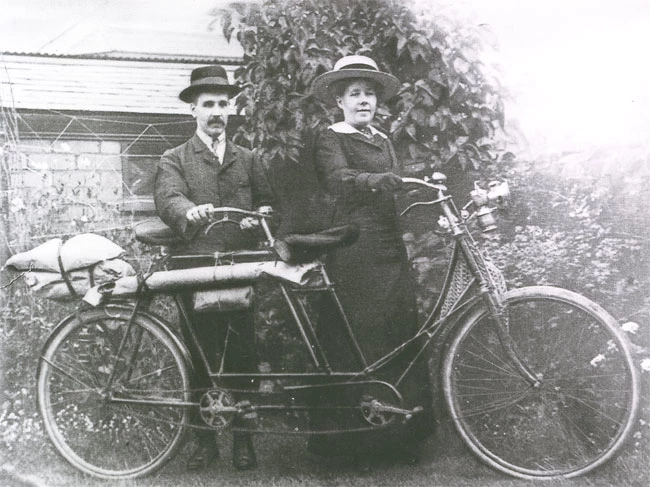
A Cardiff couple on a lady-front tandem. The man, a piano tuner, was blind.

A Cardiff couple on a lady-front tandem. The man, a piano tuner, was blind.

Bikes called High Ordinaries, later known as Penny farthings were particularly uncomfortable and required the rider to have very long legs, in order to reach the pedals.

In the 1870s the new cycle owners formed exclusive clubs, had caps emblazoned with their badges and wore military-style cycling suits. Although women initially steered clear of bicycles many became enthusiastic tri-cyclists, choosing more stable three wheeled varieties and special clothing designed for safety and comfort. Pleated skirts allowed more freedom of movement and the more modest individuals often wore breeches beneath their skirts.

There was a bicycle boom in the 1890s. New models were appearing almost weekly and new factories making bicycles opened up all over the country. The development of the safety bicycle, with chain-driven wheels of equal size, meant cycling was no longer restricted to tall athletic men. As cycling became more common cyclists' dress became less strange and men stopped wearing their cycling suits and began simply to wear their everyday clothes.

Because women were initially riding men's bicycles for which skirts were totally unsuitable, the Rational Dress Society and many cycling clubs encouraged them to wearing of a form of knickerbockers known as 'rationals'. The 'rationals' were not flattering and made their wearers objects of public ridicule. This proved too much for most women and by the turn of the 20th century most women had stopped wearing them.

As mass production brought bicycle prices down, the working classes grasped the opportunity to own their own transport. Bicycles replaced the pony and trap for the country postman, helped policemen cover large areas and speeded up shop deliveries. There were even experiments with bicycle-driven fire engines.

Local ironmongers and suppliers of agricultural goods began to sell bikes and many local blacksmiths became experts at repairing them.

The evolution of the bicycle

The desire for speed had a great effect on bicycle design. As the wheels of the early bikes were directly driven by the pedals, the only way to increase the speed was to make the wheels bigger. There were some models produced with a wheel diameter of 62 inches which weighed approximately 50 pounds. Other efforts to increase speed by reducing the weight of the machines resulted in bicycles which were only 22 pounds, needless to say they were very unsafe.

Bicycle racing

Long distance road races, such as London to John O'Groats, captured public interest and helped increase the popularity of cycling. However, as speeds increased, accidents became more and more frequent and eventually the police put a stop to racing on public highways. Controlled racing over selected courses of 50 to 100 miles were then organised by the National Cyclists Union. Road races, like the Tour de France, did not really catch on here until the early 1950s. The first Tour of Britain race, which later became known as the Milk Race, took place in 1951.

Track racing, on the other hand, was one of the original sports of the 1st Olympiad in 1896. World Championships were held in track racing from 1892, although women's events were not introduced until 1958.

Bicycles in the Museums collections

The earliest bicycle in the museum's collection is called a 'boneshaker'. It dates from around 1865, has an iron frame, wooden wheels and iron tyres, and is said to be the first of its kind in Cardiff. The collection also includes a country-made wooden 'boneshaker' copied from the manufactured type and built by a local craftsman. As well as the boneshakers, the museum also has Raleigh bikes from the 1930s, World War II roadsters, a 1938 New Hudson tandem and a sociable tricycle produced in the 1880s.

Sea creatures of the deep - the Blaschka Glass models

During the late 19th century, Leopola Blaschka (1822-1895) and his son Rudolf (1857-1929) produced beautifully detailed glass models of bizarre sea creatures for natural history museums and aquaria all over the world.

Their work has been hailed as: “an artistic marvel in the field of science and a scientific marvel in the field of art.”

Today, the Blaschkas seem remarkably contemporary: working as they did on the cusp of design, craft, art and industry.

Click the thumbnails below to view larger images from a selection of these remarkable glass models held at Amgueddfa Cymru.

The Stone Age tombs of south-east Wales

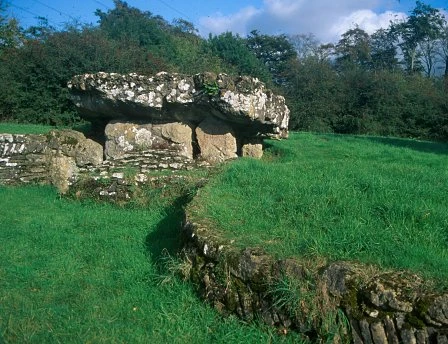
The forecourt and chamber of Tinkinswood (Vale of Glamorgan).

The forecourt and chamber of Tinkinswood (Vale of Glamorgan). Built in the Cotswold-Severn style, the chamber of this impressive monument can still be visited today. Image: Cadw (Crown Copyright).

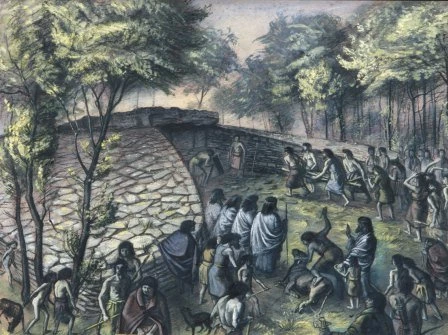
Imaginative reconstruction of a burial ceremony at Tinkinswood, by Alan Sorrell.

Imaginative reconstruction of a burial ceremony at Tinkinswood, by Alan Sorrell.

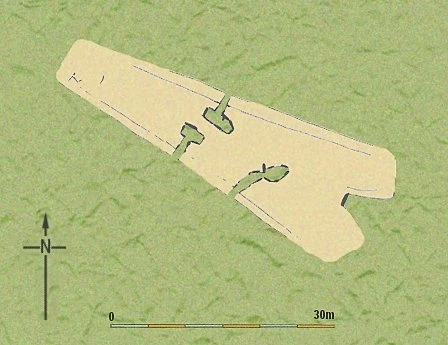
Ground plan of tomb at Gwernvale (Powys).

Ground plan of tomb at Gwernvale (Powys). This plan of the tomb is typical of the Cotswold-Severn type, although in this case the chambers are not accessed from the forecourt, but from the sides of the tomb.

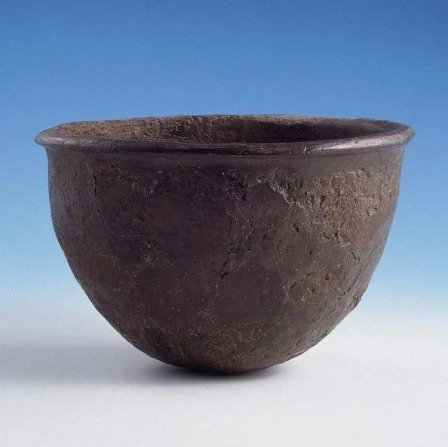
Bowl from Ty-Isaf (Powys). 24.6cm (9.8 inches) in diameter. Found in fragments, this simple bowl is more typical of the grave goods offered at this time.

Bowl from Ty-Isaf (Powys). 24.6cm (9.8 inches) in diameter. Found in fragments, this simple bowl is more typical of the grave goods offered at this time.

6,000 years ago small farming communities began to build tombs that continued to be used for hundreds of years - many survive to this day.

Stone Age tombs are relatively common in Wales. These 6,000 year old monuments consist of one or more chambers constructed from massive stones (megaliths). These were originally covered by a mound of earth or stones, although this rarely survives.

Many of these tombs were made to a common design, and in south-east Wales this often takes the form of mounds where the wider end points eastwards and opening to a forecourt. The internal chambers are accessed by short passages leading from the forecourt or the sides of the mound.

This design also appears throughout the Cotswolds (England), and beside the River Severn giving rise to the archaeological name Cotswold-Severn tombs.

Excavation at Cotswold-Severn tombs such as Gwernvale (Powys) have shown that they were sometimes built over earlier settlements, suggesting it was important that the dead be buried on land once occupied by the living.

At Pipton and Ty-Isaf (both in Powys) archaeologists have also discovered that some tombs were built in stages, often with a smaller monument being incorporated into a larger design.

The end product can be massive, for example Penywyrlod, Talgarth (Powys). It is likely that these grand houses for the dead were intended to stake a claim to a territory, emphasising to passers-by that the land was taken.

Once built Cotswold-Severn tombs were used for generations. For example, bodies were interred at Parc le Breos Cwm (Gower) for over five hundred years. This site gives us a glimpse of the burial rituals at these tombs, with some bodies apparently having been kept outside the tomb until they had partially decomposed - a practice which sounds gruesome today, but appears to have been a common part of the burial rite at this time.

When abandoned Cotswold-Severn tombs often held the remains of a large number of people. At Parc le Breos Cwm archaeologists found more than 40 bodies, while at Ty-Isaf and Tinkinswood (Vale of Glamorgan) over 30 and 50 were found respectively.

The fragmentary nature of these bodies suggests that it was not the individual burial that was important to the tomb builders, but the creation of an ancestral bone pile.

Few grave goods are found in these tombs, at most a few broken pots and a handful of flint tools. It is likely that what ceremony occurred to honour the dead took place outside of the chambers.

Together, the bones, grave goods and the tombs themselves provide one of the main sources of information about life and death in south-east Wales during this remote period.

Background Reading

The Tomb Builders: In Wales 4000-3000BC by Steve Burrow. National Museum Wales Books (2006)

The megalithic chambered tombs of the Cotswold-Severn region by T. C. Darvill. Vorda Publications (1982).