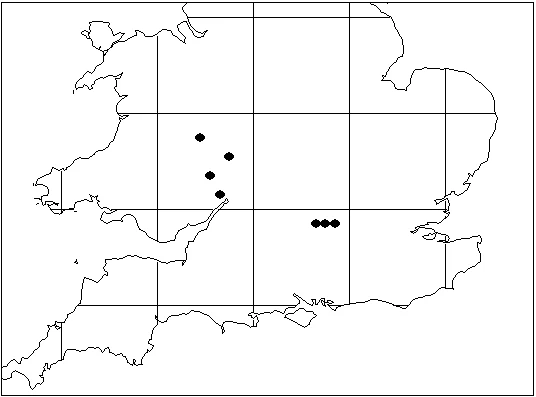
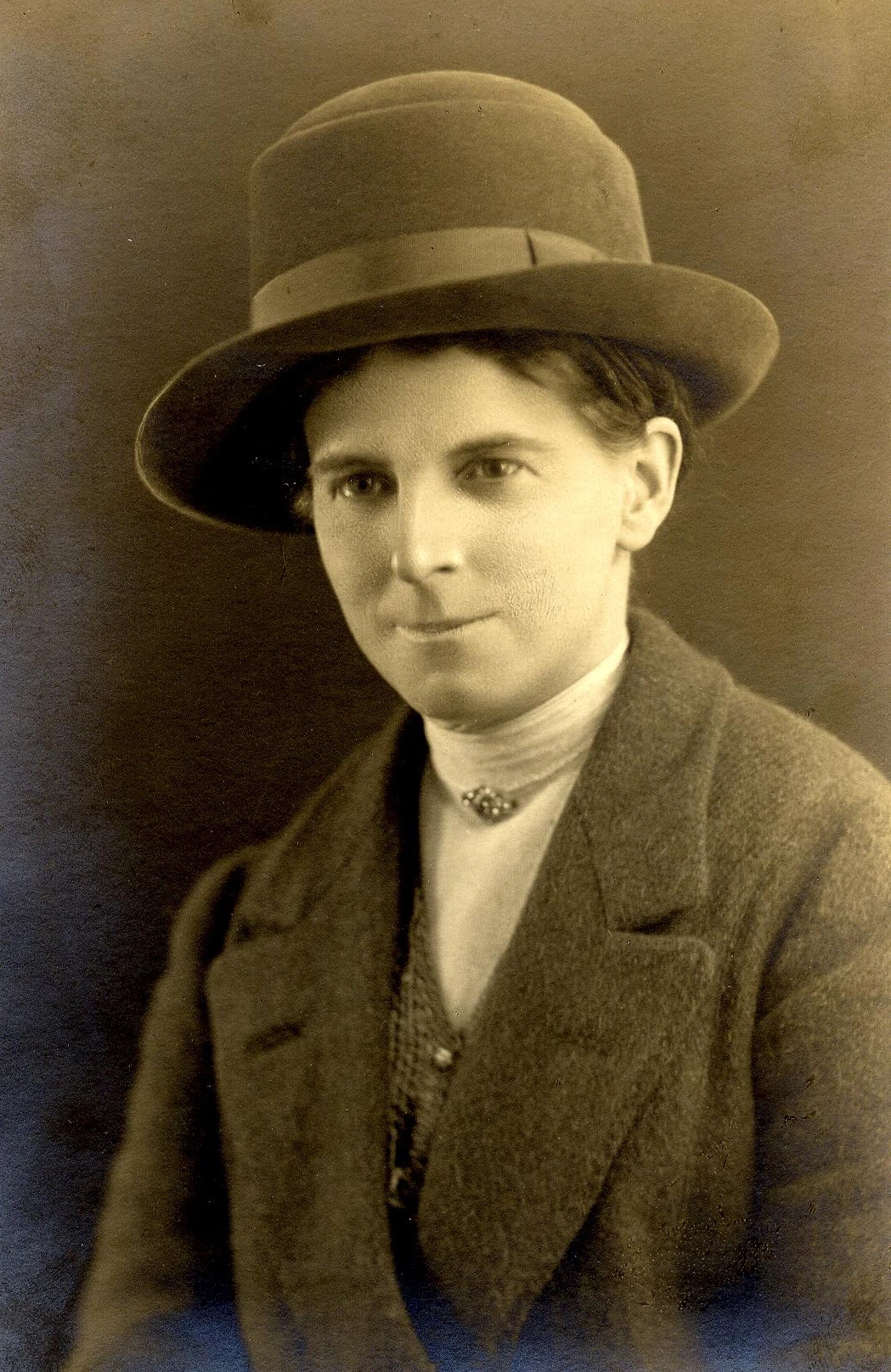
The Ghost Orchid: one of Britain's rarest plants 3 July 2013 The Herefordshire Ghost Orchid, 2009 Distribution map of Ghost Orchids in Britain (all records: data courtesy of Botanical Society of the British Isles 2013). Eleanor Vachell, c. 1930. A 1953 Ghost Orchid collected by Rex Graham The 1982 Herefordshire Ghost Orchid preserved in formalin The Welsh National Herbarium at Amguedfa Cymru has a small - but very precious - collection of Ghost Orchids (Epipogium aphyllum Sw.); is this something to be proud of, or should they have been left in the wild? The answer lies in the donations to the Museum, and slugs... Ghost Orchids are among the rarest plants in Britain. They have been found in about 11 sites in the Chilterns and West Midlands in England, but such is their rarity and the secrecy surrounding them that it is difficult to be sure exactly how many sites there are. Regarded as extinct Ghost Orchids were first discovered in Britain in 1854 but were only seen 11 times before the 1950s. They were seen regularly in a few Chilterns sites between 1953 and 1987 but then disappeared and were regarded as extinct until one plant was discovered in 2009. In most sites they have only been seen once, and rarely for more than ten years in any one site. Ghost orchids - a fleeting occurrence in dark, shaded woods Ghost Orchids get their name from their creamy-white to pinkish-brown colour and their fleeting occurrences in dark, shaded woods. The colour results from the absence of chlorophyll, as they are parasites of fungi associated with tree roots, and they do not need to photosynthesise their own food. They spend most of their lives as rhizomes (underground shoots) in the soil or leaf litter of woodlands, and flowering shoots only occasionally appear above ground. Even then, their small size (usually less than 15cm, rarely up to 23cm) and unpredictable appearance between June and October means that Ghost Orchids are rarely seen. Until recently the only British specimen held by Amgueddfa Cymru was a scrap of rhizome collected for Eleanor Vachell in 1926 - her herbarium is one of the most comprehensive ever put together by a British botanist - who donated her collection to the Museum when she died in 1949. The story of how the fragment of Ghost Orchid was discovered is given in her botanical diary: "28 May 1926. The telephone bell summoned Mr [Francis] Druce to receive a message from Mr Wilmott of the British Museum. Epipogium aphyllum had been found in Oxfordshire by a young girl and had been shown to Dr [George Claridge] Druce and Mrs Wedgwood. Now Mr Wilmott had found out the name of the wood and was ready to give all information!!! Excitement knew no bounds. Mr Druce rang up Elsie Knowling inviting her to join the search and a taxi was hurriedly summoned to take E.V. [=Eleanor Vachell] and Mr Druce to the British Museum to collect the particulars from Mr Wilmott. The little party walked to the wood where the single specimen had been found and searched diligently that part of the wood marked in the map lent by Mr Wilmott but without success, though they spread out widely in both directions... Completely baffled, the trio, at E.V.'s suggestion, returned to the town to search for the finder. After many enquiries had been made they were directed to a nice house, the home of Mrs I. ?, who was fortunately in when they called. E.V. acted spokesman. Mrs I. was most kind and after giving them a small sketch of the flower told them the name of the street where the girl who had found it lived. Off they started once more. The girl too was at home and there in a vase was another flower of Epipogium! In vain did Mr Druce plead with her to part with it but she was adamant! Before long however she had promised to show the place to which she had lead Dr Druce and Mrs Wedgwood and from which the two specimens had been gathered. Off again. This time straight to the right place, but there was nothing to be seen of Epipogium! 2 June 1926. A day to spare! Why not have one more hunt for Epipogium? Arriving at the wood, E.V. crept stealthily to the exact spot from which the specimen had been taken and kneeling down carefully, with their fingers they removed a little soil, exposing the stem of the orchid, to which were attached tiny tuberous rootlets! Undoubtedly the stem of Dr Druce's specimen! Making careful measurements for Mr Druce, they replaced the earth, covered the tiny hole with twigs and leaf-mould and fled home triumphant, possessed of a secret that they were forbidden to share with anyone except Mr Druce and Mr Wilmott. A few days later E.V. received from Mr Druce an excited letter of thanks and a box of earth containing a tiny rootlet that he had found in the exact spot they had indicated." [Source: Forty, M. & Rich, T. C. G., eds. (2006). The botanist. The botanical diary of Eleanor Vachell (1879-1948). National Museum of Wales, Cardiff.] Eleanor shared the rootlet with her great friend Elsie Knowling, who also had a herbarium. Coincidentally, the two fragments have been reunited at the Museum after being apart for 84 years. In 1953, Elsie's son Rex Graham stumbled across 22 Ghost Orchids in a Buckinghamshire wood, the largest colony of ever seen in Britain (Graham 1953). This was the first time that Ghost Orchids had been seen for 20 years and it made the national press. At the time Rex collected only three specimens, but over the next few years he collected more when they were found eaten off by slugs. Eventually Rex had four specimens for his own herbarium, to add to the scrap in his mother's herbarium. The Ghost Orchids were amongst the treasures in Graham & Harley herbarium, which was donated to Amgueddfa Cymru in 2010. The third collection is the Museum's only specimen preserved in spirit (rather than being pressed and dried) so that the three dimensional structure of the flower can be seen. Dr Valerie Richards (formerly Coombs) was looking for wild orchids in Herefordshire in 1982 when she discovered a single ghost orchid in a new site. When she took a local botanist to the site a few days later, a slug had eaten through the stem. She picked it up and took it home and preserved it in formalin like the zoological specimens she had been used to working with during her university days. The specimen was kindly donated to the Museum in 2013. The fourth and final collection resulted from the hard work and intuition of Mark Jannink combined with another hungry slug. Mark wondered if Ghost Orchids flowered more frequently after cold winters. He researched all previous Ghost Orchid discoveries - their preferred habitat, time of flowering and weather patterns - then staked out ten possible sites in the West Midlands, visiting them every two weeks throughout the summer of 2009, following the first cold winter for many years. Finally in September, he discovered one small specimen - causing great excitement amongst botanists, as the Ghost Orchid had been declared officially extinct in 2005! Mark returned several times over the next few days as the plant gradually faded and 'browned', until the stem was once again eaten through by slugs. The remains were collected and pressed, and donated to our herbarium shortly after. So five of the seven British Ghost Orchids in Amgueddfa Cymru have been collected as a consequence of slugs, which are more of a threat than botanists. The Ghost Orchids are fully protected by law under the Wildlife and Countryside Act 1981 but nobody seems to have told that to the slugs! We also have eight specimens from Europe, where Ghost Orchids are more widespread, though still rare. One of our best specimens was collected by W. A. Sledge in Switzerland. You are welcome to visit the Welsh National Herbarium to see the Ghost Orchids, but don't expected us to reveal where they were found! And please leave your slugs at home. Adapted for the website from the following article: The Ghost Orchid Collection [PDF] The scrap of Ghost Orchid rootlet in Eleanor Vachell's herbarium. Also attached to the specimen are Dr George Claridge Druce's (1924) account of it from Gardeners Chronicle series 3 volume 76, page 114 and two small sketches by Miss Baumgartner. Swiss Ghost Orchids collected by W. A. Sledge in 1955. The 2009 Ghost Orchid from Herefordshire. References Graham, R. A. (1953). Epipogium aphyllum Sw. in Buckinghamshire. Watsonia 3: 33 and tab. (http://archive.bsbi.org.uk/Wats3p33.pdf ). Harley, R. M. (1962). Obituary: Rex Alan Henry Graham. Proceedings of the Botanical Society of the British Isles 4: 505-507. For further information on Ghost Orchids see: Farrell, L. (1999) Epipogium aphyllum Sw. page 136 in Wigginton, M. J. (1999) British Red Data Books 1. Vascular plants. 3rd edition. JNCC, Peterborough. Foley, M. J. Y. & Clark, S. (2005) Orchids of the British Isles. The Griffin Press, Maidenhead. Jannink, M. & Rich, T. C. G. (2010). Ghost orchid rediscovered in Britain after 23 years. Journal of the Hardy Orchid Society 7: 14-15. Taylor, L. & Roberts, D. L. (2011). Biological Flora of the British Isles: Epipogium aphyllum Sw. Journal of Ecology 99: 878–890. http://onlinelibrary.wiley.com/doi/10.1111/j.1365-2745.2011.01839.x/abstract:
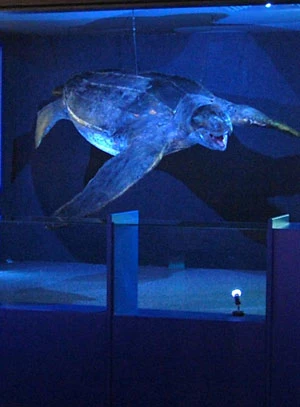
The largest turtle in the world 15 August 2007 The leatherback turtle on display at National Museum Cardiff was washed ashore on Harlech beach, Gwynedd in September 1988. Sadly, the turtle had drowned after being trapped by fishing lines. It was approximately 100 years old when it died. The turtle attracted worldwide attention as it was the largest and heaviest turtle ever recorded, measuring almost 3m (9ft) in length and weighing 914 kilos (2,016 pounds).The turtle's arrival on the beach saw a flurry of activity by Museum staff who were keen to exhibit the turtle. However, preparing such a specimen for display was not straightforward. The turtle had to be flipped upside down before repairing cracks on the underside. Displaying the world's largest turtleAfter undergoing an autopsy for scientific information, the skin was removed and preserved and a mould of the body shape was made. The preserved skin was stretched over the mould to produce a lifelike pose.The skeleton was also removed and prepared for display alongside the body. The taxidermy mount and associated skeleton were then put on display in their own gallery, with linking displays on the leatherback's history, threats, ecology and conservation. The Leatherback being cleaned and repaired Sixteen years onAfter 16 years on display, significant cracks had started to appear on the specimen. There had long been problems with cracking, and it had been patched up over the years. Low humidity was identified as a cause, so there was no choice but to close the gallery and conserve this popular specimen properly.The first stage was to clean the turtle of its layer of dust and oily grime. A non-ionic detergent removed the worst of the dirt.Once reasonably clean the next stage was to return the distorted parts of the specimen back to the correct shape. This involved soaking the exterior with a solution of deionised water, salt and detergent, enabling it to be moved back into position.Removing old repairsOnce the specimen was dry, the old repairs were removed. This was a long and slow process requiring care so as not to damage the turtle's skin any further. A large amount of the skin had been painted black some years before, so this also had to be removed. This was achieved with acetone and a mobile fume extraction system.Once the previous repairs and paint were removed, the turtle's original patterns and skin texture could be seen once more. Gaps and splits in the specimen were then filled in and painted over to blend with the turtle's original skin colour and texture. The Turtle after conservation The leatherback turtle in its new display at the National Museum, Cardiff RedisplayingThe skeleton was also carefully cleaned before the finished turtle was re-hung as before. After 4 months of work, the turtle gallery could finally be re-opened to the public.Another journey for the turtleConditions in the turtle gallery were continuing to cause conservation problems. As a result, during 2006 the turtle was moved to a new location in the adjoining 'Man and the Environment' gallery, next to the humpbacked whale. The new space has better environmental conditions, allowing the turtle to remain on open display. In addition, the information panels have been renewed with up-to-date information. The turtle now sits as a fine addition to this gallery space.
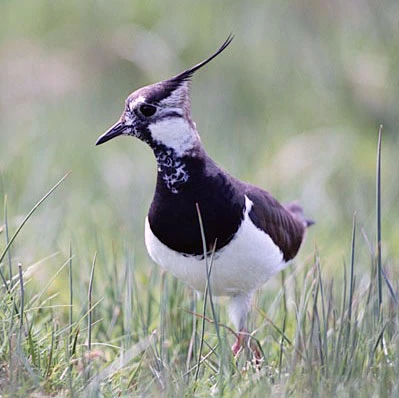
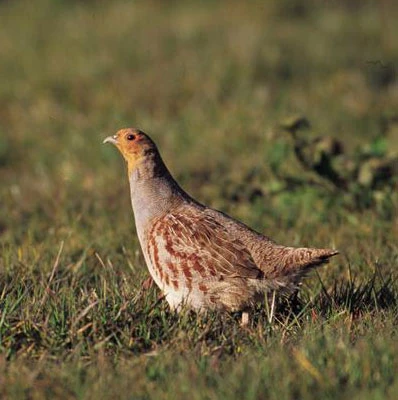
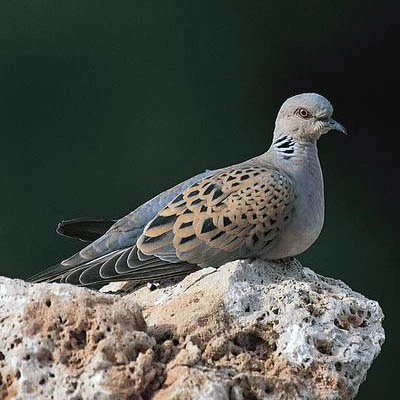
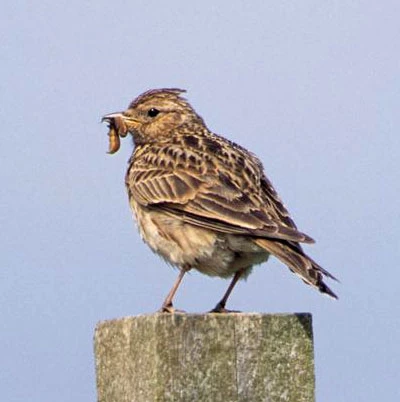
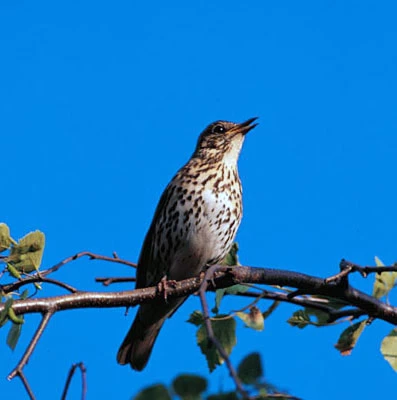
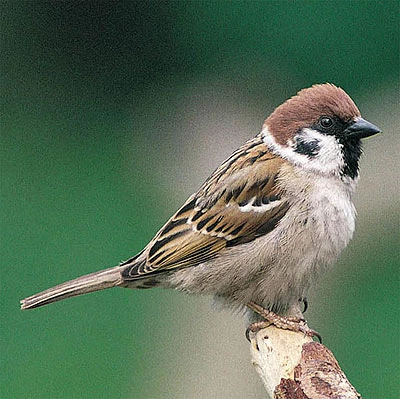
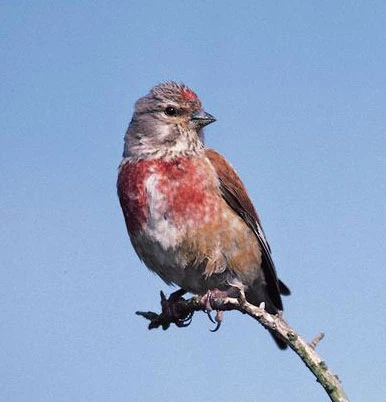
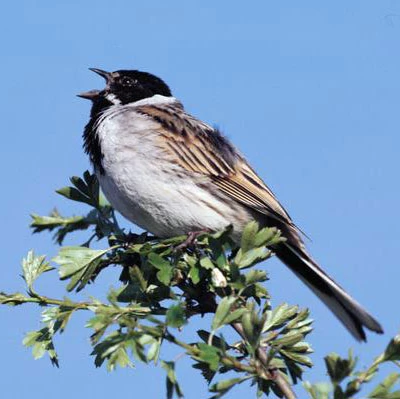
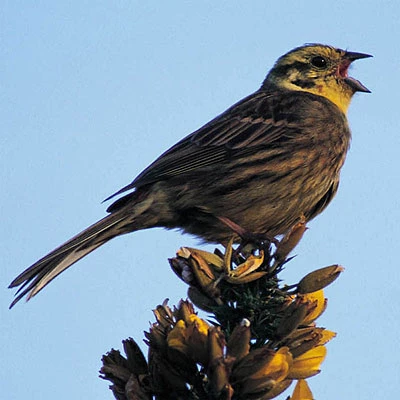
Britain's farmland birds in trouble 23 July 2007 Lapwing (Vanellus vanellus) Lapwing The British population dropped by 40% between 1970 and 1999. They mainly breed on damp meadows and rough pasture. In winter they can be found in large flocks on ploughed fields and coastal salt marshes. The draining of damp meadows and the change to sowing crops in autumn have had the most impact on them. There are now fewer ploughed fields for them to feed on in winter, and by spring crops are too tall for them to nest in. Managing lowland farms to provide the right habitat works. Recreating damp meadows leads to an increase in breeding birds. Grey Partridge (Perdix perdix) Grey Partridge The British population dropped by 86% between 1970 and 1999. They breed in rough field edges with hedgerows nearby. They do not move far in winter and are found in more or less the same places. The loss of hedgerows, spraying of field edges with weed-killer and the change to sowing crops in autumn have had a severe impact on them. This has removed nesting sites and winter feeding areas. The good news is they respond very quickly to improvements to their habitat. Numbers of breeding birds can be doubled within two years simply by providing the right habitats at the right time of year. Turtle Dove (Streptopelia turtur) Turtle Dove The British population dropped by 71% between 1970 and 1999. They breed anywhere there is sufficient cover of hedges, trees and bushes. They winter around agricultural land in Africa, south of the Sahara desert. They have suffered from the loss of field edges like the Grey Partridge. There are now fewer seeds of wild plants for them to feed on. They face an additional obstacle too. They are hunted as they fly across Europe. Large numbers are shot in spring as they head back to Britain. European regulations have reduced this slightly but it still goes on, reducing numbers even further. Skylark (Alauda arvensis) Skylark The British population dropped by 52% between 1970 and 1999. Skylarks breed on lowland farmland and upland moors but need short, rough grass. In winter they flock together on ploughed and stubble fields. On lowland farmland they have been hit hard by the move to intensive farming, which leaves less rough grassland to nest in. The change to autumn sowing of crops has deprived them of their favoured wintering areas. Fortunately they respond very quickly if land is managed to suit them. The number of skylarks on a farm run by the RSPB has more than doubled in two seasons. Song Thrush (Turdus philomelos) Song Thrush The British population dropped by 56% between 1970 and 1999. Song Thrush breed in copses and hedgerows. In winter some of our birds move south-west into Ireland and France and we see large numbers of birds come in from Scandinavia. Song Thrush have been hit hard by the move to intensive farming. Loss of hedgerows has taken away their breeding sites and pesticides have killed the animals they feed on. Reducing the use of slug pellets will help the Song Thrush even in areas where their decline is not as serious. Farms need to move away from intensive farming, with hedgerows being replanted or unused fields being turned back into copses. Linnet (Carduelis cannabina) Tree Sparrow The British population dropped by 52% between 1970 and 1999. Linnets like to breed in hedgerows and scrubby areas. In winter they flock together and feed on weedy fields. Linnets have been most affected by the removal of hedgerows and the loss of scrubby areas as the size of fields have been increased. The increasing use of set-aside and reduced use of herbicides around field edges have seen Linnet numbers increase in some areas. Tree Sparrow (Passer montanus) Linnet The British population dropped by 95% between 1970 and 1999. This is the largest drop for any species in Britain. Tree Sparrows nest in holes in trees and buildings, and prefer open farmland with scattered trees and hedgerows. The loss of food is the likely cause of this dramatic decline. Grain crops are taken straight from fields nowadays and there are fewer winter stubble fields. This means there is less spilt grain and seed around for birds to feed on. Tree Sparrows can be helped by using less herbicides and pesticides around field edges and improving the variety of plants to provide food. Reed Bunting (Emberiza schoeniclus) Reed Bunting The British population dropped 53% between 1970 and 1999. It nests in dense vegetation around ponds and wet areas. In the winter, it can flock together with finches and other buntings to feed in weedy fields. Reed Buntings have been worst hit by loss of suitable fields to feed on during the winter. Draining of wetlands and general tidying of waterways have also not helped. They can be helped in the same way as many other seed-eating birds. Reducing the use of herbicide allows a variety of plants to grow around field margins and in setaside, increasing the food supply. Maintaining vegetation around ponds and ditches will also provide nesting places. Yellowhammer (Emberiza citrinella) Yellowhammer The British population dropped by 53% between 1970 and 1999. It nests in open farmland with hedgerows and bushes. It's also found on heaths and commons. In winter they can be found in flocks together with other seed-eating birds such as Reed Bunting and Linnet. Even seed-eating birds such as the Yellowhammer must feed their young on insects and other invertebrates. In common with many of the species featured here, they are affected by use of insecticide during spring and early summer.
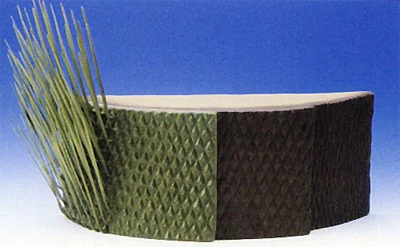
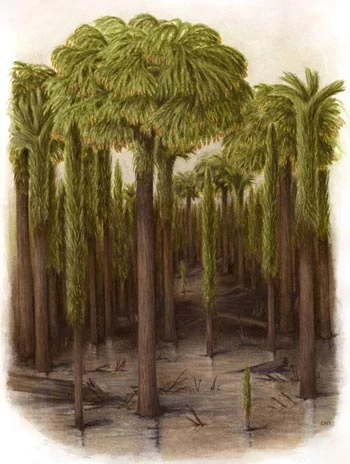
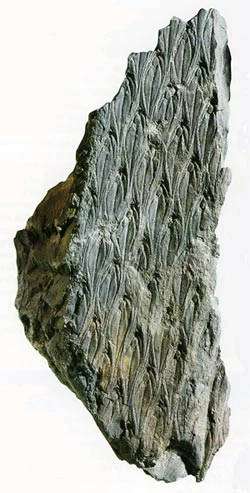
Wales's tropical rainforests 12 June 2007 Wax model of a cone from the Late Carboniferous giant club mosses. Wax model of a section of trunk from the Late Carboniferous giant club mosses. View over the late Carboniferous coal forests, showing the giant club mosses of the backswamp. Lepidodentron aculaetum fossil. Today, rainforests cover much of the tropics and there are large icecaps at the poles. An essentially similar arrangement has existed for the last 3 or 4 million years, but back in time, conditions were quite different to what we find today. 3-4 million years may seem a long time but, in the context of the 4700 million years of Earth's total history, it is not. If we look deeper into geological time, such as when dinosaurs roamed the Earth, conditions were quite different to what we find today. In only one other time in our geological past have conditions been similar to today's, with extensive polar ice and tropical rainforests &mdsh; what geologists refer to as Late Carboniferous, 300 years ago. We are of course no longer in the tropics, having drifted north to temperate latitudes. However, 300 millions years ago Wales was positioned right on the equator and was largely covered in lowland tropical swamp-forests. The dominant plants of these ancient swamps were giant club mosses. Club mosses still live today, as very small plants (hence the 'moss' part of their name), but these ancient forms were up to 40 metres high. Despite their size, they were not strictly trees, as their trunks were made up of soft cork-like tissue, not wood. This allowed the plants to grow extremely quickly, growing to their full size in as little as 10 years. The club mosses were not long-lived plants: they would grow to their mature size, reproduce (by spores, not by seeds as in most of today's trees) and then die. The colossal amount of dead plant-debris produced meant that the mud and silt in which they grew became very acidic, hindered the rotting of the plant tissue. The result was the build-up of thick peat deposits, which subsequently changed into the coal that has been mined in the coalfields of both north and south Wales. The Carboniferous tropical forests were one of the most powerful terrestrial 'sponges' in geological history for drawing carbon out of the atmosphere and burying it underground. By looking at how these forests changed in size (and thus how much carbon they extracted from the atmosphere) and comparing it with changes in the size of the polar icecaps, we can get a much better idea of how atmospheric carbon and global temperatures match up. One particular marked reduction in the size of the forests appears to have coincided with a shrinking of the icecap. To understand these global changes properly, we need to understand the causes and exact timing of the changes to the forests. To do this, we need to look carefully the changes in the composition of the vegetation as preserved in the fossil record and the changes in the geographical extent of the forests. The pioneering 19th century geologist Charles Lyell coined the expression, 'the present is the key to the past'. However, the message that the Late Carboniferous geological record is telling us is that the past may in fact be the key to understanding the present.
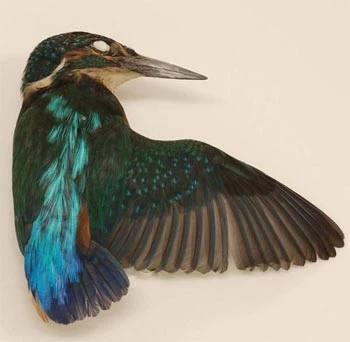
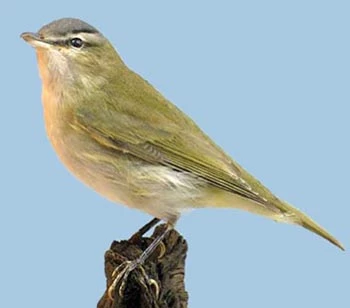
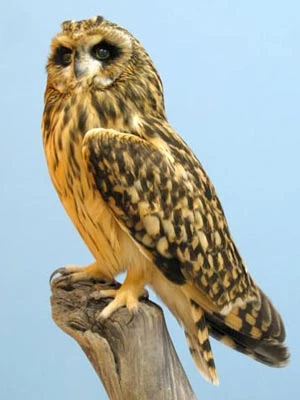
Frozen in time: the National Bird Collection at Amgueddfa Cymru 12 June 2007 Kingfisher: one of the new freeze-dried bird specimens Red-eyed Vireo: a rare migrant from North America killed at Bardsey lighthouse Dotterel: a scarce migrant in Wale, killed at Bardsey Lighthouse Short-eared Owl: a scarce breeding bird and winter visitor to Wales, killed by a car One of the founding collections of Amgueddfa Cymru back in 1915 was the Cardiff Museum's collection of birds. These were displayed in cases, along with their nests and eggs in small dioramas of their habitat. This collection continued to form a major part of the Museum's galleries until as recently as 1992. Over the years, the Museum has become a centre for many bird studies, such as the Red Kite — in conjunction with the Royal Society for the Protection of Birds (R.S.P.B.) and the Countryside Council for Wales (C.C.W.) Deep freeze Today, Amgueddfa Cymru has large-capacity freeze drying facilities in order to preserve new additions to the collections. Specimens are frozen in a vacuum chamber at about -20°C. Under these conditions the frozen water in the specimen is forced out as a vapour rather than becoming a liquid. This leaves the specimen completely dried out and, importantly, its shape and size are more or less unchanged from when it was living. Freeze-drying is also a much simpler procedure than skinning - the traditional method of preserving most museum specimens. The birds are arranged to allow the plumage detail on the wings and tail to be examined. This determines the age and sex of specimens. The collection is aimed at field ornithologists and artists alike and adds to the existing skin collections at the Museum. Bardsey Island The primary source of specimens for this collection is Bardsey Island, off the Lleyn Peninsular, North Wales. Birds migrating at night need clear skies to find their way, should it become cloudy or foggy they can become disorientated and under these conditions are attracted by the light from the lighthouse on the island. They circle or fly down the beams of light and are killed hitting the tower. The island warden checks the base of the tower every morning and any casualties are picked up and frozen before being transferred to the Museum in Cardiff. The focus is on British birds but also includes some rare species from around the world. These and other casualties received from the public are used for display and education, encouraging a deeper interest in birds and making people look harder at their surroundings. The collection is used to highlight current biodiversity and environmental issues, including raising awareness of the effects climate change and loss of habitat can have on birds migrating between Britain and Africa.