Quarrymen’s Gardens Bloom to Reveal Family History

Julie Williams, 30 April 2020

The gardens of the Quarrymen’s Houses at the National Slate Museum are a popular part of the visitor experience - but the planting choices are not just there to look nice - they're there to add an extra layer of meaning to the stories of the quarrymen’s families and lives.

The gardens are mostly tended by a hardworking team from Gwynedd Council working from their base at Melin Glanrafon, Glynllifon. The team is part of Gwynedd Council’s adult, health, and wellbeing department, and offers training and experience for adults with learning difficulties. The team are contracted to look after the gardens all year round and to ensure that they are in tip top condition for visitors.

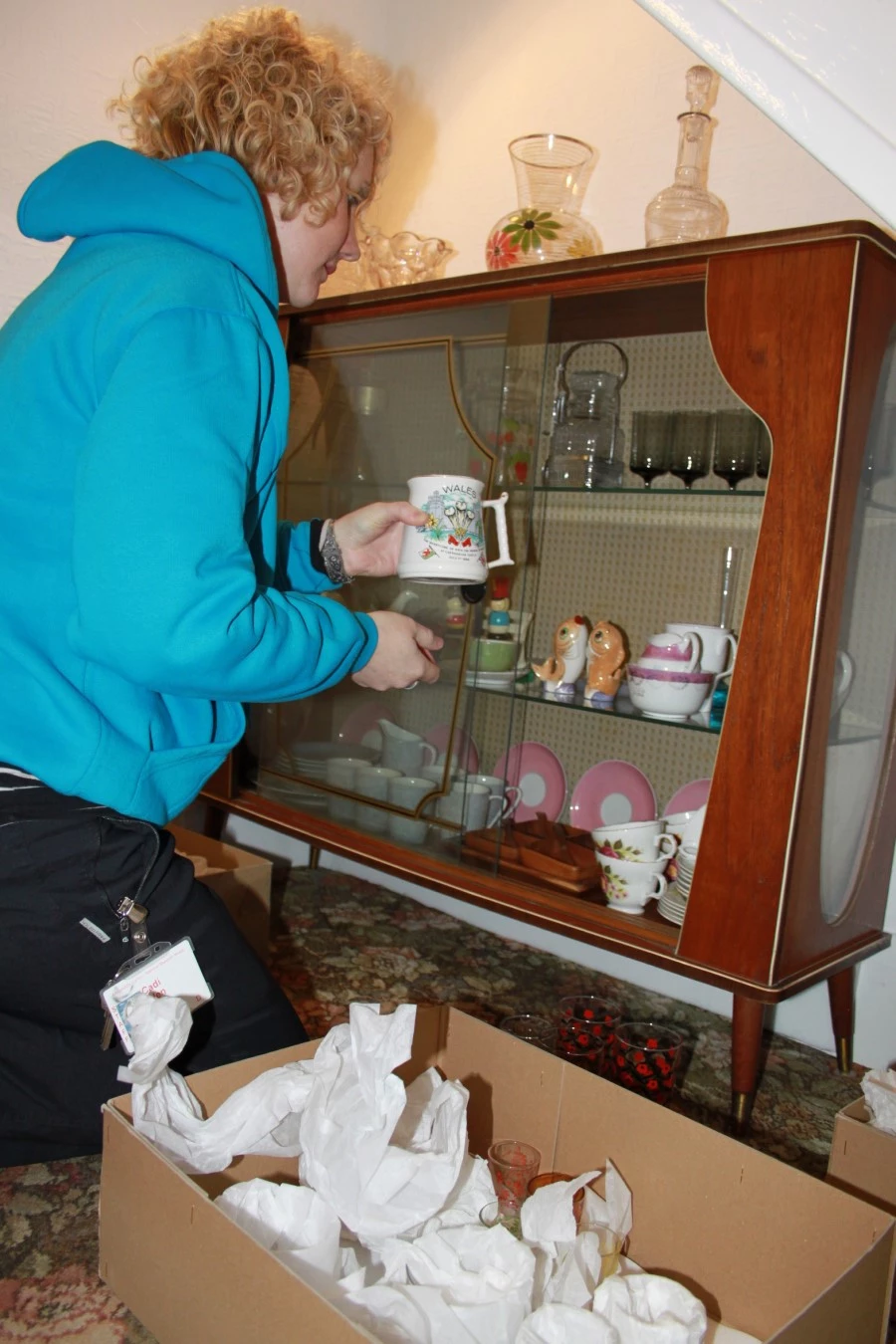
Cadi Iolen, Curator of the National Slate Museum explains more about the history and context for the gardens:

“The Quarrymen’s Houses were moved from Tanygrisiau to the National Slate Museum 21 years ago. Each house reflects a different period in the history of the slate industry – from 1861 in Tanygrisiau at the rise of the industry to a household in 1901 on strike during the Penrhyn Lockout of 1900 -1903 and a house in 1969 in Llanberis  - when Dinorwig quarry closed for the final time.

Initially we sought advice from the head gardener at our sister site,  St Fagans: National History Museum, who outlined what we should use for each house in order to further interpret the living conditions at the time. After that it was over to the gardeners to grow and prepare all that was need for the gardens.

Our 1861 house has a herbal garden including  fennel, mint, and st john’s wort. The 1901 house is more practically planted with a vegetable garden in the front as well as the back as the family would have needed to grow their own food at a time of particular hardship.  By 1969, the gardens become much more decorative with wallflowers, begonias and lots of colourful planting similar to the gardens that we grow ourselves today.  We also grow potatoes and rhubarb in the back of the Education House which our actors in residence refer to when on site and which are occasionally used in the cafe. ”

Dig for Health and Wellbeing!

Sharon & Iwan Ford, 29 April 2020

Produce and flower gardens were a mainstay of Miner's homes. An important place where food was grown, where pidgeons, chickens and often a pig was also kept. Sharon Ford is Learning and Participation Manager at Big Pit National Coal Museum. She wrote this article for our blog, in celebration of the health and wellbeing benefits of gardening - particularly during this lockdown. Its full of gardening joy and helpful hints and tips, and Sharon had more than a little help from a fellow keen gardener - her son, Iwan.

‘We may think we are nurturing our garden, but of course it's our garden that is really nurturing us’   

Jenny Uglow

I’ve never been so grateful to have a garden as I do at the moment, because it offers a space to inhabit beyond the four walls of the house. The fact that the weather has been so consistently good has enabled us to make the most of being outdoors when not working, to get out of each other’s way when we need a bit of solitary time, and of course catch up on all the garden tasks which are usually shoe horned into evenings and weekends. Having something to plan and focus on has been really helpful in taking our minds away from the current global crisis and the fact that we are away from friends and family. Even our energetic 8 year old son Iwan has been more engaged with the outdoors so far this year, planning which vegetables he wants to harvest and eat in a few months time, and the fresh air and activity tires him out at the end of the day. This is important as he is missing his usual swimming, gymnastics and rugby sessions.

The benefits of gardening on physical and mental health are well-researched and widely known, and it can help with a range of physical conditions such as high blood pressure and anxiety, as well as helping those with more defined mental health problems.

Not everyone is as lucky as we are to have a garden at home and an allotment just across the road, but keeping pots or planters of vegetables in small spaces can also help reduce stress and boost self-esteem. Tending for house plants has also been proven to give a sense of purpose, and can be a good place to start for those with no previous experience of gardening.

Anyway, I asked Iwan of he wanted to share his top tips for growing and tending, as he’s a seasoned gardener with four years experience now. He also wanted to share his tips for keeping chickens, just in case anyone is thinking of getting chickens to keep them happy! By the way, the therapeutic benefits of chicken keeping are also well documented!

My name is Iwan Ford. I am 8 years old and live in Blaenavon. During the lockdown, I spend all my time at home with Mam and Dad. It is ok but I miss my friends and cousins. We are very lucky because we have two gardens and two chickens. My chickens are called Barbara and Millie. I had another chicken who was called Penny, but she died a few weeks ago because she was poorly. We buried her in the garden.

Someone gave Millie to us when they heard Barbara was on her own. She is a Silkie, and is very funny and clumsy. She has big feet and walks on and into everything. Sometimes she kicks the food over and sometimes she walks over Barbara. She is very friendly and follows me around the garden. Silkies have blue ears and furry feathers. Barbara is a small bantam and has very beautiful feathers. She had orange feathers around her neck. She lays very small eggs but they are yummy and have very yellow yolks. You can tell they are happy chickens.

I do some gardening to help Mam and Dad because we have an allotment as well as our house garden. I like planting, watering and picking the vegetables and fruit when they grow. I have my own vegetable patch and have planted my French beans, pumpkin, marrow and kidney bean seeds already. Seeds need good soil with compost mixed in, sunshine and water. You have to remember to water a lot or they will not grow.

Iwan’s Top Tips:

Planting tips:

  • Fill the plant pots with compost. Put your seed in. Sometimes you half fill the pot with compost then the seed then more compost. Sometimes you fill the pot then make a hole with your finger and put the seed in. Make sure you water them, and they will grow in a few weeks. When they have grown big enough and no more frost is coming, you put the plants out into the ground.
  • If you haven’t got a garden you can grow potatoes in buckets or bags of compost if you cut the top. Tomatoes will grow like this as well.
  • Always write the names of what you are planting on tags or lolly sticks and put into the pots so you know which is which.

Chicken tips:

  • Silkie chickens don’t like to wander as they can’t fly, so if you only have a small garden silkies are the best.
  • Chicken poos are good for making compost. When this is ready you can dig it into the soil to make your plants come up big and strong.
  • Chickens love meal worms as a little treat. We give some to the chickens and put some out for the garden birds as well. ‘Beaky and Feather’ is the chickens favourite food and makes their feathers shine.


Heritage 'Gardener's Questiontime' from St Fagans Gardens

Juliet Hodgkiss, 28 April 2020

Juliet Hodgkiss is Senior Garden Conservator for Amgueddfa Cymru – National Museum Wales. She leads a dedicated team of gardeners and volunteers at St Fagans, who care for the gardens and their special heritage plant collections. In response to an increased interest our own gardens and a growing yearning for the beauty of some of our nations’ magnificent great gardens during lockdown, over the past few days we’ve been collecting your questions for Juliet about her work. Here are her answers in our ‘heritage’ version of Gardener’s Questiontime.

What's the best thing about your job?

The best thing about my job is being paid to work in such beautiful gardens.We have such a great variety of gardens, I’m doing something different every day. I also get to meet so many great people through my work - staff, volunteers, visitors, fellow gardeners and more.

Which of St Fagans' gardens is your favourite and why?

This time of year, my favourite part of the gardens is the area by the ponds. Throughout spring, the terrace banks are covered with spring bulbs; daffodils, bluebells and fritillaries, all above a carpet of anemones.  The magnificent Magnolia ‘Isca’ comes into flower first, followed by the cherries and the apples. The latest tree to flower is the Davidia with its giant white bracts, which sway in the breeze, giving its name of the handkerchief tree.​

​Which is the rarest plant in the collection?

One of the rarest plants we have is the Bardou Job rose, which was one of the original roses in the Rosery. This was thought to be extinct, then it was re-discovered by a group of rose enthusiasts growing in the old garden of the head warder on Alcatraz! They propagated from it, and sent us over 6 roses to grow in our gardens.

We also have a collection of heritage potatoes, donated to us by the Scottish Agricultural Research Agency. One of the potatoes we grow is the Lumper, the potato grown at the time of the Irish potato famine. These cannot be bought, so we have to grow them each year to maintain our collection.

Which is the most difficult plant you have to tackle - one that is hardest to maintain?

The most difficult plants to keep are the heritage potatoes. We have to grow these every year to maintain our collection, and most of these old varieties are very susceptible to blight, so require careful management to ensure a good crop.

Which is the most difficult plant to control?

The hardest plant to control is Oxalis, a persistent weed with a clover-like leaf, which multiplies by means of bulbils. These bulbils are spread when the soil is cultivated. It is virtually impossible to eradicate. After years spent trying to weed it out, we now keep it under control with ground cover planting and mulching.

Which is your favourite time of the year in the garden?

My favourite time of year is spring, with the spring bulbs, blossoming trees, the ferns unfurling their fronds, and all the plants in the garden bursting into growth. Everything looks fresh and new, and we gardeners are full of hope for a great year ahead in the garden.

National Waterfront Museum's GRAFT Team Spread Seeds and Sunflowers During Lockdown

Angharad Wynne, 28 April 2020

While The National Waterfront Museum’s GRAFT team and volunteers cannot gather to garden the Museum’s courtyard garden at this time, they are nonetheless keeping busy setting up ‘Seeds Out in the Community’ and encouraging us all to grow sunflowers in visible and public spaces to show support for key workers. Here’s a little more about this innovative community project and how it’s grown from a seed of an idea to a flourishing project that grows plants, food and people.

GRAFT: a soil based syllabus is the National Waterfront Museum's edible land and educational project, and a permanent piece of green infrastructure within Swansea City Centre. The project is also a socially engaged work of art by artist Owen Griffiths, and was originally commissioned as part of Now the Hero / Nawr Yr Arwr in 2018 funded by 1418NOW as part of a huge UK wide cultural project commemorating the first World War.

GRAFT works with community groups from a wide range of backgrounds across the city who came together, to transform the Museum's once industrial courtyard into a beautiful, sustainable, organic growing environment; creating an edible landscape to encourage participation and conversation around land use, food and sustainability in an accessible and empowering way.

Owen and Senior Learning Officer Zoe Gealy develop the ongoing program at GRAFT around these ideas of collaboration, sustainability and community. Every Friday, (other than during this lockdown), volunteers young and old work alongside one another to share skills working in wood and metal, learning how to grow plants, gaining qualifications and supporting each other along the way. The project has seen successful apprenticeships develop as a result of its program as well as seeing the long-term mental health benefits of working outside together. New friendships are formed, and people, as well as plants, flourish. During GRAFT’s development, in addition to raised beds, a pergola and benches from local timber, a cob pizza oven and beehives have been introduced to the garden. GRAFT's youngest volunteers come from Cefn Saeson School in Neath and work with Alyson Williams, the resident Beekeeper, learning about biodiversity, the environment and working together to care for the bees.

Some of the produce grown in the garden usually makes its way into delicious meals at the Museum's café whilst some is used for community meals at GRAFT. A portion of produce is used by volunteers, and some is donated to projects and groups throughout the area who provide food for those in need, such as Matts House, Ogof Adullam and the Swansea refugee drop in centre.

SPREADING SEEDS AND SUNSHINE DURING LOCKDOWN

Over the coming weeks GRAFT will be posting seeds through City and County of Swansea’s food parcel scheme and to community groups they regularly work with such as Roots Foundation and CRISIS. The seeds include squash and sunflowers, which were harvested by the gardeners last season.

Another initiative GRAFT is developing in the coming weeks is encouraging people to plant sunflowers in visible and public spaces, to show support for key workers alongside rainbow paintings. People are also invited to post pictures of their successful growing on GRAFT’s social media pages.

To request seeds contact zoe.gealy@museumwales.ac.uk

07810 657170

During lock-down, the GRAFT garden continues to need some tending and so  The National Waterfront Museum's on-site team are watering the GRAFT garden and seedlings during their daily shifts.

With thanks to players of the People’s Postcode Lottery for supporting Amgueddfa Cymru’s public programme of activities and events.

FOLLOW GRAFT:

www.facebook.com/graft.a.soil.based.syllabus

INSTAGRAM: Graft____

Sgwrs Fyr am Fron Haul i Ddysgwyr

Lowri Ifor, 28 April 2020

Are you learning Welsh? This is a short conversation introducing the Fron Haul houses. This conversation is suitable for higher level learners.