ARTIST'S PROJECT: Celebrating 10 Years of Volunteering

Robin Bonar-Law, 20 June 2019

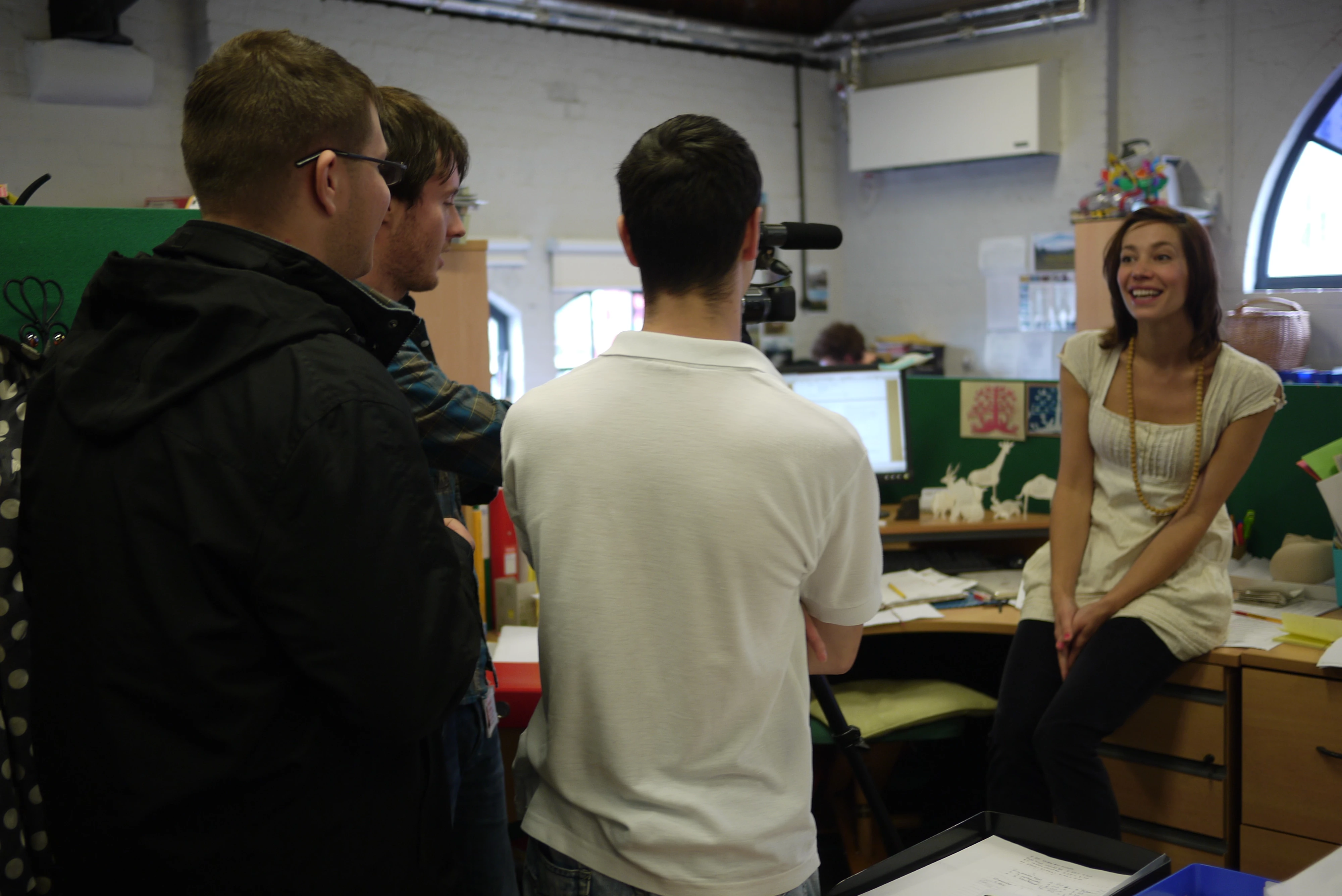
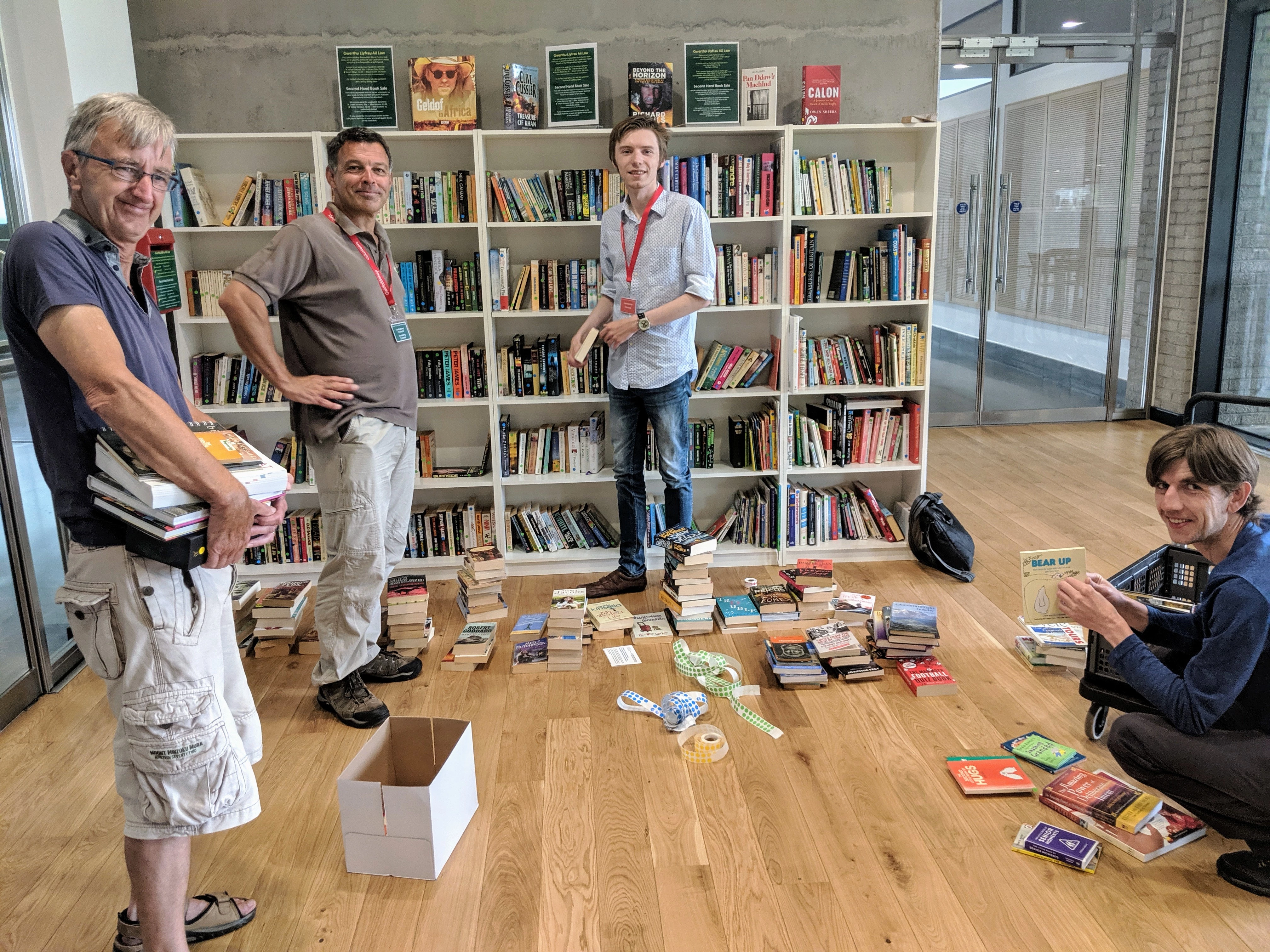
A few months ago, I was given the opportunity of a lifetime. I was invited to work at Amgueddfa Cymru as an artist in residence and asked to organise a project to celebrate 10 years of the volunteer programme. The project has consisted of a series of creative workshops with volunteers at sites across the country, which have fed into the creation of a celebratory artwork.

My name’s Robin Bonar-Law, I’m a self-taught artist and graphic design graduate of Falmouth University. From the time of my graduation up until my residency, I have been working in the catering industry so my artistic outlet has been primarily restricted to latte art. The creative industries are incredibly competitive and coming from a low-income family I have often felt stifled by a lack of social mobility. I take portrait commissions and enter competitions when I can but over the coming years, I would like to make the rewarding leap into self-employment by becoming a freelance mural artist.

Early this year I applied to an artist opportunity based at St Fagan’s. After a thoroughly exciting interview process, I was asked to join the team and given an open brief, ‘Create an artwork that is inspired by the volunteers and showcases the amazing contribution they have given to the museum. The process should also include a series of creative workshops with volunteers.’ With over 900 volunteers this year alone this was no small task, nonetheless, overflowing with unbounded enthusiasm and a sense of freedom (from the coffee shop) I got to work planning.

The project is split into two main components; the workshops and the final artwork. I love drawing and wanted to run a series of ‘mark-making’ workshops that help re-introduce the volunteers to the idea of drawing as something that’s fun and relaxing. By normalising and simplifying drawing through a series of games and activities, I hoped to make it less daunting and something relaxing that they may enjoy doing brief moments of spare time.

Volunteering blog

As well as allowing me to teach the volunteers new drawing techniques the workshops served as a time for the volunteers to teach me about their roles and experiences at the museum. From the beginning of the project, I have wanted to create an authentic artwork that represents the true collaborative spirit of the volunteer workforce and the best way to do that is to meet them and get their personal input. Visiting the sites and talking to members of staff was another valuable resource.

I have met such a large number of enthusiastic and happy volunteers, they are all equally passionate and have truly enriched my experience. The workshops have been far more rewarding than I could ever have expected, I hope the volunteers enjoyed them as much as I did.

My favourite part of any project like this is the final, hands-on crafting of a design, but there’s no point rushing into it without a strong design process as a foundation. Alongside the workshops, I started amassing a large pool of research to help shape the direction of the artwork. I gathered inspiration from celebratory imagery such as friendly society banners, religious artworks, Flags, political/social murals etc. I also furthered my knowledge of Welsh craft and traditions by meeting with curators, visiting volunteers outside of workshops and making use of the information on display to the public. I wanted to create a final piece with mulitple layers of complexity; representing the wildly diverse range of roles, having that celebratory feel and being reminiscent of the traditional craft that imbues each site.

I am in the final stages of the design process and putting the finishing touches to my artwork. Once complete, the modular, hanging banner inspired artwork will be transformed into a majestic, megalithic and meaningful mural adorning the walls of Tŷ Gwyrdd (the new volunteer hub) and made into a digital print for each of the 7 museums around Wales. It will also be made into tote bags and given to each of the volunteers. From the very beginning, I have wanted to create a purposeful artwork that rejuvenates and enriches the volunteer spaces, fostering an environment that helps individuals find a sense of well-being, pride and identity. I can’t wait to show you all the finished product.

I am incredibly grateful for the museum and all the staff that have given me this once-in-a-lifetime opportunity.


Robin's placement was funded by the Hands on Heritage youth project at Amgueddfa Cymru, which is supported through the National Lottery Heritage Funds ‘Kick the Dust’


Walking With Romans

Kathryn O'Dobhain, 10 June 2019

For one week only, Key Stage Two pupils enjoyed the Walking with Romans session at the National Roman Legion Museum.

As well as their usual facilitated session with one of our Roman teachers, they were also taken on a tour of the Amphitheatre with a Roman guide.

Under the strict instructions of their new Roman leader, they learned how to march in the centre of the Amphitheatre. Once they had perfected their pace, a couple of the pupils even got the chance to run out as gladiators with their classmates cheering them on.

Every year, the most popular part of the session proves to be when the children learn how to charge as a unit, using their teachers as the target! 

The outdoor environment of the Amphitheatre and Barracks, steeped in rich and ancient history, continues to capture children’s attention more effectively than a standard classroom session.

This is a fantastic opportunity for learners to not only see the history around them, but to experience what it was like to be a part of it.

A recent study by HAPPEN Wales found that outdoor learning sessions like these provide “a variety of benefits for both the child and the teacher and for improving health, wellbeing, education and engagement in school.” So if schools are disappointed at missing out on our Walking with Romans week, we have another outdoor session on the horizon.

Starting on Monday 1st July and running until the end of term, schools can book in for our Roman Boot Camp. Pupils will hear about what the Romans looked for in a soldier, discover if they have what it takes to join the Roman army and even compete in teams to test their pace on the marching square! Email learning.romans@museumwales.ac.uk for booking information.

While the museum is still closed for essential maintenance, the National Roman Legion Museum’s education programme is still running successfully.

Focussing on Key Stage Two learning, the programme offers each school group a full day of activities - from exploring the ancient ruins of the Amphitheatre, Baths and Barracks, to trying on armour in our reconstructed Barrack Room and learning Latin in our iBook.

The National Roman Legion Museum will be reopening to the public in Autumn 2019 .

Remembering the 1919 Cardiff Race Riots

Museum Cardiff Youth Forum, 10 June 2019

Hi this is the Museum Cardiff youth forum. On Tuesday the 11/06/2019 we are taking over the museum’s twitter account to remember a 100 years since the Cardiff Race Riots.

By bringing attention to the 1919 Cardiff Race Riots, we want to look at different aspects of society 100 years ago and compare it with today. The Race Riots help us to understand the history and development of segregation, the effects of war and disorders such as Post-Traumatic Stress Disorder (PTSD), and media bias. The consequences of the riots, including the casualties and deaths caused by the targeted violence affected the residents of Cardiff for two generations and scarred the families of those directly impacted.

Why is this important to remember negative history? Although it is a tough subject to talk about, reflecting on the Race Riots helps to bring light the effect of war, colonialism and prejudice on both society and the lives on individuals, and lets us reflect on what has changed, and what hasn’t.

Have the last 100 years since the riots seen racism be completely wiped out from society? Well, unfortunately not. Racism is still a very real problem that occurs daily and effects many different people from many different backgrounds. However, it is important to note that by looking at census data around the ethnic diversity of Cardiff, society is becoming more and more racially mixed and accepting of other cultures. As a nation, we are hopefully learning to redefine what it means to be Welsh.

What was the role of the press in 1919? During the days that the race riots took place within Cardiff, the aggression was fuelled by racist and biased newspapers headlines which targeted those of ethnic minorities as the culprits of violence and destruction, rather than the victims of racist, targeted attacks that they in fact were. As well as this, it has been documented that the Police dealing with the riots were also acting unfairly towards ethnic minorities. This unfair treatment is highlighted by the records of arrests during the riots; predominantly black men were taken into custody. Some were held for their own protection, but sentencing of suspects after the riots showed even more bias and harsher sentencing for people from a minority ethnic background.

Although society still has a long way to go in terms of ending racism, prejudice and media bias, remembering events such as the 1919 Cardiff Race Riots helps to bring recognition to the ongoing importance of campaigns which aim to end racism and hate crimes, such as Black Lives Matter. Society is not free from racial bias and institutional racism, but we hope that things truly are changing for the better.

The 1919 Cardiff Race Riots also highlights the horror of war and the state of society following the end of the First World War. Many returning soldiers had not only suffered physically from the disastrous effects of the war, but also mentally. Many suffered from shellshock and struggled to reintegrate into society, they were jealous of ‘foreign’ men who they felt had taken over their jobs, homes and women, which contributed towards the rioting in 1919. This is not to say that the actions of these soldiers and others is excused by shellshock but is to highlight the effects of war and importance of mental health services. When we compare it with what we have today, we can see that there have been many developments and we now have a more stable and supporting system of mental health, which recognises PTSD as an actual disorder and offers appropriate treatment for those who have fought in wars.

For Cardiff the result of the 1919 racial tensions was the creation of a deep scar on the city’s history with the mass rioting which began on the 11th of June 1919 and lasted for 3 subsequent days. However, it is hard, even today, to physically trace impact of these events which involved crowds of up to 2,000 people since no permanent markers point out any of the sites to have witnessed rioting during the summer of 1919. There is little official documentation around the riots. We think it is important to remember the Cardiff Race Riots of the 11th – 14th of June 1919 not just in the memories of the affected community but also in school lessons, through public monuments and by heritage institutions. We hope to contribute a small part with our youth forum Twitter Takeover on 11/06/19, a hundred years after the riots. To see our tweets follow @AmgueddfaCymru on Twitter or look for the hashtag #1919CardiffRaceRiots .

 Youth work at Amgueddfa Cymru is supported through the National Lottery Heritage Funds ‘Kick the Dust’ funding. Our youth forum are young people aged 14-25 who care about social justice, heritage and dinosaurs. If you want to join the youth forum get in touch at youth.forum@museumwales.ac.uk

Hands on Heritage - putting heritage into the hands of young people.


“Brought to the Surface” Now in Full Flow

Ben Rowson & Harry Powell, 5 June 2019

“Codi i’r Wyneb - Brought to the Surface” is a project on freshwater snails led by the Museum’s Department of Natural Sciences, supported by the National Lottery through the Heritage Lottery Fund. Since our last blog in January, our project has grown from its wellspring in the collections to spill over into the outside world.

This, being midsummer, is pond-dipping season. Fieldcraft is so important to being a good naturalist, and also a good curator. No matter how good the collections, ID guides or apps, there is no substitute for finding things in their natural environment first-hand. So far we have identified and recorded snails from over 50 water bodies in South Wales alone, often with the help of local people and volunteers. As well as being good education for us, this has helped provide data and specimens from less well-studied areas, such as the lakes at Blaengarw, and the Neath Canal at Tonna, and the River Ely. We’ve also followed up a number of historical records to see whether species are still present. In a neat symbiosis, Alice Jones from Cardiff University has also been helping us out as part of her search for snail parasites and their microscopic predators. Lest anyone fear this is a Cymrocentric project, we’ve also been collecting in South-west England, and are heading East soon!

Back at National Museum Cardiff and with the help of the Exhibitions team, we installed our display in the Insight Gallery in time for the Easter school holidays. (In fact, all the displays in Insight have recently been refreshed, so it’s well worth visiting if you haven’t for a while). It features a variety of showcasing the diversity and importance of freshwater snails. To help bring the small shells of the Welsh species to life, we made magnified models of the living animals, approximately 1000 times actual size. These are shown alongside some grapefruit-sized tropical Apple Snails (the world’s largest freshwater snails), and their eye-catching bright pink eggs. The display also includes a mini-diorama of a British river, and a slideshow of images of the project’s progress. One thing which proved surprisingly hard to obtain (in Cardiff!) was an authentic-looking miniature of a sheep, so we made our own. The sheep is there to illustrate the life-cycle of the liver fluke - a big problem for British agriculture, yet one that hinges on tiny freshwater snails.

Since our last update we’ve taken part in public events including “Museums After Dark” and “Fossils from the Swamp”, and even appeared on the Radio Wales Science Café programme. The big one for us was our first Snail Day training course in late April, where we put our draft identification keys to the test. Held at Gwent Wildlife Trust’s Magor Marsh reserve, we are very grateful to the 8 members of the public prepared to be our guinea pigs, while learning as much about the 40 species as we could fit into a day. Our second Snail Day, at the “Aqualab” of the National Botanical Gardens in Carmarthenshire, was also a fully-booked success with thanks to the infectiously enthusiastic Paul Smith and our stalwart volunteer Mike Tynen, who helped amaze some visiting cub scouts by juggling a leech. The fish-free lakes at the Gardens have a huge biomass of snails!

Keen to join in? Our third Snail Day is on the 29th June, at the RSPB’s Ynys Hir reserve near Machynlleth, once used as the base for the BBC’s Springwatch. If you’d like to take part, please email harry.powell@museumwales.ac.uk. On Twitter, follow @CardiffCurator for the latest updates.

LGBT figures from Welsh History

youth forum, 4 June 2019

Happy Pride Month!

We've got an introduction to 4 prominent LGBT-people from Welsh history for you.

This text was written by Young Heritage Leaders during last LGBTQ+ History Month; thank you to Norena Shopland for helping with our research and diolch to The National Lottery Heritage Fund for their "Kick the Dust" support of our work with Young People.

This blog was written as part of our Hands on Heritage project.

Words by Holly

Images by Cecile


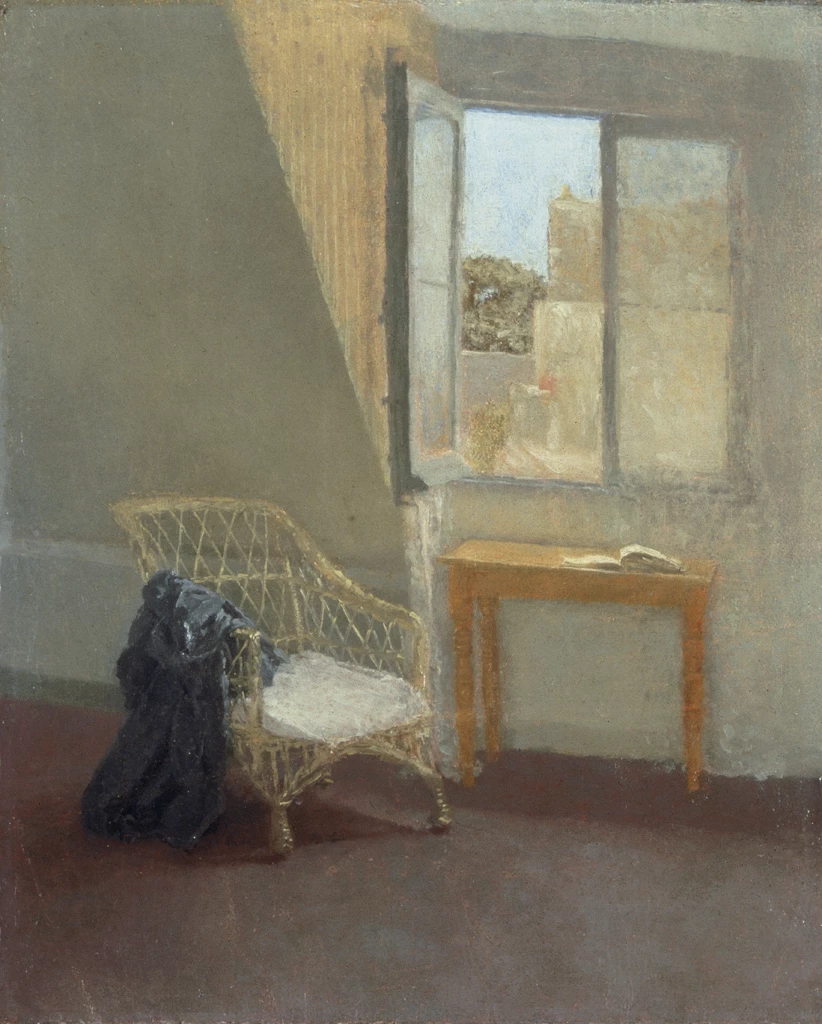
Gwen John

‘I should like to go and live somewhere where I meet nobody I know till I am so strong that people and things could not effect me beyond reason.’

Gwen was born on 22 June 1876 in Haverfordwest to Edward and Augusta John. Growing up, she had one older brother, a younger sister and a younger brother, the artist Augustus John. When their mother died young the family moved to Tenby, where Gwen’s education was placed in the hands of governesses. Her childhood years seemingly left little impression; she later said that nothing important happened to her before she turned 27.

Gwen is well-known for her affair with the sculptor Auguste Rodin, but she had sexual relationships with both men and women over the course of her life. Whilst attending he Slade School of Fine Art in London in the 1890s, she developed passionate feelings for an unknown woman, who ended up disposing herself of Gwen’s affections when she began a relationship with another man. Gwen threatened suicide if she did not break it off. This man eventually returned to his wife, but the love between Gwen the object of her passion had turned to hate.

In 1898 Gwen travelled with a group of friends to what was at the time the centre of artistic culture in the Western World: Paris. This period was a big influence on her art, at the end of which she painted her first self-portrait.

Throughout her life she challenged and defied convention. In 1902 she and a friend, Dorelia McNeil decided to walk to Rome to study there. They slept rough on the streets, and sang and painted in return for meals. If this seems daring now, at a time when women were usually chaperoned everywhere by older relatives it would have been totally unheard of. Gwen was also known for her intense focus on her work. She abhorred distractions and often preferred to work alone in her room, when she would become so absorbed she would forget to eat and rest. All this has contributed to Gwen’s reputation as being a bit of a loner, a hermit. Her surviving letters actually reveal that she enjoyed company, although it is difficult to escape the impression that, had Gwen lived today, she may have been diagnosed as having Asperger’s Syndrome, or something like it.

Gwen met Rodin whilst in Paris again in 1904, and began an affair that lasted some 14 years. During this time, Gwen wrote around 2000 letters to Rodin, would organise her days around his visits, and would sometimes stand outside his house watching for him. Rodin frequently explored female sexuality in his work, and sketched Gwen with one of his assistants in erotic poses. Whilst Gwen was intrigued, she later told Rodin it was insignificant compared to being with him.

In later life Gwen converted to Catholicism. She also fell in love for the last time with an older woman called Véra Oumançoff, who became increasingly irritated with her obsessive attentions and was horrified by her sketching during Mass. In her last years she became increasingly isolated, and in 1939 left Paris carrying her will and burial instructions. When she died she was buried in an unmarked grave, and it was not until  over sixty years later, thanks to a 2015 TV documentary, that the final resting place of one of Wales’ greatest ever female artists was discovered.

‘It is difficult to express oneself in words for painters, isn’t it?’


Sarah Jane Rees//Cranogwen

‘It is a pretence in everybody, men and women alike, to try to be what they are not; and it is a loss for anybody not to be what they are.’

Sarah was born on 9th January 1839 in Llangrannog, Cardiganshire, the town from which she would later take inspiration for her bardic name. In her later autobiographical writings, she claims the birth of a girl was ‘much awaited for’ after two sons, and she was named after her paternal grandmother who lived with them. At 15 years old, Sarah started going her father out at sea. This was not in itself unusual for the time, but Sarah went on to attend schools in New Quay, Cardigan and eventually London, from which she returned with her Master’s Certificate in Navigation, allowing her to captain a vessel anywhere in the world if she chose.

It was at the 1865 Eisteddford that Sarah was catapulted into the limelight, winning a major prize in the ‘song’ category for her poem ‘The Wedding Ring’. It depicts four working class wives reflecting on their marriages, and placed above other established male writers who were ‘disgusted,’ according to the local newspaper. This was just the beginning of her Eisteddford success, winning a prize at Chester the following year and taking the Bardic Chair (the first woman to do so) at the local Aberayron in 1873. It was around this time that Sarah suffered a great personal tragedy. Fanny Rees was a milliner’s daughter who, like Sarah, had published literary works and moved to London for her education. It was there that she had contracted Tuberculosis, and in 1874 she returned to Wales. It was not to her family home she went to, but that of Sarah, in whose arms she died, something that indicates ‘a requited affection stronger than friendship’ according to Sarah’s biographer. Sarah had clearly loved this woman deeply; it was 12 years before she could bring herself to go to Fanny’s grave to lay flowers.

The success of her writing enabled Sarah to leave her teaching profession. She published a book of poems under her bardic name Cranogwen, which she dedicated to her mother, and became the editor of the Welsh language women’s journal Y Frythones. She often used this position to give advice to her readers regarding marriage and the role of women, and tirelessly promoted women’s writing and education. When two women from Dolgellau asked her advice regarding the suitability of female preachers, Sarah replied in a typically firm fashion: ‘Everyone should preach the Gospel who feels a desire to do so, and can do so, and can get people to listen.’ Her life had never been defined by traditional gender roles, so she would be unlikely to give any other response. At this time, and indeed for most of life, she had been in a happy same sex relationship with Jane Thomas, to whom she addressed one of her most famous poems, ‘My Friend’: ‘I love you, my beloved Venus, my Ogwen.’ At the time Ogwen was the female subject of a popular love ballad. Sarah clearly puts herself in the role of the male lover, leaving no doubts about the nature of their relationship.

Despite her sexuality, Sarah was a committed Christian, seeing human love as being ‘beamed from the warmth of the divine breast.’ She was a frequent preacher, though she was often relegated to using the deacon’s pew due to her gender, and at 60 years old founded the South Wales Women’s Temperance Union, which by the time of her death had 140 branches across Wales. She died in 1916, aged 81. The Union set up a shelter for homeless women and girls in her memory in 1922, in recognition of her unending efforts to improve the lives of Welsh women.

‘Gender difference is nothing in the world.’


Jan Morris

‘I was three or perhaps four years old when I realised I have been born into the wrong body, and should really be a girl…it is the earliest moment of my life.’

Jan was born James Humphrey Morris to a Welsh father and an English mother in Clevedon, Somerset, on 2nd October 1926. She was aware of being transgender from an early age, and remembers as a child at Catherine Choir School in Oxford praying to God to make her a girl. After graduating from Oxford University, she had a brief career as a soldier in the closing months of the Second World War. She became a well-known journalist, built on the back of breaking the news of Hillary and Norgay’s successful ascent of Everest on the day of the Queen’s coronation. When reporting on the Suez Crisis, she provided the first irrefutable proof of collusion between France and Israel in invading Egyptian territory.

But the feeling of being born into the wrong body remained. Whilst still living as James she had married; her wife Elizabeth knew from the beginning that she was transgender and has been a lifelong support. They went on to have five children, one of whom died in infancy. With her wife by her side, Jan began taking steps towards gender reassignment, though many tried to convince her that she needed to be cured, or that she was really homosexual. Having been referred to Charing Cross, she was told that she and Elizabeth would have to get divorced. Jan adamantly refused. Eventually, in 1972 in Morocco, ‘James’ underwent surgery and officially became Jan Morris. Two years later her landmark book Conundrum was published, one of the first autobiographies to discuss transgender issues and gender reassignment.

Whilst she acknowledges that the question of her gender overshadowed her work at first, she has gone on to write around 46 books, including the Pax Britannica trilogy. She does not see her surgery as having changed her writing, in fact, ‘it changed me far less than I thought it had.’ In the past, other feminists have criticised her for simplifying traits associated with gender, something she acknowledges, and now says her views have matured. In 2008 she and Elizabeth entered into a civil partnership in Pwllheli, close to where they now live.

Morris has now fully adopted Wales, or perhaps Wales has adopted her. After moving to Wales, she was adopted into the Gorsedd of Bards in 1993, which she sees as one of the proudest moments of her life. She considers herself a Welsh nationalist, although she accepted a CBE in 1999 out of respect. Her picture of Wales sometimes seems to border on the romanticised, the fantastical. Just before her reassignment surgery she spent the summer in North Wales, and would often visit a secluded lake: ‘There I would take my clothes off, and stand for a moment like a figure of mythology…I fell into the pool’s embrace, [and] sometimes I thought the fable might well end there, as it would in the best Welsh fairy tales.’

Jan now rarely speaks about being transgender and does not join with LGBT activism, preferring to be seen first and foremost as a writer. Last year, at the age of 91, she published another book, Battleship Yamato. She has also written a book of allegories, to be published after her death.

“Looking back on my life, of course I had this feeling that I was in the wrong sex and I had to get out of it. But it didn’t occur to me then that the ultimate object might be to be both. And the next object is to be neither.”


Angus McBean

“Kings and queens, princesses sleeping or otherwise in ivory towers, or in enchanted castles with satins, furs and cloths of gold...and always happy endings.”

Angus was born on 8th June 1904 in Newbridge, Monmouthshire, in what seems like a far cry from London’s theatrical scene of the 1930s and 1940s that would make him one of the most influential photographers of the 20th Century. His father, Clement, was a chartered surveyor. He was educated at Monmouth Grammar School and Newport Technical College, and in his late teenage years worked as a bank clerk. However, his childhood interest in the makeup of a visiting actress and the purchase of an early Kodak perhaps hinted at what was to come. After being introduced to amateur dramatics by an aunt, he began designing posters, costumes and masks for the first time.

His father died at 47 years old, having contracted TB when fighting in the trenches, and the family moved to London. Angus was briefly married during this time (1923-24) to Helena Wood, although given that Angus was a homosexual, it is unsurprising that they separated a year later with no children.

He began working at Liberty’s Department store in London, where he developed the eccentric style of dress that he became known for. After leaving Liberty’s he attracted the attention of society photographer Hugh Cecil, who took him on as an assistant and taught him about the art of photographic portraits. His first job as a theatre photographer was for The Happy Hypocrite at His Majesty’s Theatre in 1936, starring Ivor Novello. The intensely dramatic photographs that he produced were unlike anything seen before.

It was Angus who took photographs during the now lauded years of the late 1930s at the Old Vic, which saw Laurence Olivier’s first performances in Macbeth, Hamlet and Henry V. His other subjects included Vivien Leigh, who became a muse of his. It was Angus’ photograph that was sent to David Selznick, preparing to cast Scarlett O’Hara in Gone with the Wind. He never photographed the Queen, reporting that he would have been ‘shaking with fear,’ and never moved into society photographs like his mentor Cecil, calling it all ‘a Bond Street Game I never played.’ He also became popular for his ability to retouch the photographs he took.

It was in 1942 that he was sentenced to four years in prison for homosexual practices. It might be expected that this would have meant the ruin of his life; he reportedly collapsed in the dock as his sentence was read out. However, the commissions were still there for accepting and Angus carried on much the same after his release. It was a similar case with his friend, the legendary actor John Gielgud who was arrested in 1953 for cruising for sex in a public toilet. He feared the disgrace would end his career, but the audience of his next performance gave him a standing ovation. This is probably reflective of how much more liberal the arts world was, then as now, compared with other sections of society. After his release, Angus also appeared as a witness at the trial of his friend and lover Quentin Crisp, who had been charged with soliciting.

Angus passed away in 1990. His photographs are now held by, among others, the Harvard Theatre Collection, the Victoria and Albert Museum, the British Library, the National Portrait Gallery and the Shakespeare Library.

‘Put the camera into the hands of an artist and a very different kind of photography will emerge.’