Taking part in ‘take pART' 2026 – a young artist’s perspective, Cara Walker

Cara Walker, 8 October 2026


While the National Slate Museum is temporarily closed for a major redevelopment project, the team has been busy travelling with our ‘pop‑ups’ and attending local and national events. They have been trialling and piloting activities that will be woven into the redevelopment and sharing those plans with our communities.  Read below to see how freelance opportunities were offered to creative practitioners as part of the Amgueddfa Cymru Producers programme during the annual ‘take pART' event at Venue Cymru.

Planning and preparation

I undertook a virtual tour of the collection centre in Bangor. This was very informative and gave me a good scope of possibilities for workshops. Looking at things like a switchboard telephone with etched names by female workers; wagons created by groups of quarrymen that would transport them to and from the quarry - these would be decorated by the groups of men with each wagon having a distinct identity; a plate carefully constructed into strips of slate, each coloured by their diverse environments. Looking beyond the practicalities like machinery and tools, I was interested in the creative pursuits the quarrymen would apply their slate splitting skills. Most notably there were numerous slate carvings created by off-duty quarrymen. Contrastingly these works were intricate and detailed, they felt slower than their traditional slate splitting work. Beautiful structures and slabs carved into delicate designs - using traditional tools.


Initial Individual Ideas

Some initial ideas I had were inspired by the quarrymen wagons- Malwoden Lwyd (grey snail), was painted along the side of one. I liked the idea of customising a collective object- especially one that could be experienced by being sat inside. Ambitiously, I thought about creating a wagon that participants can decorate and sit inside. I realised quickly this wouldn’t be possible due to firstly the space for every participant to have to contribute would be limited, thus raising the question of multiple trolleys- this became a logistical and practical nightmare in my head. However, with the idea of collective contribution still in mind, a banner that participants can add to together – reminiscent of a large-scale quarryman sash. Like the wagons - the idea that this thing is bigger than a take-home element, something that could be hung or displayed together felt exciting.

First meet with Iza

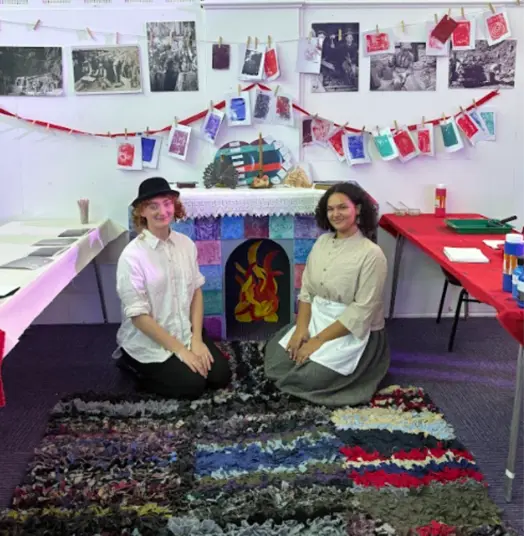
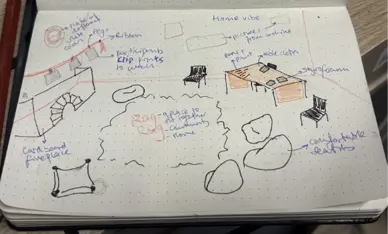
After my initial tour and brainstorm, me and Iza, a movement Artist who I had the pleasure of collaborating on this project with, had our first meeting online. We shared our findings and considered our cross overs - it seemed we had both highlighted the slate carvings, the women who had etched their names into the telephone switchboard and the idea of a banner. Through this we wanted to explore the idea of women and quarry men outside of work, looking more intimately into their lives and what they choose to do in their free time. This was cemented after Iza mentioned a fireplace they had made as a prop for a window display which would create a great living room environment.

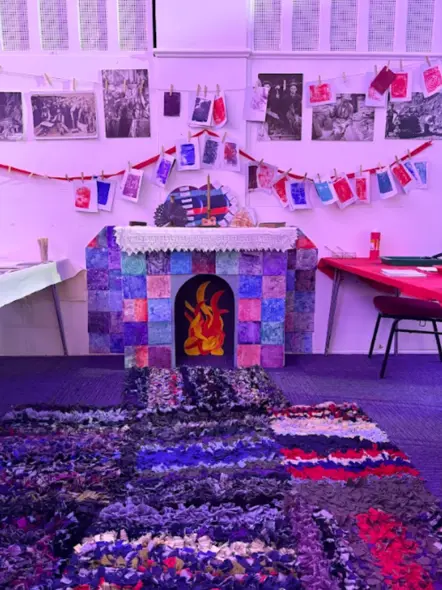
The set up of a living room allowed more storytelling and education to happen naturally. We thought about the importance of situation and how this guides people into an activity e.g. being sat around a circle encourages making together rather than in rowed desks which may feel more formal and independent. Additionally, what else can entice people into a space? Pictures on the wall can draw people in (if positioned right) and give them permission to come take a closer look. To further fill the room, we wanted to add rag rugs traditionally made by wives from old rags, hanging pictures of quarrymen as if they were our family portraits, along with pieces from the collection as ornaments on the mantle.

Final Iteration

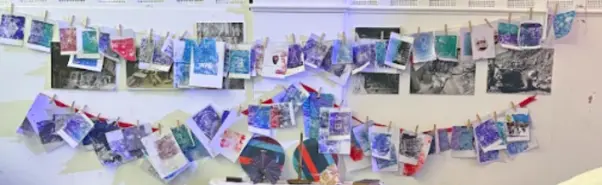
For the Final iteration we were able to include almost all elements of our design. As you can see below, some beautiful rag rugs were brought down which re-instated the comfort felt from a living room. We had red ribbon hung above the mantle to hang participants printed outcomes. Red ribbon was a reoccurring symbol we encountered in our research found on banners and memberships, so we wanted to include this here too.

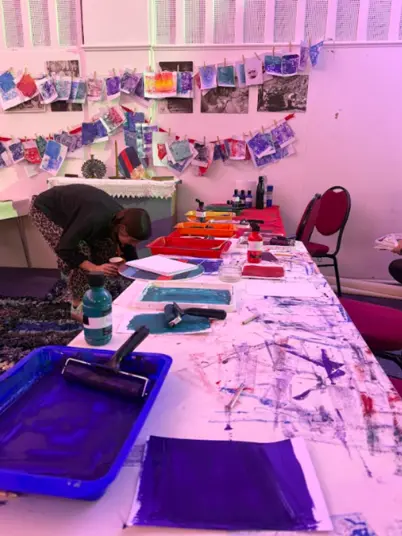
Due to the fast-paced environment that the take Part event is – it wasn’t practical to organise a steady flow of designing and printing in a circle format on the floor. Instead, we had two tables parallel to each other, one dry table for etching designs onto. Here we would explain and introduce what slate carvings were traditionally. Referencing the tools brought by Chloe and Lowri that quarrymen would have used. The participants instead used pencils, sticks and mini wooden hammers to emulate the traditional process. We also provided example of slate carving designs that could be used as inspiration.

Participants would then move on to the paint table where they could choose a colour based on the diverse colours of the plate made by different colours of slate. This Slate plate became the basis for the printing, not only for ease of accommodating many people with limited trays. We did this also to educate people who would pass through, many didn’t realise that slate could vary in colour like this. This also created a relatable element as many young people recognised names like Penrhyn as areas they were from.

Outcomes from print workshop

Overall the workshop was a great success, with over 300 participants total! We had some lovely interactions with young people wanting to experiment with the possibilities of print like layering and using multiple colours. We also had a great response from parents who also wanted to get involved and we encouraged them to create their own prints too.  


The redevelopment project of the National Slate Museum is funded by the National Lottery Heritage Fund, UK Government via Gwynedd Council as part of the Llewyrch o’r Llechi project, Welsh Government including the Community Facilities programme, the Wolfson Foundation, The Garfield Weston Foundation, and other funders.
Taking part in ‘take pART' 2026 – a young artist’s perspective, Iza Jem

Iza Jem, 8 October 2026

While the National Slate Museum is temporarily closed for a major redevelopment project, the team has been busy travelling with our ‘pop‑ups’ and attending local and national events. They have been trialling and piloting activities that will be woven into the redevelopment and sharing those plans with our communities.  Read below to see how freelance opportunities were offered to creative practitioners as part of the Amgueddfa Cymru Producers programme during the annual ‘take pART' event at Venue Cymru.

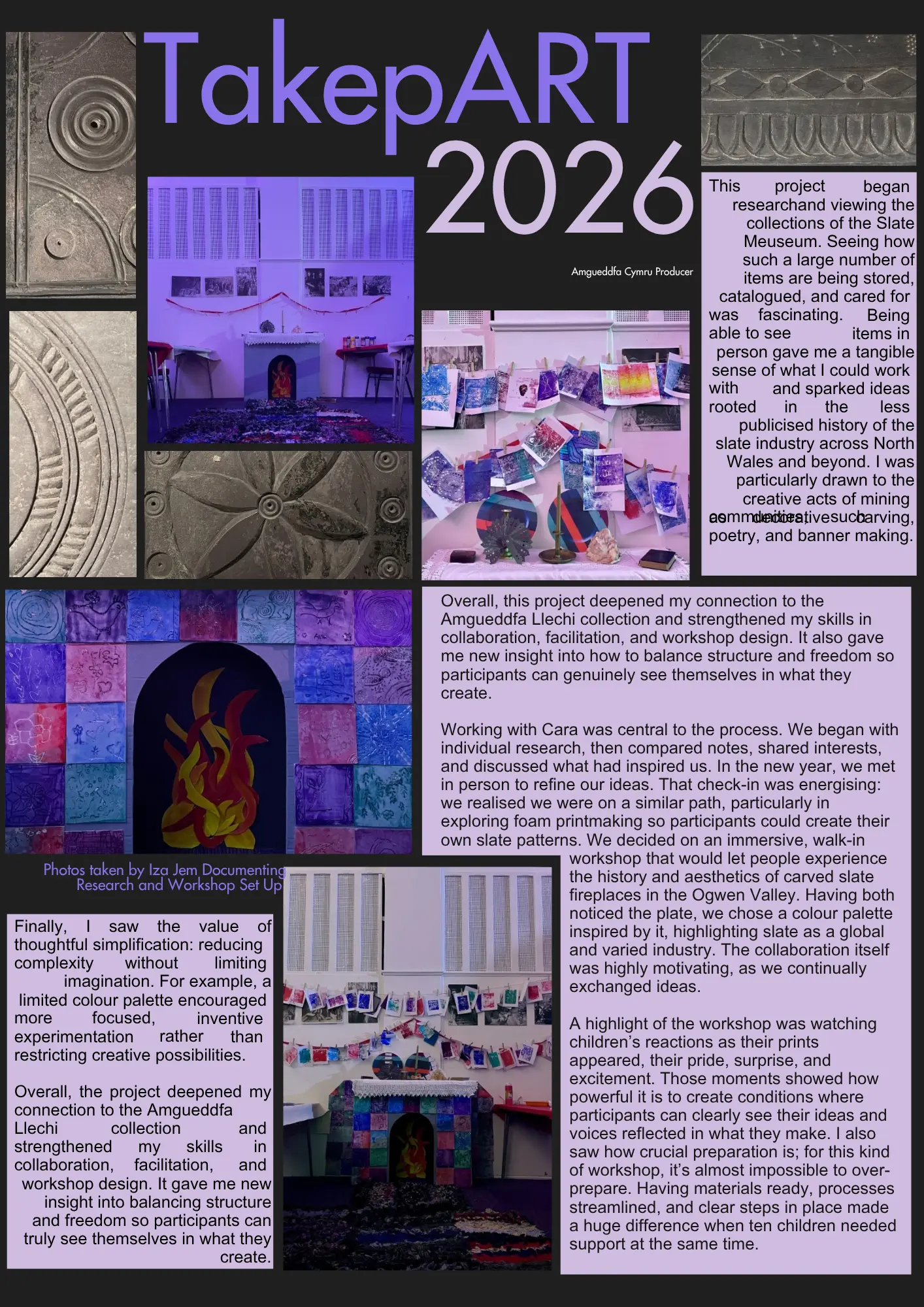
This project began research and viewing the collections of the Slate Museum. Seeing how such many items are being stored, catalogued, and cared for was fascinating. Being able to see items in person gave me a tangible sense of what I could work with, and sparked ideas rooted in the less publicised history of the slate industry across North Wales and beyond. I was particularly drawn to the creative acts of mining communities, such as decorative carving, poetry, and banner making.

Working with Cara was central to the process. We began with individual research, then compared notes, shared interests, and discussed what had inspired us. In the new year, we met in person to refine our ideas. That check-in was energising we realised we were on a similar path, particularly in exploring foam printmaking so participants could create their own slate patterns. We decided on an immersive, walk-in workshop that would let people experience the history and aesthetics of carved slate fireplaces in the Ogwen Valley. Having both noticed the plate, we chose a colour palette inspired by it, highlighting slate as a global and varied industry. The collaboration itself was highly motivating, as we continually exchanged ideas. A highlight of the workshop was watching continually exchanged ideas.  

A highlight of the workshop was watching children’s reactions as their prints appeared, their pride, surprise, and excitement. Those moments showed how powerful it is to create conditions where participants can clearly see their ideas and voices reflected in what they make. I also saw how crucial preparation is; for this kind of workshop, it’s almost impossible to over- prepare. Having materials ready, processes streamlined, and clear steps in place made a huge difference when ten children needed support at the same time.

Finally, I saw the value of thoughtful simplification: reducing complexity without limiting imagination. For example, a limited colour palette encouraged more focused, inventive experimentation rather than restricting creative possibilities.  

Overall, the project deepened my connection to the Amgueddfa Lechi collection and strengthened my skills in collaboration, facilitation, and workshop design. It gave me new insight into balancing structure and freedom so participants can truly see themselves in what they create. 

The redevelopment project of the National Slate Museum is funded by the National Lottery Heritage Fund, UK Government via Gwynedd Council as part of the Llewyrch o’r Llechi project, Welsh Government including the Community Facilities programme, the Wolfson Foundation, The Garfield Weston Foundation, and other funders.
Slate quarries in the landscape and their names

Siân Shakespear, Engagement and Volunteering Coordinator, 8 October 2026

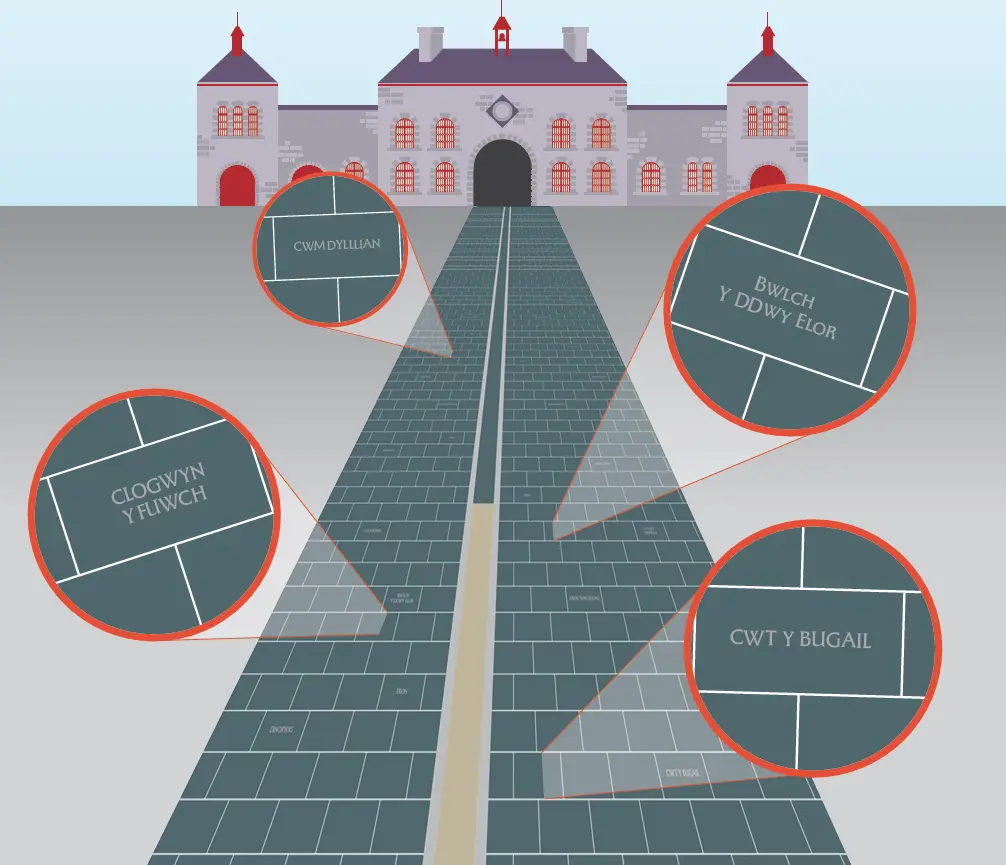
The National Slate Museum is keen to celebrate the wealth of names for slate quarries scattered throughout Wales by carving their names into a slate path which will lead to the gateway of the refurbished Museum. Anyone who explores the many corners of Wales will easily notice the remains of the huge effort made by previous generations to dig and extract slate rock from the ground and transform it into slates for various uses. Some of these remains can be very obvious since the quarrymen reshaped the landscape by blasting the rock and pouring waste into massive tips. And yet the remains of some of the quarries are mere ripples on the face of the earth since they weren’t worked for long enough to produce much waste nor create the need for numerous holes, addits and a transport system. Whatever the size and substance of the physical remains another clue can point to the presence of a quarry and that is its name.


Most of the names are Welsh and they frequently originate from a nearby landscape feature e.g. Ffynnon y Gog – cuckoo spring, Dŵr Oer – cold water, Pompren – wooden bridge a Rhiw Gwreiddyn – hill of the root. Some of them have been named after a person such as Doctor Hughes, Chwarel Gethin – Gethin’s quarry, Mathew’s, Palmerston’s, Vivian and Hollands. Several of the names simply follow the name of the location or area where they reside such as Tal y Fan, Nantlle Vale, Hafod y Llan, Garreg Fawr and Deeside. It may be difficult to trace exactly why some quarries have been given a specific name, but the name itself is so well known that it is synonymous with a slate quarry even without the prefix ‘chwarel’ or quarry. We could refer to Dorothea, Glynrhonwy, Llechwedd, Prince of Wales and Alexandra in this regard.


More than anything, the wealth of quarry names present in various corners of Wales is testament to the sweat and labour expended by men to produce and export slate to the four corners of the world. Over the years historians and experts have recorded the majority of the quarries in various papers and books. The Slate Museum redevelopment project is keen to celebrate this wealth by carving as many names as possible into a slate path which will lead visitors to the gateway. After poring over various sources Museum staff have gathered a list of 196 names which include names from the area of the World Heritage Site in Northwest Wales in addition to Denbighshire, Pembrokeshire, Radnorshire and Carmarthenshire. However, we need to ensure that the path is as representative and comprehensive as possible and so we are calling on local knowledgeable people the length and breadth of Wales to contribute names of lesser-known quarries here: 
 

Contribute to our list of Welsh slate quarry names here: Google Forms

Find out more here: Our website


What can you find in the garden?

Professor Plant, 25 August 2026

Professor Plant here!

I hope you are enjoying your summer break or if you have already returned to school, I hope you are looking forward to participating in this year’s Spring Bulb Climate Investigation!

If you are looking for an exciting activity to do beforehand, take a look at our Wildlife Spotter and see what animals and critters you can find in your area!

Catch up soon! 

Shopping In The Past

Catherine Pinkerton, Group Retail Manager, 18 August 2026

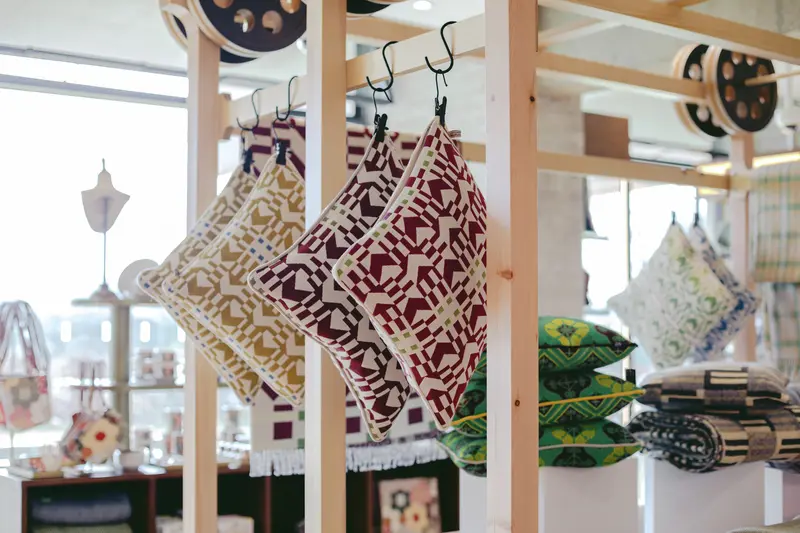
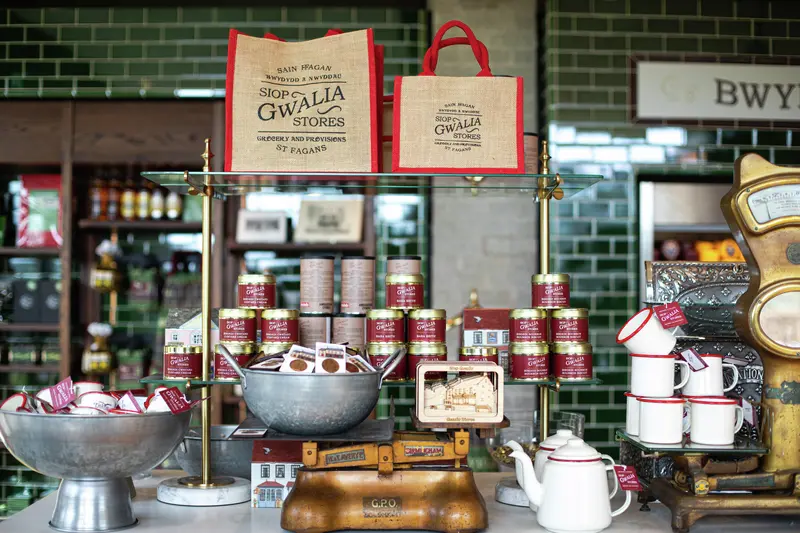
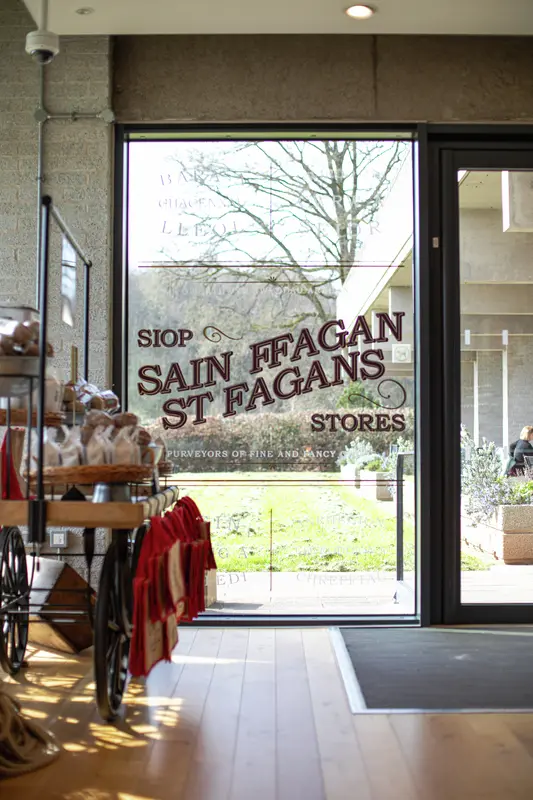
This year our museum shop underwent the biggest transformation in its history, to create a shop that truly represents St Fagans and its collections and allows our visitors to take a piece of St Fagans home with them!

One of the most special things about St Fagans is the variety of buildings and exhibits, we therefore decided to turn the museum shop into one inspired by a department store. Rather than traditional departments such as toys or food, each area of our shop represents a different building or exhibit from across the museum. We have even created a soundscape so visitors can hear the noises of the school playground, farm or sweet shop as they shop from those department.

Working with many local and Welsh suppliers, we have created over 230 new products inspired by the museum. They are packed with stories; from cakes made by the relatives of the original Gwalia Stores baker to an unfinished patchwork from the collection that has inspired a range of handbags and purses. From love spoons to Welsh cakes, items handmade by our craftspeople to school stationery, the shop is an experience in itself. 

We hope visitors will be able to enjoy the museum shop as a ‘best of’ experience; all the highlights of a visit to St Fagans represented through a huge variety of products, and what’s better, every purchase supports the museum.

It’s not just the museum shop that we have been developing though, over at Siop Losin we have created a 1920s inspired period shopping experience. Visitors can now admire the 1920s inspired displays, meet staff in costume and choose from a huge selection of traditional sweets that are weighed out in front of their very eyes! The smells, sights and sound of the past have been recreated through historical research, and we’ve worked with small artisan and Welsh businesses to allow visitors to taste the past now too! The packaging and designs of the products are all inspired by 1920s confectionery and a Siop Losin tote bag has become a sought-after item.

We hope you’ll be able to join us for a fun day out across the summer and call by Siop Losin and the museum shop to experience a taste of the past!