: Natural History

Fire burn and cauldron bubble!

Jennifer Gallichan, 5 November 2014

‘From ghoulies and ghosties, and long-leggedy beasties, and things that go bump in the night…’

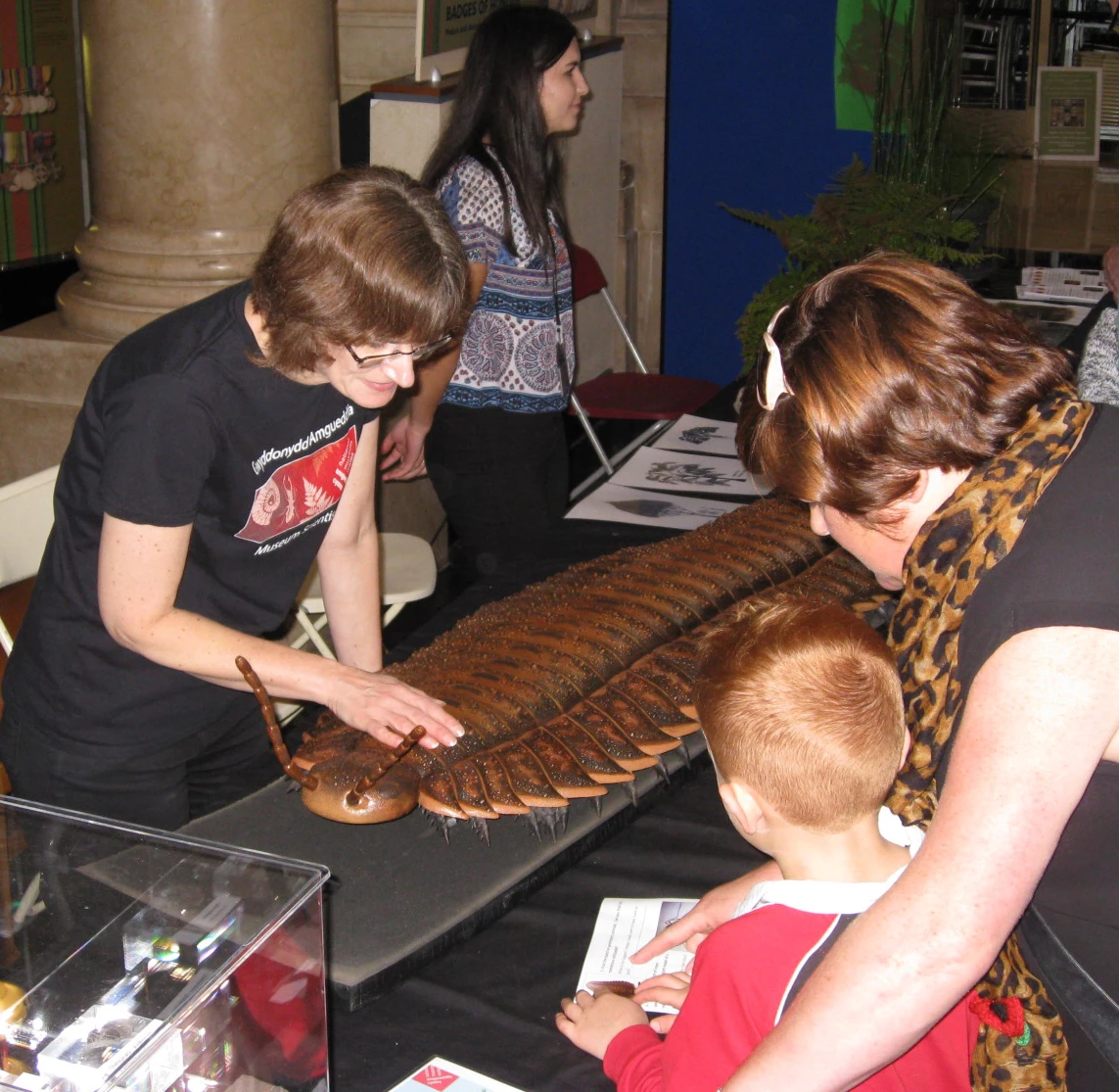
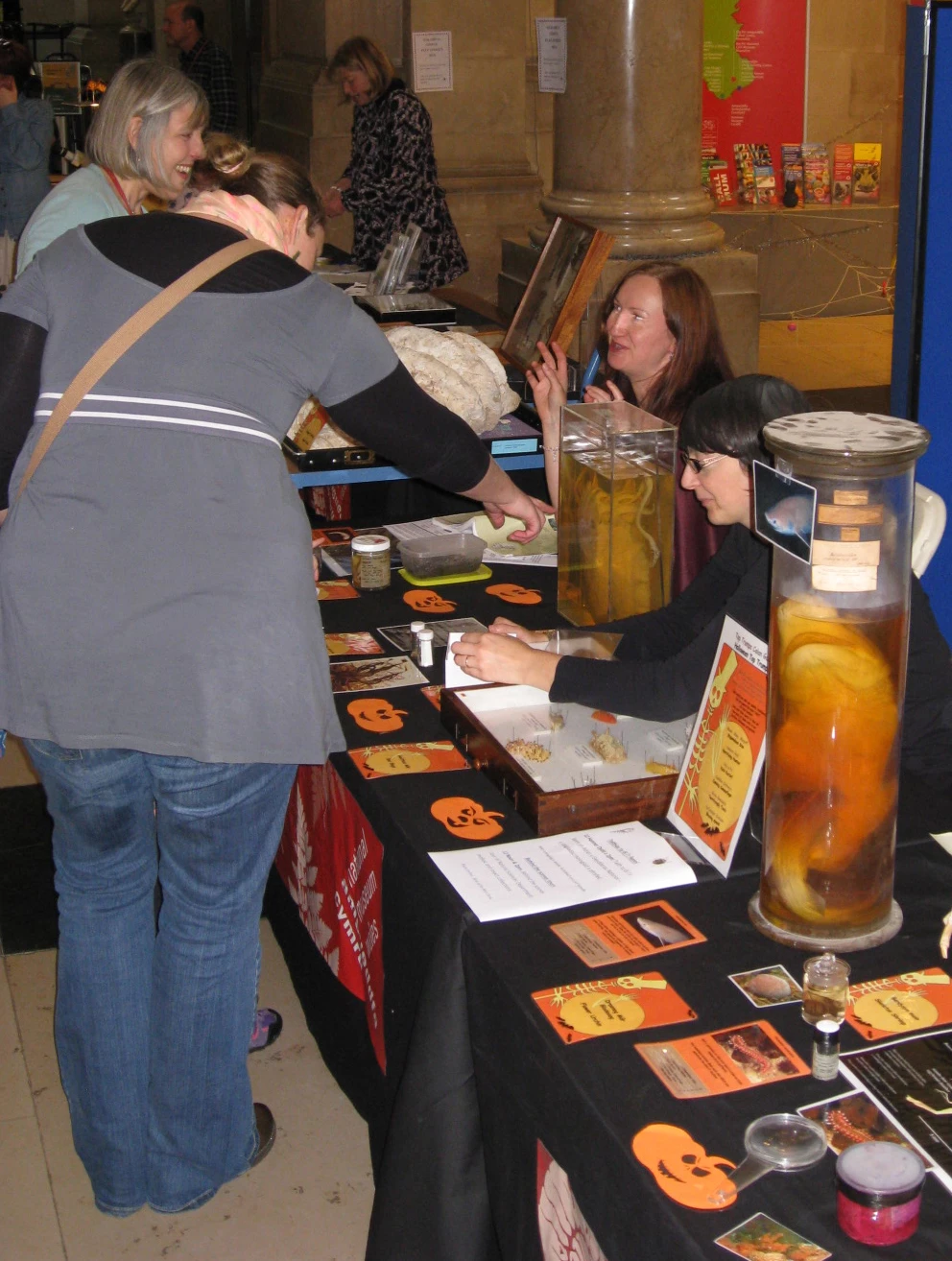
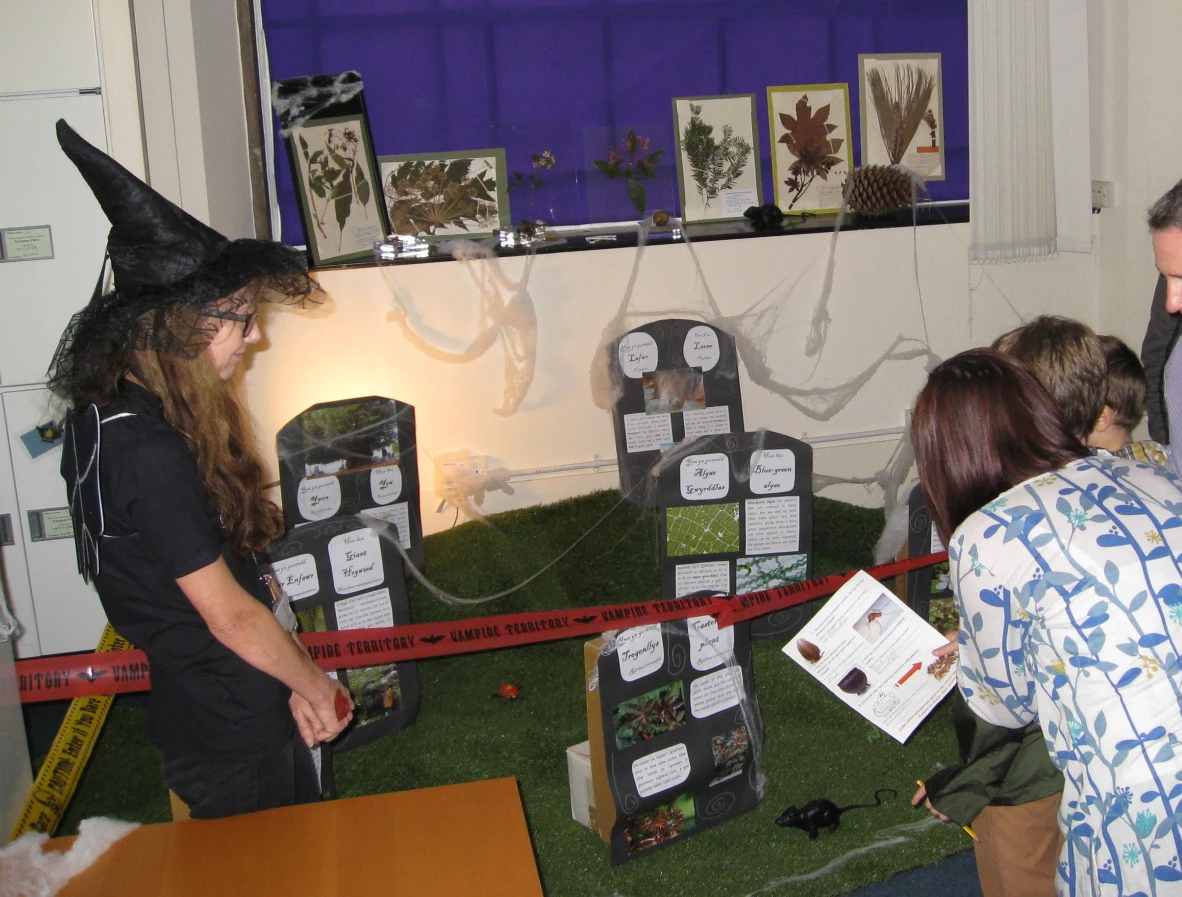
Last Friday, Natural Sciences staff celebrated Halloween in grand style with a host of truly ghoulish and grizzly specimens out in the main hall at National Museum Cardiff. The National Herbarium was transformed into a ghoul filled graveyard, and a large mosquito model leered down from the entomology (insects) stand, any moment threatening to jump on the jugular of an unsuspecting member of the public. Younger visitors to the OPAL stand were encouraged to stealthily walk through a spider’s web without disturbing its occupant, and learn about glow in the dark scorpions. Meanwhile the biggest creepy crawly that ever lived, Arthropleura, a 300 million year old extinct giant millipede, escaped from the Palaeontology (fossil) stand and went off to explore the Impressionist galleries.

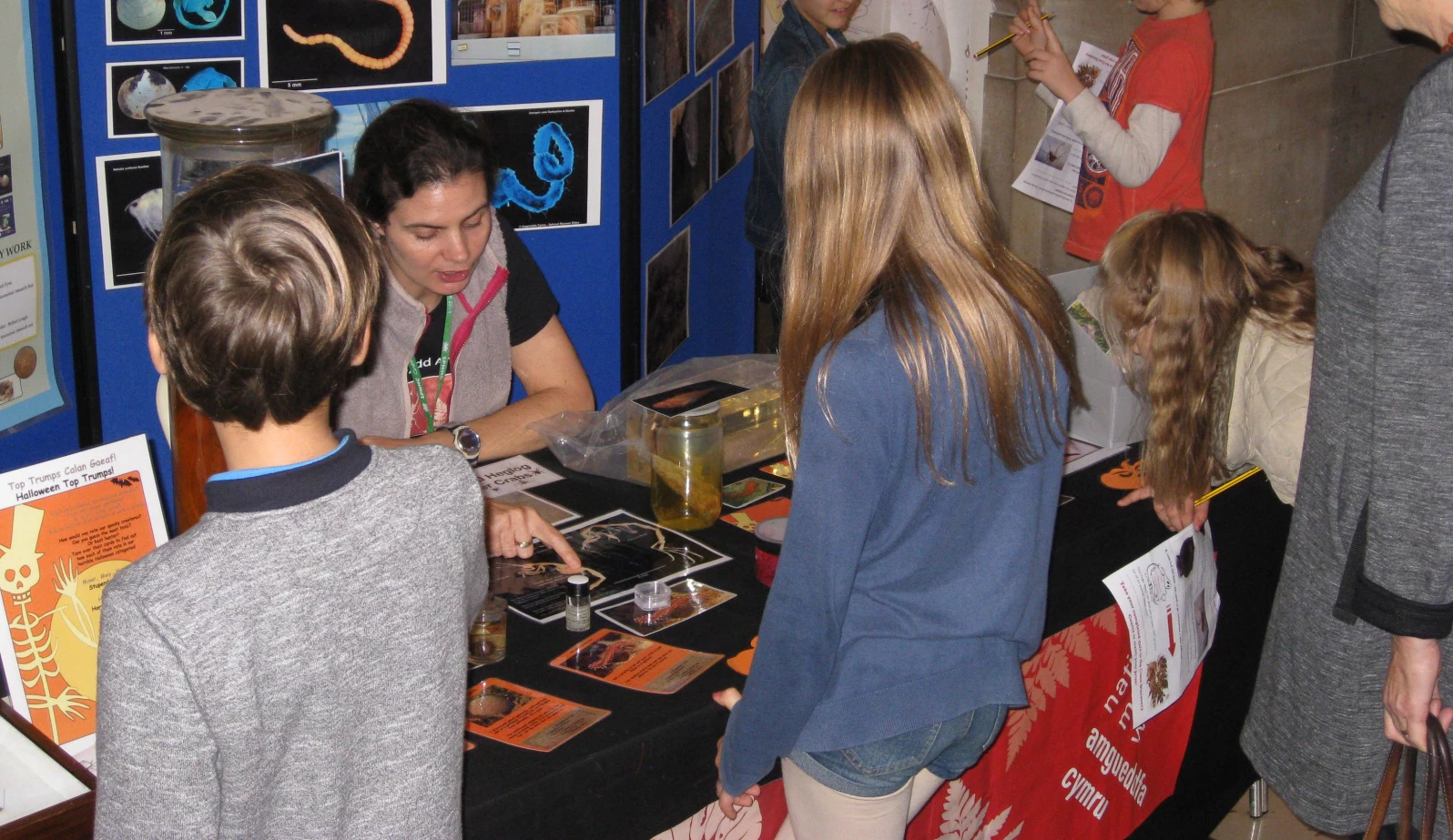
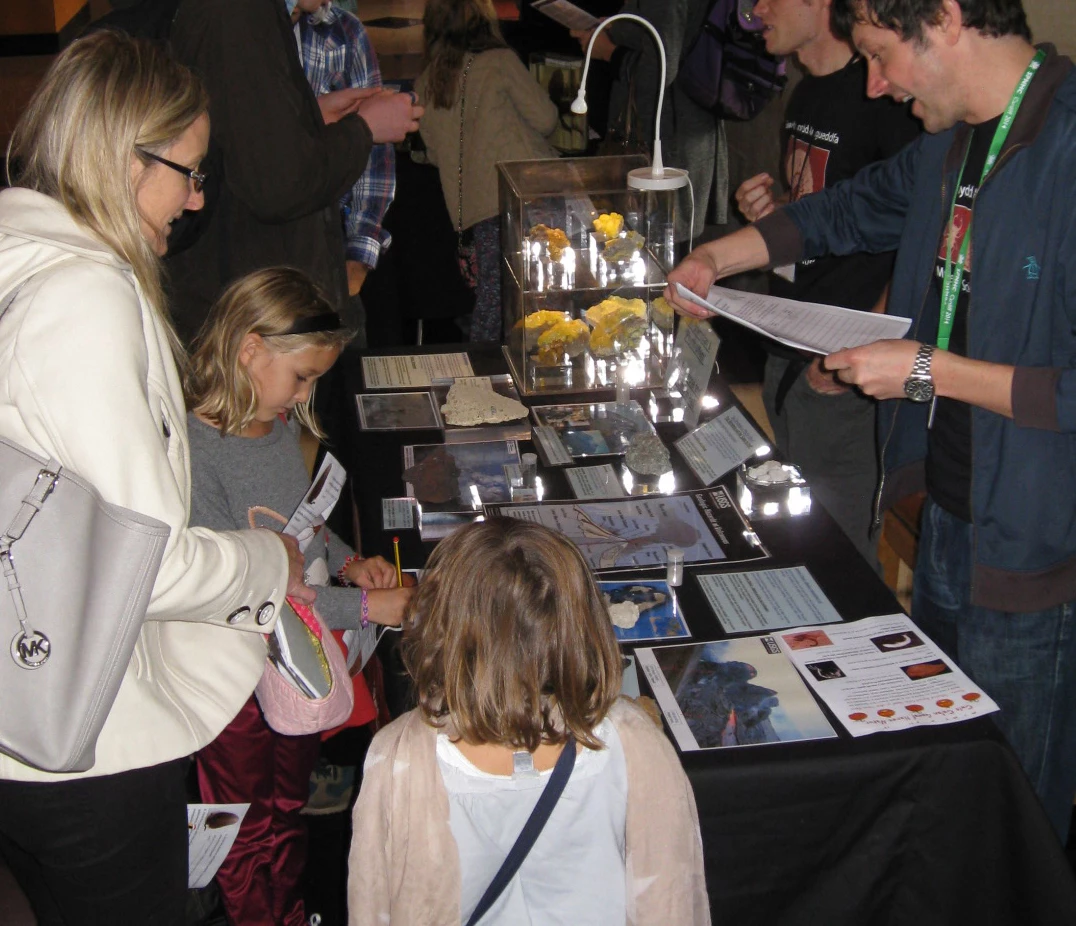
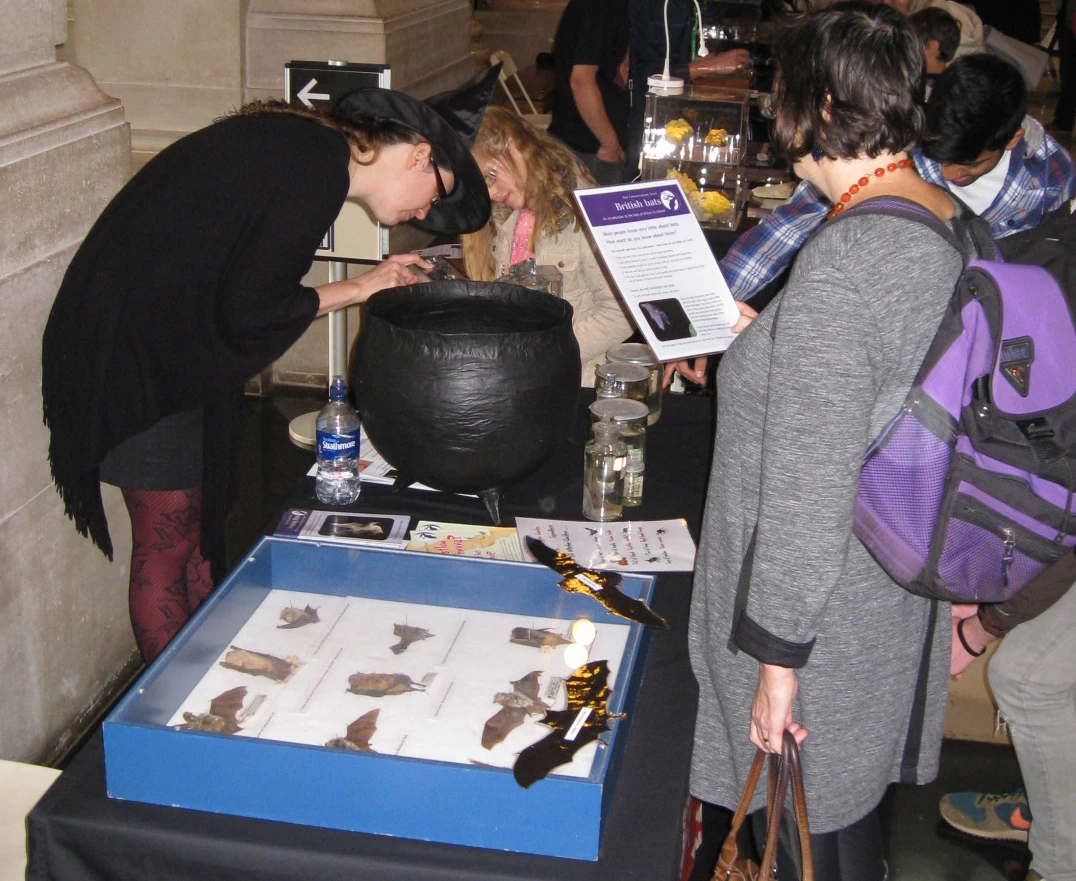
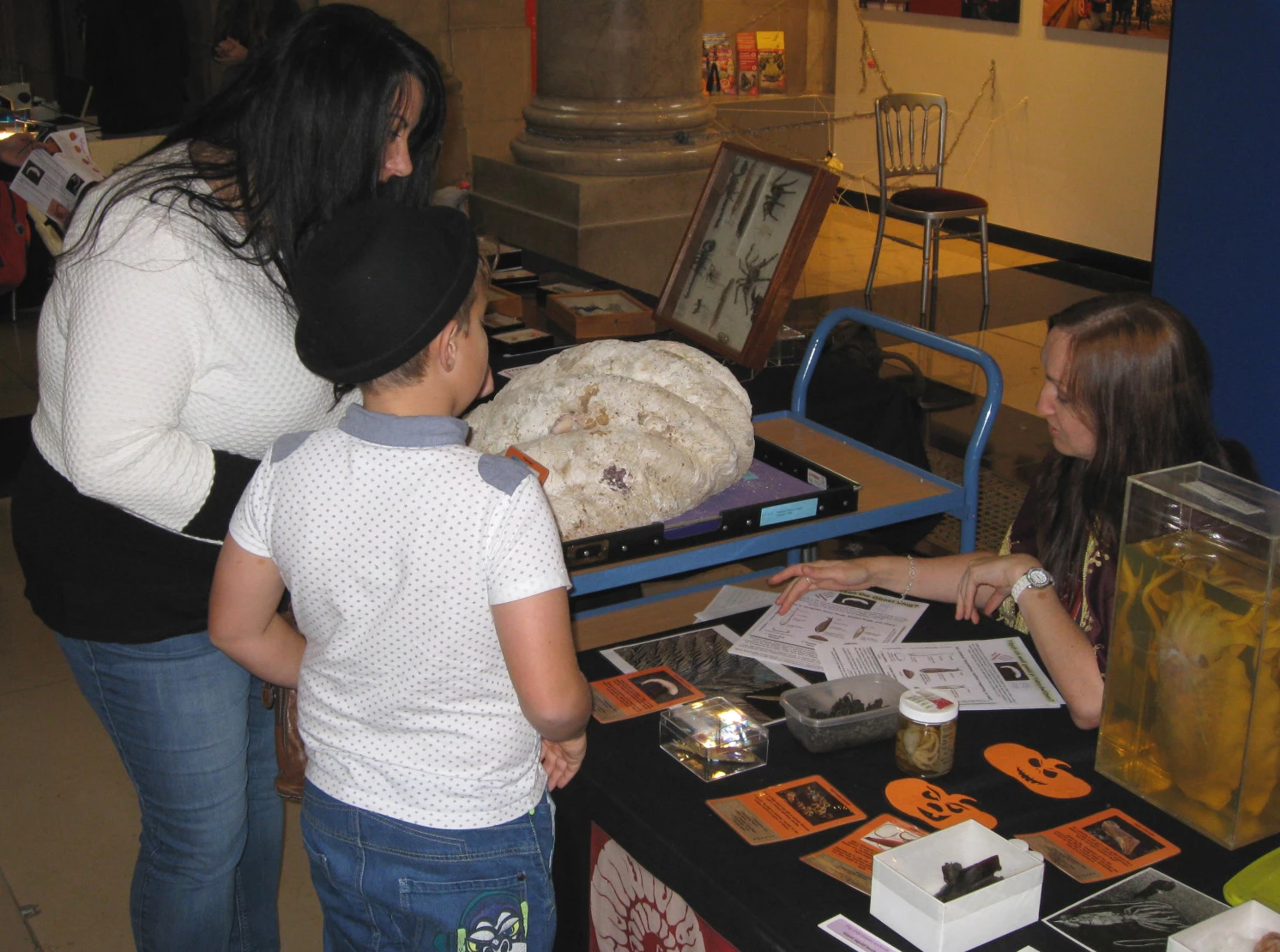
Despite all of the fun, visitors gained an insight about some of the 6 million specimens that are held behind the scenes at the museum, and the incredible work of the staff that care for them.  From bats to giant squid, volcanic rocks to fungi, we covered them all. One of my favourite parts of the day was taking visitors behind the scenes on tours of the Entomology and Molluscan sections to see insects and shells and the Spirit store (not ghosts, but where we keep our specimens preserved in fluid such as sea worms and crabs). It is such a rewarding experience to see the excitement of people visiting the collections for the first time, and proudly talking about all of the great research work that we do.

If you missed it, don’t worry! We have a whole host of open days and curator led sessions coming up. See our What’s Onto find out more!
Museum scientists pop up at Fairwater Library

Lucy McCobb, 4 November 2014

Museum scientists were out and about during half-term week, when the I Spy…Nature pop-up museum paid a visit to Fairwater Library on 30th October.  Curators from the Botany, Invertebrate Diversity and Palaeontology sections took along specimens from their collection areas to show the public, along with a microscope and quizzes to encourage them to look even closer.

Ingrid Jüttner challenged people to identify as many trees as they could, using beautiful displays of freshly-pressed leaves and fruits.  This activity was a big hit with grown-ups, and it was very pleasing to see so many parents and grandparents encouraging children to learn more about these important plants, which bring our living spaces to life.

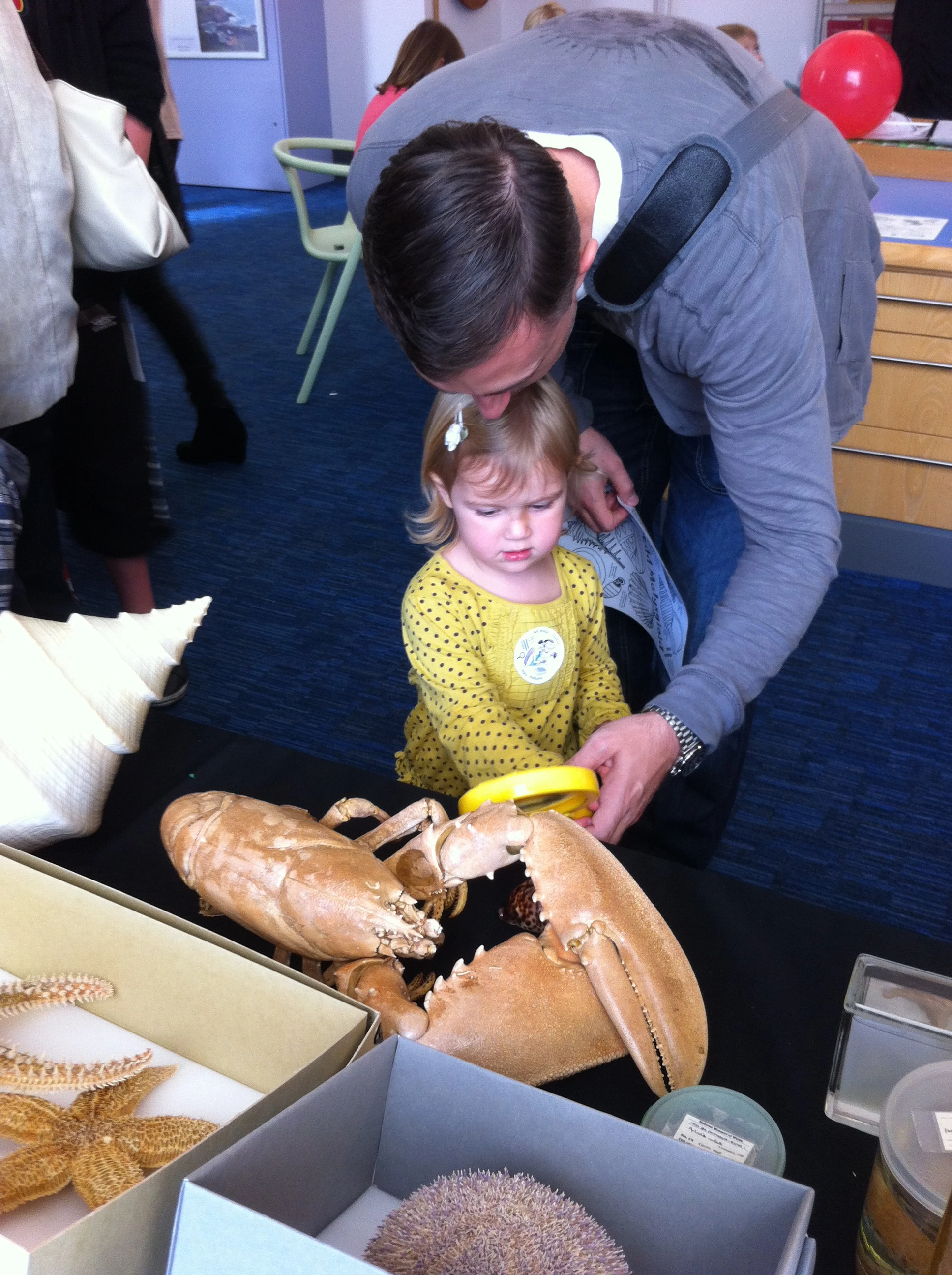
The library’s meeting room became temporary home to an impressive array of marine and mollusc specimens from the Invertebrate Diversity section.  People were fascinated by the creatures on display, which evoked a range of reactions (including ‘they’re really gross!’) depending on how they felt about slugs and worms!  Teresa Darbyshire showed some of the diversity of life found around our shores, with beautiful sea shells, lobster, starfish, and a pickled octopus and giant sea worm.  Visitors tried their hands at identifying shells using a key, all good training for trips to the beach!  Ben Rowson challenged people to identify mystery objects under the microscope, and introduced them to slug identification using his recently published book and life-like models.

Lucy McCobb showed visitors a range of fossils from different periods of the Earth’s history, ranging from an Ice Age mastodon tooth and horse’s leg bone, through Jurassic ammonites and ichthyosaur bones, to trilobites, which are among Wales’s oldest fossils.  The ‘what’s in a name?’ quiz was popular with children, and asked them to use the meanings of scientific names to match up the name with the correct fossil.

This was I Spy..Nature's  first venture into libraries, and showed that they have great potential as venues for taking the Museum’s collections and experts out into communities.

Unknown Wales 2014

Christopher Cleal, 23 October 2014

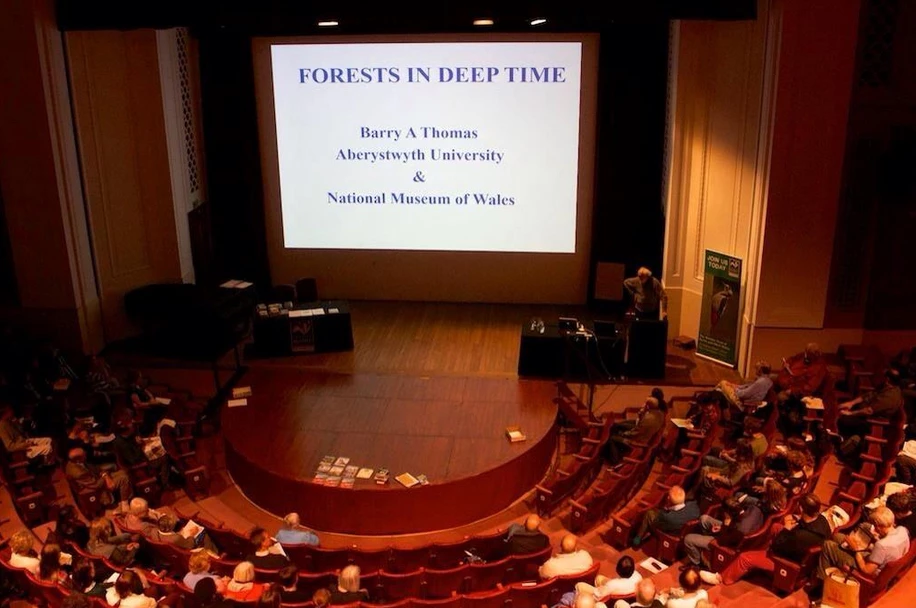
Unknown Wales is a free annual public event organised by Amgueddfa Cymru’s Department of Natural Sciences in collaboration with the Wildlife Trust for South and West Wales, to highlight the natural history treasures found in Wales.  It allows the museum to tell a wide general audience about the collaborative efforts that we are a party to, fighting to protect the wildlife and its habitats across the country.

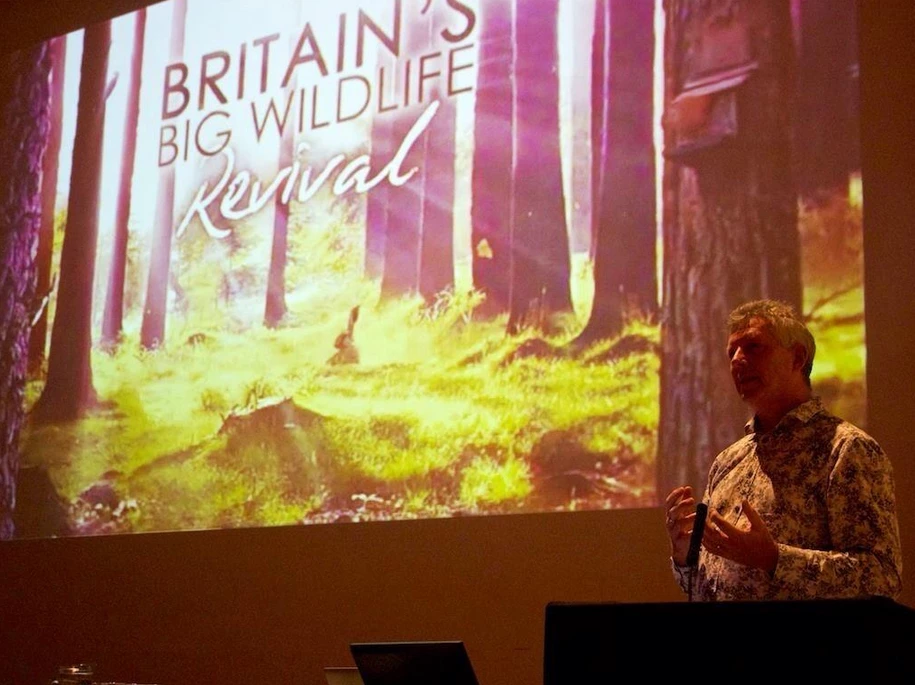
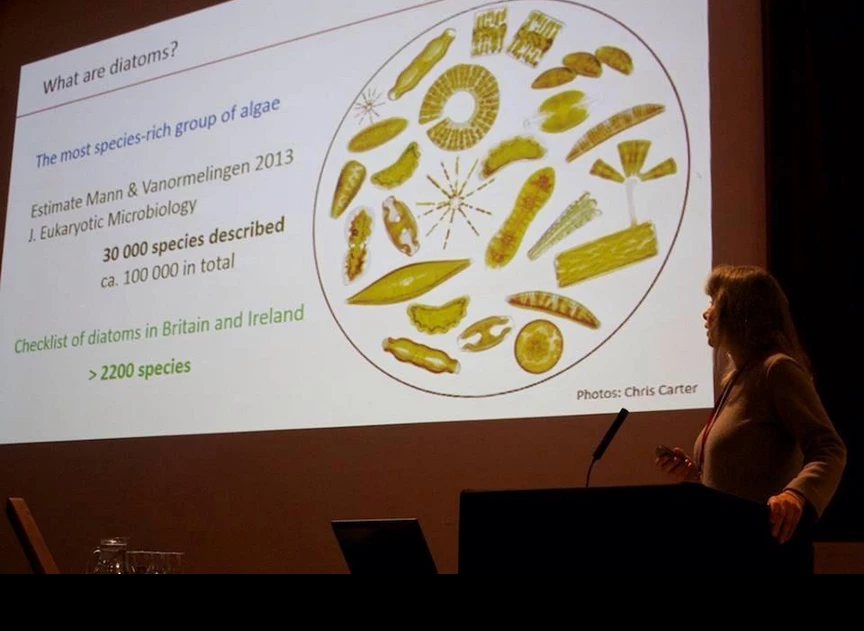
This year’s meeting, held on the 11th October in the Reardon Smith Theatre at National Museum Cardiff, had an audience of nearly 250 people.  They heard talks about bank voles, diatoms (by the museum’s Ingrid Jüttner), sand lizards, dung beetles, fossil forests and rare fish.  The meeting was rounded off by Stephen Moss of the BBC Natural History Unit, talking about conservation activities in Wales, such as the success story of the recovery of the red kite.

As in previous years, the event has been sponsored by one of our very generous Patrons.

Biology Rocks! at National Museum Cardiff

Lucy McCobb, 20 October 2014

Biology rocked at National Museum Cardiff on Saturday 11th October, when over 3000 visitors joined scientists from Amgueddfa Cymru, Cardiff University and the Society of Biology to celebrate National Biology Week and Earth Science Week. 

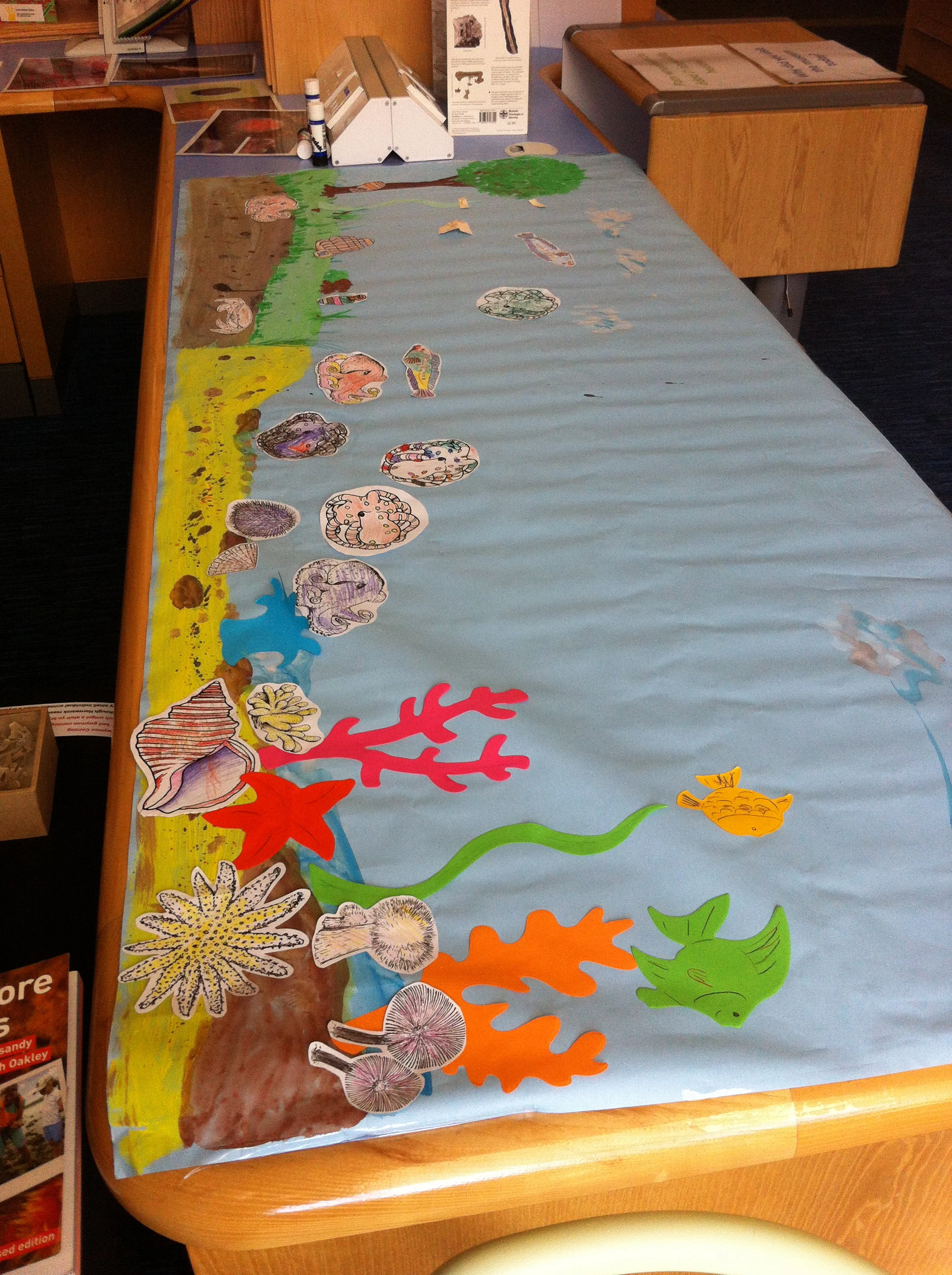
Visitors got the opportunity to see some of the specimens from our collections that aren’t usually on display and to talk to Museum experts about their work.  Specimens from the Marine and Mollusca collections provided inspiration for a mural depicting life in the seas around Wales, which became more colourful and populated throughout the day!  

As part of the Geological Society’s ‘100 Great Geosites’ campaign, Museum geologists displayed rocks, fossils and minerals from our collections, as well as stunning images of some of the most beautiful and iconic landscapes in Wales.  Members of the public were invited to vote for their favourite site in Wales, with the dinosaur footprints from Bendricks Rocks, near Barry, emerging as the clear favourite on the day.

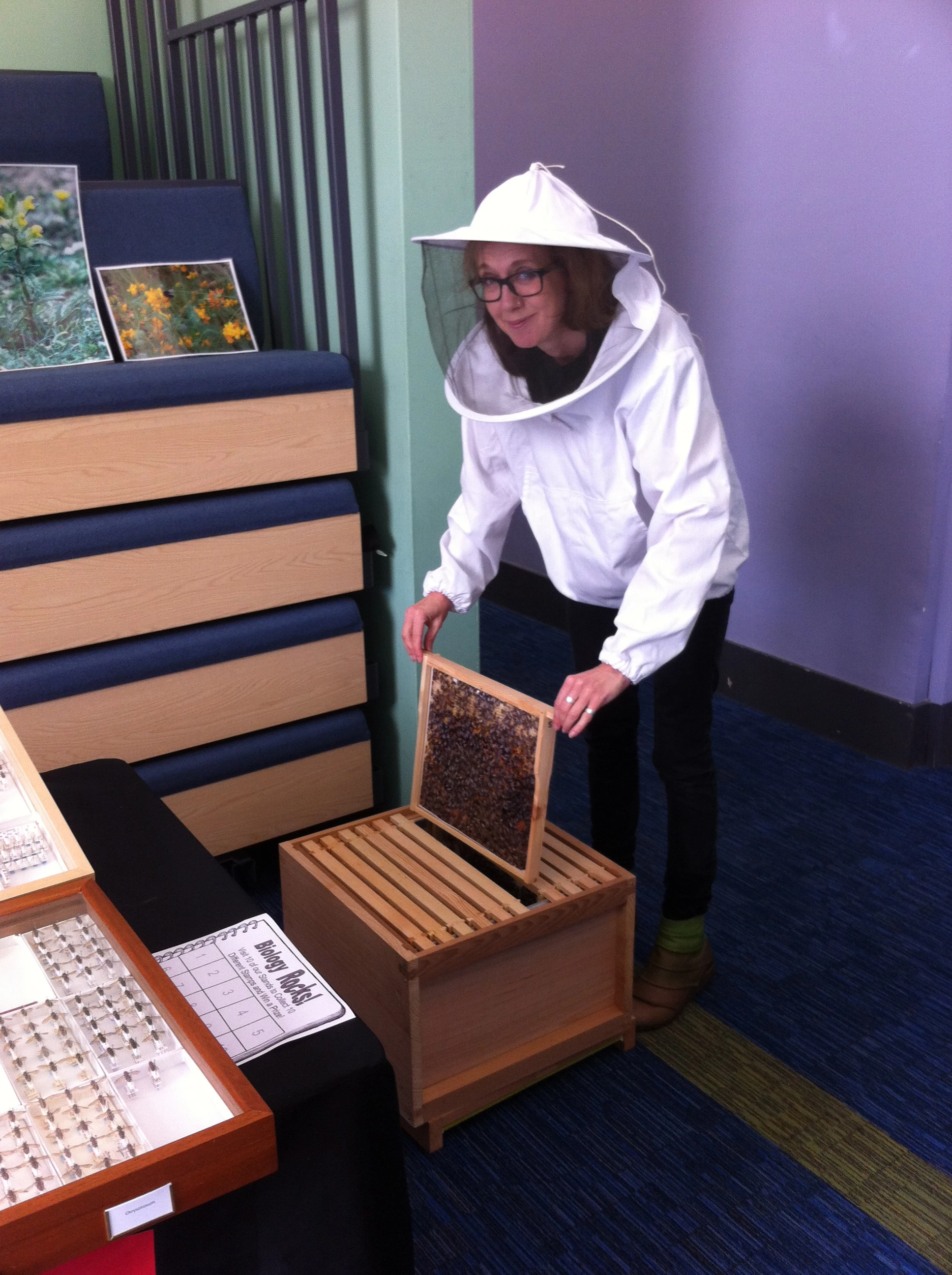
To mark the recent arrival of two hives on our roof, staff from the Entomology and Botany Sections gave visitors the opportunity to take a closer look at bee specimens from our collections and to experience a ‘bee’s eye view’ of the world by playing a pollination game, collecting ‘pollen’ and ‘nectar’ from various flowers.

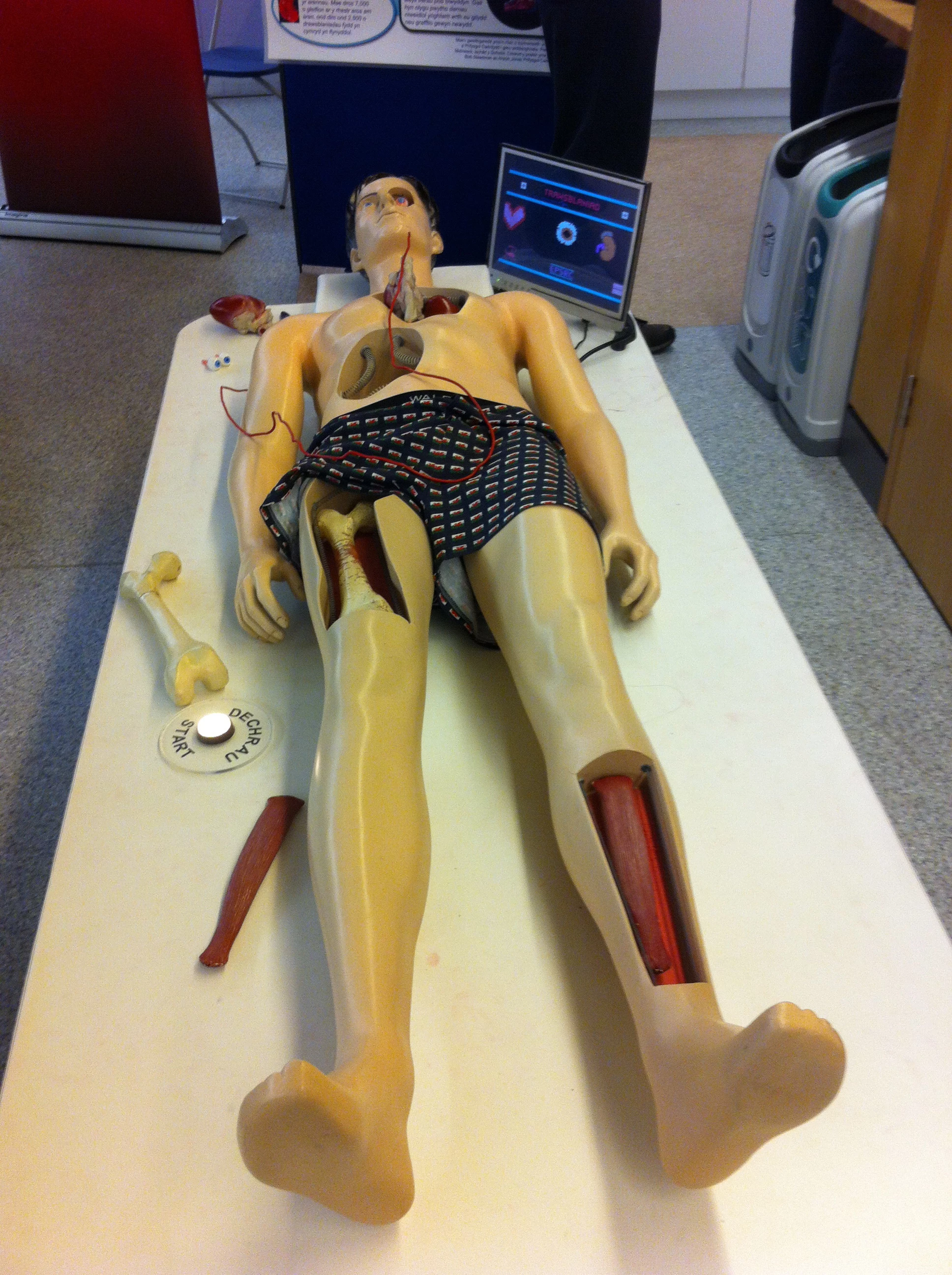
Scientists from Cardiff University’s School of Biosciences and School of Earth and Ocean Sciences put on a variety of displays and activities throughout the Museum.  Among the many activities on offer, visitors could try their hand at organ transplant using a life-size Operation game, race maggots, work out how big a dinosaur was from its footprint, discover first-hand how fungi get their spots, and learn the importance of reporting road kill with the Splatter Project.

Unlocking records from backlog collections

Harriet Wood, 17 October 2014

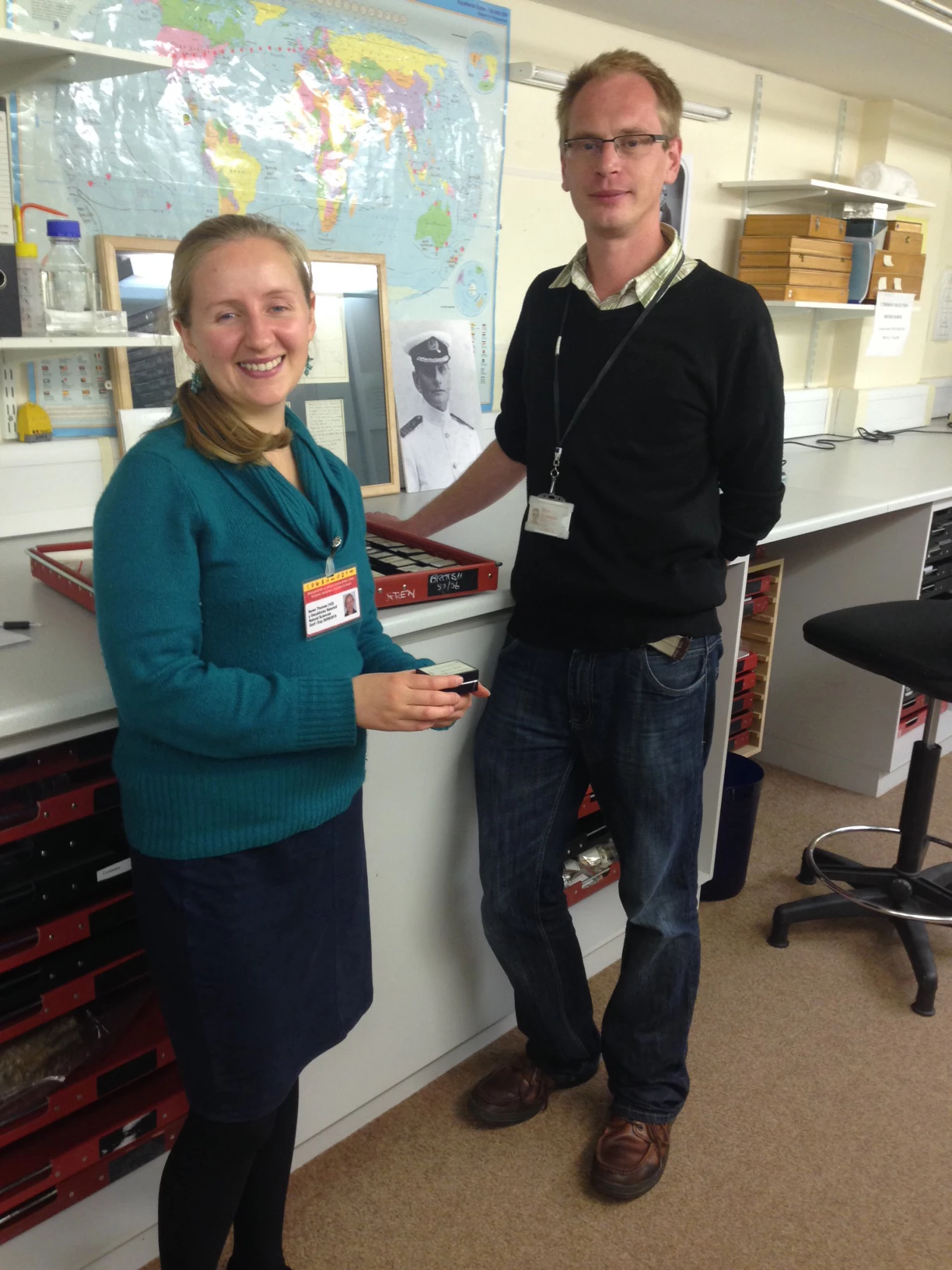
This week we were delighted to welcome our new intern, Seren Thomas, to the Department of Natural Sciences. Seren is already known to the department having volunteered for us in the Mollusca and Botany Sections whilst studying for her degree five years ago. Now, with her degree behind her, including a professional training year at Kew Gardens, and a Masters degree starting late next year, Seren was keen to work with us once again. So, what will she be doing… 

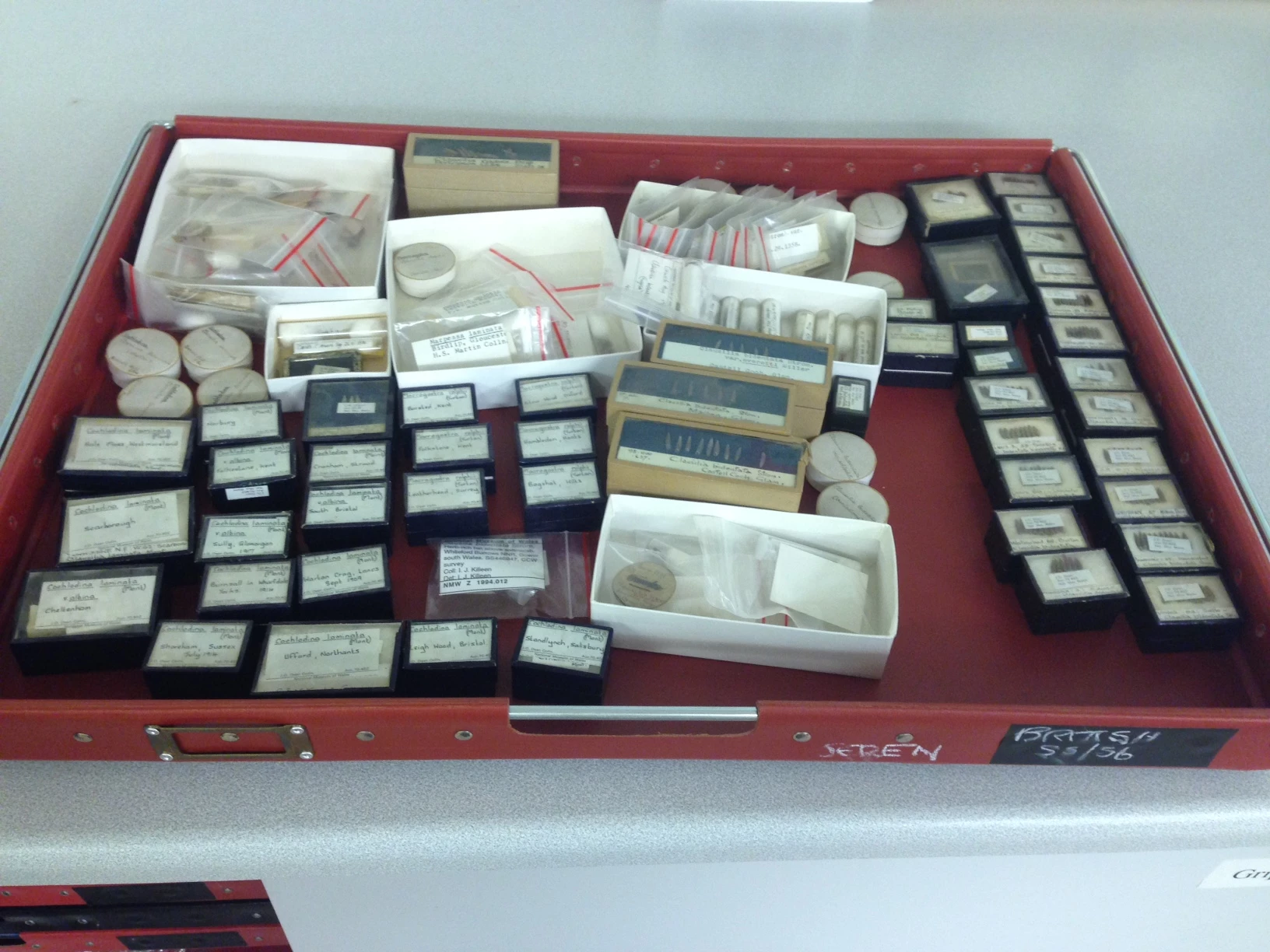
There is so much useful information held in our collections that we are continually trying to make available and disseminate. Seren will be helping unlock data from our non-marine British backlog collections in Mollusca (primarily slugs and snails). These specimens date from before 1900 to the present, cumulatively spanning almost the whole of Britain and Ireland, representing many species and habitats. The project will involve repackage and re-labelling each species in turn, and extracting, verifying and georeferencing the species and site data. This will allow the data to be exported to the national environmental recording networks via the Conchological Society of Great Britain and Ireland. It will also help the material to be used more efficiently and widely in our research projects and other activities.

Watch this space to see how the project progresses over the next year and beyond.