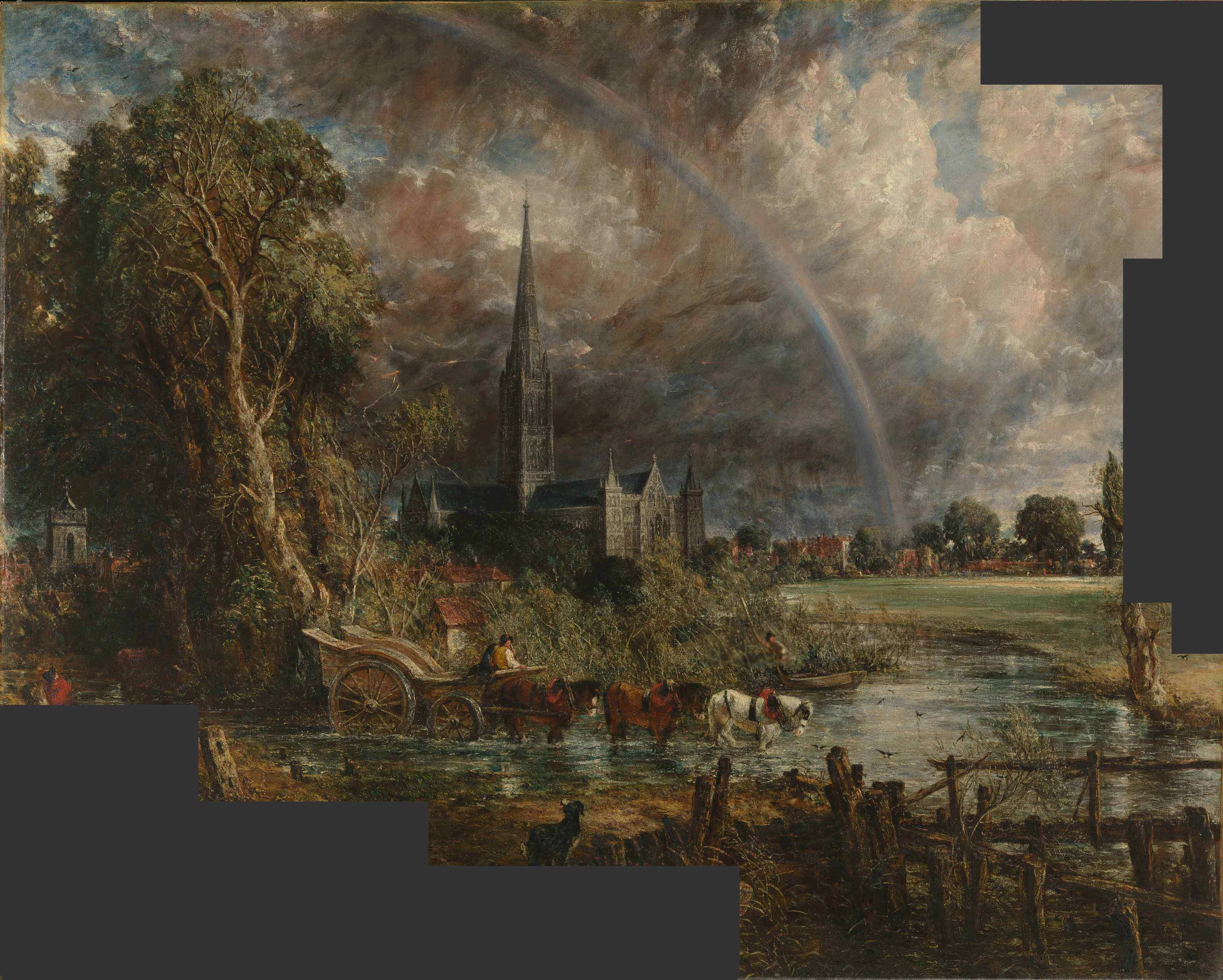
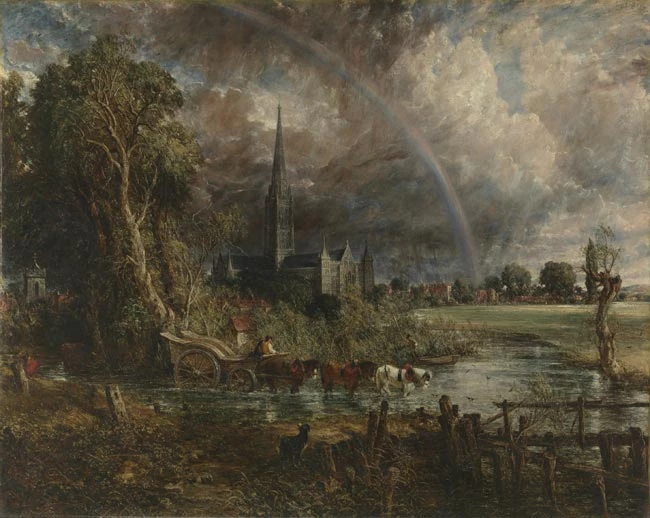
John Constable Salisbury Cathedral from the Meadows 1831 20 March 2014 Salisbury Cathedral from the Meadows 1831 John Constable (1776 – 1837) Photograph © Tate, London 2013Purchased by Tate with assistance from the National Lottery through the Heritage Lottery Fund, The Manton Foundation and the Art Fund (with a contribution from the Wolfson Foundation) and Tate Members in partnership with Amgueddfa Cymru-National Museum Wales, Colchester and Ipswich Museum Service, National Galleries of Scotland; and Salisbury and South Wiltshire Museum. When this painting was exhibited at the Royal Academy, Constable quoted nine lines from The Four Seasons: Summer (1727) by Scottish poet James Thompson to expand on its meaning.As from the face of heaven the scatter’d clouds Tumultous rove, th’interminable sky Sublimer swells, and o’er the world expands A purer azure. Through the lightened air A higher lustre and a clearer calm Diffusive tremble; while, as if in sign Of danger past, a glittering robe of joy, Set off abundant by the yellow ray, Invests the fields, and nature smiles reviv’dJames Thompson, The Seasons: Summer (1727)The poem tells the mythical tale of young lovers Celadon and Amelia. As they walk through the woods in a thunderstorm, the tragic Amelia is struck by lightning, and dies in her lover’s arms. The poem has a religious message: it is an exploration of God’s power, and man’s inability to control his own fate. It is also a poem of hope and redemption. The rainbow appears as a ‘sign of danger past’.The story of Celadon and Amelia has clear resonances with Constable’s own tragic loss. His wife Maria died of tuberculosis in 1828, after just twelve years of marriage. It is likely that the poem had special significance for the young couple. When Maria was unsure whether or not she should marry Constable, he quoted lines from the poem to her, to allay her fears. Explore the Painting Click on the links below to explore the details of the painting Cathedral Storm clouds Rainbow Leadenhall Wooden Bridge St Thomas’ Church Wagon and Cart Cathedral When Constable painted Salisbury Cathedral, the future of the Anglican Church was in doubt. He shows the Cathedral under a black cloud, lightning striking the roof – will it survive the storm? The spire – which Constable described as‘dart[ing] up into the sky like a needle’ - pierces through the darkness into a patch of light, perhaps suggesting his hopes for the future of the Church. Storm clouds When this painting was first exhibited, a reporter for The Morning Herald complained that ‘the sky is in a state of utter derangement’. Others described it as ‘chaos’. It is a key part of the painting’s meaning. For Constable, the sky was more than just a backdrop. It can be used to convey mood and changing emotional states. The sky here is often seen as an expression of the grief and anxiety he felt at this time. His wife Maria had died of tuberculosis in 1828, and he was deeply concerned about the troubles facing the Anglican Church. The vigorous brushwork adds to the emotional charge. Rainbow Constable once said ‘nature… exhibits no feature more lovely nor any that awaken a more soothing reaction than the rainbow’. The rainbow represents a glimmer of hope in turbulent times, a sign that the storm is passing. Leadenhall The rainbow ends at Leadenhall, home of Constable’s supporter and close personal friend, the Archdeacon John Fisher. This is no coincidence: Fisher had provided comfort and emotional support to Constable in his grief after the death of his wife, and it was Fisher that first encouraged Constable to paint Salisbury Cathedral. He died just a year after the painting was first exhibited. Wooden Bridge Constable was fascinated by the humblest details of rural life. ‘Old rotten planks, slimy posts, and brickwork, I love such things’ he wrote in a letter to his friend John Fisher. The paint here is thick and coarse suggesting the natural texture of the wooden bridge, a simple detail which most artists of the day would have overlooked. St Thomas’ Church Just visible through a clearing in the trees is the parish Church of St Thomas. The Church can’t actually be seen from this viewpoint, so why has Constable drawn attention to it? Is it purely for compositional reasons, or is there another explanation? The answer is uncertain. Wagon and Cart Constable believed that no landscape was complete without traces of everyday life. He would fill his sketchbooks with small details which he would later include in his paintings. Here a horse-drawn wagon crosses the river Nadder. This vignette is often compared to The Hay Wain (1821), one of his best known paintings. The sheepdog appears in other paintings by Constable, such as The Cornfield (1826). Both paintings are in the collection of the National Gallery, London. Download this page as a PDF here.
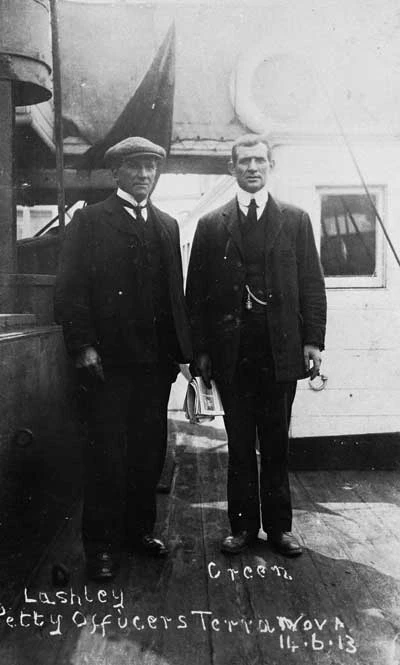
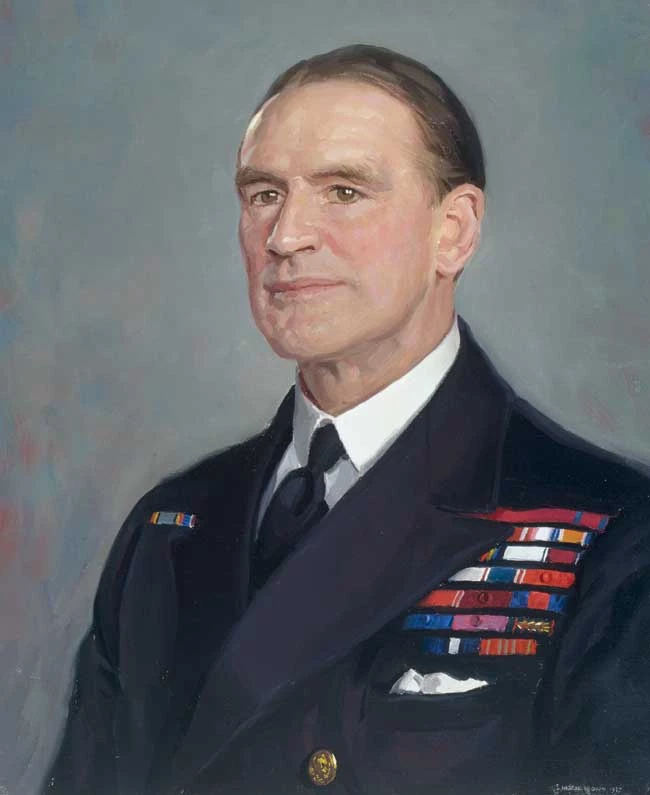
A portrait of Teddy Evans of the Antarctic, Evans of the Broke (1880-1957) 14 June 2013 Petty Officers William Lashly (left) and Tom Crean on board the Terra Nova on her return to Cardiff, 14 June 1913 Evans of the Broke (1880-1957) Teddy Evans was second-in-command of Captain Scott's ill-fated Antarctic expedition from 1910 to 1913 and, following Scott's demise, in command of the Terra Nova's journey back into the Roath Dock in Cardiff on 14 June 1913. In 1937, when this picture was painted, Admiral Sir Edward Ratcliffe Garth Russell Evans (Teddy Evans) was 57 years old and Commander-in-Chief of The Nore, an operational command position of the Royal Navy based at Chatham in Kent. He had had a distinguished naval career, most notably during the First World War when, in command of HMS Broke, he famously rammed a German destroyer in a battle off Dover in 1917. But he was also well-known to the public as second-in-command of Captain Scott's last Antarctic expedition from 1910 to 1913. This painting is one of a series of twenty portraits of eminent Welsh men and women commissioned by Sir Leonard Twiston Davies in 1937 for the National Museum from the artist Sydney Morse-Brown (1903-2001), Principal of Carmarthen School of Art and Inspector of Art in Schools in Wales. The other sitters were selected from a diverse range of fields; they included the playwright and actor Emlyn Williams (1905-1987), former Secretary to the Cabinet Dr Thomas Jones (1870-1955), David Davies, 1st Lord Davies of Llandinam (1880-1944), architect Clough Williams-Ellis (1883-1978), novelists Richard Hughes (1900-1976), Charles Morgan (1894-1958) and Hilda Vaughan (1892-1985) and the World Flyweight Boxing Champion Jimmy Wilde (1892-1969). Although claiming a Welsh ancestry, Evans' Welsh roots are obscure; he was born on 28 October 1880 in Marylebone in London; his father, Frank, was born in Oldham in Lancashire where his father, Henry Edwin Evans, was a provision merchant. After an unruly childhood, Evans joined the Royal Navy in 1896. In 1902, as a Lieutenant, Evans served as second officer on the Morning, one of two ships sent by the Royal Geographical Society to help free Scott's first expedition ship, Discovery, from the ice of McMurdo Sound in Antarctica. In 1909, Evans played on his tenuous Welsh links to seek support in Cardiff for a Welsh National Antarctic Expedition. But within a few months of floating his idea, he was told about Captain Scott's plans to return to Antarctica and was invited to join Scott as second in command. With him, he brought so much Cardiff and Welsh sponsorship that Scott named Cardiff the home port of the expedition ship, the Terra Nova. On Scott's second (and last) expedition, with William Lashly and Tom Crean, Evans was in a supporting sledging party which accompanied Scott to within 150 miles of the South Pole before turning back on 4 January 1912, leaving Scott, Lawrence Oates, Edward Wilson, Henry Bowers and Edgar Evans to continue on to the Pole. Teddy Evans, Lashly and Crean were the last to see Scott's Polar Party alive. Evans himself came close to death on his return journey to the expedition base hut. Suffering from scurvy, Evans had to be dragged on the sledge by Lashly and Crean. On 18 February 1912, leaving Lashly with the severely ill Evans, Crean pushed on, alone, for the final 35 miles to get help. Crean and Lashly were later awarded the Albert Medal for saving Evans. After a period of recovery in England, Evans returned to Antarctica in charge of the Terra Nova to collect the expedition members and the Polar Party. On arriving at the base hut, with the ship decorated for celebration of a successful attempt on the Pole, he received the news that Scott and his companions had perished on their return journey. Now in command of the expedition, Evans brought the Terra Nova back into the Roath Dock in Cardiff on 14 June 1913. Evans' career culminated in a peerage in 1945, as first Baron Mountevans. He died in Norway on 20 August 1957.
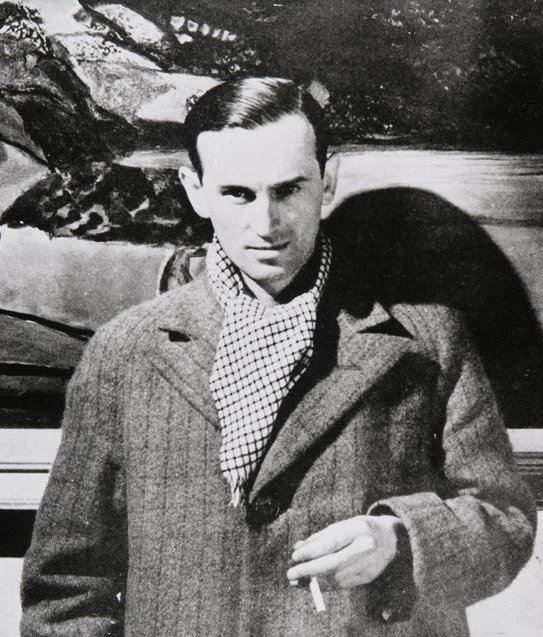
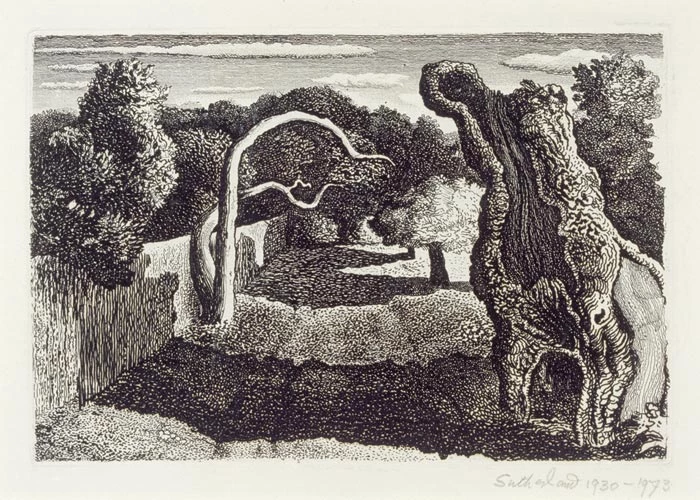
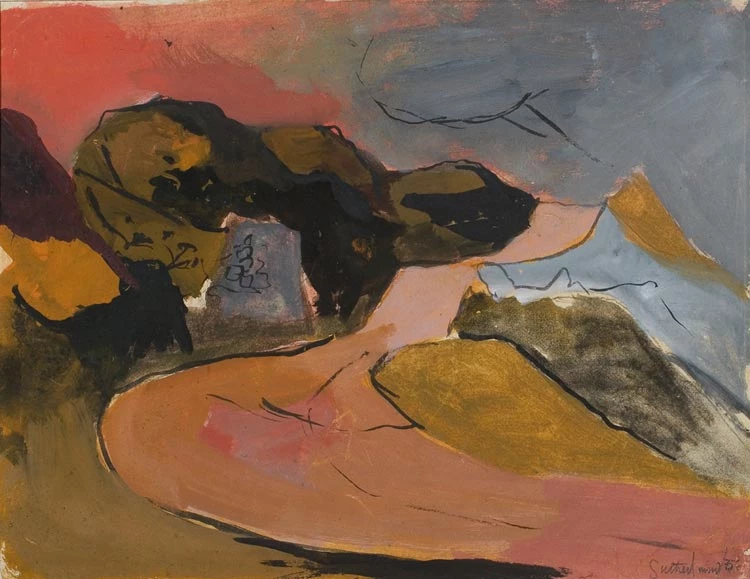
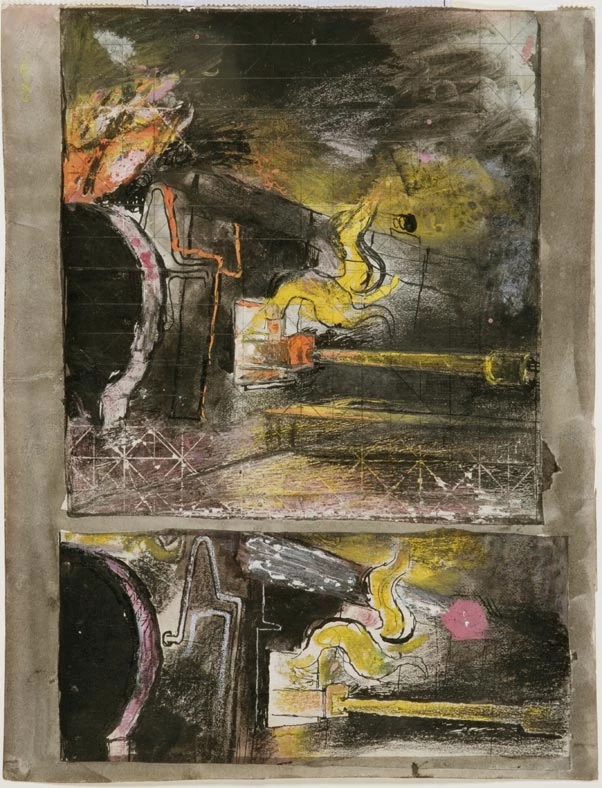
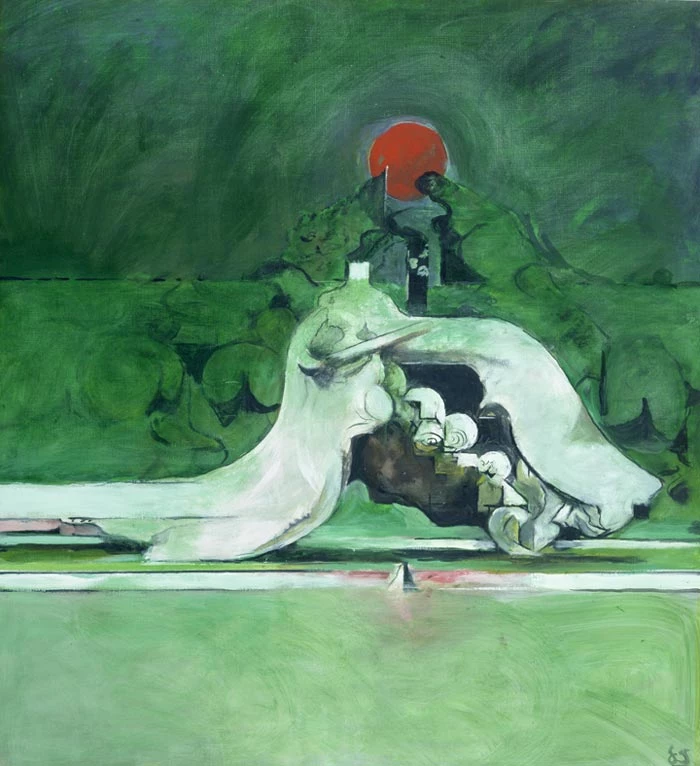
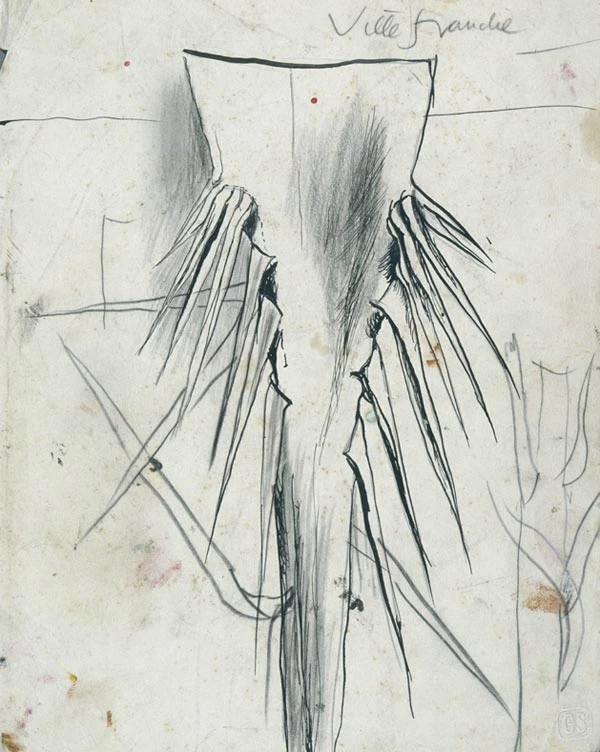
Graham Sutherland: Artist in Focus 14 May 2012 Graham Sutherland c.1940 © Estate of Graham Sutherland SUTHERLAND, Graham Pastoral, 1930 (NWM A 4042) © Estate of Graham Sutherland SUTHERLAND, Graham Welsh Landscape, 1936 (NWM A 4403) © Estate of Graham Sutherland SUTHERLAND, Graham Feeding a Furnace, 1942 (NWM A 4628) © Estate of Graham Sutherland SUTHERLAND, Graham Untitled (Wavelike Form), 1976 (NMW A 2271) © Estate of Graham Sutherland SUTHERLAND, Graham Study of a Palm Frond, 1947 (NWM A 4101) Graham Sutherland was celebrated as the 'outstanding painter of his generation'. The places in which Sutherland worked had a profound influence on his work: from the rural landscape of Kent, to the hills and valleys of west Wales and the heat and light of the French Riviera. Sutherland trained as a printmaker at Goldsmiths in the mid 1920s. Many of his early prints show his enthusiasm for the pastoral work of Samuel Palmer. Trees and woods are enduring motifs in Sutherland's work, from the nostalgic countryside scenes of his earliest prints, through to the blasted and tortured forms of his later images. They often become like creatures, capable of expressing emotion and physical sensation. Gradually Sutherland's vision began to take on a more personal style and note of menace. Sutherland in Wales He first visited Pembrokeshire in 1934 and said it was the place where he 'began to learn painting'. He recalled being fascinated by 'twisted gorse on the cliff edge... the flowers and damp hollows... the deep green valleys and the rounded hills and the whole structure, simple and complex'. Sutherland discovered in Pembrokeshire a landscape of 'exultant strangeness' but also felt that he was 'as much part of the earth as my features were part of me'. Following the outbreak of World War Two, Sutherland was appointed an Official War Artist. He recorded war work at mines, steel works and quarries in Cornwall, South Wales and Derbyshire, and the devastation of bomb-damaged Cardiff, Swansea, London and northern France. Sutherland visited steel works in Cardiff and Swansea in 1941 and 1942. He imaged the workings of the foundries to be like living creatures. He wrote: 'as the hand feeds the mouth so did the long scoops which plunged into the furnace openings feed them, and the metal containers pouring molten iron into ladles had great encrusted mouths.' Describing his first experience of the south of France in 1947 Sutherland recalled that: 'To see Provence for the first time is to know Cézanne properly, and the painting of van Gogh had suddenly for me a new excitement'. He was first encouraged to visit by friends including Francis Bacon . Sutherland quickly took to both the sunny climate and the intriguing appearance of the region's plants and animals. In 1956 he and his wife bought a modernist villa designed by the Irish architect Eileen Gray. Sutherland was to live in this house, on a hillside of the coastal town of Menton for much of the year for the rest of his life. In France, Sutherland discovered an array of new inspirational forms. Palms, gourds, maize and root-forms were all studied, dissected and reassembled into new arrangements. These increasingly took on the quality of creatures or figures caught in a process of metamorphosis. Palm leaves suggest the sun, heat and foreignness of the south of France. After the hardship and drabness of the war years they must have seemed exotic. However, they signify more than the simple enjoyment of a holiday destination. The razor-sharp frond edges recall the spikiness of Sutherland's earlier thorn studies. They suggest the potential for the co-existence of pleasure and pain. In 1967 Sutherland returned to west Wales for the first time in over 30 years. Nearly a decade later when he had once again been working regularly in the region, he explained that he had been 'sorely mistaken' in his assumption that he had exhausted the inspiration the place had to offer. Instead he had again soaked himself in the 'curiously charged atmosphere — at once both calm and exciting'. Sutherland wanted to leave a collection to Wales because he felt 'having gained so much from this country, I should like to give something back'. In 1976 he established the Graham Sutherland Gallery at Picton Castle where the majority of this collection was held before its transfer to Amgueddfa Cymru in 1995. This article was produced by Rachel Flynn as part of an Arts and Humanities Research Council funded Collaborative Doctoral Award with Amgueddfa Cymru – National Museum Wales and the University of Bristol. View a list of works by Graham Sutherland on Art Online External Links Oriel y Parc
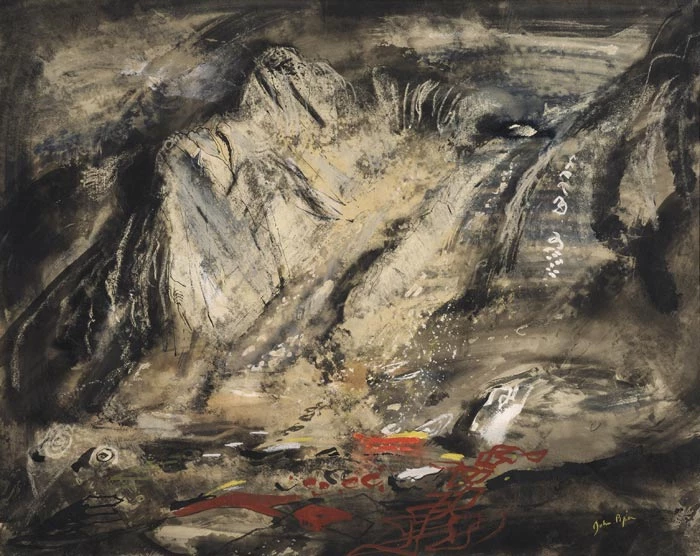
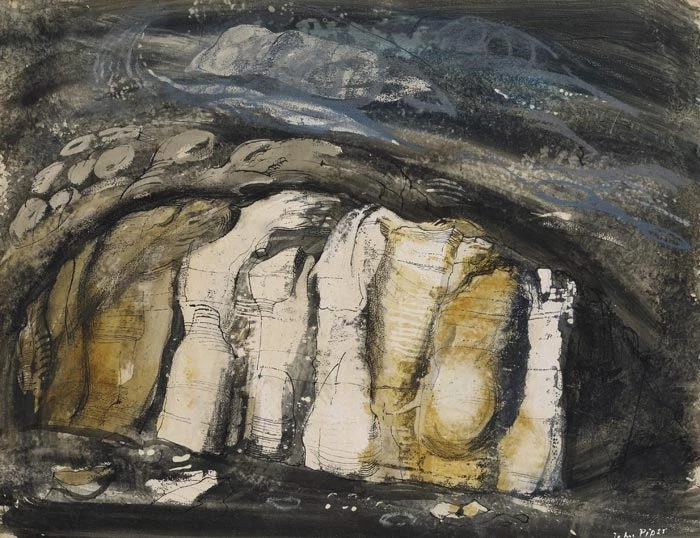
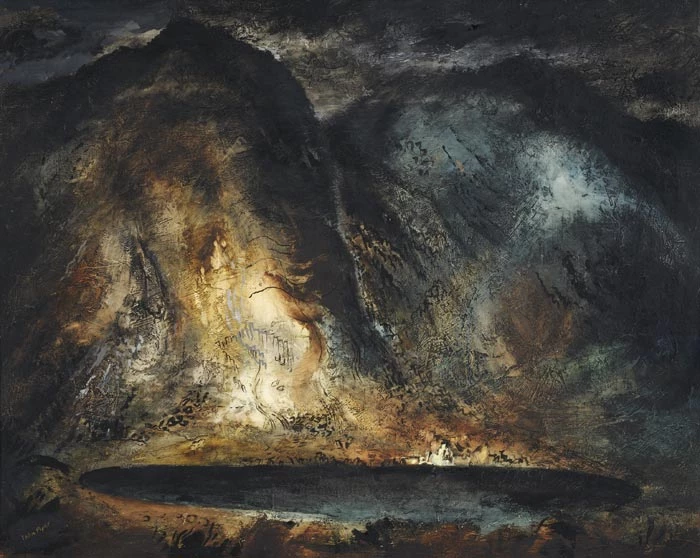
John Piper: A Journey Through Snowdonia Melissa Munro, 27 April 2012 John PiperJagged rocks under Tryfan ink, watercolour & gouahce, c.1948 22 x 27 inches Copyright John Piper Estate John PiperRock formations ink, watercolour & gouache, c.1948 21 x 27.5 inches Copyright John Piper Estate From around 1943 to 1950 John Piper undertook an intense artistic journey through the mountains of north Wales, conveying a passion and vision like none other seen before. There is an exuberance and brilliancy to the tones and hues, as well as sheer drama in each of the pictures. One of the most versatile British artists of the twentieth century, John Piper's work encompasses portraiture, landscape, architectural studies, still life, ceramics and designs for theatre, stained glass and tapestry. Piper's interest in landscape and architecture extended to all areas of Britain, however his first significant encounter with North Wales came when he was working as an official war artist during the Second World War. Manod Mawr Quarry: storehouse for priceless objects during the Blitz In 1943 the War Artists Advisory Committee commissioned Piper to record the interior of Manod Mawr quarry. At the time it housed artworks from the National Gallery and the Royal Collection to protect them from bombing during the Blitz. The dark conditions of the quarry were not suitable for painting or drawing and so the commission was abandoned. It did, however, provide the opportunity for Piper to explore North Wales. This sparked an intense period of recording the mountains of Wales. Inspiration from Turner and Wilson During the period Piper spent in North Wales, he often referred to the guidebooks and early geological texts of the eighteenth and nineteenth centuries as he travelled around the area recording the mountains. Not only did he admire their engraved illustrations, but they also provided a link to the artists of the period most admired by Piper, Richard Wilson (1714-1782) and J.M.W. Turner (1775-1851). Church architecture from West Wales Piper's painting trips to Wales did not start with Snowdonia or North Wales, but Pembrokeshire and Cardiganshire in 1936. The following year, he produced Five Chapels, 1937. The chapels depicted are: Emmaus, Llanon, Red Roses, Rhydygwyn and Tyrhos. These five collages were produced with torn and cut papers drawn and assembled. It shows his early interest in church architecture. He took a particular interest in the simple though neo-classical architecture of non-conformist chapels in Wales. Piper in North Wales During the unsuccessful Manod Mawr commission, Piper began to explore north Wales and the locations painted by Wilson and Turner such as Cader Idris. This trip also brought him in close proximity to Aran Fawddwy, the subject of an impressive oil, The Rise of the Dovey, 1943-44. The title of this painting refers to Creiglyn Dovey, the lake in the foreground, which is the source of the River Dovey. Turner painted a slightly different view of Aran Fawddwy in 1798 in a watercolour titled, A bridge over the Dyfi near Dinas Mawddwy, with Aran Fawddwy beyond (collection of the British Museum). The almost abstract nature, foreboding dark atmosphere and brilliant hues of light gold, yellow, blue and red in this work are very similar to Turner's style of painting. Upon the canvas is a layer of gesso, which has been painted on top of in oils. This gives the work this very rough texture, evoking a sense of the roughness of the rocks and the elements. In 1945 John and his family rented a cottage named Pentre. There is a painting titled Nant Ffrancon Farm, 1950, which shows the house from the roadside. It is situated in the Nant Ffrancon valley, with a steep hill leading up behind the house. The property was sub-let to the Pipers for £35 a year. At the time there was a basic muddy track, rather than a concrete road, making the house almost inaccessible in bad winter weather conditions. Along with this, the house was at the foot of a steep hill, which caused the house to be flooded by heavy rain. I felt then that I was seeing the mountains for the first time and seeing them as nobody had seen them before. John Piper quoted in Richard Ingrams and John Piper, Piper's Places, London, 1986 John PiperThe Rise of the Dovey oil on canvas on board, 1944 27.5 x 34.5 inches Copyright John Piper Estate A stormy and wintery Snowdonia The difficulties and hardships presented by living here, even though only for short periods at a time, encouraged the Pipers to move to another rented house called Bodesi around 1947. Bodesi is situated across the road from Tryfan facing the mountain and Llyn Ogwen. This was the landlord's hafod or summer house, so the Pipers had use of it for the rest of the year. This would account for most of Piper's paintings of Snowdonia being stormy and wintery. Bodesi was well-placed and a flurry of paintings and drawings of Tryfan began. Jagged Rocks under Tryfan, 1949-50, is a wonderful example of Piper's attention to detail by selecting very particular rock formations on and around Tryfan. It depicts Tryfan Bach (little Tryfan) situated at the base of the mountain on its western side. Its jaggedness mimics that of its parent, Tryfan. White spirals drawn in gouache are most likely patterns left on rocks by lichen which has since detached. In the lower foreground are splashes of red and yellow, in some cases accentuating the shape of the rocks, in other areas denoting the 'chrome yellow and chrome orange lichen' Piper described in his notes. The influence of nineteenth century guides to Snowdonia in Piper's work also encouraged him to write his own guide to the area. Unfortunately it never went beyond note form, which is now in the archives at Tate Britain. Although Piper's dream of publishing a guide to Snowdonia never came to pass, it is justifiable to say that he provided an enthralling guide through his paintings and drawings. This series of work is considered by some to be the best of all his paintings. In the 1960s, the Pipers bought a house in Pembrokeshire called Garn Fawr and much of his Welsh work from this period onwards focuses on Pembrokeshire and South Wales. He would never work in North Wales with this intensity again. External Links Tate Britain Barc Cenedlaethol Eryri
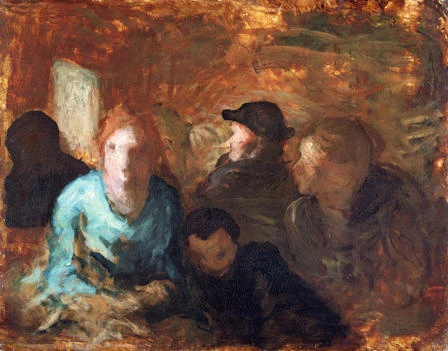
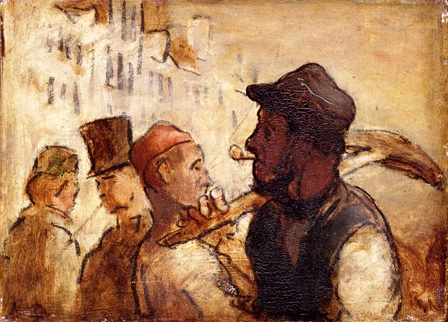
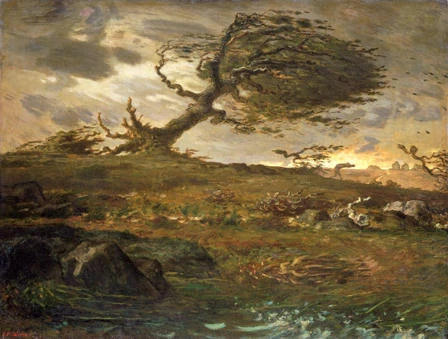
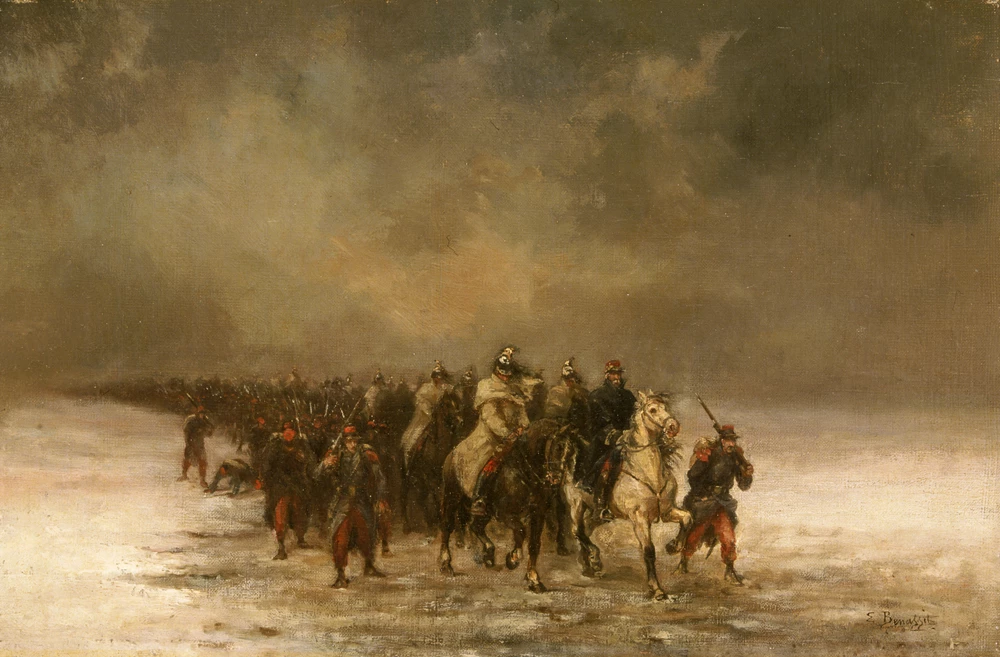
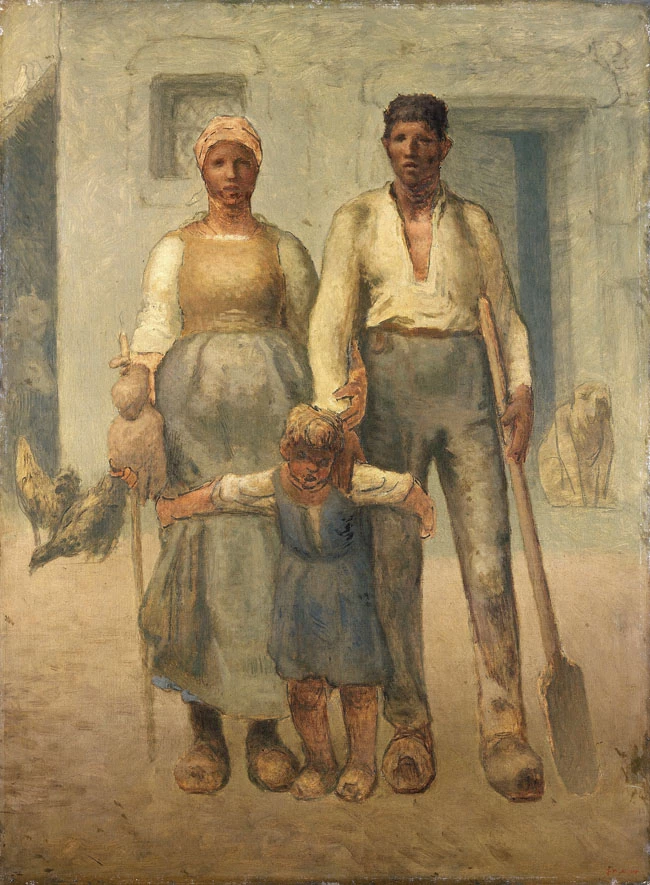
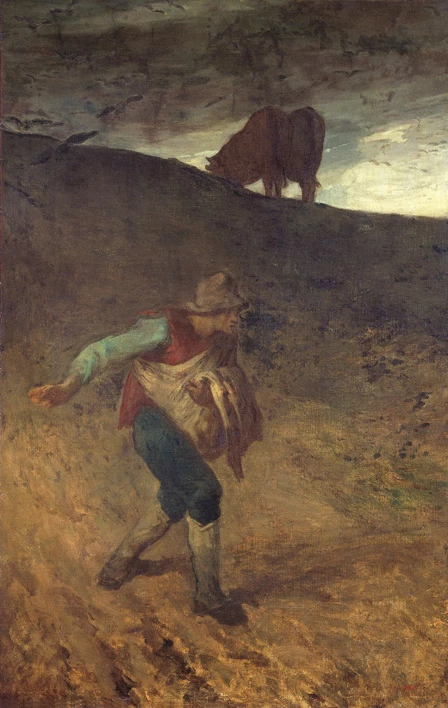
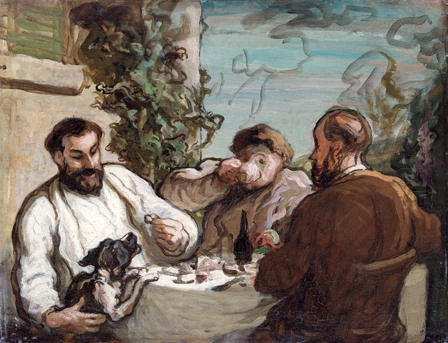
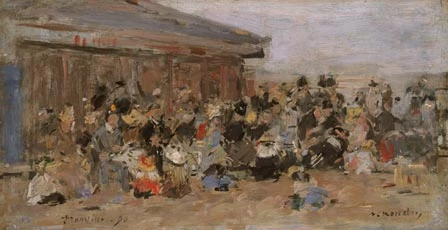
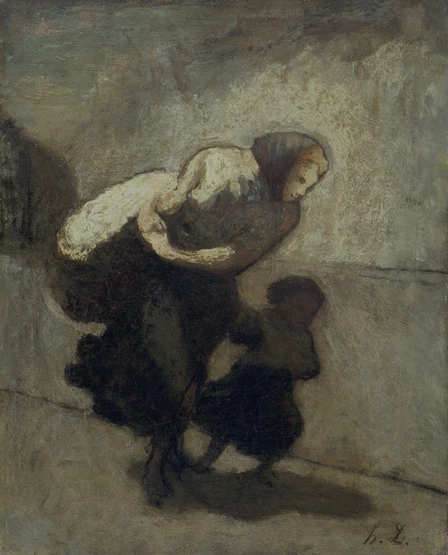
Revolutionary Dreams: Investigating French art 22 March 2012 A Third Class Carriage Honore Daumier (1808 - 1879) Workmen on the Street, 1838-40 Honore Daumier (1808 - 1879) The Gust of Wind Jean-François Millet (1814 - 1875) The Retreat Louis Eugène Benassit (1833 - 1904) Amgueddfa Cymru has one of the most exceptional collections of nineteenth-century French Art in the United Kingdom. Engaging with the turbulence of nineteenth century France and the relationship between the revolutions of the people and revolutionary developments in art, we take a fresh look at the Museum's collection of pre-Impressionist French paintings, researched and interpreted by postgraduate students from the University of Bristol.The Century of RevolutionThe turbulent social and political history of France during the nineteenth century led many artists to document the shifting realities and expectations of life. The 1789 French Revolution, which established the First French Republic, sparked a century of uprisings and uncertainty for the population. While some artists sought to represent current events, others looked to recapture lost traditions.Revolution and the rise of RealismFrom the seventeenth century, the state-run Academy of Fine Arts and its official exhibition, the Salon, led the direction of French art. During the nineteenth century, many artists began to challenge its approach, and to examine how the lives of the people were altered by the dramatic changes of the nineteenth century. Increasingly artists abandoned the biblical figures and Roman heroes that had previously dominated the walls of the Salon.In A Third Class Carriage Honoré Daumier refers to a key invention of the century, the steam train. In contrast, Jean-François Millet's The Peasant Family depicts rural farmers and idealises the French countryside. While these are very different paintings their common theme is that they are representations of real, contemporary, humble life.It was during this period that French artists first began to paint like this; an approach sometimes known as 'Realist' painting. These changes in subject matter laid the groundwork for much of Modern Art as we understand it today.Political UnrestThe overthrow of King Charles X in the July Revolution of 1830 led to the July Monarchy of Louis-Phillippe, ousted in the Revolution of February 1848. The Second Republic gave all men a right to vote and promised democracy. However, a brutal suppression of the workers' rebellion demonstrated that frustration was still present. Daumier's Workmen on the Street indicates such tensions and his imagery criticised continuing class distinctions.Millet's later The Sower highlights rural labour and peasant life. Agriculture was an ingrained part of the French national identity, however, Millet mourned the mass migration from rural areas into the cities.During the Franco-Prussian War in 1870 many artists went into exile in safer rural locations. Millet fled from Barbizon to the Normandy coast. He painted The Gust of Wind on his return; the frightening strength and power of the storm representing both change and the violence of war.The Second Empire collapsed with France's defeat in 1871, causing a group of French radicals to briefly seize control of Paris in the 'Commune' of the same year. Soon quashed, it was replaced by the Third Republic.The distress and loneliness within these desolate landscapes may be read as a response to the turbulent events in France at this time. Most importantly they show how political events shaped national identity and, in turn, its art. The Peasant Family (1871-2) Jean-François Millet (1814 - 1875) Oil on canvas The Davies Sisters Collection The Sower, 1847-8 Jean-François Millet (1814 - 1875) Lunch in the Country, 1868 Honore Daumier (1808 - 1879) Beach at Trouville, 1890 Louis Eugéne Boudin (1824 - 1898) The Heavy Burden Honore Daumier (1808 - 1879) LeisureDuring the second half of the nineteenth century, changes in class structure in France led to a growth in the wealth of the middle classes, known as the bourgeoisie.In particular, they enjoyed paintings that showed themselves in the pursuit of leisure and inferred their new status in society. Artists responded by creating paintings to suit the tastes of this growing audience.1804 saw the invention of the steam powered locomotive and within 50 years, railway lines were being constructed across France. Daumier's Lunch in the Country and Boudin's Beach at Trouville are depictions of bourgeois tourist activities.In addition to reflecting revolutionary developments in tourism and transport, artists employed bright colour and loose linear structure to create an air of entertainment and recreation. Such revolutionary light effects and loose brushstrokes had a strong influence on the emerging style of Impressionism.Women and DomesticityPaintings of women feature significantly in the Museum's collection of nineteenth-century French paintings. It is, however, interesting to note that all these women were painted by male artists, so viewers are observing women from the perspective of the nineteenth-century man.With this in mind we can begin to understand the role of women in society. Daumier's The Heavy Burden presents us with the activities of working class women, while the other paintings depict fashionable and delicate beauties of a higher social ranking. This shows us that class and gender divisions were still intact following the Revolution.Society's expectations for women to be demure and feminine run through several of the paintings. Whether they are active and working or seated and passive can be seen as an indication of their situation within society.Research and RevealHere we present four essays, giving a fresh look at the Museum's collection of pre-Impressionist French paintings, researched and interpreted by postgraduate students from the University of Bristol:Personalities in Paintings, by Matthew Howles Landscape Fakes, by Jessica Hoare The Landscapes of Millet, by Jessica Hoare The Paintings of Charles Bargue, by Rhian Addison External linksArt History at the University of BristolAssociation of Art Historians