: Big Pit National Coal Museum

Underground Bible

Ceri Thompson, 30 October 2019

Mynydd Newydd Colliery was situated about three miles to the north west of Swansea. It commenced working in 1843 and was initially owned by the Swansea Coal Company. In 1844 an explosion killed five workmen and seriously injured several others.

After this explosion the workmen came together and discussed how to protect themselves from further deaths. They decided to hold prayer meetings underground before starting work. They approached the colliery management who were enthusiastic about the idea and allowed them to construct a chapel in the workings.

After they had constructed the chapel in the Five Feet Seam, they bought the first Bible which was carried underground and used in the first meeting at half past six on the morning of the 18th August 1845. After this a meeting was held every Monday morning.

By 1859 a new Bible was purchased as the original was by now falling apart due to the dampness of the workings. The new Bible was kept in a box in the engine room near the chapel to help keep it in better condition. However, on one occasion, the ‘preacher’ got over excited and banged his fist down on the Bible and broke the binding scattering the pages over the floor of the chapel. A new Bible was presented by a visiting Scottish medical man, Dr McRitchie, in 1899. In the same year a Journalist from the Sunday magazine visited the colliery and described the underground chapel:

"The coal has been worked out of the seam to the left (of the roadway) till a chamber about 16 yards long by 6 yards wide has been formed. The walls are formed, in parts, of small rough pine logs, through which the splendid thick coal seam out crops to the view, here and there. The roof is somewhat menacingly close overhead, but it is of hard, smooth clift and has been whitened with lime, so it looks like an artificial ceiling. As you enter you observe that the chapel is timbered with pit props on either side, and furnished with rude plank seats placed at equidistance between the props."

There was room for a congregation of around a hundred and a high wooden desk formed a pulpit. The colliery was deemed to be ‘gas free’ and lighted candles were arranged around the chapel for illumination.

In 2019 the last Bible used in the underground chapel was donated to Big Pit. This Bible was purchased in 1904 and contains the following inscription:

‘To the prayer meeting service held in the Five Foot (seam) at Mynydd Newydd Colliery every Monday morning when the works is working. This work commenced on 28th November 1904. Dated August 9th 1915.’

In 1924, after the colliery changed owners and closed down for a short while, a Prayer Meeting Festival was held. A programme for the event was printed with the title:

‘A list of Hymns for the Preaching Festival Service Mynydd Newydd Colliery To celebrate 80 years of Prayer Meetings Underground.’

It would be interesting to find out if any of these programmes still exist.

In 1929 the Radio Times carried an article on the underground chapel and an underground service was broadcast by the BBC on Sunday October 13th.

Mynydd Newydd Colliery closed temporarily in 1932 but re-opened by the Mynydd Newydd Colliery Company in 1935 when it employed 76 men. The colliery was finally closed by the National Coal Board in 1955.

The donor’s grandfather, worked in the colliery and when it was closing he went down to the chapel to look for the Bible. There had also been a hymn book but only the Bible was still there which he brought out of the pit. His son, John Moelwyn Thomas who worked in Garn Goch Colliery, inherited the old Bible and took it around Miners’ Galas and other events.

This important piece of Welsh social and industrial history was donated to Big Pit by the Thomas family in 2019. This particular Bible is the 1904 one, and the last one to be used in Mynydd Newydd. Strangely enough, a different Bible was pictured in the National Museum’s publication ‘Welsh Coal Mines’ (now out of print) and captioned as the Bible used underground. However, that particular Bible is not the same as the one the Museum now holds so may have been an earlier one. If that is the case, there must be another Mynydd Newydd Bible still in private hands.

Yama – The mining art of Sakubei Yamamoto

Ceri Thompson, 27 September 2019

At the age of seven years old, Sakubei Yamamoto (1892–1984) moved with his family to the coal mines of the Chikuho region in Kyushu. He was apprenticed to a colliery blacksmith at the age of twelve, and later worked as a mine blacksmith and coalminer until the age of sixty-three in 1955. He then became a colliery security guard when he started painting his memories of the mining industry.

He had little formal education but, from the age of 21 in 1913, began keeping notebooks and diaries in which he recorded events. These influenced his later painting.

"The yama [the miners' term for the coal mines] is fading away, leaving 524 mountains of rubble in the Chikuho region; and as for me, I'm no spring chicken. I've decided to leave behind something of the work and feelings from the yama for my grandkids. It'd be faster just to write something down, but after a couple of years, who knows, maybe the notes would just get thrown out during spring cleaning. With pictures, though, so much can be taken in just with a single glance – I've decided to paint."

In 2011, Sakubei Yamamoto’s coal mining paintings and drawings were registered in UNESCO’s Memory of the World programme.

This exhibition focuses on a small selection of the 2000 drawings and paintings by the artist. They are very Japanese in style but any Welsh mineworker can recognise the type of work and the characters depicted.

Working Abroad - Welsh Emigration

9 February 2010

Welsh industrial emigration: The legacy

In the nineteenth and twentieth centuries, millions of people across the world moved to different countries looking for work. They wanted to improve their lives, try new working practices, or have adventures in different lands.

Many people left Wales and took traditional Welsh industrial skills with them. Some helped create continuing economic success in the countries they moved to. Some made huge fortunes, finding fame. Others led more quietly successful lives, settling down and raising families. Some returned to Wales after time abroad, others were never to see this country again.

Here we look at the various industries from Wales that supplied workers and expertise around the world. What were those industries and skills? Where did the workers go? What values and traditions did they take with them? What impact did their leaving have on the country they left behind?

Welsh coal mine, Kentucky

Welsh coal mine, Kentucky

Coal

"Wales experienced a spectacular boom in coal mining in the late 19th and early 20th centuries. The world looked to the Welsh mining industry for expertise and advice."

[see more]

Burra Burra copper mine, 1874.

Burra Burra copper mine, 1874.

Copper

"The world of copper smelting was led by Wales in the 19th century. The works around Swansea and Holywell supplied over 50% of the world's copper."

[see more]

 
John Davies of Talsarnau, Gwynedd, with his brother and friend seeking gold during the Australian Gold Rush

John Davies of Talsarnau, Gwynedd, with his brother and friend. They are seeking gold in Queensland, Australia in the 1880s

Gold

"Gold has been mined intermittently in Wales for thousands of years, but the industry never employed huge numbers of workers. Despite this, many Welsh emigrants joined the famous 'Gold Rushes' of the 19th century."

[see more]

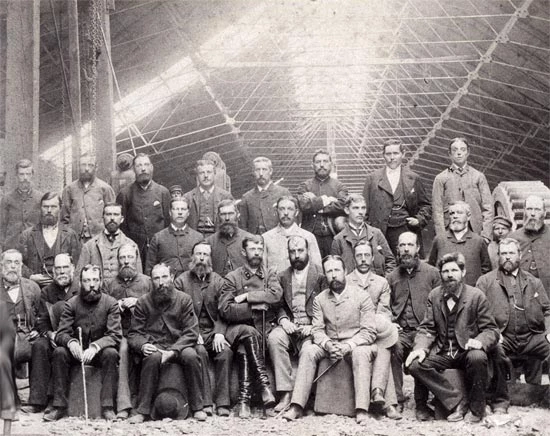
Welsh workers in the ironworks at Hughesovka

Welsh workers in the ironworks at Hughesovka, John Hughes is second from the right in the front row

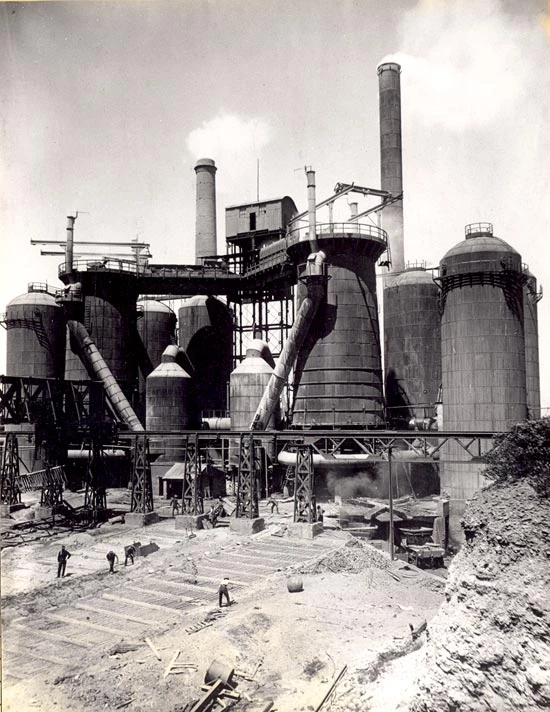
Iron

"Wales was at the forefront of the development of the iron industry in Britain and it is therefore not surprising to find Welsh people leading the industry across the world in the nineteenth century."

[see more]

 
Bangor, Pennsylvania

Bangor, Pennsylvania

Slate

"Slate was used in Europe as a roofing material. Welsh slate was exported across the world for prestigious building projects. The discovery of slate deposits in different countries became one of a number of economic factors that influenced Welsh workers to move to those areas."

[see more]

Lithgow Steelworks, New South Wales, Australia, 1920s

Lithgow Steelworks, New South Wales, Australia, 1920s

Steel

"Iron working centres often adapted themselves to the creation of steel, a stronger, more versatile material. Unsurprisingly Welsh workers played an important part in this change."

[see more]

 
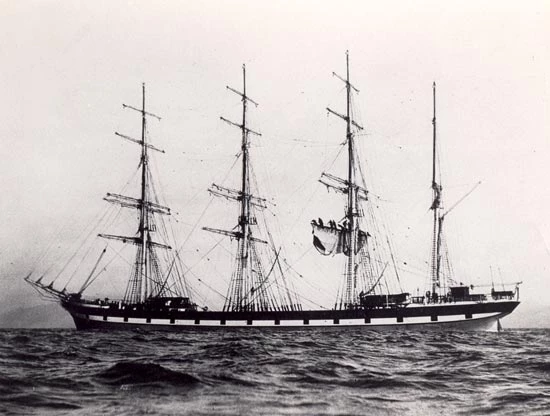
<em>Metropolis</em> built for William Thomas in 1887
Metropolis

built for William Thomas in 1887

Shipping

"Wales has a 1,200km (750 mile) coastline and a long tradition of seafaring. Welsh sailors travelled around the world, exporting Welsh goods and importing raw materials for industry. Welsh shipping lines were among the best-known in maritime trade and the company owners were amongst the richest."

[see more]

Quarrying stone, Randolph, Wisconsin

Quarrying stone, Randolph, Wisconsin

Metal Mining

"Wales has a 1,200km (750 mile) coastline and a long tradition of seafaring. Welsh sailors travelled around the world, exporting Welsh goods and importing raw materials for industry. Welsh shipping lines were among the best-known in maritime trade and the company owners were amongst the richest."

[see more]

 
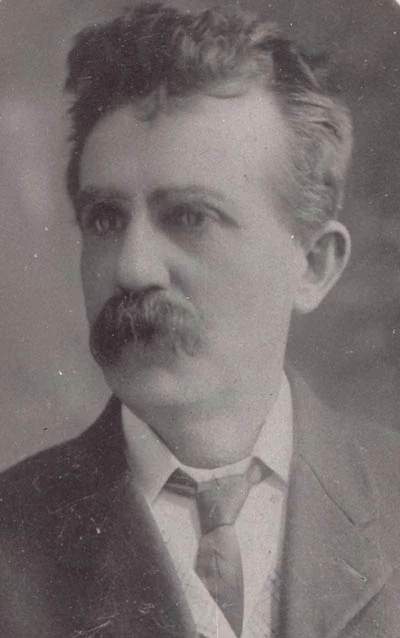
John Williams

John Williams

Tinplate

"The manufacture of tinplate was another area where Wales held a virtual monopoly in the world. South Wales accounted for over 80% of world production in the early 1890s."

[see more]

Morgan C. Jones, (on the right), nephew of Morgan Jones and working for the same company

Morgan C. Jones, (on the right), nephew of Morgan Jones and working for the same company

Other Industries

"Not all Welsh people worked in the 'traditional' heavy industries of Wales of course. Many worked in other industries and many transferred the skills they learnt in mines, foundries and works to other places of work."

[see more]

 
Cartoon from the Western Mail, 1928

Cartoon from the Western Mail, 1928

Migration Patterns

"Not everyone who left Wales for a new life abroad stayed away. Many people returned home for various reasons. This is called back migration."

[see more]

Breaker boys in Pennsylvania.

Breaker boys in Pennsylvania. Many Welsh boys in the USA began work in this way at an early age.

Radicalism

"Welsh industrial workers came from areas that had well organised unions. They had a reputation for standing up for their rights, safe working conditions and decent pay."

[see more]

 
Old Saron Church, the first Welsh church in Minnesota, 1856

Old Saron Church, the first Welsh church in Minnesota, 1856

Welsh Culture

"Like many emigrants, Welsh people took their culture with them to the new countries. In a strange, new place, keeping the songs, stories, languages and traditions of home alive helped emigrants to deal with the unfamiliarity."

[see more]

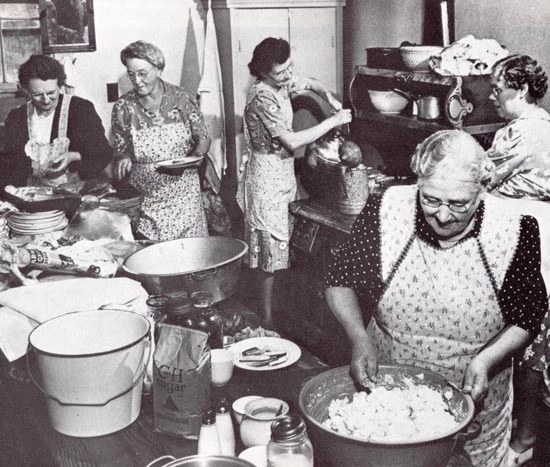
 Preparing food for a Gymanfa Ganu (singing festival), Peniel Church, Pickett, Wisconsin,1946.

Preparing food for a Gymanfa Ganu (singing festival), Peniel Church, Pickett, Wisconsin,1946.

Women

"The majority of industrial workers were men but women of course formed an important part of migrant communities."

[see more]

 
California, USA

California, USA

Place names

"It was common for emigrants of all nationalities to name their new settlements after places in their home countries. This provided a sense of identity and a link with home."

[see more]