: National Waterfront Museum

Canary Girls

Ian Smith, 6 August 2019

War

Germany invaded Belgium on 4 August 1914, leading Britain to declare war. In that first weekend, one hundred men an hour signed up to join the armed forces. By the end of the First World War over five million men had joined up.

The rush to do one’s duty and fight at the front left a shortage of skilled workers in factories across Britain. Women who mainly did menial or domestic jobs at this time, were now recruited to work in industry.

Even though there was a shortage of men to work in the factories, women were accused of taking jobs away from the ones who couldn’t fight. Women were also a cheaper workforce as they were paid less for doing the same job.

Shell Shortage

The nature of warfare changed dramatically during the First World War. Artillery had previously been a back up to soldiers but now became the main destructive force.

In 1915 a crucial shortage of shells and munitions occurred. Parliament was forced to adopt a National Munitions Policy with David Lloyd George as Minister of Munitions. It controlled wages, hours and employment conditions in munitions factories. It also forced the factories to employ more women to help with the shortage.

Munitions factories became the largest single employer of women with over 900,000 being employed in the industry. Even though they did the same job as the men they were paid half the wage.

By June 1917 the factories that the women worked in produced over fifty million shells a year. At the end of the war the British Army had fired around 170 million shells during the conflict.

Dangerous Work

With the declaration of war many firms realised that there was an opportunity to increase sales. Local Munitions Committees were organised by engineering and metal producing firms. National Shell Factories (NSF) were set up all over the country.

National Shell Factories took over existing buildings. Grangetown which had been used for spinning hemp and yarn, Festiniog Railway in Portmadoc and the Baldwins factory in Landore, Swansea were just a few of these. All of them produced varying weights of shell and shell heads.

It was dangerous work and the risk of explosion was always present. There are many recorded cases of death and serious injury.

Pembrey and the Canary Girls

Nobels Explosives owned the site of a former dynamite factory at Pembrey, near Burry Port. With government approval in 1914, they opened one of the first purpose built TNT (trinitrotoluene) factories. The site was taken over by the Ministry of Munitions and became the National Explosives Factory (NEF) Pembrey by 1917 and closed at the end of the war.

The work in this factory was heavy and dangerous and TNT was a highly poisonous substance. It contained picric acid which had the effect of turning the skin of the women who worked with it bright yellow - giving rise to the nickname canary girls.

The women were given milk to drink to combat the effects of these dangerous compounds. It could lead to liver failure, anaemia and damage to the immune system. Around four hundred women died from overexposure to TNT during the First World War.

Munitionette Football

During the war, women became heavily involved in sports like football and cricket. Football teams were formed at munitions factories across Britain. The government actively encouraged the women to play sports as they believed it was good for their health and kept them fit to work in the factories.

The North East of England was a hotspot of women’s football. Blythe Spartans Ladies FC were undefeated with their centre forward Bella Raey scoring 133 goals in one season. In 1918 thirty teams competed in the Munitionettes Cup.

When the men returned from the front, the munition factories closed and the ladies teams disbanded. In 1921 the FA banned women from playing on any of their grounds even though they were just as popular on the pitch as the men teams. Men were returning to football and they believed there was no place for women n the game.

It wasn’t until 1971 that the FA relented and allowed women to play at their grounds.

Llanelli Ladies FC, 1921.

Llanelli Ladies FC, 1921.

Equality

In 1915, the Women's War Workers Committee drew up a list of demands including the right to training, trade union membership and equal pay for equal work.

Women who filled roles previously held by men were paid much less and were justifiably angry. Men were also concerned that women would continue in these jobs after the war and a lower pay rate would become normal.

The first strike for equal pay in the UK happened in 1918 by women workers on London buses and trams. The Strike was successful and forced the government to look into whether the pay gap between sexes should be applied to all sections of industry.

The War Cabinet set up a committee in 1917 to look into equality at work. The report was not published until 1919. It found no difference between the sexes with production or quality of work. But the view that women were less able than men still remained.

Explosion in Pembrey

As soon as the war ended, the munitions factory at Pembrey, Carmarthenshire was used to dismantle shells rather than to make them. On 18 November 1918, Mary Fitzmaurice (36), Jane Jenkins (21) and Edith Ellen Copham (19) were killed in an explosion. Two other women were injured.

On the night of the fatal accident the women were dealing with a different type of shell than they had been used to. The explosion killed Jane immediately. Mary and Edith died in hospital that night.

The women were all from Swansea and Edith and Mary were buried in Danygraig cemetery on the east side of the town. A huge funeral procession was led from High Street by a brass band and followed by 500 munition girls from the factory, wearing their uniforms. The South Wales Weekly Post said that the women ‘had died as surely in the service of their country as any on the battlefield’ and noted that the crowds of onlookers saluted as the funeral passed.

Over a million shells were dismantle at Pembrey without any further accidents.

The funeral of a munitions worker in Swansea.

The funeral of a munitions worker in Swansea.

The Gilbern – too good to be a ‘one-off’

Ian Smith, 30 July 2019

Gilbern is a name synonymous with Welsh car making. Over 1,000 vehicles were produced in a factory at Llantwit Fardre, in the Rhondda valley, between 1959 and 1974.

The cars were the brainchild of Giles Smith and Bernard Friese; 'Gilbern' came out of a combination of their first names. Bernard was an engineer and Giles a butcher. Giles wanted to build his own car and Bernard had experience of working with fibreglass, so they worked together to produce a car that was destined to become the Gilbern GT. The first car was built in 1959 in a shed behind the butcher’s shop in Church Village near Pontypridd.

Local racing driver Peter Cotterell was invited to view the car and loved it from the start. It was decided that the car was too good to be just a one-off and that they should form a company and go into production. Cotterell himself owned many Gilbern GTs and modified them for racing.

The original mechanical parts were from Austins and Austin Healeys, although Cotterell fitted a number of different engines in his racing cars, including 1600 MGA and 1800 MGB engines. One car, made for racer Ken Wilson, had a 4.5 litre V8 Chevrolet engine and a Jaguar independent rear axle!

Gilbern Invaders on show at an owners’ rally in 2009

Gilbern Invaders on show at an owners’ rally in 2009

In 1961, the pair bought premises in Llantwit Fadre and started production in earnest. At first the company produced one car a month, but by 1965 production had increased to four a month.

In 1966 a new car, the Gilbern Genie, was produced. This was a bigger family car than the sporty GT, and with a V6 Ford engine it had plenty of power. The GT 1800 was produced in tandem with the Genie for a little while, but was then gradually phased out in 1967.

The company never made huge sums of money but Giles and Bernard kept the company ticking over until April 1968, when it was sold to the ACE Group, which was based near the Gilbern factory.

Gilbern GTs on show at an owners’ rally in 2009

Gilbern GTs on show at an owners’ rally in 2009

Giles and Bernard were to stay on as directors but Giles left soon after the takeover. Bernard stayed for about a year before he also left the company.

The Genie was replaced by the Gilbern Invader Marks I, II, and by 1972 a Mark III; an Invader Estate was also built in 1971.

The company produced the exciting prototype two-seater sports car – the T11. Only one of these was built and the model never went into production. This T11 is still around, though; it's been fully restored and looks fantastic!

The Gilbern T11 only got as far as the prototype stage

The Gilbern T11 only got as far as the prototype stage

From 1972 to 1974 the company struggled to make a profit and, even with a succession of investors, it finally closed in 1974.

We have three Gilberns in our collection at Amgueddfa Cymru – National Museum Wales. One, a Gilbern GT Mark 1, is on display at the National Waterfront Museum in Swansea. The other two Gilberns are normally to be found in the National Collections Centre in Nantgarw and are brought out from time to time for exhibitions or special displays. Both are Gilbern Invaders – a Mark II which is green and a Mark III automatic in purple. The Mark III was the last production model to be made by the company, but they did produce two prototypes which never went into production.

Following a suggestion that the Invader would make a good police car the company extended one to make a four-door version – four doors being needed to allow passengers or prisoners to get in the back easily. This idea never came to fruition, though.

Working Abroad - Welsh Emigration

9 February 2010

Welsh industrial emigration: The legacy

In the nineteenth and twentieth centuries, millions of people across the world moved to different countries looking for work. They wanted to improve their lives, try new working practices, or have adventures in different lands.

Many people left Wales and took traditional Welsh industrial skills with them. Some helped create continuing economic success in the countries they moved to. Some made huge fortunes, finding fame. Others led more quietly successful lives, settling down and raising families. Some returned to Wales after time abroad, others were never to see this country again.

Here we look at the various industries from Wales that supplied workers and expertise around the world. What were those industries and skills? Where did the workers go? What values and traditions did they take with them? What impact did their leaving have on the country they left behind?

Welsh coal mine, Kentucky

Welsh coal mine, Kentucky

Coal

"Wales experienced a spectacular boom in coal mining in the late 19th and early 20th centuries. The world looked to the Welsh mining industry for expertise and advice."

[see more]

Burra Burra copper mine, 1874.

Burra Burra copper mine, 1874.

Copper

"The world of copper smelting was led by Wales in the 19th century. The works around Swansea and Holywell supplied over 50% of the world's copper."

[see more]

 
John Davies of Talsarnau, Gwynedd, with his brother and friend seeking gold during the Australian Gold Rush

John Davies of Talsarnau, Gwynedd, with his brother and friend. They are seeking gold in Queensland, Australia in the 1880s

Gold

"Gold has been mined intermittently in Wales for thousands of years, but the industry never employed huge numbers of workers. Despite this, many Welsh emigrants joined the famous 'Gold Rushes' of the 19th century."

[see more]

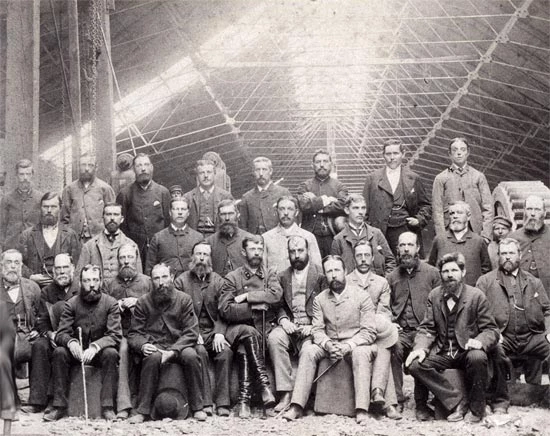
Welsh workers in the ironworks at Hughesovka

Welsh workers in the ironworks at Hughesovka, John Hughes is second from the right in the front row

Iron

"Wales was at the forefront of the development of the iron industry in Britain and it is therefore not surprising to find Welsh people leading the industry across the world in the nineteenth century."

[see more]

 
Bangor, Pennsylvania

Bangor, Pennsylvania

Slate

"Slate was used in Europe as a roofing material. Welsh slate was exported across the world for prestigious building projects. The discovery of slate deposits in different countries became one of a number of economic factors that influenced Welsh workers to move to those areas."

[see more]

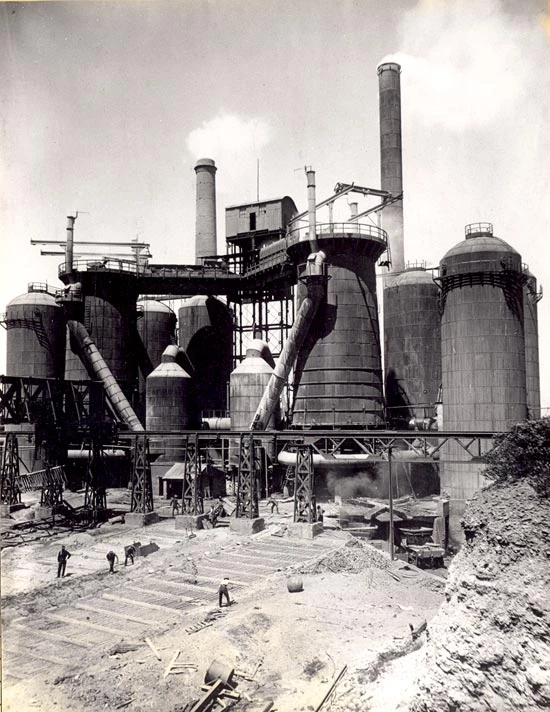
Lithgow Steelworks, New South Wales, Australia, 1920s

Lithgow Steelworks, New South Wales, Australia, 1920s

Steel

"Iron working centres often adapted themselves to the creation of steel, a stronger, more versatile material. Unsurprisingly Welsh workers played an important part in this change."

[see more]

 
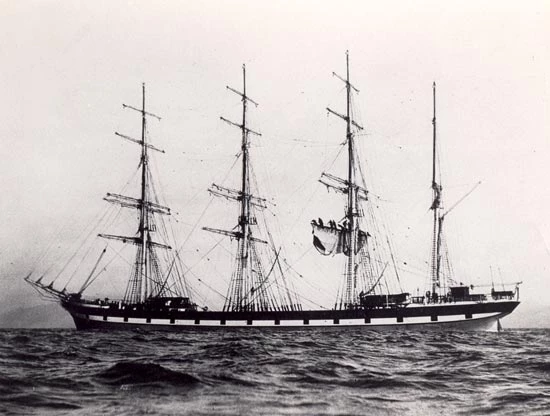
<em>Metropolis</em> built for William Thomas in 1887
Metropolis

built for William Thomas in 1887

Shipping

"Wales has a 1,200km (750 mile) coastline and a long tradition of seafaring. Welsh sailors travelled around the world, exporting Welsh goods and importing raw materials for industry. Welsh shipping lines were among the best-known in maritime trade and the company owners were amongst the richest."

[see more]

Quarrying stone, Randolph, Wisconsin

Quarrying stone, Randolph, Wisconsin

Metal Mining

"Wales has a 1,200km (750 mile) coastline and a long tradition of seafaring. Welsh sailors travelled around the world, exporting Welsh goods and importing raw materials for industry. Welsh shipping lines were among the best-known in maritime trade and the company owners were amongst the richest."

[see more]

 
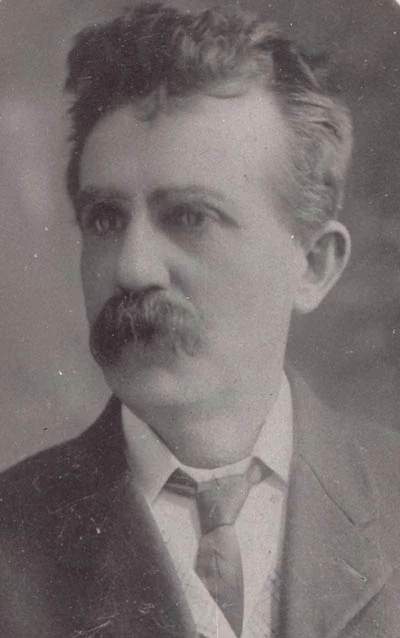
John Williams

John Williams

Tinplate

"The manufacture of tinplate was another area where Wales held a virtual monopoly in the world. South Wales accounted for over 80% of world production in the early 1890s."

[see more]

Morgan C. Jones, (on the right), nephew of Morgan Jones and working for the same company

Morgan C. Jones, (on the right), nephew of Morgan Jones and working for the same company

Other Industries

"Not all Welsh people worked in the 'traditional' heavy industries of Wales of course. Many worked in other industries and many transferred the skills they learnt in mines, foundries and works to other places of work."

[see more]

 
Cartoon from the Western Mail, 1928

Cartoon from the Western Mail, 1928

Migration Patterns

"Not everyone who left Wales for a new life abroad stayed away. Many people returned home for various reasons. This is called back migration."

[see more]

Breaker boys in Pennsylvania.

Breaker boys in Pennsylvania. Many Welsh boys in the USA began work in this way at an early age.

Radicalism

"Welsh industrial workers came from areas that had well organised unions. They had a reputation for standing up for their rights, safe working conditions and decent pay."

[see more]

 
Old Saron Church, the first Welsh church in Minnesota, 1856

Old Saron Church, the first Welsh church in Minnesota, 1856

Welsh Culture

"Like many emigrants, Welsh people took their culture with them to the new countries. In a strange, new place, keeping the songs, stories, languages and traditions of home alive helped emigrants to deal with the unfamiliarity."

[see more]

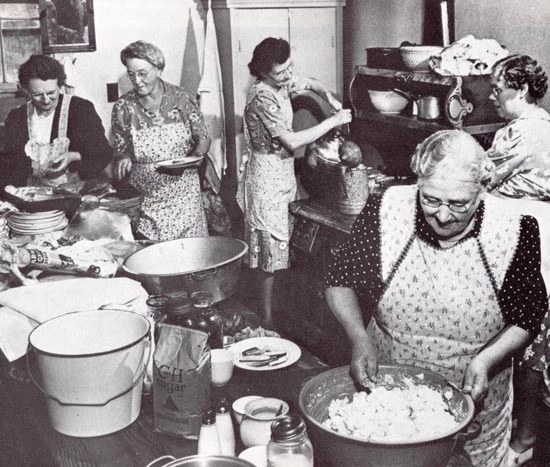
 Preparing food for a Gymanfa Ganu (singing festival), Peniel Church, Pickett, Wisconsin,1946.

Preparing food for a Gymanfa Ganu (singing festival), Peniel Church, Pickett, Wisconsin,1946.

Women

"The majority of industrial workers were men but women of course formed an important part of migrant communities."

[see more]

 
California, USA

California, USA

Place names

"It was common for emigrants of all nationalities to name their new settlements after places in their home countries. This provided a sense of identity and a link with home."

[see more]