Slate Development

All the world's a stage! How becoming a character transforms a story!

Julie Williams, 28 July 2025

Telling a story is a complicated process - especially a Museum story! 

Objects, information panels and websites do a good job of giving information and films are invaluable at setting context - but what we all want to know more about are the stories of the people who were there at the time.  And there's no better way of doing that  than by bringing them back to life! (sort of!)   

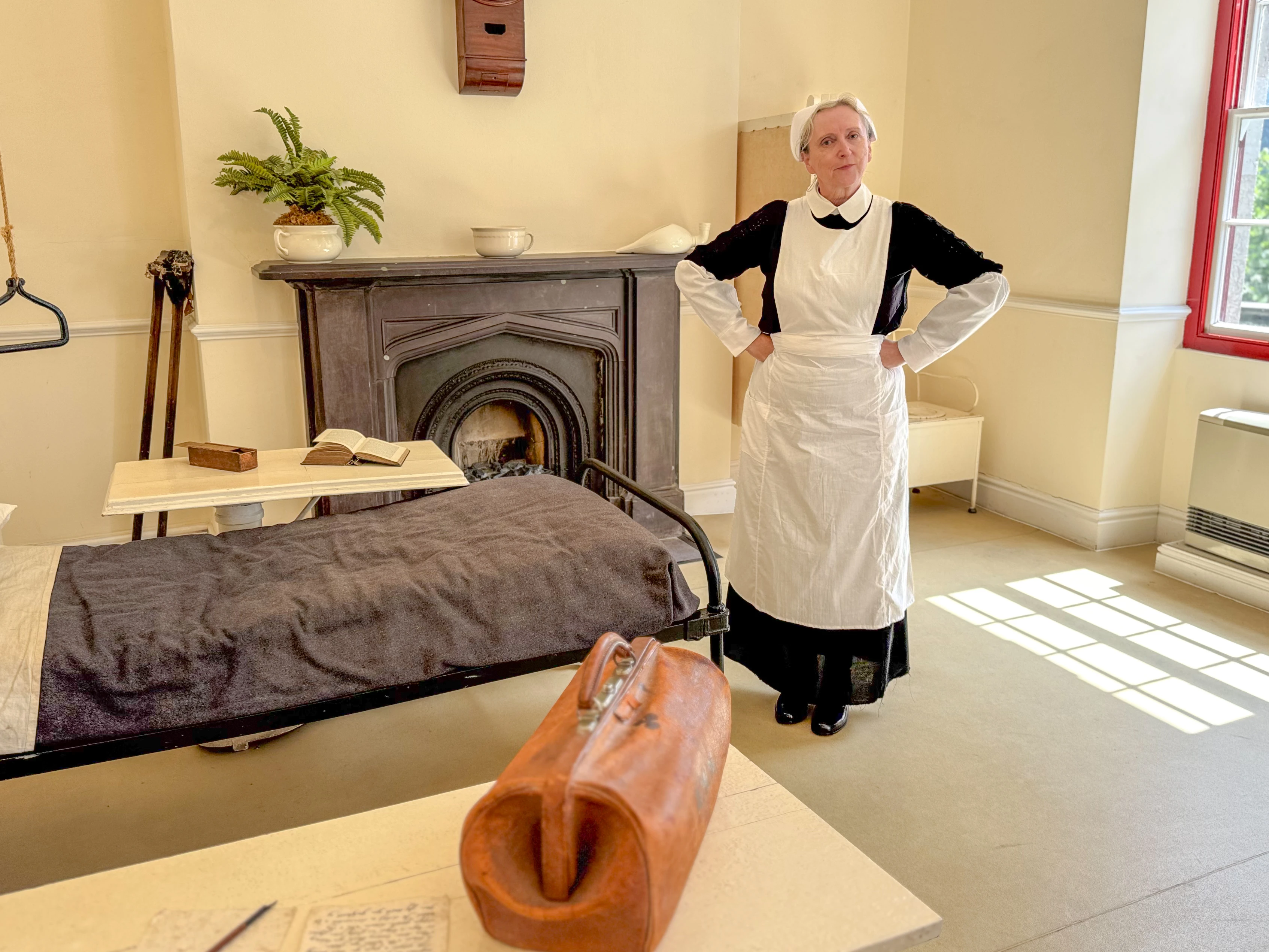
Rhian Cadwaladr - a popular local actor, has been telling 'stories' and creating 'characters' at the museum for over 25 years, and her latest creation, Margaret the Matron, has recently taken up residence at the Quarry Hospital in Llanberis as the Museum is temporarily closed for redevelopment. 

Margaret (or Gladys as she was more popularly known) was quite a character! An excellent nurse but also an excellent singer. She worked at the Hospiatl for many years and Rhian has meticulously researched her history so that she's able to answer all visitor questions that might come her way! 

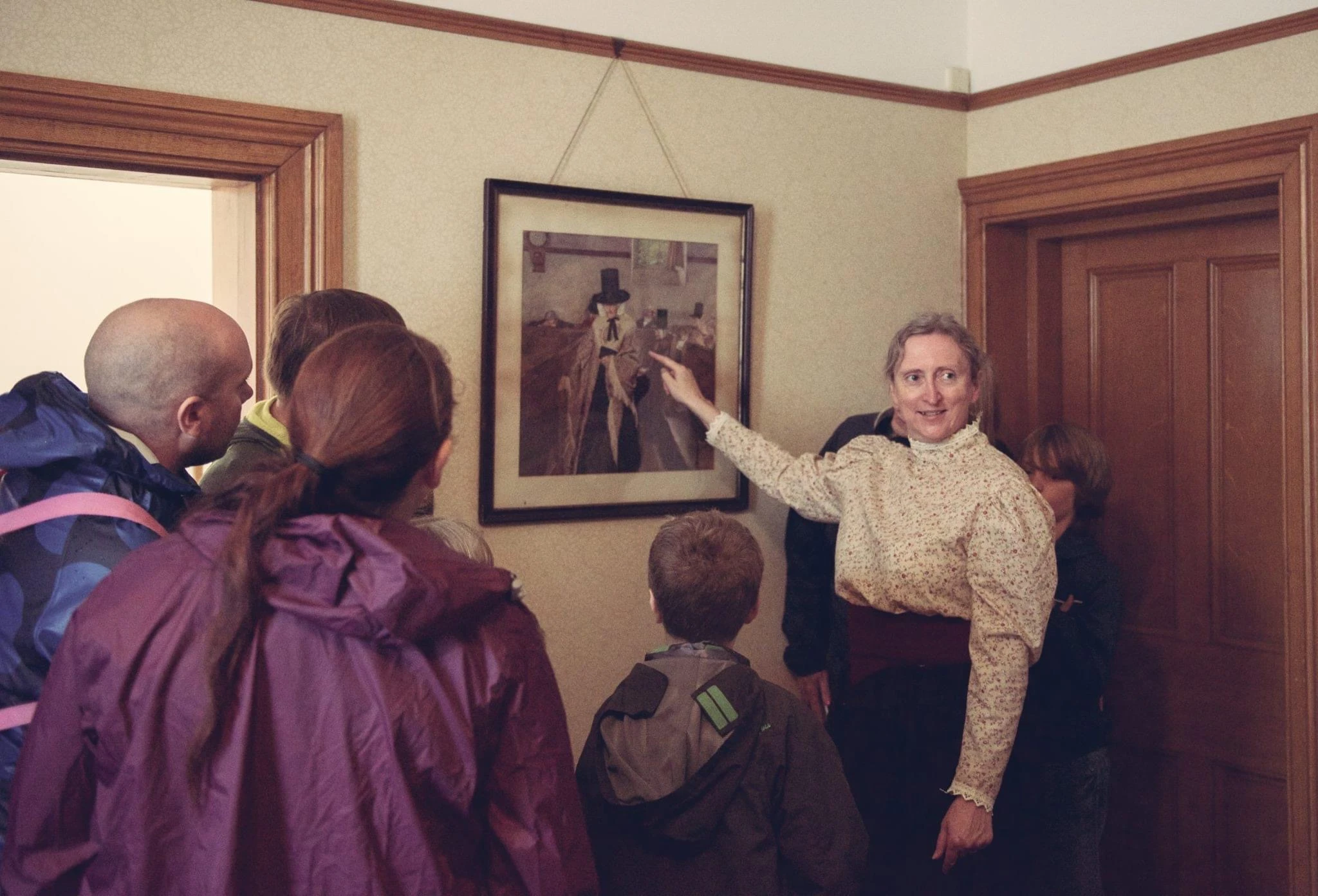
Rhian first worked with the Museum back in the autumn of 1997 when she was asked to become a character in the Museum’s then newly restored Chief Engineer’s house.  Over the years she has portrayed various characters from the original Elizabeth, the Chief Engineer’s maid,  to Hanna the Chief Engineer’s wife and Anti Marged, who brings to life the 'washday' for local schoolchildren. 

As Hanna, Rhian would tell people all about her life in the Chief Engineer's House and the many objects in it  – from the beautiful willow pattern crockery on the dresser to the handmade rag rugs on the floor. She would also draw attention to the ubiquitous SALEM painting on the wall – a common find in many Welsh homes circa 1919 due to the brilliant advertising mechanisms of sunlight soap! 

During Christmas events at the Museum 'Hanna' was often surrounded by families helping her to make Victorian oranges – leaving a gorgeous festive aroma through the house.

Whilst families enjoy these activities, they are learning that these  are places where people lived. Hanna spends a lot of her time making fires to warm the house and cook the food. She makes the rag rugs on the floor and polishes the brasses that have been passed down from generation to generation. Her favourite possession is the slate fan made by her father to show his skill as a quarryman. 

“Bringing our history to life, not only to generations of Welsh people but to people from all over the world has been an honour,” said Rhian, who is originally from the village of Llanberis and whose grandfather, great grandfather and great great grandfather worked at Dinorwig quarry. 

"People are so willing to imagine that they have stepped back in time and are meeting a ghost from the past - though I must admit some people, who have not expected to see me there, can be a bit spooked to start with!"

Another character Rhian brought to life with local schoolchildren is 'Anti Marged'.  These sessions focused on the traditional washday – from intense scrubbing with carbolic soap to pushing clothes through the mangle to drying and ironing – all centred around a warm coal fire of course and all a far cry from the convenience of our electric washing machines, tumble dryers and electric irons today. School children are always gob-smacked by the fact that the whole thing takes so long compared to the modern-day set-up!  

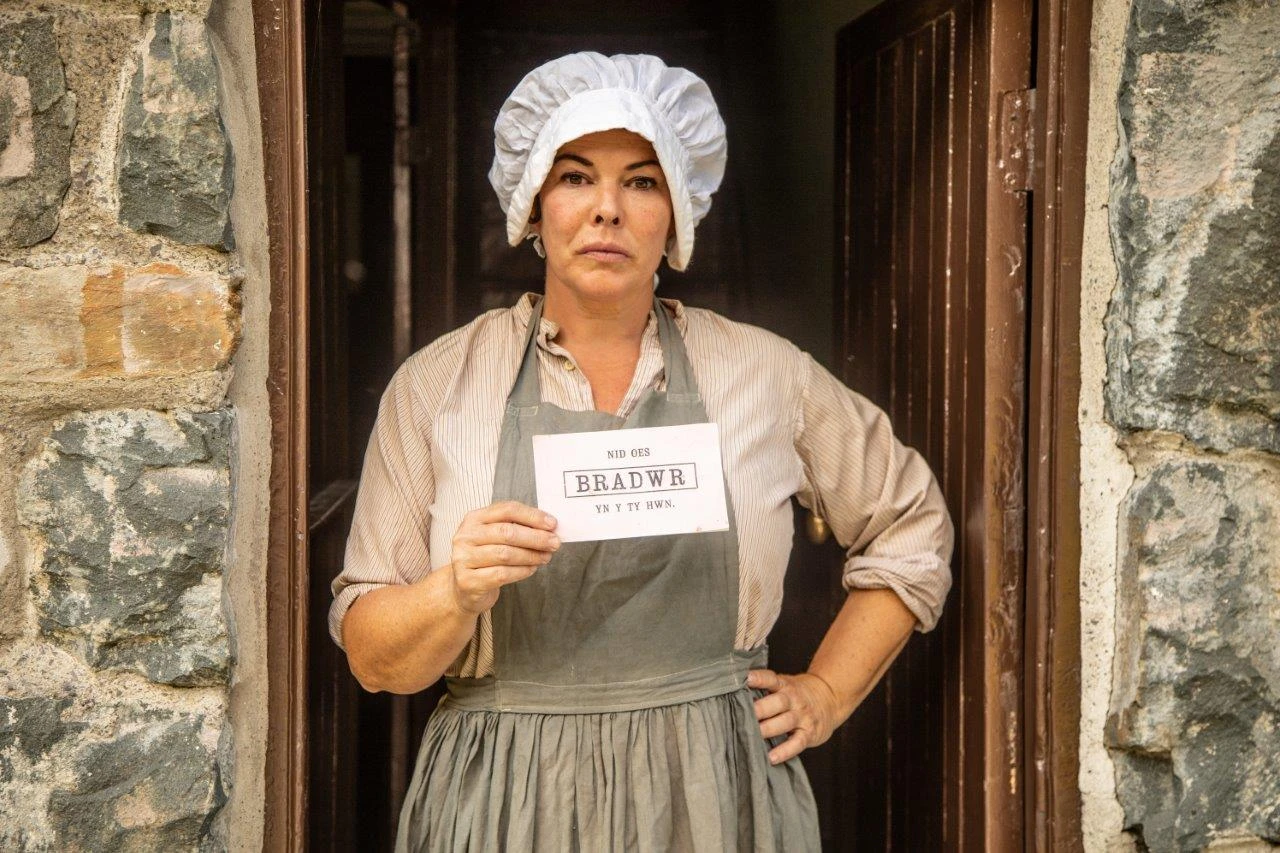
Another actor who has worked at the museum for a number of years is Leisa Mererid. Leisa would regularly take on the role of a 1901 housewife struggling to cope with the hardships brought about by the Great Strike at Penrhyn Quarry in Bethesda a difficult story!  Based in 1901 Leisa’s Quarryman husband is on strike – during the Great Lockout of Penrhyn Quarry. She has little bread on the table and life is generally a struggle. Most prominent in the house where she ‘lives’ is a large conch shell which she and others who are married to men who are on strike, hoot through at the men who have decided to break the strike and go back to work. They are ‘bradwrs’ (traitors) but as the sign in Leisa’s window states “Nid oes Bradwr yn y ty hwn” (There are no traitors in this house!) 

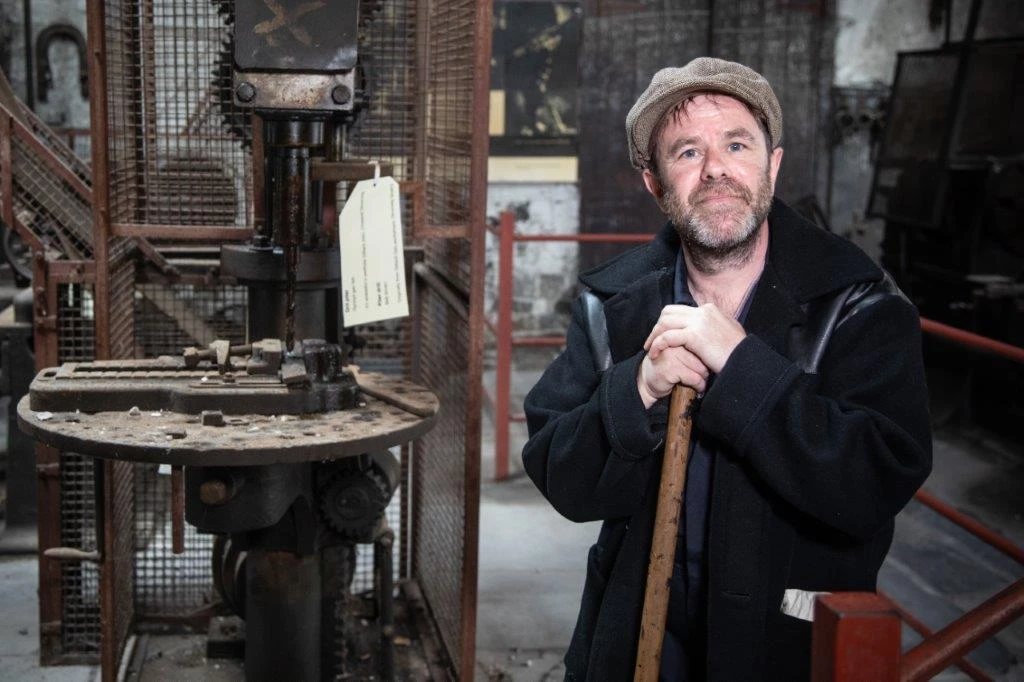
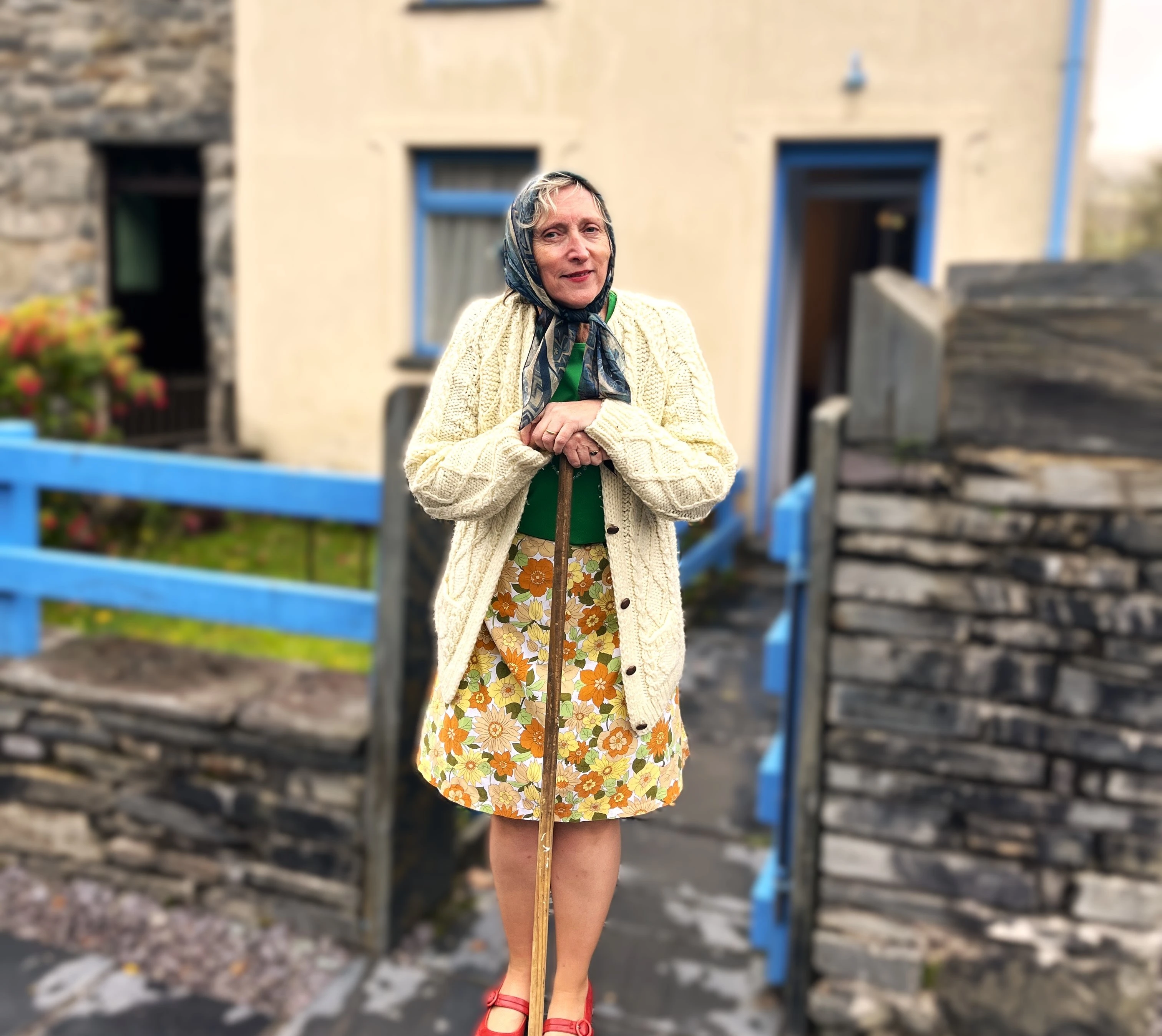
In May 2022, the National Slate Museum celebrated its 50th birthday and introduced a new character – ‘Wil the Fitter’ – a former engineering fitter at the Gilfach Ddu workshops. The script for this was written by Rhian...and in 2024 Gwyneth was created - a character who was based in the 1969 House of the Fron Haul Quarrymen's Houses.

This Summer, as the Museum is temporarily closed for redevelopment, Rhian takes on the role of yet another character - Margaret the Matron at the Quarry Hospital, located in the shadow of the Quarry but overlooking the beautiful Padarn Lake. Here she tells people about the type of injuries and illnesses that are treated at the Hospital, the Doctors who treat them, the type of work the Matron and other staff carry out day to day and just how progressive this amazing community Hospital is. There are many sad stories to be heard but it's also a story of innovation and of a community working together to provide an essential service for the Quarrymen and their families. 

Said Elen Roberts, head of National Slate Museum:

“Being a museum actor is a hard role to take on! The depth of knowledge they have to accumulate is huge because the questions that can be asked are extremely wide ranging – from basics such as how to tell if the iron is hot enough to more complicated issues such as the political events of the day. We’re incredibly lucky to have such talented actors as part of our museum family; they’ve added so much value and enjoyment to thousands of visitors’ experiences over the years.”

 Margaret can be seen every Thursday during the Summer. Click here for more information. 

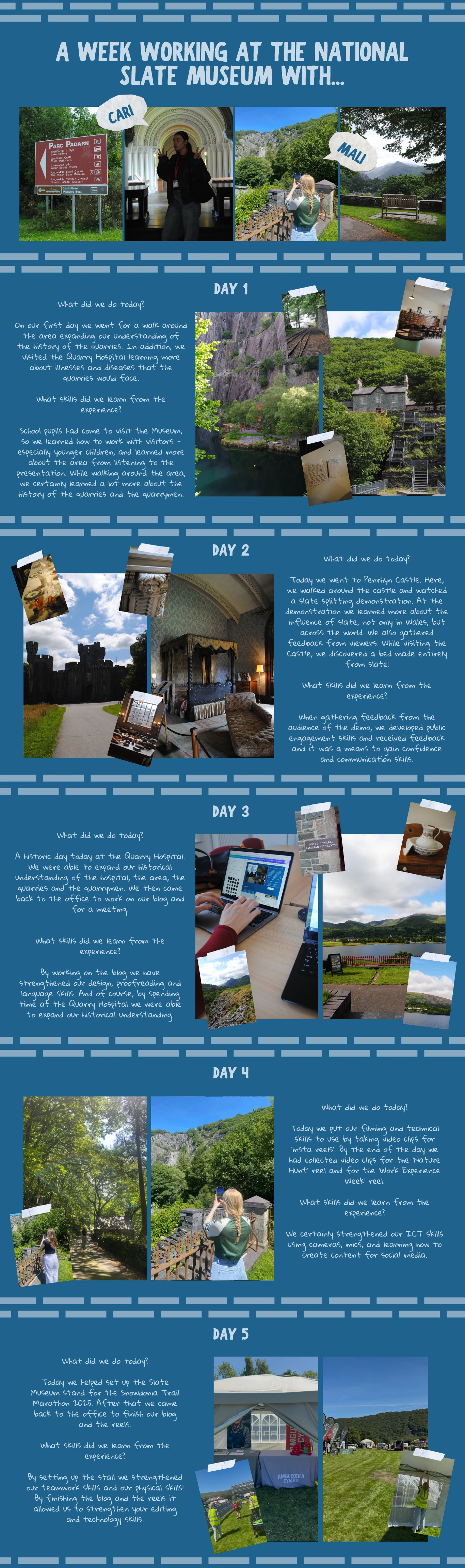
A week working at the National Slate Museum with Cari and Mali

Cari and Mali, work experience students , 14 July 2025

Cari and Mali, two work experience students at National Slate Museum.
Cari, work experience student, walking along a narrow road surrounded by green leafy trees.

Day 1 

What did we do today?

On our first day we went for a walk around the area expanding our understanding of the history of the quarries. In addition, we visited the Quarry Hospital learning more about illnesses and diseases that the quarries would face.

What skills did we learn from the experience?

School pupils had come to visit the Museum, so we learned how to work with visitors - especially younger children, and learned more about the area from listening to the presentation. While walking around the area, we certainly learned a lot more about the history of the quarries and the quarrymen.

Day 2

What did we do today?

Today we went to Penrhyn Castle. Here, we walked around the castle and watched a slate splitting demonstration. At the demonstration we learned more about the influence of slate, not only in Wales, but across the world. We also gathered feedback from viewers. While visiting the Castle, we discovered a bed made entirely from slate!

What skills did we learn from the experience?

When gathering feedback from the audience of the demo, we developed public engagement skills and received feedback and it was a means to gain confidence and communication skills.

A laptop opened onto a screen showing the blog a student on work experience is creating.

Day 3

What did we do today?

A historic day today at the Quarry Hospital. We were able to expand our historical understanding of the hospital, the area, the quarries and the quarrymen. We then came back to the office to work on our blog and for a meeting.

What skills did we learn from the experience?

By working on the blog we have strengthened our design, proofreading and language skills. And of course, by spending time at the Quarry Hospital we were able to expand our historical understanding.

Day 4

What did we do today?

A historic day today at the Quarry Hospital. We were able to expand our historical understanding of the hospital, the area, the quarries and the quarrymen. We then came back to the office to work on our blog and for a meeting.

What skills did we learn from the experience?

By working on the blog we have strengthened our design, proofreading and language skills. And of course, by spending time at the Quarry Hospital we were able to expand our historical understanding.

Collage of an event set up with Museum Wales branding, and work experience students helping to set up wearing high-vis.

Day 5

What did we do today?

Today we helped set up the Slate Museum stand for the Snowdonia Trail Marathon 2025. After that we came back to the office to finish our blog and the reels.

What skills did we learn from the experience?

By setting up the stall we strengthened our teamwork skills and our physical skills! By finishing the blog and the reels it allowed us to strengthen your editing and technology skills.

Head over to Facebook to see a Reel Cari and Mali made to document their time on work experience! 

Building confidence, one rag rug at a time!

Chloe Ward, 13 June 2025

In June 2023 Amgueddfa Lechi Cymru started a craft volunteering role to create 6 rag rugs for the education programme. We recruited 6 volunteers, and Isabel de Silva was part of the group. She started volunteering while she was finishing her master's degree at Bangor University, and her reason for volunteering was to gain experience for a job or career.

Volunteers making rag rugs.

As well as creating rag rugs, Isabel and the volunteers had to engage with visitors at the Chief Engineer's House to explain how they were made and share the history of the tradition. When Isabel started volunteering, she was quite shy and lacked confidence. To work on this further, Isabel volunteered to help us at Christmas with rag wreath making workshops too – it was a busy and lively environment! Her confidence grew as she spoke to more and more visitors and dealt with the many questions about the rugs from enthusiastic visitors.

A volunteer making traditional christmas decorations.

"Volunteering with the Slate Museum helped me to improve my confidence, improve my communication skills and learn a new practical skill." - Isabel de Silva

Isabel has since graduated and completed her master’s degree, and since gaining confidence and developing work skills, has now got a job with the Gwynedd Libraries Service and at Storiel, Gwynedd's museum and gallery. Isabel also completed a wonderful rug by herself by July 2024… it took a year of volunteering once a week!

"Through my volunteering I learned so much about the history of the local area, and the impact of the quarry on the lives of the people of North Wales today. That knowledge inspired me to do my part in preserving and sharing the history of Wales, and I have had the opportunity to do that through my job at Storiel." - Isabel de Silva

How do you pack up and move a Museum?

21 May 2025

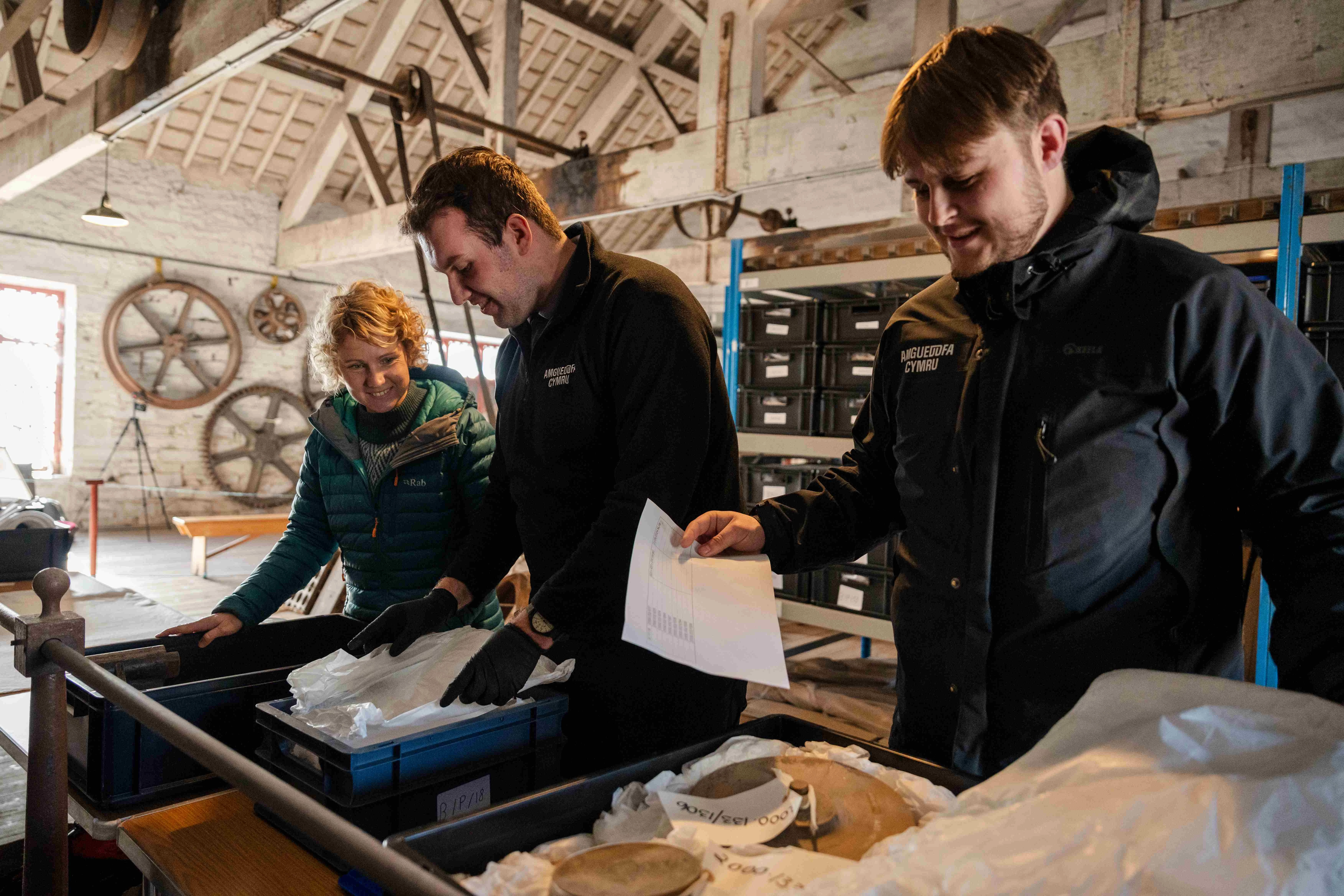
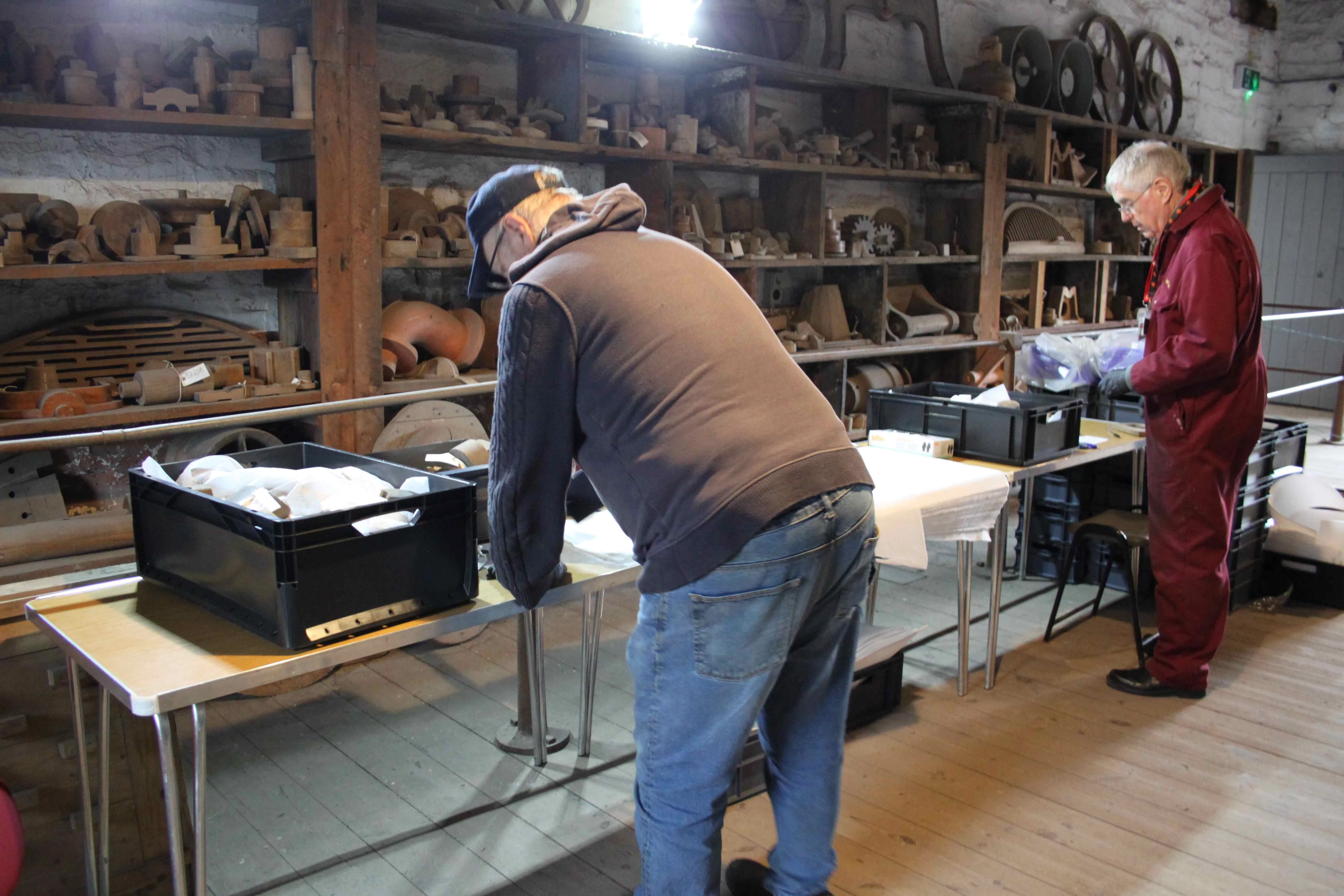
One of the first and largest parts of our redevelopment project has been the work of moving most of our collections off site to a nearby collections centre. This was necessary in order to ensure their safety whilst renovation and building work are carried out on site.

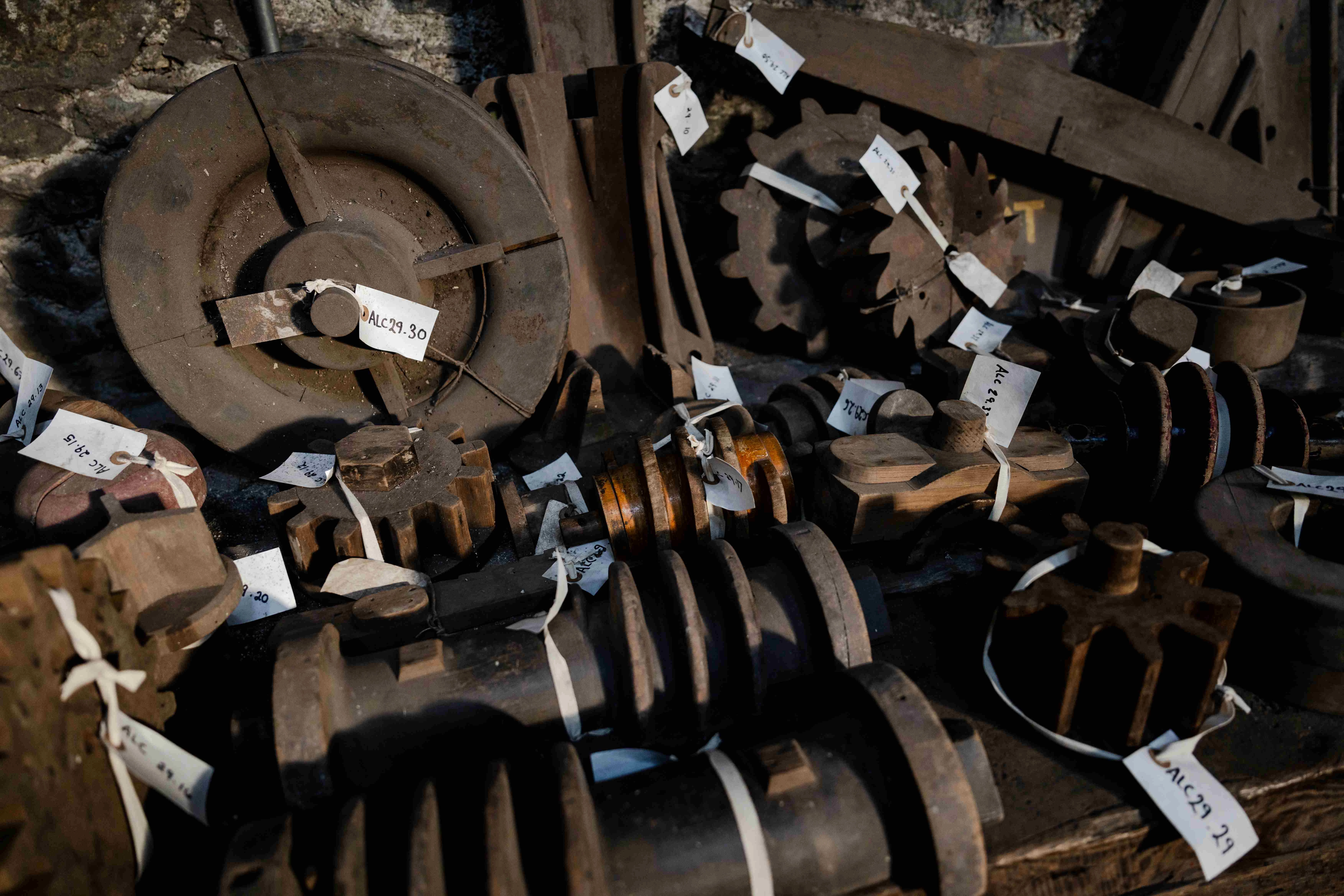
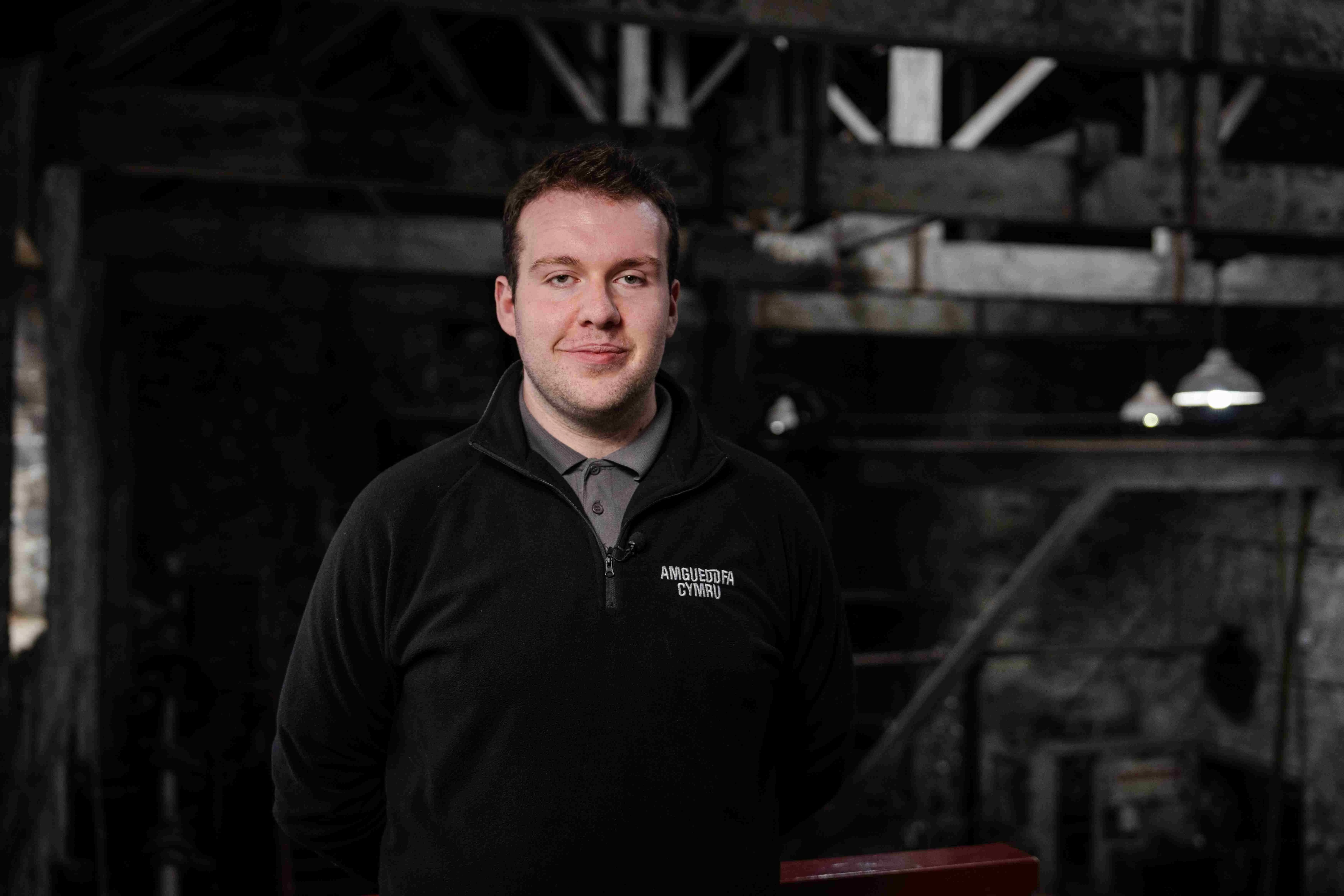
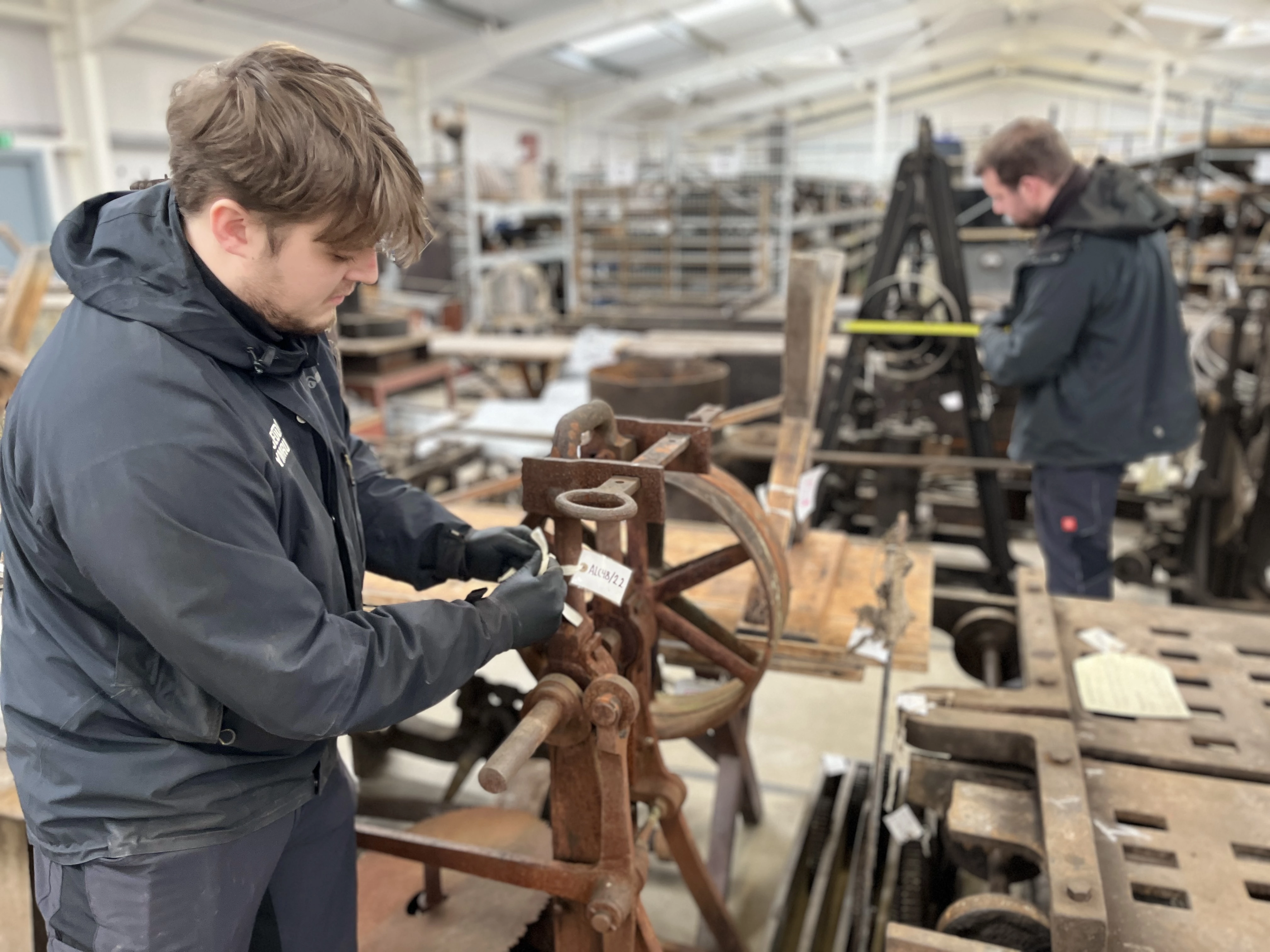
Work began back in July 2024 with the appointment of 2 new Collections Assistants - Osian Thomas and Mathew Williams - who joined Curator Cadi Iolen, to begin the enormous task of itemising, labelling and packing up each object in the Museum. 

Here they tell us a bit more about what was involved in 'moving a museum'. 

"There are over 8,000 objects in our collection ...this was an enormous task!" Cadi Iolen, Curator

The National Slate Museum is housed in the original engineering  workshops at Gilfach Ddu, and was opened in 1972 following a dedicated campaign by the community to keep it in tact as a Museum. Although the majority of our collection was documented, quite a large amount wasn't and so we've had to go back to basics and document and tag everything in the Museum so that everything's recorded. 

"It's a process that has never been done in the Slate Museum before, When the museum opened in 1972 it wasn't in a new building with white walls, and people bringing things in to display. It was sometimes difficult to know what was here originally and what has been transported here by the museum staff over all the years. But of course that has also given us a different kind of museum which is so unique and beautiful."      Cadi Iolen, Curator

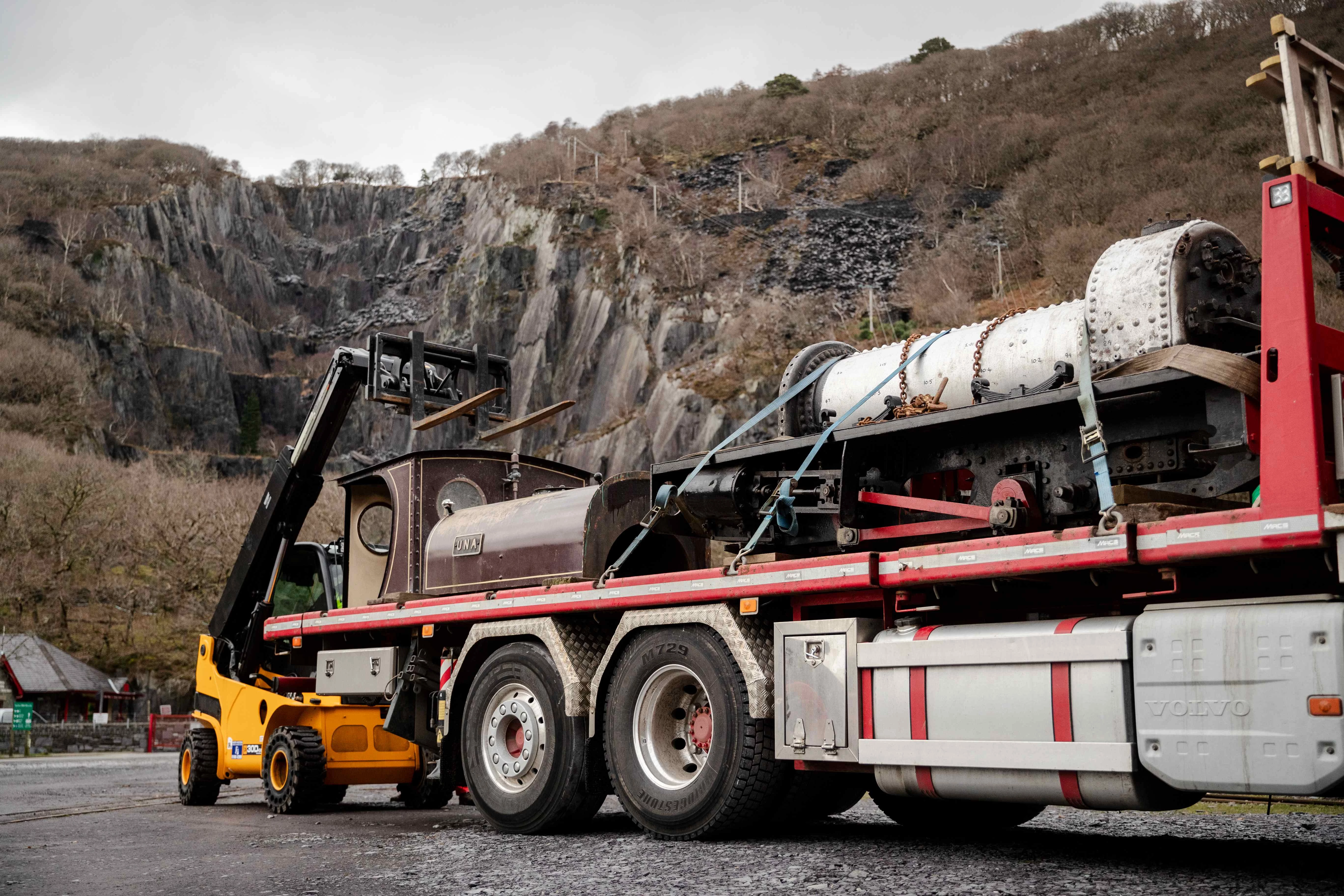
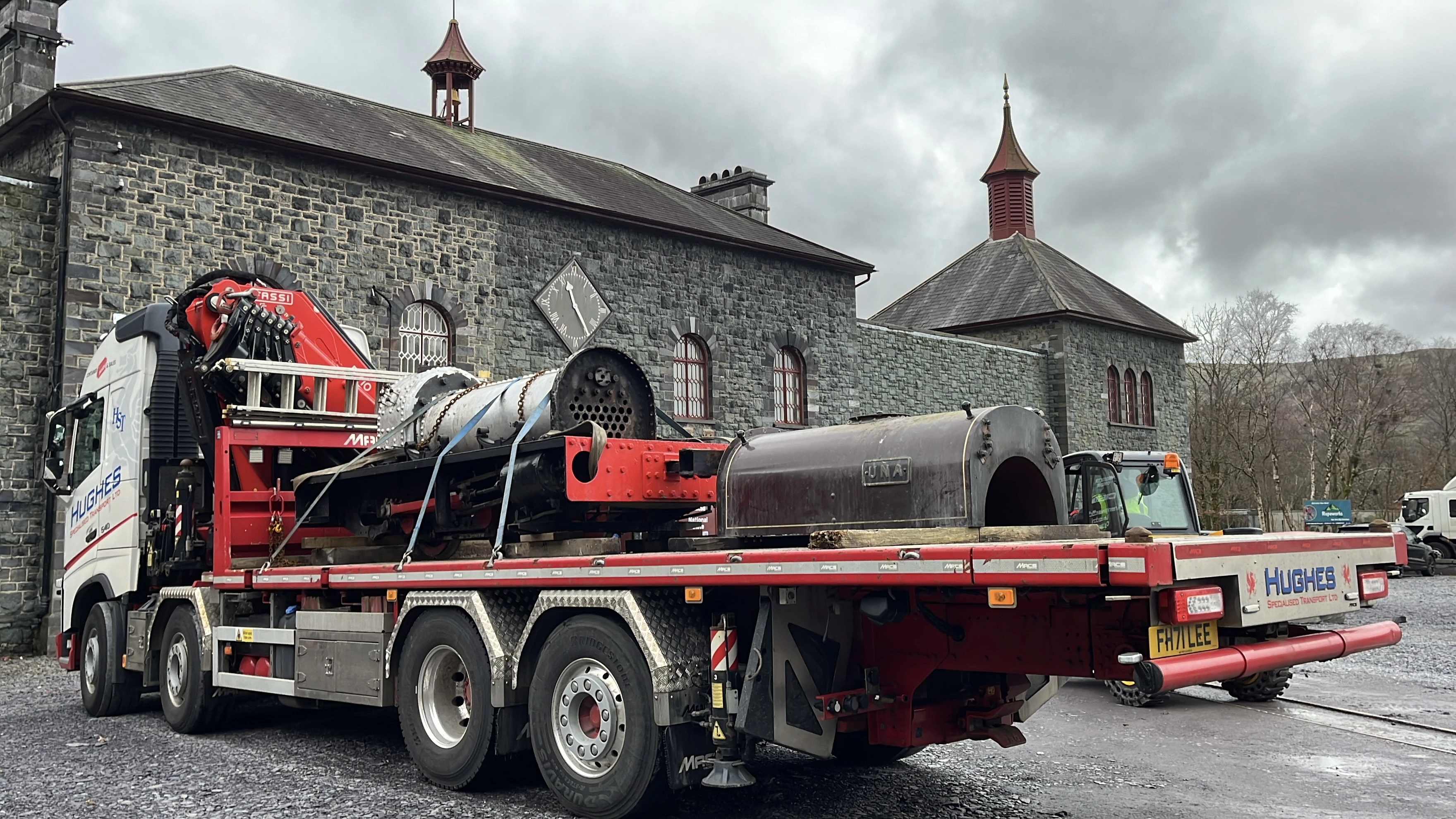
From Slate dressing tables to bellows, blocks and tackles to dressing machines, the sheer scale of the project has been immense and surprising at times. From the smallest wooden pattern to our much-loved locomotive, UNA, the Gilfach Ddu workshops are now a very different place to what people are used to seeing during a normal visit. As we’ve moved through the Museum we’ve made some surprising discoveries. 

"I found a box of tools owned by the Pattern family who exclusively worked up in the Pattern Loft. The box had been hidden underneath bag of patterns for years. We’re so happy that we came across them as they – like many items at the Museum – seem to have been left as they were when the workshops complex was closed in 1969!" Mathew Williams, Collections Assistant

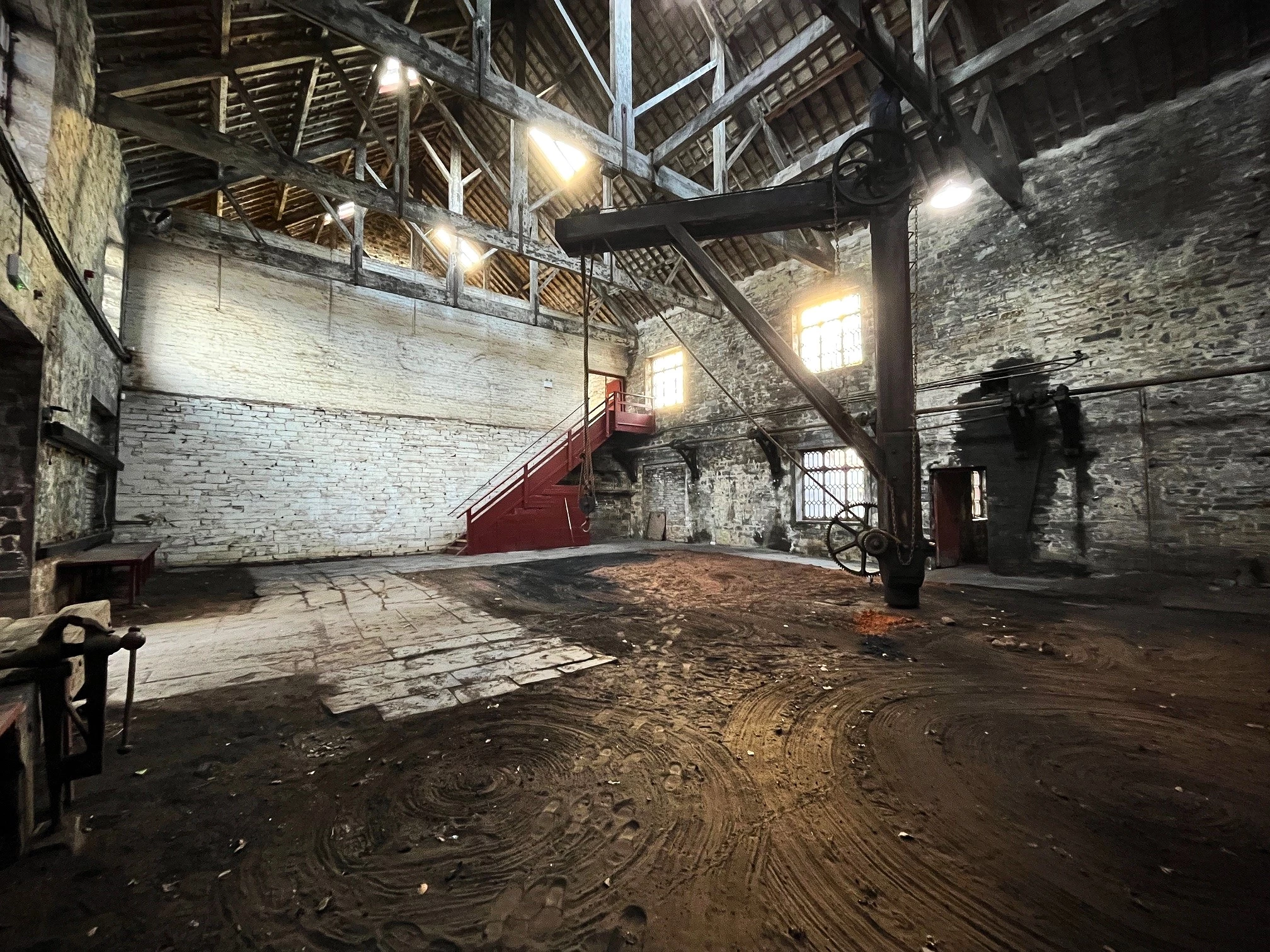
The Foundry was another room which needed to be recorded before items being moved. The massive sand area in the middle of the room was once filled with casting boxes and metal equipment and the walls were adorned with wooden patterns so big that it is difficult to grasp their size until they eventually came off the wall – each one revealing their legacy imprint on the paintwork behind them.

"While examining the building, we uncovered several hidden graffiti pieces. In the Volunteers’ Loft, we found WW2-era drawings of war leaders, previously hidden behind storage racks. I made a personal discovery while tagging tools on the crane in the Foundry. My grandfather, Gwynfryn Thomas, worked there as a Moulder, and I noticed “GT” etched into the woodwork. To my surprise, I counted nine of hiinitials on the crane—a touching connection to my family history." Osian Thomas, Curatorial Assistant

We closed the Museum at the end of October 2024 and in November the removals began! This was challenging on many levels, from huge items which needed their very own transport to moving all the tiny items in storage boxes. Working with Restore Harrow Green – an expert removals company specializing in large scale library, museum and office moves – things were relocated very quickly and efficiently. 

One of the first rooms to be emptied was the  Volunteers Loft (the last room in the pattern loft) which was full of Conserved Collections of wooden patterns and other objects. The Foundry, Smithy, Caban all followed and room by room, the museum slowly transformed from a place full of objects where space was at a premium, to suddenly feeling eerily empty.

Then it was time to move the larger objects on the Museum’s main yard. Who would’ve thought at the beginning of this redevelopment journey that we’d see one of our locomotive boilers suspended over the museum yard by a crane on a Thursday morning? 

"It’s been a real learning journey for us, one which has made us realize and appreciate the sheer scale and variety of the Museum’s collections. It’s also been an incredibly rewarding journey, handling objects that were last held by the workmen here and now seeing them all neatly organised and stored in the new collections Store."   Osian Thomas, Curatorial Assistant.

This is just the end of the first chapter of this large redevelopment project.  

The objects have now found a new temporary home at our new Collections centre in Llandegai near Bangor. 

We're planning open days there soon ...but we'll tell you all about that amazing space in the next blog! 

Museum Voices: Helen Goddard - Project Director National Slate Museum

Helen Goddard, 28 March 2025

Hi Helen, tell us a bit about yourself and your role at Amgueddfa Cymru.

I’ve been with Amgueddfa Cymru for a whirlwind 12 months. I am on secondment from Conwy County Borough Council where I usually look after the museum, library, arts, and archives services. Before moving to North Wales 14 years ago I worked across the Scottish islands as an archaeologist and community development worker.

My mum is from North Wales, and I always wanted to learn Welsh. It has taken me 14 years to get there, but I would say that a year at Llanberis has certainly supercharged my learning experience!

My role as Project Director means that I’m responsible for the overall management and delivery of the National Slate Museum Redevelopment project. I lead a number of wider project teams and report on progress to the Project Board. I’m charged with ensuring that the project stays on schedule and within budget and that we are meeting the expectations of our funders and stakeholders. Its also my job to make sure that we all share and drive forward the same vision to deliver the project together with our communities in a way that meets their own needs and aspirations.

The Llanberis project is really exciting, what can you share about it, as it progresses?

We refer to it as a once-in-a-generation opportunity and that really is true. Since the Slate Landscapes of Northwest Wales were designated as a World Heritage Site back in 2021, strategic funding opportunities have made it possible for us develop a really ambitious scheme. We will be able to create a brand new shop, café and learning space to transform the visitor experience. We are also going to install a lift to the first floor pattern lofts for the first time, as well as provide more accessible spaces throughout and better toilets (including a changing places toilet).

We are trying to create a nuanced balance between respecting the sensitivity of Gilfach Ddu and providing a contemporary experience. Visitors, locals and staff alike tell us that they love the site just the way it is – as though the workers have just downed tools and gone home for the day. That’s the spirit of the historic workshops that we are trying to honour, whilst at the same time making more significant improvements to spaces that have historically seen a lot of change already. For example, in our new gallery spaces, we will be able to show off more of our national collection, but also develop our role as a gateway to the wider slate landscape WHS.

We have just finalised our RIBA4 stage, which is the technical design phase where all the detailed specifications and materials are agreed. We have gone out to tender for the main works and with all being well are starting on site in April.

What’s happened to the collection while the renovation works are happening and can we still visit?

Almost the entire collection – around 10,000 objects - have been moved off site to a new dedicated accessible collections centre at Llandygai just outside Bangor. Anything that can move, has moved! This is to protect the collection but also to keep it accessible while the museum is closed temporarily. Our activity programme over the coming year will provide lots of opportunities for people to visit, experience and work with the collections in their temporary home and help select objects for display and decide how their stories will be told.

Is the Llanberis site open while works happen, it would be cool to have a tour of the empty museum!

The museum is closed temporarily, partly to keep staff and visitors safe because of the scale of the works, but also because we are working to a very tight timescale! We are offering some ‘Silent Spaces’ tours at the moment for the local community as we prepare to hand over to the contractor, and we will look to offer more sneak peak and behind the scenes tours over the coming months.

We’ve seen the Development and Llanberis Redevelopment Team working hard to secure funding, whose contributed to the project that we can shout about!

Goodness me, there are so many people doing extraordinary work. Certainly in the last 6 months I have been bowled over by Cadi, our curator, and the wider site staff for the work they’ve done to prepare the museum for closure. Kerry Vicker is my hero. She got me through our Stage 2 National Lottery Heritage Fund bid for just under £10m.

What sustainability measures are being considered, to protect the future of the museum and the collection?

We have Victoria Hillman working on the project team as part of the redevelopment so that we can keep a focused eye on sustainability and environment. There are so many elements to this which are a combination of preventative measures and new initiatives.

In terms of the collection we are being pragmatic and responsive to the types of industrial collections we have. We are conserving some elements – such as Una the engine – who will be brought back into steam through the project. The environments we achieve for the main gallery spaces will achieve a new level of conditioning, which will help us to display more sensitive objects for the first time.

We have also been working with Cardiff Met university on a climate adaptation pathway exercise and building this into the specification for things like landscaping materials, managing run-off, breathability of buildings and design of rainwater goods. We are also looking to achieve:

  • BREEAM excellent for the new buildings
  • New bat and swift boxes
  • Translocation of lichens and mosses
  • Planting of native and rare species
  • Rainwater harvesting
  • Highly sensitive lighting strategy
  • Sustainability and environmental learning outcomes embedded across all interpretation

The list goes on!

What are you most looking forward to about the redevelopment?

I can’t wait to see my two young children playing in the spaces we create. I’m hoping to see nothing but delight and wonder on their faces as they explore.

Finally, we love asking this - what’s your favourite piece in the Amgueddfa Cymru collection?

Well, I haven’t been here very long, but I would say my favourite object so far is our beautiful Caban Eisteddfod Chair in the NSM collection. What a simple, beautiful expression of life in the slate quarrying communities and the lived experience of those who sat together in the Caban.