Museum Blogs

All the world's a stage! How becoming a character transforms a story!

Julie Williams, 28 July 2025

Telling a story is a complicated process - especially a Museum story! 

Objects, information panels and websites do a good job of giving information and films are invaluable at setting context - but what we all want to know more about are the stories of the people who were there at the time.  And there's no better way of doing that  than by bringing them back to life! (sort of!)   

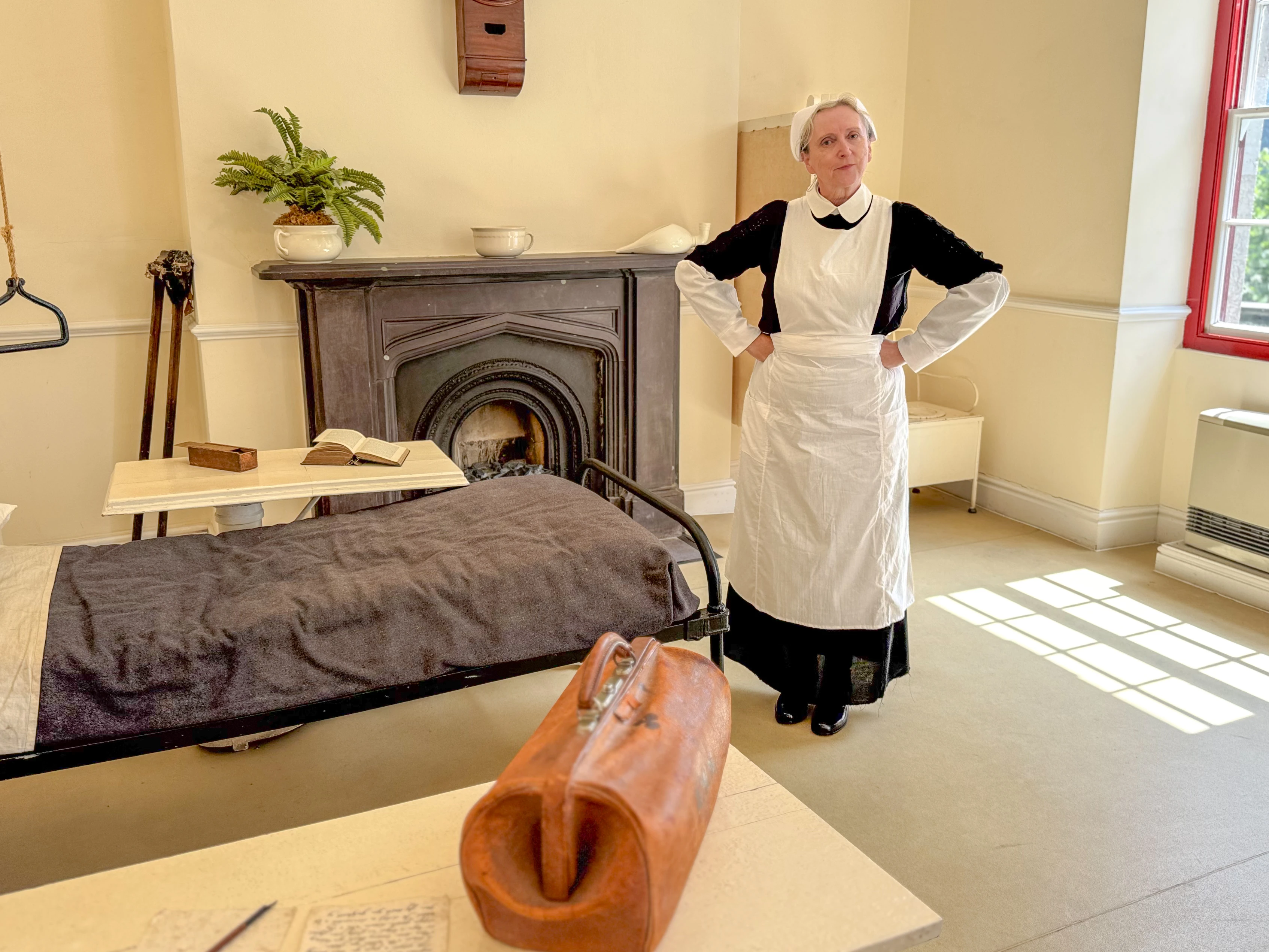
Rhian Cadwaladr - a popular local actor, has been telling 'stories' and creating 'characters' at the museum for over 25 years, and her latest creation, Margaret the Matron, has recently taken up residence at the Quarry Hospital in Llanberis as the Museum is temporarily closed for redevelopment. 

Margaret (or Gladys as she was more popularly known) was quite a character! An excellent nurse but also an excellent singer. She worked at the Hospiatl for many years and Rhian has meticulously researched her history so that she's able to answer all visitor questions that might come her way! 

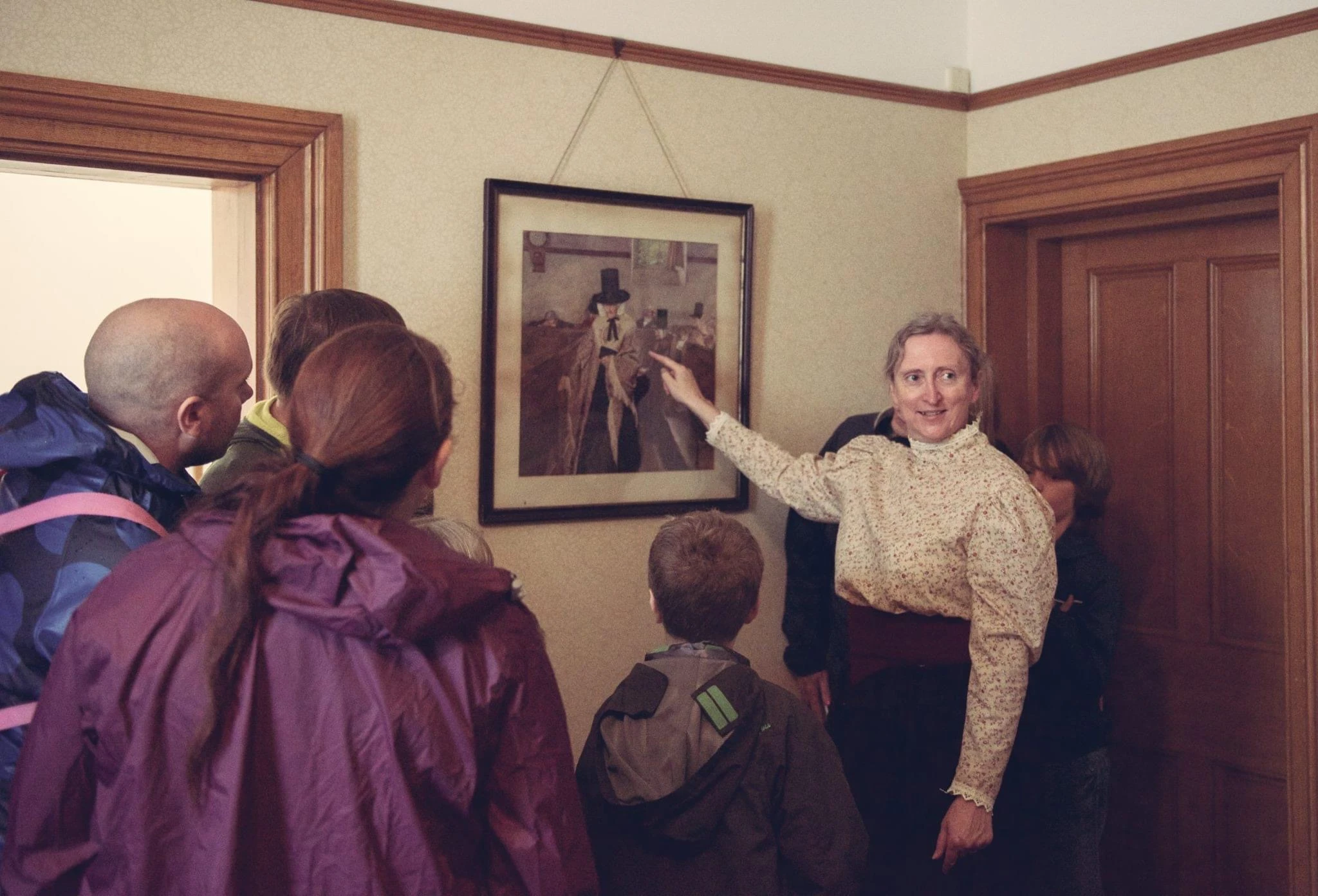
Rhian first worked with the Museum back in the autumn of 1997 when she was asked to become a character in the Museum’s then newly restored Chief Engineer’s house.  Over the years she has portrayed various characters from the original Elizabeth, the Chief Engineer’s maid,  to Hanna the Chief Engineer’s wife and Anti Marged, who brings to life the 'washday' for local schoolchildren. 

As Hanna, Rhian would tell people all about her life in the Chief Engineer's House and the many objects in it  – from the beautiful willow pattern crockery on the dresser to the handmade rag rugs on the floor. She would also draw attention to the ubiquitous SALEM painting on the wall – a common find in many Welsh homes circa 1919 due to the brilliant advertising mechanisms of sunlight soap! 

During Christmas events at the Museum 'Hanna' was often surrounded by families helping her to make Victorian oranges – leaving a gorgeous festive aroma through the house.

Whilst families enjoy these activities, they are learning that these  are places where people lived. Hanna spends a lot of her time making fires to warm the house and cook the food. She makes the rag rugs on the floor and polishes the brasses that have been passed down from generation to generation. Her favourite possession is the slate fan made by her father to show his skill as a quarryman. 

“Bringing our history to life, not only to generations of Welsh people but to people from all over the world has been an honour,” said Rhian, who is originally from the village of Llanberis and whose grandfather, great grandfather and great great grandfather worked at Dinorwig quarry. 

"People are so willing to imagine that they have stepped back in time and are meeting a ghost from the past - though I must admit some people, who have not expected to see me there, can be a bit spooked to start with!"

Another character Rhian brought to life with local schoolchildren is 'Anti Marged'.  These sessions focused on the traditional washday – from intense scrubbing with carbolic soap to pushing clothes through the mangle to drying and ironing – all centred around a warm coal fire of course and all a far cry from the convenience of our electric washing machines, tumble dryers and electric irons today. School children are always gob-smacked by the fact that the whole thing takes so long compared to the modern-day set-up!  

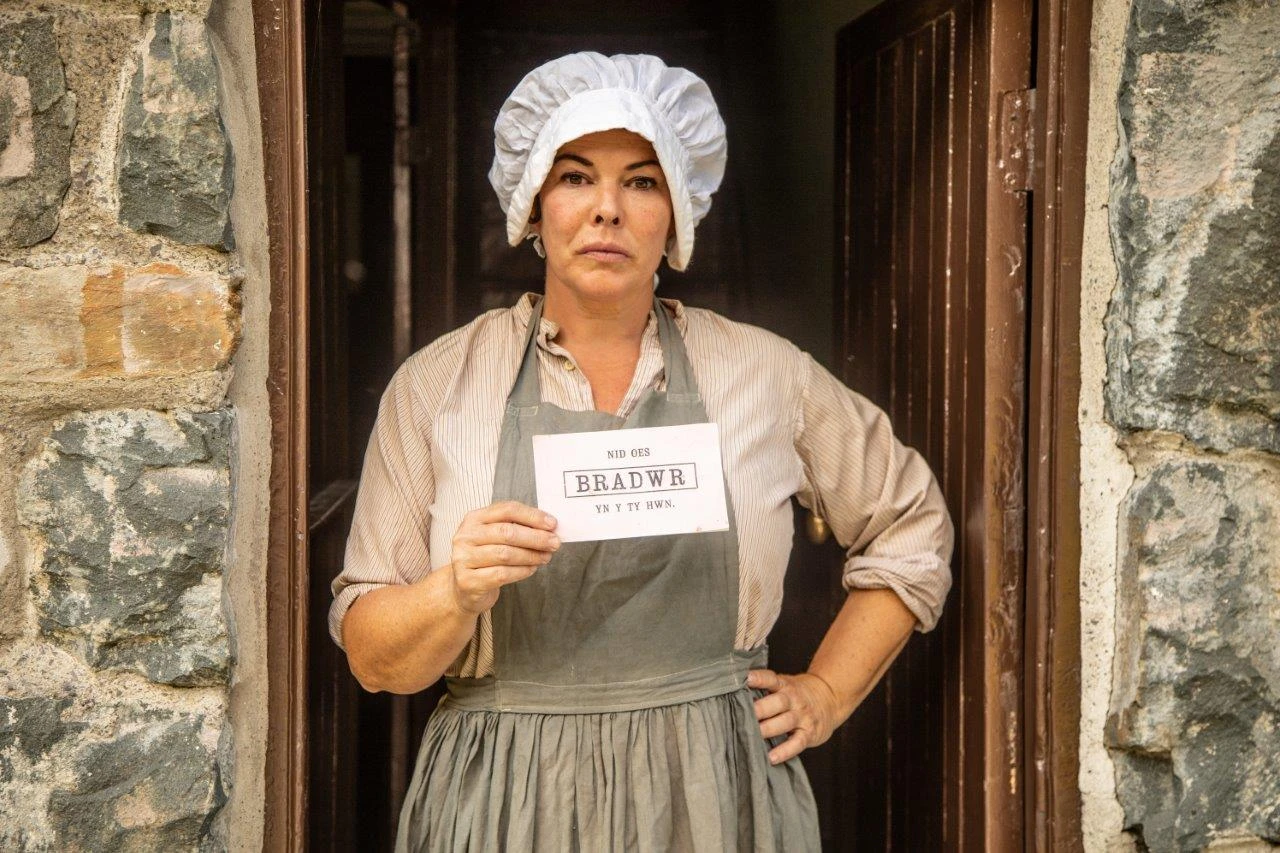
Another actor who has worked at the museum for a number of years is Leisa Mererid. Leisa would regularly take on the role of a 1901 housewife struggling to cope with the hardships brought about by the Great Strike at Penrhyn Quarry in Bethesda a difficult story!  Based in 1901 Leisa’s Quarryman husband is on strike – during the Great Lockout of Penrhyn Quarry. She has little bread on the table and life is generally a struggle. Most prominent in the house where she ‘lives’ is a large conch shell which she and others who are married to men who are on strike, hoot through at the men who have decided to break the strike and go back to work. They are ‘bradwrs’ (traitors) but as the sign in Leisa’s window states “Nid oes Bradwr yn y ty hwn” (There are no traitors in this house!) 

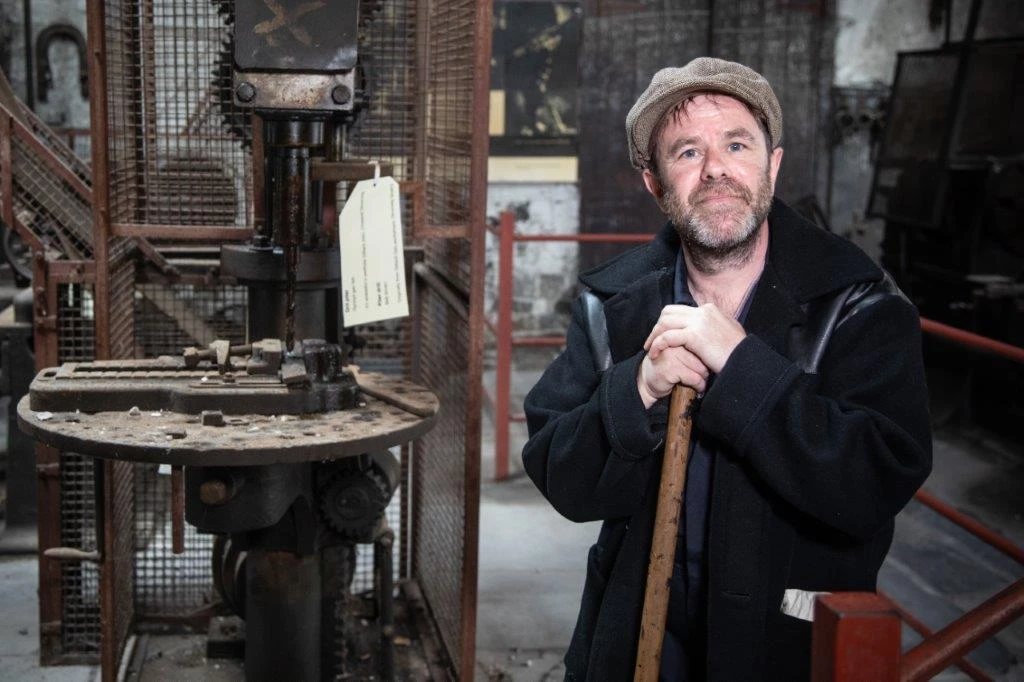
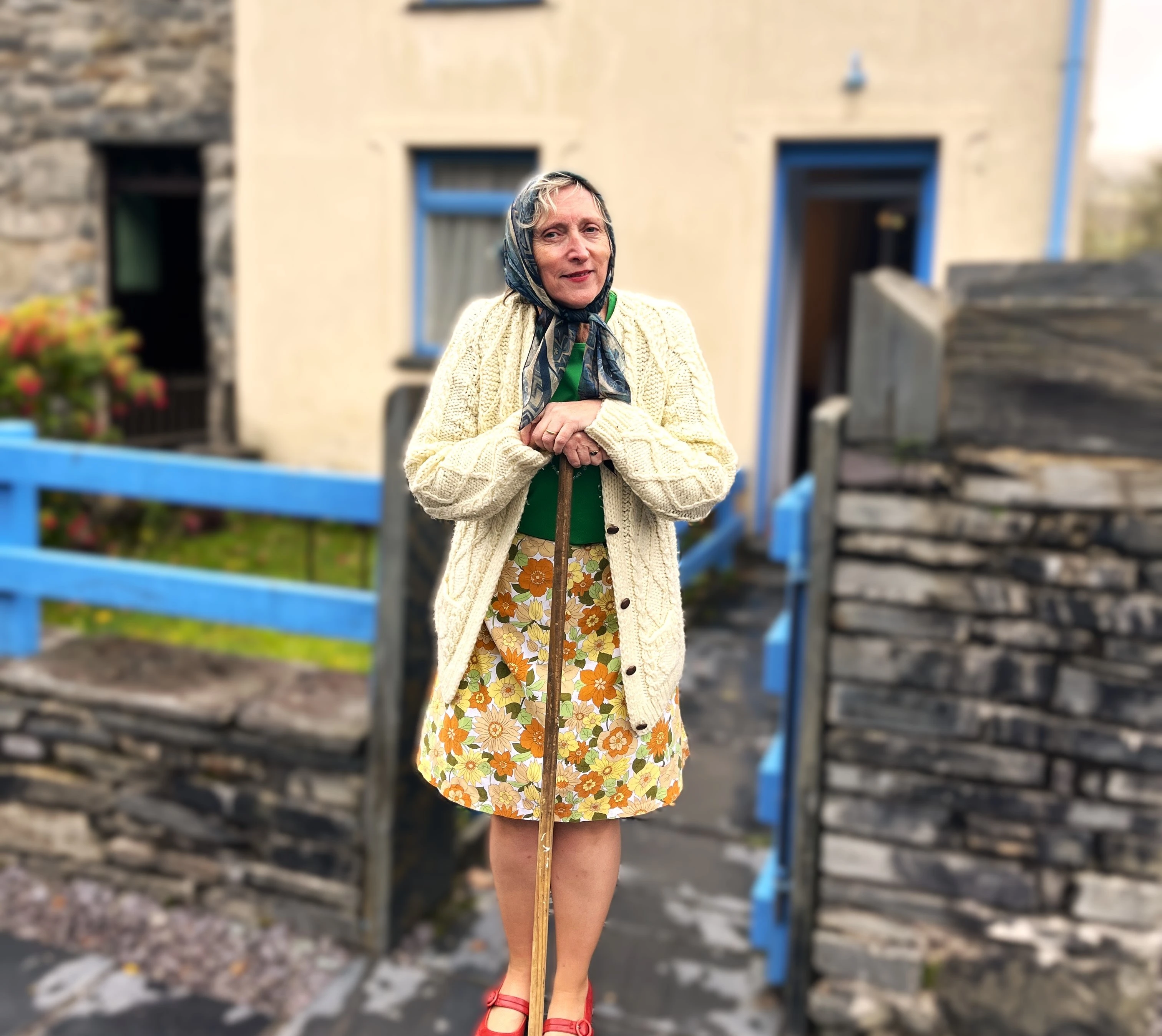
In May 2022, the National Slate Museum celebrated its 50th birthday and introduced a new character – ‘Wil the Fitter’ – a former engineering fitter at the Gilfach Ddu workshops. The script for this was written by Rhian...and in 2024 Gwyneth was created - a character who was based in the 1969 House of the Fron Haul Quarrymen's Houses.

This Summer, as the Museum is temporarily closed for redevelopment, Rhian takes on the role of yet another character - Margaret the Matron at the Quarry Hospital, located in the shadow of the Quarry but overlooking the beautiful Padarn Lake. Here she tells people about the type of injuries and illnesses that are treated at the Hospital, the Doctors who treat them, the type of work the Matron and other staff carry out day to day and just how progressive this amazing community Hospital is. There are many sad stories to be heard but it's also a story of innovation and of a community working together to provide an essential service for the Quarrymen and their families. 

Said Elen Roberts, head of National Slate Museum:

“Being a museum actor is a hard role to take on! The depth of knowledge they have to accumulate is huge because the questions that can be asked are extremely wide ranging – from basics such as how to tell if the iron is hot enough to more complicated issues such as the political events of the day. We’re incredibly lucky to have such talented actors as part of our museum family; they’ve added so much value and enjoyment to thousands of visitors’ experiences over the years.”

 Margaret can be seen every Thursday during the Summer. Click here for more information. 

DJ Jaffa's Slipmats

Kieron Barrett, 15 July 2025

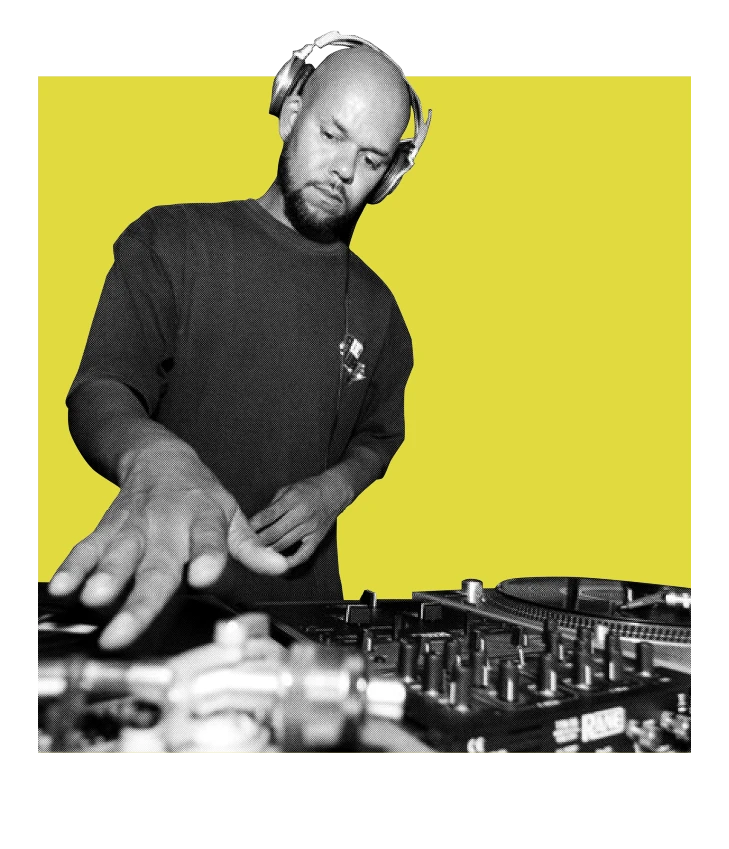
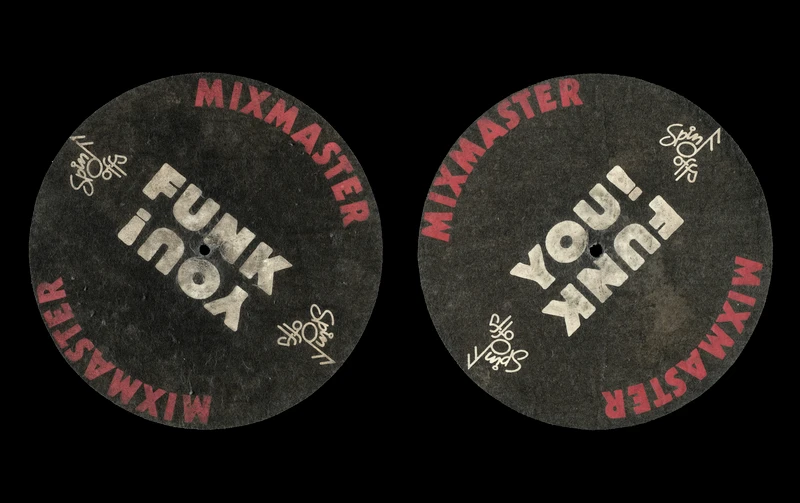
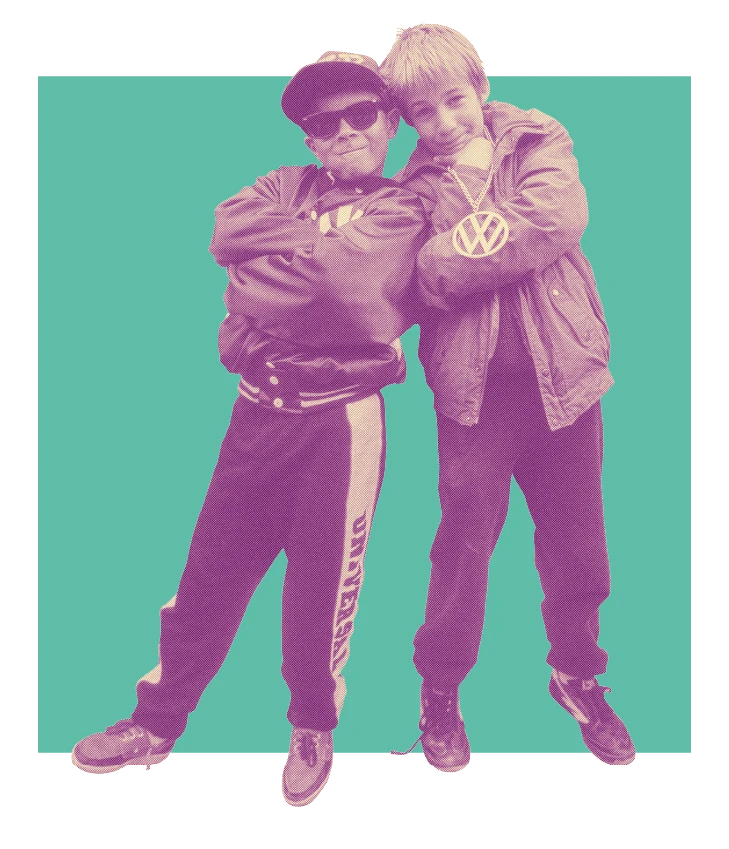
Slipmats are an essential component for DJing when using vinyl. Even more so for Hip Hop DJs who also scratch or do 'turntablist’ tricks. Many, including Jaffa, found out early on that using the home hi-fi system to learn how to scratch might soon ruin your parents record collection. Rather than rubbing the vinyl against the rubber or plastic of the turntable, a slipmat allows you to move the record back and force gracefully without damage. For this reason alone it would make sense for us to include a pair of slipmats in the exhibition, but the fact that we have the first pair purchased by DJ Jaffa is a huge bonus for us.

If you’re not already engaged with the Hip Hop scene in Wales then you might not be familiar with the name, so here’s a little extra context for this particular item. As I go through some of Jaffa's history, it will relate to a few other pieces we have included in the exhibition. I’ll also explore more about the actual slipmats themselves.

Like many people in Wales and the rest of the UK, Jason Farrell, more widely known as Jaffa, first got a taste for Hip Hop after seeing the music video to Malcolm McLaren’s ‘Buffalo Gals’ which showcased graffiti, breaking, scratching and rapping from New York artists. He also remembers seeing snatches of the culture on the BBC 2 show ‘Entertainment USA’ in 1983.

It wasn’t the World Famous Supreme Team DJs that he tried to emulate from the video first though, it was the Rock Steady Crew breakers. He started practicing as often as he could, both at home and school, using any pictures or clips from the television that he could find. When the ‘breakdance’ craze hit its peak after films such as ‘Beat Street’ and ‘Breakdance The Movie’ in 1984 he was already advanced for the time and entered his first proper battle against a crew from Port Talbot in Cardiff city centre.

I don’t have the space to give you Jaffa’s whole history here, but this is integral to the next stage of his development because it was after battling a crew from Bristol that he became friendly with them all and started to spend his weekends hanging out across the bridge. He would go to Wild Bunch parties and witnessed the rise of the Bristol scene, noting how the future Massive Attack members approached the art of DJing.

But it was while hanging out at St Paul’s Carnival, watching his friend Dennis Murray performing turntable tricks on the Galaxy Affair sound system, that he realised he wanted to become a DJ himself. Dennis Murray incidentally would go on to become an important pioneer of the rave movement as DJ Easygroove.

The DJ at his local Whitchurch Youth Centre would occasionally allow him to play records and as I mentioned above, he developed a way to learn scratching on the home hi-fi system, using crude homemade slipmats made of cardboard. He had to learn mostly by ear, dissecting live audio recordings of the DMC Championships, where the world’s top turntablists would compete. However, when he got his first set of professional record decks in 1986 he was able to take his DJ skills to the next level.

Of course this meant buying a proper set of slipmats. He had already been purchasing records from the Spin-Offs record shop on Fulham Palace Road in Hammersmith, West London, mostly via mail order at the time. Spin-Offs was a shop opened by New York DJ Greg James, who had moved to London to help open The Embassy night club in 1978. Greg is widely credited as being the first DJ to bring the disco style of DJing - seamlessly mixing the records together - to the UK.

Spin-Offs was also known for selling the latest DJ equipment, so it was the perfect place to find the right slipmats. Jaffa remembers that it was DJ Richie Rich who served him that day. He was a well-respected DJ at the time with his own show on Kiss FM, back when it was a pirate radio station. He also had some underground Hip Hop and Hip House hits in the 80s and 90s and started the Gee Street record label.

I’m personally intrigued that these slipmats say Mixmaster on them. There would have only been a few DJs known for the name ‘Mixmaster’ at the time. Mix Master Mike had not yet joined the Beastie Boys or started his career. Mixmaster Spade was still only making underground tapes in Compton, California. The three that come to mind around 1986 would be: Mixmaster Morris with his Mongolian Hip Hop Show on London’s Network 21 pirate radio station; Mixmaster Ice of the New York group U.T.F.O; and Mixmaster Gee And The Turntable Orchestra from Long Beach who had a couple of underground hits on MCA Records. But I’m getting slightly off tangent here.

Jaffa locked himself in his room and practiced. Eventually he was coaxed out with his decks to set them up outside Rudi’s Donut store at the Capitol Centre end of Queen Street in Cardiff. Although there were some club DJs playing Hip Hop locally at the time, such as Paul Lyons in Lloyds, this is widely viewed as the first proper Hip Hop jam in the city. Jaffa brought along a microphone which was picked up by just one rapper from Gabalfa called Dike (pron. Dee-Kay).

After that there were regular Saturday afternoon Hip Hop jams at Grassroots youth centre. Jaffa would DJ and rappers such as Dike, Mello Dee (later known as 4Dee) and MC Eric (later known as Me-One) would jump on the mic. A crew formed around them called Hardrock Concept, made up of rappers, graffiti artists and Jaffa. This was a period where collectives were more prominent than individuals, but towards the end of the 80s Jaffa and Eric would break off from the rest and move to London. A major label deal with Jive Records followed and their tracks featured on the compilations Def Reggae and Word Four under the name Just The Duce. These are both in the exhibition as well.

Jaffa eventually returned to Cardiff and Eric went on to global chart success with Technotronic. During the early 90s many people left Hip Hop behind when the rave scene exploded, but Jaffa helped to keep the culture going through his work alongside 4Dee and his sister Berta Williams (RIP) with The Underdogs – a youth organisation based in St Mellons that was focussed around developing skills such as Hip Hop dance, rapping and DJing. He has remained a cornerstone of the scene here ever since and has been involved in countless projects from Rounda Records to groups such as Tystion, Manchild, Erban Poets and Kidz With Toyz – right up to Xenith today.

He once deejayed for 70 hours, breaking the UK record for longest set, but just missing the World Record by 4 hours. He supported Snoop Dogg on his UK tour and he still DJs every weekend. He hosts the show This That & The Third on the Paris based station Radio Raptz, showcasing countless releases from Welsh artists. He has featured on various releases across the world as both a DJ and producer, including The Yellow Album from The Simpsons (his scratches are on the track ‘The Ten Commandments of Bart’ which Dike co-wrote the lyrics for).

Jaffa has also been integral in putting this exhibition together and is the main face on our posters, so it seems fitting that we should focus on his slipmats here. Hopefully, now you can see why we are so excited to include them. Do revisit this blog as we look into other items you will find in Hip Hop: A Welsh Story.

Conservation Conversations: Cleaning St Fagans Castle

Sarah Paul, Chief Conservator, 14 July 2025

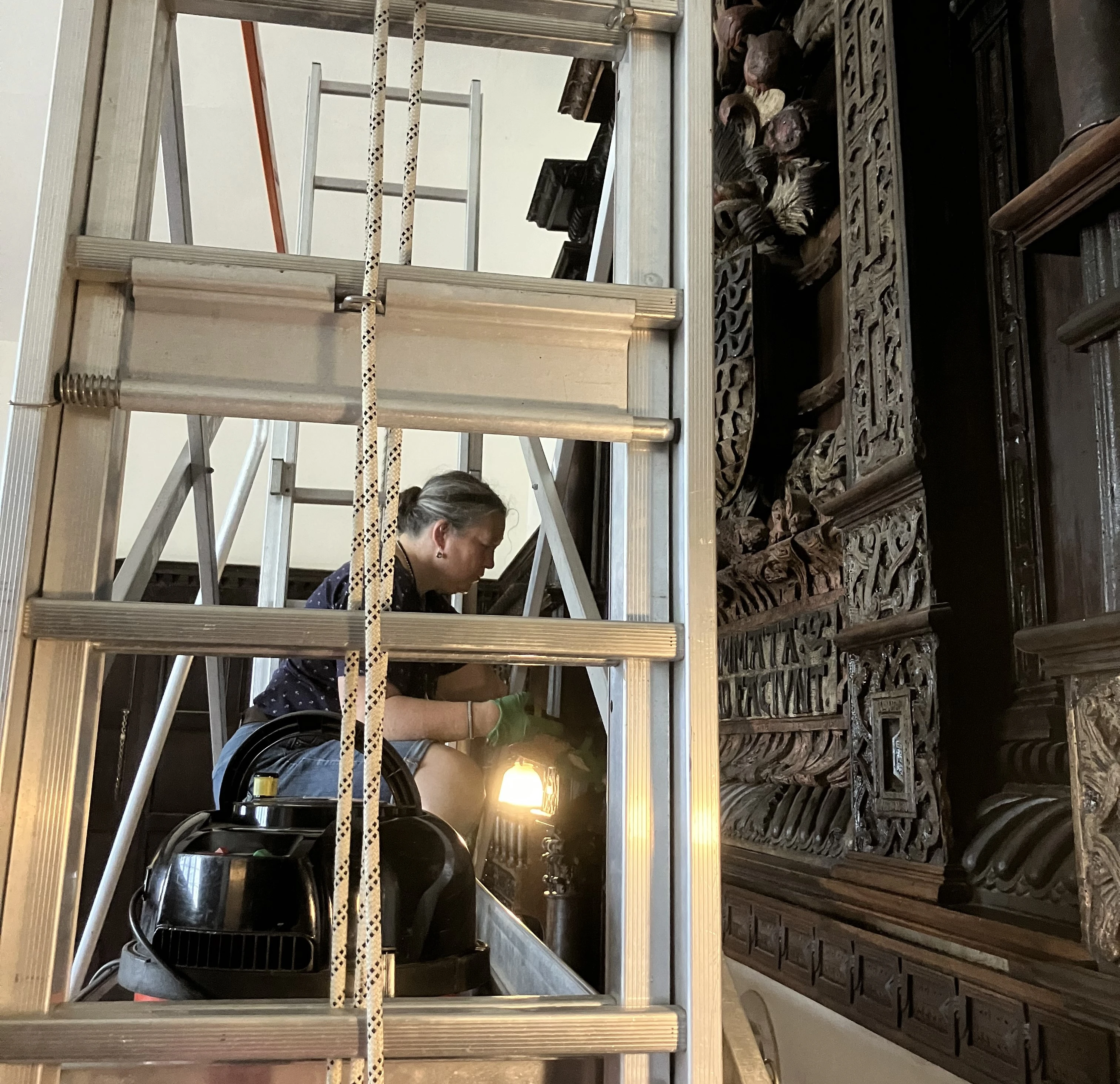
Challenge! You’ve got three days to tackle a clean of five massive rooms, open to the public seven days a week. How do you plan and undertake a conservation deep clean for reams of panelling, paintings and pots? Buff up the furniture, freshen up curtains and carpets in a mansion house built around 1580 with collections reflecting the grandeur and period of the space? Solution - with an army of skilled and specialist conservators, cleaners and volunteers, scaffolding, ladders (working at height regs noted!), brushes, vacuums, cloths, solvents, cotton wool swabs, a lot of elbow grease, stamina, enthusiasm, tea and chocolate!

At the end of June 2025, the conservation department, under the close supervision of the Senior Furniture Conservator, carried out a deep clean of the public spaces. This was carried out whilst the Castle was still open to the public.

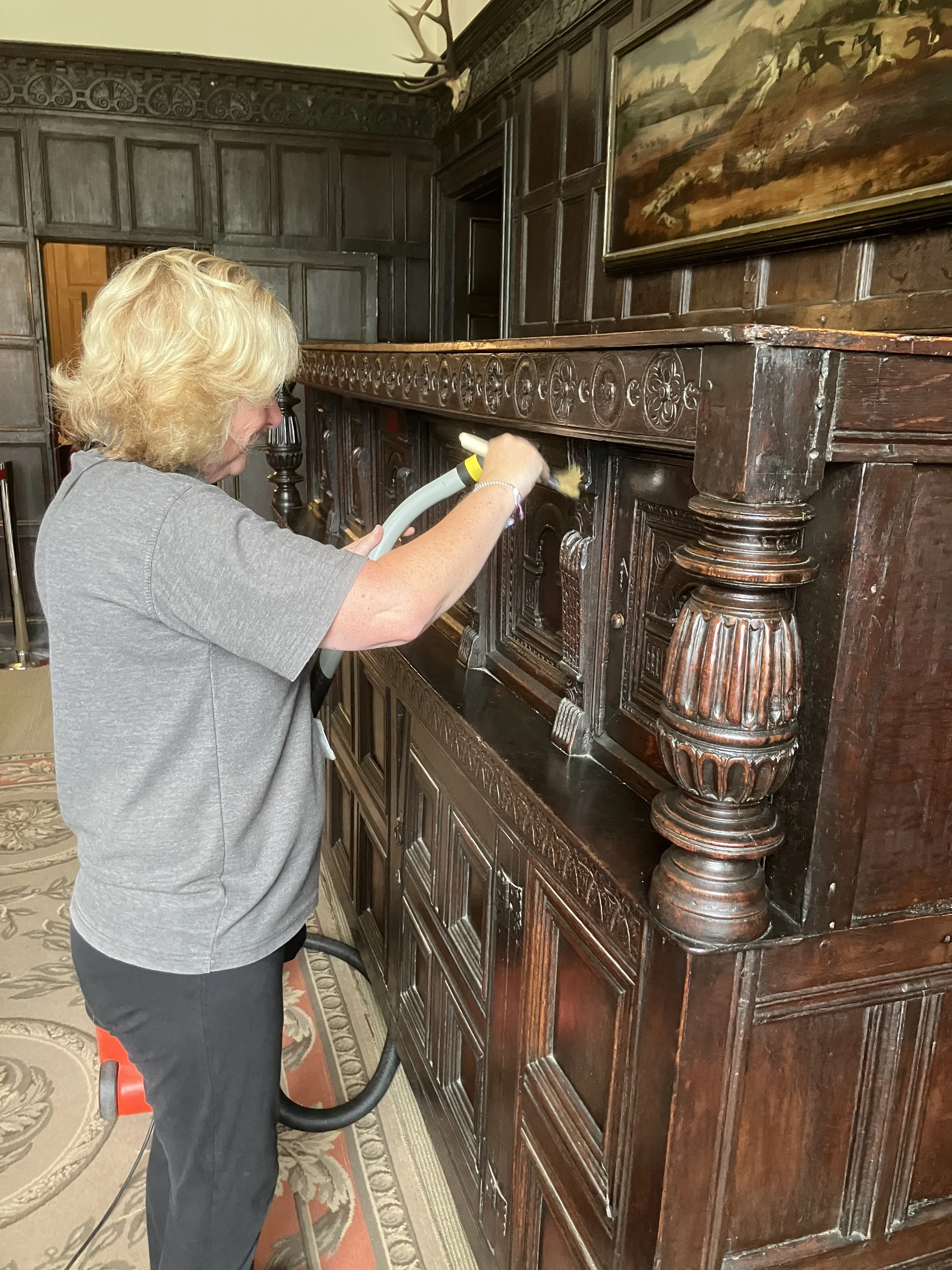
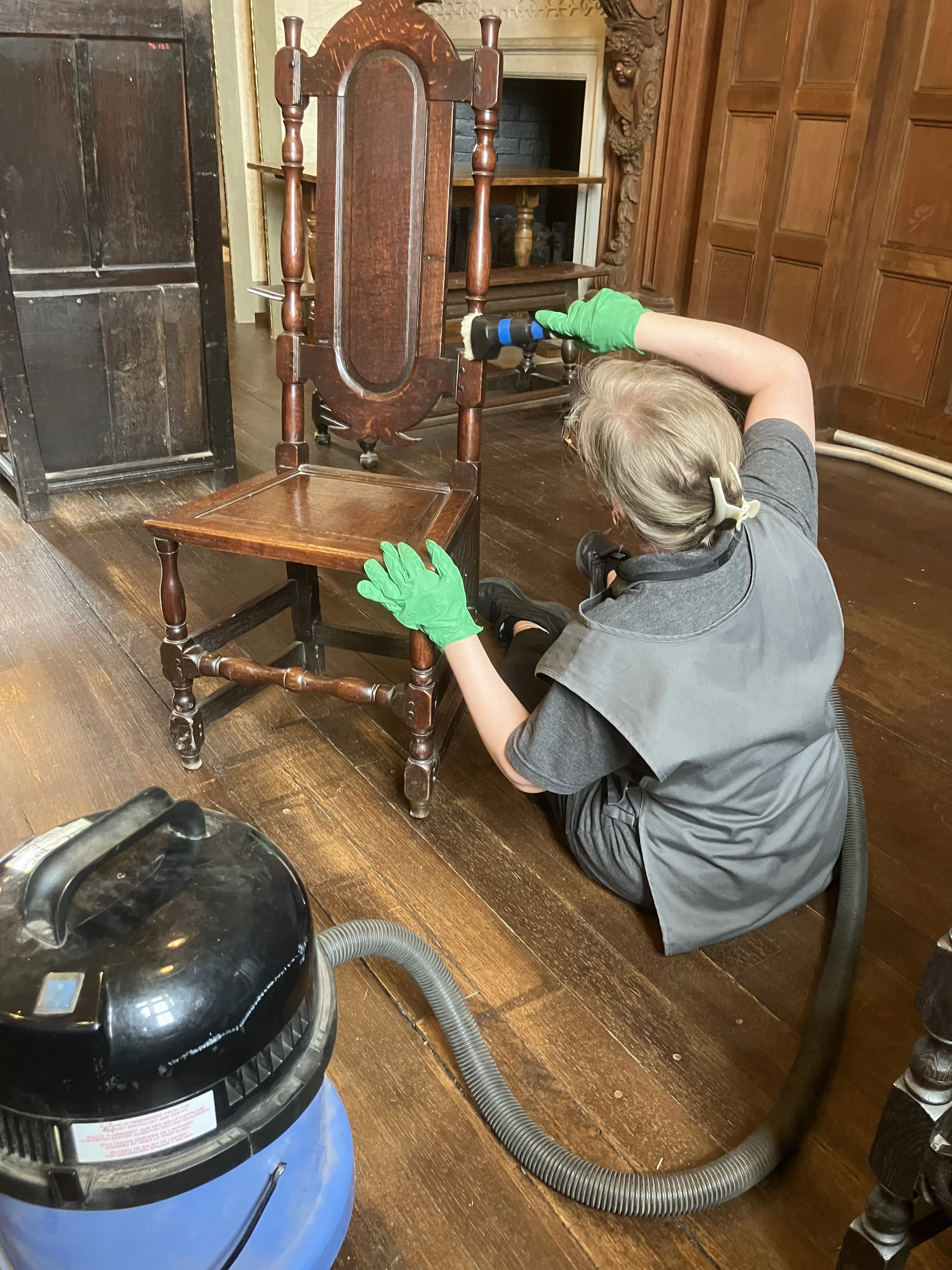
For a successful outcome, we needed to remove the loose particulate soiling deposits retained in the hidden crevices of the furniture and fittings. This activity would have the impact of brightening the appearance of the castle display and improve the visitor experience. From a conservation perspective this annual task is a hugely important one as it removes the grime which can provide the fodder for hungry pests and mould. The presence of this grime raises a risk of biological attack on our unique collections. It also removes particulates, which in the right environmental conditions can speed up the rate of deterioration of objects in our care.

We started in the dining hall, to the right of the main entrance. We worked as a team to move objects off and from walls, decanting the smaller objects to the old servant’s hall. 

The larger objects, for example the Edwinsford Sofa, the tables and side boards, were carefully moved to the middle of the room to enable access, both the object in full and the spaces they occupy to do a thorough clean.

After three days of going up and down ladders, the fiddly brushing of fine and ornate details, lots of vacuuming and the careful application of emulsions in solution and drying oils to provide residual protection and protective layers. The clean was complete.

We hope you enjoy the finished result. The Castle is only one of more than 50 historic buildings which need a rolling programme of care and maintenance to ensure that they remain accessible to everyone.  Next time you visit the Museum, you may see our conservation and cleaning teams out in action on site. If you do, make sure you say hello. We’d be thrilled to answer any questions you have on cleaning the historic buildings and collections. 

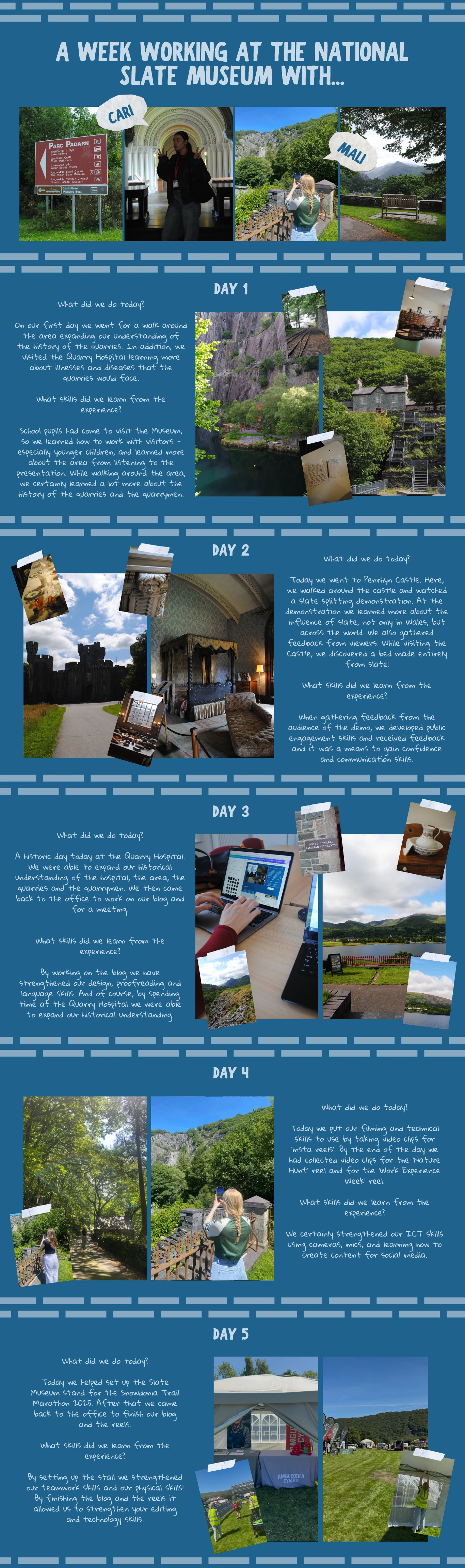
A week working at the National Slate Museum with Cari and Mali

Cari and Mali, work experience students , 14 July 2025

Cari and Mali, two work experience students at National Slate Museum.
Cari, work experience student, walking along a narrow road surrounded by green leafy trees.

Day 1 

What did we do today?

On our first day we went for a walk around the area expanding our understanding of the history of the quarries. In addition, we visited the Quarry Hospital learning more about illnesses and diseases that the quarries would face.

What skills did we learn from the experience?

School pupils had come to visit the Museum, so we learned how to work with visitors - especially younger children, and learned more about the area from listening to the presentation. While walking around the area, we certainly learned a lot more about the history of the quarries and the quarrymen.

Day 2

What did we do today?

Today we went to Penrhyn Castle. Here, we walked around the castle and watched a slate splitting demonstration. At the demonstration we learned more about the influence of slate, not only in Wales, but across the world. We also gathered feedback from viewers. While visiting the Castle, we discovered a bed made entirely from slate!

What skills did we learn from the experience?

When gathering feedback from the audience of the demo, we developed public engagement skills and received feedback and it was a means to gain confidence and communication skills.

A laptop opened onto a screen showing the blog a student on work experience is creating.

Day 3

What did we do today?

A historic day today at the Quarry Hospital. We were able to expand our historical understanding of the hospital, the area, the quarries and the quarrymen. We then came back to the office to work on our blog and for a meeting.

What skills did we learn from the experience?

By working on the blog we have strengthened our design, proofreading and language skills. And of course, by spending time at the Quarry Hospital we were able to expand our historical understanding.

Day 4

What did we do today?

A historic day today at the Quarry Hospital. We were able to expand our historical understanding of the hospital, the area, the quarries and the quarrymen. We then came back to the office to work on our blog and for a meeting.

What skills did we learn from the experience?

By working on the blog we have strengthened our design, proofreading and language skills. And of course, by spending time at the Quarry Hospital we were able to expand our historical understanding.

Collage of an event set up with Museum Wales branding, and work experience students helping to set up wearing high-vis.

Day 5

What did we do today?

Today we helped set up the Slate Museum stand for the Snowdonia Trail Marathon 2025. After that we came back to the office to finish our blog and the reels.

What skills did we learn from the experience?

By setting up the stall we strengthened our teamwork skills and our physical skills! By finishing the blog and the reels it allowed us to strengthen your editing and technology skills.

Head over to Facebook to see a Reel Cari and Mali made to document their time on work experience! 

Hip-Hop: A Welsh Story

Kieron Barrett, 9 July 2025

There are two questions which have been at the forefront of my mind when curating Hip-hop: A Welsh Story for National Museum Cardiff. Firstly, ‘what is Hip Hop?’ and secondly ‘what is a museum?’ You’d think both would be relatively simple to explain but I’ve still not come up with a satisfactory answer. Yet continually searching for some kind of resolution to them both has laid the foundations for the whole project.

You’d think the former would be easier for me. I’ve followed Hip Hop since the early 80s and it forms an important part of my identity. At various moments I’ve been a rapper, a DJ, a promoter, a blogger and an artist manager, but most of all I’ve been a fan of Hip Hop culture in all of its many forms. My background is in Hip Hop, not in museums. However, I took the responsibility of bringing an exhibition like this to life incredibly seriously. To do that properly I would have to step outside of my own relationship to Hip Hop, to ensure that I was representing a cross section of the whole country. I had to investigate the many ways that Hip Hop has become a part of Welsh culture and in many cases Welsh identity. I wanted to explore and celebrate the impact that Hip Hop has had on Wales since it first arrived back in the early 80s.

Although Hip Hop was born in the 1970s, the culture really started to make an impact here from the tail end of 1982. It was easy to form a collective identity then as we only had 4 TV channels and limited print media. However Hip Hop has been through many changes since and in the age of the internet and increased globalisation, it’s not so easy to put your finger on what makes something Hip Hop.

That’s a long conversation and I'm not going to unpack that here just yet, but it was important for me to hear thoughts and experiences from as many people as possible. To make an exhibition with legitimacy we had to include voices older and younger than myself as well as my peers. I travelled across Wales and spoke to lots of people I knew and a number of others that I didn’t - in Newport, Cardiff, Port Talbot, Bridgend, Swansea, Carmarthen, Caernarfon, Aberystwyth, Bangor, Conwy, Colwyn Bay, Wrexham and many other smaller towns and villages in-between. In total there were over 70 recorded interviews - a number of which are going into the museum’s oral history archive. However I met and spoke to hundreds more people along the way and this whole project has been a huge collective effort. I also have to give a special mention to Luke Bailey who collected a number of important interviews in podcast form which were invaluable to the research.

I trawled through multiple archives to find more stories and information. Newspapers, libraries and the BBC in particular. There were a number of videos and articles that I knew existed, but most seemed to be lost forever. I spent hours looking through websites and articles on the internet and I’m grateful to Dr Kieran Nolan the founder of irishhiphop.com for finding some of the archived pages of my old website welshhiphop.com from 2000. I found some incredible pictures but years of being passed around the internet had greatly degraded the quality of them. Wild goose chases were common in trying to hunt down the originals but they all led me to find even more voices, and more stories. This inevitably led to more photos and more (objects) for us to share with you. Some people I chased around social media sites for years before I got to speak to them in person and it took time to build and maintain trust enough for them to unlock their memories and lend us their most cherished connections to the past. I often felt the weight of this huge responsibility and still do for everything that’s on display.

I started to pull out recurring themes from the interviews and conversations. Community and competition were the most common. Not that everybody recognised these within their own experiences, but enough to start building a narrative for the exhibition. There has been a common misconception that we are creating a history of Hip Hop in Wales, perhaps this is because people view museums as a place to store history and that’s arguably one part of their function. In fact a number of people didn’t want to take part at first for the simple fact that they weren’t ready to be consigned to the past. That’s certainly not what this exhibition is about and it’s not how I view museums. For me they help us to explore our identity, especially as it relates to nationality. In the Victorian and Edwardian eras this seems to have been more prescribed, but now it’s an ever-evolving discussion and I’m so pleased that Hip Hop is finally part of that conversation.

But we really are only able to scratch the surface. We’d need the whole building and then some to get close to a proper history of Hip Hop in Wales. I heard a podcast with Neil deGrasse Tyson in which he said, “The goal of a museum is to inspire you to want to learn more” and I hope we manage to do that for you. We will continue to populate this blog with more context and more information over the next few months.

I thought I knew a lot about Hip Hop in Wales when I started this project but I have learned so much along the way. We have such a rich Hip Hop history here and you can see its influence everywhere if you look closely enough. I know people are apprehensive about the way Hip Hop will be represented and believe me nobody is more nervous than me about getting things right. I’ve been grateful for such an incredible team in pulling everything together. I could never have guessed how much work goes into a museum exhibition before I started. 

We wanted to make sure this exhibition was accessible to as many people as possible but it had to be historically and academically sound as well. This meant spending hours of my own time doing my homework on Hip Hop and unpacking the many mythologies that underpin it. Books, academic papers, interviews, documentaries, articles. It’s difficult to scrutinise something you love that much but this was largely background research. In Wales we have adapted and carved our own chapter within Hip Hop’s history. We echo the wider narratives of struggle, acceptance, self expression, healthy competition and passing on the torch to the future generations that follow us. There are many stories worth telling, we have highlighted a few to create ‘Hip-hop: A Welsh Story’ and we really hope you visit and leave the exhibition as inspired as we’ve been whilst building it.