: The 20th Century

Dinorwig '69: End of the line for one of the largest slate quarries in the world

22 August 2009

End of the line

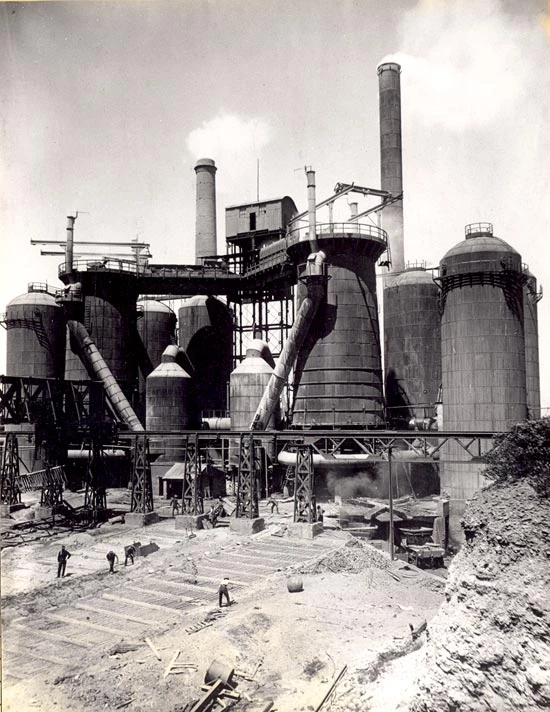
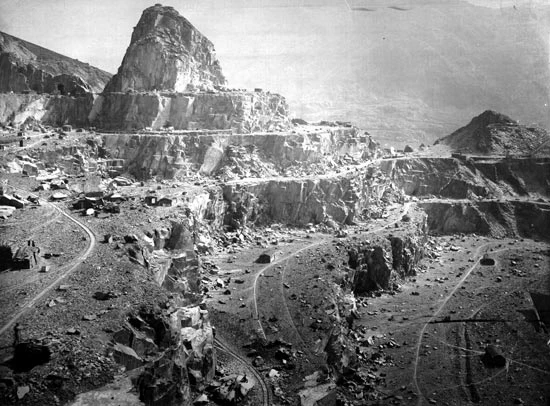
Black and white photograph of Dinorwig Quarry

Dinorwig Quarry. With the dawn of the Industrial Revolution slate was used to cover the roofs of factories and houses throughout Britain, mainland Europe as well as towns in North America and other parts of the world.

On 22nd August 1969 silence came to Dinorwig Quarry. After almost 200 years of hard toil, the quarry was closed and the men were sent home for the last time.

Not only did 350 men lose their jobs but a quarrying community and a way of life that had existed since the 1780's changed forever.

Everyone in the area had lived in the shadow of Dinorwig Quarry all their lives. Everyone had a father, grandfather, husband, uncle or brother who had worked there. A century earlier, closure would have been unimaginable. Dinorwig was one of the two largest slate quarries in the world ‐ and, along with its neighbour at Penrhyn, Bethesda, could produce more roofing slates in a year than all other combined slate mines and quarries world-wide.

Old quarrying methods

This is a clip from the first audio film in Welsh, Y Chwarelwr (The Quarryman), made in 1935. There is no sound in this piece as only some of the film survived, and the sound was recorded on disks separate from the film itself. © Urdd Gobaith Cymru.

Why did the quarry close?

Quarrymen at Dinorwig Quarry.

Quarrymen at Dinorwig Quarry.

Dinorwig Quarry's demise didn't happen overnight. Things hadn't been going well for a number of years for various reasons:

  • there was less demand for slate in the UK during the 20th century;
  • Welsh slate was expensive compared to roofing tiles and slate from overseas;
  • the quarry owners were competing against one another for a share of a fairly small market;
  • Dinorwig Quarry hadn't been developed effectively. The slate that was easy to get at had been quarried by the 60s and investment was needed to develop further. The quarry owners didn't have the money for this investment. One of their mistakes was to invest heavily in Marchlyn Quarry, but this part of the mountain didn't make them any money. There was no slate worth working there at all;
  • by the late 1960s, the quarry depended on orders from France to survive. In July 1969, these orders stopped. The final nail in the coffin.

By the 1960s, the slate industry in general was facing an uncertain future.

What next?

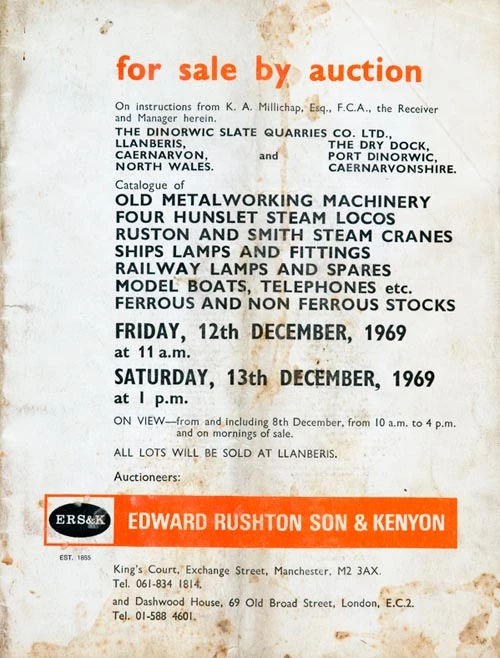
Dinorwig Quarry auction catalogue

Dinorwig Quarry auction catalogue. December 1969

Many of the 350 who lost their work found other jobs, some locally, at Ferodo and Peblig Mills, others further afield at Dolgarrog, Trawsfynydd and Holyhead. Others went even further to find work — to Corby, the relatively new steel town in Northamptonshire.

October and December, 1969 saw the auctions — selling off anything and everything that was worth carrying from the workshops. Fortunately for us, here at the Museum, Hugh Richard Jones, Dinorwig Quarry's Chief Engineer, ensured that not everything was sold. With the help of like-minded visionaries, he was instrumental in ensuring that the water wheel wasn't broken up and taken away and in preserving the machinery in the workshops.

Three years following the closure of Dinorwig Quarry, in 1972, the National Slate Museum was opened at Gilfach Ddu, and Hugh Richard Jones became its first manager.
Strike! Interviews

22 May 2009

Here you can listen to interviews with individuals from the Museum, looking back at a period of unrest that changed the industrial and social landscape of Wales forever.


Jeff White

Jeff White - Mechanical Engineer


Paul Meredith

Paul Meredith - Conservation Engineer


Ceri Thompson

Ceri Thompson - Curator


Peter Walker

Peter Walker - Keeper, Big Pit


Gavin Rogers

Gavin Rogers - Shaftsman/Guide

The Miners Strike of 1984

12 March 2009

National Coal Board

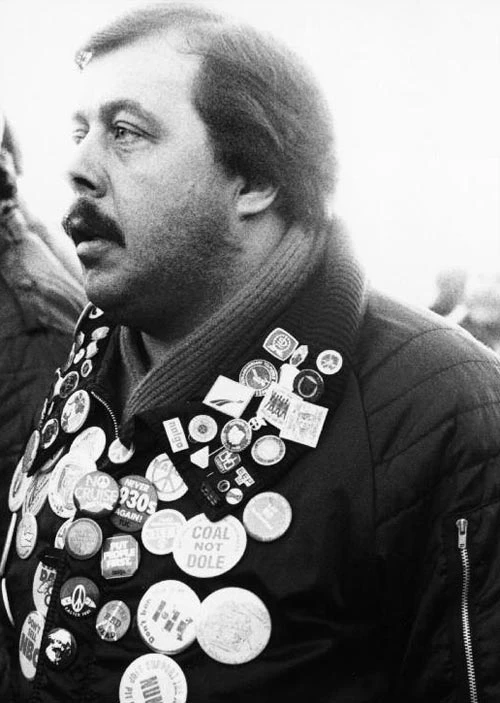
On 1 March 1984 the National Coal Board announced that it planned to close 20 coal mines with the loss of 20,000 jobs. The year-long strike that followed changed the political, economic and social history of Wales forever.

"The miners in south Wales are saying — we are not accepting the dereliction of our mining valleys, we are not allowing our children to go immediately from school into the dole queue — it is time we fought!"

Emlyn Williams, President, NUM, South Wales Area

Picketing and demonstrations

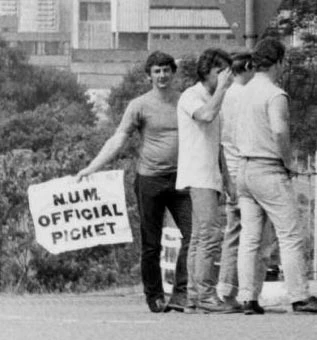
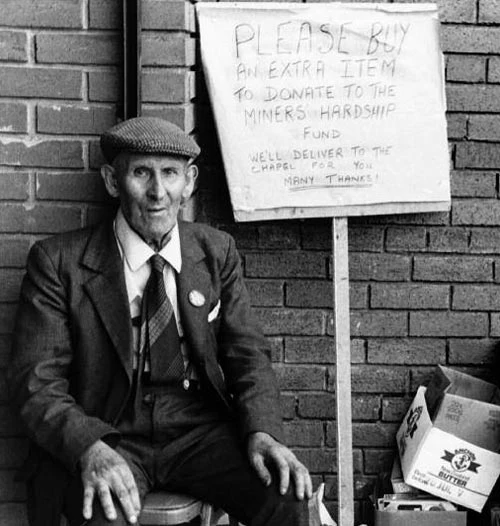
The majority of Welsh miners initially voted against a strike but later played a major part in picketing and demonstrations. Miners' wives rose to the challenge of supporting their men by raising funds and organizing food distribution, but were also active on picket lines and marches.

Although Wales did not suffer the picket line violence seen in some other British coalfields, Welsh miners were killed on picket duty and carrying out colliery safety work and a taxi driver was killed as he took a strike-breaker to work.

"We had to fight the enemy without in the Falklands, but we always have to be aware of the enemy within, which is much more difficult to fight and more dangerous to liberty."

Margaret Thatcher, Prime Minister

Collecting stories

There were rights and wrongs on both sides of the dispute and great pains have been taken to try to collect stories from each side. The passions aroused by the strike have made this a difficult task, for even now some participants are reluctant to allow their stories to be told.

This, and the fact that the majority of the stories were collected from Wales, where only a small percentage of the workforce returned to work during the strike, makes it inevitable that one view should seem to predominate. If stories had been collected elsewhere it is quite possible that the opposite view would dominate.

An objective and balanced history of the miners strike will one day be written but the pages that follow present the stories of some of the men and women whose lives were touched by what today has simply become known as... The Strike.

This article forms part of a booklet in the series 'Glo' produced by Big Pit: National Mining Museum. You can download the booklet here

From Industry to Impressionism – what two sisters did for Wales

1 January 2009

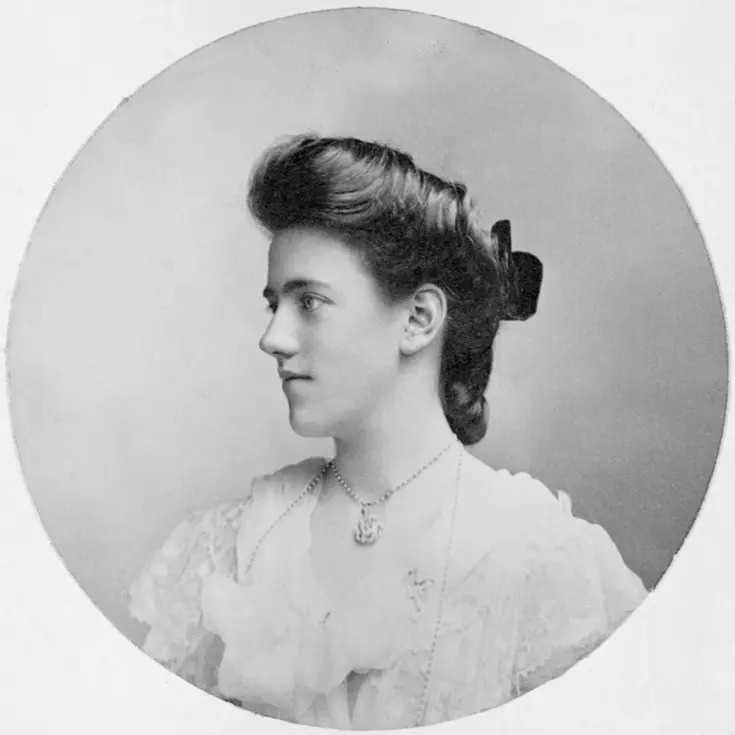
Gwendoline Davies (1882 - 1951)

Gwendoline Davies (1882-1951)
Known as Gwen, the elder, more determined and thoughtful sister, and an accomplished musician.

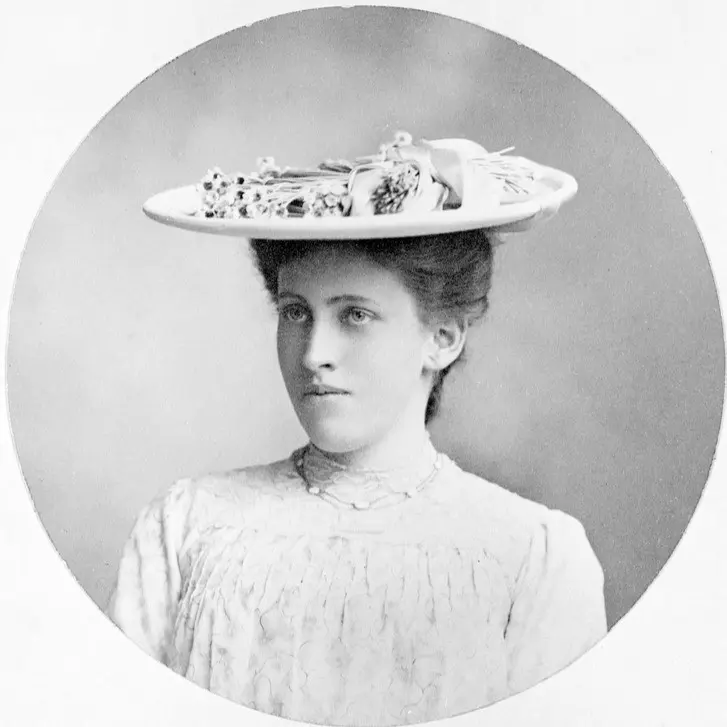
Margaret Davies (1884 - 1963)

Margaret Davies (1884-1963)
Known as Daisy, the younger, more practical sister, and a fine painter and engraver.

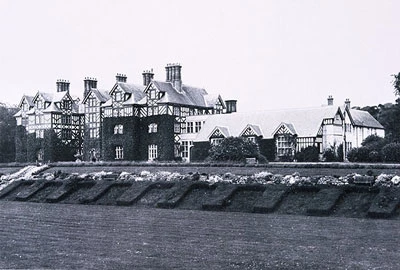
Gregynog Hall

Gregynog Hall

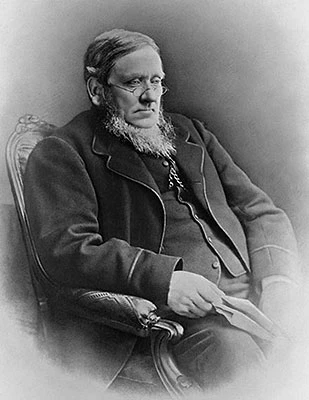
David Davies (1818-1890)

David Davies (1818-1890)
This image shows him in a rare moment of repose. Private collection (Lord Davies)

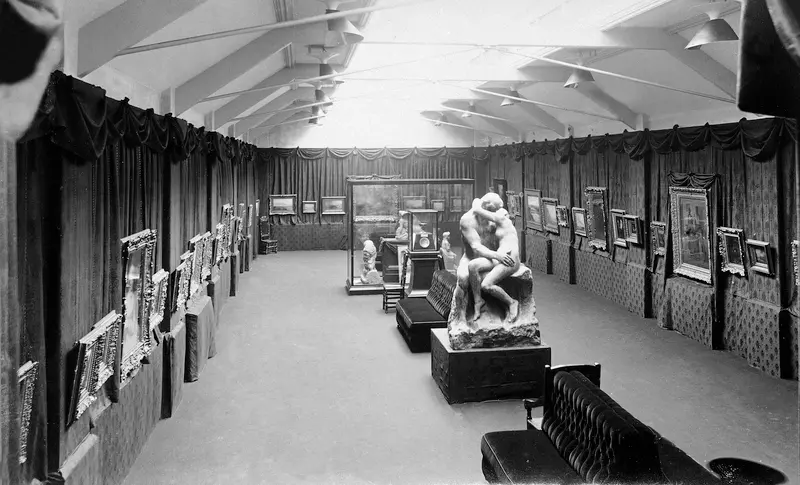
'The Loan Exhibition of Paintings', 1913

'The Loan Exhibition of Paintings' held in the temporary national museum in Cardiff City Hall in 1913.

Gwendoline (1882–1951) and Margaret Davies (1884–1963), two sisters from mid-Wales, were among the first people in Britain to collect French Impressionism and Post-Impressionism. They bequeathed their magnificent art collection to Amgueddfa Cymru, completely transforming the range and quality of Wales’s national art collection.

The Davies sisters were the greatest benefactors of the Museum’s first hundred years. Their idealism and generosity had a remarkable impact generally on cultural and intellectual life in Wales and is still with us today.

The industrial legacy of David Davies

Gwendoline and Margaret were the granddaughters of David Davies of Llandinam, one of the greatest entrepreneurs of the 19th century. He built much of the railway system in mid-Wales and was a pioneer of the coal industry in south Wales.

David Davies created a massive fortune. After his death in 1890, his son Edward succeeded him. In turn, Gwendoline, Margaret and their brother David, later 1st Lord Davies, inherited the estate.

Their upbringing and childhood

The sisters had a childhood dominated by the strict religious beliefs of Calvinistic Methodism. They were taught that it was their Christian duty to use well the great wealth they would inherit.

After a good and progressive education, they developed a passion for the arts and music. Art history was in its infancy in Britain, so the sisters travelled widely in Europe, studying art in Germany and Italy before beginning their art collecting.

Their sophisticated knowledge of art history was unusual for women of this period and their background.

Beginning the collection

In 1908, the sisters began collecting art in earnest. Their early purchases included landscapes by Corot, peasant scenes by Millet and also Turner’s The Storm and Morning after the Storm.

In the first six years of collecting, they amassed nearly a hundred paintings and sculptures. Their early taste was quite traditional, but in 1912 they turned to buying Impressionism.

Impressionism

Their Impressionist purchases were generally less expensive than the works they had been acquiring by artists such as Turner and Corot.

In 1913, Gwendoline acquired her most important painting, La Parisienne, for £5,000.

The impact of the First World War

The War transformed the lives of Gwendoline and Margaret. They worked as volunteers with the Red Cross in France. However, they still managed to add to their collection during these years. They bought works by Daumier, Carrière, Renoir, Manet and Monet. In 1916 Gwendoline Davies also spent £2,350 on ten oil paintings and a drawing by Augustus John.

In 1918, Gwendoline bought her two celebrated landscapes by Cézanne, The François Zola Dam and Provençal Landscape, which are among her most important and visionary purchases.

Collecting after the First Word War

In 1920, Gwendoline acquired perhaps her finest works, Cézanne’s Still-Life with Teapot for £2,000 and Van Gogh’s Rain – Auvers for £2,020.

They also spent large sums on Old Masters, including Botticelli’s Virgin and Child with a Pomegranate.

Then their collecting suddenly reduced. Gwendoline wrote in 1921 that they could not continue to purchase so much ‘in the face of the appalling need everywhere’.

They still spent over £2,000 on Turner’s Beacon Light in 1922 and £6,000 on a Workshop of El Greco Disrobing of Christ in 1923. In 1926, Gwendoline stopped collecting altogether.

Gregynog: a centre for the arts, music and crafts

The Davies sisters championed many social, economic, educational and cultural initiatives in Wales during the 1920s and 1930s.

In 1920, they bought Gregynog Hall, which they established as a centre for music and the arts in Wales. They also set up the Gregynog Press in 1922, which produced some of the finest books ever illustrated in Britain between the two world wars. Gregynog Hall complemented the Arts and Crafts Museum the sisters had already helped create at Aberystwyth.

Gregynog hosted the popular Festivals of Music and Poetry up until the outbreak of war in 1939, when the sisters again turned their attention to the war effort.

The end of an era

When Gwendoline died in 1951 Margaret kept up such activities as she was able to during her final years. However, without Gwendoline, its ‘chief creator and inspirer’, Gregynog’s heyday was never to be revived. In the year before she died, Margaret gave the house and its grounds to the University of Wales for use as a residential conference centre.

From personal to public collection

In October 1951, Amgueddfa Cymru announced the arrival of ‘the late Miss Gwendoline Davies’ bequest. This was one of the most valuable donations in recent years to any public collection in Britain.

Margaret continued to collect art until just before her death in 1963, focusing on work by modern British artists, many of whom were Welsh. Her works were also destined for the Museum and many of her later acquisitions were made with the Museum in mind.

In 1963 Margaret’s bequest of 152 objects joined that of Gwendoline. Together, the sisters’ collections completely transformed the Welsh national art collection.

A guide to the paintings

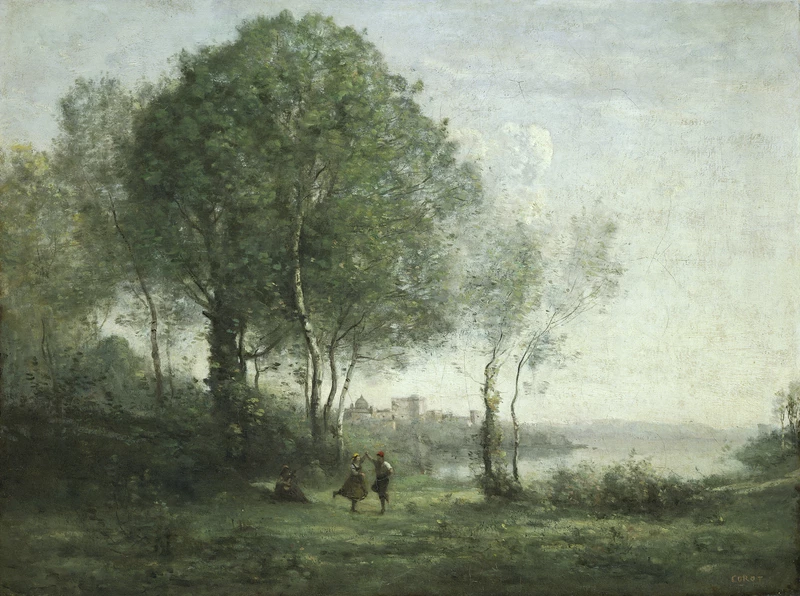
Jean-Baptiste Camille Corot (1796-1875), Castel Gandolfo, dancing Tyrolean shepherds by Lake Albano, oil on canvas, 1855-60
Jean-Baptiste Camille Corot

(1796–1875), Castel Gandolfo, dancing Tyrolean shepherds by Lake Albano, oil on canvas, 1855–60

In 1909 Gwendoline paid £6,350 for this painting, described at the time as one of Corot’s masterpieces. Earlier that year, Margaret recorded seeing ‘several charming pictures by Corot’ at the Louvre.

Amgueddfa Cymru, Bequest of Gwendoline Davies, 1951) NMW A 2443

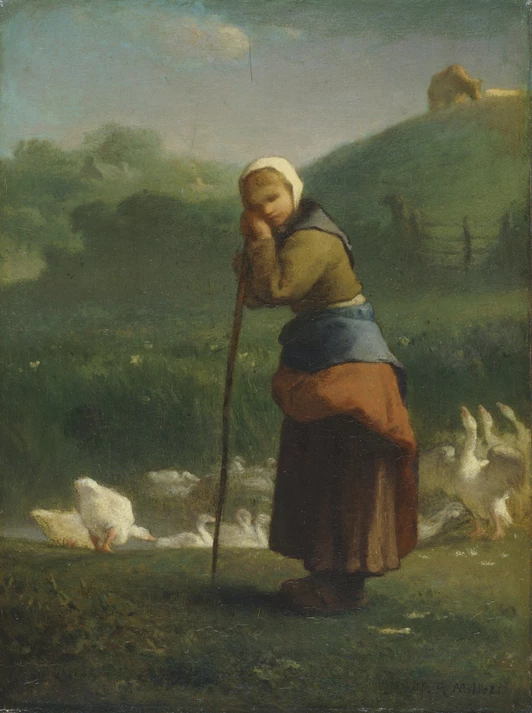
Jean-François Millet (1814-1875), The Goose Girl at Gruchy, oil on canvas, 1854-6.
Jean-François Millet

(1814–1875), The Goose Girl at Gruchy, oil on canvas, 1854–6

Gwendoline and Margaret Davies bought a number of works by Barbizon School artists in the early years of their collecting. Millet was one of the sisters’ favourites.

Amgueddfa Cymru (Bequest of Gwendoline Davies, 1951) NMW A 2479

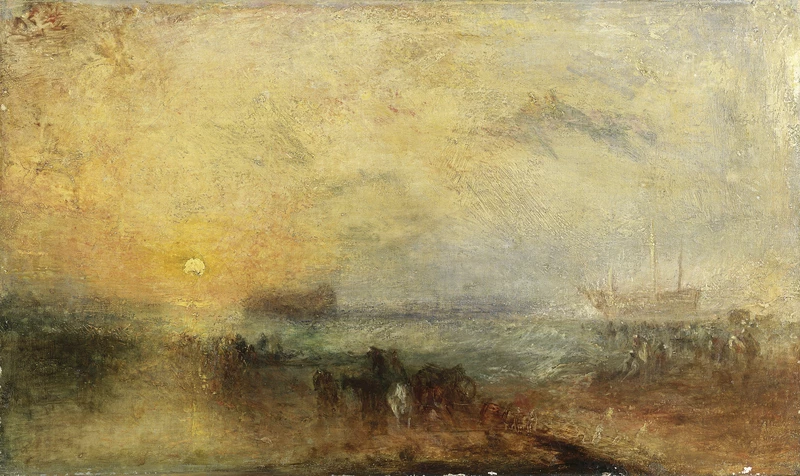
JMW Turner, The Morning after the Storm, oil on canvas, c. 1840-45
J.M.W. Turner

(1775–1851), The Morning after the Storm, oil on canvas, about 1840–5

Gwendoline purchased this work in November 1908 for £8,085, while Margaret acquired its companion The Storm. Both paintings were apparently inspired by the great storm of 21 November 1840.

Amgueddfa Cymru (Bequest of Gwendoline Davies, 1952) NMW A 434.

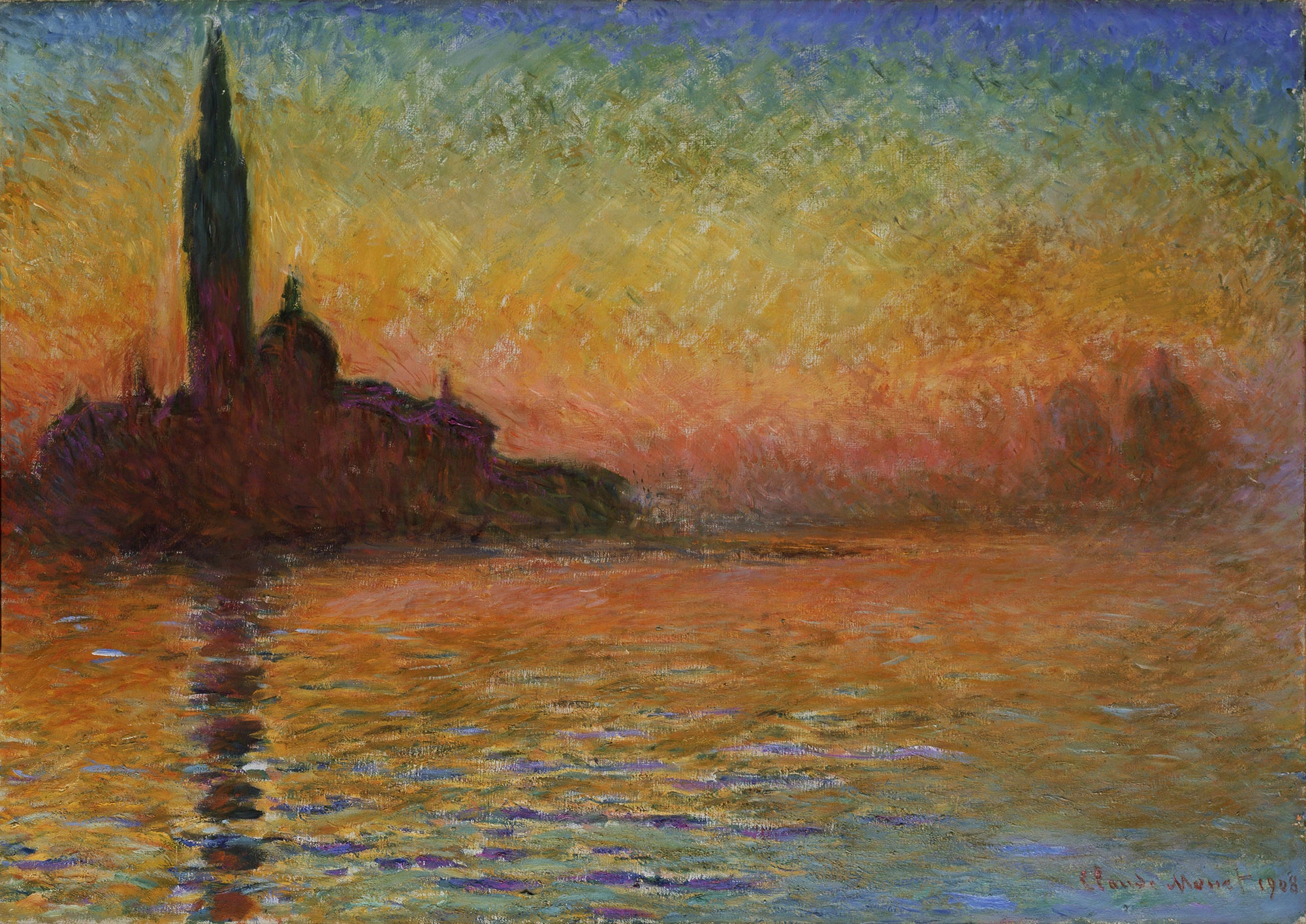
Claude Monet (1840–1926), San Giorgio Maggiore by Twilight, oil on canvas, 1908.
Claude Monet

(1840–1926), San Giorgio Maggiore by Twilight, oil on canvas, 1908

The sisters visited Venice in 1908 and 1909. The subject is the Palladian church of San Giorgio Maggiore, shown as a purple silhouette at twilight. Gwendoline acquired this work for £1,000 in October 1912.

Amgueddfa Cymru (Bequest of Gwendoline Davies, 1951) NMW A 2485.