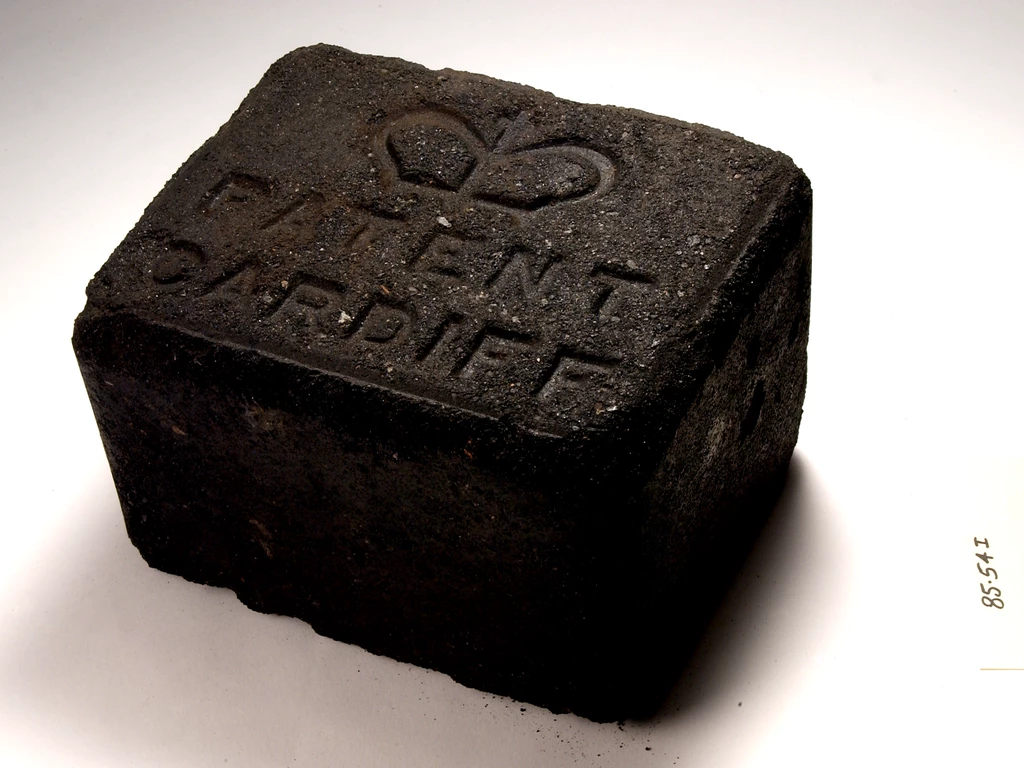
Fuelling Antarctic exploration: The Crown Patent Fuel Company in Cardiff Jennifer Protheroe-Jones, 23 July 2010 A block of Crown Patent Fuel. Age of Polar ExpeditionsThe early 20th century was a time of great heroic explorations to the Antarctic continent. Crown Patent Fuel from south Wales was the fuel of choice for these Antarctic expeditions.Crown Patent FuelIn addition to 100 tons of steam coal from south Wales coal companies, Captain Scott's 1910 British Antarctic Expedition was also given 300 tons of fuel blocks by Cardiff's Crown Patent Fuel Company. This, along with other sponsorship from Cardiff and south Wales, persuaded Scott to designate Cardiff the home port of his ship, the Terra Nova. He sent the Terra Nova to load fuel in Cardiff rather than have it sent by rail to London.The Crown Patent Fuel works were situated alongside the Glamorganshire Canal at Maendy. The works was one of a number along the canal and, together with a number of works at other south Wales ports, made the region the largest producer of patent fuel in the world. Most of the patent fuel was exported, with France being a major customer.Scott commends Welsh coalThe fuel was made by mixing and heating waste small coal with pitch, the residue from distilled coal tar, and ramming the mixture into moulds. Various size blocks were produced, ranging from 7lbs to 56 lbs, with 28lbs being the most common — and the size taken on Scott's expedition. The blocks stacked well and took up less space than coal.When the expedition reached their base at Cape Evans on Ross Island in Antarctica, the fuel blocks were used to build a back wall to the stables for the expedition ponies.Earlier expeditionsIn 1901 the Discovery, Captain Scott's first Antarctic expedition ship, took on 200 tons of Patent Fuel in Cardiff. The Aurora, the ship of the Australasian Antarctic Expedition (1911-14), was also in Cardiff taking on Crown Patent Fuel on 4 August 1911 before sailing for Australia and Antarctica.
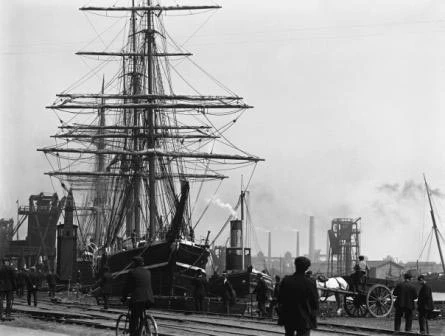
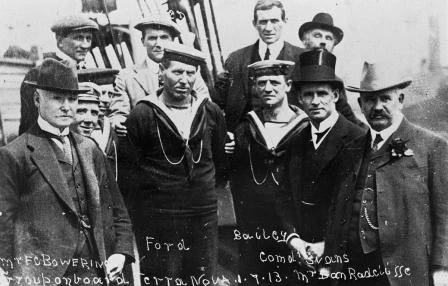
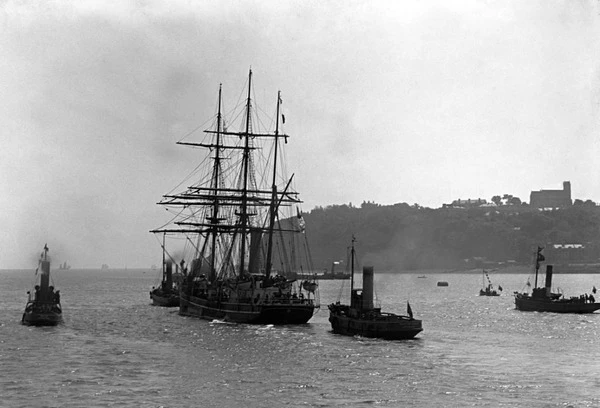
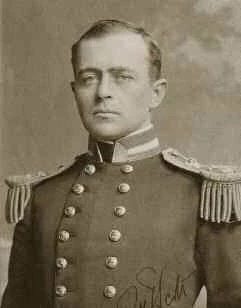
Captain Scott sails from Cardiff David Jenkins, 9 June 2010 The Terra Nova loading in Bute East Dock, Cardiff, June 1910 F.C. Bowring (front left) and Daniel Radcliffe (front right) with Commander E.R.G.R.Evans (in top hat) aboard the Terra Nova in Cardiff, 17 June 1913. Scott's Terra Nova leaving Cardiff, 15 June 1910 Robert Falcon Scott (1868-1912) in about 1905 The SS Terra Nova On 15 June 1910 a large, excited and noisy crowd cheered a heavily laden ship as she left the Roath Basin in Cardiff's docklands. SS Terra Nova was headed south — to Antarctica. On board were Captain Robert Falcon Scott and members of his British Antarctic Expedition , who aimed to be the first to reach the South Pole. Welsh Coal The Terra Nova had arrived in Cardiff five days earlier to finish preparations for the voyage and to take on fuel. 300 tons of Crown Patent Fuel, 100 tons of steam coal and 500 gallons of engine and lamp oil were donated by Welsh coal companies. All the cooking utensils were given by the Welsh Tin Plate Company of Llanelli and even Scott's sleeping bag was bought with funds raised by the County School in Cardigan. In addition to support in kind, a further £2,500 was raised in Cardiff, more than from any other city. Locally, the largest individual donors, and two of the expedition's most enthusiastic supporters, were the leading Cardiff shipowners Daniel Radcliffe and William J. Tatem . They played an important role in fund-raising and raising sponsorship from throughout the south Wales business community and in the provision of dock facilities for the Terra Nova. There was so much support in Wales for the expedition that Cardiff was designated the Terra Nova's home port and it was to Bute Dock that she returned at the end of the expedition on 14 June 1913. Why Cardiff? In June 1909 William Davies, editor of the Western Mail, met with the young naval officer Lieutenant E.R.G.R. Evans, who was planning his own Antarctic expedition. Davies was very keen on supporting what he initially saw as a Welsh National Antarctic Expedition — Evans's grandfather was probably from Cardiff — and thought that there would be support for such a project from Cardiff businesses. Soon afterwards, Evans learned of Scott's planned expedition and joined him as second-in-command, bringing with him the support of the editor of the Western Mail and the prospect of Welsh sponsorship. Davies was instrumental not only in rallying business and public support in Wales for Scott's expedition, but in persuading his compatriot, the Chancellor of the Exchequer, David Lloyd George, to provide a government grant of £20,000. Arguably, without the influence of Davies, the support of the Western Mail and the Welsh shipowners, Scott's expedition would not have left in time to reach the Pole in 1912. Welsh connections There was another Evans in the Terra Nova's crew, Petty Officer Edgar Evans from Rhossili, Gower. He had been to Antarctica with Scott on his Discovery expedition of 1901-4, and was chosen by Scott to be a member of his polar party on the 1910-12 expedition. Evans was the first to die on the return march from the South Pole. Commemoration Scott's links with Cardiff are commemorated by the lighthouse erected in 1915 in Roath Park Lake and the bronze plaque of 1916 on the staircase in City Hall. In June 2003 a commemorative sculpture was unveiled in Cardiff Bay.
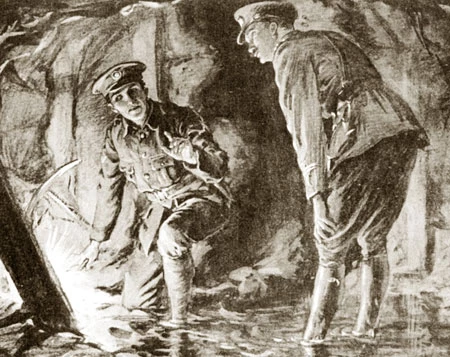
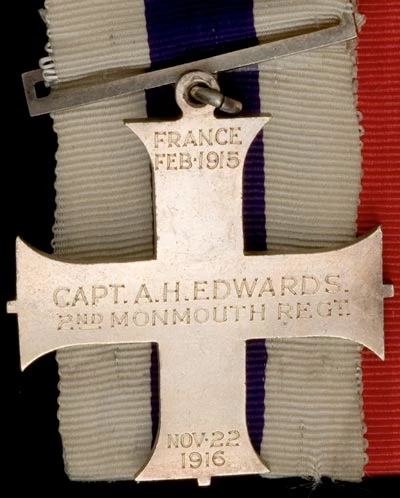
Welsh miners digging for victory on the Western Front Edward Besly, 1 October 2009 Artists' impression of Edwards' mining exploits. From Deeds that Thrill the Empire, by courtesy of Dix Noonan Webb. Military Cross (1915), 1914 Star, British War Medal and Allied Victory Medal awarded to Captain (later Major) Arthur Edwards. Many recipients of the Military Cross arranged to have details of the award engraved on its back. The trenches of World War 1 Captain Arthur Edwards from Blaenafon in south Wales oversaw the explosion of the first British mine on the Western Front in March 1915. The First World War (1914-18) is famous for the trench warfare of the Western Front in France and Flanders. Huge armies faced each other in horrible conditions, preparing for the next big battle intended to break the stalemate. Tunnelling and mining on both sides formed a significant part of this trench warfare, as each side tried to gain an advantage. Tunnels were dug underneath "no man's land" and under the enemy's trenches. They were then packed with explosives and detonated. The dry chalk of the Somme was especially suited to mining, but it was also possible to mine in the sodden clay of Flanders. The experience and skills of Welsh miners played an important part in the construction of these mines. Fighting the war underground It was all started by Captain Arthur Edwards, a mining engineer who served in the 2nd Battalion of the Monmouthshire Regiment. In December 1914 the 4th Divisional Mining Party was formed, under Edwards' command. In March 1915, after two months of tunnelling under enemy lines, the tunnels were evacuated, packed with explosives and detonated. The huge explosion caused buildings above ground to be destroyed — the tunnels were under buildings that were being used by enemy snipers. On another occasion, German miners, tunnelling in one direction, broke into allied tunnels being dug in the opposite direction, resulting in fierce hand-to-hand fighting underground. A Badge of Honour In June 1915 Captain Arthur Edwards was awarded the Military Cross, a newly introduced decoration for captains and junior officers. He was also twice mentioned in despatches for gallant and distinguished service. He served through the War, including the first day of the Battle of the Somme (1 July 1916) before being badly wounded by a gas shell in June 1918. His medals were acquired by Amgueddfa Cymru in 2006.
Welsh miners digging for victory on the Western Front Edward Besly, 1 October 2009 The trenches of World War 1 Military Cross (1915), 1914 Star, British War Medal and Allied Victory Medal awarded to Captain (later Major) Arthur Edwards. Artists' impression of Edwards' mining exploits. From Deeds that Thrill the Empire, by courtesy of Dix Noonan Webb. Many recipients of the Military Cross arranged to have details of the award engraved on its back. Captain Arthur Edwards from Blaenafon in south Wales oversaw the explosion of the first British mine on the Western Front in March 1915. The First World War (1914-18) is famous for the trench warfare of the Western Front in France and Flanders. Huge armies faced each other in horrible conditions, preparing for the next big battle intended to break the stalemate. Tunnelling and mining on both sides formed a significant part of this trench warfare, as each side tried to gain an advantage. Tunnels were dug underneath "no man's land" and under the enemy's trenches. They were then packed with explosives and detonated. The dry chalk of the Somme was especially suited to mining, but it was also possible to mine in the sodden clay of Flanders. The experience and skills of Welsh miners played an important part in the construction of these mines. Fighting the war underground It was all started by Captain Arthur Edwards, a mining engineer who served in the 2nd Battalion of the Monmouthshire Regiment. In December 1914 the 4th Divisional Mining Party was formed, under Edwards' command. In March 1915, after two months of tunnelling under enemy lines, the tunnels were evacuated, packed with explosives and detonated. The huge explosion caused buildings above ground to be destroyed — the tunnels were under buildings that were being used by enemy snipers. On another occasion, German miners, tunnelling in one direction, broke into allied tunnels being dug in the opposite direction, resulting in fierce hand-to-hand fighting underground. A Badge of Honour In June 1915 Captain Arthur Edwards was awarded the Military Cross, a newly introduced decoration for captains and junior officers. He was also twice mentioned in despatches for gallant and distinguished service. He served through the War, including the first day of the Battle of the Somme (1 July 1916) before being badly wounded by a gas shell in June 1918. His medals were acquired by Amgueddfa Cymru in 2006. Article by: Edward Besly, Numismatist, Department of Archaeology & Numismatics. Amgueddfa Cymru.
The Miners' Strike - 1984-85 23 September 2009 The coal industry underwent great changes following nationalisation in 1947. Considerable investment was ploughed into the industry by the government allowing new equipment and mining techniques to be introduced. Until the mid 1950s, levels of employment and production remained steady but, with the decline in the demand for coal and the challenge from Middle East oil, 50 collieries were closed in south Wales between 1957 and 1964.During the 1970s, the industry was hit by two major strikes. In 1972 Conservative Prime Minister Edward Heath caved in when the miners went on strike for more pay. When another miners' strike began in 1974, Mr Heath called a snap general election hoping to rally public support against the miners. But the public vote went against him resulting in victory for the Labour Party.By the 1980s the British coal industry was one of the safest and most efficient in the world. However, the new Conservative government under Margaret Thatcher wanted to make industry more efficient by slimming down what they regarded as unprofitable industries. Under her leadership, many former state run industries like gas, water and the railways were transferred to private sector ownership i.e. they were privatised. British Telecom was the first service provider to be 'de-nationalised' in 1984, followed by many others in subsequent years. At the same time she wanted to weaken the power of the trade union movement which she believed had become too powerful. This agenda put the Conservative government on a collision course with the National Union of Mineworkers (NUM). Incidentally, the NCB became British Coal in 1987, in readiness for privatisation which occurred in 1994. The Miners' Strike - 1984-1985 Glamorgan Colliery, Llwynypia Bargoed Colliery and surrounding area Strike poster Western Mail article, 14 February 1985 The march back to work, Maerdy, Rhondda South Wales NUM strike poster Rhymney Valley Miners' Support Group newsletter Police and Pickets, Bedwas Colliery Police and Pickets, Bedwas Colliery Strike poster Strike badge Poster produced during the strike Front Page, Labour Weekly 1984 Penallta's oldest picket Arthur Scargill visits Banwen Picket line, Trawsfynydd power station Demonstration in support of the miners, Blaenau Ffestiniog Collecting for the miners, Tonypandy Police and pickets at Nantgarw Colliery Police and pickets at Nantgarw Colliery Christmas party for Miners' children, Banwen, Neath Valley Welsh police on picket duty, English coalfield Strike graffiti, Abercarn Graffiti on an explosives magazine Picket duty at Aberthaw power station Rhymney Valley Women's Support Group Picket line, Penallta Colliery Advertisement produced by the south Wales NUM Wales Congress poster supporting miners Arthur Scargill, Maesteg Lady Windsor Colliery North Celynen Colliery Six Bells Colliery Cwm Colliery, Rhondda Rose Heyworth Colliery, Abertillery Download the PDF here [3.3MB]