: Work & Labour

Scattered by war and revolution

12 June 2007

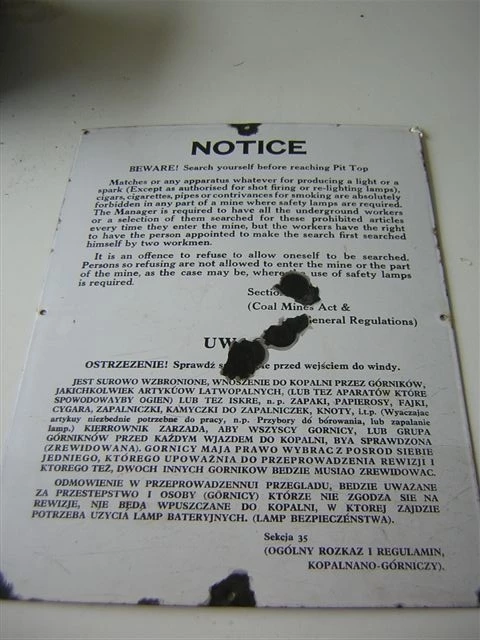
Colliery sign in English and Polish

Colliery sign in English and Polish

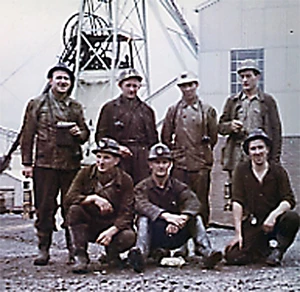
German mine workers at a south Wales coal pit

German mine workers at a south Wales coal pit

After the Second World War the demand for coal was high and there was a need to recruit new miners. One source for these was amongst the thousands of Europeans who had to flee their home countries during the Second World War.

In January 1947, a national agreement was made between the National Union of Mineworkers (NUM) and the National Coal Board (NCB) to recruit from the large number of Polish soldiers who had fought with the Allies during the war.

However, there was much resistance amongst local unions. By the end of May 1947 there were Poles whose training was complete but no collieries willing to take them.

The NCB appealed for help from the NUM who put a strong resolution to a delegate conference in favour of the acceptance of the Poles and most found places eventually.

A scheme to recruit other eastern European displaced persons began in September 1947. There was again fierce opposition from local unions and by the winter only a minority found collieries willing to take them.

By 1951 only 10,000 of the 18,000 foreign workers still remained in the mines and a new scheme to recruit Italians was launched. Again there was local opposition, only 400 found placements and the recruitment stopped in April 1952.

It was no better when the National Coal Board tried to recruit amongst refugees who had fled from Hungary during the 1956 revolution. There were over 4,000 volunteers but under a third of them found places, the rest went to other industries.

The 'foreign workers' came to Wales after years of hardship and danger. The ones that found employment in the coal industry eventually gained a reputation for hard work and respectability. Wales should be proud of them and the part they played in its industrial history.
Dragons, zebras and doorstops - building a collection of Welsh computers

16 May 2007

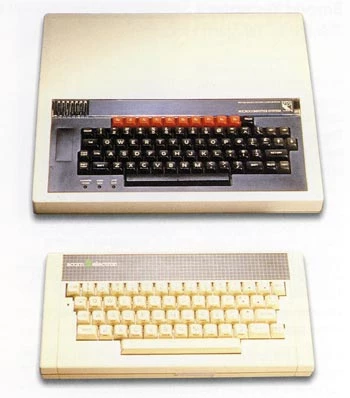
The BBC model B (top) and the Acorn Electron.

The BBC model B (top) and the Acorn Electron.

The Dragon 32 (left) and the Spectrum Plus.

The Dragon 32 (left) and the Spectrum Plus.

In the early 1980s Wales produced many of the world's home computers. Over the years, Amgueddfa Cymru has been trying to add an example of every computer manufactured in Wales to its collection.

In 1943, Thomas Watson snr, Chairman of IBM, imagined that the future world computer market would be made up of only five different computers. However, in the 1980s, there were at least six different models being manufactured in Wales alone.

Zebras and Dragons

The 'Zebra' and 'Dragon' were both types of early computers.

The 'Zebra' was produced in the 1960s. Only forty were ever made and most of them were exported overseas. The Zebra machine in the Museum's collection was manufactured in Newport, south Wales and was donated by Cardiff University.

The 'Dragon' was available in two versions, the thirty-two and the sixty-four. These numbers refer to the amount of memory each machine had. Although this is much less memory than computers today, this was considered very powerful in the 1980s.

Tracking down information about where early computers were made has proved difficult. However, a number of scrapbooks providing useful information were discovered in the Glamorgan Record Office, and were donated to the museum by 'AB Electronics' of Abercynon. The scrapbooks revealed that AB Electronics had produced most of the computer models made in Wales, and also provided information about other Welsh manufacturers.

The Electron & The BBC

The Electron was made by the Acorn Company, best known for producing the BBC computer. It was much cheaper and less powerful than the BBC, which was the most powerful and expensive home computer available in the 1980s. Although primarily used as an educational machine some of the games written for the BBC are some of the best produced for any computer of any era.

The scrapbooks showed that a number of Electron machines were manufactured by AB Electronics and a Welsh made machine was kindly given to the museum by the Chairman of the Electron User Group.

The books also showed that three firms had manufactured the BBC in Wales: AB Electronics of Abercynon, Race Electronics of Llantrisant and ICL of Kidsgrove. A dealer in vintage Acorn hardware gave the museum a BBC computer, for its collection, that had been manufactured by Race Electronics.

ZX Spectrum

Despite the Spectrum's popularity and availability, locating a Welsh-built model was difficult. Once again AB Electronics at Abercynon had made the Spectrum, but the majority had been produced by the Timex factory in Dundee. Eventually the Museum did manage to obtain an example of a Spectrum Plus built by AB Electronics and added it to its collection.

Torch Computers

The AB scrapbooks referred to 'Torch Computers of Cambridge' who had a factory in Caernarfon and built machines aimed at the business market. After contacting the company, they generously offered us an example of a machine built in North Wales.

The Museum now only needs three machines to complete its collection of computers made in Wales. One of these is the Apple iMac manufactured by the LG Corporation of Newport.

There are many websites on the internet which can give you more information about early computers. Some sites also offer software for the early machines and there are even programs to run on your modern PC which mimic the behaviour of the old machines, allowing you to see how much computers have moved on.

The Cave Men of Ice Age Wales

11 May 2007

The Ice Age in Wales

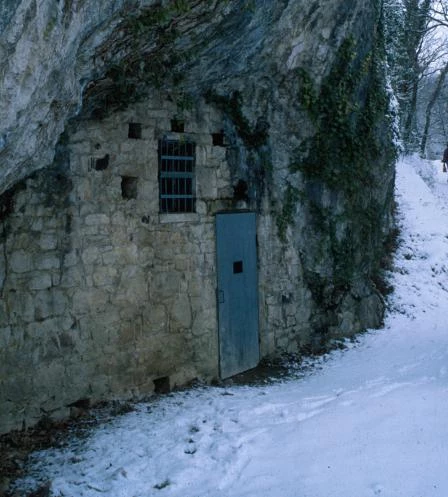
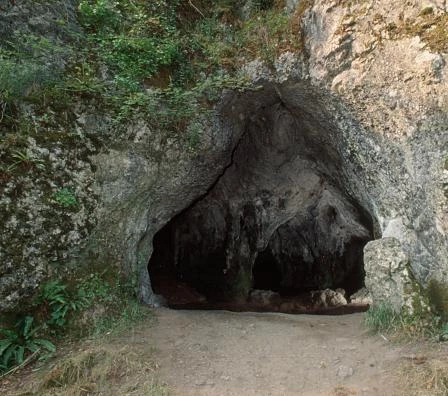
Pontnewydd Cave (Denbighshire). This cave produced the oldest human remains from Wales, dated to around 230,000 years ago.

Pontnewydd Cave (Denbighshire). This cave produced the oldest human remains from Wales, dated to around 230,000 years ago.

Humans have lived in Wales for over a quarter of a million years, first by the Neanderthals and then by modern humans. Evidence for the first human occupation of Wales can be found in caves around the country.

The 'Palaeolithic' or 'Early Stone Age' period is the time popularly known as the 'Ice Age'. It saw very cold periods (known as glacials) when ice covered all of Wales, and warm periods (interglacials), like the one in which we live today.

It is against this backdrop of changing climate that our earliest ancestors evolved from their African origins, migrated across Europe and Asia, and developed into modern humans.

In Wales most of the evidence we have for the earliest Palaeolithic settlements come from caves. These caves are found in limestone areas, for example in parts of Denbighshire, Gower and south Pembrokeshire.

The Neanderthals

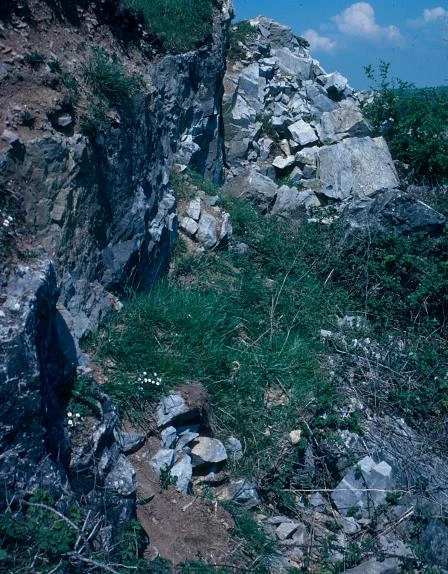
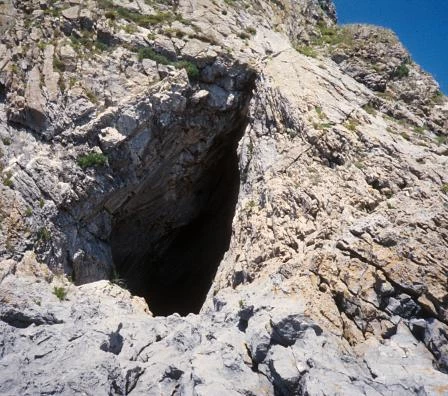
Coygan Cave (Carmarthenshire). No human remains have been found here, just a handful of tools that show that Neanderthals used the cave briefly.

Coygan Cave (Carmarthenshire). No human remains have been found here, just a handful of tools that show that Neanderthals used the cave briefly.

The first evidence we have for humans in Wales comes from the site of Pontnewydd Cave (Denbighshire). Here, excavations have identified the remains of an early form of Neanderthal, that lived around 230,000 years ago.

Neanderthals were hunters and their tools show that they needed to get close to their prey in order to kill. Neanderthal skeletons excavated around Europe have a very high number of broken bones, suggesting that they may often have come off worst from these encounters.

The Neanderthals at Pontnewydd Cave made tools using the local stones picked up near the cave; including cutting tools, scrapers and hand axes. Handaxes have been discovered at Coygan Cave in Carmarthenshire - a site now destroyed by quarrying.

Climate change

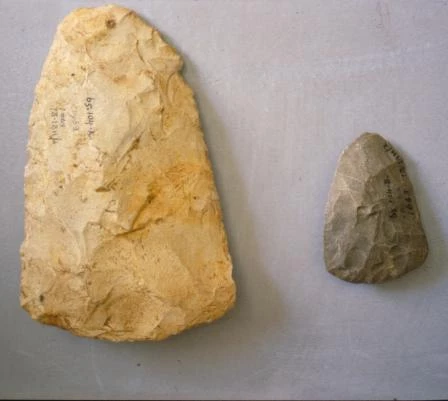
Bout coupè handaxes (Coygan Cave). These tools are characteristic of Neanderthal technology.

Bout coupè handaxes (Coygan Cave). These tools are characteristic of Neanderthal technology.

Coygan Cave was used briefly as a lookout point by Neanderthals some time between 60,000 and 40,000 years ago. The cave was then used as a den by hyeanas as the last glacial began.

It is possible that this deterioration in the climate is the reason for the extinction of the Neanderthals, who died out around 35,000 years ago.

Modern Humans

In 1823, William Buckland of Oxford University discovered a skeleton in this cave...

In 1823, William Buckland of Oxford University discovered a skeleton in this cave. The bones were stained red and were accompanied by bracelets and shell beads. Buckland believed that the body was that of a woman, who had lived during the Roman period. Modern science has now proved this appealing theory to be wrong. The skeleton actually belongs to a 25 year old man buried around 26,000 years ago.

Modern humans, like us, first appear in Europe about 60,000 years ago. Our appearance is marked by the use of new types of stone tools made from long thin blades struck from a block of flint. These blades were much more versatile than those of the Neanderthals.

Paviland Cave — The earliest human burial in Britain

Excavation by Amgueddfa Cymru has shown that the cave was occupied around 30,000 years ago and again around 12,500 years ago.

Excavation by Amgueddfa Cymru has shown that the cave was occupied around 30,000 years ago and again around 12,500 years ago.

Early modern humans also developed the first art. Cave paintings from this period have survived in France and northern Spain - areas unaffected by the return of the glaciers. In Wales no cave art has yet been discovered, but engraved and carved bones have been found. Perhaps the most significant site to have produced this material is Paviland Cave (Gower). This is home to the earliest human burial found in Britain, dating to around 26,000 years ago.

Other caves occupied during this early part of the last glacial include Cae Gwyn and Ffynnon Beuno (both in Denbighshire), and Hoyles Mouth (Pembrokeshire). This latter cave was used around 30,000 years ago. After this time, ice sheets spread across Wales reaching their greatest extent between 20,000 and 18,000 years ago, at this time, animals retreated south, forcing the people who hunted them to follow.

Around 18,000 years ago the ice sheets began a slow retreat and the animals and people returned. We believe they had returned by around 14,500 years ago, but the earliest evidence from Wales dates to around 12,500 years ago at caves such as Paviland and Hoyles Mouth.

With the end of the last glacial, about 11,500 years ago, the evidence for people living in Wales increases greatly and changes in character. This date is used to mark the end of the Early Stone Age (Palaeolithic) and the start of the Middle Stone Age (Mesolithic).

Background Reading

Ice Age hunters: neanderthals and early modern hunters in Wales by Stephen Green and Elizabeth A. Walker. Published by the National Museum of Wales (1991).

Roman pottery factory discovered beneath Celtic Manor golf course

10 May 2007

Mass produced Pottery in Roman Wales

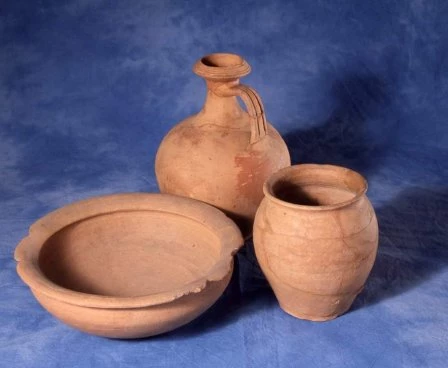
Jar, bowl and flagon in Caerleon red-slipped ware.

Jar, bowl and flagon in Caerleon red-slipped ware. Soil conditions have all but destroyed the red-slipped surfaces, however, substantial patches still survive on the flagon at the rear of this group.

Study of a unique type of pottery from the Roman fortress at Caerleon, south Wales, sheds light on the relationship between local civilians and the army in Roman Wales.

Pottery was a mass-produced commodity in the Roman world and provides an important resource for archaeologists researching this period.

Different fashions in the shapes and fabrics of Roman pottery allow archaeologists to identify pottery industries: their production areas, trade routes, and date their rise and fall. Wales was home to several of these pottery industries, one of which has been the subject of study and debate since the late 1920s.

Pottery at Caerleon

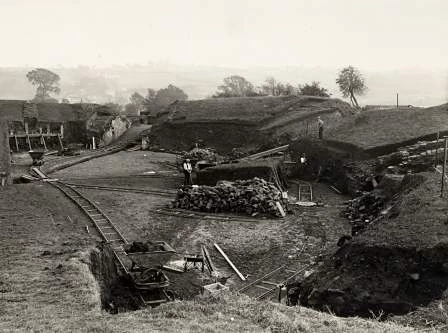
Sir Mortimer Wheeler's excavations at the Caerleon Roman amphitheatre.

Sir Mortimer Wheeler's excavations at the Caerleon Roman amphitheatre.

It was during the excavations at the Roman amphitheatre at Caerleon that the pioneering archaeologist Sir Mortimer Wheeler first identified a group of fine, well made pottery including jugs, bowls, plates, and beakers. Many of these seemed to imitate the forms of metal and samian pottery vessels imported from the continent.

Since Caerleon was home to the second Augustan legion it seemed reasonable to assume that these pots were directly linked to the Roman army.

Roman tableware

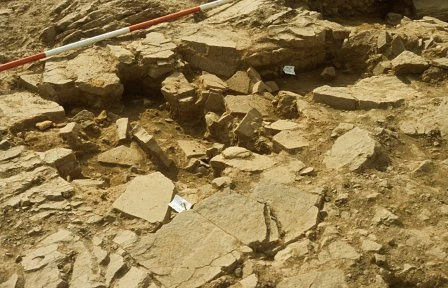
The kiln discovered during excavation of the Celtic Manor golf course in 1996.

The kiln at Abernant during excavation at the Celtic Manor resort in 1996. The pottery to be fired would be stacked on a fired clay floor over the pit in the centre of the image. Photo © Peter Webster.

Wheeler believed he had discovered the tableware used by the legion in the 2nd century AD.

Further excavations have found this type of pottery at Roman sites in and around Caerleon. With so much being discovered, it seemed obvious that it had been produced locally, and it became known as Caerleon Ware. The question was where?

It took another seventy years of work at Caerleon before this question was answered on the Celtic Manor golf course 1.6 miles (2.6 km) north-east of the fortress.

Celtic Manor Golf Course

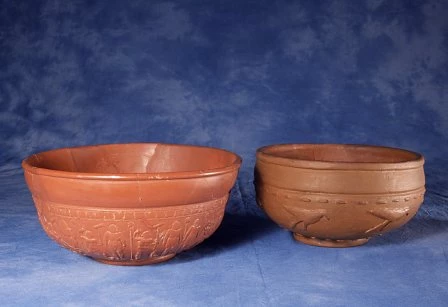
Caerleon Ware was produced in imitation of well known continental types such as Samian bowls.

Caerleon Ware was produced in imitation of well known continental types such as Samian. On the left is an authentic Samian bowl, and on the right the less-defined Caerleon Ware imitation.

In 1996, as the Celtic Manor golf course was being built, archaeologists revealed a kiln and the remains of several buildings - possibly drying sheds. The kiln contained a range of broken Caerleon Ware pots.

The Abernant kiln provided proof that the pottery, which Wheeler had grouped together, was made locally. But another question remains unanswered: who were the potters?

Wheeler believed that the potters were Roman soldiers. However, a close look at the 'name' stamps used on the large mixing bowls (mortaria) suggested the potters were illiterate - unlike the stamps used on tiles which were clearly literate.

If the makers of the pots were illiterate, they were probably not soldiers, but local civilians. Also the pottery was being made at a time when large sections of the legion were away in northern Britain.

It would appear that some enterprising civilians had set up business to supply the legion with pottery in a style that it recognised.

Background Reading

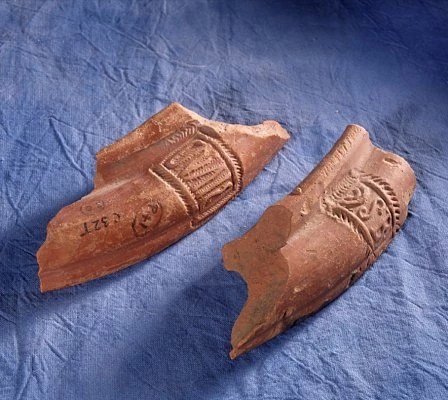
Not all of the Caerleon potters were literate.

Not all of the Caerleon potters were literate. On the right is a stamp on the rim of a bowl on which the initials 'S. B.' can be seen. On the left is a stamp produced by an illiterate potter. Here the letters have become stylised shapes.

'Bulmore, Celtic Manor golf course, No. 3' by B. C. Burnham. In Brittania vol. 28, p401-2 (1997).

'The Roman amphitheatre at Caerleon, Monmouthshire' by T. V. and R. E. M Wheeler. In Archaeologia vol. 78, p111-218 (1928).

Roman glazed pottery from North Wales

9 May 2007

Pottery

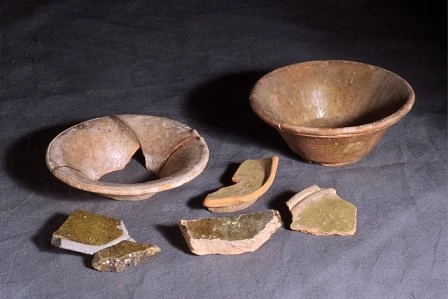
Green glazed pottery from Holt (Wrexham).

Excavations

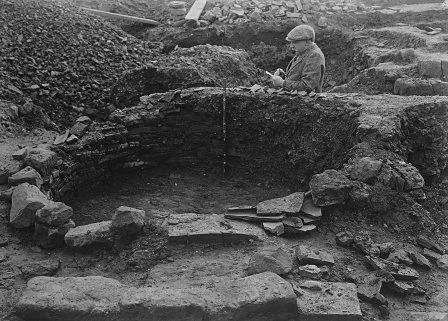
Excavations at Holt before the First World War. In this photograph Mr Acton stands beside the remains of one of the pottery kilns he discovered.

Ceramic plaque

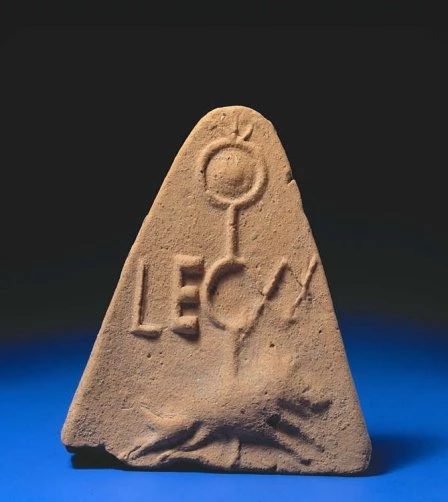
This ceramic plaque (known as an antefix) was used to cover the end of a line of roof tiles. It was produced at Holt and bears the stamp of the 20th Legion (LEG XX), as well as their emblem (a wild boar), and a standard.

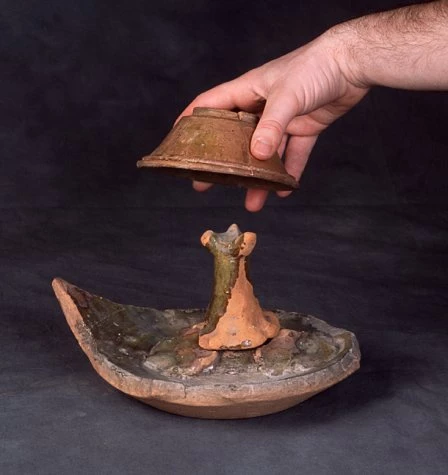
Illustration of how green glazed vessels were fired.

Illustration of how green glazed vessels were fired.

Shortly after the Roman conquest, potters in North Wales were using a technology first developed in Egypt in the 1st millennium BC.

Holt, near Wrexham, North Wales produced pottery and building materials for the legionary fortress at Chester. The main period of production at Holt appears to have been between AD87 and AD135 - when the fort at Chester was rebuilt. However, production probably continued into the 3rd century AD.

Holt specialized in a number of different shapes and styles of pottery, some of which show a remarkable degree of technological sophistication on the part of the potters - none more so than the Green Glazed ware.

Glazed wares of any type are difficult to produce and are rare in Britain prior to the medieval period, however, limited numbers of vessels were produced at Holt and at Caerleon in the Roman period. They were made by dipping a vessel into a 'frit' (a raw glaze suspended in water). In the Roman world this frit was normally based on a lead oxide.

When the vessel was fired this reacted with silica in the pot, to form a hard impermeable glazed surface that can range in colour from light yellow to olive green to dark brown.

During the firing the Holt potters would have faced two major problems.

First, during the firing, the glaze liquifies and, if over-heated, could run excessively; if this happened the pots could become fused together. Second, hot, dirty gases in the kiln could affect the chemical reaction and cause blisters to the glaze or change its colour.

The Holt potters overcame these problems by firing their pots on a prop set within a 'saggar' (a fired clay box). A lid sealed the top of the saggar, keeping the vessel inside protected from the kiln gases and running glaze from other pots.

The technology to produce glazed pots in this way was developed in the Near East and Egypt during the early first millennium BC and was not known in Britain prior to the arrival of the Romans.

Presumably it was introduced at Holt to enable the soldiers to continue to enjoy luxuries they had grown familiar with elsewhere in the empire.

Background Reading

'A collection of samian from the legionary works-depot at Holt' by M. Ward. In Form and Fabric: Studies in Rome's material past in honour of B. R. Hartley by J. Bird, p133-43. Published by Oxbow Books (1998).

'Holt, Denbighshire: the works depot of the twentieth Legion at Castle Lyons' by W. F. Grimes. In Y Cymmrodor, vol. 41. Published by The Society of Cymmrodorion (1930).

'The Lead Glazed Wares of Roman Britain' by P. Arthur. In Early Fine Wares in Roman Britain by P. Arthur and G. Marsh, p293-356. Published by British Archaeological Reports (1978).