
The Albert Medal and the Tynewydd Inundation
, 25 June 2012

The reverse of Isaiah Thomas's Albert Medal.
The reverse of Isaiah Thomas's Albert Medal.
Tynewydd rescuers with the rescued
The Chilean rescue reminded many of a similar incident which occurred in the Rhondda Valleys over 130 years before. On the 11th April 1877 Tynewydd Colliery in Porth became flooded by water from the abandoned workings of the nearby Cymmer Old Colliery. At the time of the inundation fourteen miners were underground at Tynewydd and rescue attempts were begun to find them.
Five of the survivors were located after sounds of knocking were heard and rescuers had to cut through 12 yards of coal to reach them. Unfortunately, when the area was broken into, one of the trapped men was killed by the force of the air rushing out through the rescue hole. There were now nine men unaccounted for.
"Bringing the miners Out", Tynewydd Colliery disaster
Further sound of knocking were heard from working places beneath the water line which led to the rescuers assuming that there were other survivors trapped in an air pocket. An attempt was made by two divers from London to reach the men but the amount of debris blocking the roadways made this impossible. It was decided that the only way now was to cut a rescue heading through 38 yards of coal.
During the ten days it took to reach the five trapped men, the rescue attracted the attention of the world's press and telegrams were even sent by Queen Victoria who was concerned about the men's plight. The trapped miners were reached on Friday, April 20th; they had been without food and had only mine water to drink for ten days. The five rescued miners were found to be suffering from 'the bends' because of the rapid decompression of their air pocket and had to spend time in hospital but otherwise recovered fully. The four other missing miners were all drowned.
Albert Medals and other presentation items were awarded to the rescuers in a ceremony held at the Rocking Stone above Pontypridd. It was estimated that up to forty thousand people attended.
The Tynewydd rescue was the first time that Albert Medals had been awarded for bravery on land. Five of these medals are now held by Big Pit National Coal Museum along with examples of presentation silverware and other items connected with the rescue.
Survivors of the Tynewydd Disaster
The team of rescuers
Postcard commemorating the disaster
Caption reads:
'Cross section of "stalls" and cutting, showing the imprisoned men, and their rescuers at work. Note: The first engraving exhibits the condition of the affairs before any opening had been made, while the other shows the rise of the water in the "stall" consequent upon the escape of the condensed air when the boring machine had pierced the three feet thickness of coal that only then remained.'
Five of the survivors
In August 2010 a roof fall at the San Jose copper/gold mine in Chile trapped 33 miners 700 metres underground. After 69 days underground and a massive rescue operation, which involved NASA and more than a dozen international corporations, all 33 men were rescued over a 24 hour period. After winching the last trapped miners to the surface the rescue workers held a placard up for the cameras reading "Mission accomplished Chile". This was seen by an estimated television audience of more than a billion viewers around the world.
The Chilean rescue reminded many of a similar incident which occurred in the Rhondda Valleys over 130 years before. On the 11th April 1877 Tynewydd Colliery in Porth became flooded by water from the abandoned workings of the nearby Cymmer Old Colliery. At the time of the inundation fourteen miners were underground at Tynewydd and rescue attempts were begun to find them.
Five of the survivors were located after sounds of knocking were heard and rescuers had to cut through 12 yards of coal to reach them. Unfortunately, when the area was broken into, one of the trapped men was killed by the force of the air rushing out through the rescue hole. There were now nine men unaccounted for.
Further sound of knocking were heard from working places beneath the water line which led to the rescuers assuming that there were other survivors trapped in an air pocket. An attempt was made by two divers from London to reach the men but the amount of debris blocking the roadways made this impossible. It was decided that the only way now was to cut a rescue heading through 38 yards of coal.
During the ten days it took to reach the five trapped men, the rescue attracted the attention of the world's press and telegrams were even sent by Queen Victoria who was concerned about the men's plight. The trapped miners were reached on Friday, April 20th; they had been without food and had only mine water to drink for ten days. The five rescued miners were found to be suffering from 'the bends' because of the rapid decompression of their air pocket and had to spend time in hospital but otherwise recovered fully. The four other missing miners were all drowned.
Although the incident was a minor one in terms of loss of life (an explosion at Cymmer Colliery had killed 114 men and boys in 1856), the perseverance of the rescue teams attracted great press and public interest. Twenty four First and Second Class
and other presentation items were awarded to the rescuers in a ceremony held at the Rocking Stone above Pontypridd. It was estimated that up to forty thousand people attended.The Tynewydd rescue was the first time that Albert Medals had been awarded for bravery on land. Five of these medals are now held by Big Pit National Coal Museum along with examples of presentation silverware and other items connected with the rescue.
Article by: Ceri Thompson, Curator, Big Pit National Coal Museum
John Cornwell was a freelance photographer who took many photographs of collieries, mostly in south Wales and the English Midlands, both underground and on the surface, during the 1970s and early 1980s. He perfected a method of underground photography using the standard colliery lighting and was able to photograph coal faces, roadways, shafts and equipment with amazing clarity. In addition to photographing working mines he also recorded abandoned mine workings, above and below ground.
John Cornwell was also well respected in the broader field of industrial archaeology. He published a number of books on Welsh and English collieries.
The copyright of his south Wales images is now owned by National Museum Wales.
Download the catalogue to the Cornwell Photographic Collection [PDF 4.7MB]
Tirpentwys Colliery 1979
Six Bells Colliery, 1979
Oakdale Colliery, electric locomotive near the pit bottom, c.1978
Oakdale Colliery, coal conveyor attendant, c.1978
North Celynen Colliery, 1975
Markham Colliery yard, 1977
Marine Colliery, 1980
Marine Colliery, 1974, a 'Western' class locomotive - the 'Western Consort'.
Llanhilleth Colliery, the lattice headframe on the No.2 shaft, 1975.
Hafodyrynys Colliery, electric locomotive at the entrance to the drift in 1968.
Cwmtillery Colliery, decorative brickwork on ventilation fan building, 1980
Cwmtillery Colliery pit bottom, 22 November 1977
Celynen South Colliery, 1978.
Blaenserchen Colliery pit bottom in 1979 with supplies and a dram of waste.
Blaenserchan colliery in 1973.
Coegnant Colliery 1978, prop and bar face.
Wyndham Colliery, c.1975
Wyndham/Western Colliery, turntable near pit bottom, c.1979
Treforgan Colliery with the afternoon shift waiting to descend 1979
St John's Colliery, Anderson Strathclyde shearer, c.1979
Overmen inspecting a shearer on the Six Feet Seam, Brynlliw Colliery 15 December 1977
Modern concrete viaduct linking the mine with the washery, Blaengwrach Colliery, c.1977.
Graig Merthyr Colliery, line of drams in the Graigola Seam - note the unsupported sandstone roof, c.1977
Graig Merthyr Colliery yard in 1977 with a long journey of drams waiting to be run into the mine.
Garw Colliery in 1977, with village in the background.
Cefn Coed Colliery, 1973, engine house and downcast shaft headframe.
Cefn Coed Colliery engine house for the Markham engine on the upcast shaft 1973.
Aberpergwm, 1972, entrance of the new drift mine.
Abernant Colliery, miner at a pumping station at pit bottom, 1978
Aberpergwm Colliery, Dosco Road heading machine and auxiliary fan ducting, c.1978
Ty Mawr Colliery, the remains of an underground ventilation furnace which date back to the late 1870s.
Tower Colliery, 'Rex' with his ostler, 1979.
Taff Merthyr Colliery, heading with Dosco road heading machine and auxiliary ventilation, 1979.
Taff Merthyr Colliery in the late 1970s.
Penrhiwceiber Colliery Pit bottom, 1978.
Nantgarw Colliery, 1978, Anderson Strathclyde drum shearer cutting coal on the coal face.
Merthyr Vale Colliery downcast shaft, c.1980
Maerdy Colliery, 1977, empty mine cars waiting at pit top.
Lewis Merthyr Colliery, 1977, hydraulic roof supports in the yard waiting to be taken underground.
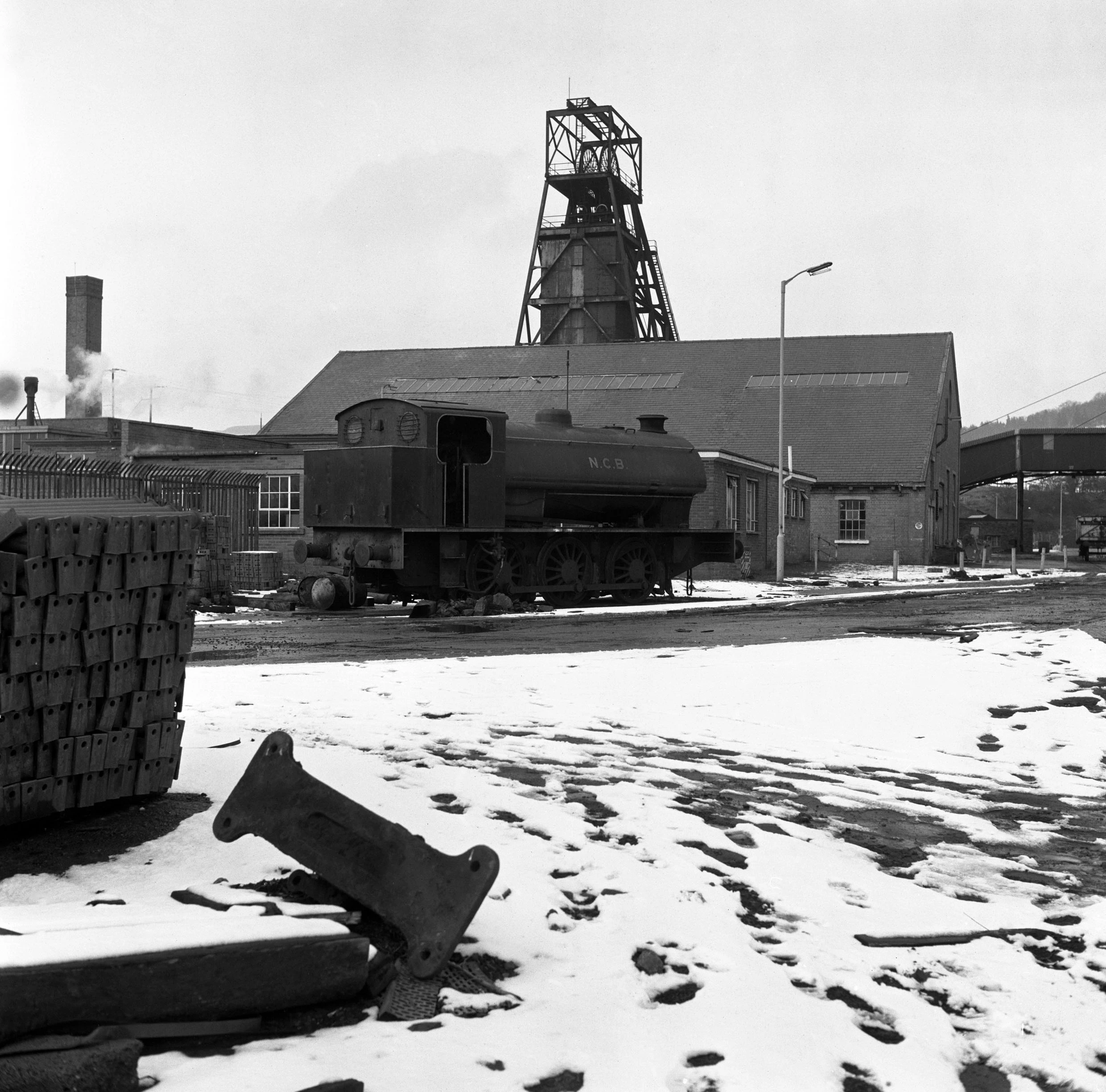
Lady Windsor Colliery, steam locomotive with the upcast shaft in the background, 1977
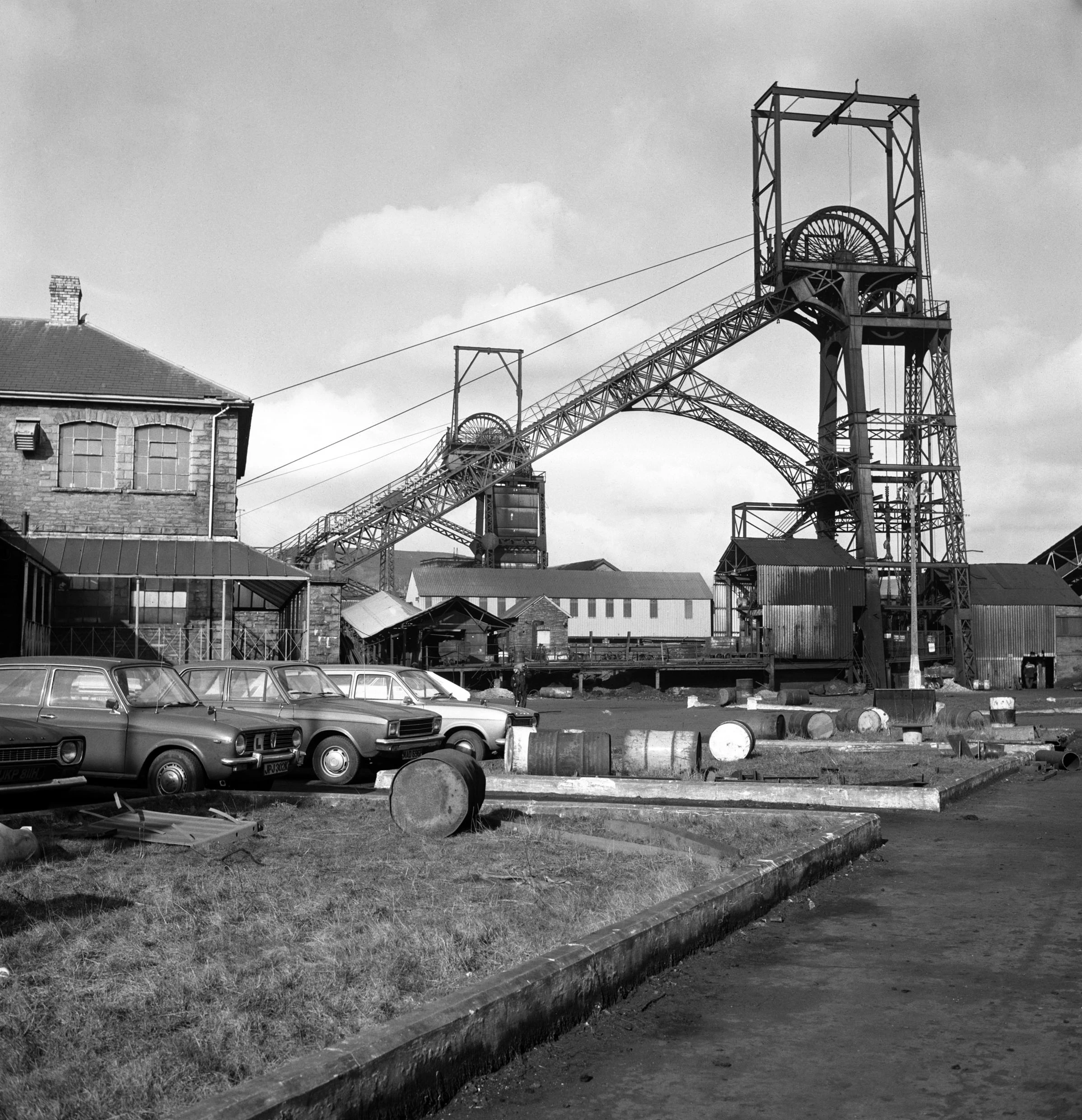
Ffaldau Colliery, 1977, the pit head.
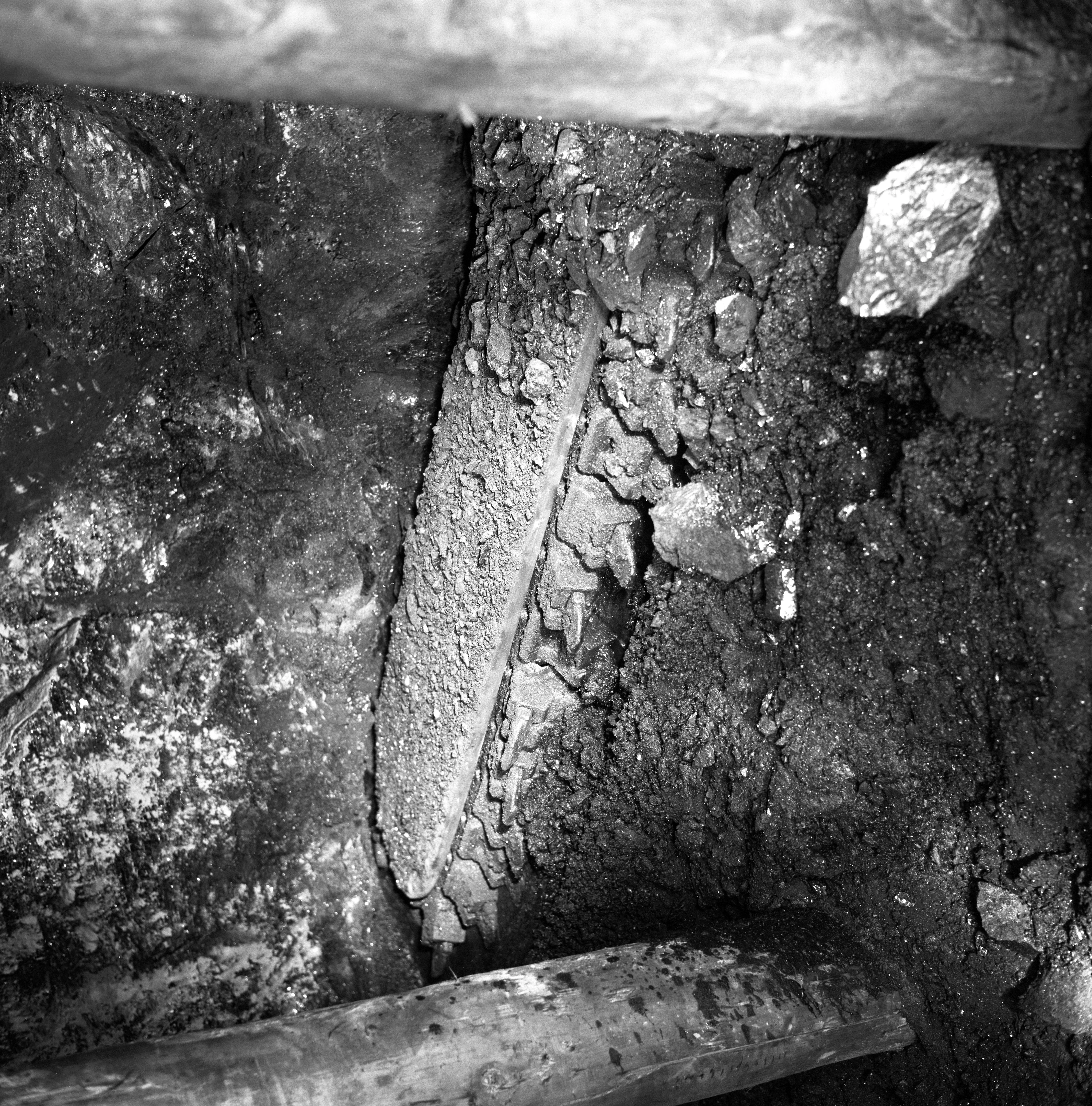
Fernhill Colliery, the jib of an AB 15 hydraulic undercutter on a timbered longwall face.
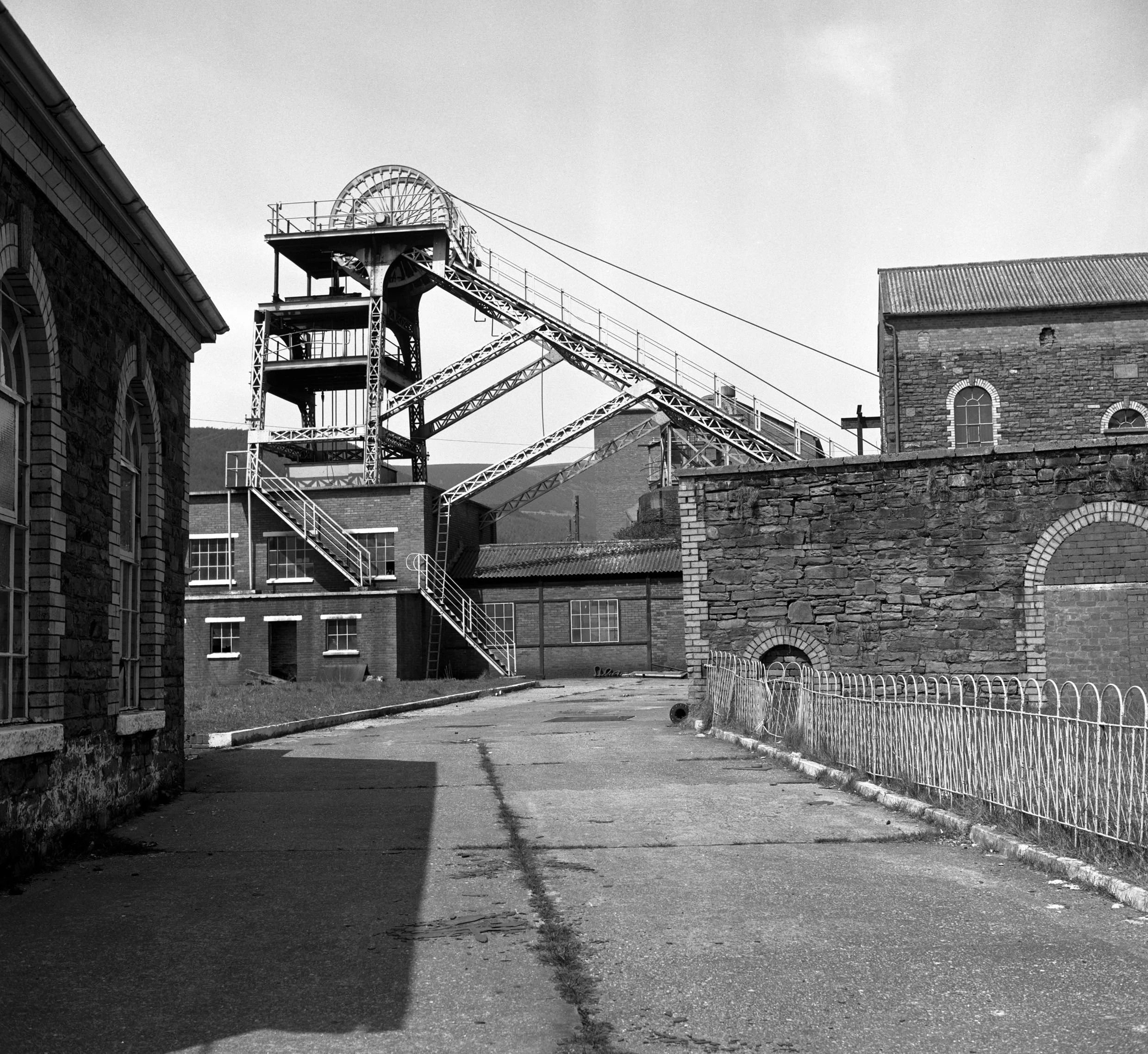
Deep Navigation Colliery, the downcast headframe, c.1978
Deep Duffryn Colliery, two pitmen inspecting the shaft from the roof of the cage, 1977-78.
Bargoed Colliery, 20 May 1977.
Morlais Colliery, general view looking east across the River Llwchwr, 1978.
Morlais Colliery, a general view, note the derelict engine pumping house, 1978
Cynheidre Colliery,coal drams at an underground loading point, c.1978
Cynheidre Colliery, main trunk road with high speed conveyor, c.1978
Cwmgwili Colliery, 1978, afternoon shift waiting for their ride at the entrance of the mine.
Cwmgwili Colliery, 1978, a Joy Loader and operators ready to commence work.
Betws Mine, the afternoon shift waiting for the manriding train, c.1976
Cwmgwili Colliery, a completed drivage supported by timber, 1978
Ammanford Colliery, 1974, Mr P.A. Jones, Safety Officer inspecting the roof on the last coal face.
Ammanford Colliery, 1974, Gerald Gibson drilling a shot hole on the coal face.
Ammanford Colliery, 1974, a journey of empty drams being lowered into the slant.
Two Blaenavon miners in the timber yard at the end of the morning shift, 1978.
The Big Pit manager, Glyn Morgan, talking to Billy 'Pigeon' Preece (seated), Big Pit 1975
New roadway driven from the drift entrance with conveyor belt carrying coal from the Garw Seam, Big Pit 1975.
Last day for Glyn Morgan, the last National Coal Board Manager, on 28 November 1980.
Junction near pit bottom, Big Pit 1975, now part of the museum's underground tour.
General surface view, Big Pit 1975.
Forge level, driven c.1812, later incorporated into the Big Pit underground complex .
Colliery horse returning to Big Pit surface stables from the Washery in 1968.
Bill Gunter, the Big Pit safety officer, on the G11 face in 1979
Bill Gunter standing at the archway to Dick Kear's Slope, driven around 1820. Big Pit.
A mine official examining a section of a cage of a water balance machine, near the pit bottom of the Forge Pit (Big Pit), 1975
The pithead baths at Bit Pit: National Coal Museum
Before pithead baths became widely available, most coal miners, already exhausted from a day's work had little choice but to travel home from work still filthy with coal dust. Their clothing was often soaking with sweat and mine water and they were at risk from contracting pneumonia, bronchitis or rheumatism. Once home they had the task of removing as much of the dirt as possible in a tin bath in front of the fire.
The women of the house were usually responsible for the heating of water for the miner's bath and the cleaning and drying of his clothes. In addition it was a constant battle to clean the house from the all-prevailing coal dust. This was never ending and back breaking work and exhaustion and physical strain often led to serious health problems, leading in some cases to premature births and miscarriages.
It took considerable lobbying by social reformers, working under the banner of the 'Pithead Baths Movement', to convince the Government, mine owners and even some of the miners and their wives, that pithead baths were needed. From the initial campaigns of the 1890s it was a long, hard struggle to the establishment in 1926 of a special fund for the building of baths under the auspices of the Miners' Welfare Committee.
Pithead baths had been in use in Belgium, France and Germany since the 1880s. In 1913, a delegation was sent by David Davies, the proprietor of the Ocean Coal Company and an advocate of social reform, to see these European baths. This visit led to the building of the first Welsh baths at Deep Navigation Colliery, Treharris, in 1916. The success of the Deep Navigation baths played a key part in the propaganda campaign by those who wished to see pithead baths at every Welsh colliery.
In 1919 the British Government established a Royal Commission, (the 'Sankey Commission'), to investigate social and living conditions in the coalfields. As a result a 'Miners' Welfare Fund' was set up to '... improve the social well being, recreation, and condition of living of workers in or about coal mines.' This fund gained its income through a levy of a penny on every ton of coal mined. The fund was used for various purposes including the provision of playing fields, swimming pools, libraries, and institutes. From 1926, an additional levy was raised specifically to fund a baths building programme.
During the period the Miners' Welfare Fund was in existence, from 1921 to 1952, over 400 pithead baths were built in Britain. The Miners' Welfare Committee's own architects' department established the most cost-effective way of constructing, equipping and operating baths buildings. By the 1930s, a 'house style' had developed, based on the 'International Modern Movement' of architectural design.
Baths stood out amongst other colliery buildings with their flat roofs, clean lines and the plentiful use of glass to give a natural light and airy feel. Some baths, such as the one at Big Pit, were rendered white which, even today, makes it a prominent landmark on the hillside. The limited resources available to the Miners' Welfare Committee meant that many Welsh collieries were not provided with baths until the 1950s. After the nationalisation of the coal industry in 1947 the provision of pithead baths became the responsibility of the National Coal Board.
What can you find in the garden?
If you go down to the beach today….

The reverse of Isaiah Thomas's Albert Medal.
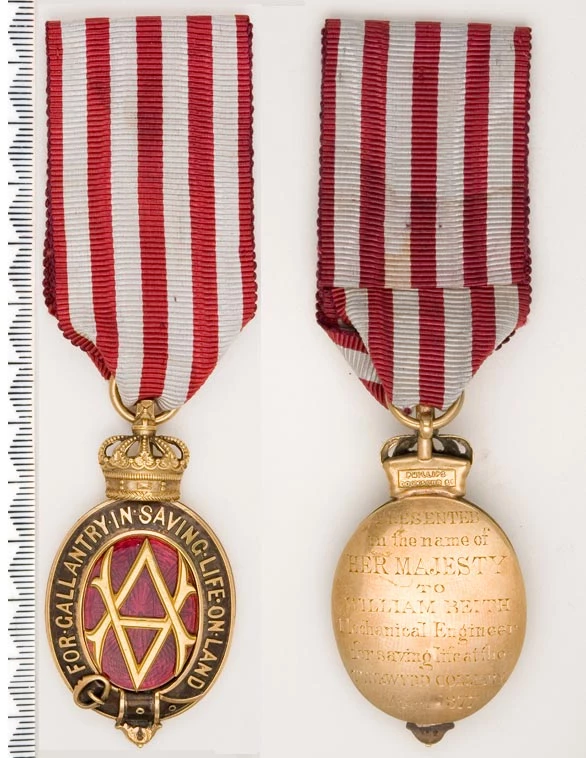
Albert Medal of the First Class, to William Beith. (Note that the royal initials are inverted, a mistake perhaps caused by the short time available to make the medals in time for the investiture on 4th August).

Anonymous portrait of Isaac Pride, wearing his Albert Medal, together with awards from the Royal Humane Society and the Order of St John.

The team of rescuers
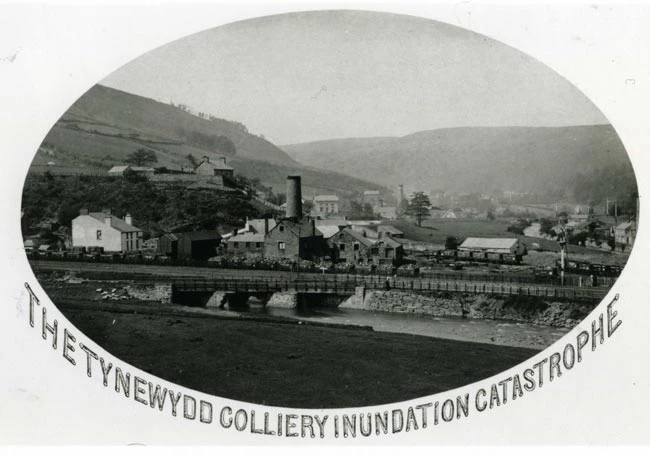
Postcard commemorating the disaster
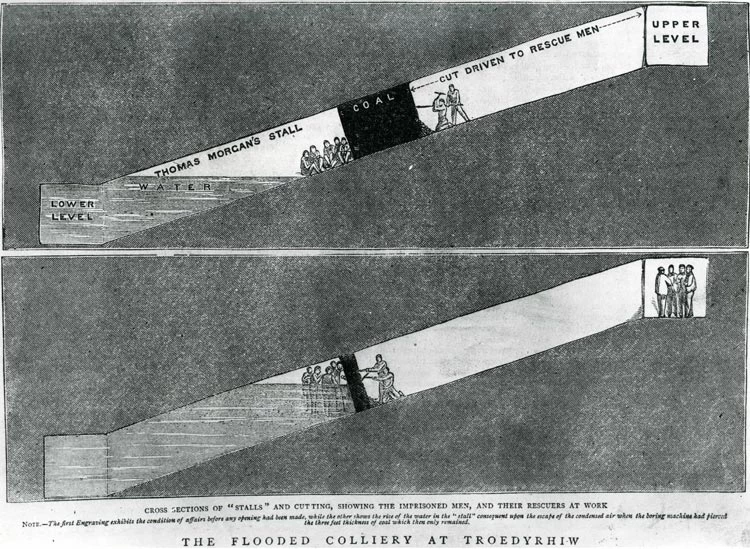
Caption reads:
'Cross section of "stalls" and cutting, showing the imprisoned men, and their rescuers at work. Note: The first engraving exhibits the condition of the affairs before any opening had been made, while the other shows the rise of the water in the "stall" consequent upon the escape of the condensed air when the boring machine had pierced the three feet thickness of coal that only then remained.'
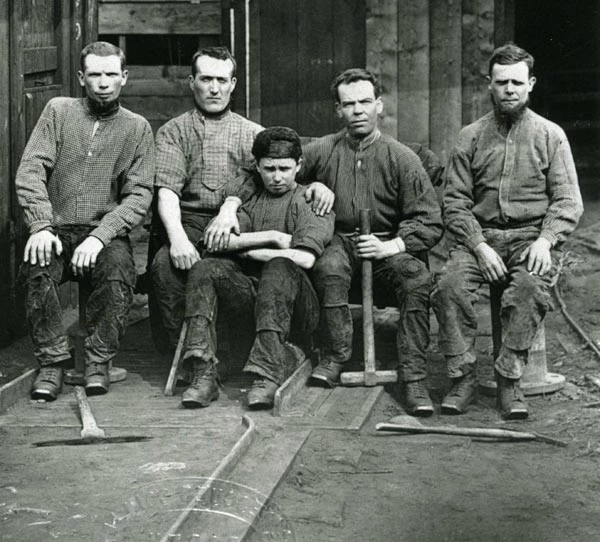
Five of the survivors

Tirpentwys Colliery 1979
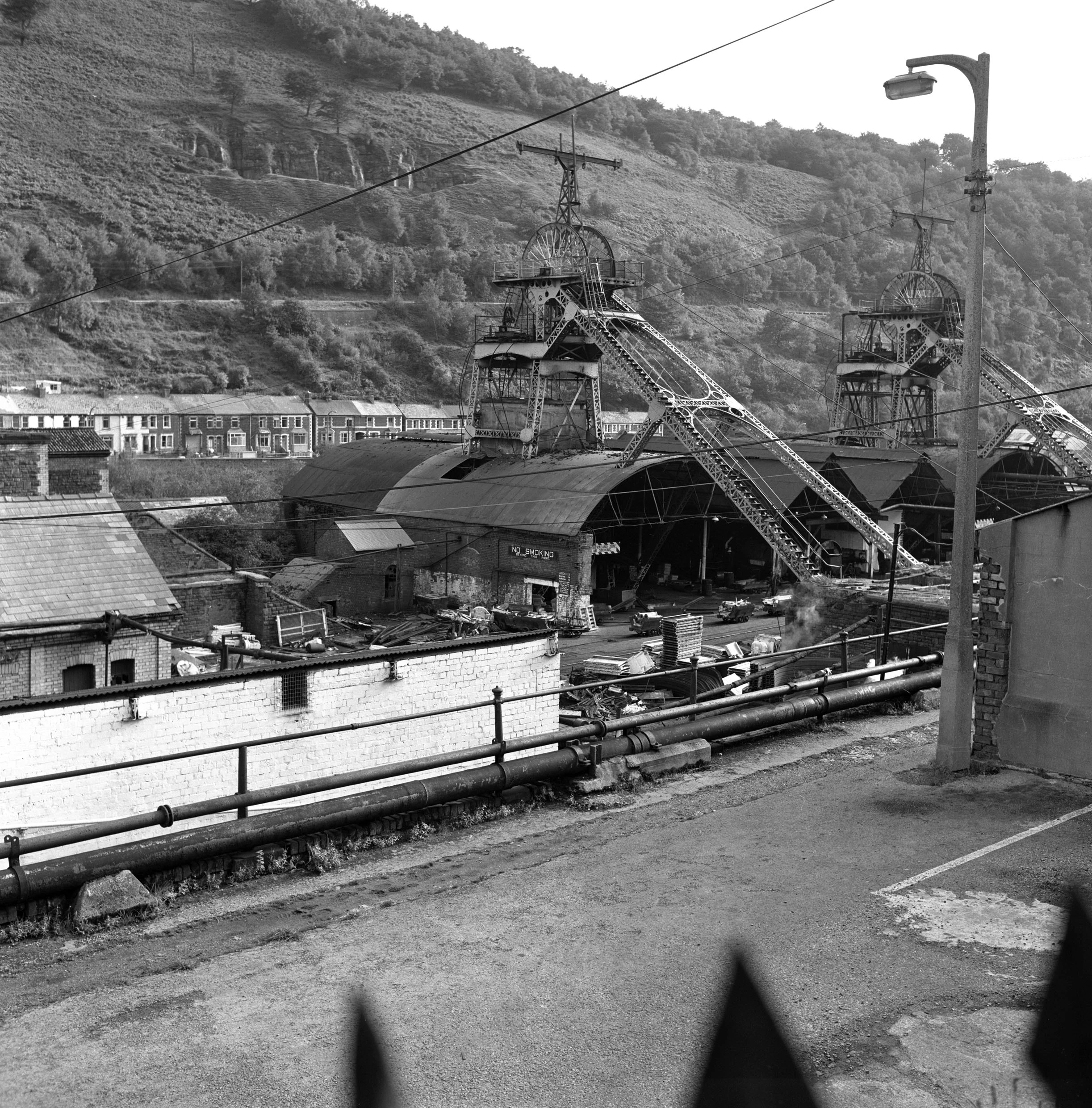
Six Bells Colliery, 1979

Oakdale Colliery, electric locomotive near the pit bottom, c.1978
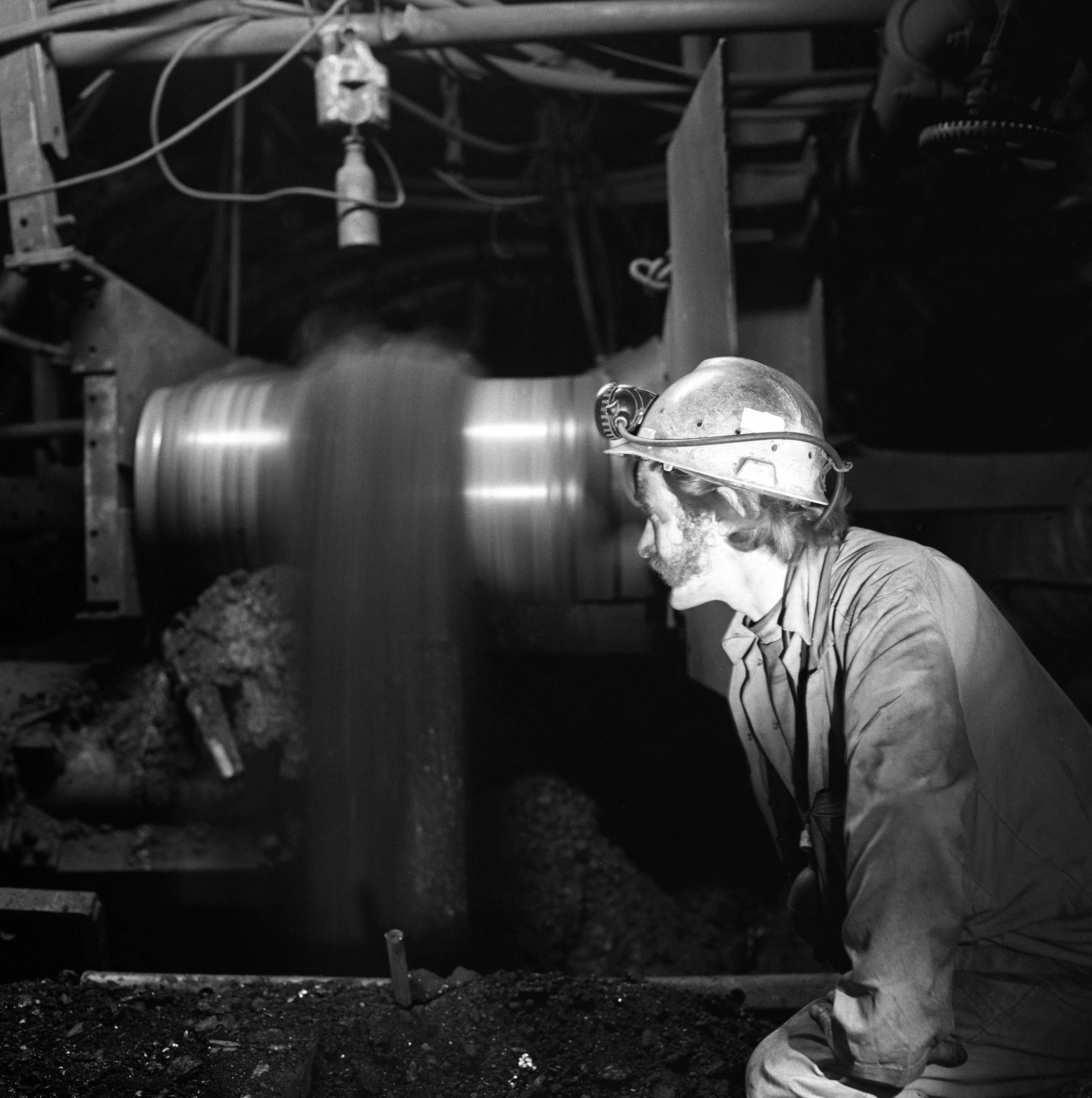
Oakdale Colliery, coal conveyor attendant, c.1978
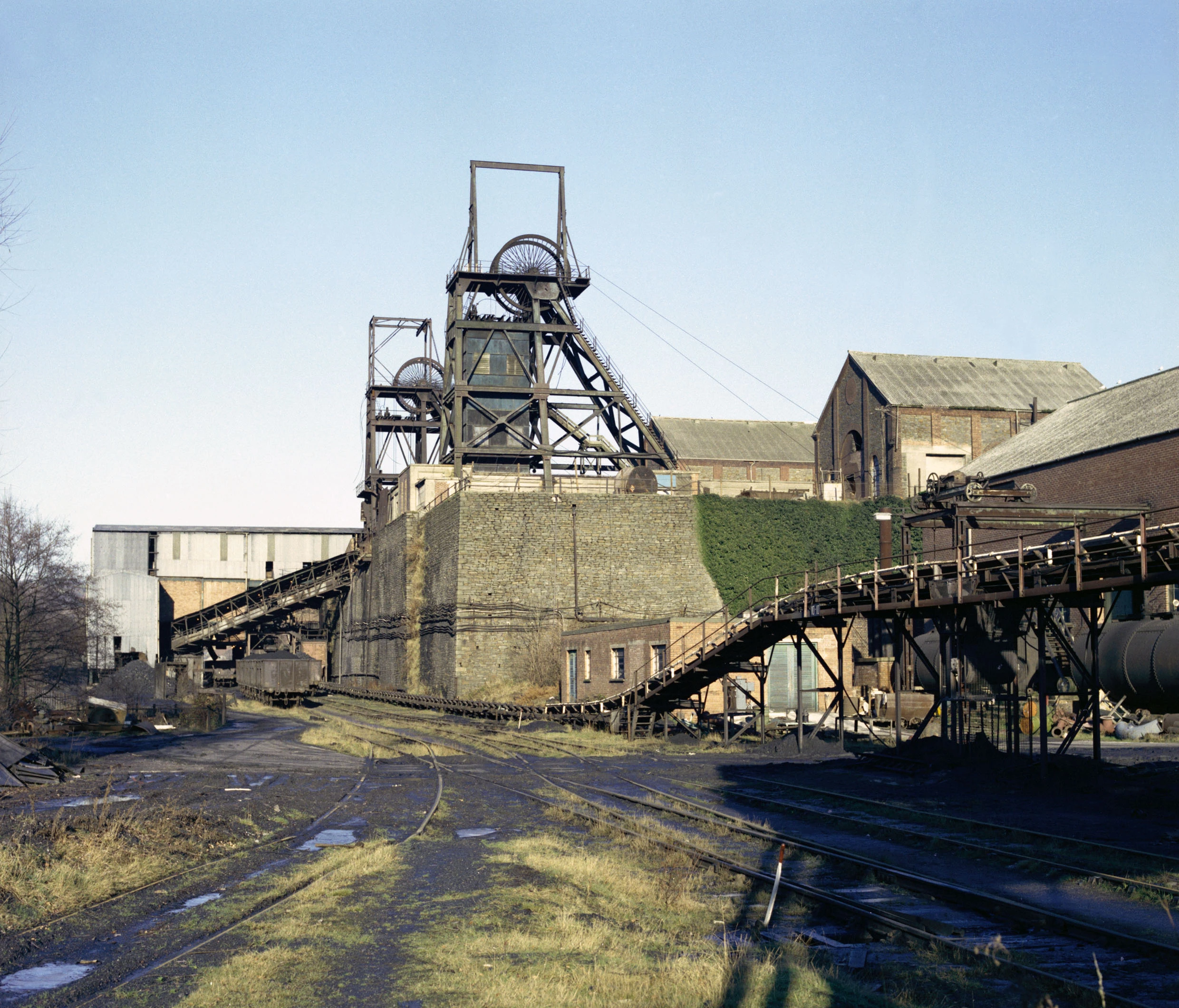
North Celynen Colliery, 1975
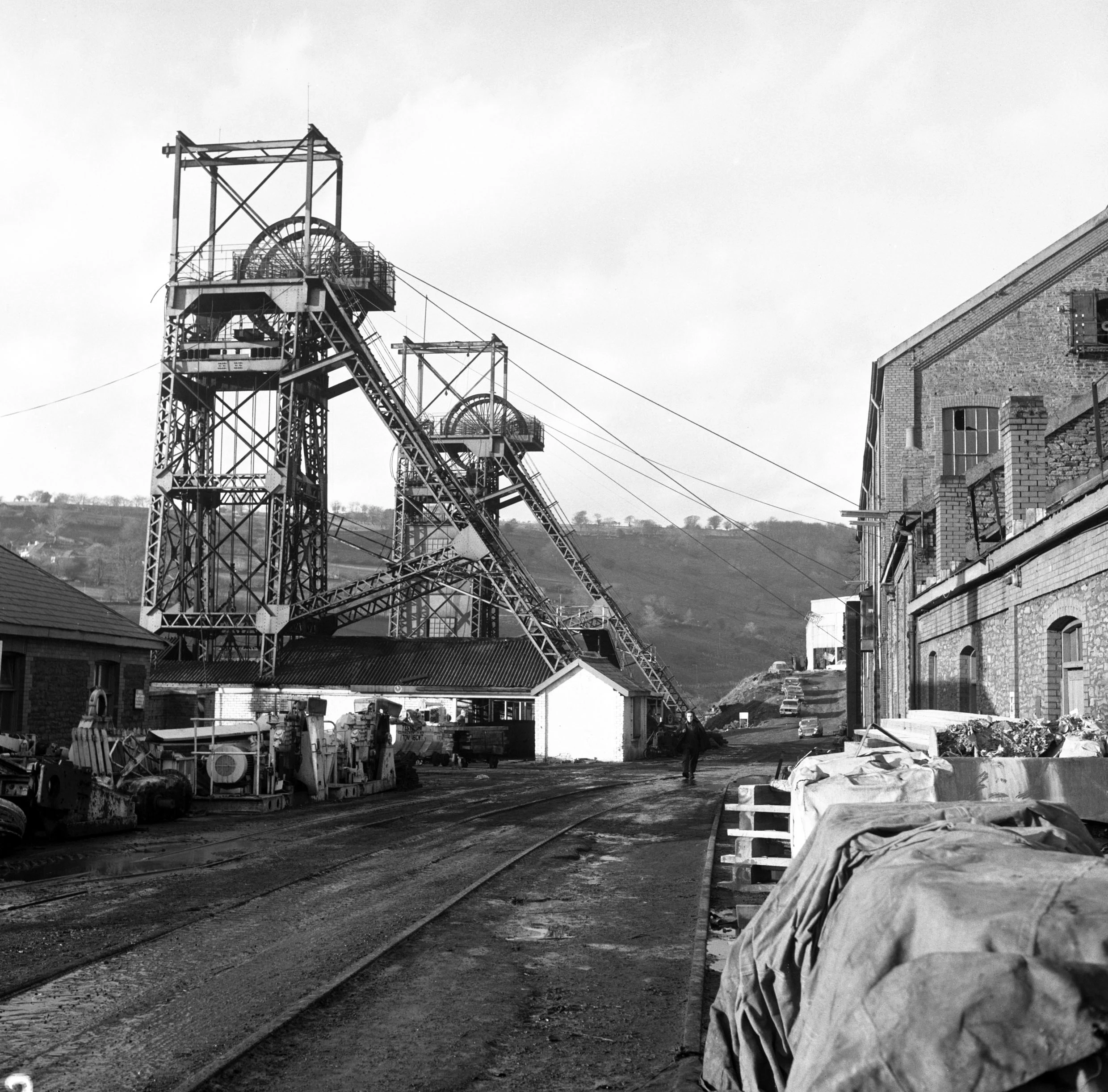
Markham Colliery yard, 1977

Marine Colliery, 1980
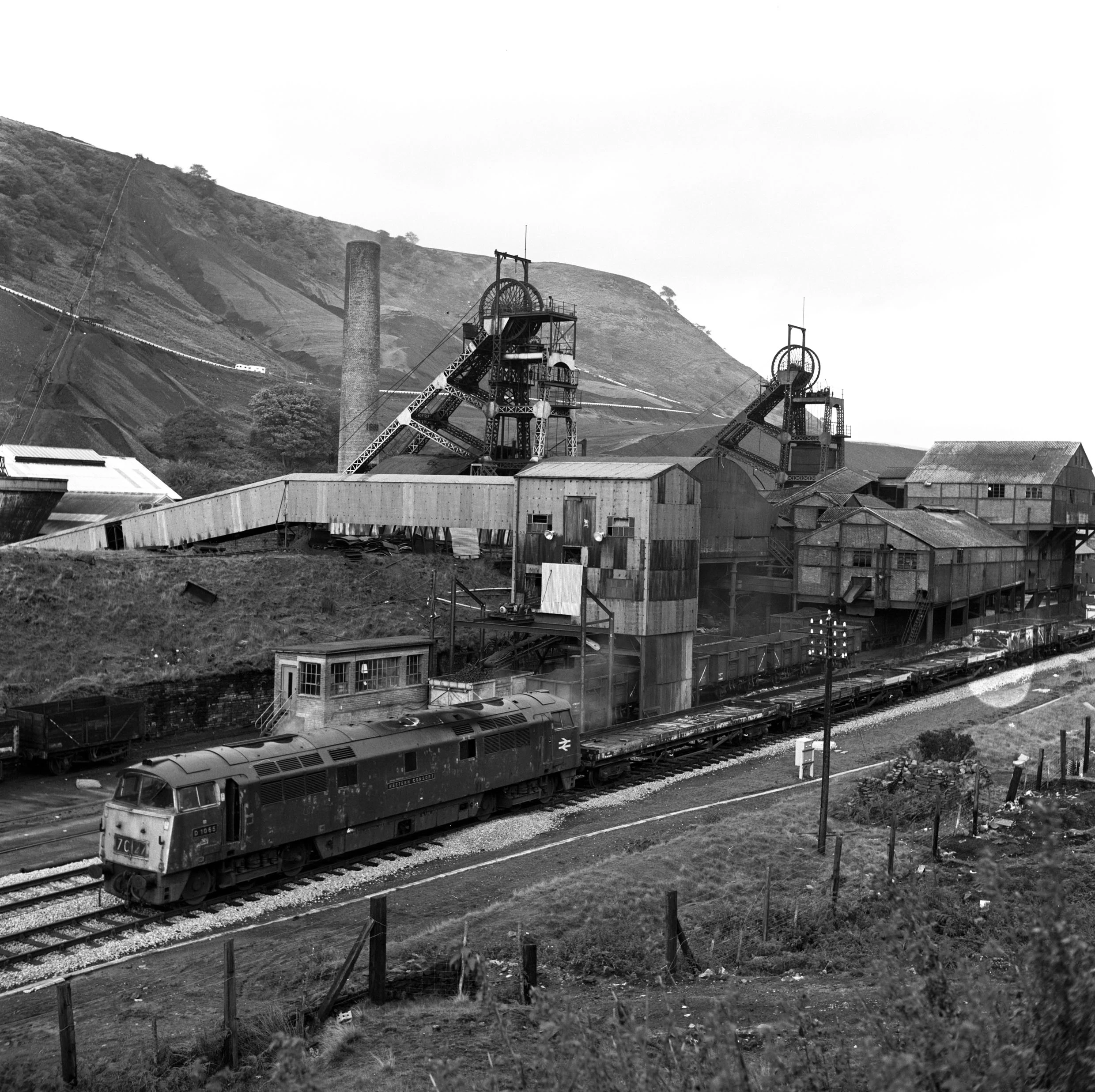
Marine Colliery, 1974, a 'Western' class locomotive - the 'Western Consort'.
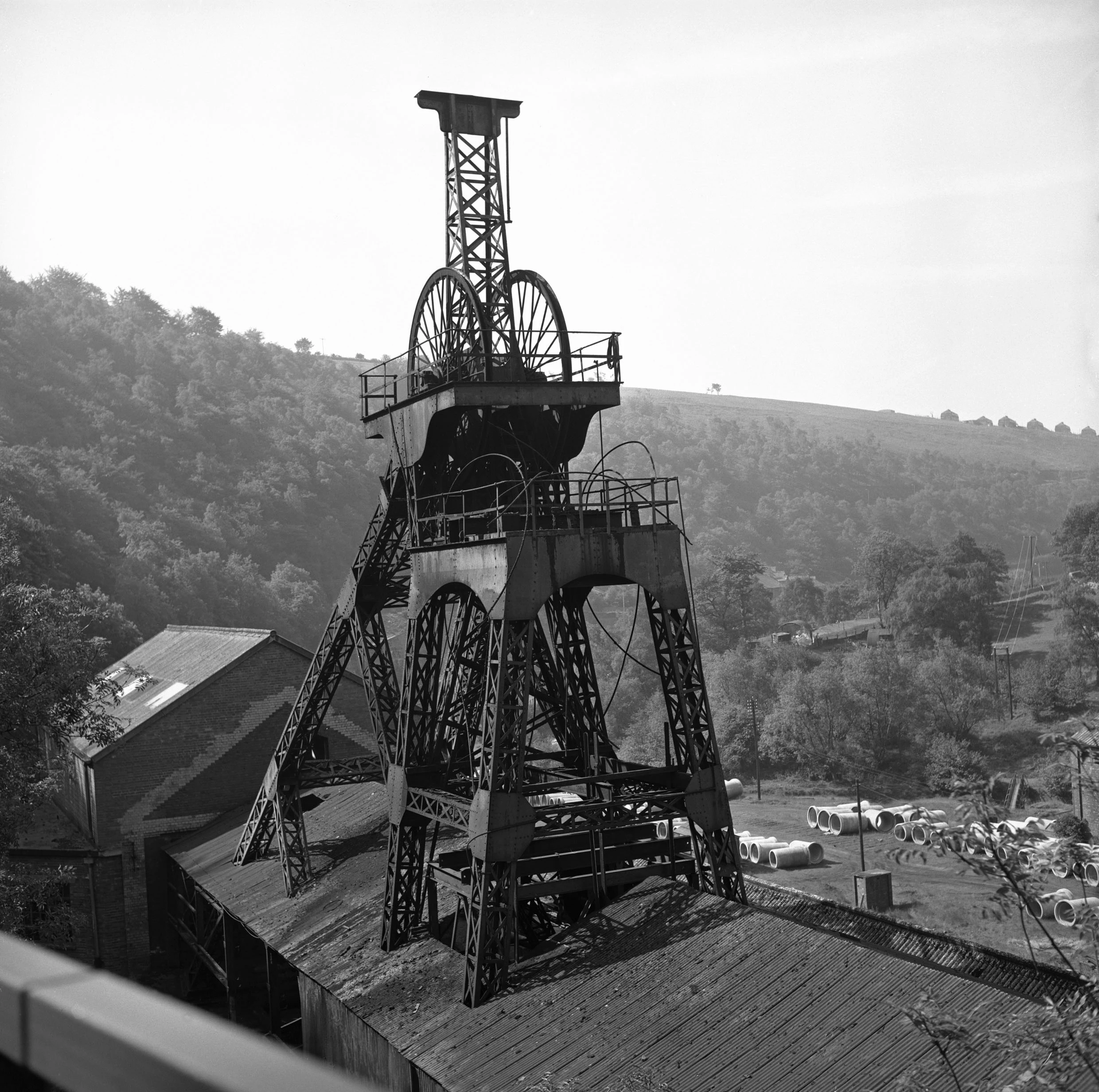
Llanhilleth Colliery, the lattice headframe on the No.2 shaft, 1975.
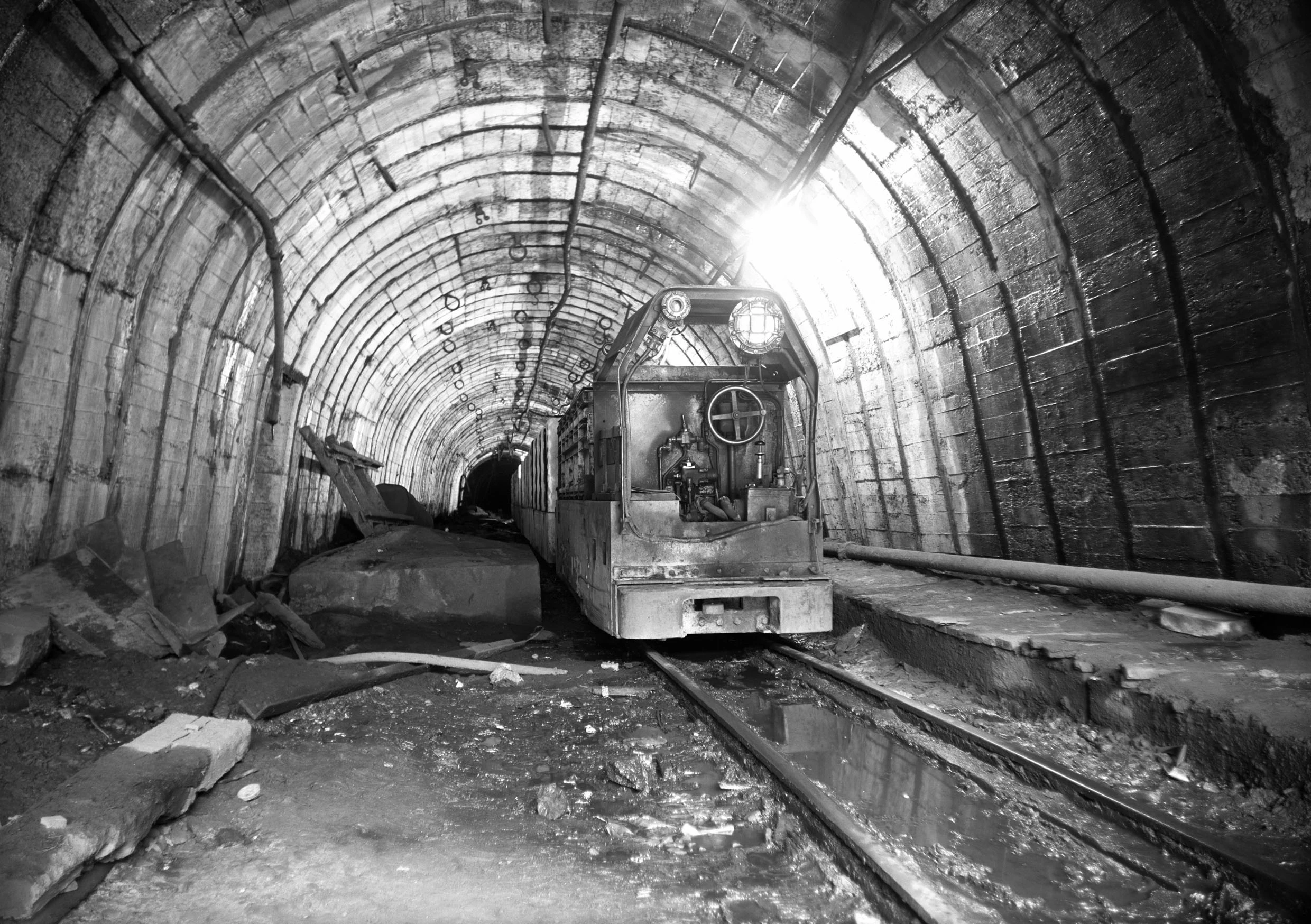
Hafodyrynys Colliery, electric locomotive at the entrance to the drift in 1968.
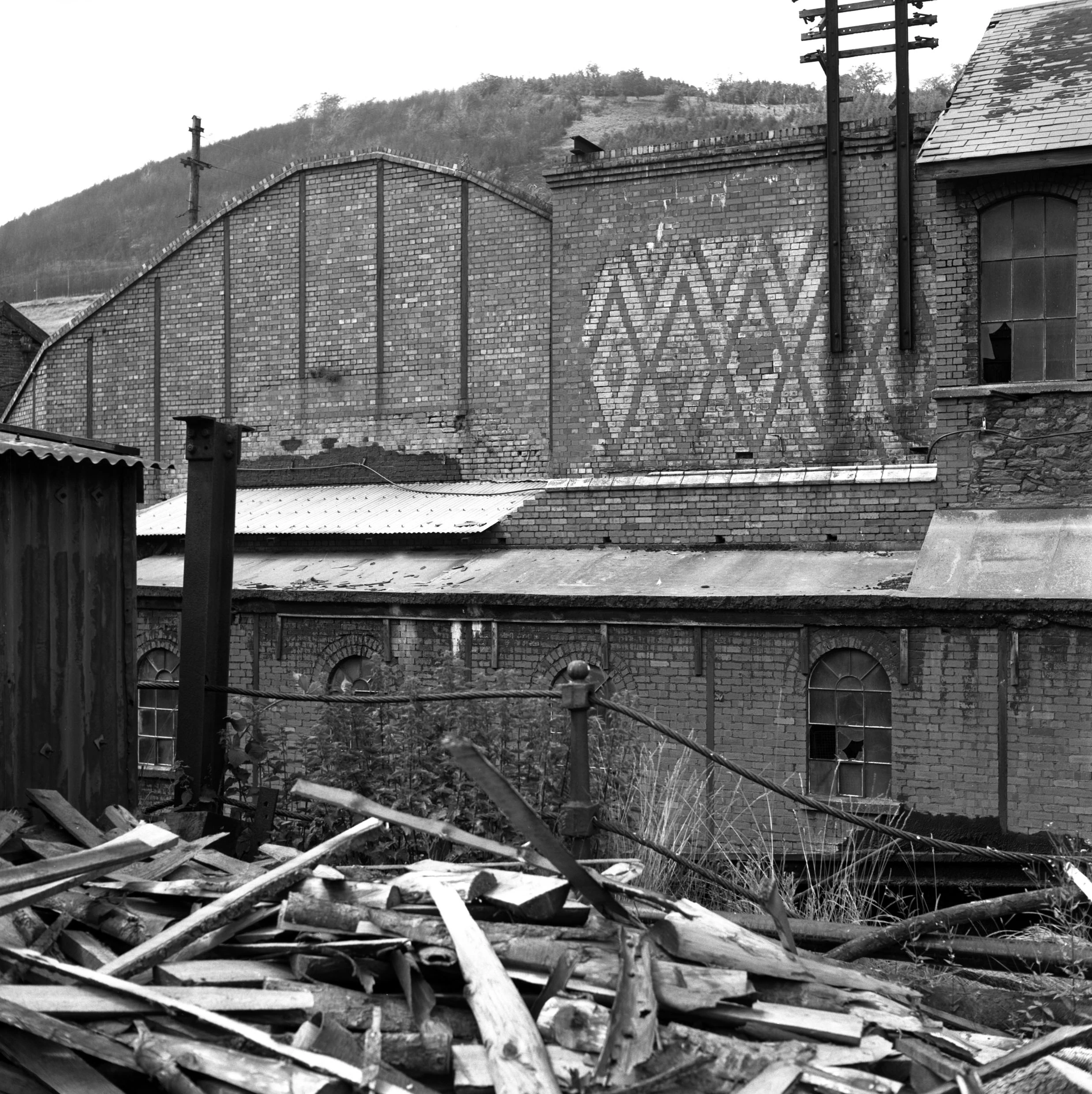
Cwmtillery Colliery, decorative brickwork on ventilation fan building, 1980
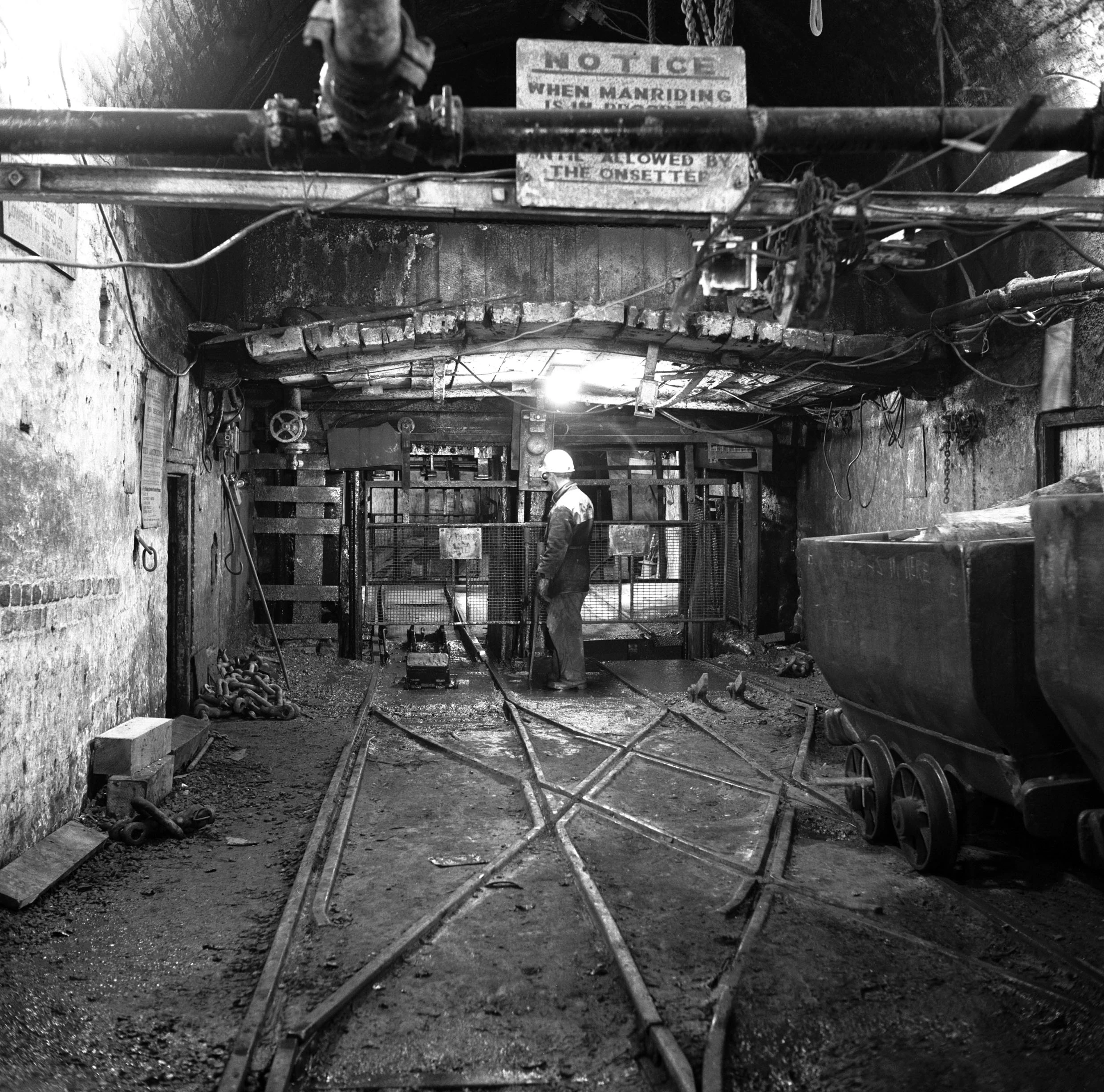
Cwmtillery Colliery pit bottom, 22 November 1977
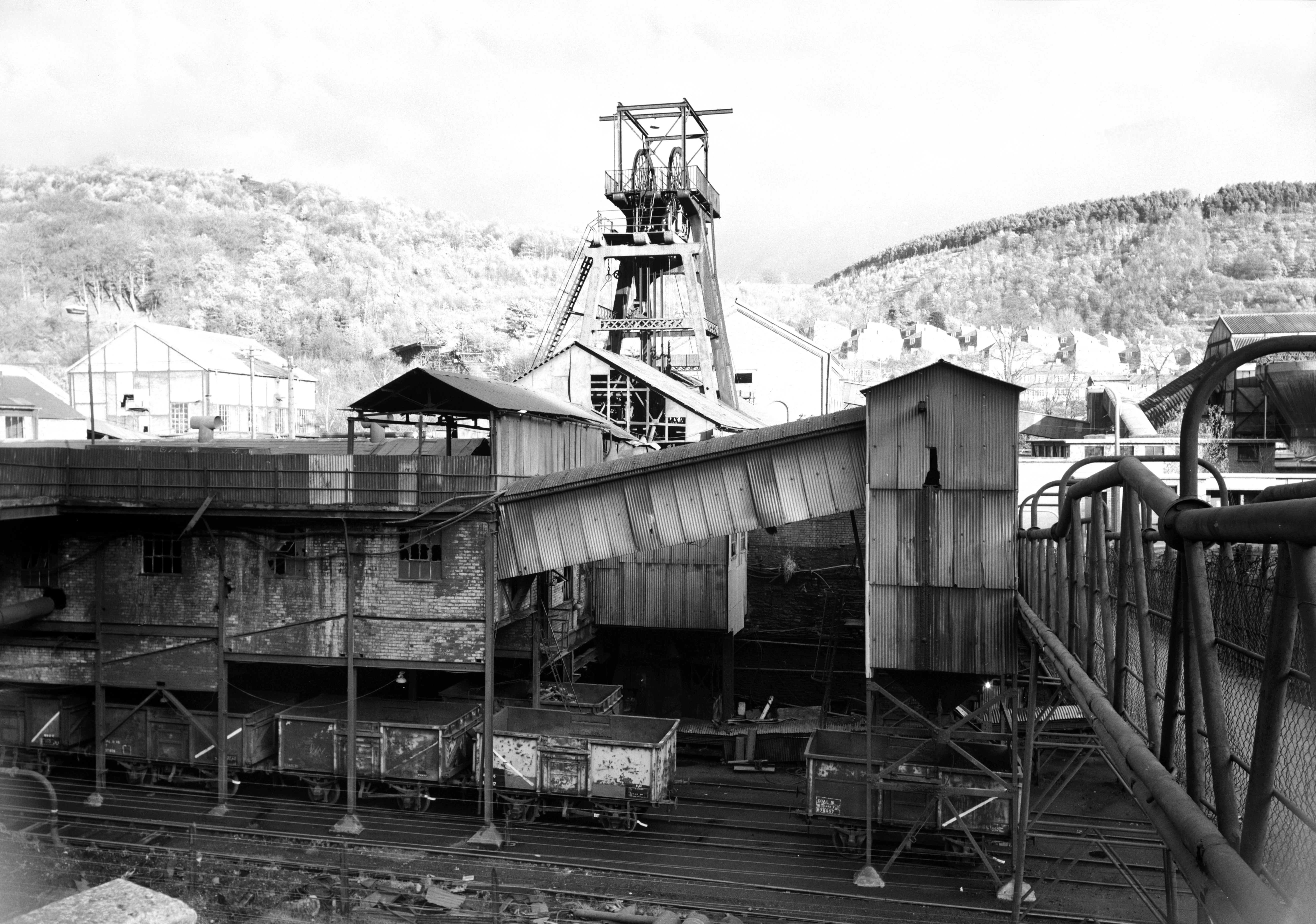
Celynen South Colliery, 1978.
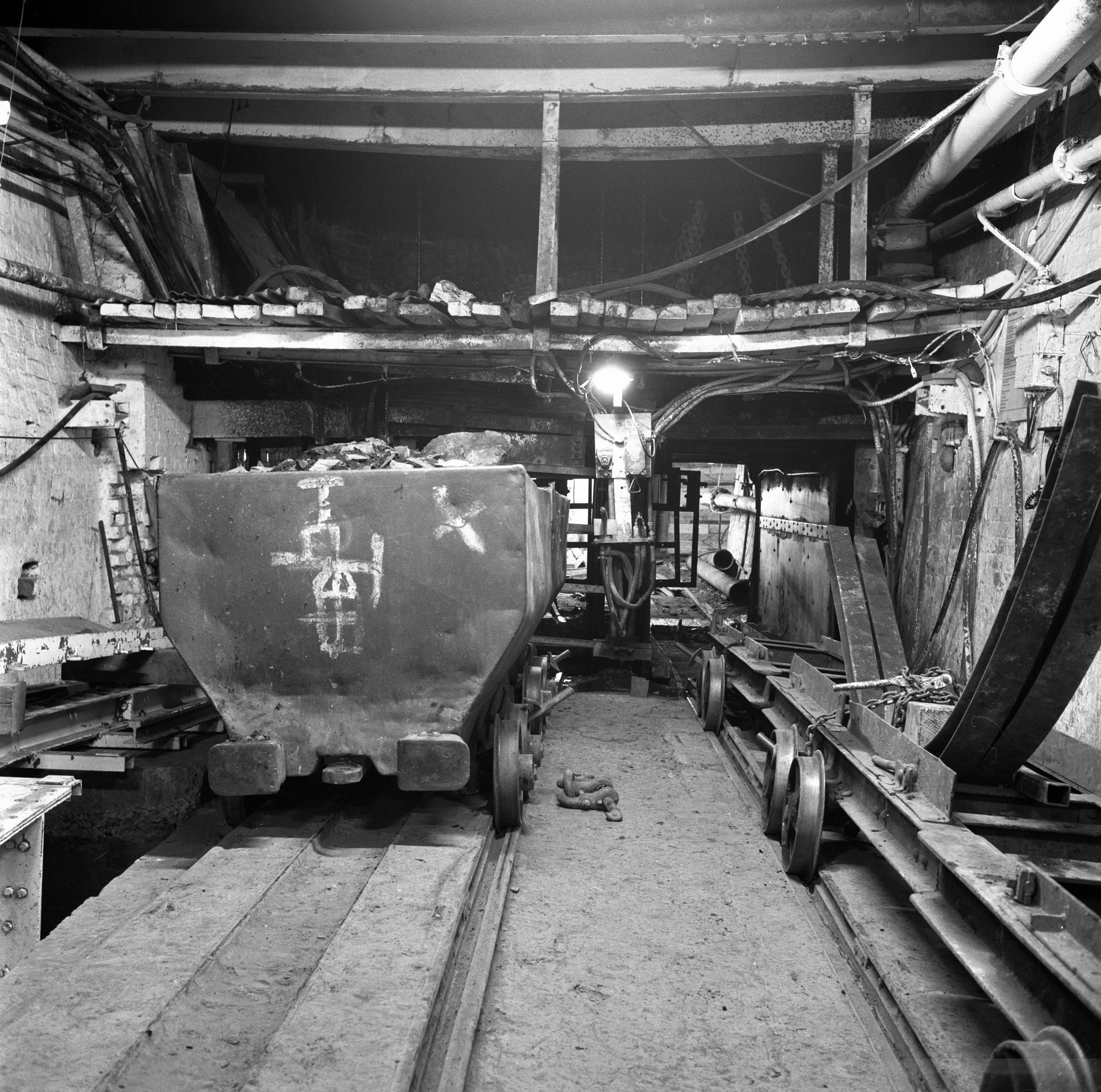
Blaenserchen Colliery pit bottom in 1979 with supplies and a dram of waste.
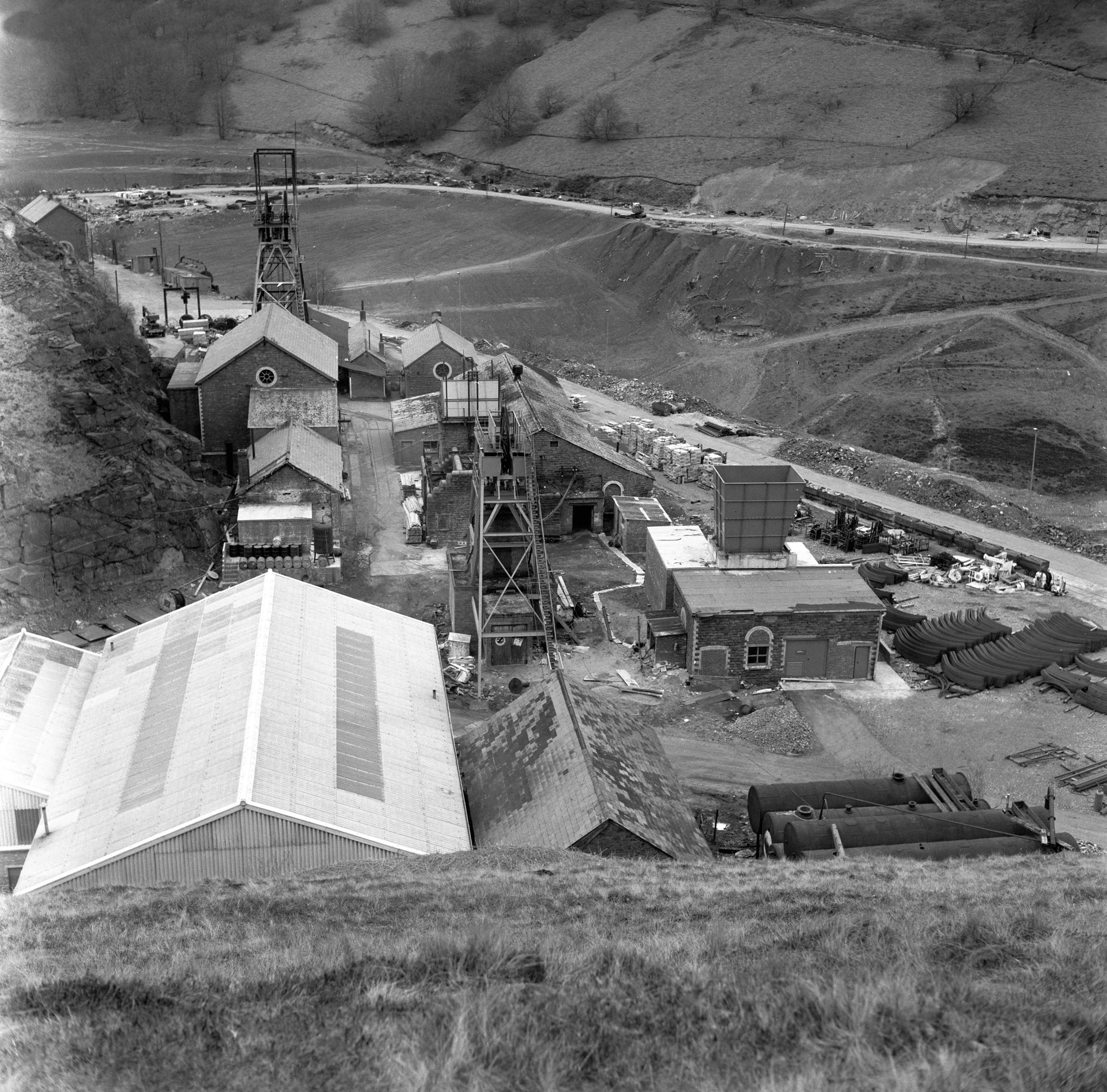
Blaenserchan colliery in 1973.

Coegnant Colliery 1978, prop and bar face.
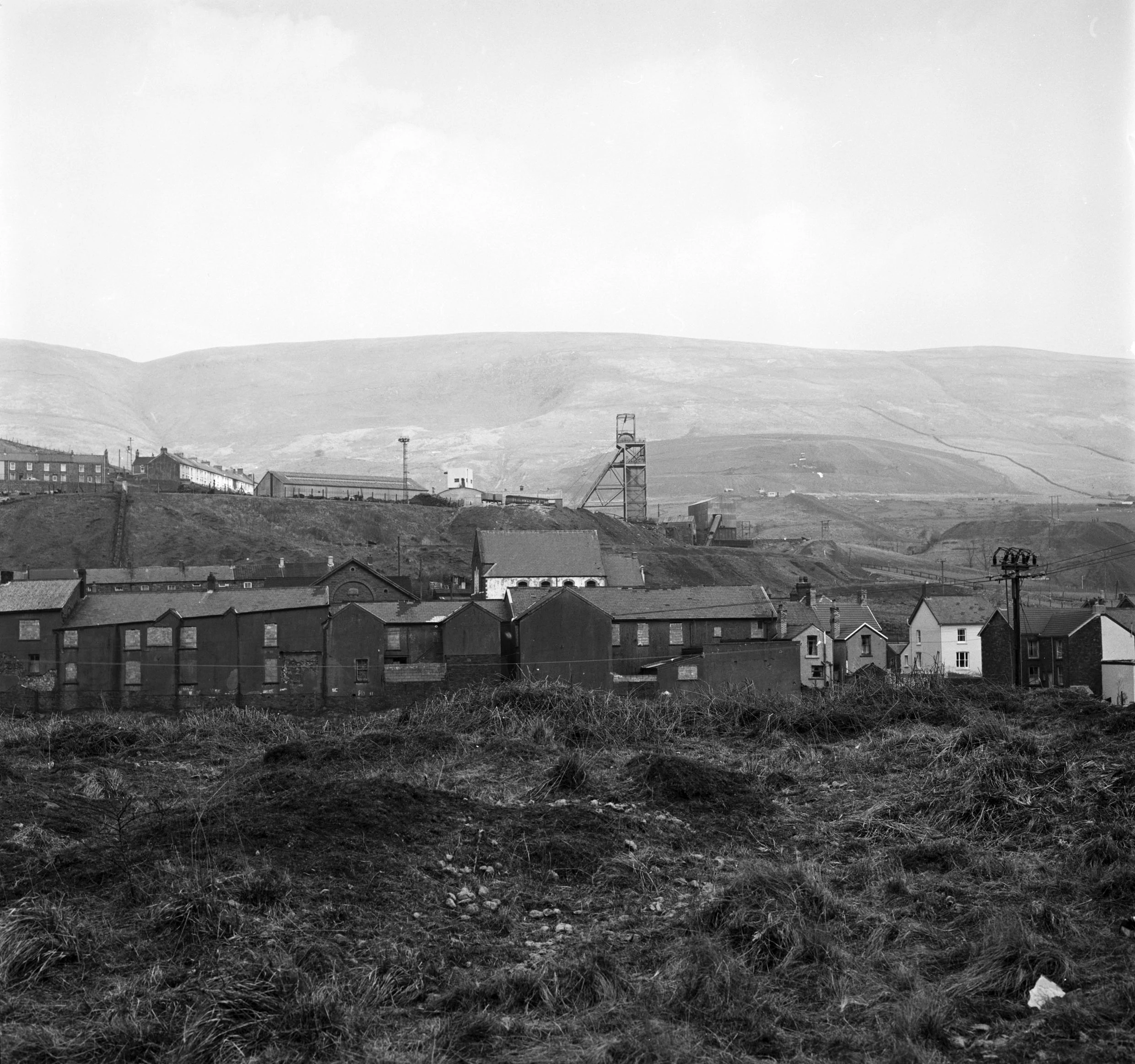
Wyndham Colliery, c.1975

Wyndham/Western Colliery, turntable near pit bottom, c.1979
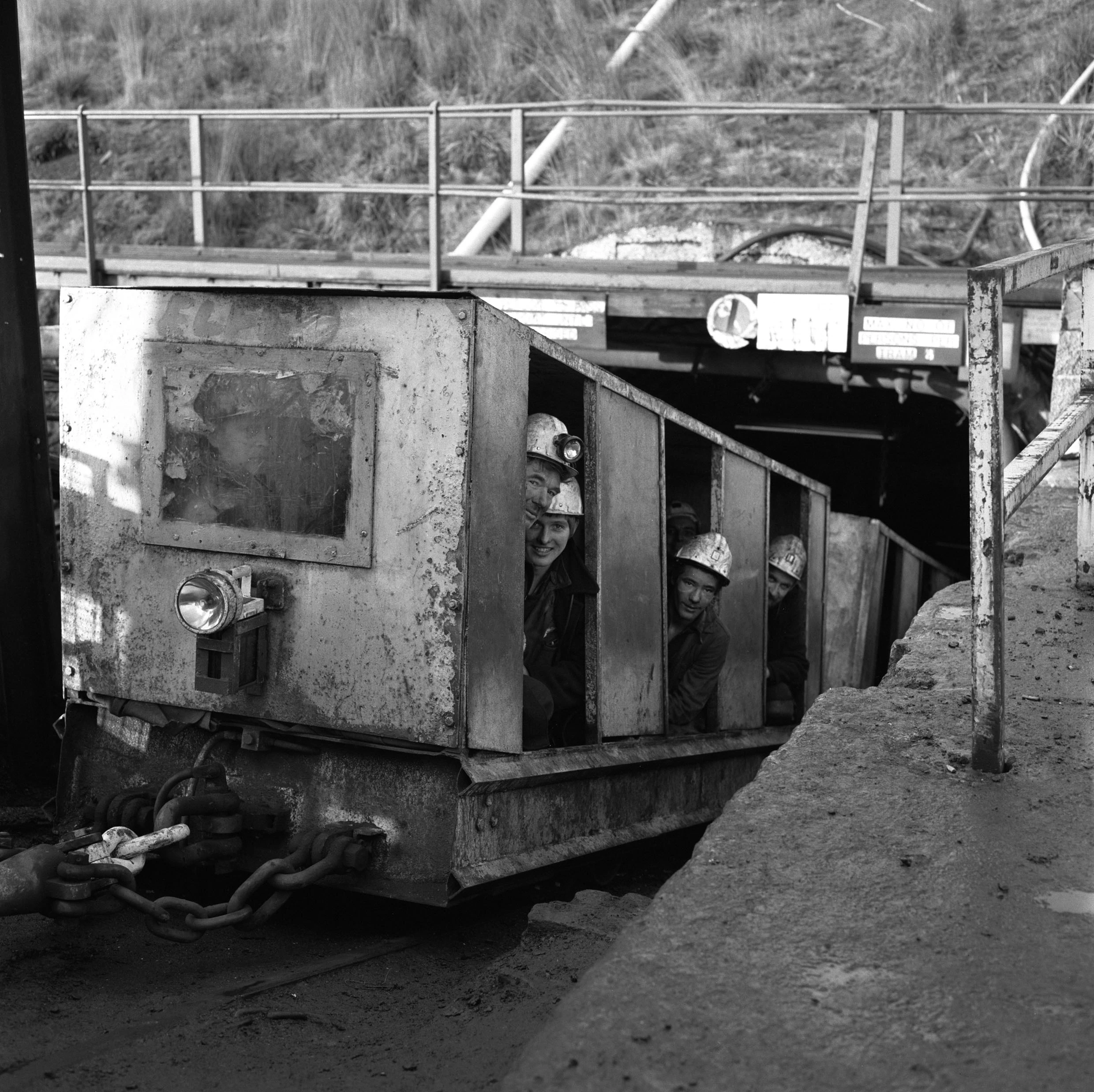
Treforgan Colliery with the afternoon shift waiting to descend 1979
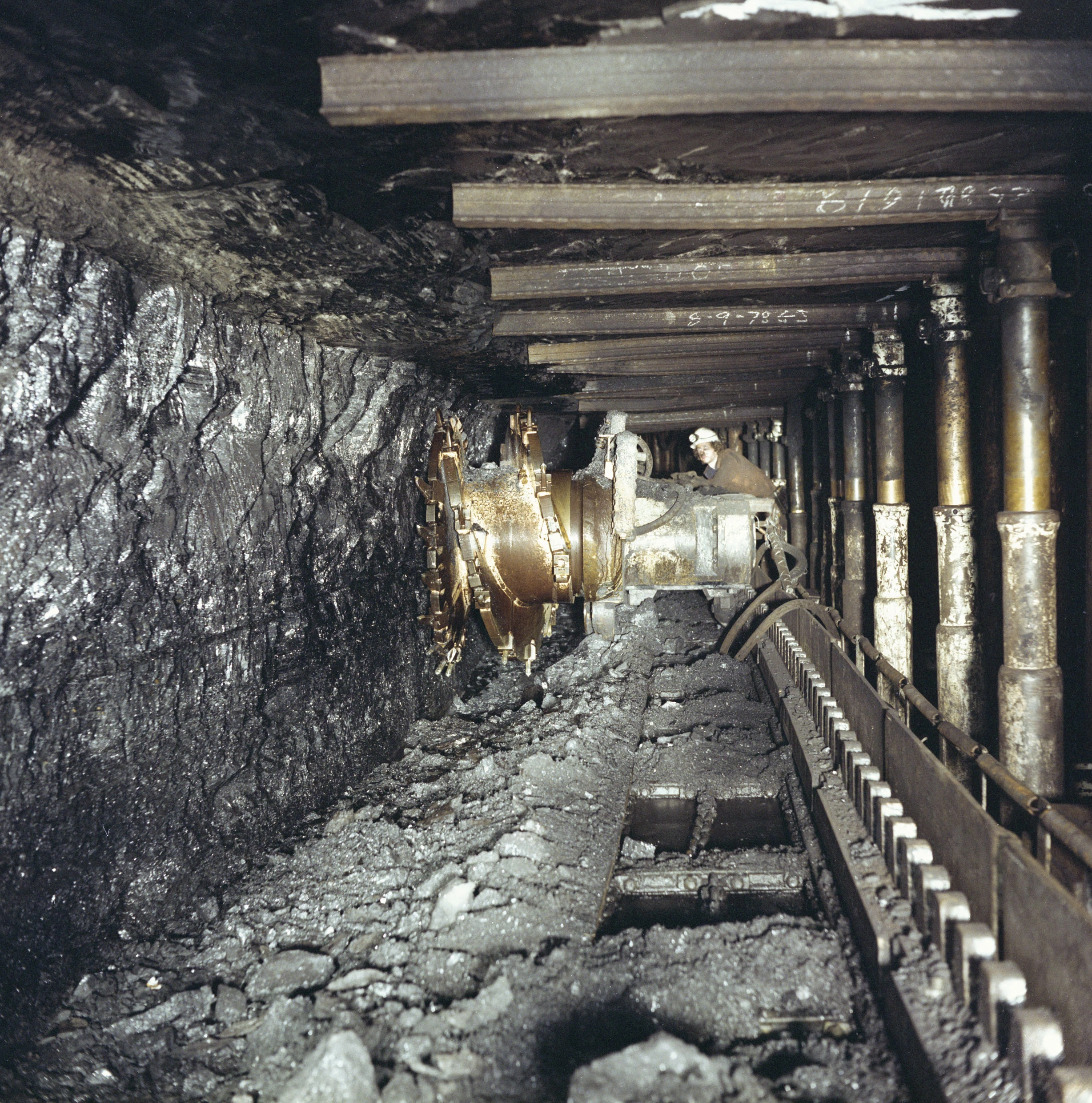
St John's Colliery, Anderson Strathclyde shearer, c.1979
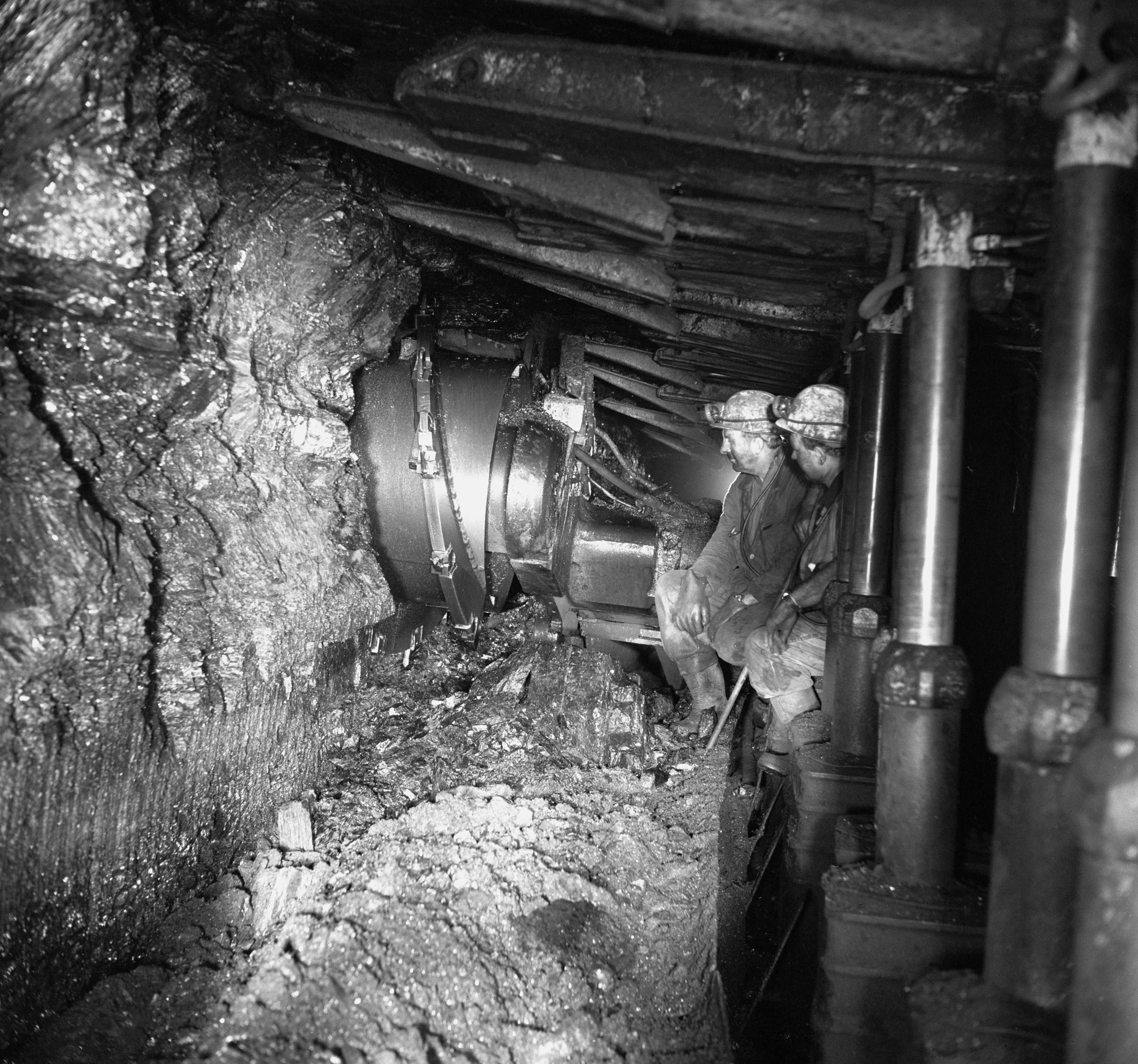
Overmen inspecting a shearer on the Six Feet Seam, Brynlliw Colliery 15 December 1977
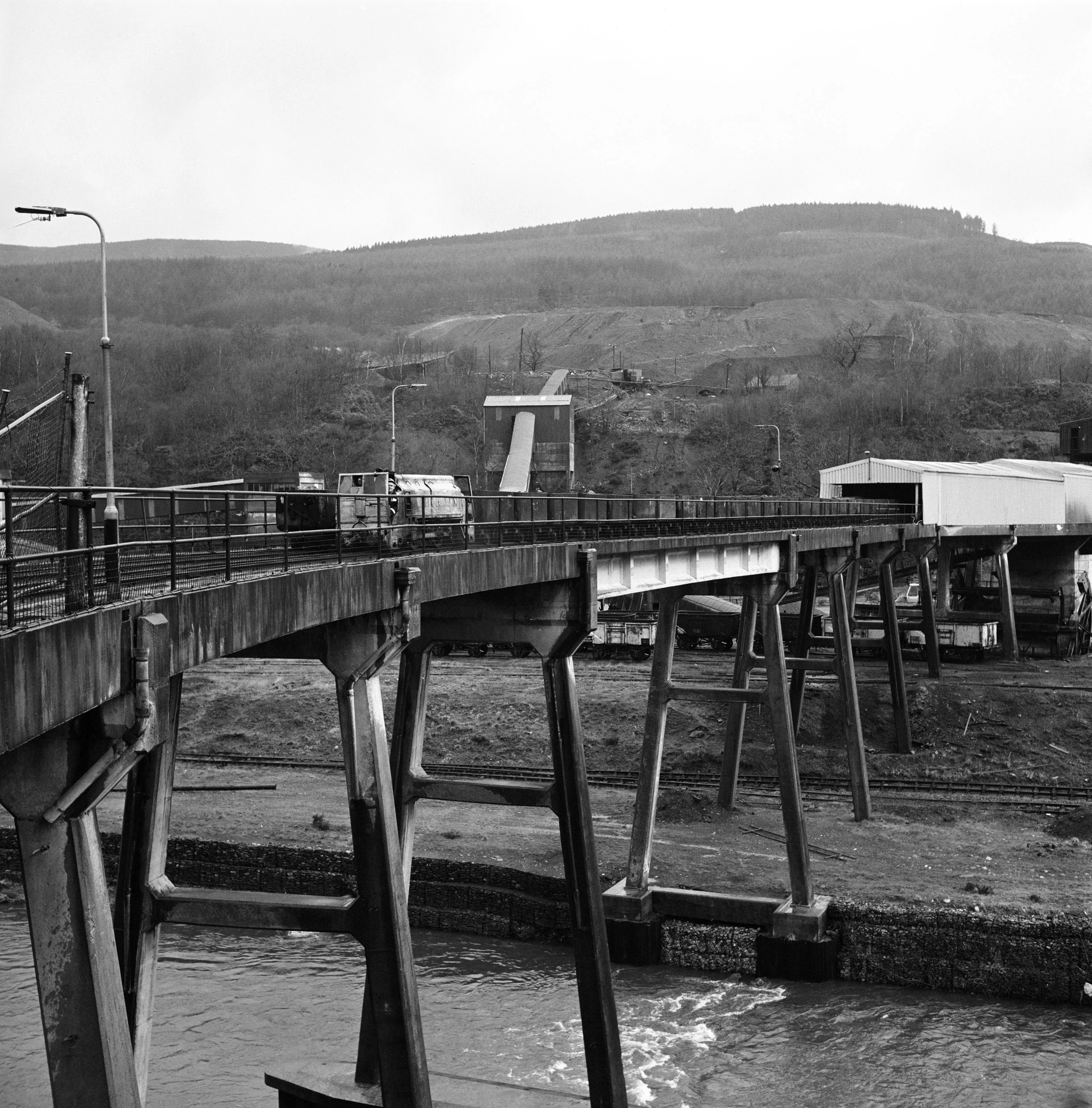
Modern concrete viaduct linking the mine with the washery, Blaengwrach Colliery, c.1977.
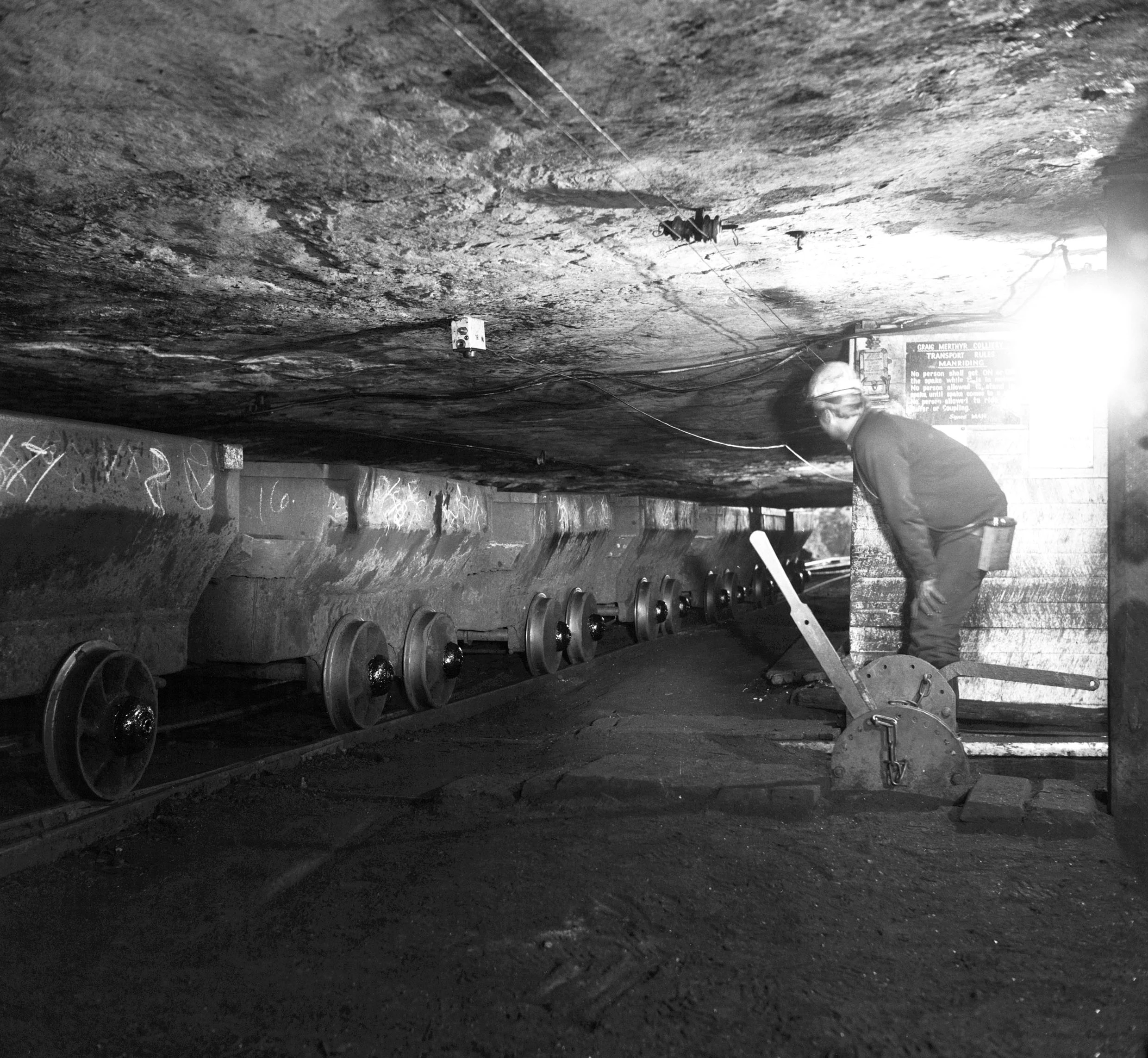
Graig Merthyr Colliery, line of drams in the Graigola Seam - note the unsupported sandstone roof, c.1977
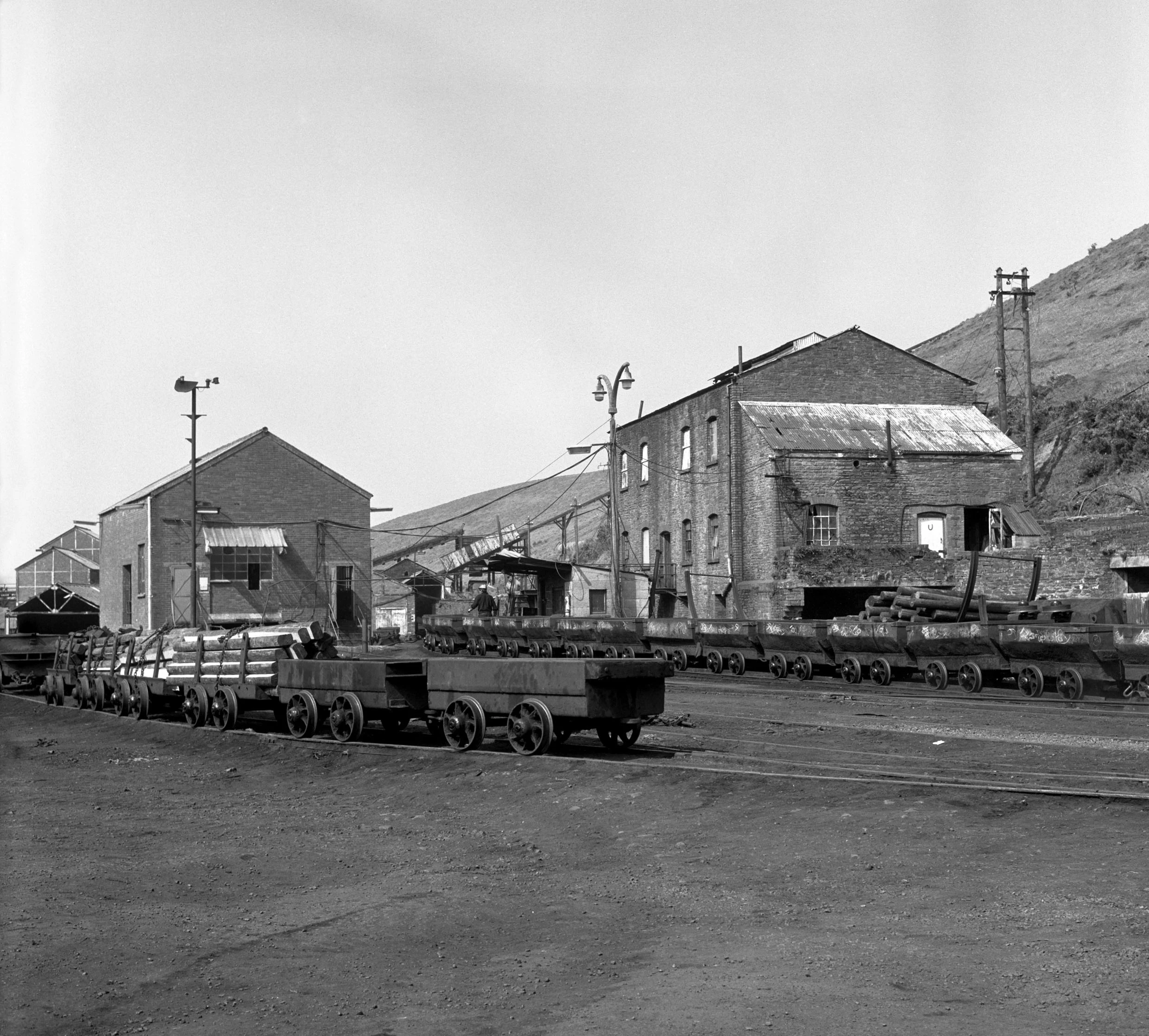
Graig Merthyr Colliery yard in 1977 with a long journey of drams waiting to be run into the mine.
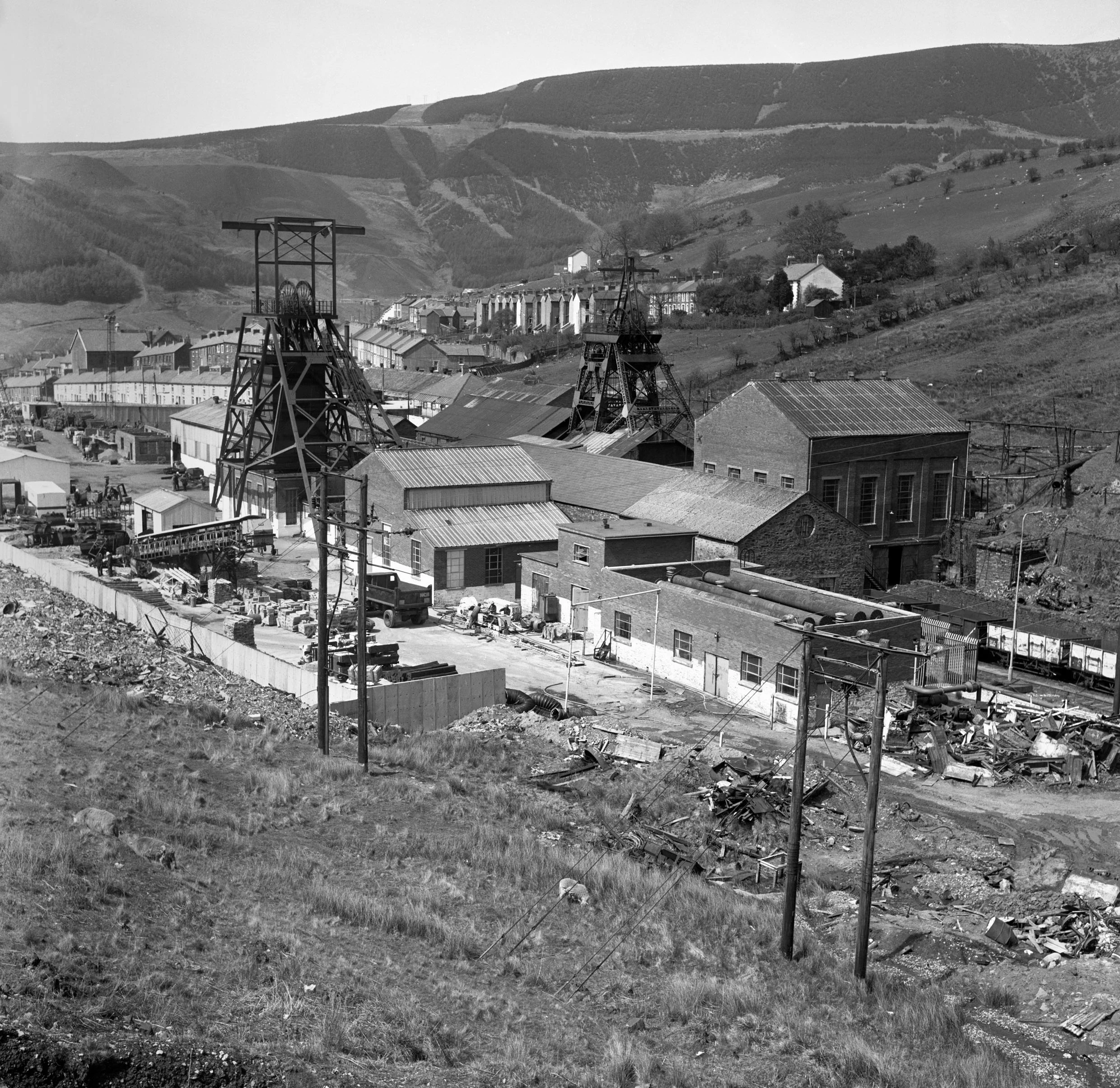
Garw Colliery in 1977, with village in the background.
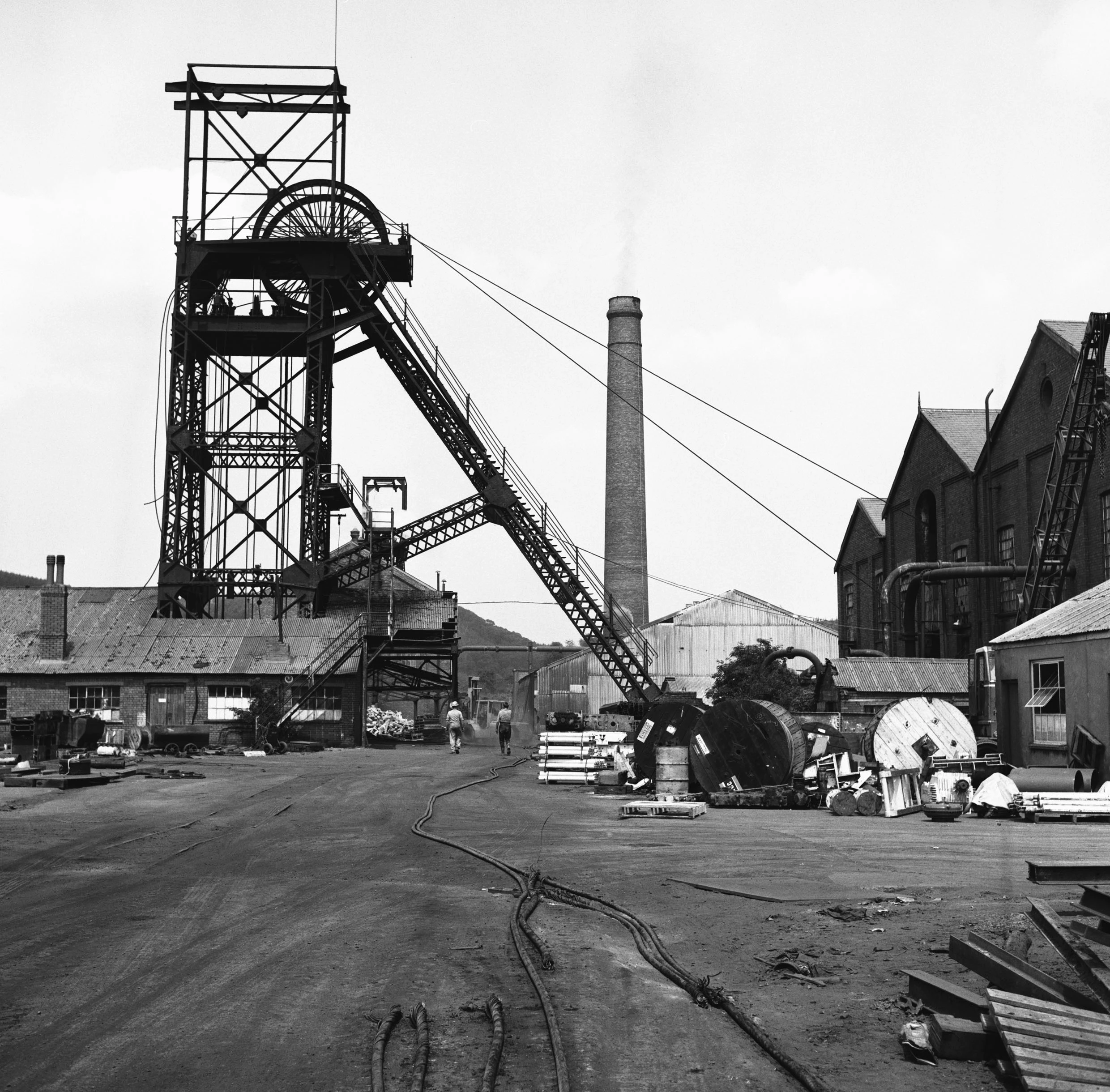
Cefn Coed Colliery, 1973, engine house and downcast shaft headframe.
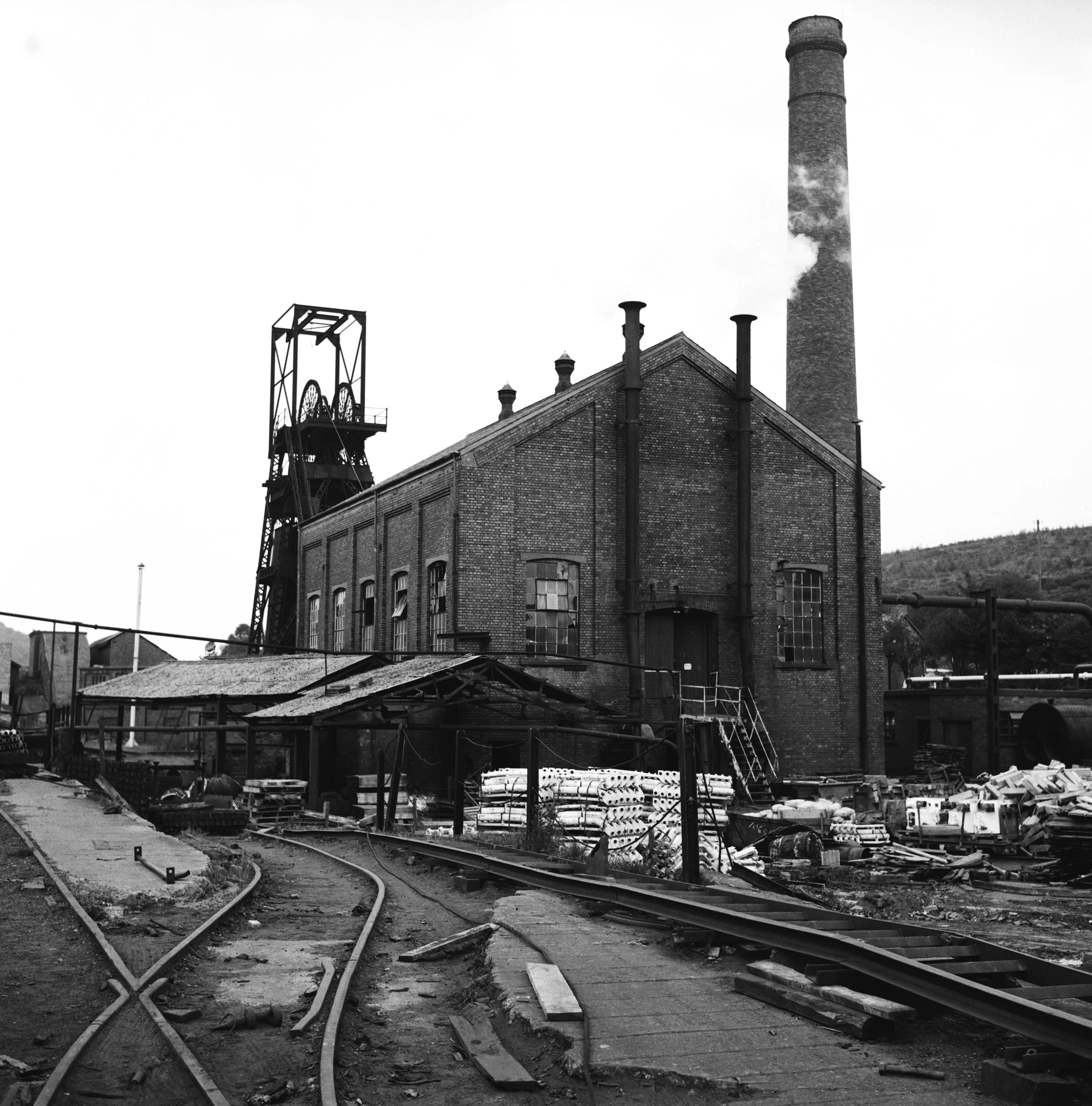
Cefn Coed Colliery engine house for the Markham engine on the upcast shaft 1973.
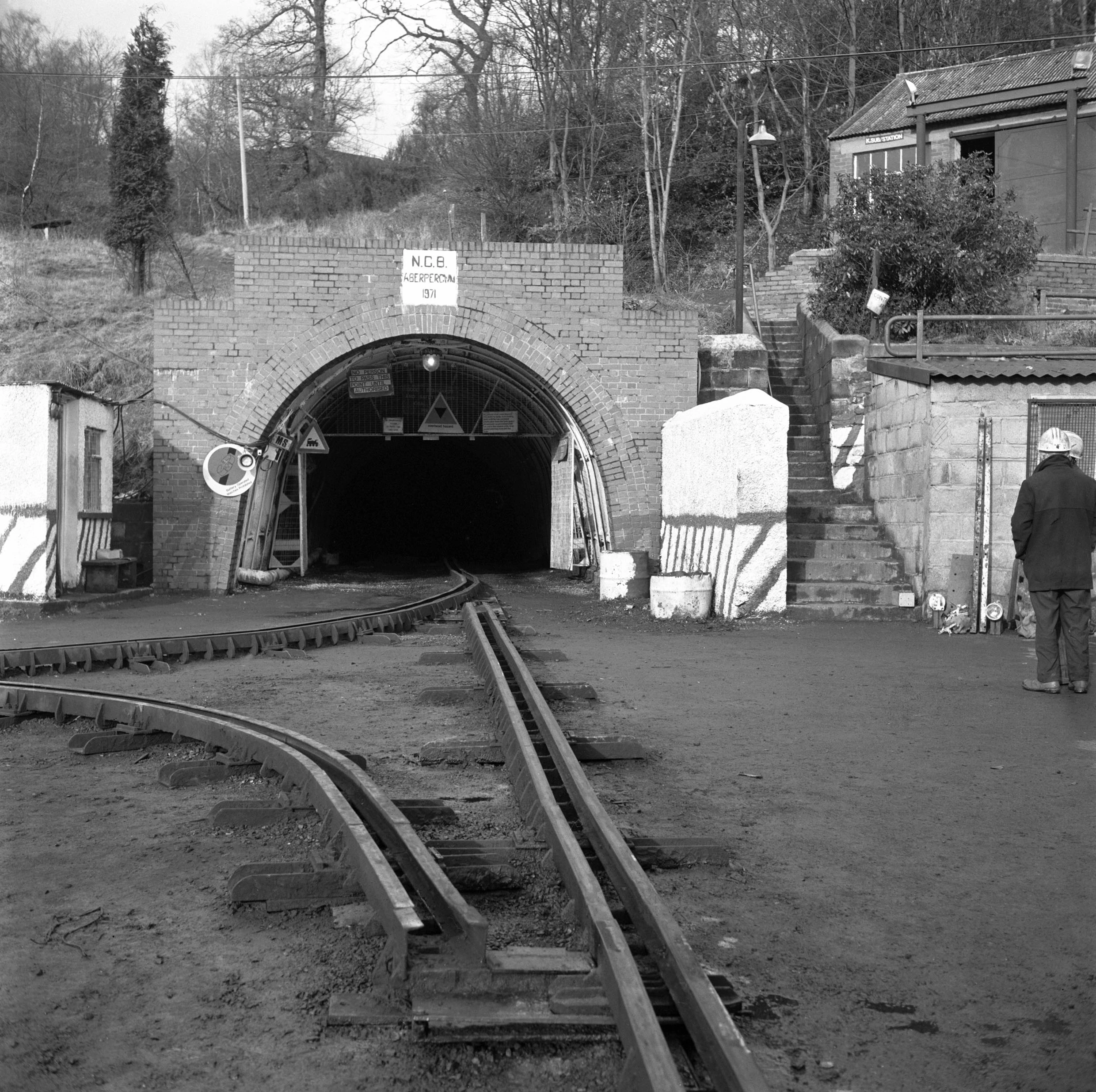
Aberpergwm, 1972, entrance of the new drift mine.
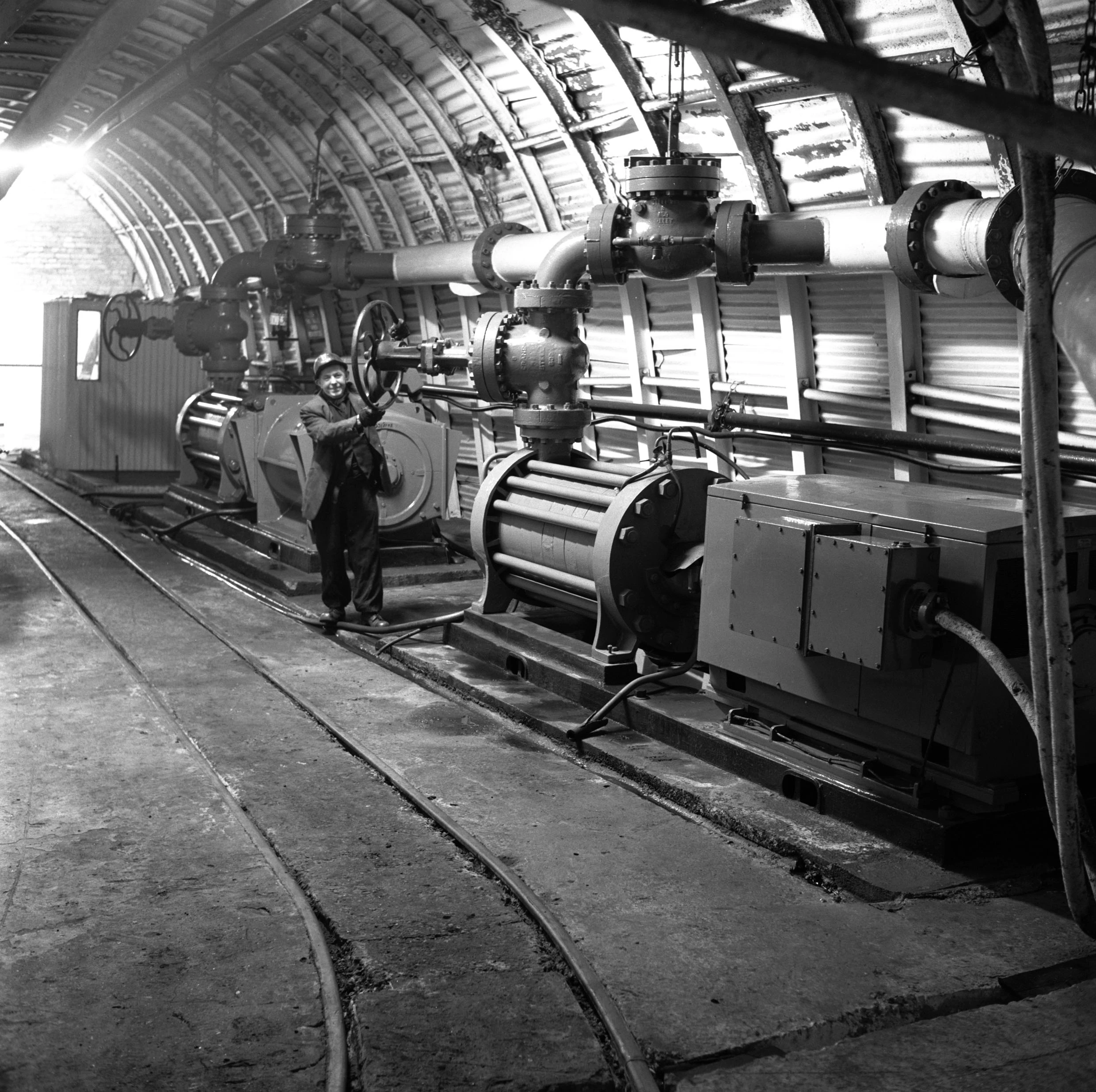
Abernant Colliery, miner at a pumping station at pit bottom, 1978

Aberpergwm Colliery, Dosco Road heading machine and auxiliary fan ducting, c.1978

Ty Mawr Colliery, the remains of an underground ventilation furnace which date back to the late 1870s.
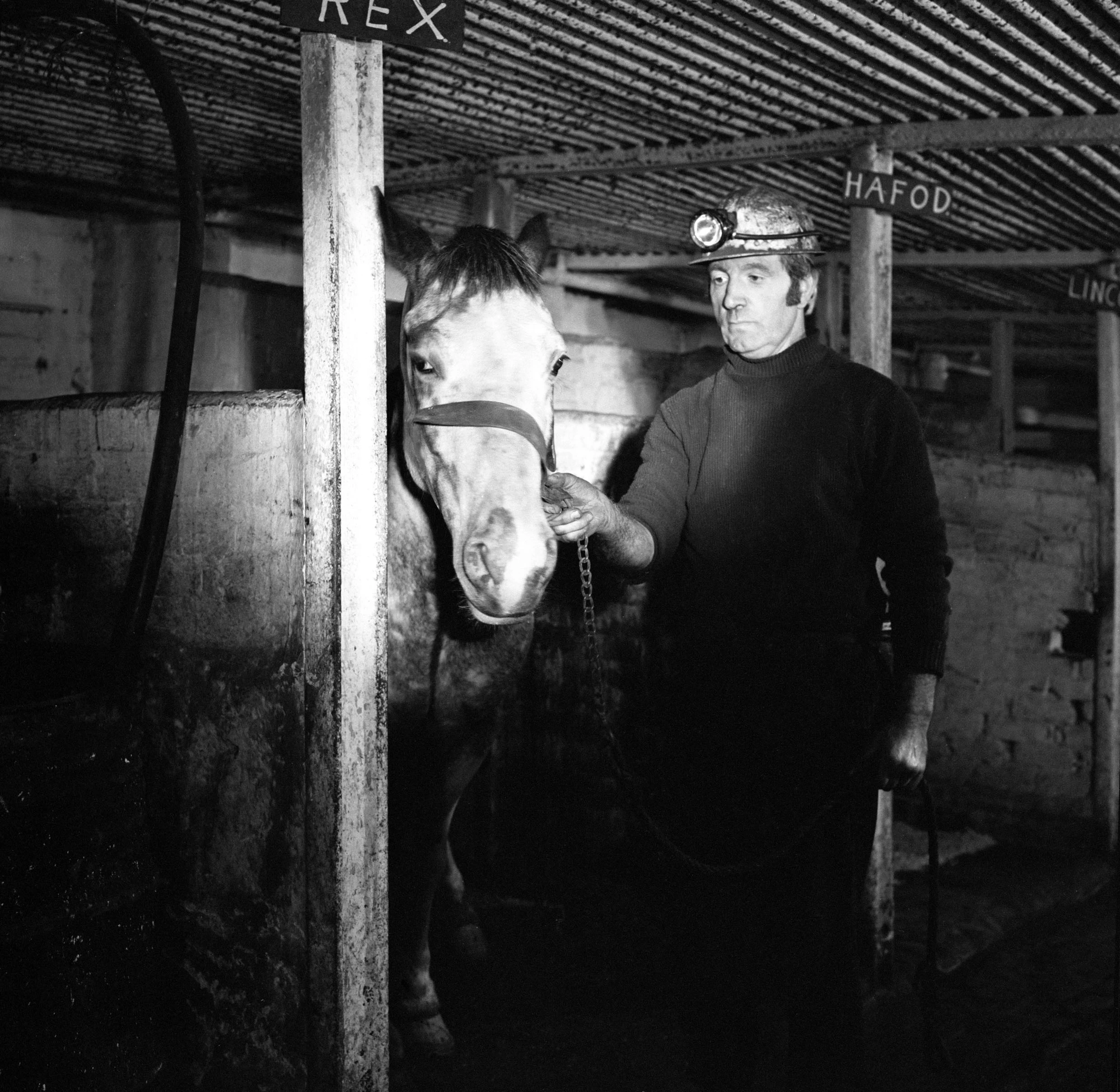
Tower Colliery, 'Rex' with his ostler, 1979.
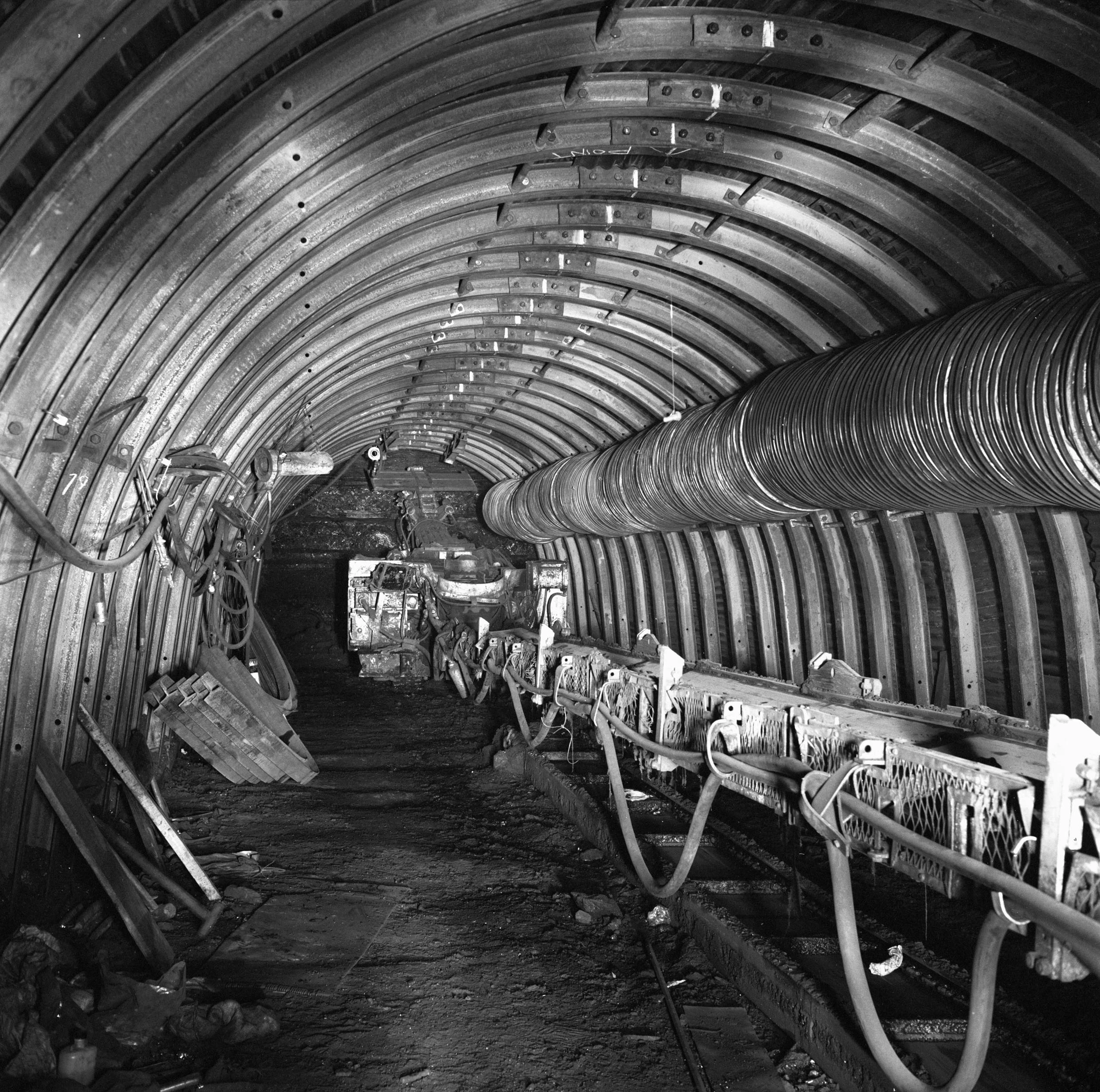
Taff Merthyr Colliery, heading with Dosco road heading machine and auxiliary ventilation, 1979.
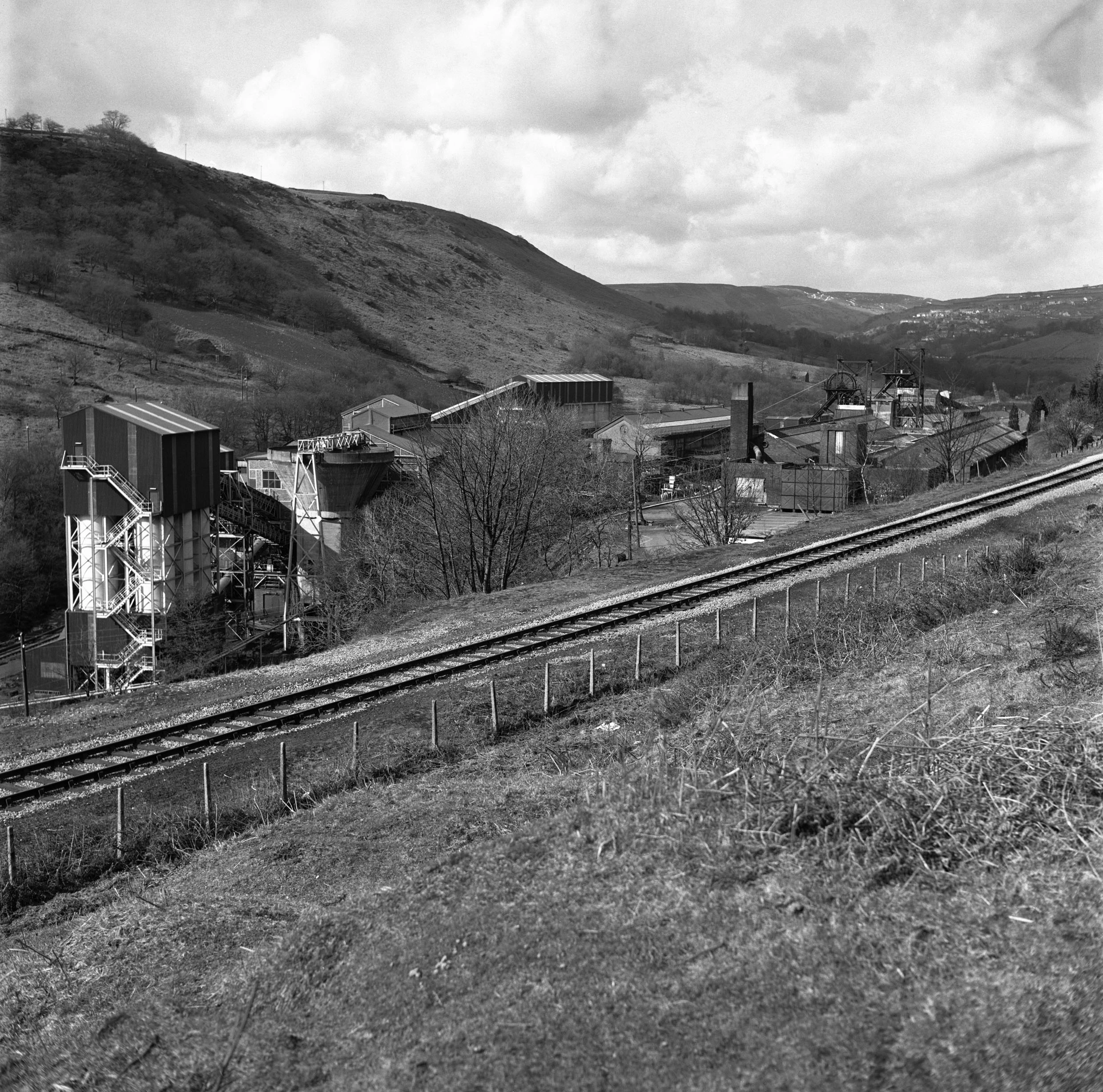
Taff Merthyr Colliery in the late 1970s.
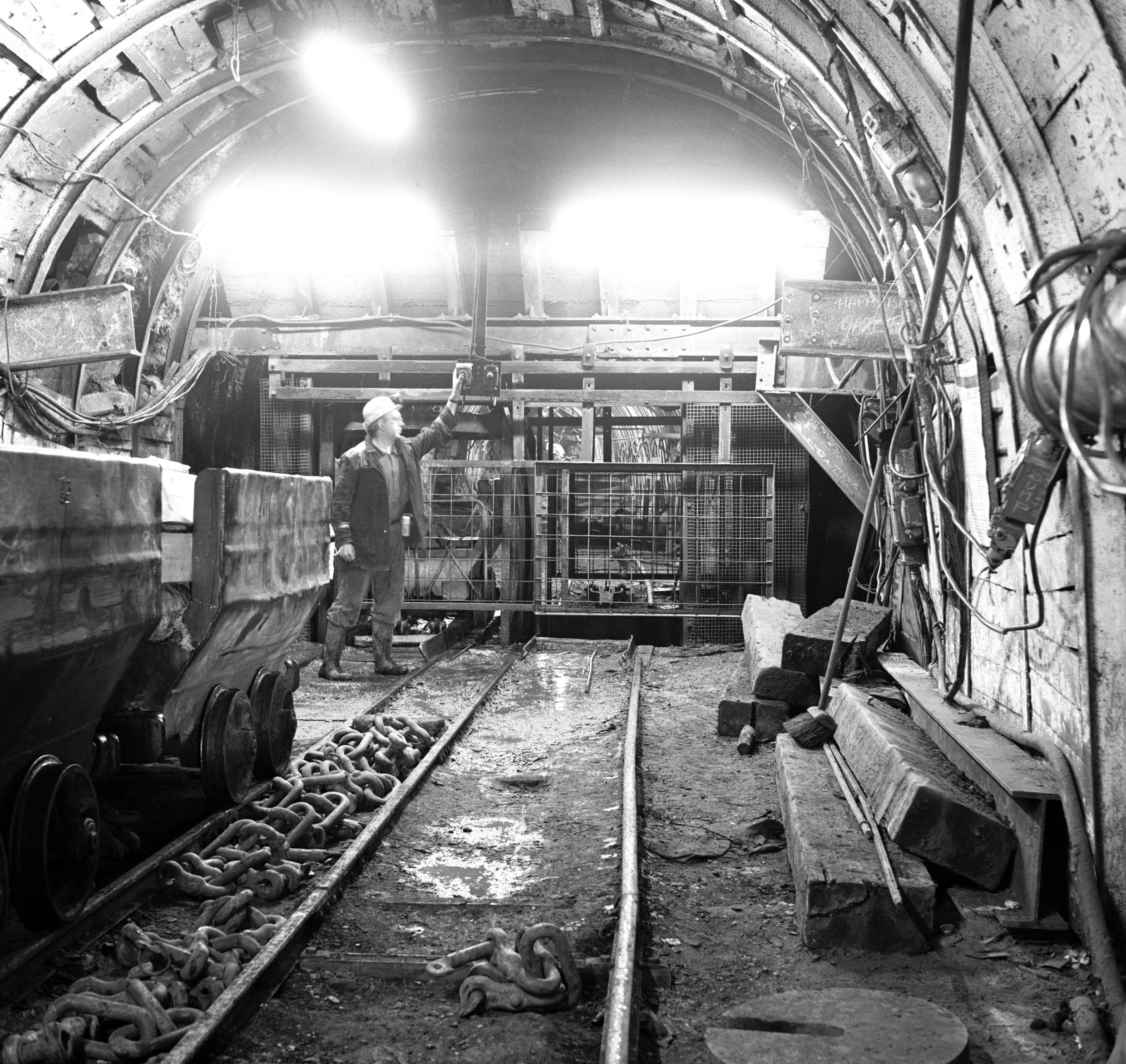
Penrhiwceiber Colliery Pit bottom, 1978.
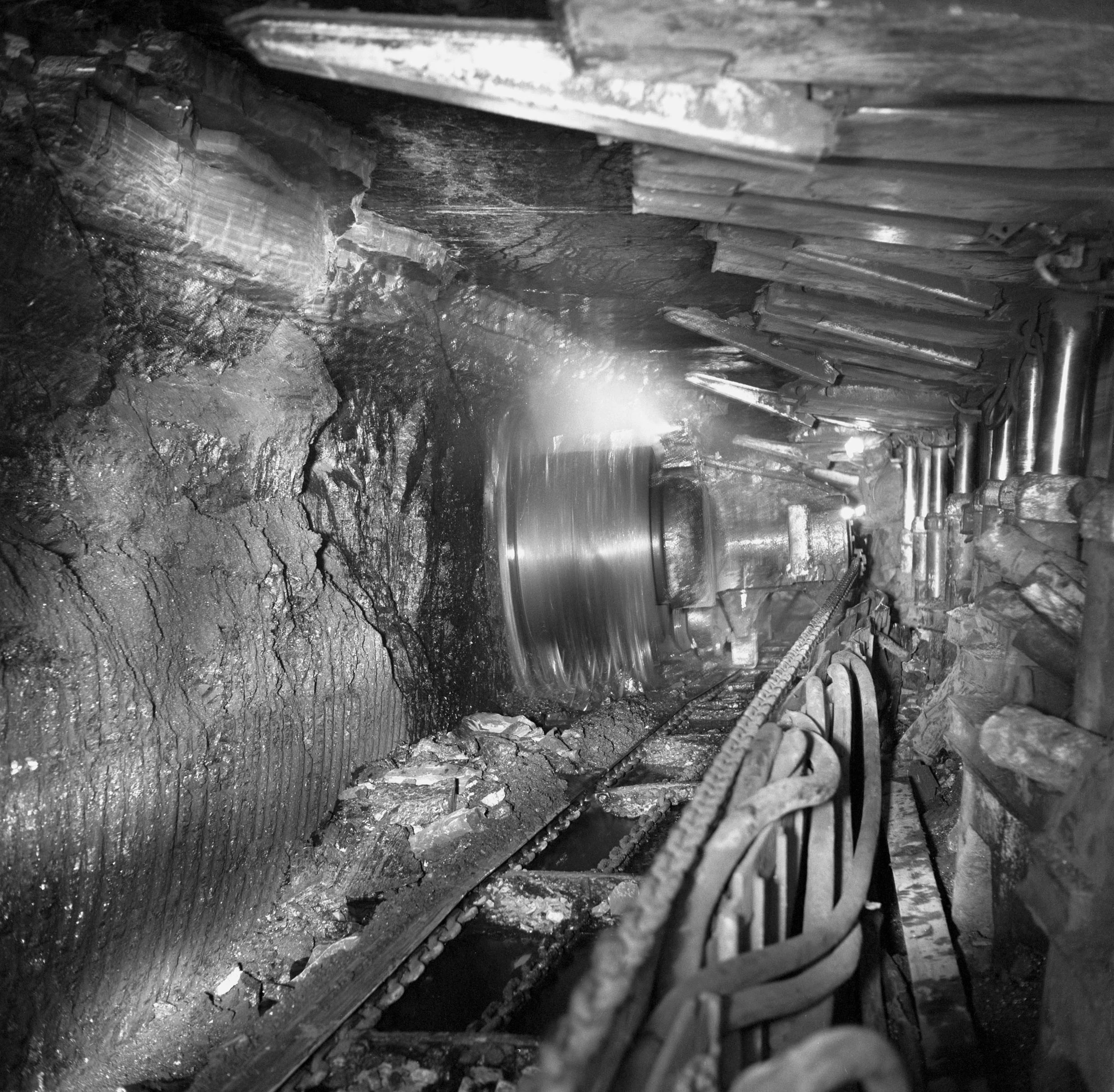
Nantgarw Colliery, 1978, Anderson Strathclyde drum shearer cutting coal on the coal face.
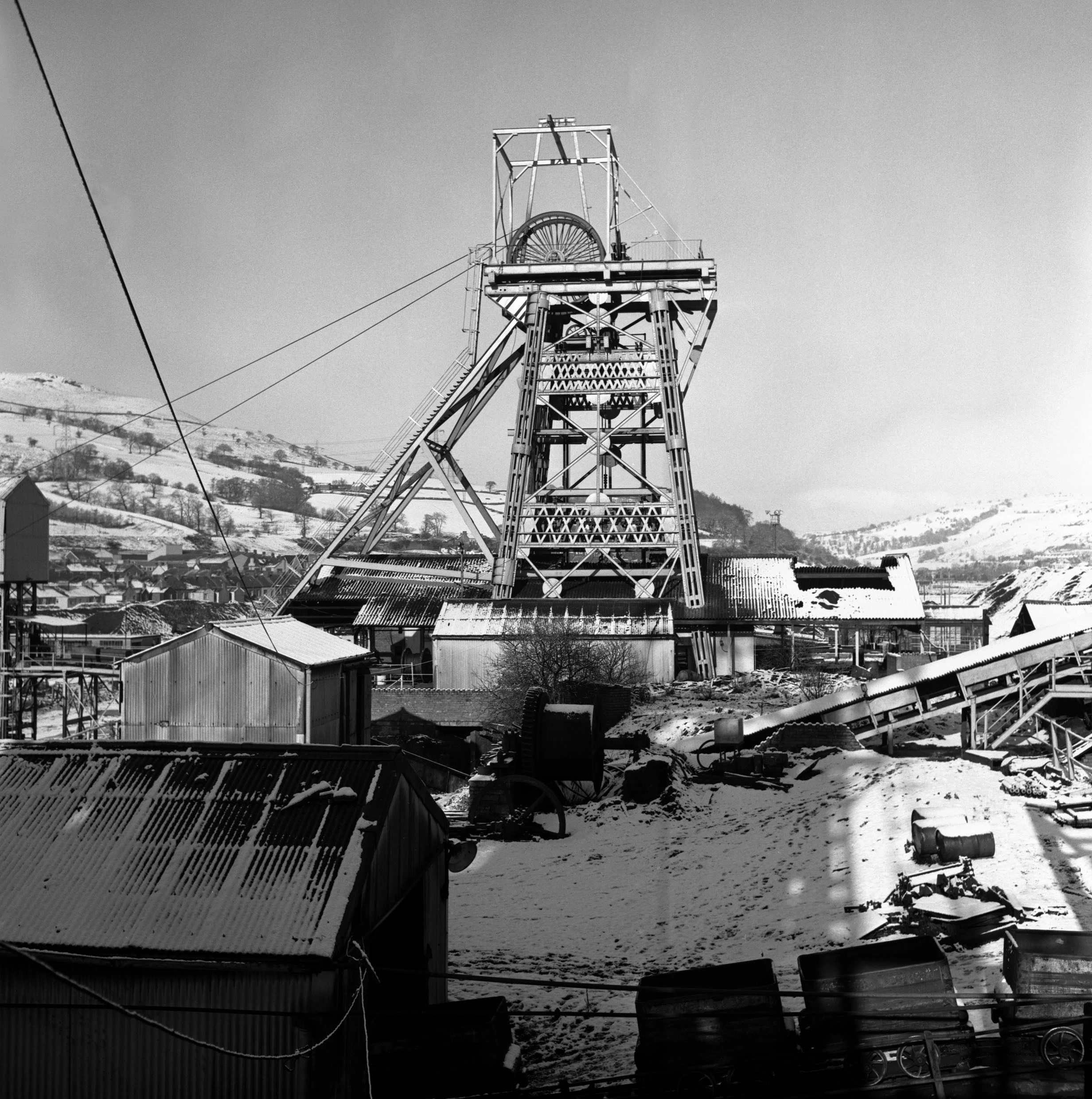
Merthyr Vale Colliery downcast shaft, c.1980
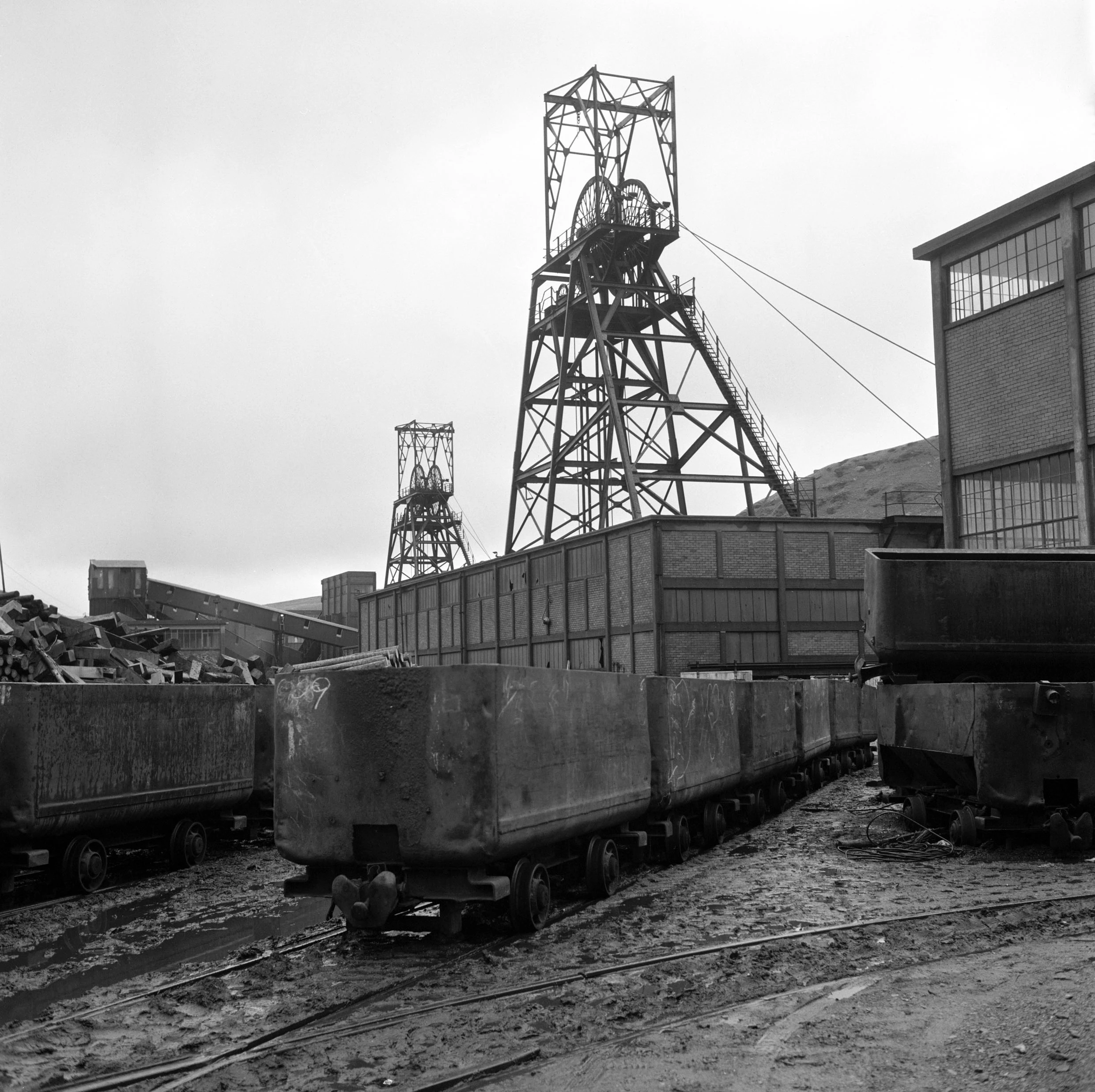
Maerdy Colliery, 1977, empty mine cars waiting at pit top.
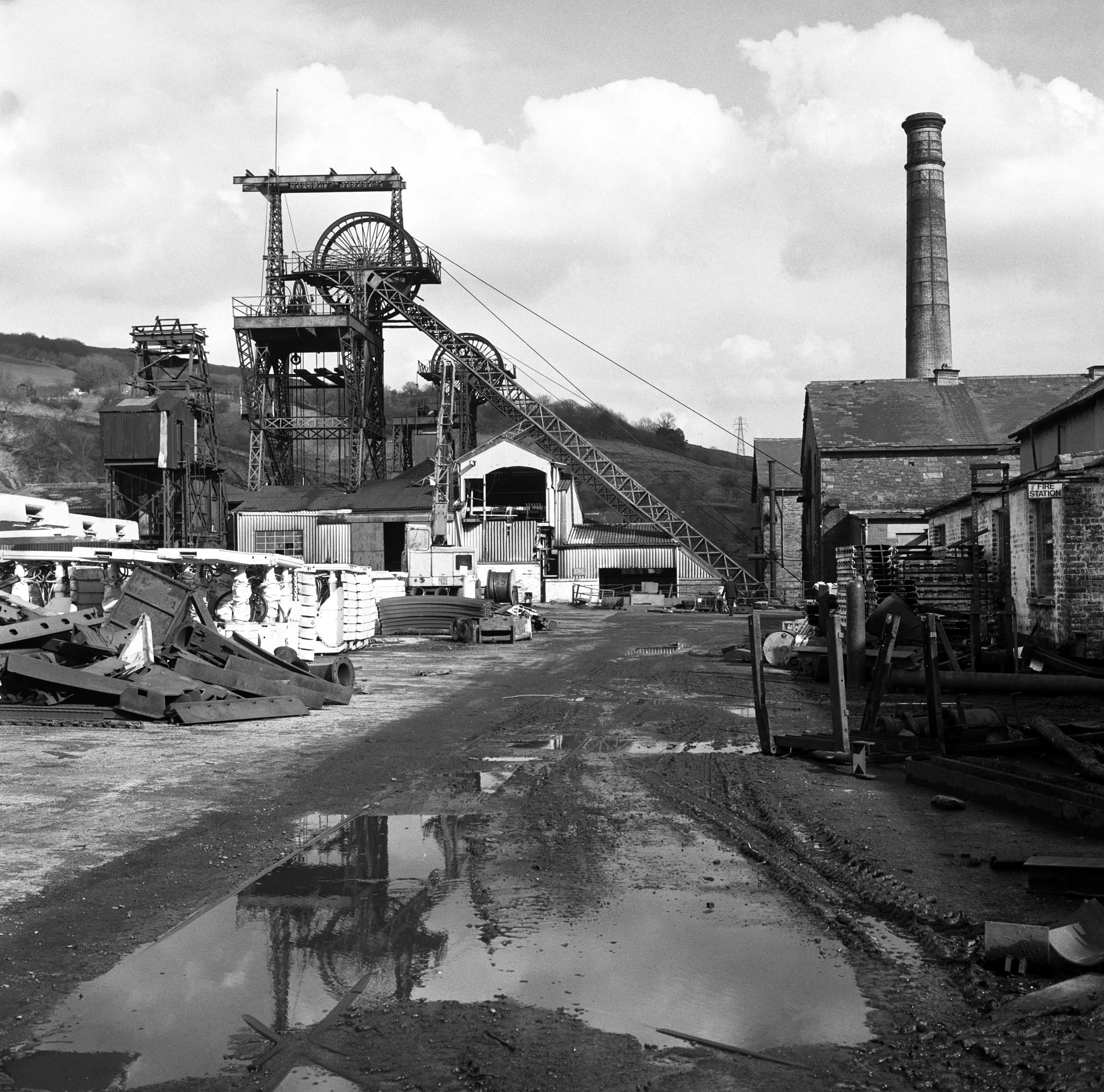
Lewis Merthyr Colliery, 1977, hydraulic roof supports in the yard waiting to be taken underground.
Lady Windsor Colliery, steam locomotive with the upcast shaft in the background, 1977
Ffaldau Colliery, 1977, the pit head.
Fernhill Colliery, the jib of an AB 15 hydraulic undercutter on a timbered longwall face.
Deep Navigation Colliery, the downcast headframe, c.1978

Deep Duffryn Colliery, two pitmen inspecting the shaft from the roof of the cage, 1977-78.
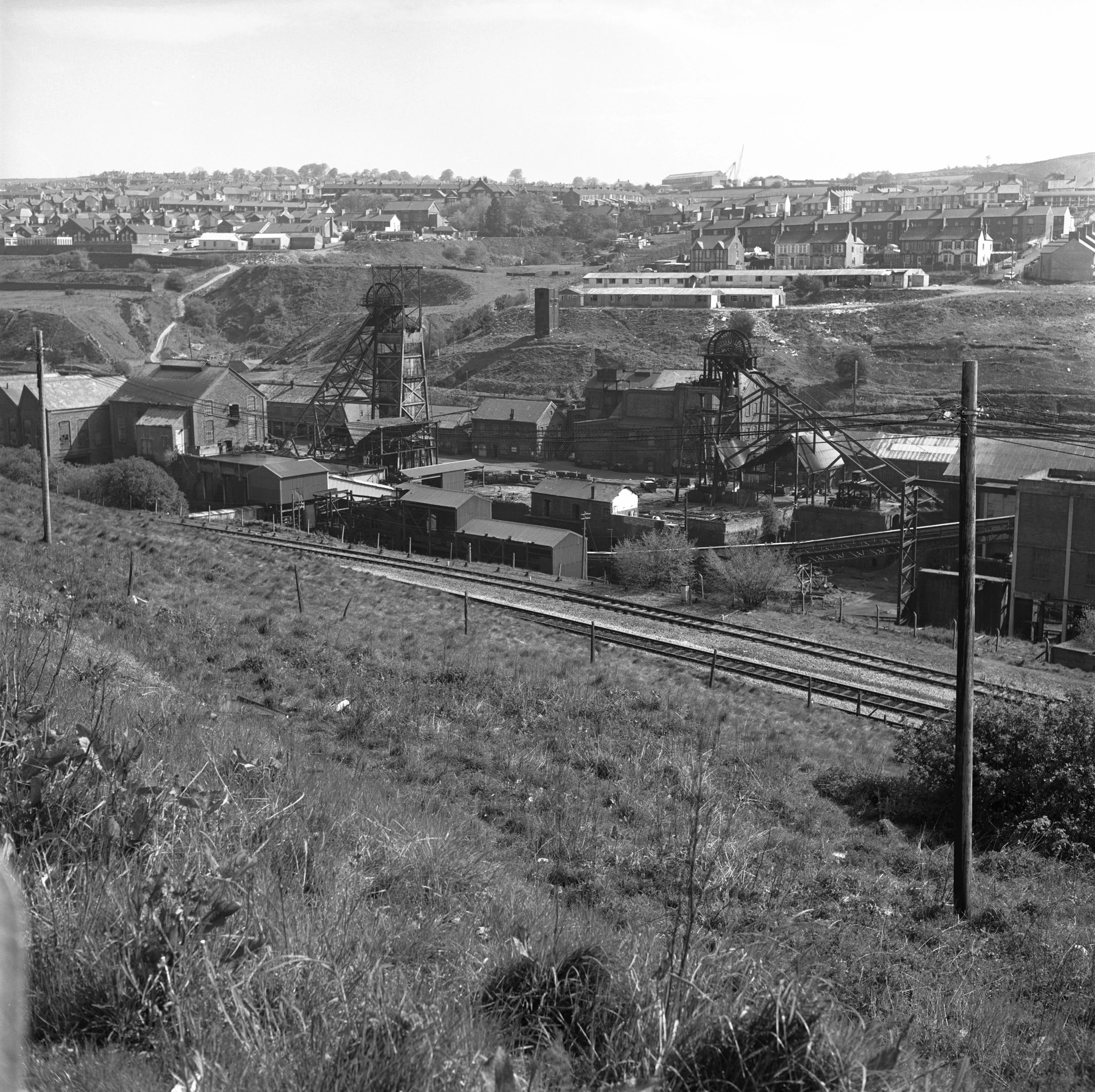
Bargoed Colliery, 20 May 1977.
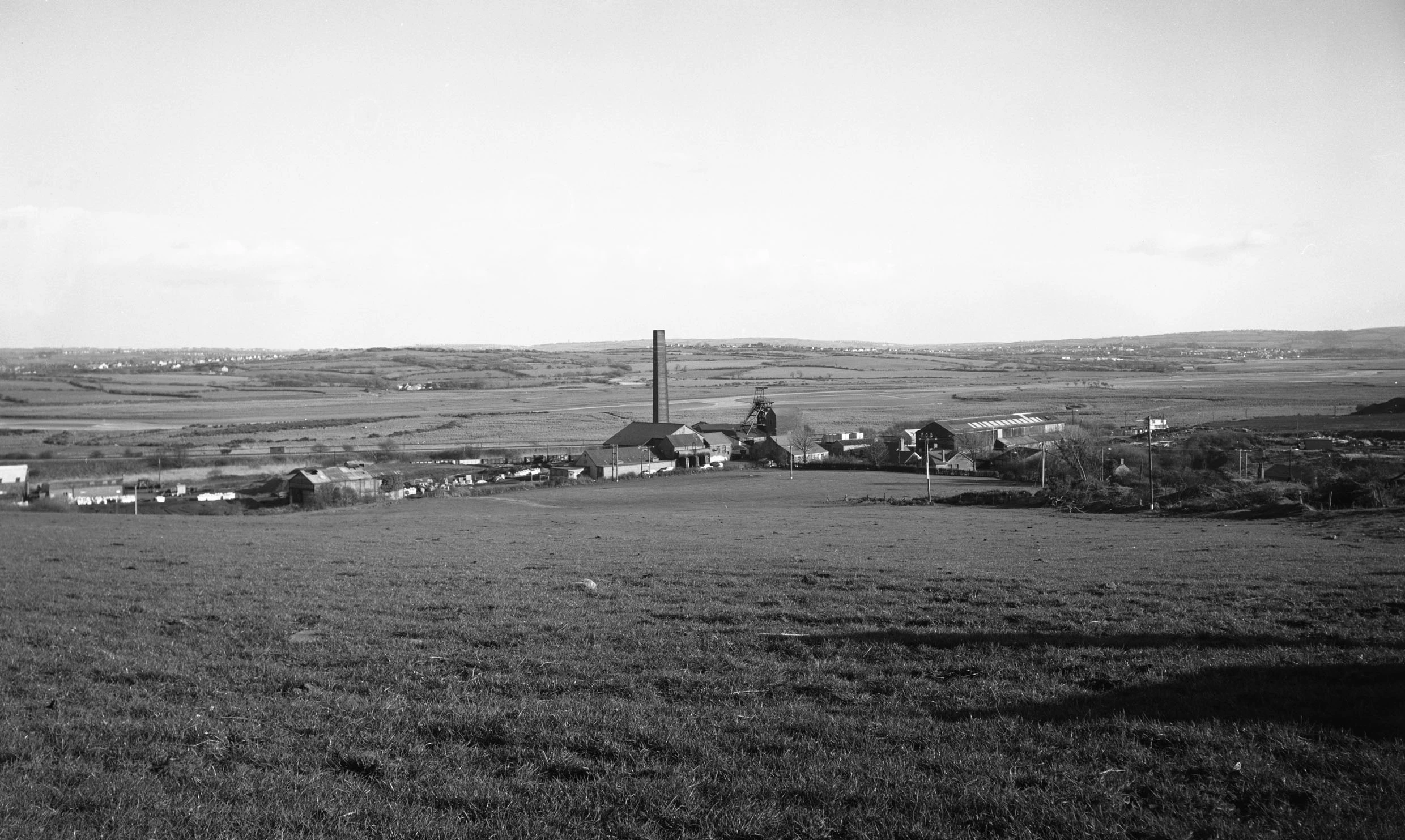
Morlais Colliery, general view looking east across the River Llwchwr, 1978.
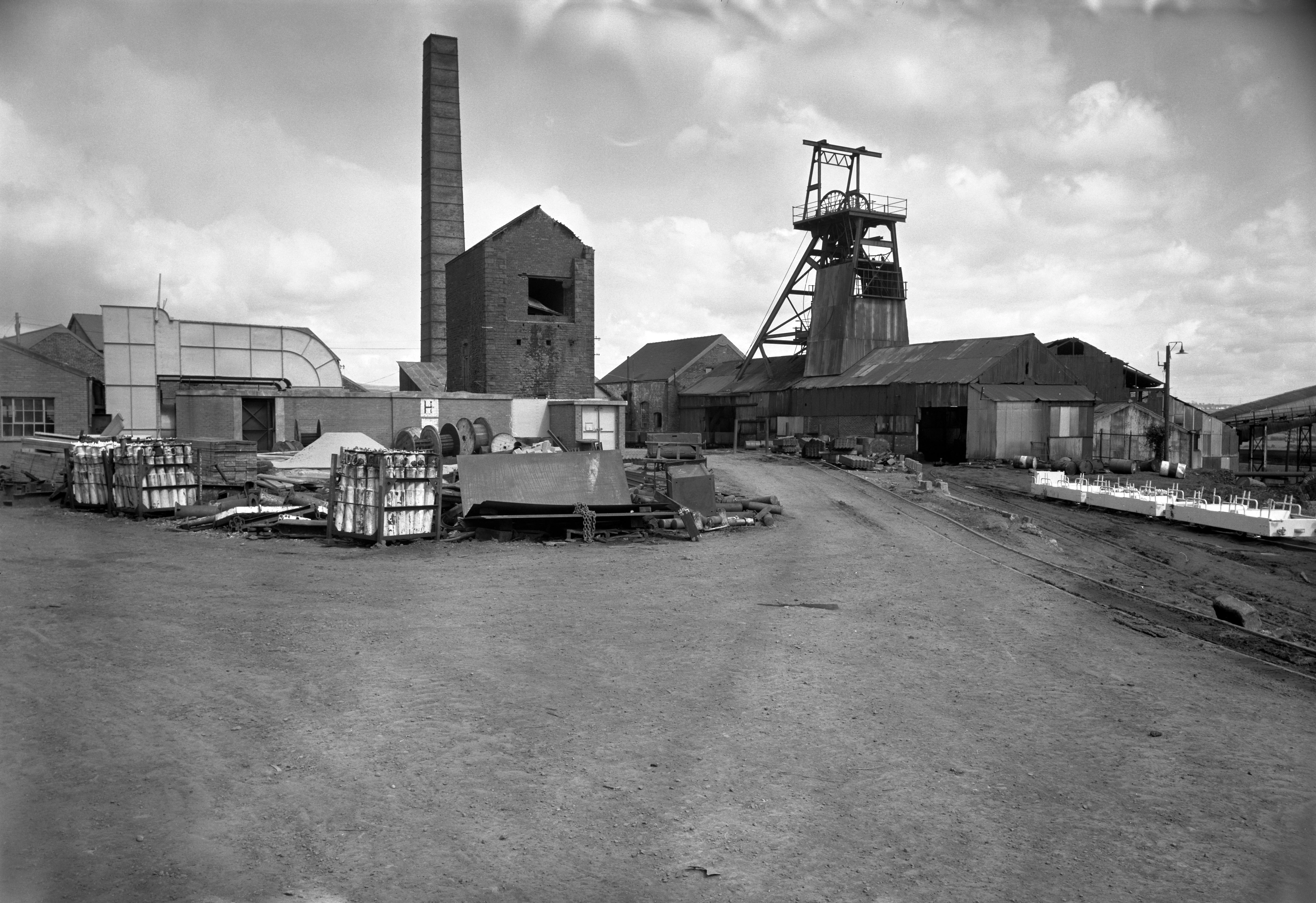
Morlais Colliery, a general view, note the derelict engine pumping house, 1978
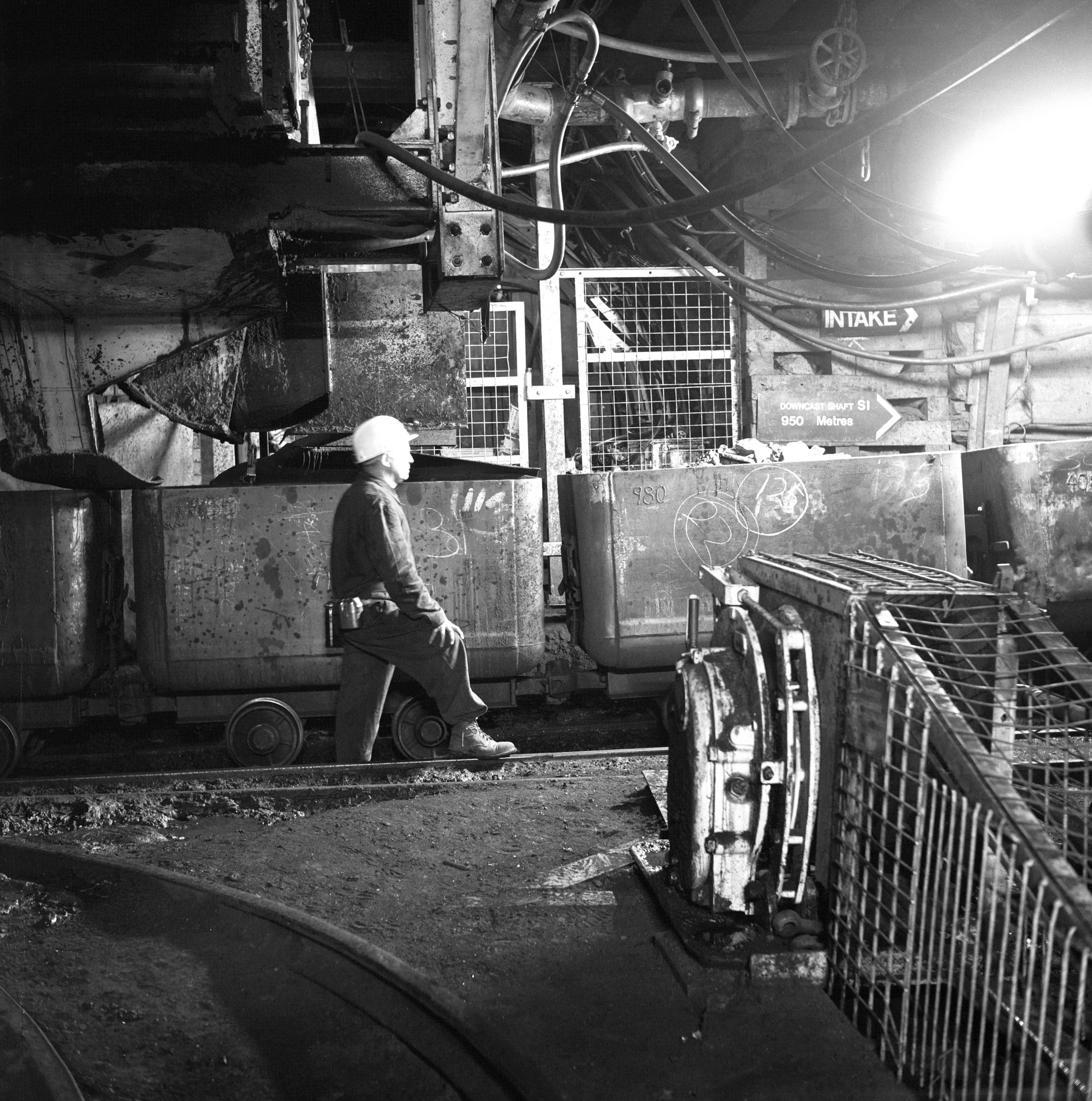
Cynheidre Colliery,coal drams at an underground loading point, c.1978
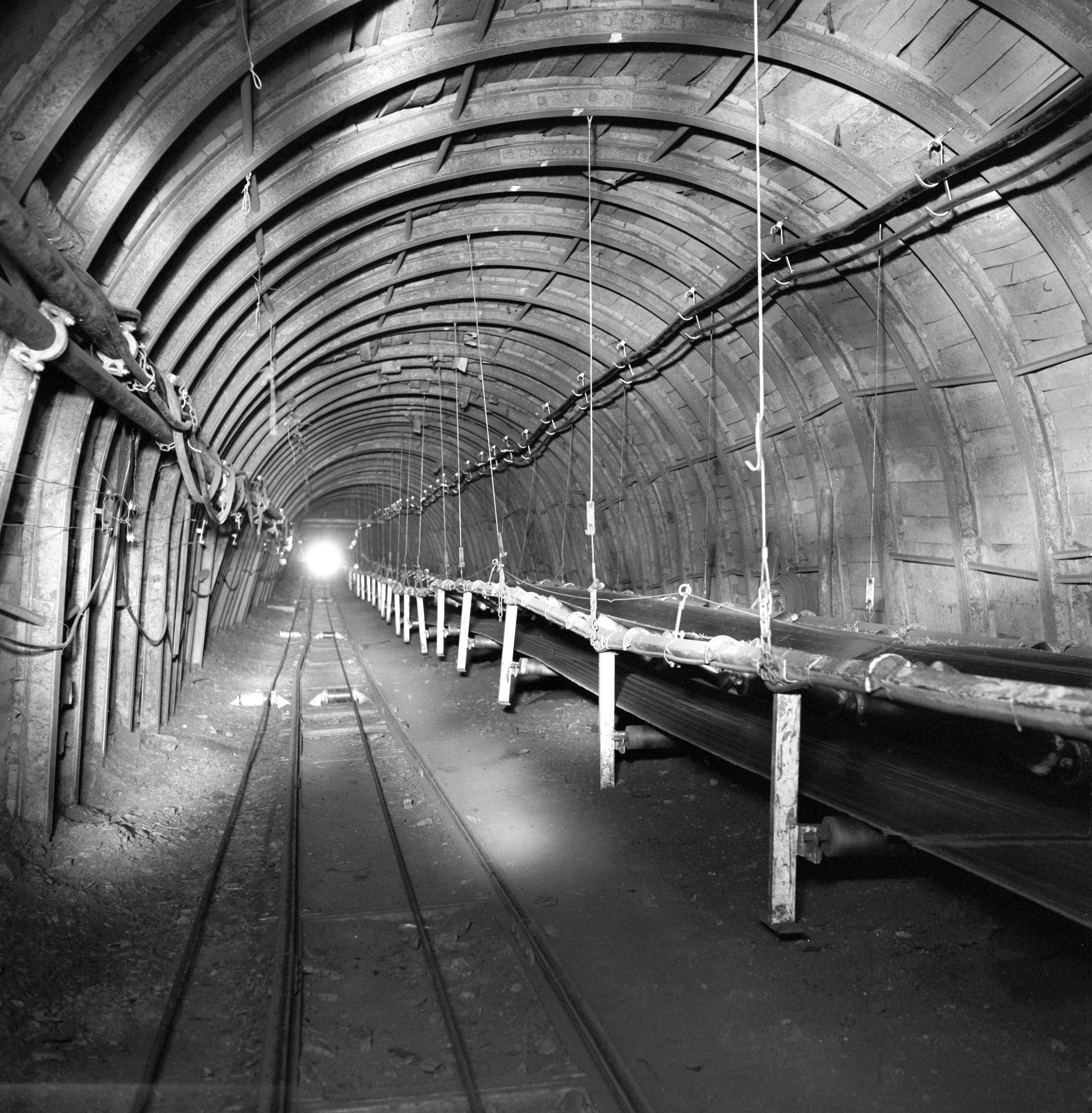
Cynheidre Colliery, main trunk road with high speed conveyor, c.1978
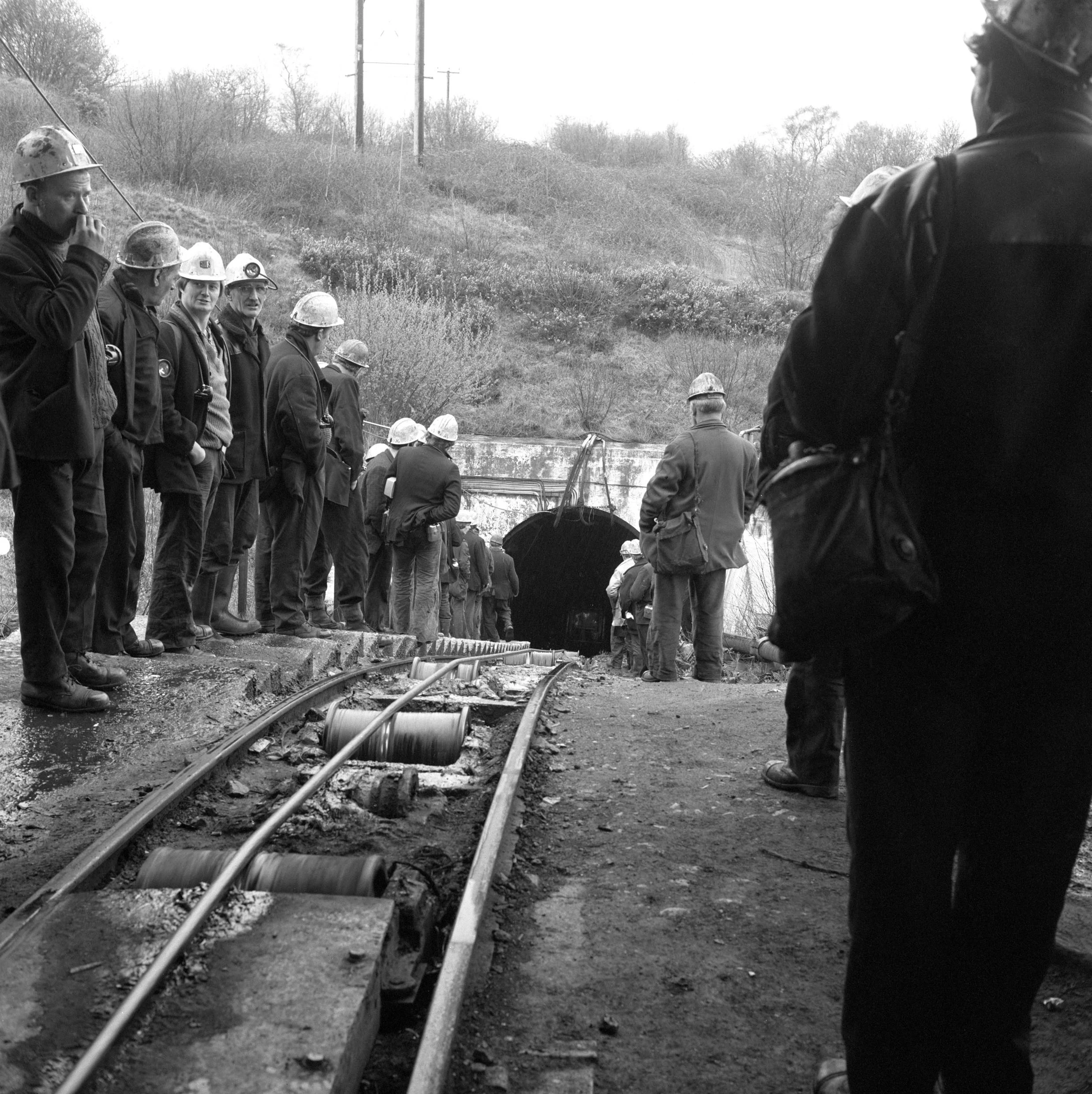
Cwmgwili Colliery, 1978, afternoon shift waiting for their ride at the entrance of the mine.
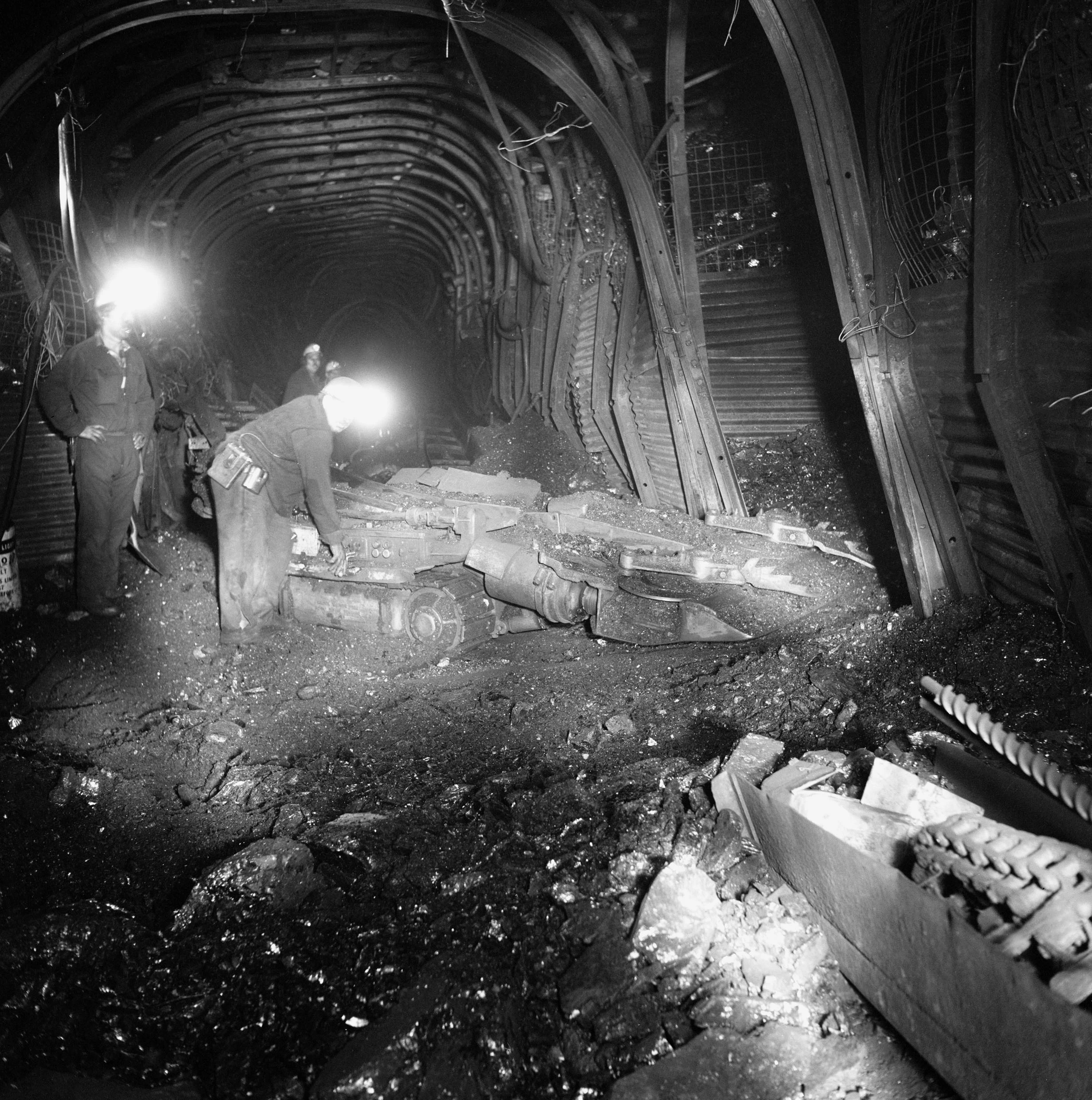
Cwmgwili Colliery, 1978, a Joy Loader and operators ready to commence work.

Betws Mine, the afternoon shift waiting for the manriding train, c.1976
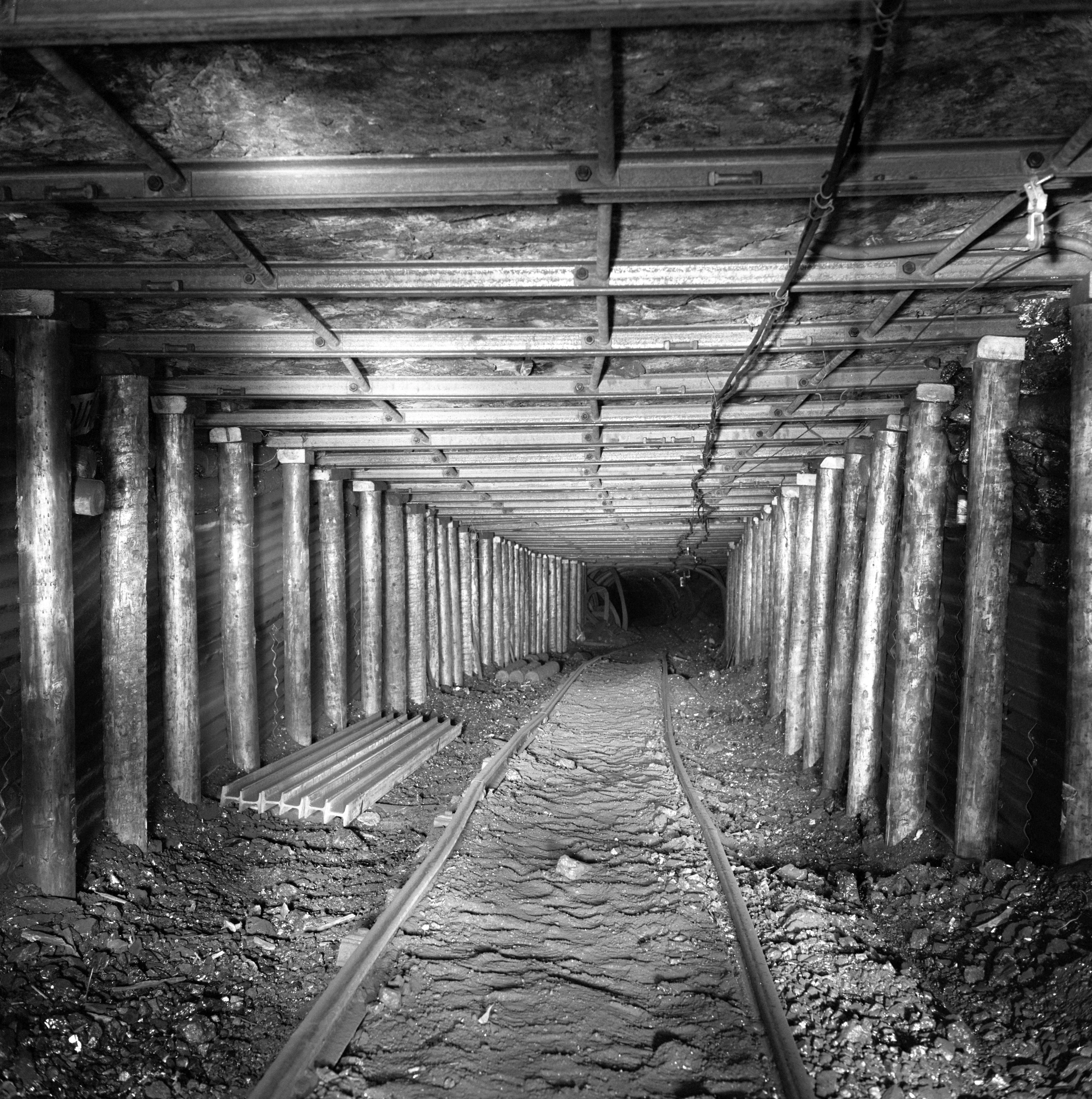
Cwmgwili Colliery, a completed drivage supported by timber, 1978
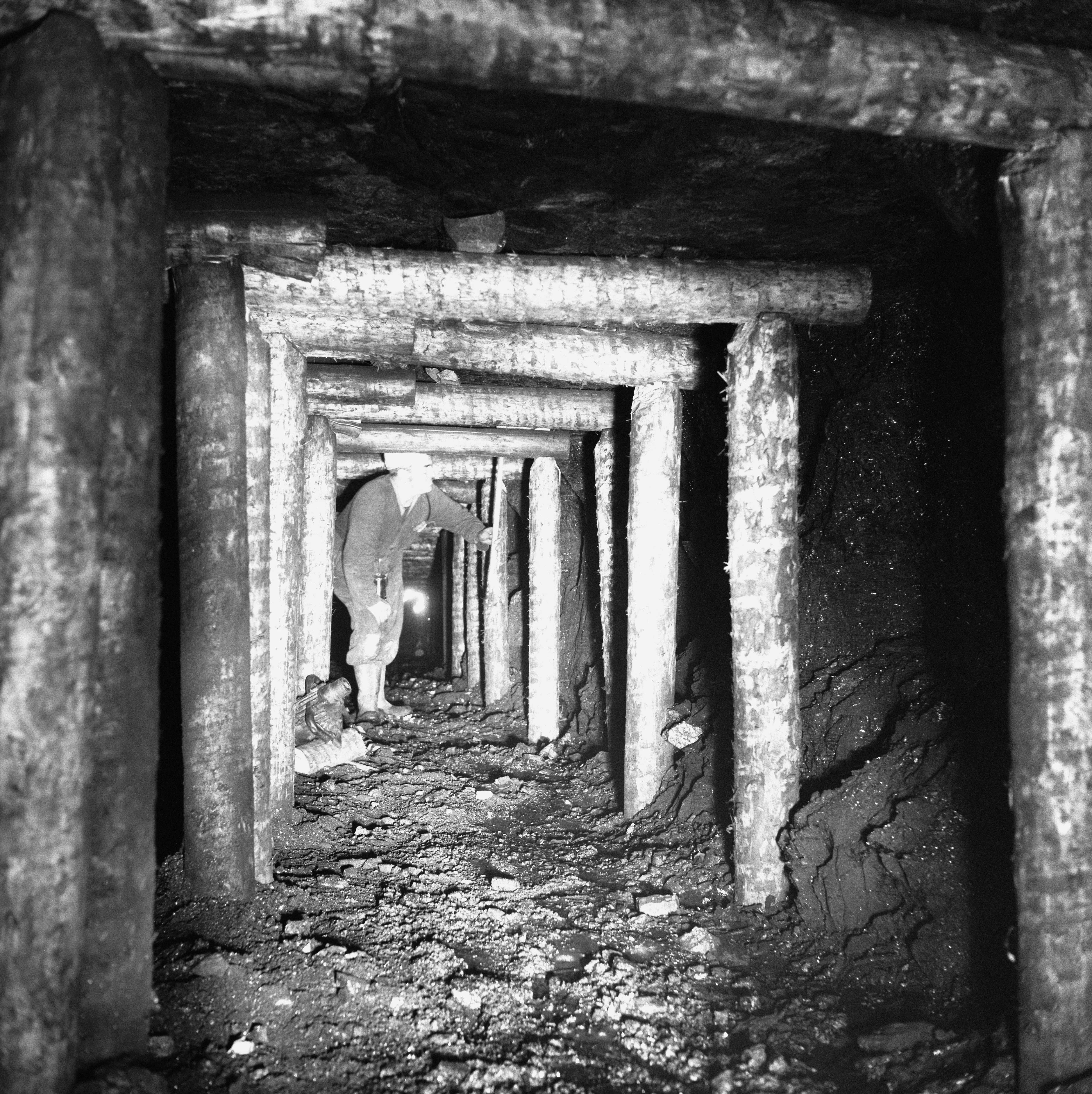
Ammanford Colliery, 1974, Mr P.A. Jones, Safety Officer inspecting the roof on the last coal face.
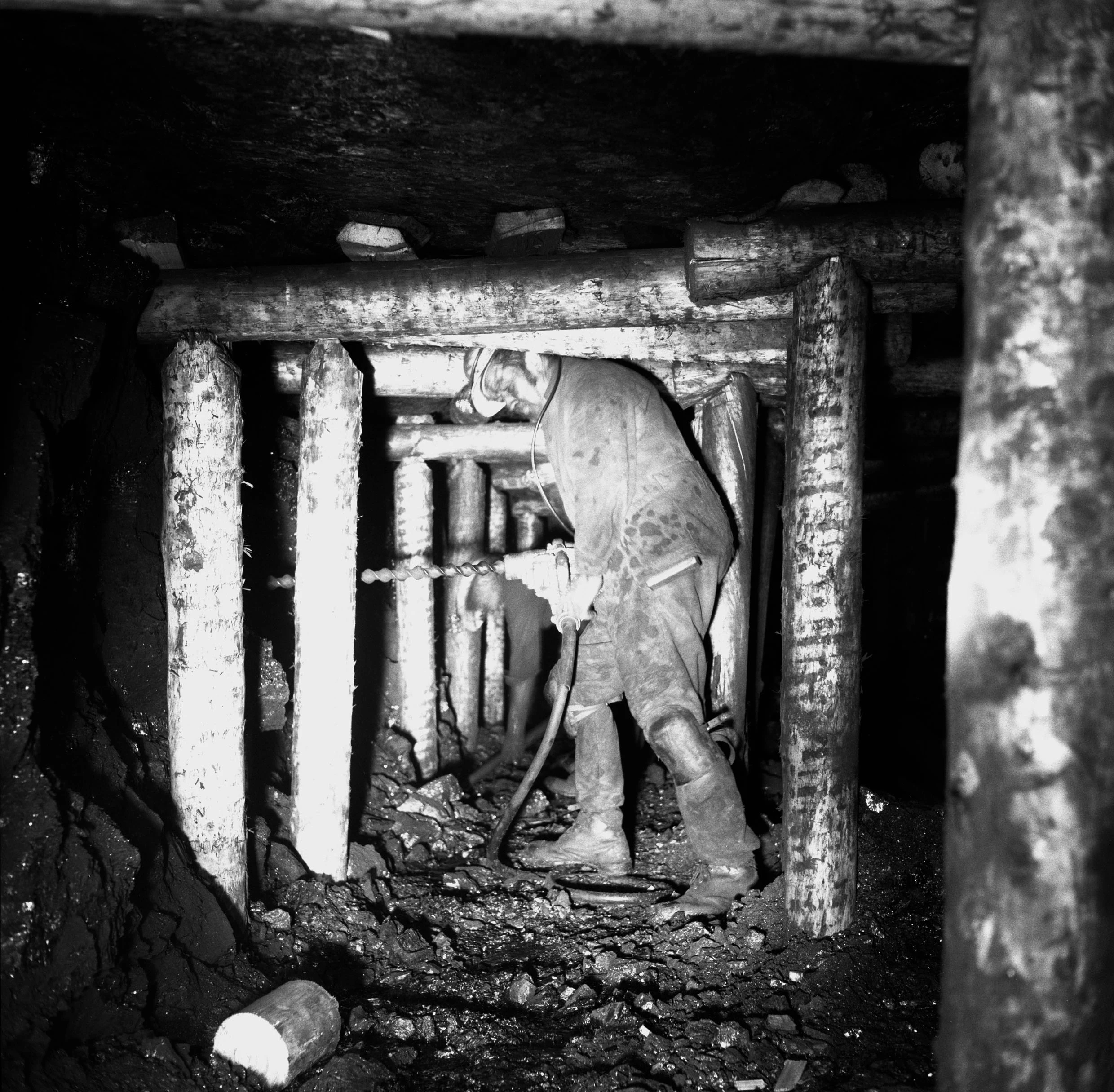
Ammanford Colliery, 1974, Gerald Gibson drilling a shot hole on the coal face.

Ammanford Colliery, 1974, a journey of empty drams being lowered into the slant.
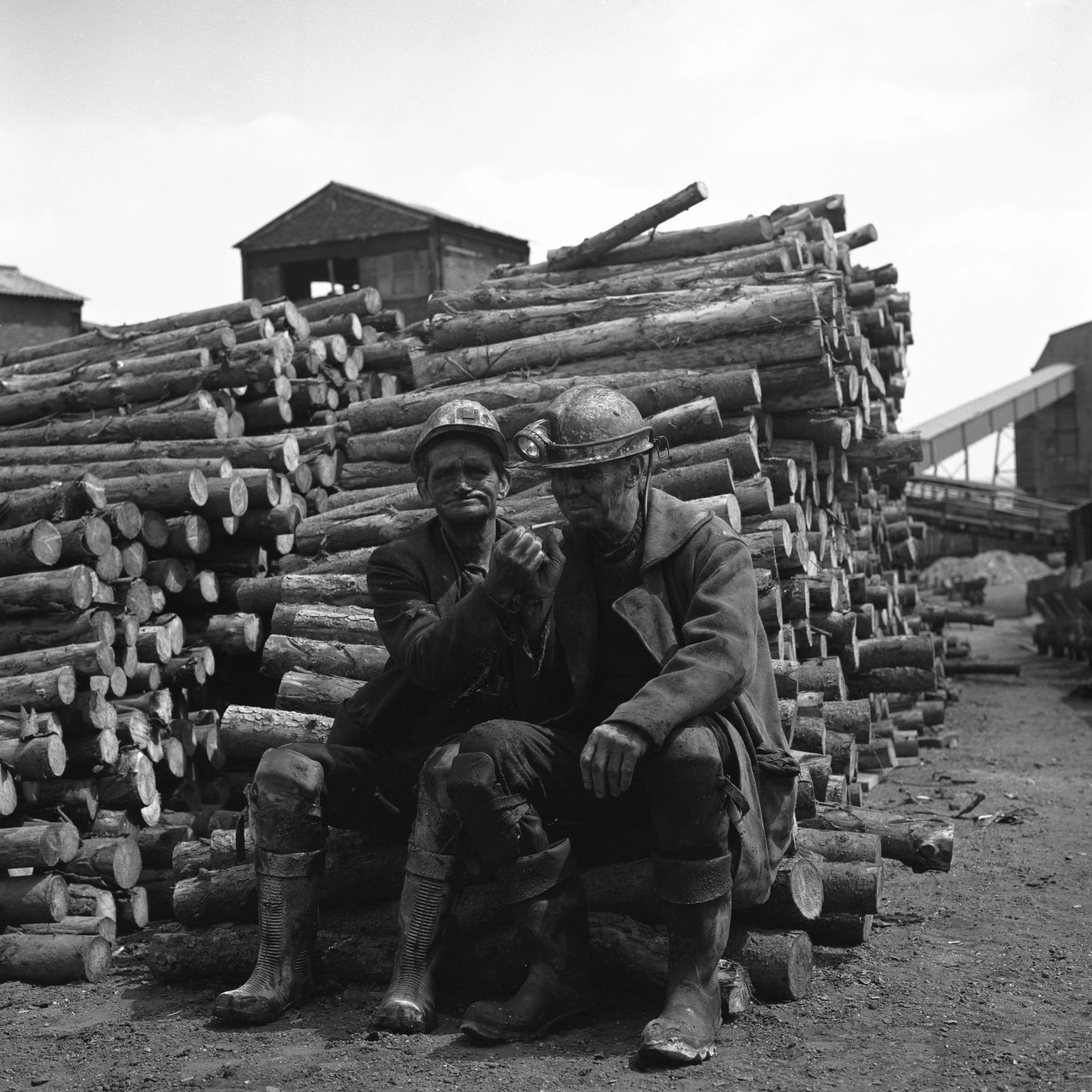
Two Blaenavon miners in the timber yard at the end of the morning shift, 1978.
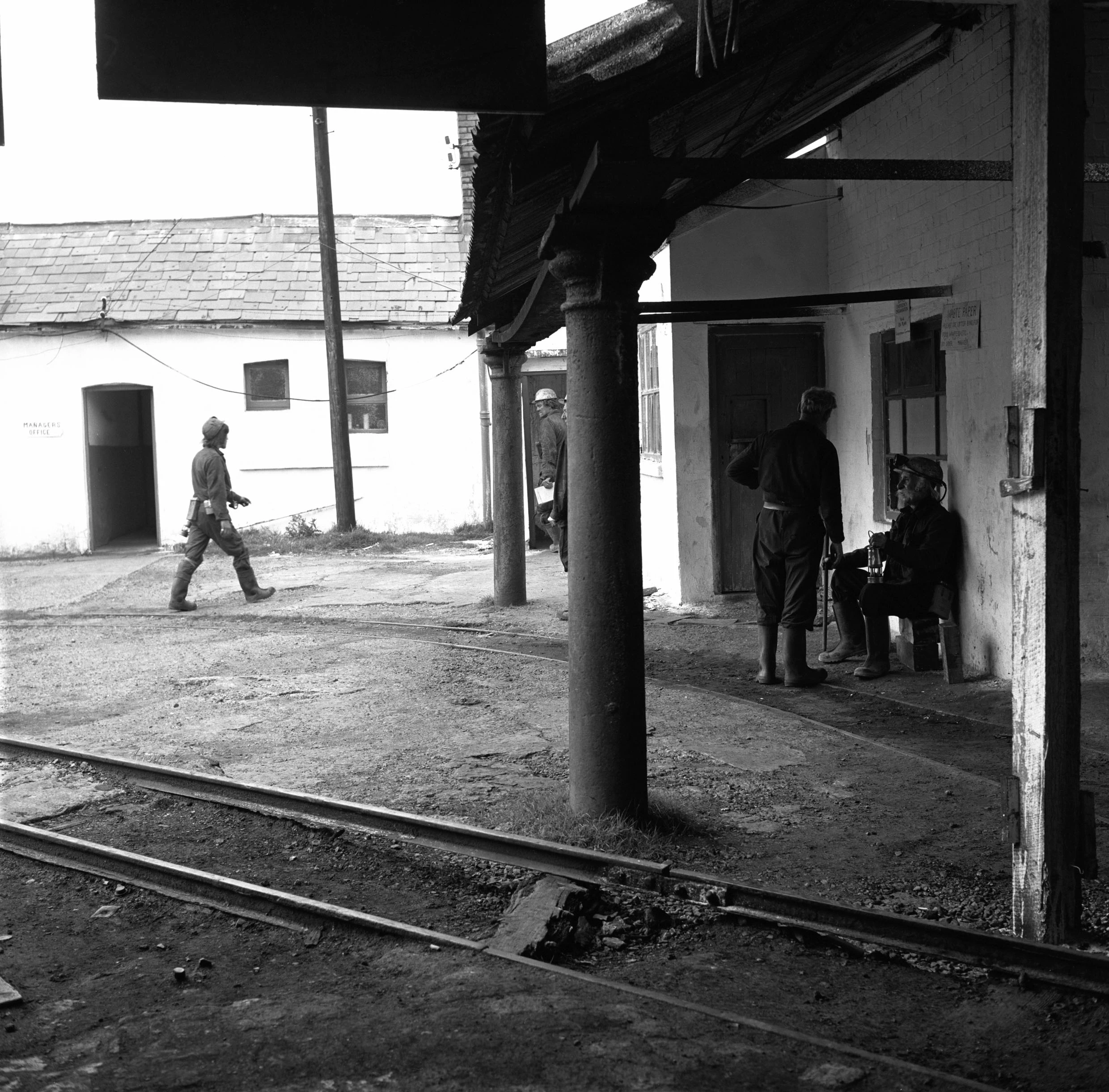
The Big Pit manager, Glyn Morgan, talking to Billy 'Pigeon' Preece (seated), Big Pit 1975
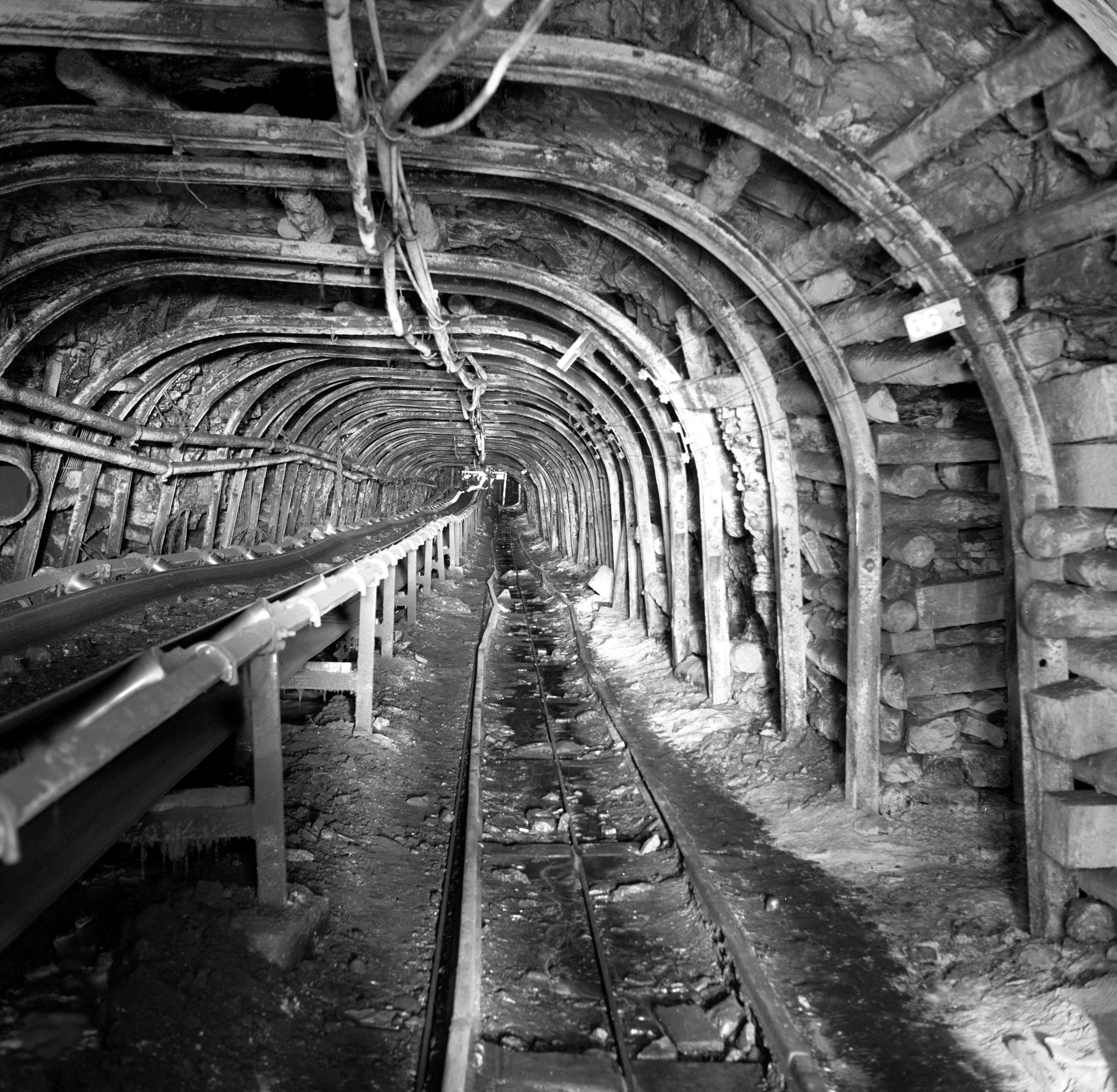
New roadway driven from the drift entrance with conveyor belt carrying coal from the Garw Seam, Big Pit 1975.
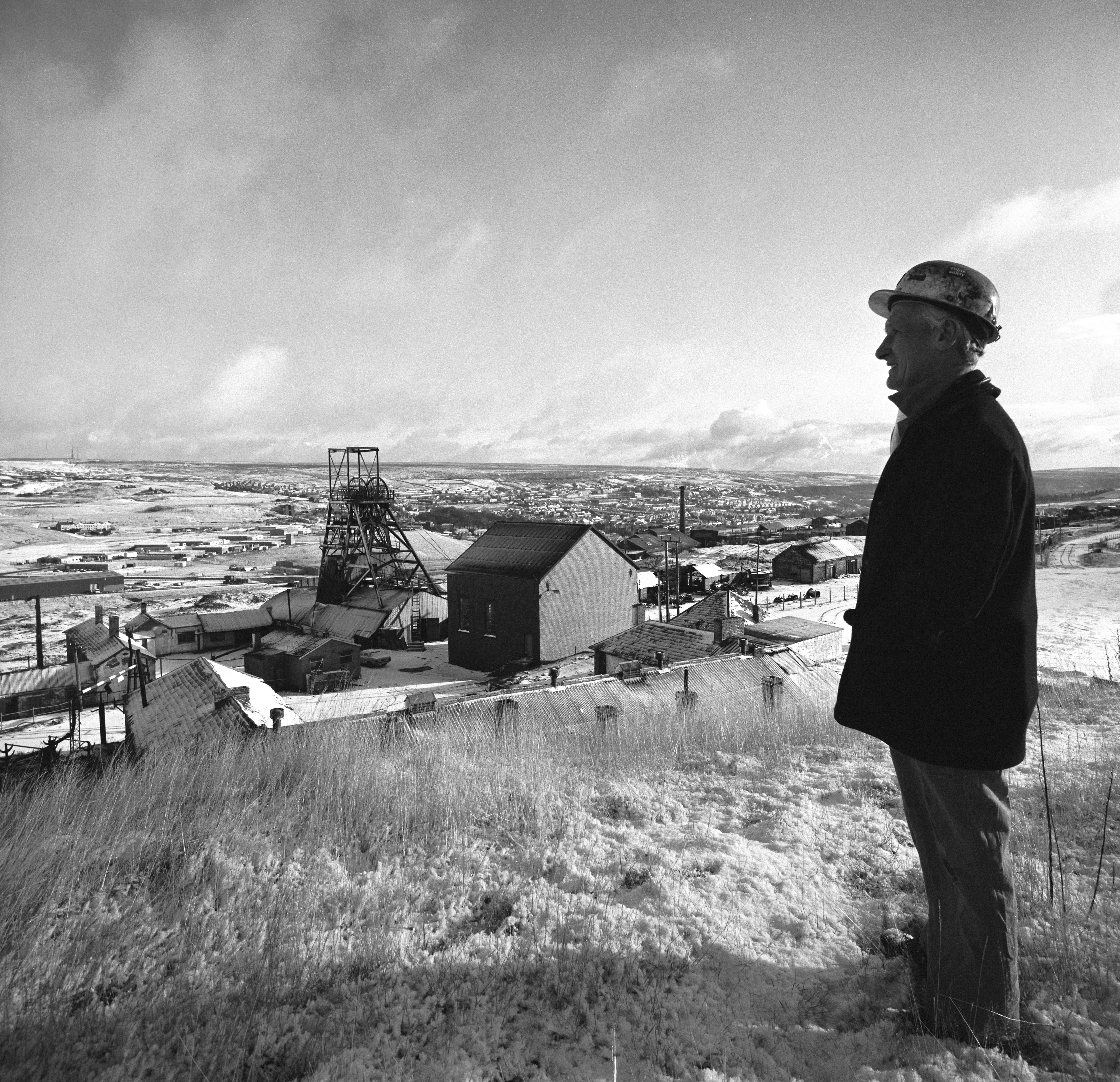
Last day for Glyn Morgan, the last National Coal Board Manager, on 28 November 1980.
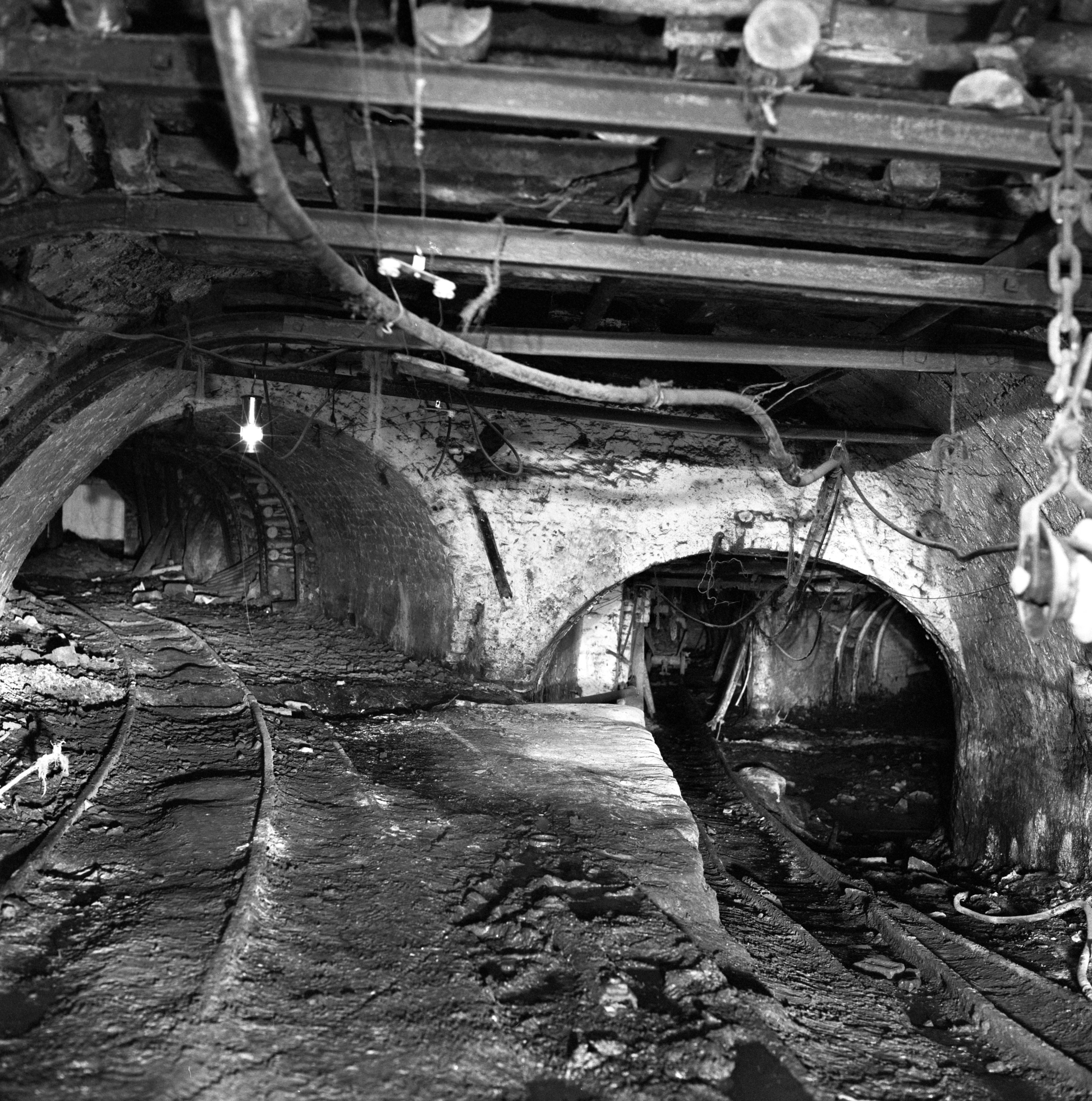
Junction near pit bottom, Big Pit 1975, now part of the museum's underground tour.
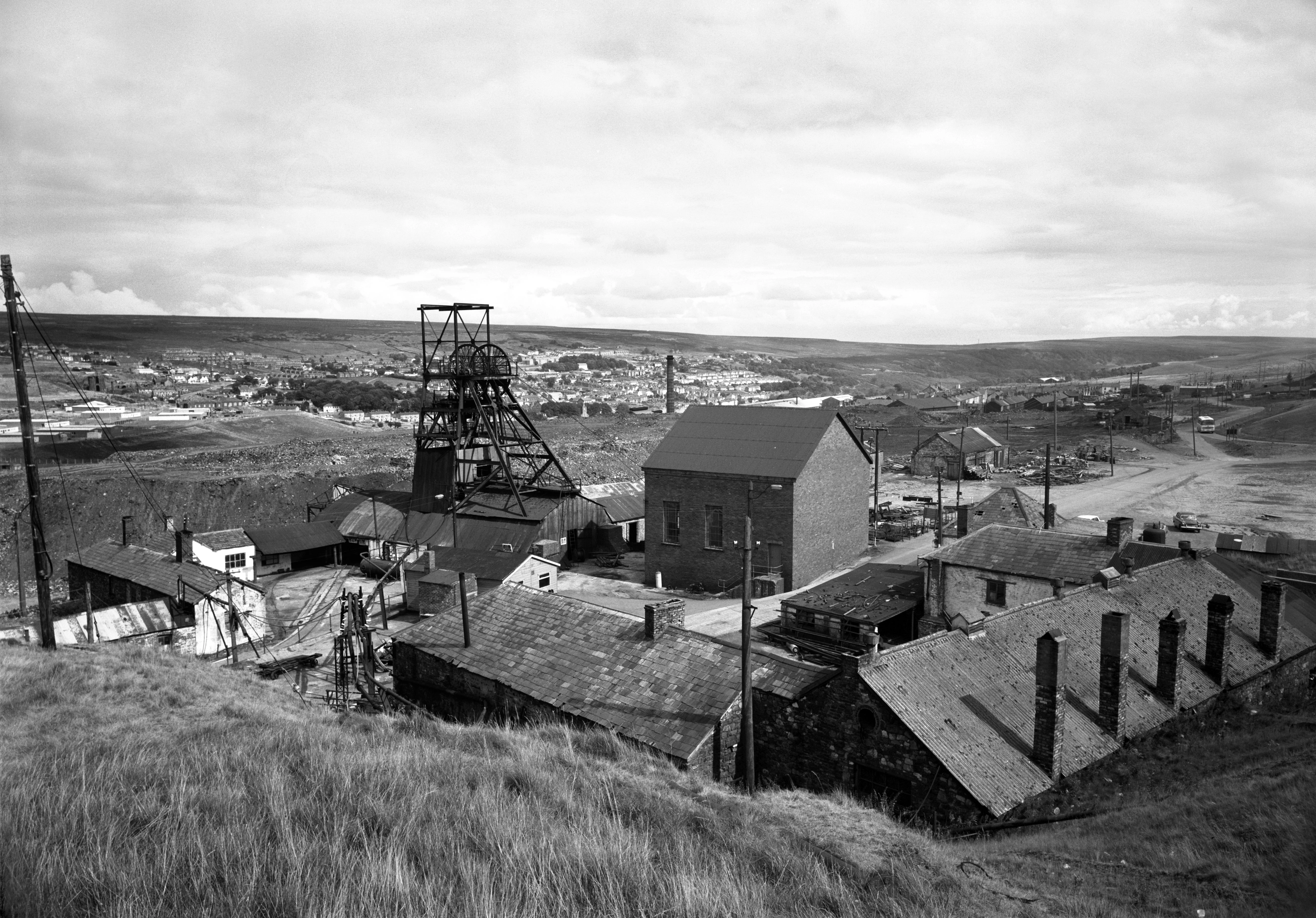
General surface view, Big Pit 1975.
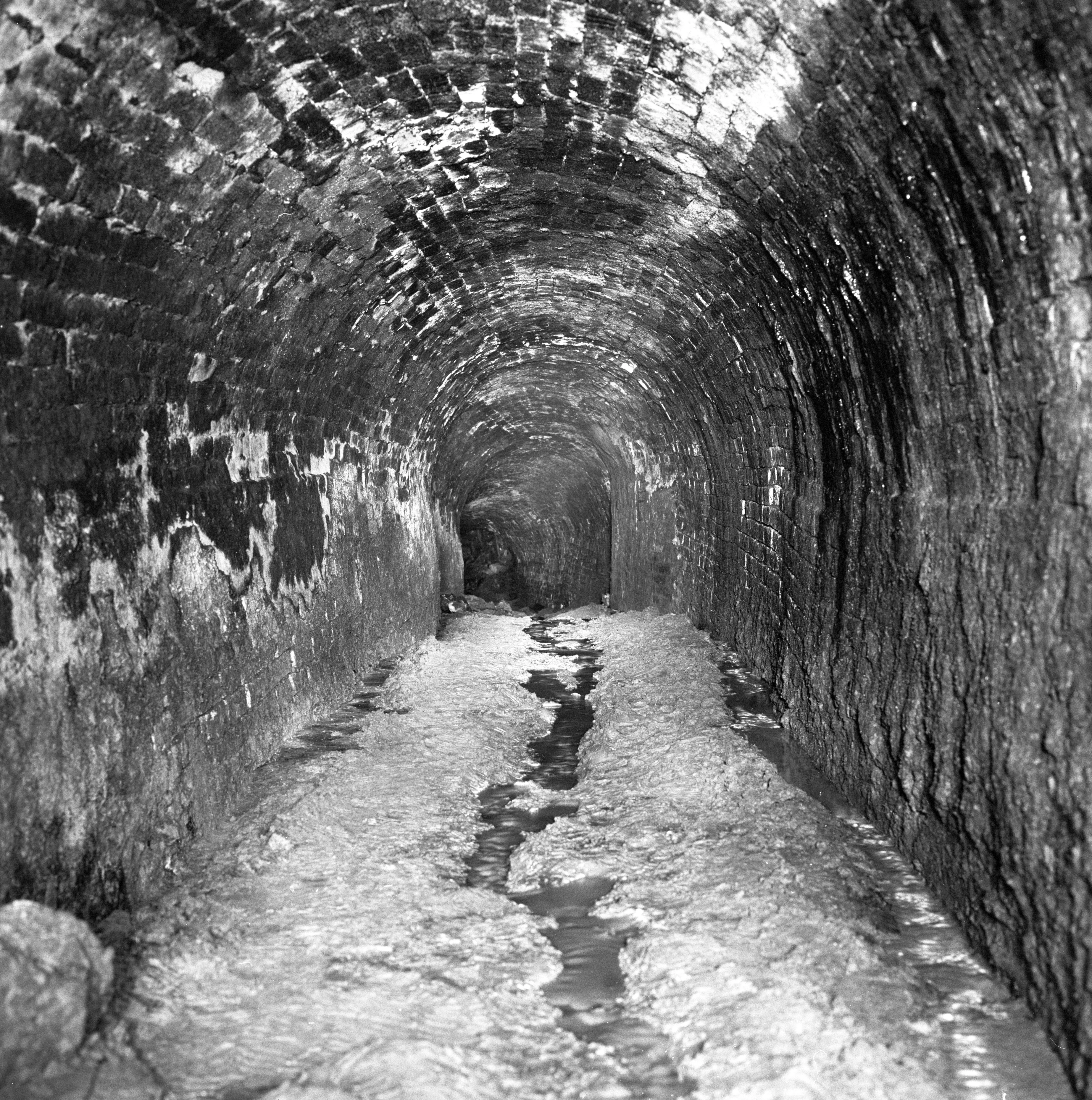
Forge level, driven c.1812, later incorporated into the Big Pit underground complex .
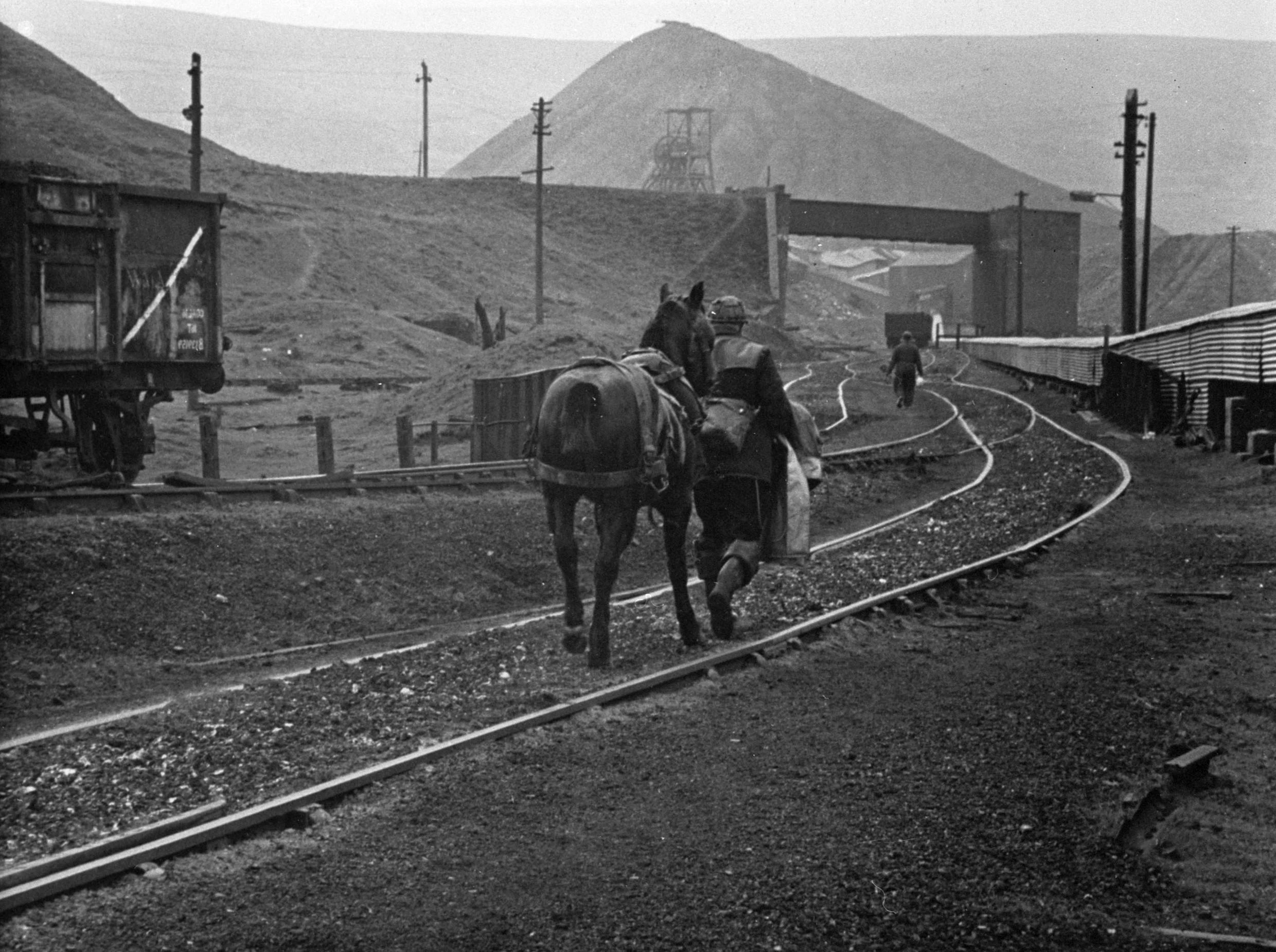
Colliery horse returning to Big Pit surface stables from the Washery in 1968.
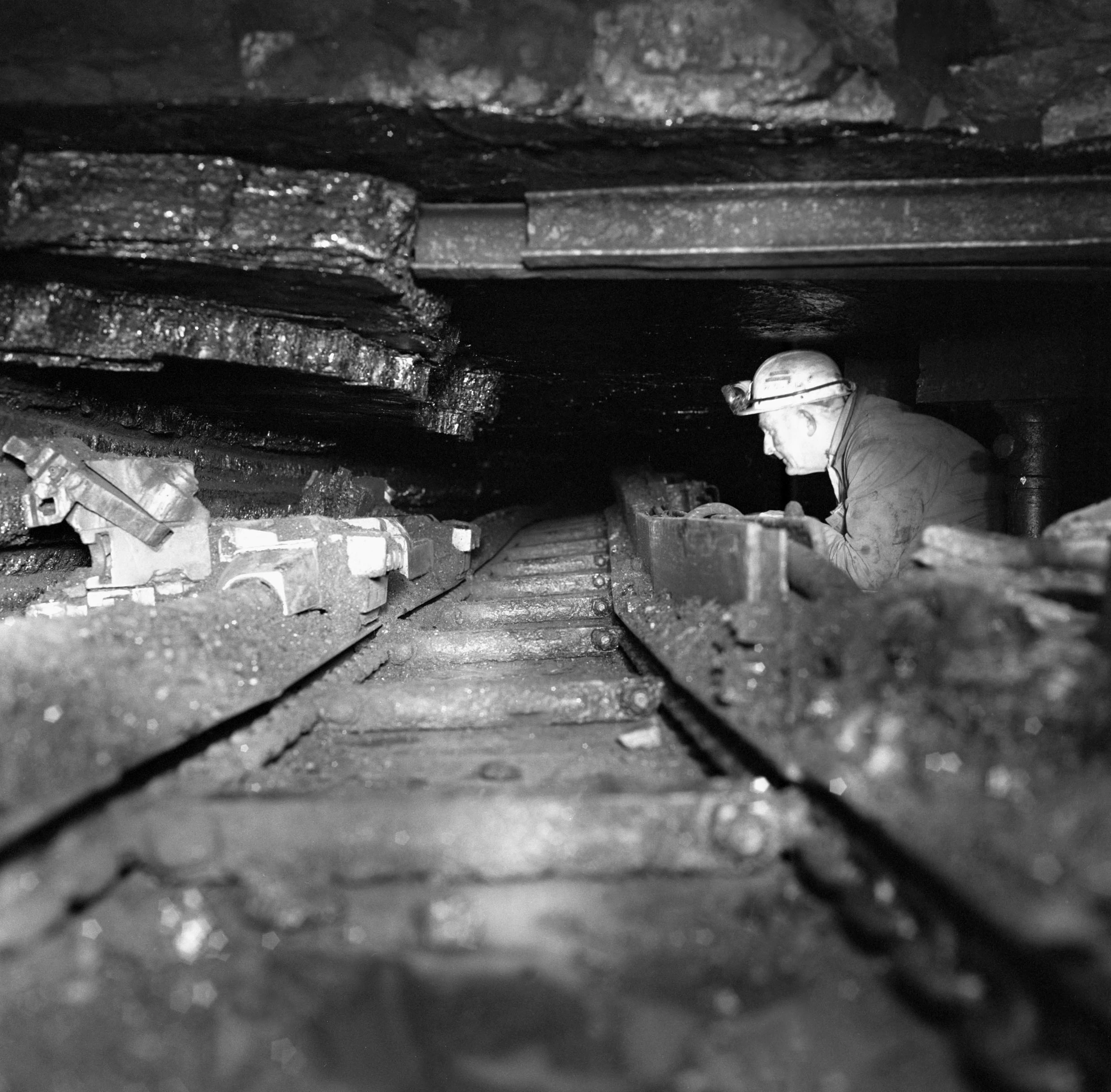
Bill Gunter, the Big Pit safety officer, on the G11 face in 1979
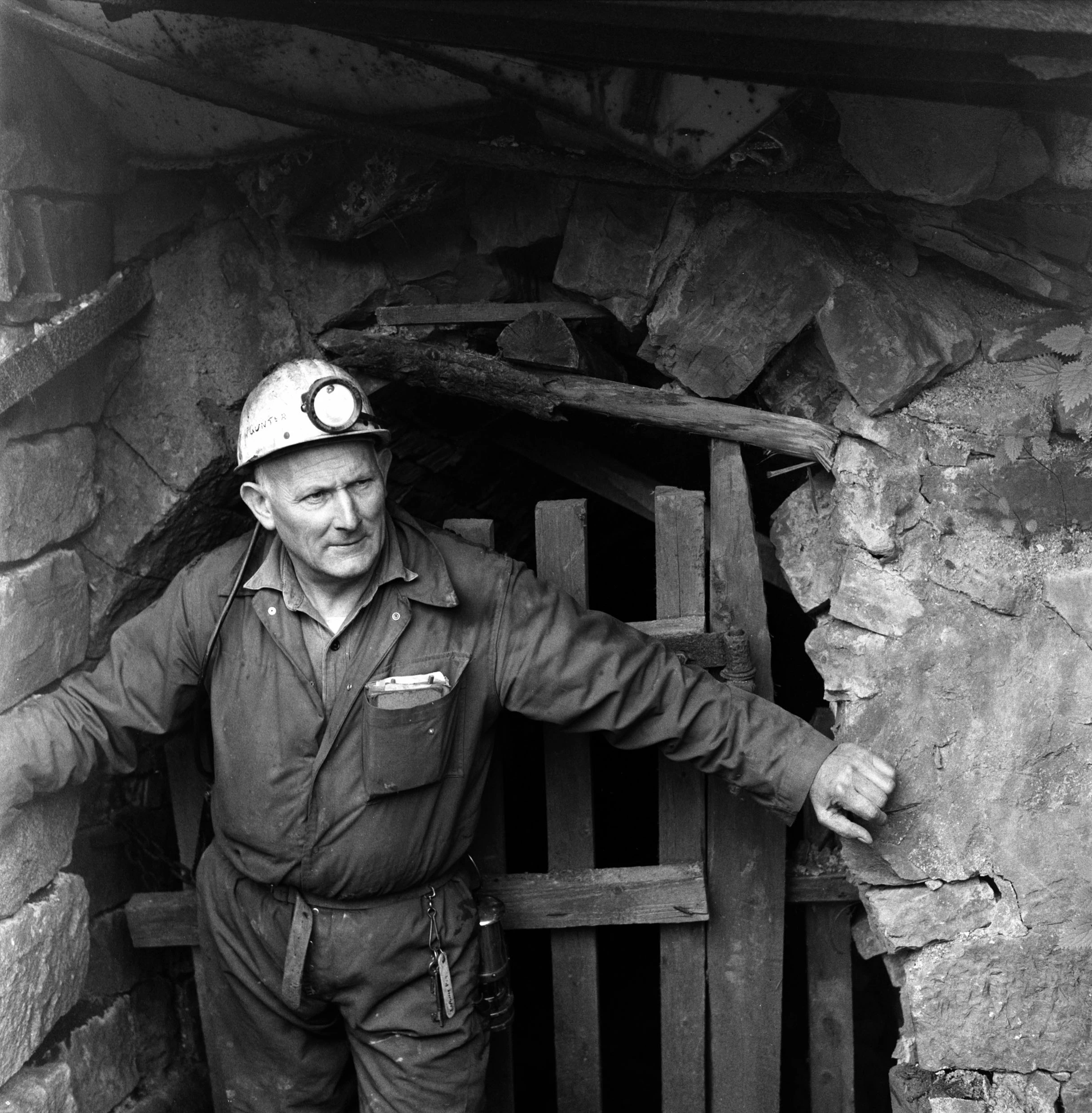
Bill Gunter standing at the archway to Dick Kear's Slope, driven around 1820. Big Pit.
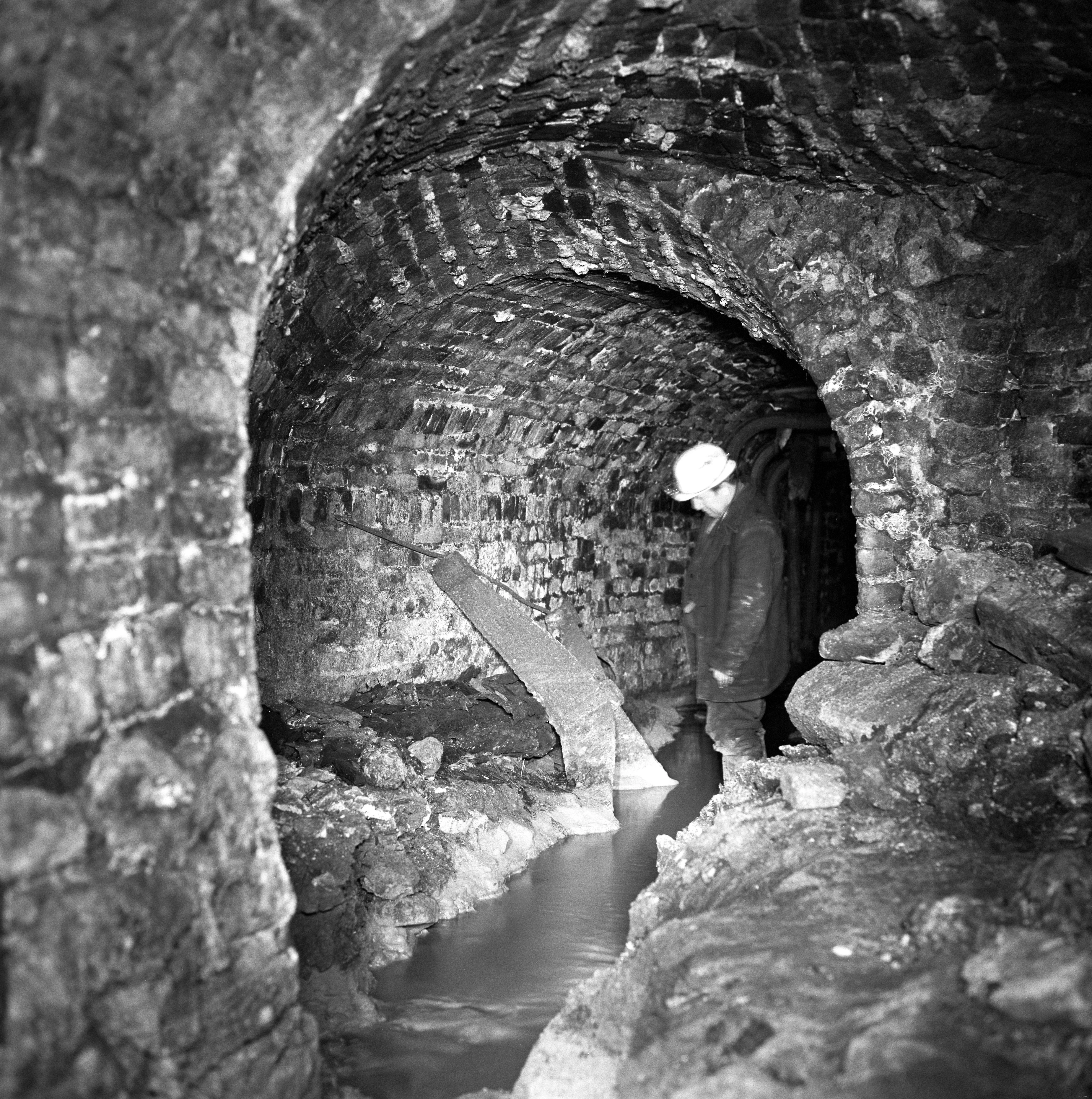
A mine official examining a section of a cage of a water balance machine, near the pit bottom of the Forge Pit (Big Pit), 1975
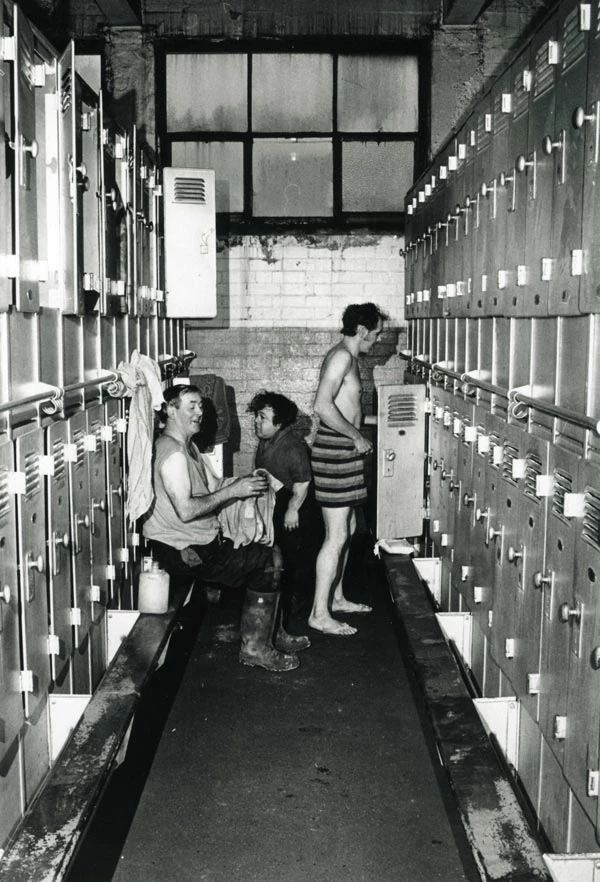
The pithead baths at Bit Pit: National Coal Museum
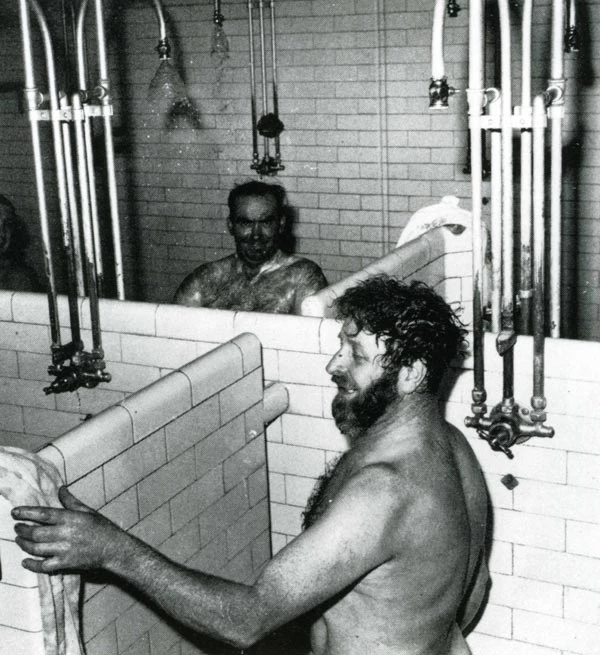
The pithead baths at Bit Pit: National Coal Museum