VE Day: Medals of Heroism, Service and Sacrifice Alastair Willis, 5 May 2020 Victory in Europe Day or VE Day commemorates the Allied victory over Nazi Germany. The United Nations also marks the 8th-9th May for all countries as a “time of remembrance and reconciliation for those who lost their lives during the Second World War”.On 8th May 1945, the War in Europe ended. After almost six years of bloody conflict, Nazi Germany had finally been defeated. By the end of the Second World War – which lasted another four months in the Pacific – more than 60 million soldiers and civilians had been killed, including more than 15,000 Welsh people. The National Museum Wales’ collection of Second World War medals attests to the incredible heroism and sacrifice of Welsh servicemen and civilians between 1939 and 1945. In this article, we will present some of the medals from the war in Europe and share with you the stories of their recipients.British servicemen were eligible for eight campaign stars (a retrospective ninth was added in 2012) and two service medals. Extraordinary acts of bravery or service by service personnel or civilians were rewarded with gallantry medals.Petty Officer William John James (Royal Navy), CardiffPetty Officer William John James, served on HMS Galatea, a Royal Navy light cruiser that operated in the Atlantic and Mediterranean until it was torpedoed and sunk by a German U-Boat off Alexandria in December 1941. James and over 460 of the crew were killed; only around 100 sailors survived. His medals were awarded posthumously and given to his family after the end of hostilities and were accompanied by a condolence slip from the Admiralty. W.J. James’ medals (from left to right): The Naval General Service Medal with the Palestine 1936-1939 clasp, The 1939-1945 Star, The Atlantic Star, The Africa Star and The War Medal. Condolence slip accompanying W.J. James’ medals. Reverend Ivor Lloyd Phillips (Army), KilgettyThese medals were awarded to the Reverend Ivor Lloyd Phillips, a military chaplain who served with the 102 (Pembroke Yeomanry) Field Regiment, Royal Artillery in Tunisia and Italy. Rev. I.Ll. Phillips’ medals (from left to right): the Military Cross, The 1939-1945 Star, The Africa Star with 1st Army clasp, The Italy Star, The Defence Medal and The War Medal with a bronze oak leaf demonstrating that Phillips had been “Mentioned in Despatches”. Phillips was awarded the Military Cross, which was at the time the second highest military decoration after the Victoria Cross. The recommendation for the award says “He has carried out his duties in a completely selfless and devoted manner… his work has been unremitting and he is held in very deep esteem by all ranks… Never deterred by any considerations of enemy shelling, he has always shown complete disregard for personal safety. He always hurries to the spot where casualties have occurred and his presence and work with them… has always been the greatest inspiration to others”He later became Archdeacon of Newport. Rev. Phillips. Rev. Phillips’ Army Chaplain’s Badge. Rev. Phillips donated his medals to the National Museum Wales in 1991.Sergeant Glyn Griffiths (Royal Air Force), Llandudno Glyn Griffiths (right) and other members of his squadron on a Hurricane. Born in Llandudno in 1918, Sgt Griffiths was an RAF fighter pilot who flew Hawker Hurricanes as part of 17 Squadron during the Battle of Britain, from July to October 1940. He destroyed at least six enemy aircraft and possibly as many as 15. He was awarded the Distinguished Flying Medal for his actions. Following the Battle of Britain he became an instructor and later flew operationally with 4 Squadron. Returning from a sortie over France, he and his wingman collided over their base and Griffiths was forced to bail out. He suffered severe burns, which ended his wartime service. Sgt Griffiths medals (from left to right): Distinguished Flying Medal, The 1939-1945 Star with Battle of Britain clasp, The Atlantic Star, The Defence Medal, The War Medal, Croix de Guerre (Belgium), Order of Leopold II (Belgium). Sergeant William Herbert Evans (RAF), CardiffSgt Evans was the navigator of a Halifax bomber in 78 Squadron. He was killed on 31st August 1943, when his aeroplane was shot down during a 600-aircraft raid on the German cities of Mönchengladbach and Rheydt. His medals were issued posthumously. Sgt Evans’ medals (from left to right): The War Medal, The Air Crew Europe Star, The 1939-1945 Star. Sgt Evans’ medals were donated to the National Museum by his family.Benjamin Lewis Aylott (Police), PontarddulaisLondon-born Aylott had served in the Royal Navy during the First World War before moving to Pontarddulais. At the outbreak of the Second World War he joined the Glamorgan Constabulary as a War Reserve Constable. He was awarded the King's Police and Fire Services Gallantry Medal for apprehending an armed army deserter on 27th December 1943. B.L. Aylott’s King's Police and Fire Services Gallantry Medal. B.L. Aylott and his family following his investiture by King George VI at Buckingham Palace. His medals were donated to the museum by his son Terry Aylott in 2011.Thomas William Keenan (Civilian), CardiffOn the night of 2nd-3rd January 1941, over 100 German aircraft attacked Cardiff. Keenan, watchman at a fuel depot, used his hat to remove an incendiary bomb from the top of a tank containing 300,000 gallons of petrol. His hands were badly burned, but the fuel tank was saved. He was awarded the George Medal for his bravery. Among his medals are two from the First World War that Keenan had received as a result of serving in the Machine Gun Corps. T.W. Keenan’s medals (left to right): George Medal, British War and Victory Medals (WW1), The Defence Medal, 1939-1945. Keenan’s medals (reverse). Gordon Love Bastian (Merchant Navy), BarryEynon Hawkins (Royal Navy), LlanharanThese Albert Medals were awarded to G.L. Bastian and E. Hawkins for saving life at sea.Born in Barry, Bastian was a Second Engineer officer on the S.S. Empire Bowman, which was torpedoed on 31st March 1943. His Albert Medal was awarded for “exceptional bravery, strength and presence of mind” in saving two men from the ship’s flooding stokehold.Hawkins, a Royal Navy Able Seaman from Llanharan, was serving as a gunner aboard a defensively armed merchant vessel that was torpedoed and set on fire on 10th January 1943. According to the London Gazette (29 June 1943), “Hawkins, with the greatest coolness and courage, organised a party of survivors in the water until they were later picked up by one of H.M. ships. Twice he swam to the assistance of other survivors who were in difficulties, himself receiving burns in the face as he pulled them to safety.” Albert Medals of G.L. Bastian and E. Hawkins. Albert Medals of G.L. Bastian and E. Hawkins. Both medals were donated to the National Museum by their recipients.Elizabeth Harriet Edwards (Civilian), CardiffThe British Red Cross Society awarded the medal below to Hetty Edwards for proficiency in First Aid. Edwards was the Librarian of the National Museum of Wales between 1931 and 1970. During the Second World War, she volunteered as a nurse for the British Red Cross Society.Read more about Hetty Edwards:Part OnePart TwoPart Three E.H. Edwards’ Proficiency in Red Cross First Aid Medal.
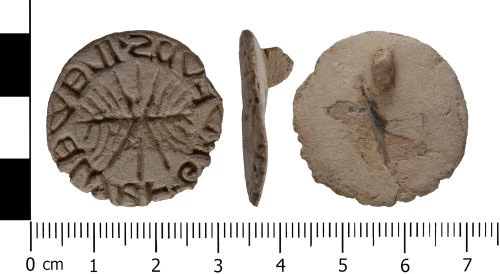
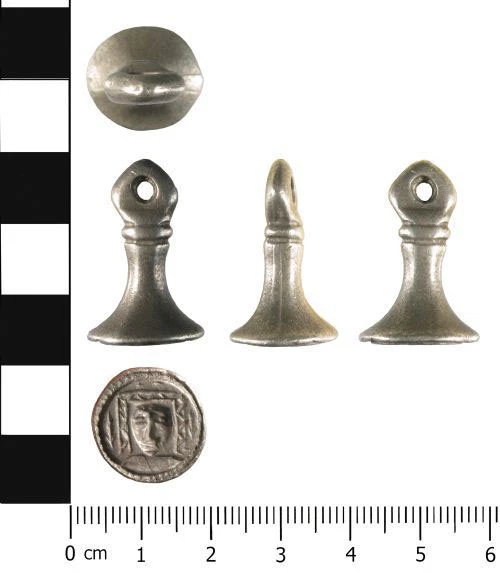
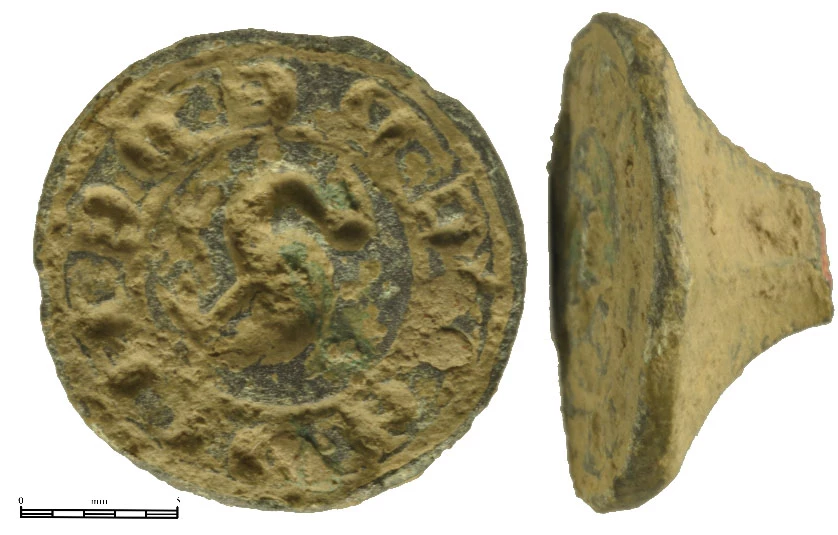
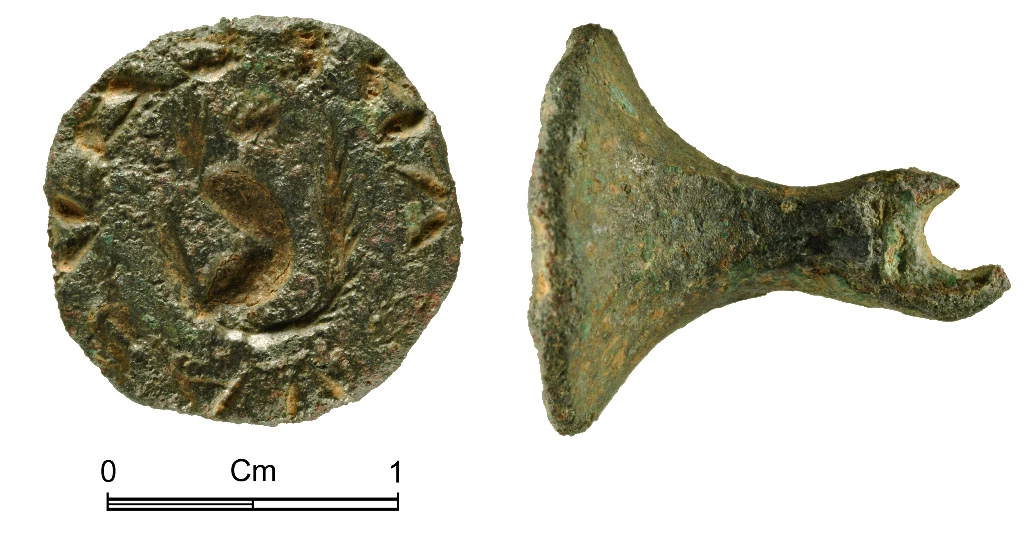
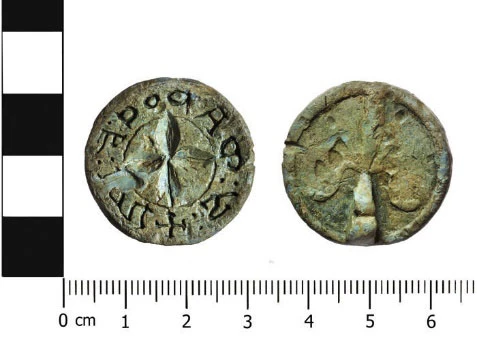
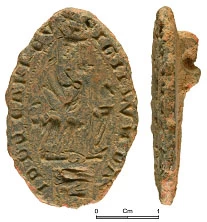
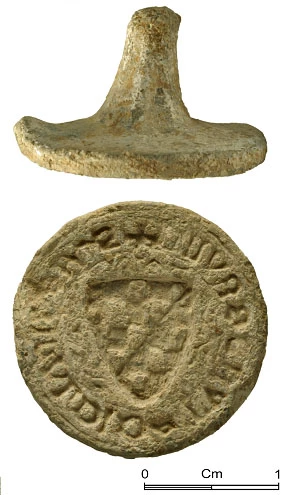
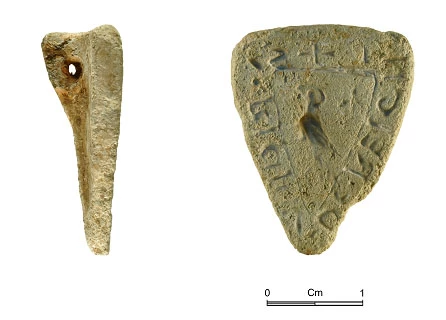
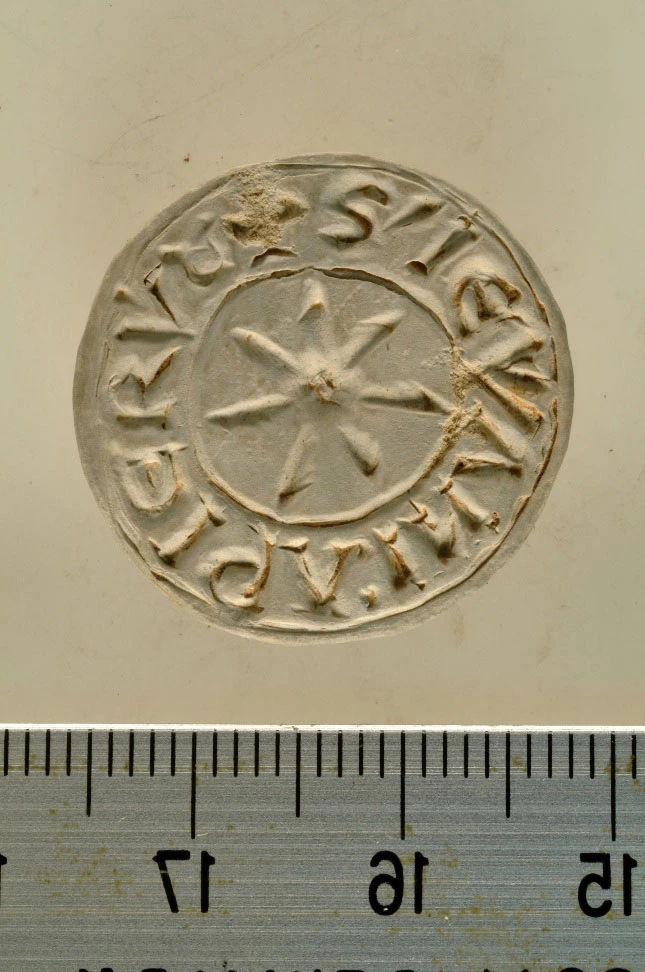
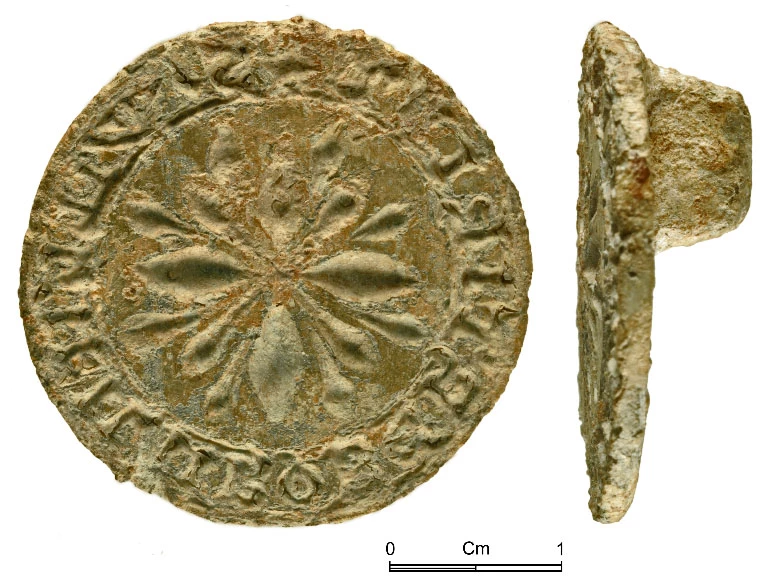
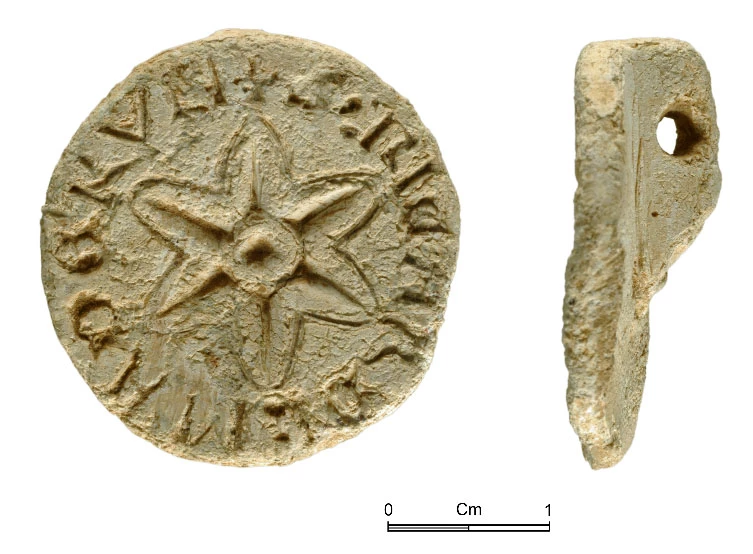
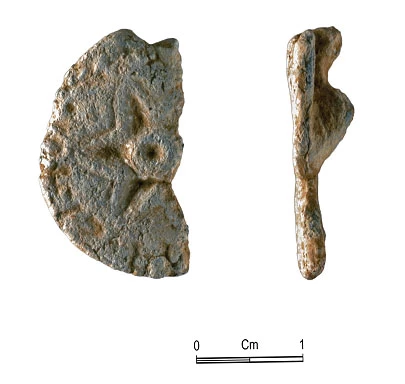
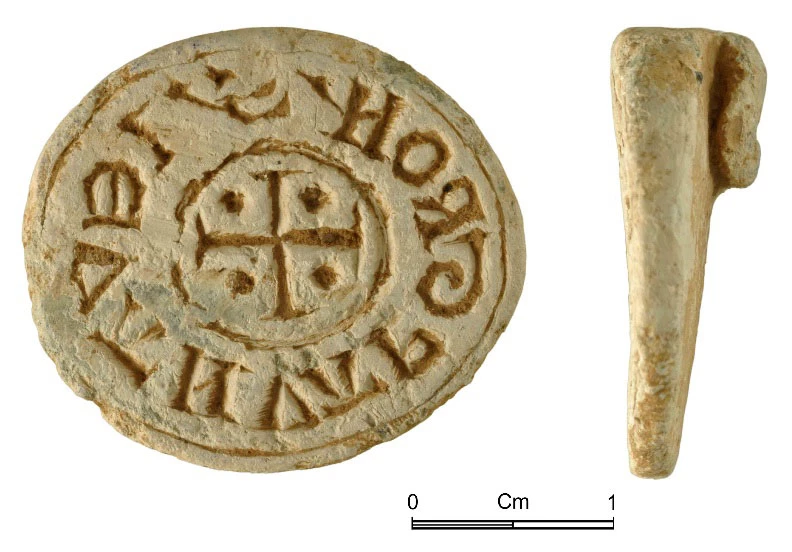
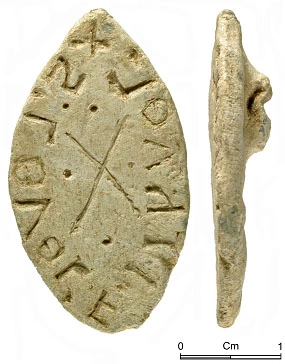
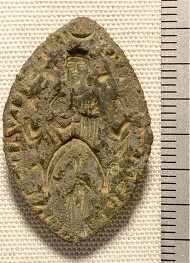
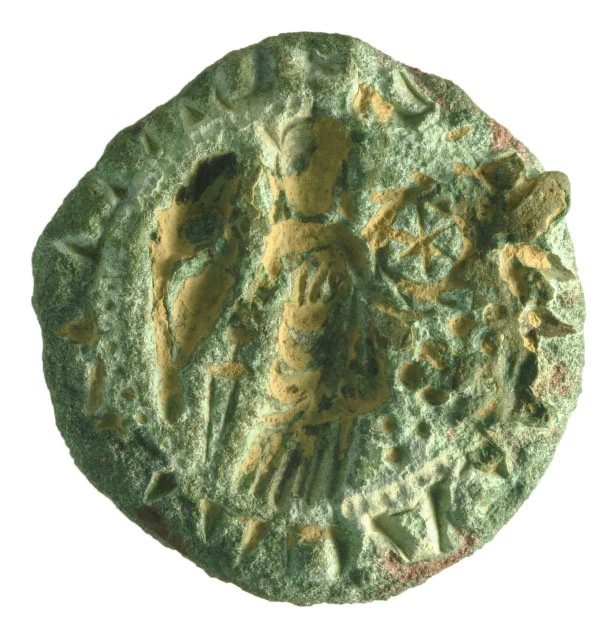
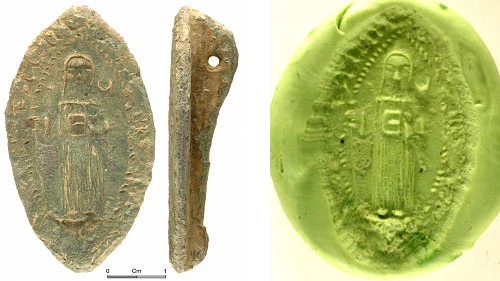
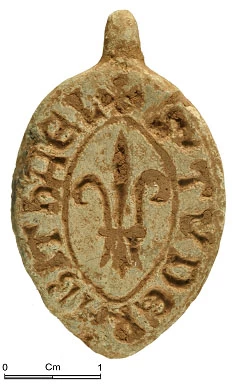
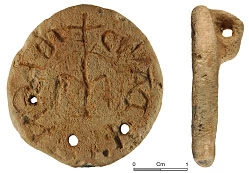
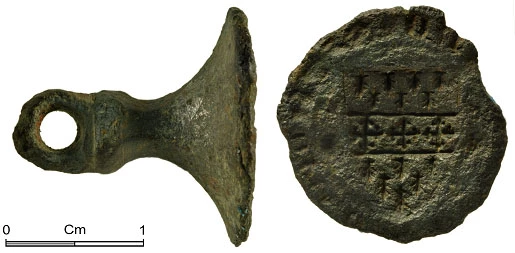
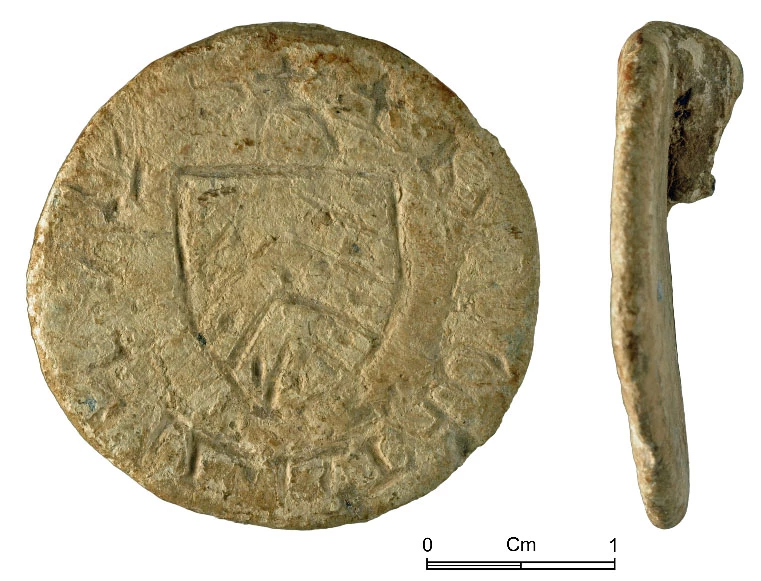
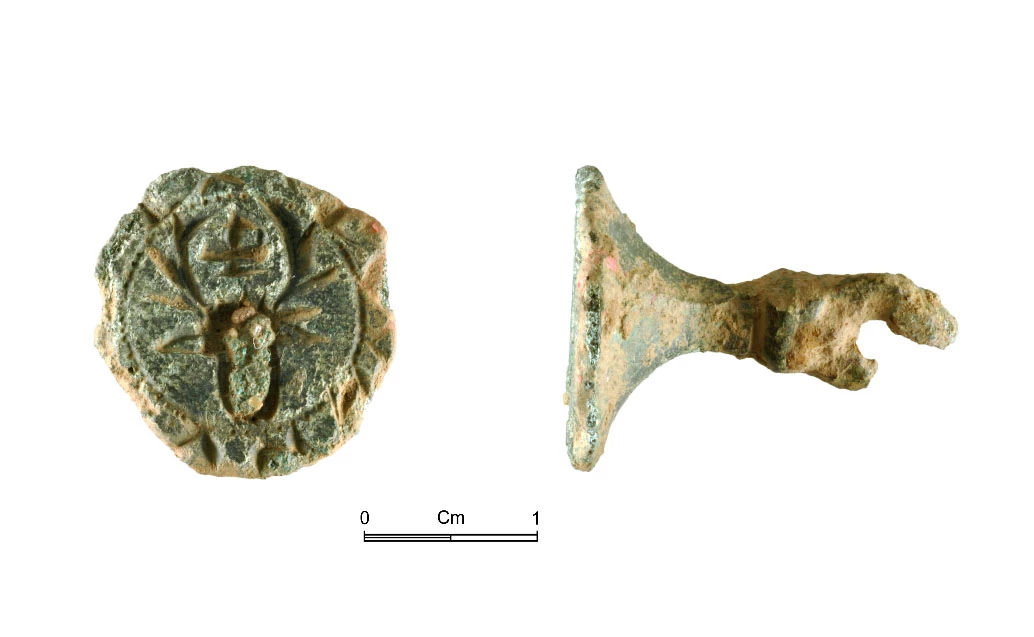
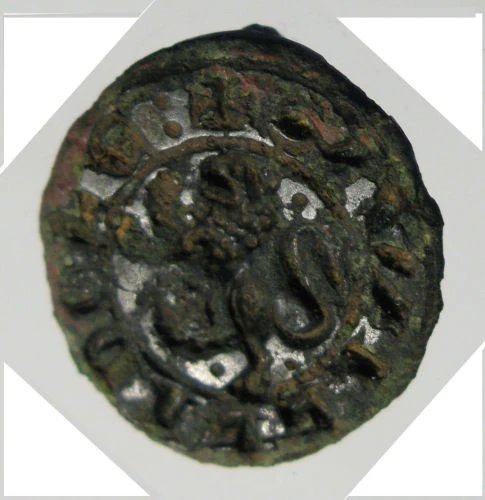
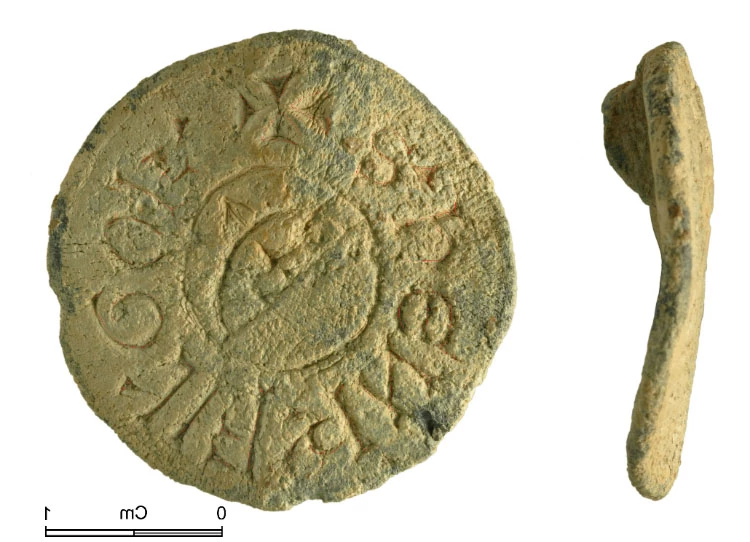
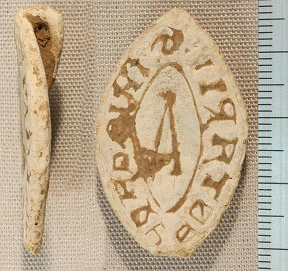
Seal Matrices Rhianydd Biebrach, 1 May 2020 What does your signature look like? Is it an illegible squiggle, an elegant flourish, or simply a hurried scrawl of your name? Whatever it looks like, it’s something that’s unique and personal to you – identifying you and no one else. Putting your signature to something shows that you have approved and endorsed it, and things like contracts, deeds, cheques and certificates would be invalid without one. But what if you can’t write, because you live in an age where literacy is a skill only needed by a small proportion of society? What if you hold an important position – such as bishop or abbot – where power is invested in your office, rather than in your person? What is a seal? For hundreds of years, instead of using signatures, people in past societies resorted to the use of seals – personal devices usually containing an image and often some sort of inscription, legend or motto to identify the owner – to show that they have witnessed and agreed to documents of various kinds. In the Roman world, seals usually took the form of signet rings, which contained an intaglio - a gem engraved with an image. Later, in the medieval period, they generally took the form of either flat metal discs or ovals, with lugs or cone-shaped projections for holding. An example of a seal in the form of a flat disc. The 13th century seal of Llewelyn son of Gruffudd, found Abenbury, Wrexham (WREX-D0D606). The cone-shaped silver seal of an unknown late 14th century lady, found in Hyssington, Montgomeryshire. (T2012.12). Now in the collections of Amgueddfa Cymru – National Museum Wales. Both forms were engraved with a distinguishing design and legend on the flat face to form a die, or matrix. This would have been pressed into coloured wax and the resulting seal was often affixed to a document with a cord or strip of parchment. Suspension loops on the backs of medieval seal matrices suggest they were kept secure or carried on cords or chains. Amgueddfa Cymru-National Museum Wales and local museums throughout the country hold many examples of seal matrices in their collections. This article, however, considers some of the hundreds which have been found by members of the public and recorded on the Portable Antiquities Scheme (PAS) database. The majority of them were found by metal detectorists and are now in private collections, apart from a small number acquired by museums through the treasure process. Seals were most commonly used in Wales in the medieval period, particularly between the twelfth and the fourteenth centuries. There are far fewer examples known of from the Tudor period and later, although they have continued in use up to the present for certain functions. What do they look like? Many seal matrices were made from base metals such as lead or lead alloy and copper alloy such as bronze. Silver examples are less frequently found by members of the public, but when they are they often end up in museum collections after being declared treasure by coroners. Generally they are circular in shape, though other shapes do occur. Pointed ovals were often used for the seals of women and the clergy, while shield-shaped, lozenge and hexagonal examples are also known. Medieval seals usually contain some sort of engraved central image or design, surrounded by an inscription identifying the owner of the seal - an individual or an institution - around the outside edge. Later seals often had an image only. Where are they found? Seal matrices have been found all over Wales, but some hotspots do occur. The Vale of Glamorgan is where the highest numbers have been recorded, followed by Pembrokeshire, Monmouthshire, Wrexham and Flintshire. Apart from a single example each from Pontyclun and Caerphilly, none have been recorded from the South Wales Valleys, or from Neath and Port Talbot, Ceredigion or Gwynedd. If you take a look at the Saving Treasures map of objects, you will notice that this pattern matches pretty closely with the areas where other archaeological objects of many different kinds, from the early Bronze Age to the eighteenth century, have been found. Who used them? A wide range of people would have needed a seal, from the monarch to small landowners and tradespeople – anyone, in fact, who might have needed business or legal documents of many different kinds. Individuals had personal seals, but seals were also used by bodies such as town corporations, trade and religious guilds, cathedrals, abbeys and monasteries. The higher your status, the better quality your seal was likely to be. It might be made of silver instead of base metal, with a carefully-chosen device engraved by an expert craftsman. The less wealthy might have resorted to a basic ‘off the peg’ example, made of lead or bronze, with a standard design which may also have been quite crudely cut. There were seals out there to suit all pockets! Legends 13th century seal of Brother Baldwin (NMGW-E91B83). © Portable Antiquities Scheme. The legend (also known as the motto or inscription) is carried around the outer edge of the matrix. It generally follows a standard formula containing the owner’s name, such as ‘S. FRATRIS BALDVINI’ (The seal of Brother Baldwin), on an example found in Porthcawl in 2008. Here, the Latin word ‘Sigillum’ (seal) has been abbreviated to a single letter ‘S’. This was common practice in order to save space for the more important element – the name itself. Both Margam and Neath Abbeys held land in the Porthcawl area, so Baldwin is likely to have been a monk of one of these houses. Names are often abbreviated, which can make them difficult to decipher, especially if the matrix is corroded or damaged. Out of the 150 or so matrices looked at for this article, 59 of them had illegible or partially legible inscriptions. More rarely, the legend takes the form of a religious or secular motto, instead of a name. A seal containing the Latin religious motto ‘CREDE MICHI’ (Believe in Me) was found in Penmark in the Vale of Glamorgan in 2011, while ‘I CRACKE NUTS’ was recorded on a seal found in Penhow, near Newport, in 2014. This legend is sometimes thought to be a sexual reference, so although seals had a serious purpose, they could sometimes be playful! 13th or 14th century seal showing the legend CREDE MICHI (Believe in Me). 13th or 14th century seal showing the legend I CRACKE NUTS. Inscriptions on seals found in England are in one of the three main languages used there in the Middle Ages – English, Anglo-Norman French and Latin. In Wales however, Welsh can be added to that list, and is far more common than either English or French. It appears either in the form of personal names, such as Ieuan or Gwenllian, or as the Welsh word ‘ap’ meaning ‘son of’. Much rarer is the female version ‘ferch/verch’, or ‘daughter of’. 13th-14th century seal of Madog son of Madog (CPAT-0791F5). ©Clwyd Powys Archaeological Trust. 13th or 14th century seal of Wenllian Kaperot. 13th-century seal of David de Carew Some people with clearly Welsh names also used the Latin ‘filius’ instead of ‘ap’. This was usually abbreviated to ‘fil’ or ‘f’, such as in the seal of MADOCI F MADOCI (Madog son of Madog), found near Wrexham. In the Middle Ages, language and names were among the ways in which people signalled their personal identity, so information like this is valuable evidence for historians studying the society of medieval Wales. Parts of Wales were extensively settled by Anglo-Normans after the conquests of the late eleventh to the late thirteenth centuries, and seals sometimes provide us with evidence of cultural exchange between the native Welsh and the incomers. Wenpelian (Wenllian) Kaperot, whose seal was found at St Mary Hill (Vale of Glamorgan) in 2005, combines a Welsh first name with an English surname. Was she a Welsh woman married to an Englishman, or was she from a settler family who had adopted native names and begun to think of themselves as Welsh? History books often tell us that the native Welsh were treated as second class citizens after the Anglo-Norman conquests, but the evidence of these seals shows us that a significant number must have been wealthy enough to have been buying and selling land and conducting legal business of various kinds. Although we can often decipher the names of the owners of the seals, it can still be difficult to link them with an individual who appears elsewhere in the historic record. Occasionally however, seals are found which can be linked to known families. The Carew family were important Pembrokeshire landowners throughout the medieval period, and the seal of one of them – DAVID DE CARREV (David de Carew) – was found in Carew Cheriton in 2009. The pointed oval shape of this seal and the religious imagery on it suggest that David was possibly a younger, non-inheriting, son of the family who had gone into the church. Like the Carews, the Turberville family were powerful Anglo-Norman lords, settled at Coity Castle, near what is now Bridgend. Reginald de Turberville’s (REGINALDI DE TURBERVILL) seal was found at nearby St Bride’s Major in 2010. Close neighbours of the de Turbervilles were the de Reigny family and the seal of RICAR’ DE REIGNI (Richard de Reigny) was found near Laleston, Bridgend, in 2018. 13th or 14th-century seal of Reginald de Turberville (PUBLIC – 6C42D0). ©Portable Antiquities Scheme 13th or 14th century seal of Richard de Reigny. Designs The seal’s central motif is its most obvious feature, and can range from simple and crude to complex and sophisticated. The most common motif on Welsh seals recorded with PAS is a variation on a many-pointed star, sometimes also described as a flower. Typical examples of this form are the thirteenth- or fourteenth-century lead seal of IEWANI APIERWE (probably Ieuan ap Iorwerth), found at Marshfield, Newport, in 2017, and the contemporary seal of WILLIEI FIL ROBERTII (William son of Robert), found at Merthyr Dyfan, near Barry, in 2013. Seal of Ieuan ap Iorwerth (13th or 14th century) 13th or 14th-century seal of William son of Robert (NMGW-8C9517) Sometimes, seals display such similar central designs, that it is highly likely that they came from the same source, or that the pattern was a very common one, produced in large numbers. Compare, for example, the twelfth- or thirteenth-century seal of RICARDI MADENVEI (Richard Madenvey), found in 2015, with a broken example found the following year. They contain near identical images of a flower, of six broad petals and a central circle, which looks very like a daffodil. Interestingly, they were found less than seven miles apart, on the Gower Peninsula. Seal of Richard Madenvei (13th or 14th century) Seal of unknown individual, showing same design as seal of Richard Madenvei (13th or 14th century). Only slightly less common than the star/flower, are a range of cross-shaped designs, and in fact these two groups are closely related, since many of the cross designs have more than four arms and can be interpreted as stars or floral patterns. A well-preserved example is the seal of Ieuan ap Gronw, found in Pontyclun, Rhondda Cynon Taff, in 2013. The seal of Wenllian Kaperot, already mentioned, contains a slightly more elaborate variation on this theme, while a more basic style can be seen on the seal of Leuel (Llewelyn?) son of Ithael, found in St David’s, Pembrokeshire, in 2011. 12th-13th-century seal of Ieuan ap Gronw (NMGW-05F969) Seal of Leuel son of Ithael (13th-14th century) Seal from St Nicholas, showing Virgin and Child and praying cleric under a canopy at her feet (13th century). Devotional images, including saints, donor figures and other religious imagery, were also popular. A typical example was found in St Nicholas, Vale of Glamorgan, in 2006, dating from the thirteenth century. It shows the Virgin and Child, with a small figure of a praying cleric under a canopy at her feet. Many of these examples are also pointed oval-shaped, suggesting it was a popular theme for the clergy. Seal showing St Catherine and her wheel (top right). The round seal of Brother Baldwin, mentioned above, contains a Lamb and Flag, the symbol of St John the Baptist. An individual, possibly named Winton or Wilton, had a seal containing an image of another popular medieval saint, Catherine, which was found at St Donat’s, Vale of Glamorgan, in 2012. St Catherine is easily identified by the inclusion of the wheel on which she was martyred. 14th-15th-century seal, possibly belonging to an abbess of Llanllyr, alongside its impression in wax. Connected to these examples of devotional imagery, and a rare and important find in its own right, is a seal from Ceredigion which depicts a standing, veiled female figure holding a book and staff. Only part of legend is discernible, reading ‘[ - - - - -] n l l e i r’, making it possible that the seal belonged to an abbess of Llanllyr, Wales’s only Cistercian nunnery. The fleur-de-lys – a stylised lily – was another popular design and was a common decorative device in the Middle Ages. A particularly nice example appears on the late thirteenth century lead seal of Tuder ab Ithel, which was found in Llanhennock, Monmouthshire, in 2010. However, the craftsman who cut the fleur-de-lys design on the seal of Henry David, found at Nevern, Pembrokeshire, in 2009, was considerably less skilful! Late 13th-century seal of Tuder ab Ithel (PUBLIC-929A66) © Portable Antiquities Scheme 13th-14th-century seal of Henry David (PUBLIC-9EF6F3) © Portable Antiquities Scheme If your family was important enough to possess a coat of arms, you may decide to include it on your seal. Heraldry was an important signifier of status in the Middle Ages, and appeared everywhere, from wall paintings, to tombs, stained glass, horse trappings and even clothing, as well as on seals. The arms of the Turbevilles of Coity Castle, Bridgend, appear on a seal found at St Bride’s Major in 2010, referred to above. It is more difficult, however, to identify the families associated with some other heraldic seals, such as that found at Reynoldston, Gower, in the same year, or the crudely-incised three chevrons on a seal found at Llanasa, Flintshire, in 2012. 13th-14th-century seal bearing the arms of an unidentified family, found on the Gower (PUBLIC-6C62F1) © Portable Antiquities Scheme 13th-14th-century seal from Llanasa, Flintshire, showing heraldic device with chevrons. As well as crosses, stars, saints and heraldry, a number of other designs are found, including animals, non-religious human figures, letters and inanimate objects. Some, like the stag’s head that appears on a seal found in Pembroke in 2017, or the rampant lion on a seal from Holt, Wrexham, may also be heraldic in origin, alluding to an animal on the owner’s coat of arms. Seal from Pembroke showing stag’s head (13th-14th century) 13th-14th-century seal from Holt, Wrexham, showing rampant lion (HESH-D966A6). © Birmingham Museums Trust The occasional appearance of bows and arrows, such as on a seal found near Kenfig, Bridgend, in 2012, may indicate an association with archery, either through military service or through hunting. Allusions to occupations are rare however. The only clear reference in a Welsh context recorded with PAS comes from a late thirteenth century lead seal found in Llawhaden, Pembrokeshire, in 2006. This vesica-shaped seal belonged to ‘I’his Carpentarii’ (John the Carpenter), and shows one of the tools of his trade in the shape of a pair of dividers. Seal showing bow and arrow device (12th-13th century). Seal of John the Carpenter, showing dividers (c.1250-1300). ©Portable Antiquities Scheme. Conclusion Of all the object types commonly recorded with the Portable Antiquities Scheme, seal matrices are unique in that they can provide us with a precious link to specific named individuals. Often, this is the only evidence we have of this person’s existence, as they may have left no other trace in the historical and archaeological record. More than this, they give a tantalising insight into the lives of their owners: their activities, status and even ethnic identity, occupations and spiritual beliefs. Further Reading David H. Williams, Catalogue of Seals in the National Museum of Wales, 2 vols, (National Museum of Wales, 1993 and 1998, Cardiff). David H. Williams, Welsh History through Seals (National Museum of Wales, Cardiff, 1982). Seals in Context: Medieval Wales and the Welsh Marches, John McEwan and Elizabeth New, eds., (Aberystwyth University, 2012). Website of the Imprint Project: https://www.imprintseals.org All images are ©Amgueddfa Cymru-National Museum Wales, unless otherwise stated.
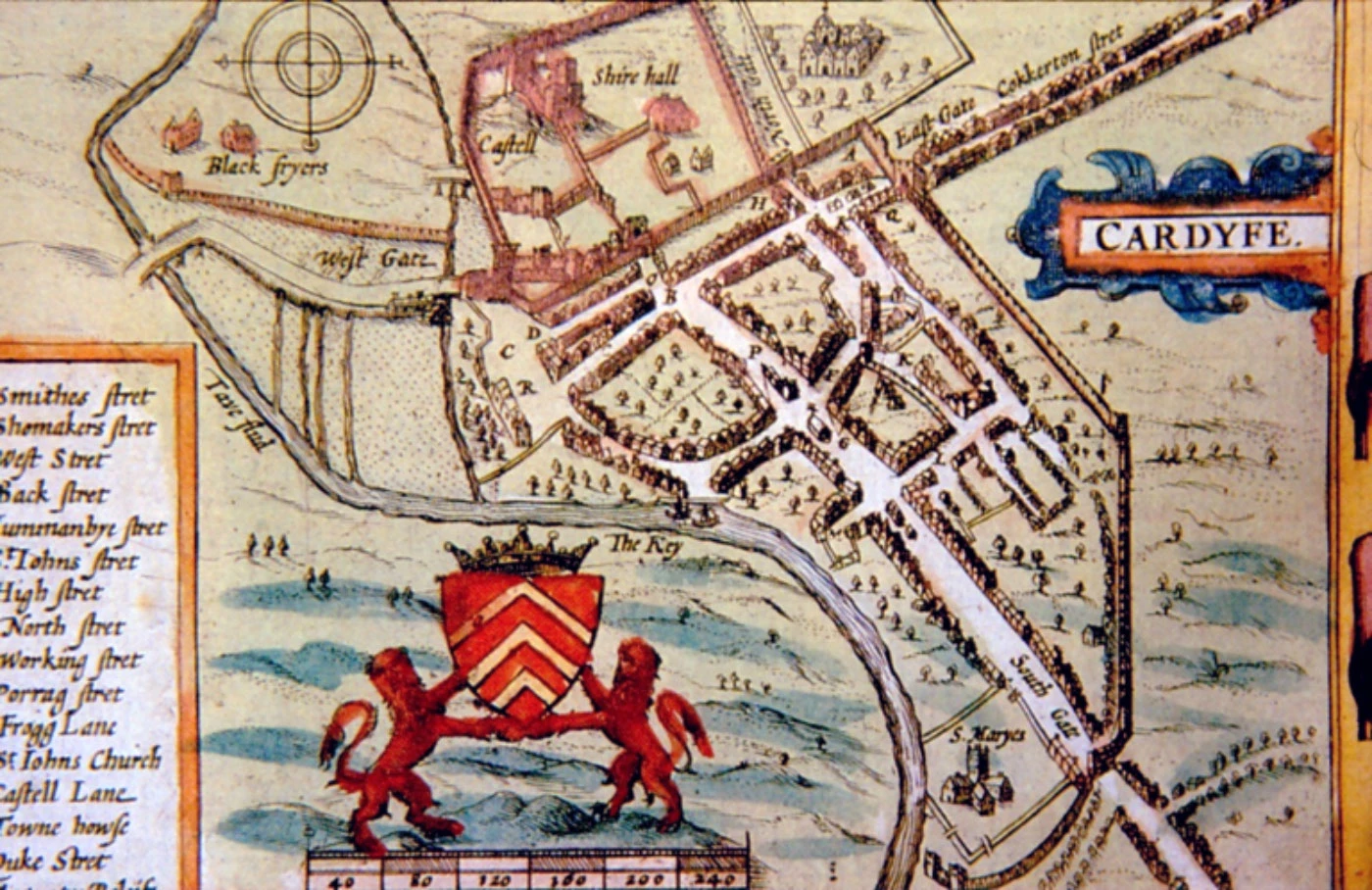
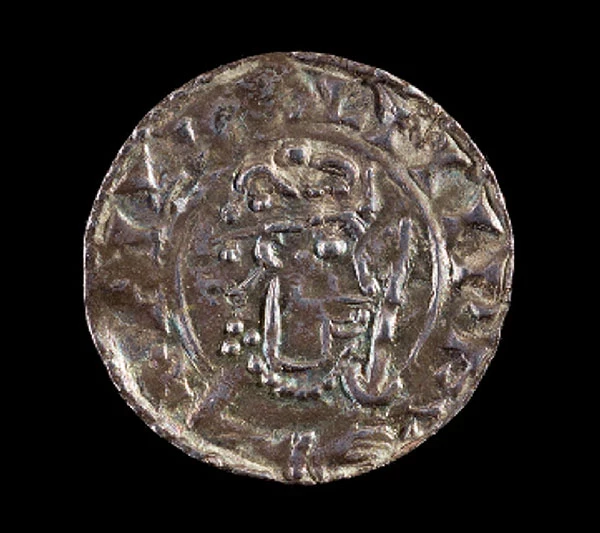
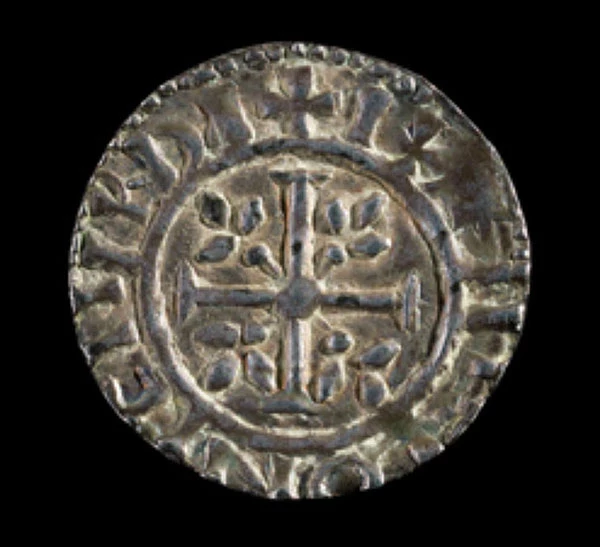
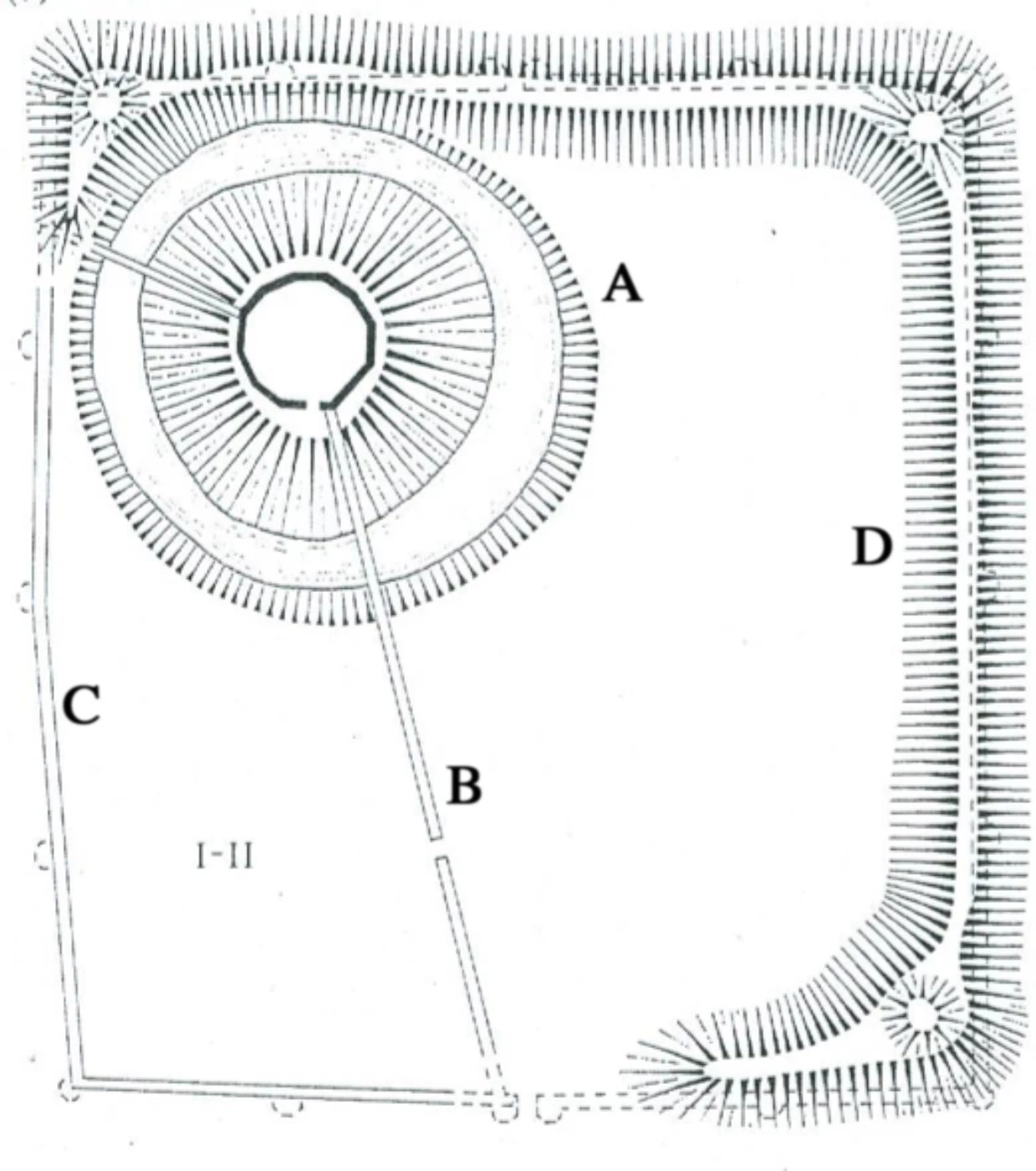
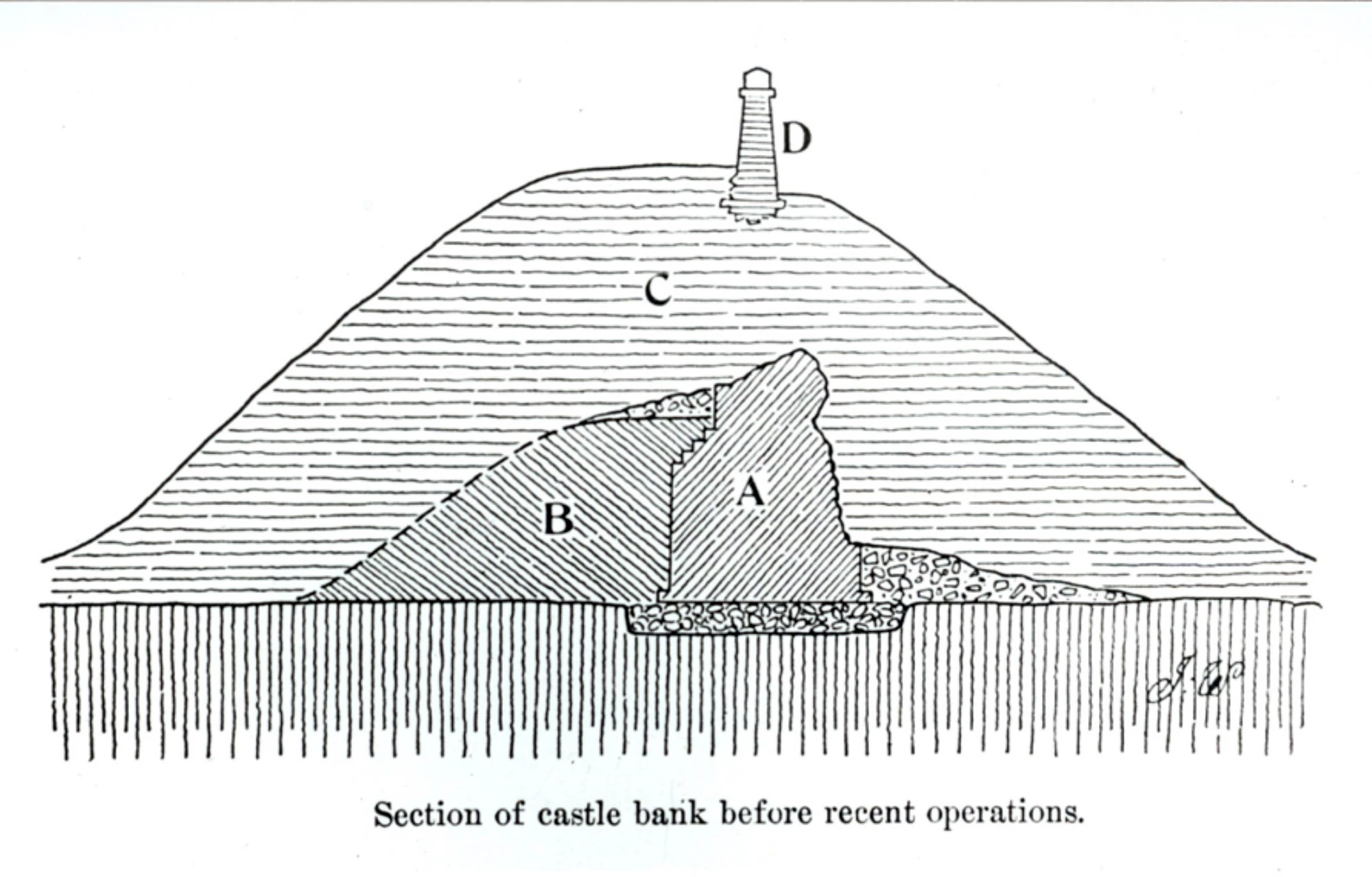
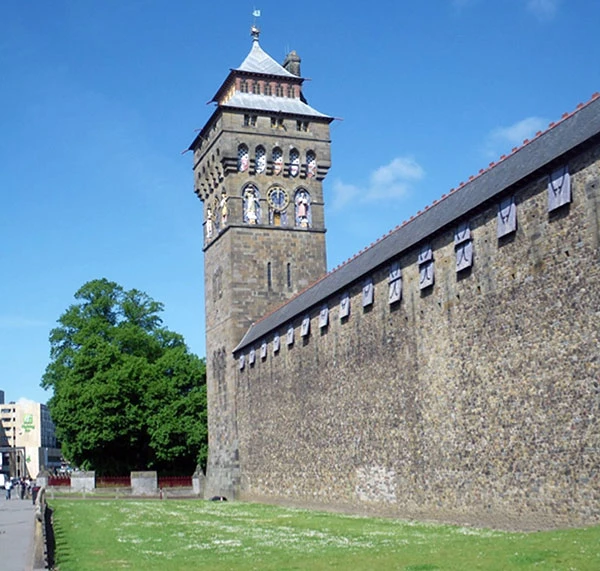
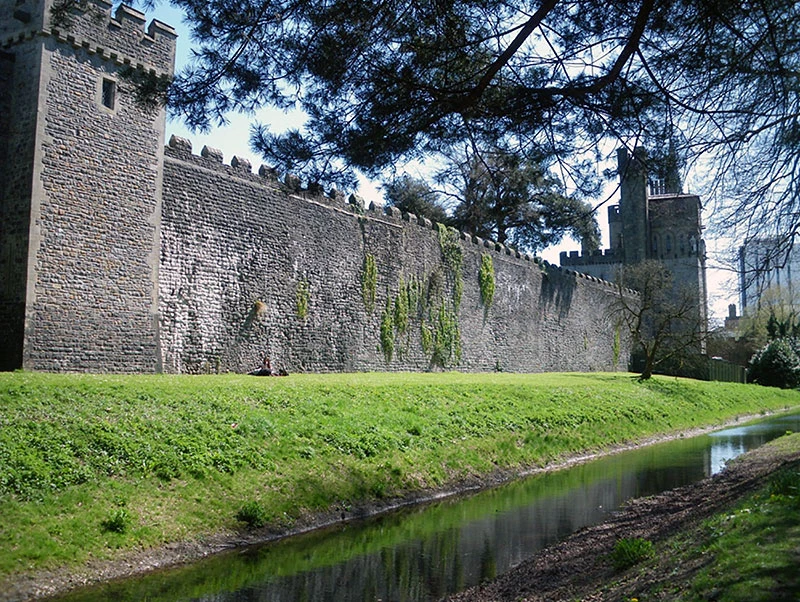
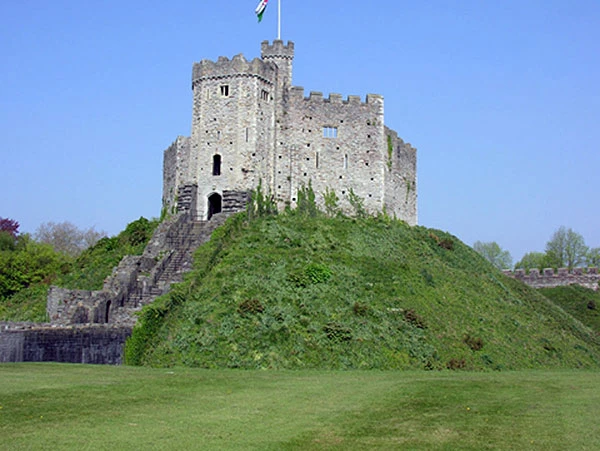
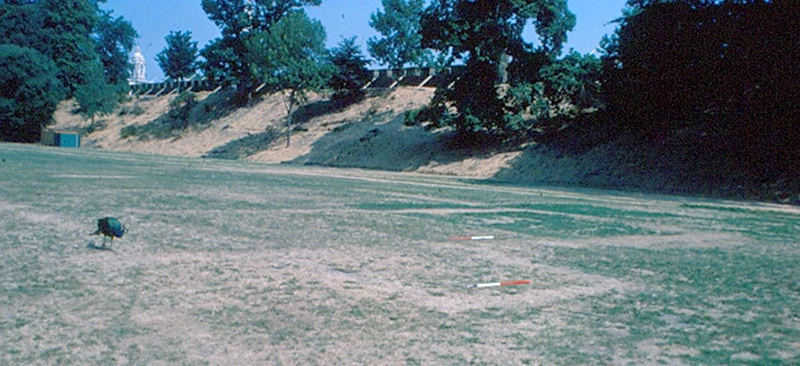
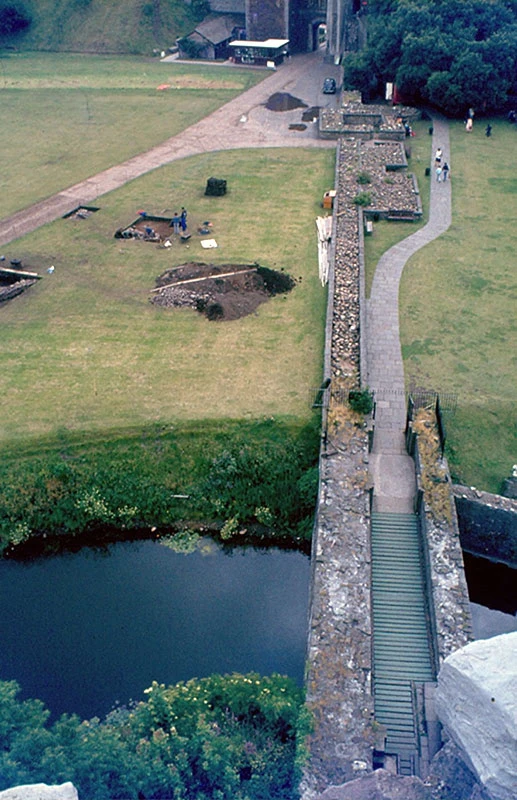
Norman Cardiff and minting coins Edward Besly and Peter Webster, 5 October 2018 Coin of William Rufus - front Coin of William Rufus - reverse Amgueddfa Cymru-National Museum Wales has just acquired a rare piece of Cardiff’s early history: a silver penny of the Norman king William II (1087-1100) made in the castle mint in the early 1090s. The newly acquired coin of William Rufus. William II, known as ‘Rufus’ (‘the Red’, perhaps from his hair colour), was the son of William the Conqueror (also known as ‘the Bastard’). During his reign the Normans made their first incursions into this part of Wales under Robert FitzHamon, a Norman baron who conquered the area and became the first lord of Glamorgan. The Normans brought with them the habit of using coinage and it seems that a mint was set up at the castle soon after its foundation in 1081. However, no coin certainly identified to be of William Rufus from the Cardiff mint had been recorded before this one showed up in 2017, within a private collection which was offered up for auction. Prior to the Norman invasion, coinage was in regular use in Anglo-Saxon England, with a network of mints and a centralised supply for the dies used to make it, but there was no tradition of minting in Wales. Early Norman Cardiff was a frontier town, and so its mint had to fend for itself: the obverse (‘heads’) die seems to have been borrowed from elsewhere and the king’s effigy was re-engraved, giving him a slightly comical appearance. The reverse (‘tails’) was made locally from scratch – it bears a clear, if crudely engraved mint signature ‘CAIRDI’ [CIVRDI or CIIIRDI], but we cannot fully read the moneyer’s name, ‘IÐHINI’ (Ð = ‘TH’) – he may have been called Æthelwine (interestingly, a Saxon rather than a Norman name). The designs of current coins were changed every few years – and the king took a cut every time a new coinage was issued. We now know of coins from four different issues in the name of ‘William’ (which could be either William the Conqueror, or his son William Rufus) and four more for Henry I (1100-35) from the Cardiff mint, but they are all incredibly rare. In the civil war of King Stephen’s reign (1135-54), Cardiff fell into the hands of the Angevin party of his enemy, the Empress Maud. In 1980, a hoard of over 100 coins, mostly previously-unknown Cardiff issues of Maud, was found at Coed-y-Wenallt, above Cardiff, and transformed our knowledge of that period. It included baronial issues from Cardiff and Swansea – which, for the latter, was the earliest evidence of that place-name. After that, however, the Cardiff mint disappears from history. Our new coin of Rufus provides another piece of the jigsaw that is the early history of Cardiff and its region. Many pieces are no doubt still missing, and who knows what may still await discovery? As for the man himself, he died on 2 August 1100, whilst hunting in the New Forest, when struck by an arrow: an unfortunate accident or was he murdered? Edward Besly, Numismatist (Coins and Medals Curator), Amgueddfa Cymru-National Museum Wales. The Norman castle as envisaged by RCAHM. The stone keep is probably later than the reign of William Rufus and would originally have been of wood. Motte surrounded by a ditch Assumed Ward wall Re-used Roman wall probably without projecting towers Earth bank with ditch outside A schematic section through the castle’s earthen defences before the 19th and 20th century removal of the outer portion of the medieval bank and the reconstruction of the Roman Fort wall. Remains of Roman fort wall Roman bank Norman bank Later Medieval castle wall Reconstructed Norman castle wall between the South Gate and the Clock Tower The west castle wall. The stretch between the towers is essentially the wall of the Norman castle. The massive Norman motte, with later medieval stone shell keep. The Medieval bank surviving on the inside of the East walls. The crop mark visible in the foreground is a late medieval building. The stone wall and gateway from the outer to the inner ward, seen here looking from the Keep to the South Gate. This wall probably has its origin in the defences of the Norman castle. Speed’s 1610 map of Cardiff. The coming of the Normans Cardiff today is largely a product of Victorian development, but at the very centre of the city is a historic core originating with the Roman military and later re-occupied by the Normans. There is little or no trace of a settlement at Cardiff between the end of the Roman period and the coming of the Normans into Wales in the 1080s, although there may have been some occupation at the point where the Roman road from Caerleon to Carmarthen crossed the River Taff. When the Normans arrived, this was the point where they chose to site the military and administrative centre for their new lordship of Glamorgan, re-using the remains of the late Roman fort for a castle enclosure and establishing a small town at its southern gate. Reconstructing the Norman castle Norman Cardiff had its focus in the castle, but the castle building we see today is very different to the original one. To get at the Norman castle we have to strip away the 19th and 20th century alterations made by the marquesses of Bute, which had in part involved the restoration of the walls of the late Roman fort. The Normans threw up a massive earth bank over the remains of the Roman fort walls, from a point near the north-west corner of the castle, round onto the sides now fronting Kingsway and Duke Street. The remaining Roman fort walling (from near the present south gate round onto the side now facing into Bute Park) was repaired, although, strangely, the projecting towers which will have formed part of the Roman defences appear to have been removed – perhaps to provide material for the repairs. This Norman wall can still be seen, albeit with a good deal of 19th century restoration, between the south gate and the Clock Tower and north of the western castle apartments. The material for the banks on the north, east and part of the south sides was taken from a massive ditch dug around the entire enclosure. This is now filled in on Kingsway and Castle/Duke Street and underlies the present western moat and northern dock feeder. This ditch can still be glimpsed occasionally when service trenches are opened around the castle, but a clearer idea of its scale can be gained from the evidence of John Ward, curator of the Cardiff Museum and Art Gallery from 1893 to 1912. Ward observed the underground toilets being dug in Kingsway and reported that, although completely below ground, they did not reach the bottom of the ditch. Ward’s schematic diagram of the castle’s earthen bank shows the result of this ditch digging – the sizeable bank still present on the inner side of the castle walls (to the left of the diagram) repeated on the outside. Inside these outer defences, the Normans constructed a massive motte – a mound rather like an inverted pudding basin, surrounded by a large moat. This can still be seen, although the mound received some landscaping by Capability Brown in the late 18th century and the moat (which Brown filled in) was re-excavated in the 19th century and may be more regular than it once was. We can assume that there was some sort of structure on the top of the mound, probably a wooden palisade and tower, likely to have been replaced by the present stone ‘shell-keep’ in the 1240s. The remainder of the castle interior was probably divided as seen now by some sort of wall between the keep and the south gate. A stone wall seems likely but is uncertain. We can expect buildings (probably of wood) within the two ‘wards’ thus created but, to date, no certain structures have been discovered within the limited area excavated. The Norman town. South of the castle lay the small town of Cardiff. The classic view of the medieval town is that created in 1610 by John Speed, which shows a walled enclosure extending south from just east of the south-east corner of the castle to the bottom of what is now St Mary’s Street. This, however, depicts the late medieval town. It is likely that the first Norman town was smaller, probably bordered by the present day Womanby Street, Quay Street, Church Street and St Johns Street (the semi-circle of streets at the northern end of the town as seen on the Speed map). This layout can still be seen in the streets of Cardiff and it is noticeable that the junctions of High Street and St Mary’s Street, and of St John’s Street and Working Street, lie on the suggested early boundary. This, along with much else of the documentary history of Norman and Angevin Cardiff, is discussed by David Crouch (2006). Crouch’s hope that archaeology will add to this picture has so far not been fulfilled. The only excavations within the suggested first town (in Womanby Street and Castle Street), although they confirm Norman occupation, have not yielded structures of such an early date. Indeed, the assiduous digging of cellars by the Victorian residents of Cardiff has unfortunately removed a good deal of the potential evidence. Peter Webster, Honorary Research Fellow, Amgueddfa Cymru – National Museum Wales (former lecturer, Cardiff University) Further Reading Cardiff Castle The medieval castle is treated extensively in RCAHMW, An inventory of the ancient monuments in Glamorgan, Vol. III, Part 1a, Medieval Secular Monuments, the early castles from the Norman conquest to 1217, London 1991, 162-211, which, despite the title, takes the castle story up to the 20th century. Further background to the restoration of the Marquesses of Bute is provided by J. P. Grant, architect to the 4th Marquess (Cardiff Castle, its history and architecture, Cardiff 1923). The Town The best discussion of Norman Cardiff is David Crouch. ‘Cardiff before 1300’ pp.34-41 in J.R.Kenyon, D.M.Williams (Eds.), Cardiff. Architecture and Archaeology in the Medieval Diocese of Llandaff, British Archaeological Association Conference Transactions 29, London 2006. This includes references to earlier work by W.Rees (1962) and D.Walker (1978).
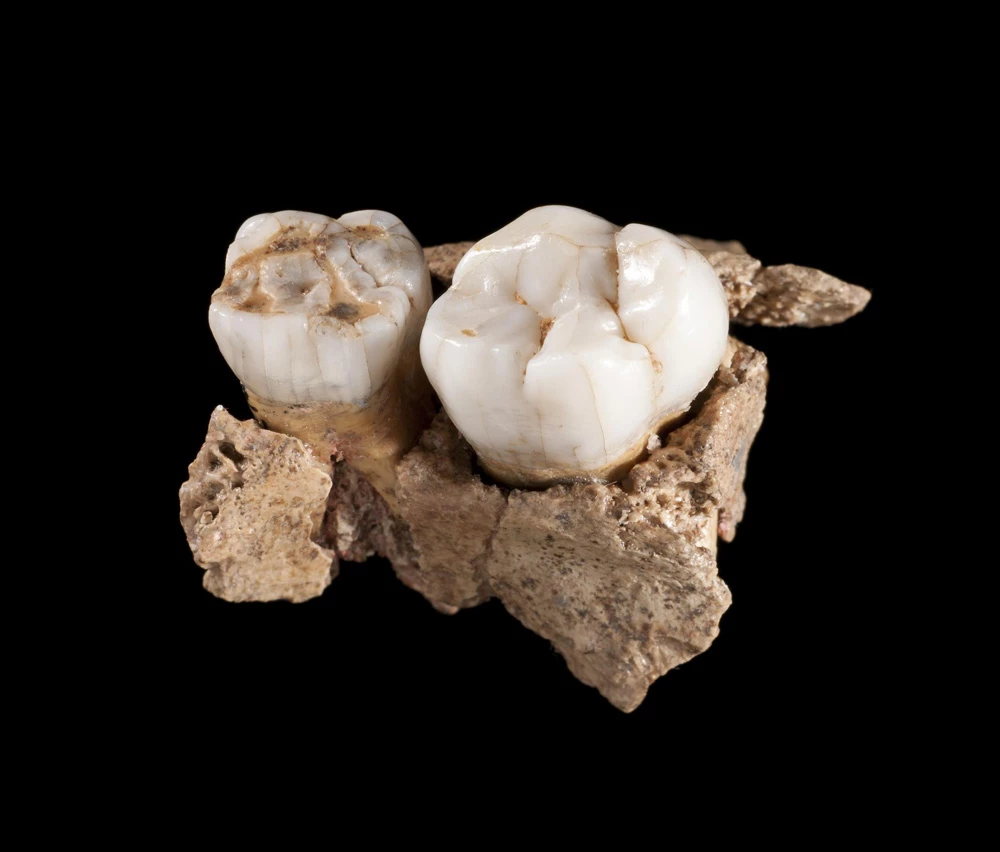
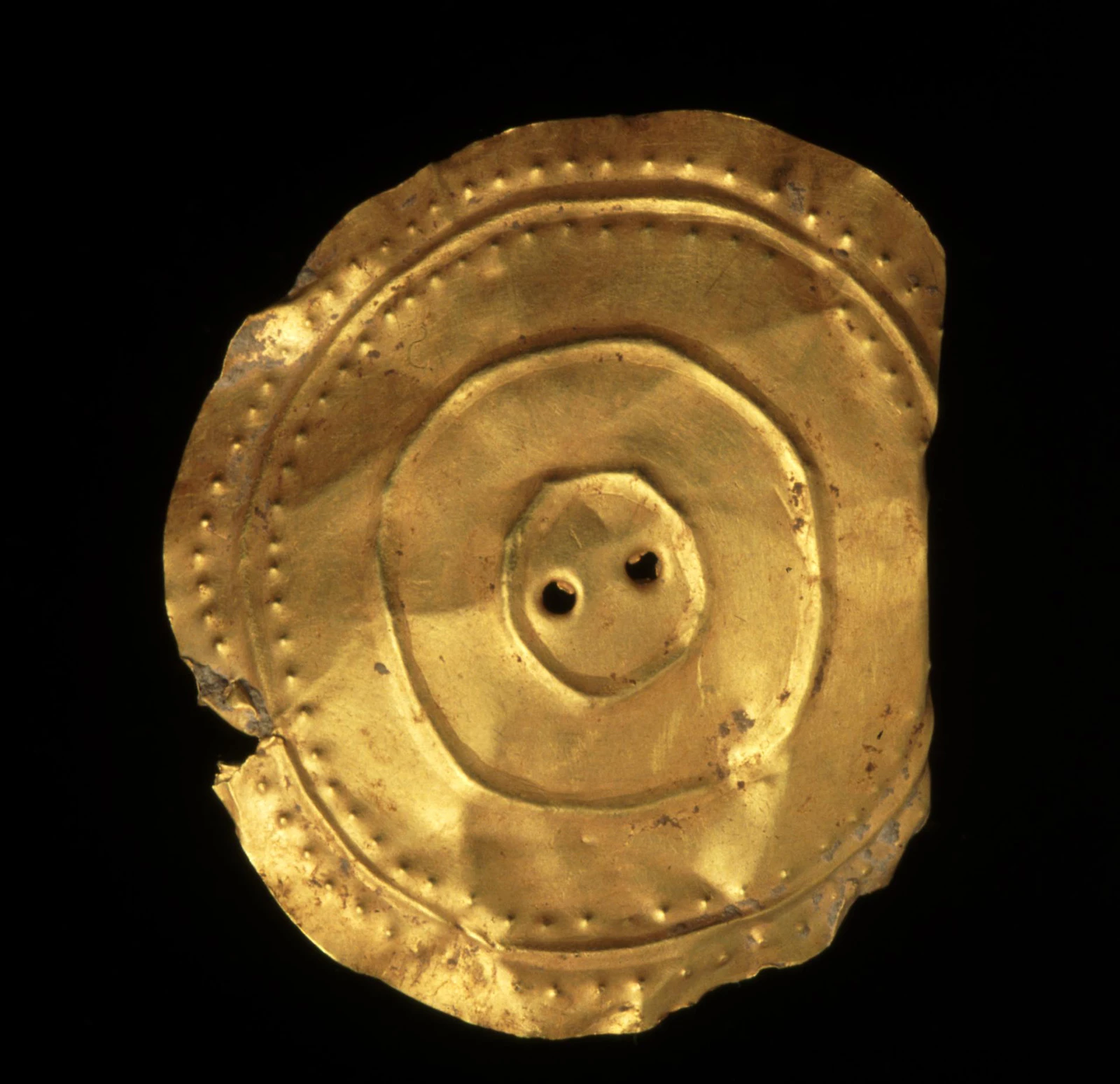
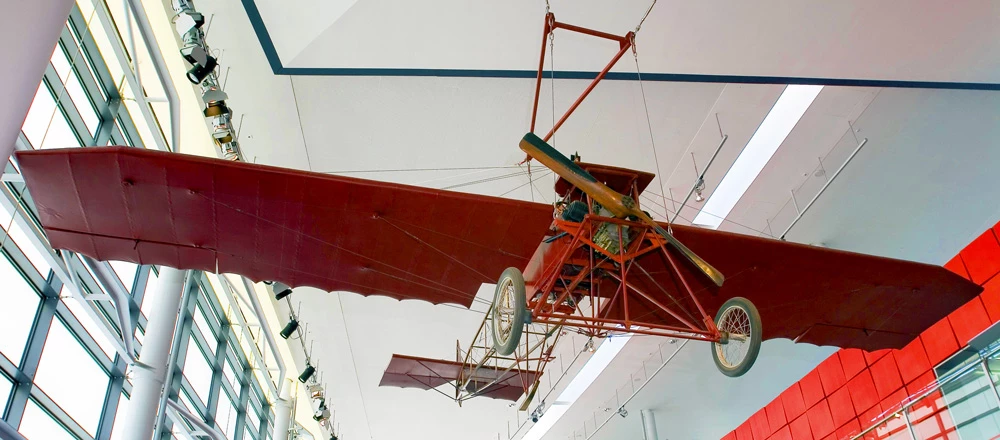
Uncovering our Collections: Half a Million Records now Online 26 March 2018 As we reveal half a million collection records for the first time, we look at some of the strangest and most fascinating objects from National Museum Wales Collections Online. This article contains photos of human skeletal fragments. The Biggest We have some real whoppers in our collections - including a full-size Cardiff Tram and a sea rescue helicopter - but the biggest item in our collection is actually Oakdale Workmen's Institute. Built in 1917, the Institute features a billiard room, dance hall and library - and is nowadays found in St Fagans National Museum of History. Horace Watkins testing his monoplane in 1908 Many of the buildings in St Fagans are part of the national collection - meaning they have the same legal status as one of our masterpiece Monets or this coin hoard. The buildings are dismantled, moved, rebuilt - and cared for using traditional techniques, by the museum's legendary Historic Buildings Unit. The Oldest The oldest human remains ever discovered in Wales These teeth belonged to an eight year-old Neanderthal boy - and at 230,000 years old, they are the oldest human remains in Wales. They were discovered in a cave near Cefn Meiriadog in Denbighshire, along with a trove of other prehistoric finds, including stone tools and the remains of a bear, a lion, a leopard and a rhinocerous tooth. These teeth are among some of the incredible objects on display at St Fagans National Museum of History The Shiniest People in Wales have been making, trading and wearing beautiful treasures from gold for thousands of years - like this Bronze Age hair ornament and this extremely blingy Medieval signet. At around 4000 years old, this sun disc is one of the earliest and rarest examples of Welsh bling One of the earliest examples of Welsh bling is this so-called 'sun disc', found near Cwmystwyth in Ceredigion. Current research suggests that these 'sun discs' were part of ancient funeral practice, most likely sewn onto the clothes of the dead before their funerals. Only six have ever been found in the UK. Most Controversial At first glance, an ordinary Chapel tea service - used by congregations as they enjoyed a 'paned o de' after a service. A closer look reveals the words - 'Capel Celyn'. The chapel, its graveyard and surrounding village are now under water. Capel Celyn, in the Tryweryn Valley, is now underwater Flooded in 1965 by the Liverpool Corporation, the Tryweryn valley became a flashpoint for Welsh political activism - creating a new generation of campaigners who pushed for change in how Welsh communities were treated by government and corporations. Curators from St Fagans collected these as an example of life in Capel Celyn - to serve as a poignant reminder of a displaced community, and to commemorate one of the most politically charged moments of the 20th century in Wales. Honourable Mention: an Airplane made from a Dining Room Chair Made from a dining room chair, piano wire and a 40 horsepower engine, the Robin Goch (Red Robin) was built in 1909 - and also features a fuel gauge made from an egg timer. The Robin Goch (Red Robin) on display at the National Waterfront Museum Its builder, Horace Watkins, was the son of a Cardiff printer - here he is pictured with an earlier, even more rickety version of his famous monoplane. Horace Watkins testing his monoplane in 1908 Our collections are full of stories which reflect Wales' unique character and history. The Robin Goch is one of the treasures of the collection, and is an example of Welsh ingenuity at its best. Half a Million Searchable Items The launch of Collections Online uncovers half a million records, which are now searchable online for the first time. “Collections Online represents a huge milestone in our work, to bring more of our collections online and to reach the widest possible audience. It’s also just the beginning. It’s exciting to think how people in Wales and beyond will explore these objects, form connections, build stories around them, and add to our store of knowledge." – Chris Owen, Web Manager Search Collections Online Plans for the future Our next project will be to work through these 500,000 records, adding information and images as we go. We'll be measuring how people use the collections, to see which objects provoke debate or are popular with our visitors. That way, we can work out what items to photograph next, or which items to consider for display in our seven national museums. Preparing and photographing the collections can take time, as some items are very fragile and sensitive to light. If you would like to support us as we bring the nation's collections online, please donate today - every donation counts. Donate Today We are incredibly grateful to the People's Postcode Lottery for their support in making this collection available online.
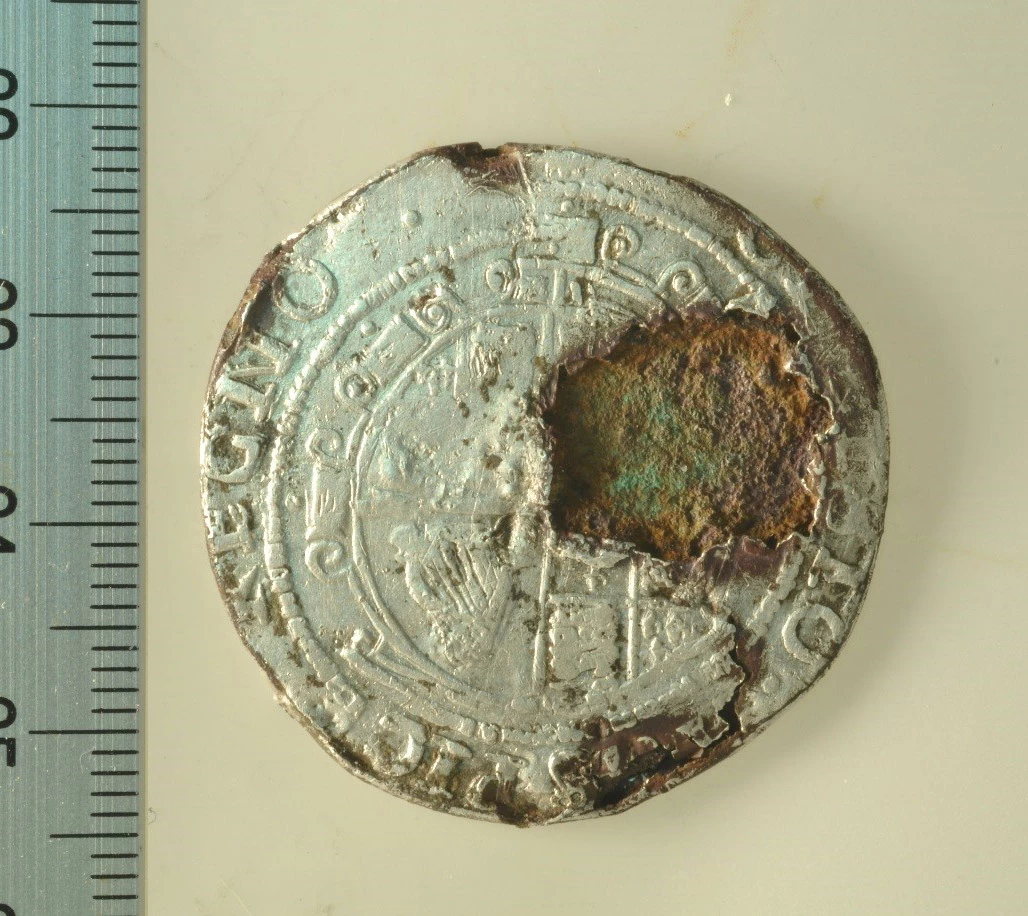
Counterfeit Coins Rhianydd Biebrach, 16 March 2017 The last execution for forgery took place in 1830 and Victorian forgers were punished by transportation, imprisonment and hard labour. The punishment for counterfeiting today is several years’ imprisonment. Have you ever been guilty of passing fake coins? A forged Charles I half-crown. The corroded base metal core can clearly be seen through the thin silver plating. Your answer will hopefully be, “no, of course not!”, but would you be able to spot one if you saw one? According to the Royal Mint, just over 2.5% of the £1 coins circulating in 2015 were counterfeit, so how many of us have unwittingly broken the law by handling fake money? But far from being a modern problem, you may be surprised to learn that counterfeit coins have been causing headaches for the authorities for thousands of years – for as long as we have been using money, in fact. Occasionally, metal detectorists who unearth coins and report them to the Portable Antiquities Scheme in Wales (PAS Cymru), are told that what they have found is not what it seems to be – it is in fact a fake. In 2015, out of 679 coins reported, seven were judged by experts at Amgueddfa Cymru-National Museum Wales to be contemporary counterfeits. Many more were described as ‘irregular’ and therefore also produced under suspicious circumstances. One of the fakes was a Charles I half crown, discovered by Mr Nick Mensikov at Miskin, Rhondda Cynon Taf. A half crown is a silver coin, but Mr Mensikov’s example gave itself away as a fake because corrosion revealed it to have only a thin coating of silver over a copper alloy core. In ‘mint’ condition it would have looked sound enough to the untrained eye, but its real value would have been well below the two shillings and sixpence (or one-eighth of a pound) that the half crown represented. Twelve fake coins from the reign of Charles I found in Wales have been reported to PAS Cymru since 2009, far outweighing those of any other monarch, but the great majority are much older than this and date from the period of Roman occupation, from the first to the early fifth century AD. One of these Charles I half-crowns is also a fake. Can you tell which one? Who made counterfeits, and why? Counterfeit coins were made for several reasons in the past. Sometimes, when supplies of the smaller denomination coins were inadequate, unofficial production took place to make up the shortfall. In Roman Britain this happened to such an extent that at some periods there may have been as many fake coins in circulation as real ones. After Claudius’s invasion in AD 43 the Roman army itself may have been responsible for much of this ‘irregular’ coinage, which was sometimes tolerated by governments as being something of a necessary evil. In other cases, people forged coins purely and simply for monetary gain. Of course, this was not an easy process. It required access to supplies of metals, a furnace or crucible, and various other bits and pieces of equipment, including dies or moulds on which had been engraved a passable copy of the coin to be reproduced. This meant that forgery operations generally involved more than one person, as well as some initial financial outlay, and so they were not the last resort of a poor man or woman with no other way of getting cash. Some ‘coiners’, as forgers were sometimes called, were already wealthy individuals. In 1603 a coining operation was uncovered at Duncannon Fort in Ireland. Moulds, pieces of brass, crucibles, as well as chemicals and charcoal, were discovered in the desk of the fort’s commander, Sir John Brockett. Sir John had been producing counterfeit English and Spanish coins, for which he was put on trial for treason. Some forgeries were never intended for use as cash, however. As early as the sixteenth century antiquaries and collectors began to be interested in old coins, and consequently some unscrupulous individuals went into business supplying fakes to tempt the unsuspecting or naïve. In early Victorian London, one Edward Emery was responsible for passing a possible 5-700 fake medieval and Tudor coins onto the collectors’ market. Roman coins were also highly collectable, and a modern era replica of one was found by a Mr Rogers in Usk in 2007. Made of a white base metal alloy designed to look like silver, was it thrown away in disgust by its owner when he realised what he had bought? How were counterfeit coins made? There were two main methods of producing fake coins – striking them from stolen or forged dies, or casting them in moulds. A coining operation in Ireland in 1601 used metal and chalk dies to strike the coins, which were made of an alloy which included enough tin to create the necessary silver colour, although the coins, of course, contained no precious metal. This was obviously a noisy activity and so coining dens were often located either in busy areas such as town centres where the noise and activity would be masked by the hustle and bustle of the streets, or in out-of-the-way places where people were unlikely to go. The latter option was chosen by the Roman forgers at work in the lead mine at Draethen, near Caerphilly. Discovered here were coins, the ‘flans’, or blanks, from which the false coins were struck, as well as the metal rods from which the flans were cut. These items were found around a hearth, and we can only guess at the hot, unpleasant and dangerous atmosphere that this subterranean forging operation would have created. Casting was a different process, but it still required access to a powerful heat source as molten metal was required. An impression of both sides of a genuine coin was made in clay, wax or ashes. The hardened moulds were then fixed together and filled with molten metal alloy. Some cast coins are given away by the tell-tale remains of the channel through which the metal was poured and which wasn’t properly broken off or filed down. There has been plenty of evidence for this forging method from Roman London, consisting of both the cast coins themselves (often in a silvery-looking alloy of bronze and tin) as well as hundreds of moulds. The appearance of precious metal necessary to pass off a fake coin was not only achieved by cunning uses of alloys (some of which included arsenic for a whitening effect!). Some coins – like the Charles I half-crown mentioned earlier – were made from base metals which were then plated with a thin coating of silver or gold to achieve the desired effect. Medieval forgeries often used a technique called fire gilding. A base metal blank was rubbed with a mixture of gold and mercury which was then heated. The mercury was evaporated and the gold was bonded to the surface. The coin could then be struck between the dies. This process obviously required some technical skill, and there is evidence that forgers were experimenting with methods that would later be used for more legitimate purposes. A counterfeit coin of William III (1689–1702) was found to have been made by an early example of the Sheffield plating technique. A copper plate was rolled or hammered between two thin sheets of silver from which blank coins were then cut out. The edges were covered with a copper and silver alloy and the blanks were then struck with official dies smuggled out of the London mint. The gold and silver necessary for the plating were sourced by clipping real coins (an offence in itself) as well as melting down pieces of plate or other coins. Punishments The severity of the punishments for counterfeiting have reflected both the seriousness of the crime but also the difficulty of detecting those responsible. Like many penalties of the pre-modern era, they were physical in nature. In ancient Rome it was a capital offence, equated with treason, and could be punished by banishment or slavery if you were lucky, or crucifixion if you weren’t. In the early 4th century, Emperor Constantine – who is more famous for making Christianity the official religion of the Roman Empire – introduced burning for forgers. In 10th-century England, under King Athelstan (927–939), the forger would lose a hand, but one of his Norman successors, Henry I (1100–1135), went one better. Suspecting his official mint workers of producing irregular coinage on the side and unhappy with the standard of the regular issues, he summoned them to a Christmas gathering at Winchester where he took the right hand and both testicles from each of them. Under Edward I and later kings, death by hanging was the usual punishment for men, with burning and strangulation reserved for women. Three unfortunate 16th century Edinburgh women suffered this appalling punishment, while in 1560 Robert Jacke, a Dundee merchant, was hanged and quartered merely for importing forgeries. Nineteen executions for counterfeiting took place in 1697 when Sir Isaac Newton was Warden of the Royal Mint.