National Coal Board
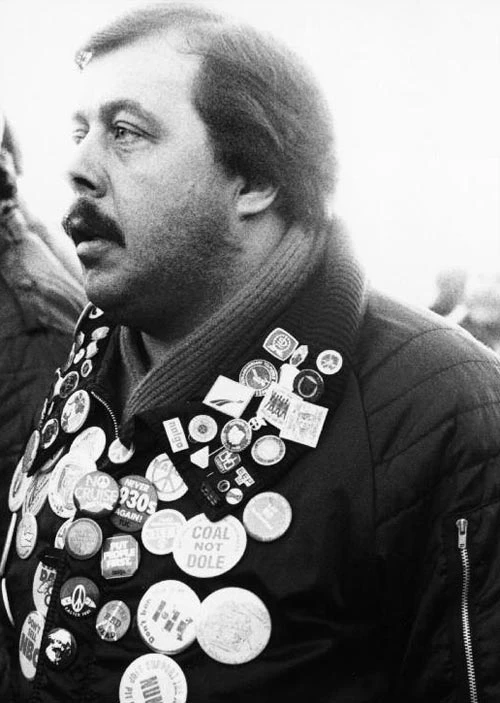
On 1 March 1984 the National Coal Board announced that it planned to close 20 coal mines with the loss of 20,000 jobs. The year-long strike that followed changed the political, economic and social history of Wales forever.
"The miners in south Wales are saying — we are not accepting the dereliction of our mining valleys, we are not allowing our children to go immediately from school into the dole queue — it is time we fought!"
Emlyn Williams, President, NUM, South Wales Area
Picketing and demonstrations
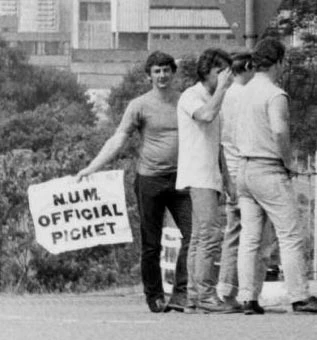
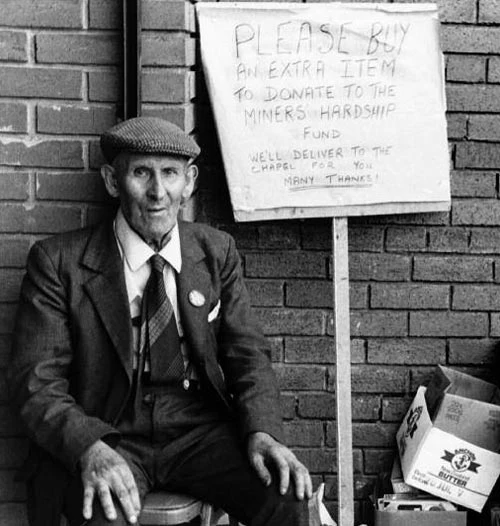
The majority of Welsh miners initially voted against a strike but later played a major part in picketing and demonstrations. Miners' wives rose to the challenge of supporting their men by raising funds and organizing food distribution, but were also active on picket lines and marches.
Although Wales did not suffer the picket line violence seen in some other British coalfields, Welsh miners were killed on picket duty and carrying out colliery safety work and a taxi driver was killed as he took a strike-breaker to work.
"We had to fight the enemy without in the Falklands, but we always have to be aware of the enemy within, which is much more difficult to fight and more dangerous to liberty."
Margaret Thatcher, Prime Minister
Collecting stories
There were rights and wrongs on both sides of the dispute and great pains have been taken to try to collect stories from each side. The passions aroused by the strike have made this a difficult task, for even now some participants are reluctant to allow their stories to be told.
This, and the fact that the majority of the stories were collected from Wales, where only a small percentage of the workforce returned to work during the strike, makes it inevitable that one view should seem to predominate. If stories had been collected elsewhere it is quite possible that the opposite view would dominate.
An objective and balanced history of the miners strike will one day be written but the pages that follow present the stories of some of the men and women whose lives were touched by what today has simply become known as... The Strike.
This article forms part of a booklet in the series 'Glo' produced by Big Pit: National Mining Museum. You can download the booklet here