: Heroes & Disasters

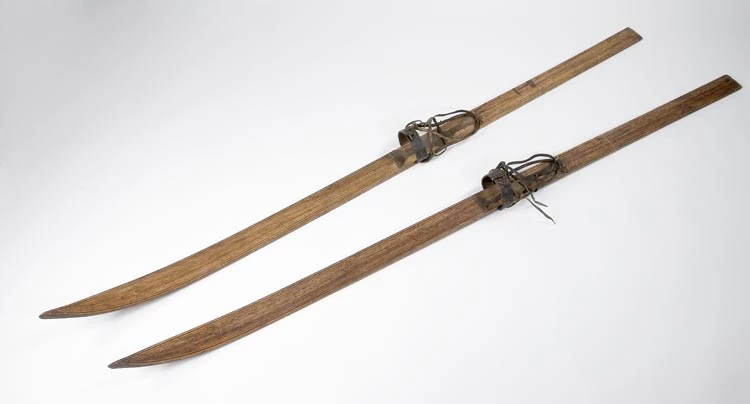
Skis from Scott's British Antarctic (Terra Nova) Expedition 1910-13

19 April 2012

Skis from Scott's British Antarctic (Terra Nova) Expedition 1910-13

Skis from Scott's British Antarctic (Terra Nova) Expedition 1910-13

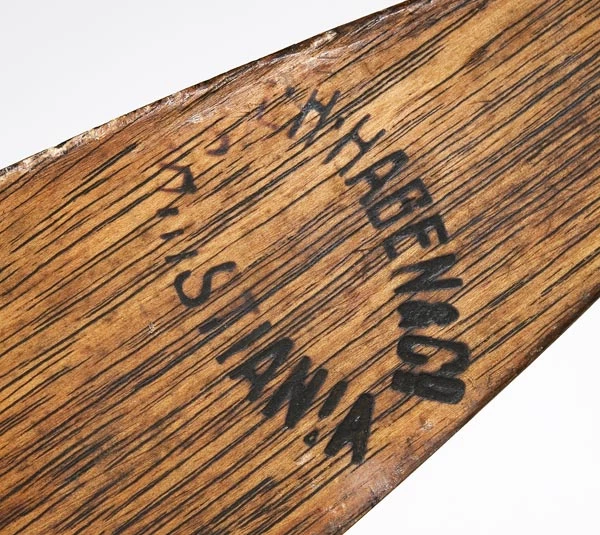
The mark of L.H. Hagen & Co., Christiania, on the base of each ski.

The mark of L.H. Hagen & Co., Christiania, on the base of each ski.

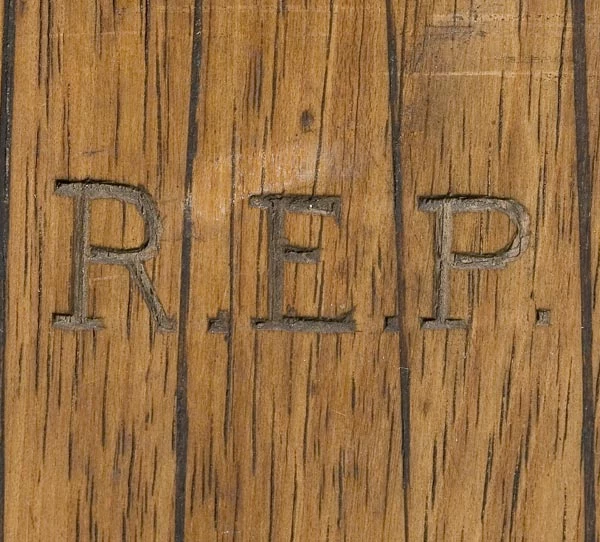
The initials of Raymond Edward Priestley are carved into each ski.

The initials of Raymond Edward Priestley are carved into each ski.

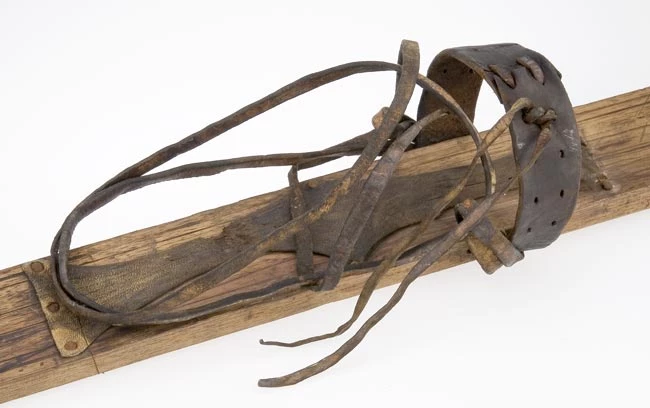
The leather binding used on the skis.

The leather binding used on the skis.

Amgueddfa Cymru has in its collections a pair of long wooden skis. Each bears the mark 'L.H. Hagen & Co Christiania' on the base and the initials 'R.E.P' carved into the top. These skis were used by Raymond Edward Priestley (1886-1974), a geologist on Scott's British Antarctic expedition of 1910-13

While preparing for his second expedition to the Antarctic, Captain Robert Falcon Scott visited Norway in March 1910 for the field trials of his motorized sledges. In Oslo, then called Christiania, Scott purchased fifty pairs of skis from L.H. Hagen & Co and, through the famous Arctic explorer Fridtjof Nansen, he was introduced to Tryggve Gran, a young Norwegian ski expert. At the trials of the motor sledges at Fefor, a ski resort north of Oslo, Scott was impressed by Gran's skiing and invited him to join the expedition as ski instructor.

The colour and grain pattern of the wood suggest that the skis are made from hickory. Each ski is a single piece of wood which has been steam-bent into shape with the tip of the ski hand-carved. Several different types of ski and ski binding were used by members of Scott's expedition.

Priestley's skis have a simple leather lap thong binding. The footplate of the binding is made of reindeer skin, with many of the hairs of the fur still surviving. This footplate was originally a rectangular piece of fur which has shrunk and distorted to its present shape.

The shrinkage and dehydration of the leather and fur on the skis will have been accelerated by the salty environments to which the skis have been exposed, such as on the voyage from Norway to Cardiff and eventually to Antarctica and back. Dissolved salts in the Antarctic sea ice are also likely to have been absorbed by the leather.

On the base of each ski is a black residue. This is the remains of the wax applied to the base to improve the glide of the ski on the snow. Applying a wax to the skis was something Gran brought to the expedition and probably contributed to the more successful use of skis on the Terra Nova expedition compared with their use on Scott's earlier Discovery expedition.

Article by: Tom Sharpe, and Megan deSilva.

Acknowledgements: Heather Lane, Scott Polar Research Institute, University of Cambridge; Lizzie Meek, Antarctic Heritage Trust.
Revolting women

Andrew Deathe, 23 May 2011

The battle for the right to vote

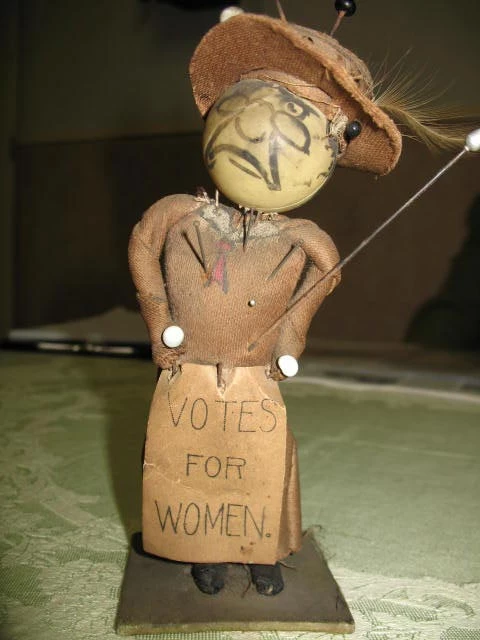
Anti-suffragette 'voodoo' doll

This anti-suffragette 'voodoo' doll is an unflattering and grotesque caricature of a suffrage campaigner. The anti-suffrage movement used images such as this in cartoons and posters to ridicule and insult women who wanted the right to vote.

Like many people around the world, women in Britain had to fight for the right to vote. Today we take this privilege for granted but it was not always the case.

During the late 19th and early 20th centuries the women's suffrage movement fought for the right for women to vote in General Elections.

These mainly female campaigners were known as Suffragettes or Suffragists. There have been many books written about them. What has received less attention however is the existence of an anti-suffrage movement, which sought to prevent women from getting the vote.

Objectors to votes for women tried to convince people that the female mind was unable to understand politics. When they failed in this they resorted to tactics such as sending this 'voodoo doll'. Some of them went as far as attacking or spitting on women activists in the streets.

The doll is an unflattering and grotesque caricature of a suffrage campaigner. The anti-suffrage movement used images such as this in cartoons and posters. They ridiculed and insulted women who wanted the right to vote.

These views were an extension of the idea that 'a woman's place is in the home'. Women were frequently shown as needing protection from the 'man's world' of work and politics. Their role was to look after their husbands, homes and children.

During the First World War the role of women in society changed. While men were away fighting, women took on many of their jobs. They were able to disprove the stereotype of being the weaker sex and prove their equality to men. This gave them another strong argument for having the vote.

Despite the strength of opposition shown in this doll, hundreds of thousands of women in Wales were eventually empowered to express their political views at the ballot box. It is due to the commitment of the suffrage movement that every British adult has the right to use their vote in elections.

View this item in 3D on the People's Collection Wales

The Guardian of the Valleys

20 May 2011

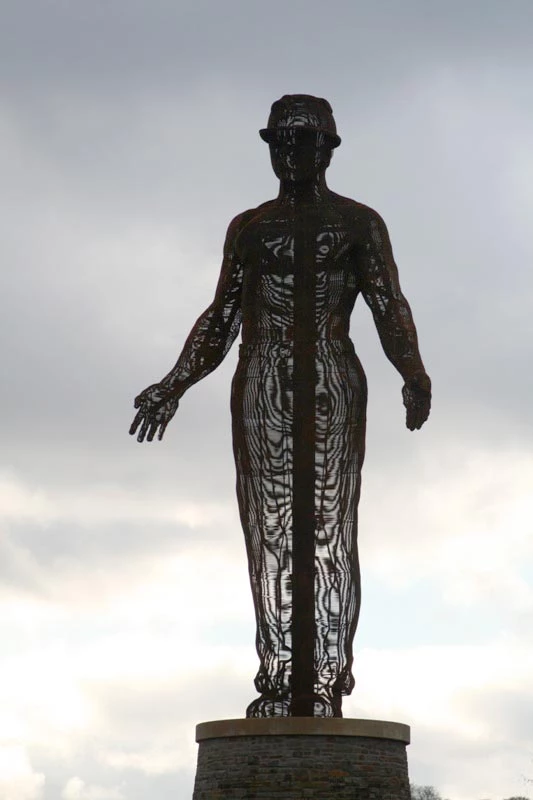
Guardian of the Valleys

Six Bells Disaster

In the summer of 1960, the community of Six Bells near Abertillery, south Wales witnessed a disaster that would haunt them for the rest of their lives.

On June 28th an underground explosion at 'Arrael Griffin' colliery led to the deaths of 45 miners, all local men - fathers, sons, husbands, brothers.

Fifty years later, to the day, after tireless work by the community and local organisations, a steel sculpture by Sebastien Boyesen, over 60ft high, was dedicated to those who died.

The name of each man who perished is engraved on its plinth. It was not possible to attach the outstretched arms for the opening ceremony due to safety concerns, but the statue was complete by the 28th July.

Guardian of the Valleys

This short film, by Alun Jones and Ian Smith, records the commemorative event and the dedication of the 'Guardian of the Valleys' who now stands proud, in memory of not just the Six Bells miners, but miners everywhere.

Children in Mines

11 April 2011

Children in mines

All alone in the dark

Mary Davis was a 'pretty little girl' of six years old. The Government Inspector found her fast asleep against a large stone underground in the Plymouth Mines, Merthyr. After being wakened she said: "I went to sleep because my lamp had gone out for want of oil. I was frightened for someone had stolen my bread and cheese. I think it was the rats."

Susan Reece, also six years of age and a door keeper in the same colliery said: "I have been below six or eight months and I don't like it much. I come here at six in the morning and leave at six at night. When my lamp goes out, or I am hungry, I run home. I haven't been hurt yet."

In Harm's Way

A coal mine was a dangerous place for adults, so it is no surprise that many children were badly injured underground.

"Nearly a year ago there was an accident and most of us were burned. I was carried home by a man. It hurt very much because the skin was burnt off my face. I couldn't work for six months."

Phillip Phillips, aged 9, Plymouth Mines, Merthyr

"I got my head crushed a short time since by a piece of roof falling..."

William Skidmore, aged 8, Buttery Hatch Colliery, Mynydd Islwyn

"...got my legs crushed some time since, which threw me off work some weeks."

John Reece, aged 14, Hengoed Colliery

Child Colliers and Horse Drivers

Some children spent up to twelve hours on their own. However, Susan Reece's brother, John, worked alongside his father on the coalface:-

"I help my father and I have been working here for twelve months. I carry his tools for him and fill the drams with the coal he has cut or blasted down. I went to school for a few days and learned my a.b.c." John Reece, aged 8, Plymouth Mines, Merthyr

Philip Davies had a horse for company. He was pale and undernourished in appearance. His clothing was worn and ragged. He could not read:-

"I have been driving horses since I was seven but for one year before that I looked after an air door. I would like to go to school but I am too tired as I work for twelve hours." Philip Davies, aged 10, Dinas Colliery, Rhondda

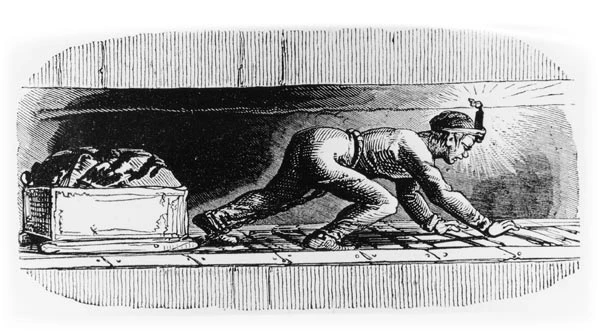
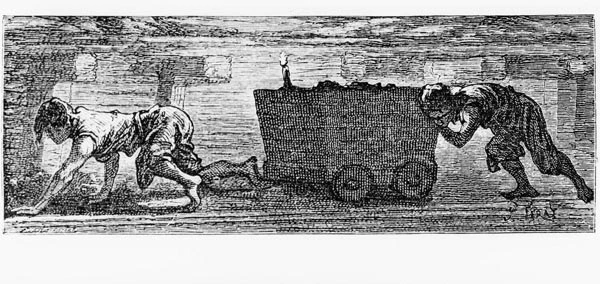
Drammers pulled their carts by a chain attached at their waist. They worked in the low tunnels between the coalfaces and the higher main roadways where horses might be used. The carts weighed about 1½cwt. of coal and had to be dragged a distance of about 50 yards in a height of about 3 feet.

"My employment is to cart coals from the head to the main road; the distance is 60 yards; there are no wheels to the carts; I push them before me; sometimes I drag them, as the cart sometimes is pulled on us, and we get crushed often."

Edward Edwards, aged 9, Yskyn Colliery, Briton Ferry

For this a drammer would earn about 5p a day.

Three Sisters

The Dowlais iron works also owned iron and coal mines; they were the largest in the world at this time and supplied products to many parts of the world. However, they still relied on children for their profits. Three sisters worked in one of their coal mines:-

"We are doorkeepers in the four-foot level. We leave the house before six each morning and are in the level until seven o’clock and sometimes later. We get 2p a day and our light costs us 2½p a week. Rachel was in a day school and she can read a little. She was run over by a dram a while ago and was home ill a long time, but she has got over it."

Elizabeth Williams, aged 10 and Mary and Rachel Enoch, 11 and 12 respectively, Dowlais Pits, Merthyr

After the Act

The publication of the Report and the ensuing public outcry made legislation inevitable. The Coal Mines Regulation Act was finally passed on 4 August 1842. From 1 March 1843 it became illegal for women or any child under the age of ten to work underground in Britain.

There was no compensation for those made unemployed which caused much hardship. However, evasion of the Act was easy - there was only one inspector to cover the whole of Britain and he had to give prior notice before visiting collieries. Therefore many women probably carried on working illegally for several years, their presence only being revealed when they were killed or injured.

The concept of women as wage earners became less acceptable in the mining industry as the years went by. However, a small number of female surface workers could be found in Wales well into the twentieth century. In 1990 the protective legacy was repealed and after 150 years women are once again able to work underground.

Autographs from Captain Scott’s 1910 Antarctic Expedition.

12 November 2010

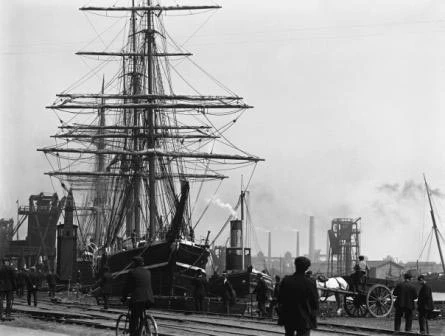
The Terra Nova loading in Bute East Dock, Cardiff, June 1910

The Terra Nova loading in Bute East Dock, Cardiff, June 1910

Scott’s 1910-13 British Antarctic Expedition

Scott’s 1910-13 British Antarctic Expedition captured the imagination of the British public, most especially when the expedition ship, the Terra Nova, returned to Cardiff from the South without Scott and four of his companions. The autographs of the expedition members were much sought after.

In the collections of Amgueddfa Cymru there are three items, two dating from the start of the expedition and one from the end, together bearing the signatures of 27 of the officers, scientists and crew of Scott’s expedition. Amongst them are the signatures of Scott, Wilson, Bowers and Oates who died on the return march from the South Pole. Notably absent on the documents from the start of the expedition is the signature of Welshman Edgar Evans from Rhossili on Gower who was the first to die on the return from the South Pole; he was merely a Petty Officer.

Sailing towards Antarctica, June 1910

Sailing towards Antarctica, June 1910

Setting off from Cardiff

Accompanying a photograph of the Terra Nova and the ship’s and other officers are the signatures of:

  • E. L. Atkinson
    Surgeon Edward Leicester Atkinson, RN (1881-1929). Main Party Surgeon and parasitologist. Atkinson led the search party which found the bodies of Scott, Wilson and Bowers in November 1912.
  • W. W. Archer
    W.W. Archer, RN (Retired).  Chief Steward, Shore Party.
  • G. Murray Levick
    Surgeon George Murray Levick, RN (1877-1956). Surgeon on the Northern Party of the expedition, surviving for seven months through the winter in an ice cave. He studied the Adélie Penguin colony at Cape Adare and later wrote a book on Antarctic penguins.
  • L. E. G. Oates
    Captain Lawrence Edward Grace Oates (1880-1912), 6th Inniskilling Dragoons. Weakened by severely frostbitten feet, Oates died on the return march from the South Pole, on 16 March 1912 when he famously told his companions Scott, Wilson and Bowers, “I am just going outside and may be some time” as left the tent and crawled out into the blizzard.
  • E. R. G. R. Evans
    Lieutenant Edward (Teddy) Ratcliffe Garth Russell Evans, RN (1881-1957). Second-in-Command. Evans was instrumental in garnering Welsh support and sponsorship for the expedition and took over command of the expedition after Scott died.
  • R. Scott
    Captain Robert Falcon Scott, CVO, RN (1868-1912). Expedition Leader. Scott had led the 1901-04 Discovery Expedition and returned to lead the Terra Nova Expedition. He reached the South Pole on 16 January 1912 with Wilson, Bowers, Oates and Edgar Evans. All five died on the return journey.

The Terra Nova Sails towards Antarctica

Letter dated June 17th 1910, At Sea, from Teddy Evans to P. Lowry Rusden of The Mercantile Pontoon Co Ltd, Roath Dock, Cardiff on British Antarctic Expedition headed paper:

"... We had a fine breeze early yesterday & have been sailing over 8 knots ever since. I don’t think any of us will forget Cardiff.

Sailing towards Antarctica, June 1910

Sailing towards Antarctica, June 1910

Signatures of

  • Edward R. G. R. Evans
    Lieutenant Edward (Teddy) Ratcliffe Garth Russell Evans, RN (1881-1957). Second-in-Command. With Welsh support and sponsorship, Evans had been planning his own Antarctic expedition when he heard about Scott’s plans. He later had a distinguished naval career and was created Lord Mountevens in 1946.
  • D. G. Lillie
    Dennis G. Lillie MA. Ship’s Party Biologist
  • Victor Campbell
    Lieutenant Victor Lindsey Arbuthnot Campbell, RN (1875-1956). Leader of the Northern Party, initially based at Cape Adare in Victoria Land. The six men of the Northern party were later stranded farther south along the coast and survived seven months of winter in an ice cave with little food and only their summer clothing.
  • Apsley Cherry-Garrard
    Apsley George Benet Cherry-Garrard BA (1886-1959). Assistant Zoologist. Cherry-Garrard paid £1000 to join the Expedition. With Wilson and Bowers he made a winter journey to collect Emperor Penguin eggs which he later described in his book, The worst journey in the world. He was a member of the search party which found the bodies of Scott, Wilson and Bowers in November 1912.
  • H. Rennick
    Lieutenant Henry E. de P. Rennick, RN. First Officer on the Terra Nova.
  • E. W. Nelson
    Edward W Nelson (1883-1923). Biologist, Shore Party.
  • Edward A. Wilson
    Dr Edward Adrian Wilson (1872-1912). Chief Scientist and Zoologist, Shore Party. Wilson had been with Scott on the 1901-4 Discovery Expedition. A skilled and talented artist and zoologist, Wilson was a close friend of Scott. He died with Scott and Bowers in their tent on the Ross Ice Shelf on their return from the South Pole in March 1912.
  • E. L. Atkinson
    Surgeon Edward Leicester Atkinson, RN (1881-1929). Main Party Surgeon and parasitologist. Atkinson led the search party which found the bodies of Scott, Wilson and Bowers in November 1912.
  • H. R. Bowers
    Lieutenant Henry Robertson Bowers, Royal Indian Marines (1883-1912). Scott put Bowers in charge of stores. He was a member of the final Polar Party and died with Scott and Wilson in their tent on the Ross Ice Shelf in March 1912 on the return march from the South Pole.
The Return to Cardiff, 1913

The Return to Cardiff, 1913

The Return to Cardiff

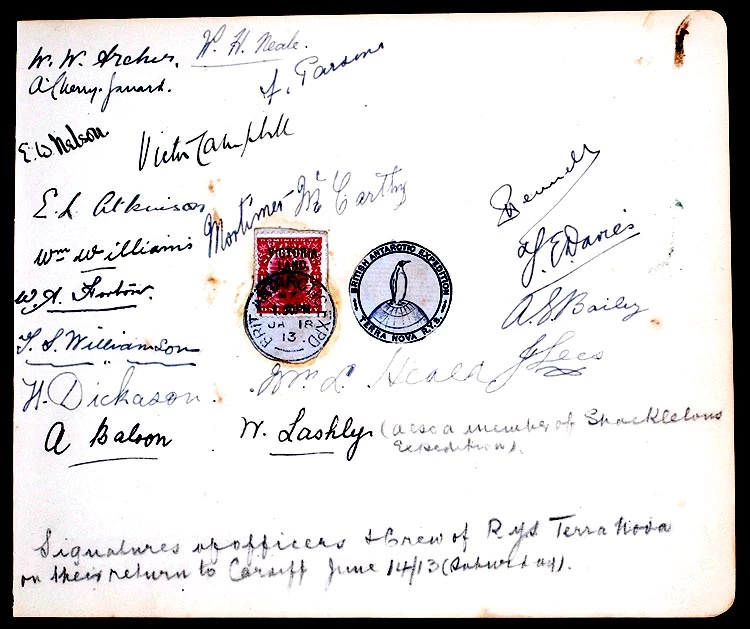
Signatures of officers and crew of RYS Terra Nova on their return to Cardiff June 14/13 (Saturday). New Zealand One Penny stamp, overprinted “Victoria Land” and franked “British Antarctic Expedition Ja 18 [19]13”.

The signatures on this sheet are of interest because although they include four of the officers and scientists, the signatures are mostly those of the lower ranks, indicating that all of the crew were regarded as celebrities upon the expedition’s return.

  • W. W. Archer
    W Archer, RN (Retired).  Chief Steward, Shore Party.
  • A. Cherry-Garrard
    Apsley Cherry-Garrard Assistant Zoologist.
  • E. W. Nelson
    Edward W Nelson. Biologist.
  • E. L. Atkinson
    Surgeon Edward L Atkinson RN. Main Party Surgeon and parasitologist.
  • Wm W. Williams
    C.E.R.A. 2nd Class William W. Williams, RN. Chief Engineer, Ship’s Party.
  • W. A. Horton
    E.R.A. 3rd Class William A. Horton, RN. Second Engineer, Ship’s Party.
  • T. S. Williamson
    Petty Officer 1st Class Thomas S. Williamson, RN.  Shore Party. He had served with Scott on the 1901-4 Discovery Expedition. He was a member of the search party which found the bodies of Scott, Wilson and Bowers in November 1912.
  • H. Dickason
    Able Seaman Harry Dickason, RN. Northern Party.
  • A. Balson
    Leading Seaman Albert Balson, R.N. Ship’s Party.
  • W. H. Neale
    Steward W.H. Neale. Ship’s Party.
  • F. Parsons
    Petty Officer 1st Class Frederick Parsons, RN. Ship’s Party.
  • Victor Campbell
    Lieutenant Victor Lindsey Arbuthnot Campbell, RN (1875-1956). Leader of the Northern Party.
  • Mortimer McCarthy
    Able Seaman Mortimer McCarthy. Ship’s Party.
  • Wm L. Heald
    Petty Officer 1st Class William L. Heald, RN (Retired). Ship’s Party. He had served with Scott on the 1901-4 Discovery Expedition.
  • W. Lashly
    Chief Stoker William Lashly, RN (1867-1940). Shore Party. He served with Scott on the 1901-4 Discovery Expedition. He was a member of the search party which found the bodies of Scott, Wilson and Bowers in November 1912. After the First World War, Lashly settled in Cardiff, working as a customs officer until 1932 when he retired to Hampshire.
  • H. Pennell
    Lieutenant Harry Lewin Lee Pennell, RN (1882-1916). Ship’s Party, Navigator.
  • F. E. Davies
    Leading Shipwright Francis E.C. Davies, RN. Carpenter, Ship’s Party.
  • A. S. Bailey
    Petty Officer 2nd Class Arthur S. Bailey, RN. Ship’s Party
  • J. Lees
    Able Seaman Joseph Lees, RN. Ship’s Party.