: Heroes & Disasters

The Welsh in Antarctica

29 October 2010

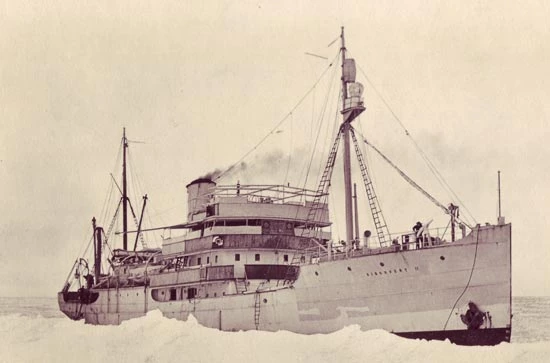
Royal Research Ship <em>Discovery II</em> in loose pack ice, Bouvet Island, Southern Ocean, 1926.

Royal Research Ship Discovery II in loose pack ice, Bouvet Island, Southern Ocean, 1926.

One of the most poignant Welsh stories from Scott's 1910-13 British Antarctic Expedition is that of Petty Officer Edgar Evans from Rhossili in Gower, one of the team of five who made it to the South Pole with Scott himself. Evans was the first to die on the return march from the South Pole.

Here we explore other Welsh links with Antarctica — a geologist from St Fagans, and the Antarctic work of a zoologist from St Brides Major who later became Director of the National Museum.

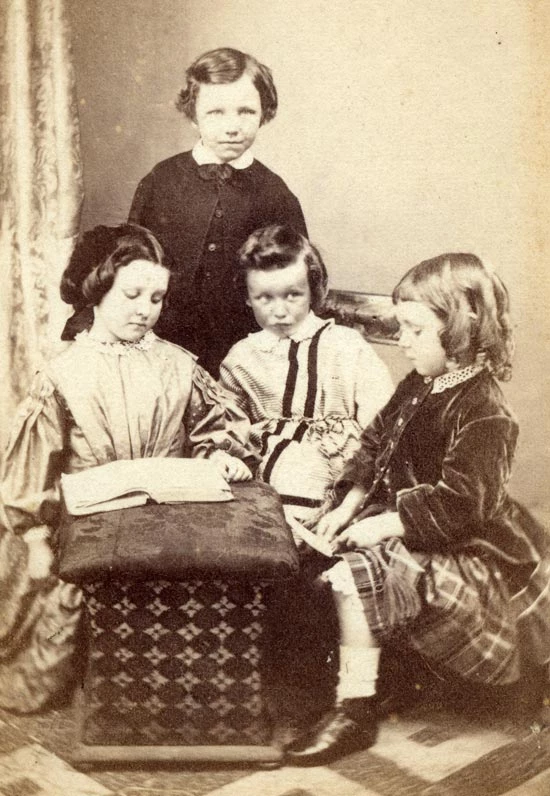
David (standing), aged about 7, with his sister Ethel (left) and two brothers (Edmund and Arthur), photographed in Cardiff in about 1865.

Edgeworth David (standing), aged about 7, with his sister Ethel (left) and two brothers (Edmund and Arthur), photographed in Cardiff in about 1865.

Sir Tannat William Edgeworth David (1858-1934) by Norman Carter. © Estate of Norman Carter.

Sir Tannat William Edgeworth David (1858-1934) by Norman Carter. © Estate of Norman Carter.

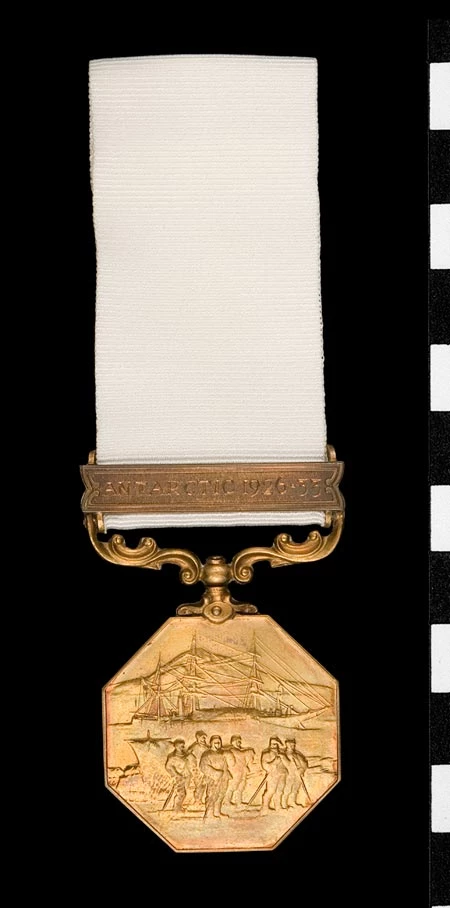
Dilwyn John's Polar Medal.

Dilwyn John's Polar Medal.

A Welsh Geologist at the South Magnetic Pole

The geologist T.W. Edgeworth David was born in 1858 in St Fagans where his father was rector. He studied glacial deposits in south Wales before moving to Australia in 1882 to join the Geological Survey of New South Wales. In 1891 he was appointed Professor of Geology at the University of Sydney. He became one of Australia's most famous scientists.

David joined Ernest Shackleton's Nimrod expedition in 1907. In March 1908, aged 50, he led the first ascent of Mount Erebus, an active volcano on Ross Island. With Douglas Mawson and Alistair Mackay, in January 1909, he was the first to reach the region of the South Magnetic Pole. His journey of 2,028 kilometres took 122 days and is one of the longest unsupported man-hauled sledging journeys ever undertaken.

He persuaded the Australian government to contribute towards Scott's 1910 expedition and helped him appoint geologists from among his students. He was awarded the Polar Medal in 1910 and an honorary degree by the University of Wales in 1921.

Dilwyn John and the Discovery Investigations

Scott's first Antarctic ship, Discovery, returned to the continent in 1925 in the first of a series of scientific research cruises in the Southern Ocean to study the biology of the Southern Ocean and the effects of commercial whaling on the whale populations. This research, known as the Discovery Investigations, continued until 1951.

David Dilwyn John (1901-95), from St Bride's Major in Glamorgan, was a zoologist who participated in three of these cruises between 1925 and 1935. The first, on Discovery, between 1925 and 1927, worked in the seas around South Georgia and the Antarctic Peninsula. He then spent two years on RRS William Scoresby on a whale marking expedition around South Georgia. In 1931-33, he was Chief Scientist on Discovery II on the first winter circumnavigation of Antarctica.

In 1935 John joined the staff of the British Museum (Natural History) as Assistant Keeper of Zoology. He left in 1948 to become Director of the National Museum of Wales, a post he held until 1968. He was awarded the Polar Medal in 1941.

Dilwyn John on his retirement as Director of the National Museum of Wales in 1968.

Dilwyn John on his retirement as Director of the National Museum of Wales in 1968.

Dilwyn John (on right) on John Peaks (415 metres), named after him on Powell Island, South Orkney Islands, 1933.
Dilwyn John (on right) on John Peaks (415 metres), named after him on Powell Island, South Orkney Islands, 1933.

Captain Scott sails from Cardiff

David Jenkins, 9 June 2010

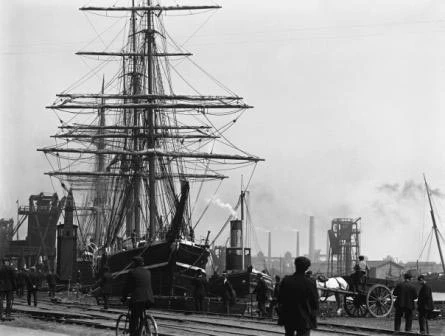
The Terra Nova loading in Bute East Dock, Cardiff, June 1910

The Terra Nova loading in Bute East Dock, Cardiff, June 1910

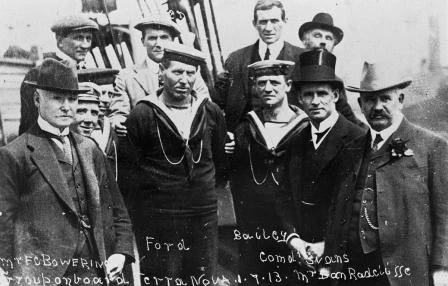
Aboard the Terra Nova in Cardiff, 17 June 1913.

F.C. Bowring (front left) and Daniel Radcliffe (front right) with Commander E.R.G.R.Evans (in top hat) aboard the Terra Nova in Cardiff, 17 June 1913.

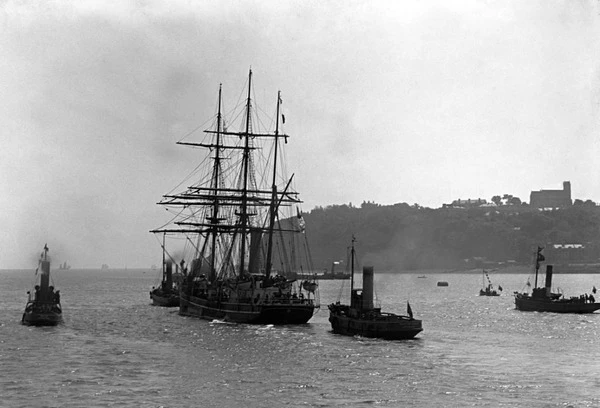
Scott's Terra Nova leaving Cardiff, 15 June 1910

Scott's Terra Nova leaving Cardiff, 15 June 1910

Robert Falcon Scott (1868-1912) in about 1905

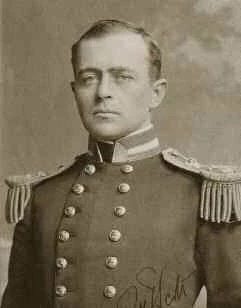
Robert Falcon Scott (1868-1912) in about 1905

The SS Terra Nova

On 15 June 1910 a large, excited and noisy crowd cheered a heavily laden ship as she left the Roath Basin in Cardiff's docklands. SS Terra Nova was headed south — to Antarctica. On board were Captain Robert Falcon Scott and members of his British Antarctic Expedition , who aimed to be the first to reach the South Pole.

Welsh Coal

The Terra Nova had arrived in Cardiff five days earlier to finish preparations for the voyage and to take on fuel. 300 tons of Crown Patent Fuel, 100 tons of steam coal and 500 gallons of engine and lamp oil were donated by Welsh coal companies. All the cooking utensils were given by the Welsh Tin Plate Company of Llanelli and even Scott's sleeping bag was bought with funds raised by the County School in Cardigan. In addition to support in kind, a further £2,500 was raised in Cardiff, more than from any other city. Locally, the largest individual donors, and two of the expedition's most enthusiastic supporters, were the leading Cardiff shipowners Daniel Radcliffe and

William J. Tatem . They played an important role in fund-raising and raising sponsorship from throughout the south Wales business community and in the provision of dock facilities for the Terra Nova. There was so much support in Wales for the expedition that Cardiff was designated the Terra Nova's home port and it was to Bute Dock that she returned at the end of the expedition on 14 June 1913.

Why Cardiff?

In June 1909 William Davies, editor of the Western Mail, met with the young naval officer Lieutenant E.R.G.R. Evans, who was planning his own Antarctic expedition. Davies was very keen on supporting what he initially saw as a Welsh National Antarctic Expedition — Evans's grandfather was probably from Cardiff — and thought that there would be support for such a project from Cardiff businesses.

Soon afterwards, Evans learned of Scott's planned expedition and joined him as second-in-command, bringing with him the support of the editor of the Western Mail and the prospect of Welsh sponsorship. Davies was instrumental not only in rallying business and public support in Wales for Scott's expedition, but in persuading his compatriot, the Chancellor of the Exchequer, David Lloyd George, to provide a government grant of £20,000. Arguably, without the influence of Davies, the support of the Western Mail and the Welsh shipowners, Scott's expedition would not have left in time to reach the Pole in 1912.

Welsh connections

There was another Evans in the Terra Nova's crew, Petty Officer Edgar Evans from Rhossili, Gower. He had been to Antarctica with Scott on his Discovery expedition of 1901-4, and was chosen by Scott to be a member of his polar party on the 1910-12 expedition. Evans was the first to die on the return march from the South Pole.

Commemoration

Scott's links with Cardiff are commemorated by the lighthouse erected in 1915 in Roath Park Lake and the bronze plaque of 1916 on the staircase in City Hall. In June 2003 a commemorative sculpture was unveiled in Cardiff Bay.

Welsh miners digging for victory on the Western Front

Edward Besly, 1 October 2009

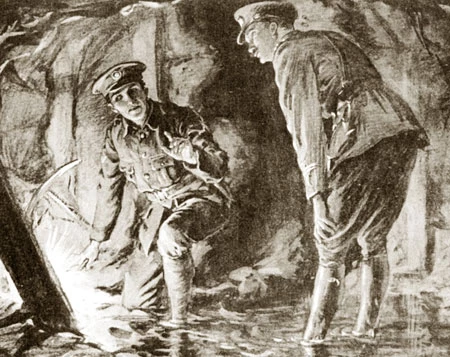
Artists' impressions of Edwards' mining exploits

Artists' impression of Edwards' mining exploits. From Deeds that Thrill the Empire, by courtesy of Dix Noonan Webb.

Medals awarded to Captain (later Major) Arthur Edwards.

Military Cross (1915), 1914 Star, British War Medal and Allied Victory Medal awarded to Captain (later Major) Arthur Edwards.

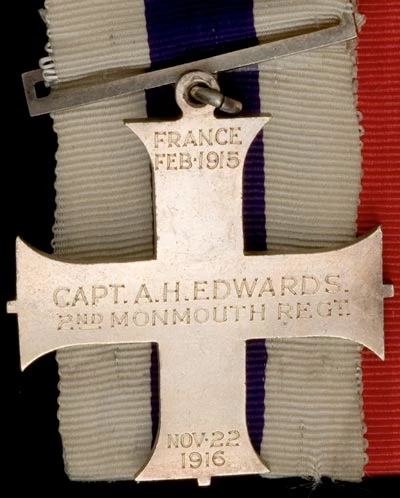
Details of the award engraved on the back.

Many recipients of the Military Cross arranged to have details of the award engraved on its back.

The trenches of World War 1

Captain Arthur Edwards from Blaenafon in south Wales oversaw the explosion of the first British mine on the Western Front in March 1915.

The First World War (1914-18) is famous for the trench warfare of the Western Front in France and Flanders. Huge armies faced each other in horrible conditions, preparing for the next big battle intended to break the stalemate.

Tunnelling and mining on both sides formed a significant part of this trench warfare, as each side tried to gain an advantage. Tunnels were dug underneath "no man's land" and under the enemy's trenches. They were then packed with explosives and detonated.

The dry chalk of the Somme was especially suited to mining, but it was also possible to mine in the sodden clay of Flanders. The experience and skills of Welsh miners played an important part in the construction of these mines.

Fighting the war underground

It was all started by Captain Arthur Edwards, a mining engineer who served in the 2nd Battalion of the Monmouthshire Regiment. In December 1914 the 4th Divisional Mining Party was formed, under Edwards' command.

In March 1915, after two months of tunnelling under enemy lines, the tunnels were evacuated, packed with explosives and detonated. The huge explosion caused buildings above ground to be destroyed — the tunnels were under buildings that were being used by enemy snipers.

On another occasion, German miners, tunnelling in one direction, broke into allied tunnels being dug in the opposite direction, resulting in fierce hand-to-hand fighting underground.

A Badge of Honour

In June 1915 Captain Arthur Edwards was awarded the Military Cross, a newly introduced decoration for captains and junior officers. He was also twice mentioned in despatches for gallant and distinguished service. He served through the War, including the first day of the Battle of the Somme (1 July 1916) before being badly wounded by a gas shell in June 1918.

His medals were acquired by Amgueddfa Cymru in 2006.

Welsh miners digging for victory on the Western Front

Edward Besly, 1 October 2009

The trenches of World War 1

Medals awarded to Captain (later Major) Arthur Edwards.

Military Cross (1915), 1914 Star, British War Medal and Allied Victory Medal awarded to Captain (later Major) Arthur Edwards.

Artists' impressions of Edwards' mining exploits

Artists' impression of Edwards' mining exploits. From Deeds that Thrill the Empire, by courtesy of Dix Noonan Webb.

Details of the award engraved on the back.

Many recipients of the Military Cross arranged to have details of the award engraved on its back.

Captain Arthur Edwards from Blaenafon in south Wales oversaw the explosion of the first British mine on the Western Front in March 1915.

The First World War (1914-18) is famous for the trench warfare of the Western Front in France and Flanders. Huge armies faced each other in horrible conditions, preparing for the next big battle intended to break the stalemate.

Tunnelling and mining on both sides formed a significant part of this trench warfare, as each side tried to gain an advantage. Tunnels were dug underneath "no man's land" and under the enemy's trenches. They were then packed with explosives and detonated.

The dry chalk of the Somme was especially suited to mining, but it was also possible to mine in the sodden clay of Flanders. The experience and skills of Welsh miners played an important part in the construction of these mines.

Fighting the war underground

It was all started by Captain Arthur Edwards, a mining engineer who served in the 2nd Battalion of the Monmouthshire Regiment. In December 1914 the 4th Divisional Mining Party was formed, under Edwards' command.

In March 1915, after two months of tunnelling under enemy lines, the tunnels were evacuated, packed with explosives and detonated. The huge explosion caused buildings above ground to be destroyed — the tunnels were under buildings that were being used by enemy snipers.

On another occasion, German miners, tunnelling in one direction, broke into allied tunnels being dug in the opposite direction, resulting in fierce hand-to-hand fighting underground.

A Badge of Honour

In June 1915 Captain Arthur Edwards was awarded the Military Cross, a newly introduced decoration for captains and junior officers. He was also twice mentioned in despatches for gallant and distinguished service. He served through the War, including the first day of the Battle of the Somme (1 July 1916) before being badly wounded by a gas shell in June 1918.

His medals were acquired by Amgueddfa Cymru in 2006. 

Article by: Edward Besly, Numismatist, Department of Archaeology & Numismatics. Amgueddfa Cymru.

Remembering the Bevin Boys in the Second World War

3 January 2008

Bevin Boys commemorative banner

Bevin Boys commemorative banner

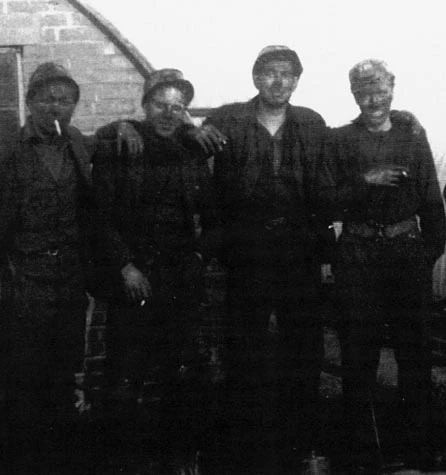
Bevin Boys

Bevin Boys from South Wales

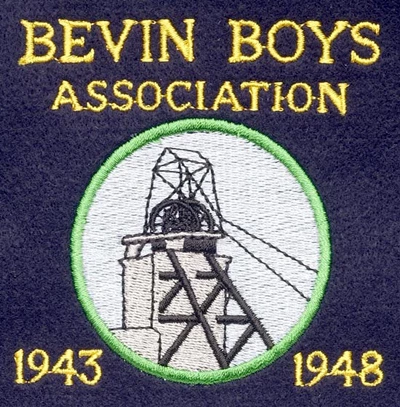
Bevin Boys Association blazer badge.

Bevin Boys Association blazer badge.

Bevin Boys annual reunion

A retired pit pony poses with two former Bevin Boys at the annual reunion at Trentham Gardens, Stoke-on-Trent.

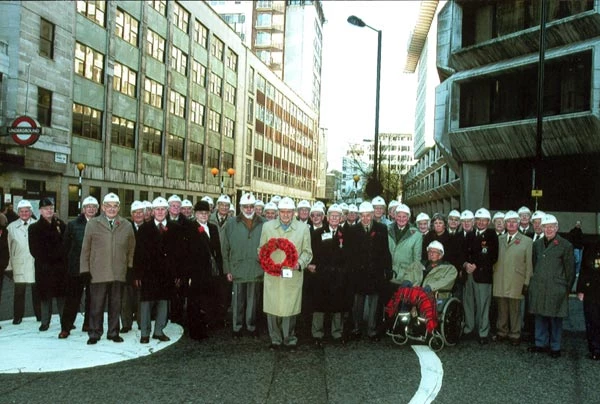
Bevin Boys attending the Remembrance Parade in London on the 14th November 2004

Former Bevin Boys attending the Remembrance Parade in London on the 14th November 2004

The underground front

The story of the Bevin Boys miners has been largely untold; those many men who spent their war on the so-called 'underground front' went unrecognized for almost half a century.

When Britain declared war in 1939, thousands of experienced miners left the mines to join the armed services or transfer to higher-paid 'war industries'. By the summer of 1943 over 36,000 men had left the

coal industry . The British government decided that it needed around 40,000 men to take their places.

Ernest Bevin

In December 1943, Ernest Bevin, the wartime Minister of Labour and National Service, devised a scheme whereby a ballot took place to put a proportion of conscripted men into the collieries rather than the armed services. Every month, ten numbers were placed in a hat; two numbers were drawn out, and those whose National Service registration number ended with those numbers were directed to the mining industry.
These "ballotees" became known as "Bevin Boys".

Alongside the ballotees were the "optants", men who had volunteered for service in the coal mines rather than the armed services. Between 1943 and 1948, 48,000 young men were conscripted for National Service Employment in British coal mines. Contrary to a common belief at the time, only 41 of them were conscientious objectors.

Bevin Boys, therefore, came from all social classes and regions in Britain, not just the mining areas. Many had only been vaguely aware of the mining industry before being drafted. Most had set their sights on a career in the armed services and were horrified to be sent to the collieries instead.

Punishment

In April 1944 the Colliery Guardian reported that 135 ballotees had been prosecuted for failing to comply with the direct labour order. Thirty two went to prison, although 19 of them were released when they eventually agreed to go into the mining industry.

Picks and shovels

Unlike the ordinary miners, who wore their own clothes, Bevin Boys were issued with overalls, safety helmet and working boots. However, they still had to pay for their own tools and equipment, which led to complaints that the infantry were not expected to supply their own rifles so why were they expected to buy picks and shovels!

Only a small proportion of Bevin Boys were actually employed cutting coal on the coal face, although some worked as colliers' assistants filling tubs or drams. The majority worked on the maintenance of haulage roads, or generally controlled the movement of underground transport. A small number who had previous electrical or engineering experience were given similar work in the collieries.

Bevin Boys suffered from resentment from local mining families who had seen their own children drafted into the armed services only to be replaced by "outsiders". In addition, just being young men out of uniform could lead to abuse from the public or attention from the police as possible deserters, "army dodgers" or even enemy spies. It is not surprising that they suffered from high absentee rates. A very small number stayed in mining after the war, but most couldn't wait to leave.

Official records destroyed

The ballots were suspended in May 1945, with the last Bevin Boys being demobbed in 1948. Unlike other conscripts, they had no right to go back to their previous occupations, they received no service medals, "demob" suit or even a letter of thanks. Because the official records were destroyed in the 1950s, former Bevin Boy ballotees cannot even prove their service unless they have kept their personal documents.

The first official Bevin Boys reunion was held at the former Chatterley Whitfield Mining Museum in 1989. More have been held at various venues since then. However, it was not until 1995, 50 years after Victory in Europe Day, that the British government finally recognized their service to the war effort and former Bevin Boys are now officially allowed to take part in the Remembrance Day service at Whitehall.

For any information on the Bevin Boys Association please contact:
Warwick H Taylor, Vice President, Bevin Boys Association, 1 Rundlestone Court, Dorchester Dorset, DT1 3TN

This article forms part of a booklet in the series ' Glo ' produced by Big Pit: National Mining Museum.