I hope you enjoy your Christmas break and are looking forward to the New Year and seeing your bulbs grow! You will start taking records again from the 4th January.
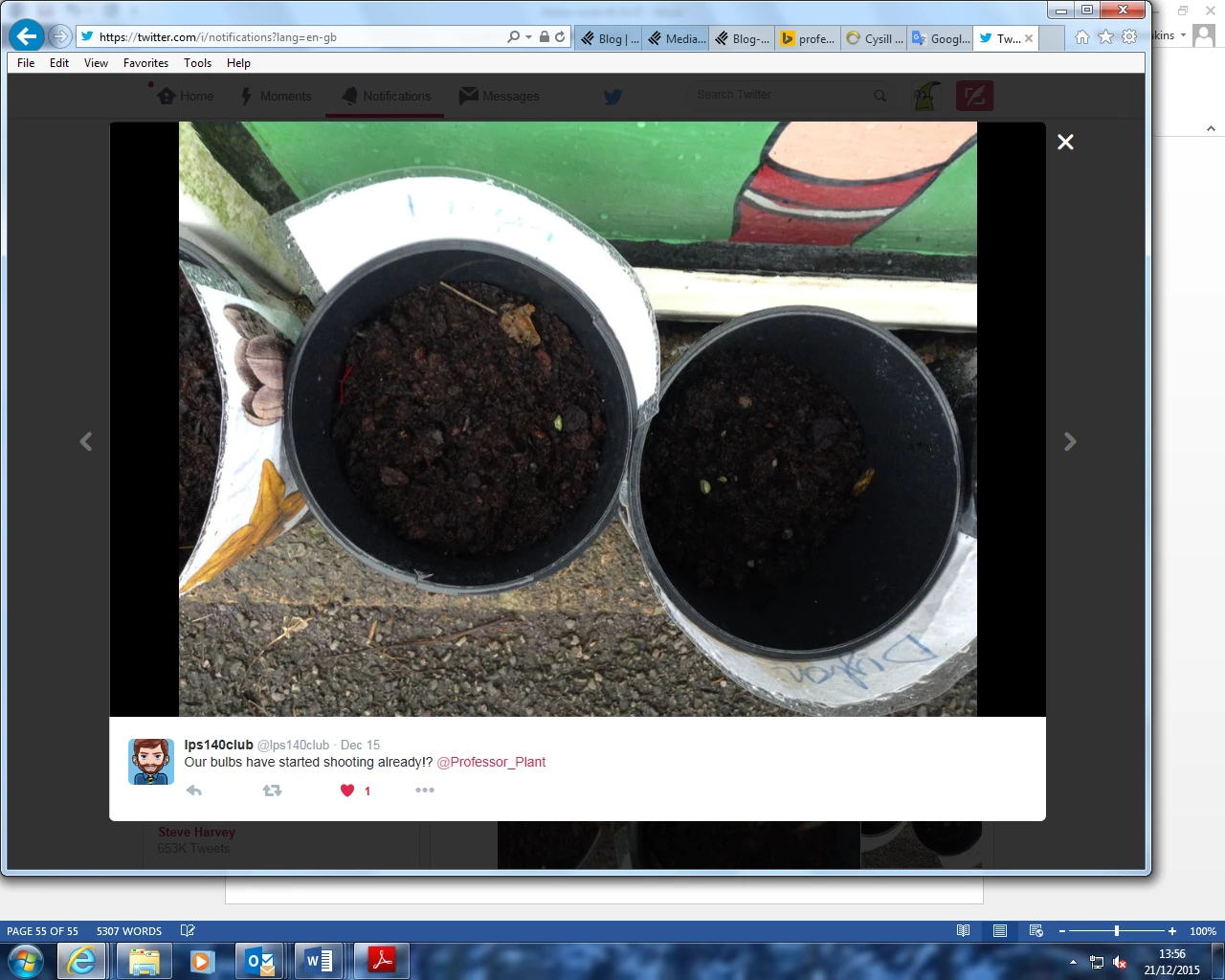
Some of you have already reported that shoots have appeared in your pots! Usually we say to look out for shoots in January and February, so these are very early this year! We think the shoots are appearing early because the weather has been so warm this winter. It will be interesting to see if our Daffodil and Crocus plants flower earlier than normal. The earliest average flowering dates recorded for Wales by this project were 2007 and 2008. The average flowering date for the Crocus was the 16th of February for both these years. The average flowering date for the Daffodils was the 14th of February in 2007 and 6th March in 2008.
What do you think Bulb Buddies? Why not look at the report 2005-2016 on the Spring Bulbs Project website and see how your data compares so far to that of previous years!
Llanharan Primary have been in touch to share pictures of their first shoots! Have a close look at the pictures so you know what to look out for!
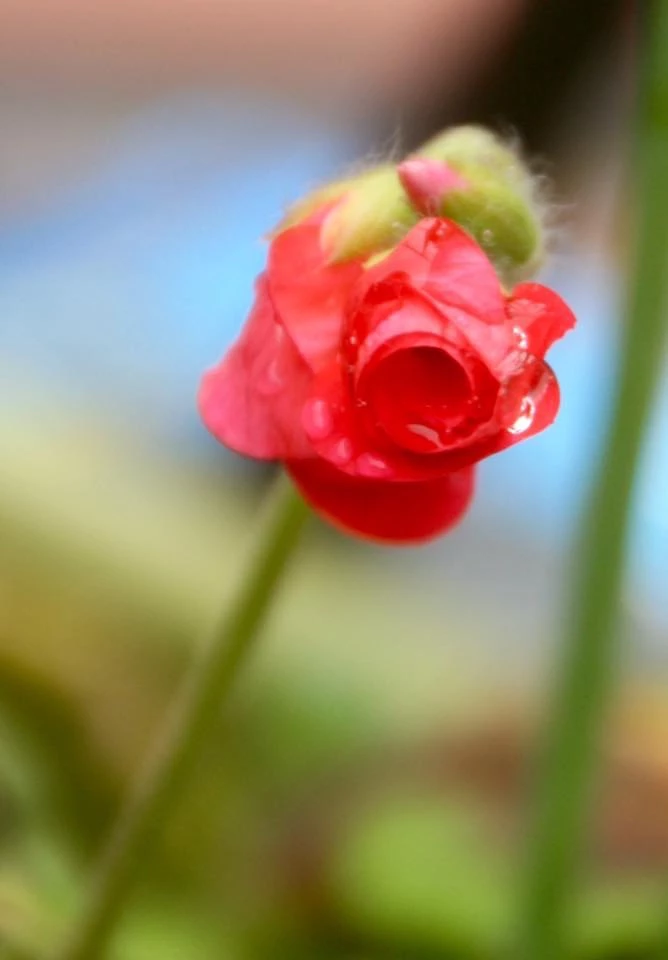
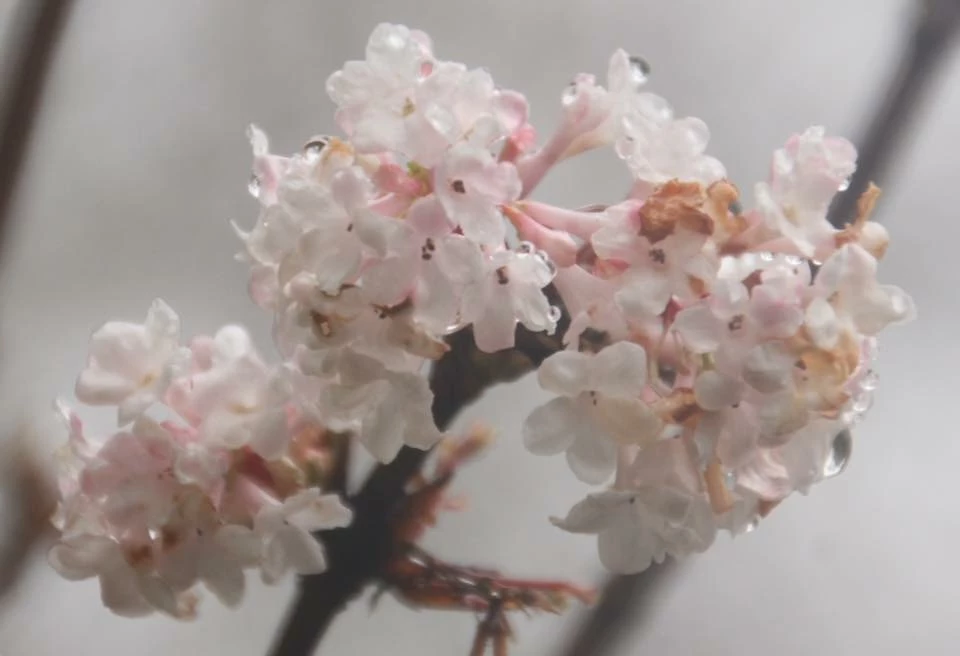
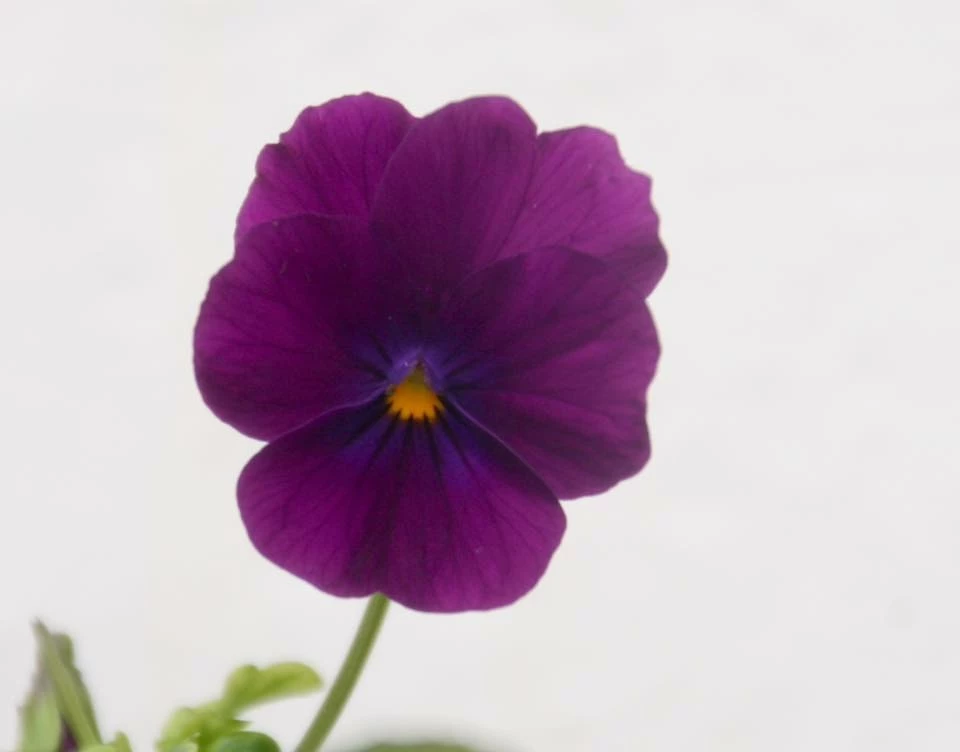
There have been lots of spring flowers appearing early this year. I have included pictures of some that have been flowering in the Cardiff area. If you see any early flowers please tell me about them in the comments section when you enter your data after the holidays. Or better yet, maybe you could take photos and ask your teacher to share them with me on Twitter or by email!
Happy Christmas and a Merry New Year,
From Professor Plant & Baby Bulb
Your Comments My Answers:
Ysgol Deganwy: Do we round up or down with rainfall totals greater than 20?
Professor Plant: That’s a great question Ysgol Deganwy. You round the rainfall reading up or down depending on which reading it is closest to. If the reading is less than halfway between two marks (say 2mm and 3mm) then you round down, if the readings are halfway or higher (so in this example 1.5mm or over) you round up! Here’s a fun clip on BBC Bitesize to help illustrate estimating and rounding numbers: http://www.bbc.co.uk/education/clips/zgnyr82 Keep up the good work Bulb Buddies!
Dasfen Primary School: Where doesn't seem to be an option to input 0.1mm etc, please advise as to how I am supposed to input this data. Thank you.
Professor Plant: Hi Dasfen Primary, in this instance you would round down to 0mm. Ysgol Deganwy asked a similar question above!
Law Primary School: It snowed a little today at lunchtime.
Professor Plant: Fantastic Law Primary School. I hope you enjoyed the snow. Elsewhere the weather has been warmer than usual and spring flowers have started growing!
Ysgol Rhys Prichard: It was very windy over the weekend and on Thursday night. Some of the plant labels blew off so we had to staple them on to the pots.
Professor Plant: Good thinking Ysgol Rhys Pritchard, stapling your labels to your pots is a great idea. I hope the weather has calmed down for you now!
Abbey Primary School: Friday 13th November is a local holiday. I have used figure from BBC weather website as I couldn't send no record.
Professor Plant: Great work Abbey Primary School. Apologies that the ‘no record’ button wasn’t working, it should be working again now.
Carnbroe Primary School: Look at how much rain we had on Thursday evening. We had our parents evening on Thursday night and had climb a fence as part of the main entrance was flooded!
Professor Plant: Wow Carnbroe Primary, there must have been a lot of rain! Castlepark Primary also commented that they were surprised by how much rain they had.
Saint Anthony's Primary School: M and me found it interesting seeing how the rain gauge after storm Abigail.
Professor Plant: Hi Saint Anthony’s, I was interested to see your rain readings after the storm. Other schools reported heavy rain fall for this week, including Silverdale St. John's CE School: ‘Another wet week - we certainly don't need to water our bulbs!’ and Drumpark Primary ASN School: ‘We had lots of rain and wind at the end of the week from Storm Abigail.’ And Shakespeare Primary School: ‘Dear Professor Plant, We got absolutely soaked on Friday. It rained nonstop! We are loving the project though.’
Bent Primary School: Sorry we were at a residential trip for 3 days and although we asked the weather to be recorded , we do not think their results are accurate enough to add to the data.
Professor Plant: Not to worry Bent Primary School, thank you for trying to arrange for the data to be collected but you did the right thing by entering ‘no record’ if the readings weren’t accurate. Keep up the good work!
Teacher: On Thursday we needed to keep our plants in because of the strong winds and rain also because the storm [Abigail] was going to blow them away or make them fall over.
Professor Plant: Hi there, well done for looking out for your bulbs. We do ask that the pots are kept outside to ensure a fair experiment, but you did the right thing by taking them inside until the storm passed. It’s always best to keep them in a cool area as a warm room could affect the results. Keep up the good work Bulb Buddies.
Calderwood Primary School: We have had such stormy weather this week with really high winds. It is also to be very cold over the weekend. We hope that our bulbs outside will be ok. We have been taking good care of our bulbs in the class.
Professor Plant: Thank you for taking such good care of your bulbs Calderwood Primary. Remember that all your bulbs in pots should be kept outside in a sheltered area. If some are inside and some are outside you can compare the flowering dates to see if those inside or outside flower first. If this is the case then please only enter flowering dates to the Museum website for the plants being kept outside. Keep up the good work bulb buddies!
Betws Primary School: A stormy week, we are hoping our plants are not too soggy! St. Paul's Primary School: Another very wet start to the week! We wonder if the extra rain will affect how the bulbs grow later! Are they drowning?
Professor Plant: Not to worry Betws and St Paul’s Primary, the bulbs like the rain and will be fine. The holes at the bottom of the pot allow excess water to drain away. If it is raining a lot and the soil is moist then there is no need to water the plants. The amount of rain does affect the development of the plants, they develop later in years with less rain and less sunlight hours. Why not have a look at the report 2005-2015 on the Spring Bulbs website and compare your readings so far this year to the average readings for last year? Do you think your flowers will appear earlier or later this year?
East Fulton Primary School: Thank you for the super seeds and certificate - it is now up on our Science wall!
Professor Plant: Hi East Fulton Primary. The seeds and certificate were provided by the Edina Trust – I’m glad you liked them! I’m sure the Edina Trust would love a photo of your science wall! Keep up the good work Bulb Buddies!
Ladywell Primary School: We have still yet to experience the flowering of our plants and hope we get to see them soon.
Professor Plant: Hi Ladywell Primary you have a little while to wait yet! Your plants should flower between February and March. Well done for looking after them so well. Keep up the good work!