Wi-Fi Audio Tour using Museum Visitors' Mobiles
, 31 May 2015
A lot of people wander around exhibitions with phones in their pockets or handbags. We decided to utilise this idea and serve up a Wi-Fi audio tour for the Chalkie Davies: the NME Years exhibition (9 May - 6 September 2015) - the museum has a web-server and there is Wi-Fi broadcasting in the exhibition gallery, allowing us to give it a whirl.
- We wanted to give access to the maximum number of people with phones from this decade (HTML5 compatible devices).
- We didn’t want an ‘app' because it creates a lot of hoops for developers and the museum to jump through, plus visitors probably don't want excessive fuss when entering an exhibition especially as they might only use it for five minutes in total.
- We didn’t want to bring in traditional audio tour guides because of the hire price for the museum and we weren't going to ask the visitors to pay, as it's free entry to the exhibition.
- We might want to use it again and would hope to do so with the minimum amount of technical fuss.
Free Wi-Fi but not sitting a Coffee Shop
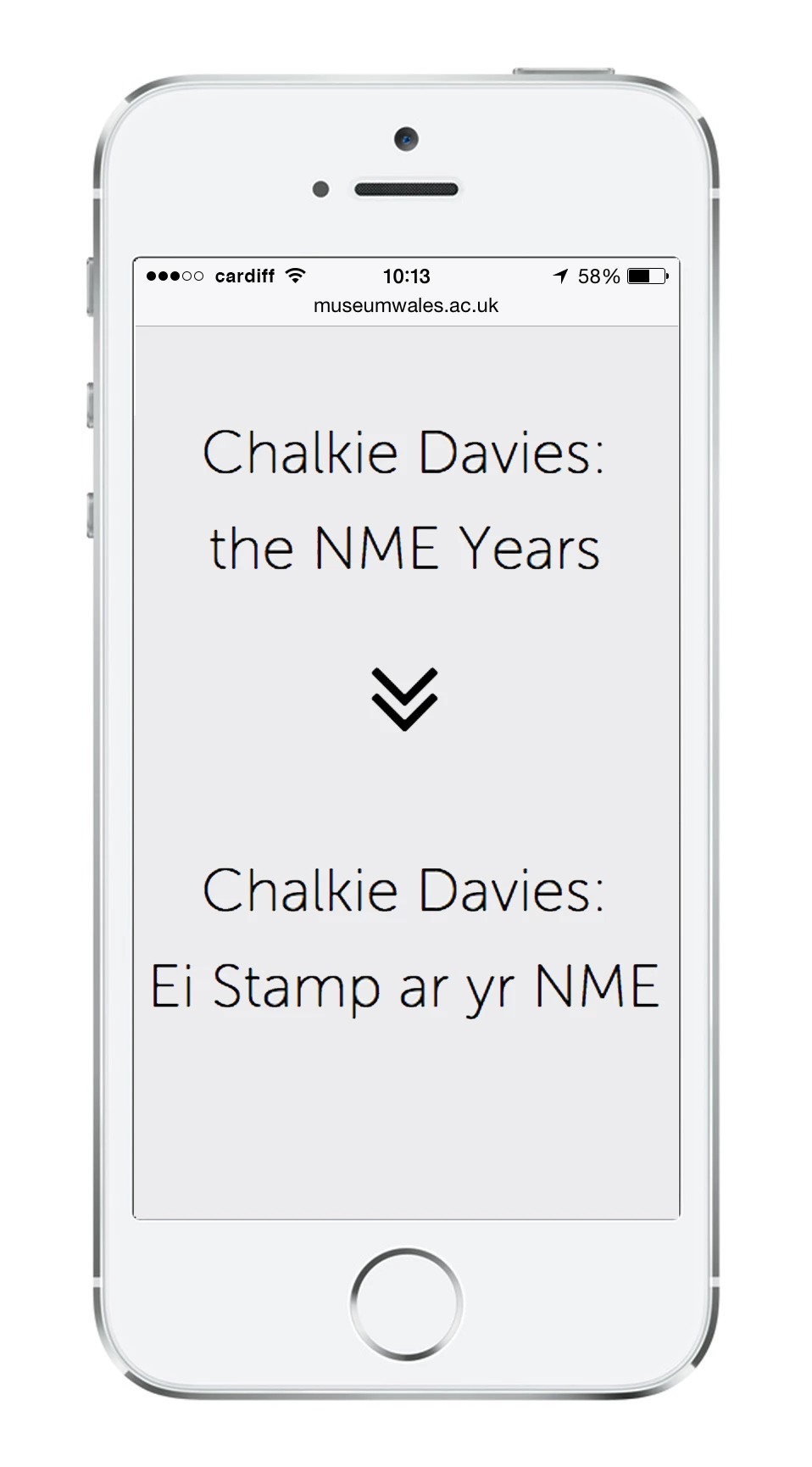
Once the visitor has connected to the free Wi-Fi audio tour ‘Chalkie' the Wi-Fi capture software will direct them to the correct web page with the name of the exhibition and a choice of languages (see picture 1). All is going well.
Language Choice
The english audio tour was written and recorded by Chalkie Davies and his team - it provides his personal insights into each of the photographs on display and some back stories. The welsh audio version was recorded in-house by Rhodri Viney (recording and editing) and Telor Gwyn (voice), using the Chalkie Davies translated transcript.
Choose a Number between One and Nine
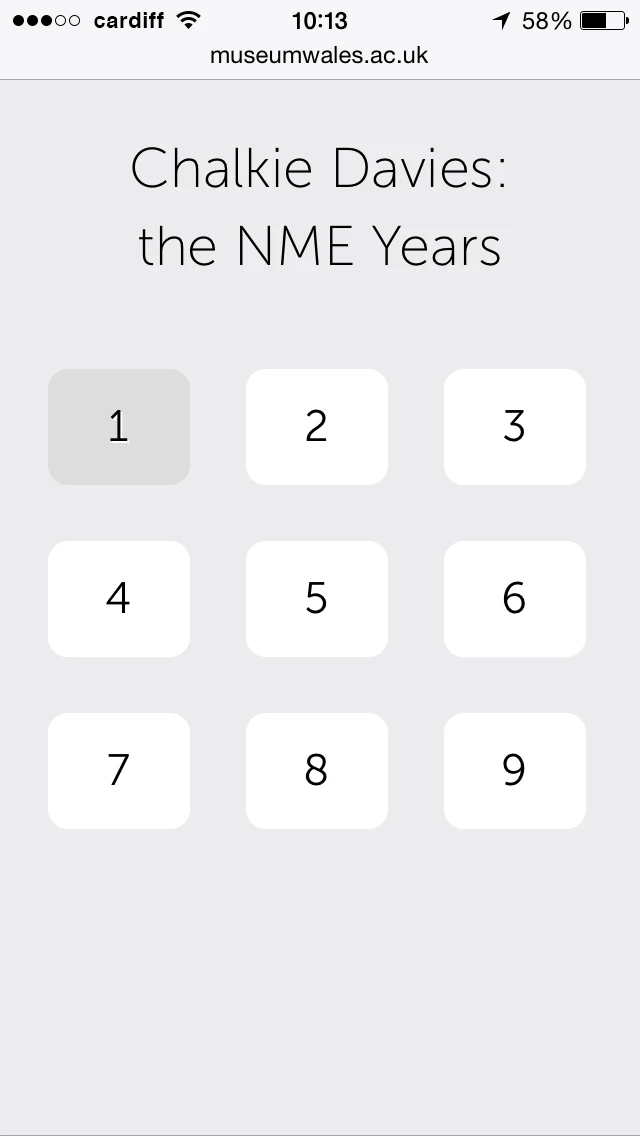
The visitor is given a choice of nine numbers, each matching a number on the gallery wall which refers to a selection of photographs (see picture 2). Once the person selects one of these numbers the audio tour begins...
"Listen To What The Man Said"
For the best experience the visitor should have headphones, but it's not the end of the world if they don't, they can still listen through their devices' built-in speaker, although this can look and feel a little awkward. Alternatively they could hand over £1.50 for headphones in the museum shop downstairs.
If they don’t want to walk around with a mobile phone protruding from their head, or leave the exhibition and come back in again to buy headphones downstairs, or find that their mobile phone has a low battery percentage - there is a printed version of the audio tour available within the gallery. They are the same words.
A Perfect Circle
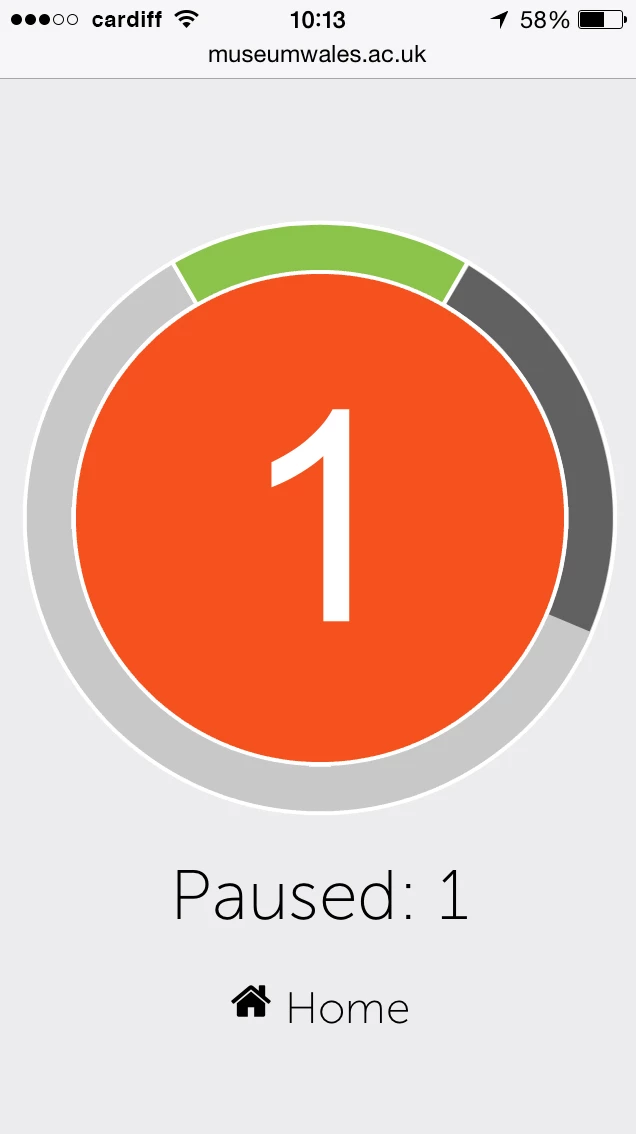
I used to have an analogue watch, but I left it accidentally next to the squash courts in the University - if anyone picked it up, could they hand it back please? Anyway, time can be measured within a circle. I like circles, so I built a large circle to indicate the progress of the audio track playing. The animated graphic uses SVG (Scalable Vector Graphics), which meant the page avoided the usual graphical software - it's all written in code: HTML5, javascript and CSS [Well, I find it mildly exciting] (see picture 3 and 4).
Pressing the circle will pause the audio. If the visitor listening to the audio tour wants to change to another number they can press the ‘Home’ button and the page will scroll up to the nine numbered keypad again. Another loop, of sorts…and repeat.
Before we go any further, maybe we could pause for a short film clip...
Additional Details You Might Enjoy
- The gallery has a capacity of 40 people at one time.
- There are two Wi-Fi hubs at each end of the gallery broadcasting wireless-N.
- A web-server streaming the audio.
- Each of the audio tracks are compressed to less than 2MB (MP3).
- It takes less than ten seconds to download the whole MP3 on a iPhone 5S and the audio plays almost immediately.
- We’ve tested it with various phones including one of the first Android audio HTML5 compatible phones (Gingerbread 2.3.6 ~ circa 2011) and Windows 8 phones.
- If the device is not capable of displaying a SVG there is a fallback to similar looking GIFs.
Media Monitoring
The web-server records each time a track is requested. Therefore, we will have some data to indicate how much the audio tour is being used - thinking about it, we shoud gather additional information about the type of browser requesting the audio (it's a closed network so we can't involve Google Analytics, which is the usual goto reference for 'what kind of computer has visited the website recently'). We will monitor things during the exhibition and conduct evaluation once it has closed.