New species of fossil crinoid discovered in south Wales

Cindy Howells, 3 February 2014

The discovery of any new type of fossil is one of the most exciting things that can happen to a palaeontologist. A new fossil discovered in south Wales – and the only one known of its kind - has been given the name Hylodecrinus cymrus to illustrate its Welsh origins.

Whilst on a field trip to Pembrokeshire in 2009 to study the 350 million year old (Carboniferous Period) rocks in a small cove at West Angle Bay, Cindy Howells, a palaeontology curator at Amgueddfa Cymru, discovered an interesting new fossil that did not match any scientifically recorded specimen. In the Carboniferous Period Wales was located close to the equator and was covered with shallow tropical seas. The rocks here suggest there were many fierce tropical storms which usually smashed the shells of marine organisms into small pieces before they were fossilised. However a few layers contain whole fossils, deposited in quieter conditions, and in one of these the new specimen was found.

<em>Hylodecrinus cymrus</em> – the holotype, and only specimen.
Hylodecrinus cymrus

– the holotype, and only specimen.

Reconstruction of <em>Hylodecrinus cymrus.</em>

Reconstruction of Hylodecrinus cymrus.

The fossil is a crinoid, a small marine animal that looked a little like a plant. Crinoids have a long flexible stem, anchored into the sea-bed. This is topped with a small cup shaped structure containing its internal organs. Long flexible feathery tentacles, or arms, are extended up above the animal and these collect micro-organisms from the seawater and channel them down to its stomach.

The new fossil was carefully extracted from the rocks and taken back to Cardiff. After consultation with Professor Tom Kammer from West Virginia University (an expert on Carboniferous crinoids), it was decided that this fossil was a new species and also belonged to a group never seen before outside the USA. It has been given the name Hylodecrinus cymrus to illustrate its Welsh origins. The description of this new fossil was published online in the Geological Journal. This specimen becomes the ‘type’ specimen of the species, against which others may be compared.

As of 2013, it is the only known specimen of this species.

The tropical seas of the Carboniferous Period were teeming with life including brachiopods, bivalves, gastropods, corals, fish and particularly crinoids. Rocks of this age are especially well exposed along the south Wales coastline, from Glamorgan to Pembrokeshire. Studies on fossils help us to understand how these rocks were deposited, and the conditions in which the animals preserved within them would have lived.

Geological map of south Wales showing the location of West Angle Bay, Pembrokeshire

Geological map of south Wales showing the location of West Angle Bay, Pembrokeshire

Big Garden Bird Watch

Hywel Couch, 31 January 2014

Last weekend was RSPB’s annual Big Garden Bird Watch, the world’s largest bird survey! On Saturday I joined in the fun by making fat ball birdfeeders with some of the visitors to the museum. Inspired by the Big Garden Bird Watch, I spent a little time this week in the bird hide at St Fagans. Here are a few photos of what I saw…

Did you take part? What birds you see in your garden? Remember to report your findings to the RSPB - Big Garden Bird Watch

Keep in touch with the wildlife at St Fagans by following on Twitter

Little Tiny Shoots

Danielle Cowell, 29 January 2014

Hi bulb buddies

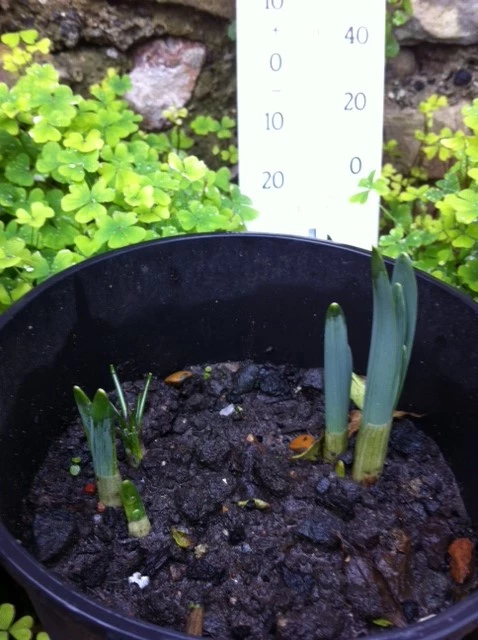
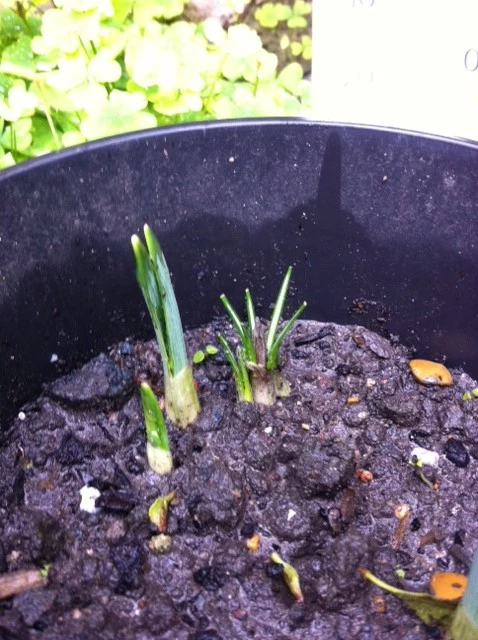
How are your bulbs getting on? Remember to watch them closely as from January onwards you may start to see little green shoots pushing up through the soil – it’s very exciting when they first appear! I was so happy when I went outside this week and saw these little tiny shoots in my plant pots – they are so lovely!

Archbishop Hutton's Primary School sent me this message: A. and J. came running to tell me that our first crocuses have appeared over the weekend and we have taken some photos of them.

That’s fantastic news! Well done A. and J.! I am really glad you are so excited about your plants. I would love to see your photos, maybe you could email them to me?

I hope you are all enjoying your investigation bulb buddies. When your plants start to peep through the soil, why don’t you take some photos too? If you email them to me I will put them on this blog.


WHAT TO DO NEXT…

  • Keep up the great work sending in your weather reports.
  • Watch for your first shoots to arrive.
  • Keep watching every day as they grow taller.
  • When you flowers open - celebrate!! Then record the date and how high the plant is.
  • Send me your Flower Records on the website.

Please use my Power Point presentation to find out how to keep flower records.


Your questions, my answers:

Ysgol Bro Eirwg: Blwyddyn Newydd Dda Athro’r Ardd! Ar ôl y gwyliau roedd y casglydd glaw yn llawn, felly methu cymryd darlleniad cywir. Arthro’r Ardd: Blwyddyn Newydd Dda Ysgol Bro Eirwg! Diolch am roi gwybod i fi am eich problemau mesur glaw, bydda i’n nodi hyn. Peidiwch â phoeni, digwyddodd hyn i lawer o ysgolion oherwydd iddi fwrw cymaint o law dros y gwyliau.

Cawthorne's Endowed Primary School: Im sorry we missed Friday we still want to go to Wales!!! Please wish us luck in Manchester. Prof P: Wishing you lots and lots of luck with your Spring bulbs Cawthorne School! Just wanted to let you know that if you are an English School and you win the Super Scientist Prize, we will arrange a day out for you in England instead of you travelling to Wales. It will still be a Super fun day, I promise.

Woodplumpton St. Anne's Primary School: sorry we forgot to take readings on two days - our teacher was not in school to remind us. There was a lot of rain over the holidays! We were surprised the temperatures were as high as they were. It felt colder. We talked about wind chill. Prof P: You are doing a great job and I am very pleased to hear you have talked about wind chill, it can make us feel VERY cold, can't it? Brrrrr.

The Blessed Sacrament Catholic Primary School: When we came back from our Christmas break the rainfall gauge was overflowing as nobody had been able to empty it over the holidays. The ground is getting very wet and muddy and we have to be careful collecting the information. Prof P: Be careful in the mud! We don't want any accidents, were you wearing your school shoes or your wellies?

Raglan VC Primary: Extreme rainfall on Wednesday evening. Prof P: There has been some very extreme weather recently Raglan, you are right!

Llanishen Fach C.P School: No rainfall measurement for Monday as rain gauge was full from holiday. Very high measurement for Friday rainfall - gauge was emptied on Weds and no rainfall Thursday during day. Prof P: Excellent weather reporting Llanishen Fach.

Stanford in the Vale Primary School: Monday we were off. We have noticed that the bulbs have started to sprout and are growing nicely. Prof P: Fantastic news!! Thanks for letting me know I hope you enjoy watching them grow!

Greyfriars RC Primary School: it was 50mm because that was all over the holidays. C: this is exciting and i dont know whats gonna happen. R: it was fun watering the plants with C. Prof P: Well done C and R, its great to hear you are working together and having fun.

Ysgol Nant Y Coed: School was closed on Monday sorry professor plant. Prof P: That's okay Ysgol Nant Y Coed, keep up the good work!

John Cross CE Primary School: we had some problems because sheep got on to our field and knocked over the rain collector. Prof P: What cheeky sheep! Maybe they were interested in your investigation and came over to have a closer look.


A Window into the Industry Collections

Mark Etheridge, 29 January 2014

We have had a number of interesting objects coming into the Industry collections since my last Blog. Here are just a few.

This wooden full hull ship model is of the m.v. Innisfallen. The Innisfallen was built in 1969 to inaugurate British & Irish Line’s Swansea to Cork ferry service. She was eventually sold to Corsica Ferries and then to Sancak Lines, Turkey. After a number of name changes she was broken up in 2004.


The commemorative plate below was manufactured by Ceramic Arts in 1989. It commemorates both the National Justice For Mineworkers Campaign, 5th Anniversary of 1984-85 strike, and the centenary of the National Union of Mineworkers.


This illuminated address was presented to Harry Brean by the workmen of the Risca Collieries for bravery during the “Gob Fire” at the Old Black Vein Colliery between July 12th and August 9th 1918. Presented towards the end of the First World War, it is interesting to note that the address states that “the Coal Mines produce their Great Heroes no less than the Battlefield”. The address is of a standard format that was printed by the Western Mail Ltd., Cardiff, and then hand illuminated. Note that his name is spelt incorrectly on address!


The object below we believe to be a calendar mount. It was printed on tinplate by Metal Box Company Limited in Neath, c.1960. The image is of a painting by the artist Harold Forster. The original oil on board painting depicts the hot strip mill at Abbey iron and steel works in Port Talbot and dates to 1955. The original painting is in our collection and details of this work and others by Harold Forster can be seen on our Images of Industry online catalogue - http://www.museumwales.ac.uk/industry/images/?action=search&search_type=artist_title&artist=forster&title=


 Mark Etheridge

Curatorial Assistant (Industry)


Collections Review at Carmarthen Museum

Katie Mortimer-Jones, 27 January 2014

On Friday, Adrian Plant and I, along with Christian Baars, took part in a Collections Review at Carmarthen Museum as part of the Esmee Fairbairn ‘Linking Natural Science Collections on Wales’ project. The museum, was in a lovely old house, the old Bishop’s Palace, just outside Carmarthen. We spent the day in the natural history store, systematically going through all of the boxes to see what was in each one and assess it’s condition and potential importance. As not all of it had been accessioned even the curators were not sure what might be there and we had a very interesting time never knowing what might be in the next box. Amongst the specimens we found were a collection of weaver birds’ nests and a ‘vasculum’ (metal box containing botanical specimens) containing an old seed collection along with the original bill of sale. Hopefully, some of these specimens may now find their way out to public display at some point in the future.

 
Blog by Teresa Darbyshire