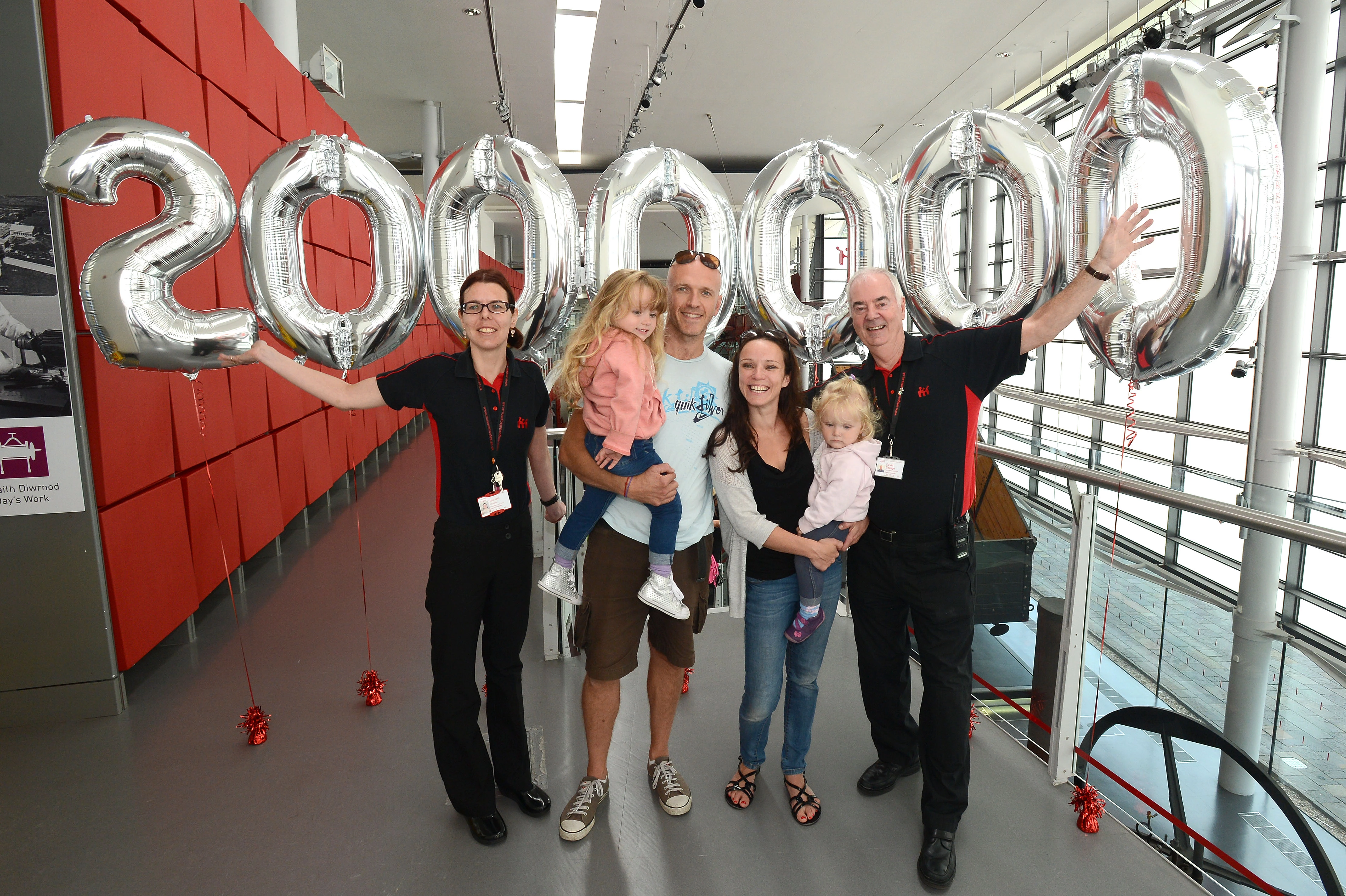
Datgloi ~ Unlock: Your Words Will Celebrate Unlocking the Doors at National Waterfront Museum Angharad Wynne, 28 July 2020 We'll be celebrating the re-opening of the National Waterfront Museum after more than four months in verse, with a specially commissioned poem about life in lockdown, woven through by your words. This week, we're launching a campaign to get our visitors, fans, and community to contribute words and phrases for what will become a poetic legacy of these unprecedented times for the city and surrounding area.All being well, on 28th August, we'll be unlocking the museum's doors and look forward to welcoming you all back, albeit on a pre-booked, ticketed (free ticket) entry basis, to manage numbers and maintain social distancing measures.2020 marks the National Waterfront Museum’s 15th anniversary. When it opened in October 2005, it was to the words of a poem by the then National Poet of Wales, Gwyneth Lewis. So, for the unlocking of the doors this August, we want to conjure words, rhythms and rhymes once more, this time with your help!Datgloi ~ Unlock will be a poetic celebration of the unlocking of our doors. We're asking the community of Swansea, our visitors and fans to let us know two things, each in 280 characters, which is the length of a tweet: Describe your experience of lockdown (ANSWER IN 280 characters or less) Why are you looking forward to the re-opening of the National Waterfront Museum? (ANSWER IN 280 characters or less) Those wishing to get involved and submit their thoughts and words are invited to do so via the museum’s Facebook Page:https://www.facebook.com/waterfrontmuseum or by Tweeting @the_waterfront and using #DatgloiUnlockor by emailing us on DatgloiUnlock@museumwales.ac.ukThrough this project, our aim is to gather a sense of the lock-down experience for the people of Swansea and the region, and to understand what re-opening the museum will mean for you. The commissioned poets, Aneirin Karadog and Natalie Ann Holborow will then take these statements and craft them into two poems, one in Welsh, the other in English.Speaking about the project, the Head of the National Waterfront Museum, Steph Mastoris said:“Over the coming weeks, we’ll be engaging our local audiences and followers through social media and asking them to share a phrase or two about lockdown and what they’re most looking forward to seeing / doing when our museum reopens. Our commissioned poets will then use these words and phrases as the basis and inspiration for their poems, so that they reflect the experiences of our community during lockdown, and celebrate the unlocking of our museum, which over the past 15 years has found it’s place at the heart of the city’s community.” The poets commissioned for this project both have strong connections with the Swansea area. Aneirin Karadog who will compose the Welsh language poem for Datgloi ~ Unlock Aneirin Karadog is a poet, broadcaster, performer and linguist. He was brought up in Llanrwst before moving to Pontardawe in the 1980sHe graduated from New College, Oxford University, with a degree in French and Spanish. His mother is Breton and his father is Welsh; he can speak Welsh, English, Breton, French and Spanish fluently.Aneirin is a familiar face on S4C, and a chaired bard of the National Eisteddfod (2016). He composes poetry on a range of metres from syncopatic rap to the ancient and fiendishly difficult Welsh language form, cynghanedd, and his work has been published widely. Natalie Ann Holborow who will create the English language poem for Datgloi ~ Unlock Natalie Ann Holborow is proud to be from Dylan Thomas’ hometown.She is the multi award-winning Welsh writer whose debut collection, 'And Suddenly You Find Yourself' (Parthian, 2017) was listed as one of Wales Arts Review's 'Best of 2017' and was launched at the International Kolkata Literary Festival. She is a finalist for the Cursed Murphy International Spoken Word award and her second collection, 'Small', will be published by Parthian in 2020.We're grateful to Literature Wales who advised and helped us set up this project. The poems will be unveiled at the opening of the National Waterfront Museum, planned for 28 August.The National Museum of Wales is currently collecting reflections and memories of Covid 2020. Find out more about our Collecting Covid: Wales 2020 project here: www.museum.wales/collecting-covid/
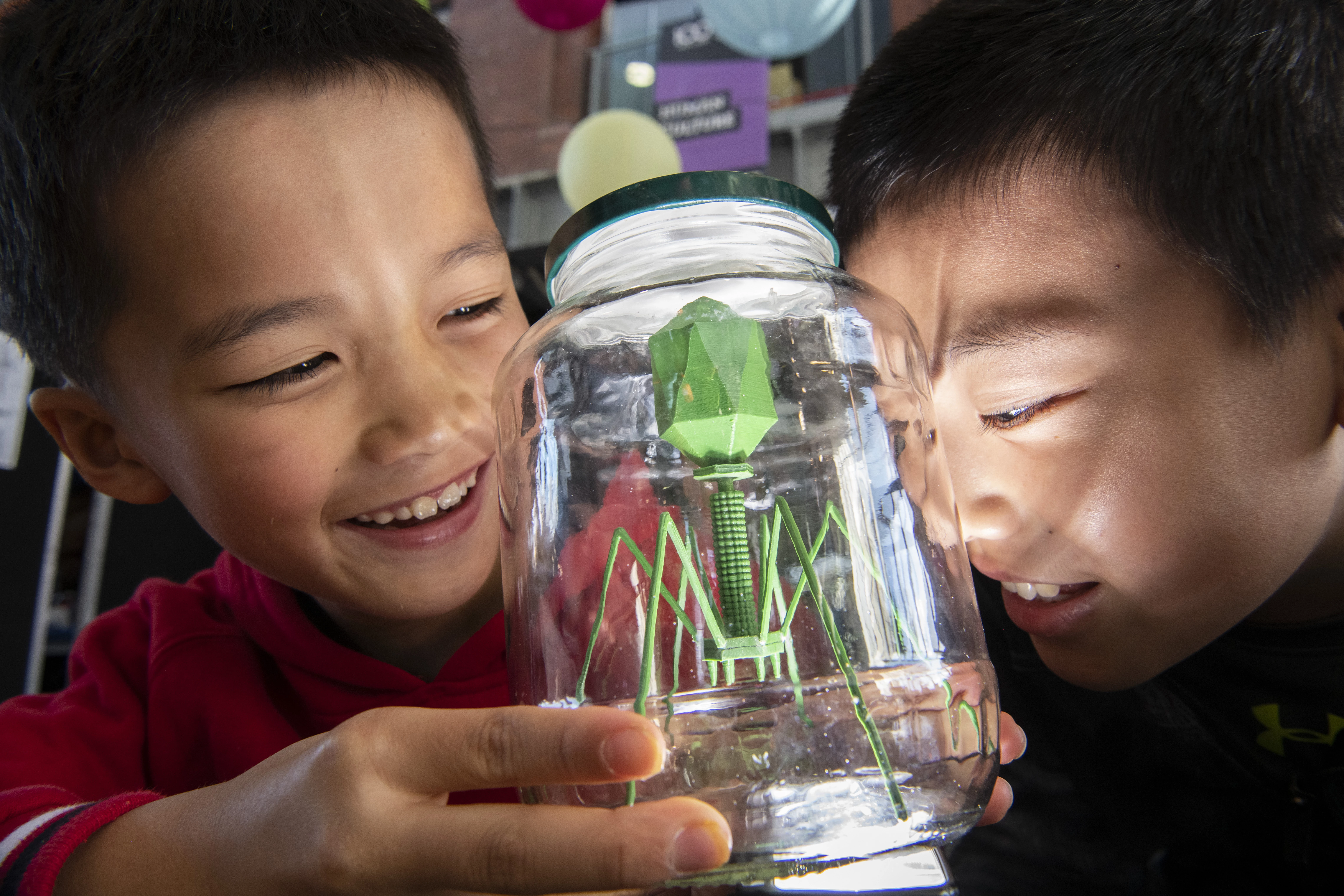
Minecraft Your Museum: The Winners! Danielle Cowell, 25 July 2020 We have had fantastic entries from all areas of Wales & beyond! The standard is truly incredible! Visiting these virtual museums has been great fun and an incredible honour! Many thanks to everyone who took part in the Minecraft Your Museum Competition! We hope you enjoyed taking part as much as we enjoyed visiting your Museum! The video below shows entries from all our participants and highlights the winning entries.Congratulations to everyone who took part in this (woolly) mammoth of a challenge! This competition shines a light on the talented young 'crafters' we have in Wales! They have created the most beautiful Museums and wonderful collections. They also thought of everything a visitor might need from cafes, to play areas, shows and of course toilet facilities. They are digital architects, curators and Museums managers all rolled into one! The digital skills they have used in both creating and presenting is something to shout about! Digital Literacy being a cross-curricular theme in Wales is really paying off. We are delighted to announce that the People's Collection Wales will be creating a collection of all the entries so others too can appreciate the amazing museums created. Once we have permission from participants,we will update this blog with links. People’s Collection Wales is a National digital collection that gathers history from the People of Wales.We are delighted to announce that the Minecraft Your Museum competition has been shortlisted for the Family Friendly Museum Award From Home. The Winners:1st place: Prize VIP trip for your class to your chosen museum (when safe to do so). Plus two reserved tickets for the Museum Sleepover - Dino nights at home & certificates. Year 2 - Thomas Denney Year 3 - Carys Lee Year 4 - Gwilym Davies-Kabir Year 5 - Osian Jones Year 6 - Caitlin Quinn & Lucy Flint Group category: Marc, Zach and Matthew Chatfield. 2nd place: Two reserved tickets for the Museum Sleepover - Dino nights at home & certificates! Year 2 - Monty Foster Year 3 - Nico Poulton Year 4 - Luca Dacre Year 5 - Chloe Hayes Year 6 - Bethan Silk Group category - Emily Jones and Daisy Slater 3rd place: Two reserved tickets for the Museum Sleepover - Dino nights at home & certificates! Year 2 - Meilyr Frost Year 4 - Arwen Silk Year 5 - Zach Waterhouse Year 6 - Evie Hayden Group category - Theo Harrison, Thomas Sommer, William Howard-Rees Highly commended: One reserved ticket for the Museum Sleepover - Dino nights at home & certificates! Year 2 - Mali Smith Year 4 - Oliver Jarman Year 5 - Ffion Ball Year 5 - Zac Davis Year 6 - Scarlett Foster Year 7 - Wren Ashcroft Group category - Bella Hepburn and Phoebe Wilson Group categroy - Gwen Fishpool, Ethan Coombs and Sofia Mahapatra To be awarded Minecraft Your Museum certificates for completing the challenge! Rita Jones Thomas Silk Elliott Thompson Entry 1 (Gelli Primary) Entry 2 (Gelli Primary) Entry 3 (Gelli Primary) Entry 4 (Gelli Primary) Alis Jones Andrew Poulton Cari Hicks Elyan Garnault Ethan Beddow Evan Hicks Greta Wyn Jones Joshua Akehurst Jude Clarke Matilda Turner Ronan Peake Tomos Dacey Zac Jonathan Cally Sinclair Chris Jones David Hughes Durocksha Eshanzadeh Eifion Humphreys Emilia Slater Emily Akehurst Freya Powell Harriet Heskins Henry Lansom Holly Wyatt Ioan Davies Isaac Smith Jessica Thomas Kayden Matthews Lewis Hopkins Macy Jo Tolley Maisie Boyce Mia Livingstone Noah Pearsall Oliver Reeves Peyton Creed Phoebe Skinner-Quinn Rufus Huckfield Sam Cowell Sam Rees Sophie Vickers Sumaiyah Ahmed Tomos Pritchard Will Heskins Zoe Murfin Abhay Prabhakar Alexander Newman Angharad Thomas Floyd Thomas Gwydion Frost Morgan Trehearne Rhys Tinsley Ziggy Dyboski-Bryant Ben Fox-Morgan Emilia Johns Trixx Flixx Dylan, Rhiannon, William Bringhurst Dylan, Rhiannon & William Ellouise Grace James Matthews Pippa and Monty Walker Daniel Brenan & Micah Bartlett Chloe and Grace Chamberlain The CompetitionCompetition for 6-11 year olds.The Challenge: Use your imagination to build your dream museum in Minecraft. Decide how you would like the building to look and fill it with some of your favourite Museum objects. They could be anything from any of our seven museums, such as a Dinosaur, a Roman coin or a house from St Fagans!Prizes: Win a VIP trip for you & your whole class to your chosen museum - when schools re-open! A prize will be awarded to each year group (Yrs. 2-6).
Surviving an unsettled pain Angham Abdullah, Refugee Wales project researcher, 23 July 2020 Angham Abdullah, Refugee Wales research associate When I first read about this project, “Refugee Wales: The Afterlife of Violence,” I immediately identified with the idea of the afterlife of violence. This idea is closely related to my personal experience as an Iraqi survivor of wars, an asylum seeker and a former academic in my home country, struggling at some stage, to set my foot in the British academia. Moreover, my PhD research “Contemporary Iraqi Women’s Fiction of War” and my publications focus on war-related trauma and on how memory and identity function to shape and define the lives of survivors. In my PhD research, I analyzed narratives of the three decades of wars, sanctions and occupation in Iraq and I examined how survivors of traumatic events undergo a “crisis of survival” which transform them into victims to their survival. The crisis of the characters in the narratives takes different forms: sorrow, guilt, uncertainty, fear, and loneliness. However, the characters are determined to live and can put up with the hardships they are facing by means of the strategies of coping: denial, escape, daydreams and through the act of narration. Not only fictional characters could survive the woes of war, but also the writers of the texts and myself. In my PhD research, I added my personal memories of war to the experiences of the characters and the writers to generate one story of dealing with loss of a country and of loved ones and of putting up with the sorrow of an unfinished political disarray. My recollections of war work as a personal testimony to a historical fact and locate me as a historian and in my thesis also as an author who narrates the history of the political conflict in Iraq.Unfortunately, this conflict was enlarged to engulf Syria, a very close country to Iraq and with which Iraqis share similar culture, traditions, and values. And above all we share Arabic language which enabled me to work as a volunteering interpreter with the Syrian refugees in the UK since 2012. In my role as an Associate Researcher in the “Refugee Wales Project,” I am responsible for meeting with Syrian refugees in Wales and of conducting interviews with them. The data collected from the recorded interviews will be translated, analyzed and be part of a book later. Thus, I am offered a great opportunity to add my initial PhD research findings and my personal story of displacement, of longing and of belonging to the stories of refugees who are striving to build a new life in Wales. Together we will produce another narrative of survival and a historical record to generations of Syrians who would be longing to hear testimonies from the witnesses who are seeking to integrate while enduring an unresolved misery back home.https://refugee.wales
1 – 4 Fron Haul Mared McAleavey, 21 July 2020 I can’t believe that 21 years have passed since Fron Haul was officially opened at the National Slate Museum. This was my first project at the Museum, and as someone who grew up in the area, I feel extremely lucky to be associated with Fron Haul. The following is a piece I wrote back in 1999.Why Fron Haul?Originally located on the edge of the road in Tanygrisiau; the buildings were chosen because they are typical of the cramped terraces characteristic of the quarrying towns and villages.When it came to re-erecting and interpreting these houses, we decided to take the lead from the popular and successful Rhyd-y-car terrace. But rather than limit the story to Tanygrisiau, each house not only illustrates different periods, but also depicts different quarrying areas.‘Golden Age’The houses are first recorded in the 1861 Census - with the slate industry well on its way to becoming one of the most important industries in Wales and the main employer in Gwynedd. As demand for slate increased, men moved from neighbouring agricultural areas to work in the quarries. In a number of cases quarrymen would stay the working week in the barracks, built near the quarries, returning to their homes for the weekend. With the building of houses near the quarries, many of the families moved to join the breadwinner, forming new and unique communities. As would be expected, Fron Haul’s first inhabitants were quarrymen born in parishes outside Ffestiniog.However, there weren’t enough houses to meet the demands of the growing workforce. According to the 1871 Census, seven people lived in one of the Fron Haul houses. As well as the father and mother, there lived a 13 year old daughter, two sons, six and one year old, a 27 year old servant and a 29 year old lodger. Considering the houses originally only had one bedroom, it’s hard to imagine how they managed. In addition to overcrowding, damp was a problem, the water was impure and the sewage system primitive. It is no wonder that diseases such as typhoid and tuberculosis were rife.The Penrhyn LockoutAlthough the quarryman received a reasonably fair wage, there was nothing to protect them from losing their jobs or receiving wage cuts in times of recession. There were periodical strikes and lock-outs, the most prominent being the Penrhyn Lockout - one of the longest running disputes in the industrial history of Britain, extended from November 1900 until November 1903.Furnishing the house to reflect the poverty and hardship of a family on strike was quite a challenge, especially as the visitor’s eyes are naturally drawn to the oak dresser with its Willow Pattern plates and the lustre jugs; the ornaments on the mantelpiece and pictures on the walls. But there are a few clues – the sign 'Nid oes Bradwr yn y tŷ hwn’(There is no traitor in this house), that was displayed in the windows of everyone still on strike, showing clearly which side they were on. The wives and children would have used the conch-shell on the windowsill as a trumpet to shame the ‘traitors’ as they returned home from the quarry. Upstairs, in the main bedroom the father’s trunk is in the process of being packed as heads to The Tumble, Carmarthenshire. It’s estimated that between 1,400 and 1,600 quarrymen moved to south Wales to work in the coal mines and support their families during the Strike.End of an EraThe Strike failed in its aim, and the industry declined soon after. The closure of such an influential quarry as Penrhyn for three whole years starved the market of its supply of slate, and merchants turned their sights towards foreign markets for roofing materials.Quarries gradually closed, with the process reaching its peak between 1969 and 1971 when work came to an end at three of the previous mainstays: Dinorwig, Dorothea and Oakeley.In less than a century, the slate industry developed, grew, then declined. The houses have been furnished to reflect this change within the slate industry.
Dementia Friendly Underground Tour at Big Pit National Coal Museum Sharon Ford, 14 July 2020 In May 2017 we launched a new underground tour developed with and designed for people living with dementia and their carers. The Dementia Friendly Underground Tour follows the same principles of our other tours, but with a few adjustments. Before going underground participants meet with their guide for a cup of tea and a chat and the tour is slightly shorter than normal with less figures and numbers and more history. The tours are conducted by our miner guides who have been specifically trained and many have first-hand experience of knowing people who are living with dementia. To date, over 200 people living with dementia and their carers have taken part in the tours. Our plan is to schedule more of these free, bespoke tours once the museum re-opens. Here are some quotes from our miner guides and people living with dementia and their carers, who have taken part in our Dementia Friendly Underground Tours:“It is fantastic when you see someone with dementia talking and remembering from their past.”“I didn’t know that he had been a miner for 23 years and his companion said it was the first time they had heard so much from him in ages.”“The tour brought back all the memories of mining.”"The conversation I was having with the gentleman was quite detailed...it's great to think that we are able to help someone in this way"Big Pit Miner Guide"I was amazed to hear him having a conversation with the miner...he was remembering all the terms"Staff member from a dementia care setting"This gentleman has started reminiscing and even started talking about his school days. This has done him the world of good"Staff member from a dementia care setting