If you go down to the beach today….

Dafydd Newton-Evans, 13 August 2026

You’re sure of a big surprise! Okay you are not likely to find a Teddy Bear’s picnic but that doesn’t mean that it won’t be any the less surprising! There is plenty to discover and learn about the amazing wildlife we have around the coasts of Wales.

Our marine biologists, the museum scientists who study the life within the sea, have set you a challenge to see if you can find 16 objects at the seaside. Fancy giving it a go?

See if you can find and photograph all of these objects. Some may be more familiar to you, but some are not so obvious. To help our scientists have shared the results of their last visit to the beach to give you a helping hand [Bingo answers]. They have also prepared some spotter’s sheets that you can print out and take with you when you go to help you spot the things on the shore: 

https://museum.wales/media/52516/10SG-Treasures-of-the-Strandline.pdf

https://museum.wales/media/51467/08SG-Spotting-Seaweeds-in-Wales-reds-and-greens.pdf

https://museum.wales/media/52514/09SG-Common-Seashells.pdf

https://museum.wales/media/51473/03SG-Have-I-found-a-fossil.pdf

https://museum.wales/media/51468/07SG-Spotting-Seaweeds-in-Wales-brown-seaweeds.pdf

There are a few that are a little bit harder than others to spot, so our marine biologists have given you some helpful tips;

Hornwrack

Hornwrack may look like seaweed but it is actually a bryozoan moss animal! They are made up of a colony of tiny individuals called zooids, which you may be able to see using a magnifying glass. Find pieces washed ashore on the strandline.

Efallai bod gwymon corniog yn edrych fel gwymon ond mewn gwirionedd yr hyn ydyw yw anifail mwsogl bryosoaidd! Cytref o unigolion bychan bach o’r enw sõoidau ydyn nhw, y mae’n bosib y byddwch chi’n gallu eu gweld drwy ddefnyddio sbienddrych. Dewch o hyd i ddarnau wedi eu golchi i’r lan ar ymyl y traeth.

Thrift

Thrift is a plant that is called Clustog Fair in Welsh, or Mary’s Pillow. The plants grow in small mounds that look like cushions at the top of the shore. 

Yr enw Cymraeg ar Thrift yw Clustog Fair. Mae’r planhigion yn tyfu mewn twmpathau bach sy’n edrych fel clustogau.

Barnacle

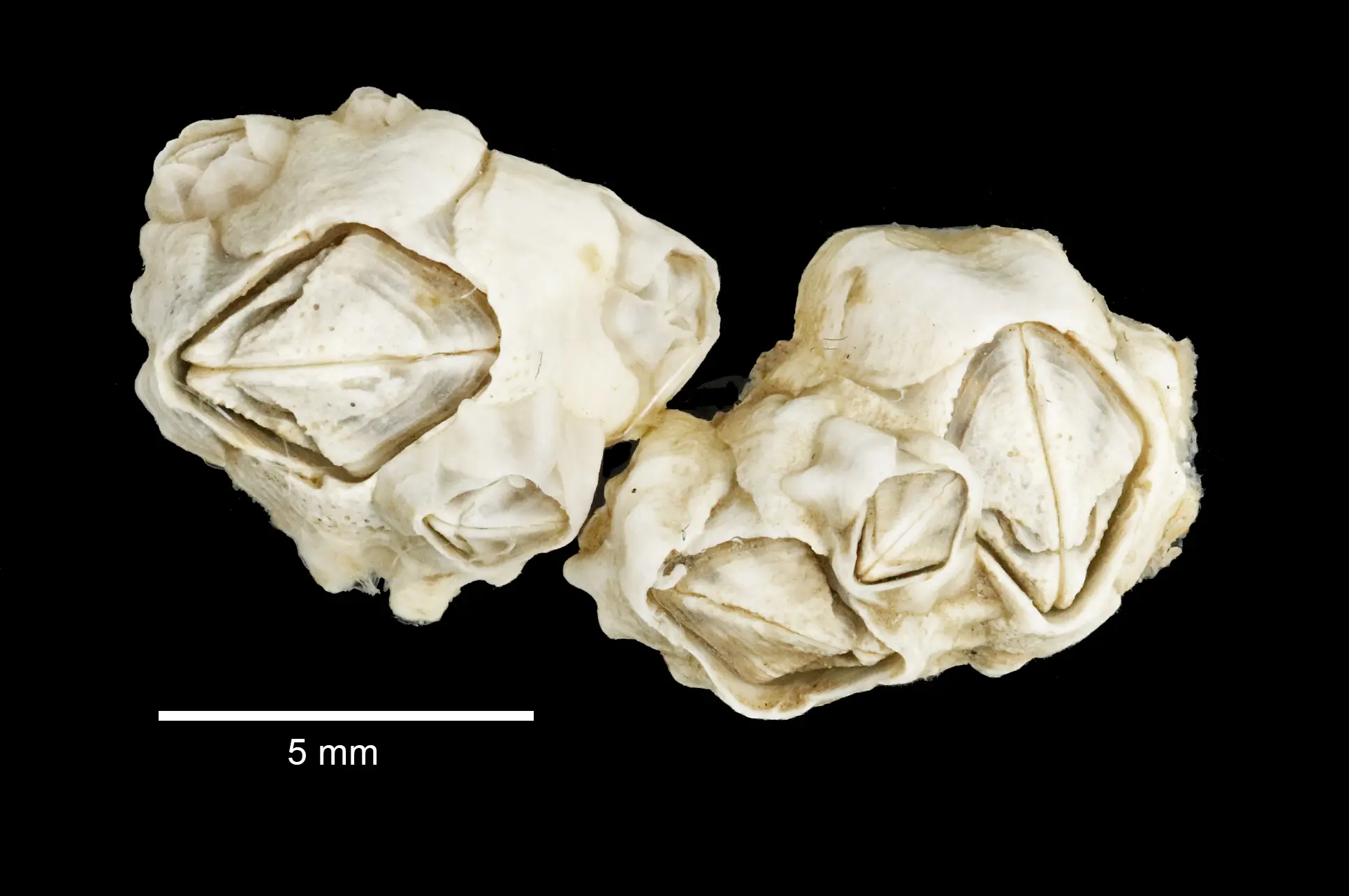
You can find barnacles attached to rocks at the beach. They may look like shells, but did you know that they are related to crabs and lobsters! Rather than using their feet to walk, they actually use them to gather food from the water column. Most of the barnacles you see are pretty small, but we have some whale barnacles in the collections at National Museum Cardiff. They came off the Humpback Whale that is on display and they are a lot bigger, almost the size of a human fist!

Starfish

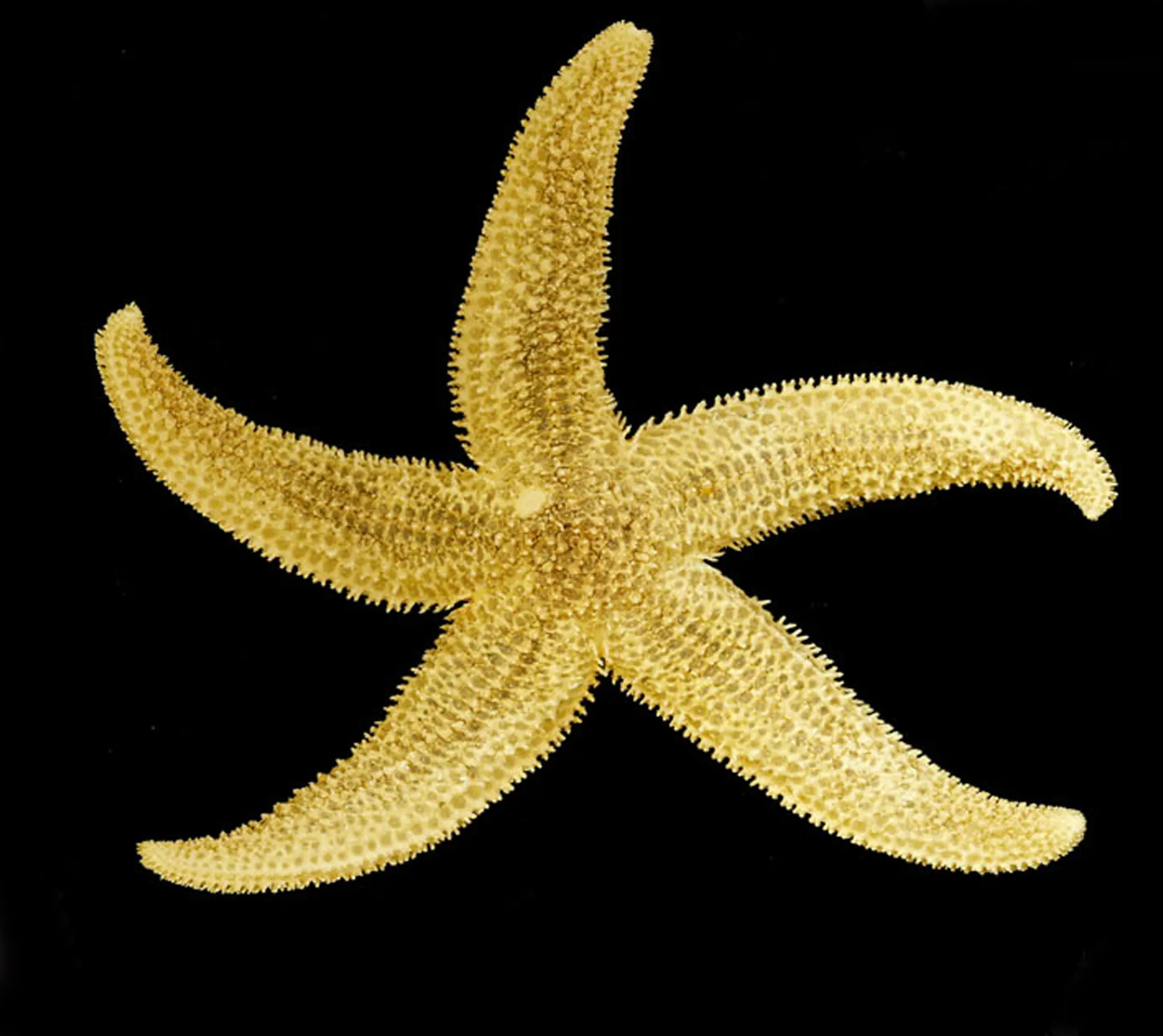
There are several different types (species) of starfish you might see at the beach. The most common one to find is the Common Starfish, which is reddish/orange in colour. However, you might come across a spiny starfish, a sand starfish or even brittlestars, which have very delicate legs. There are even some very small starfish called cushion stars, which you might see stuck on rocks. They take some finding though as they are not very big at all. Next time you see a starfish, count how many legs they have. 

Lugworms

We might all be familiar with the squiggles of sand that you see on a sandy beach. These are called lugworm casts, and they are actually worm “poo”. They are left behind after a lugworm, a type of marine bristleworm, has consumed lots of sand. However, there are actually a couple of different types of lugworms in South Wales, and you can tell them apart from the shape of the cast they make! The blow lugworm has very messy casts whilst the black lugworm has very neat and tidy casts.

Honeycomb worms

Have you seen this strange honeycomb like structure covering rocks near a sandy beach? Well, this has been made by the Honeycomb Worm. Each opening is the home of one worm and they build this reef-like structure together. It’s really important that we try to look after the reefs and to not tread on them as we walk over the rocks. 

Remember if you do go out on the beach be safe (RNLI Beach Safety – Top Five Tips To Stay Safe By The Sea) and follow the seashore code (Seashore code-web.pdf)., Respect | Wild Seas Wales 

Helios and a Partial Solar Eclipse

Heather Jackson, 31 July 2026

On Wednesday 12th  August 2026, people in Wales will be able to see a partial solar eclipse. This is where around 90% of the Sun will be covered by the Moon.  

This will be the closest to a total eclipse the UK has seen since 1999, and you'll have to wait until 2090 for the next total solar eclipse visible from Wales! 

At the same time, visitors to Amgueddfa Cymru: National Museum Cardiff will have the chance to explore Helios, a spectacular illuminated installation by artist Luke Jerram. Visitors will be able to experience both the Sun in partial eclipse and explore an up-close artistic interpretation.  

National Museum Cardiff will be opening late on the 12th August to celebrate the eclipse. To help you view it safely, we will be making eclipse viewers in the Clore Discovery Centre throughout the day out of cereal boxes. Why not bring along a cereal box and turn it into your own scientific instrument? Tickets to this event are free and can be booked from our website - Museum Lates: Solar Eclipse.

What is a solar eclipse?  

A solar eclipse occurs when the Earth, Moon and Sun align. The Moon passes in front of the Sun and blocks its light, casting a small shadow on Earth. As the shadow is quite small compared to the size of the Earth, only a few countries see the eclipse. 

Map of the August 12, 2026, Total Solar Eclipse

An eclipse’s ‘path of totality’ is a thick line (shown in red on the map of the globe) where viewers are fully in the Moon’s shadow. These people will see a total eclipse. 

On the 12 August, the path of totality falls over Greenland, Iceland and Spain. People in the UK, France, Belgium, Switzerland and northern Italy will see a partial eclipse, where a portion of the Sun (90%) is covered by the Moon. 

For Wales, it will be as close to a total eclipse as we’ve seen in 27 years! 

Historical eclipses in Wales 

Total solar eclipses are very rare in Wales but there are records of them. The last one was in June 1927, but the weather was bad with dark clouds and heavy rain.  

For the eclipse of 1836, Wales fared better. The following poetic report appeared in Y Seren Ogleddol (The Western Star) afterwards. The original inhabitants of the Rhyd y Car cottages and Cilewent Farmhouse at St Fagans National Museum of History would have witnessed this eclipse in much the same way as this writer. 

DIFFYG AR YR HAUL

Cymerodd y peth anarferol hwn le, Sabbath y 15 o Fai, yn union yn yr amser. Mewn rhai mannau yn y dywysogaeth, dywedir bod y brain yn mynd i'w coedwigoedd, yr adar yn mynd i'w nythod, a'r ystlum yn dangos ei hun; yr ieir yn chwilio am eu clwydau. Yr oedd natur wedi llawn prydferthwch, felpetai wedi ei daro â syndod a rhyfeddod; yr awyr yn oer a thywyll, fel pe bai rhywbeth annormal yn dod i'r ddaear; ac wedi i'r gwanwyn godi, dyma natur yn codi o farwolaeth i fyw, yr ystlumod yn dianc i'w tyllau, a'r adarbach yn canu'n hapus i'w Creawdwr, a phob peth yn edrych mor brydferth a dymunol a cynharach. 

SOLAR ECLIPSE

This unusual event took place on Sabbath, 15th May, exactly at that time. In some parts of the county, it is said that the crows went to their woods, the birds went to their nests, and the bats appeared; the hens went to roost. Nature that was full of beauty, appeared as if struck with wonder and amazement; the air was cold and dark, as if something abnormal was coming to the earth; and after the sun reappeared, nature arose from death to life, the bats escaped to their holes, and the little birds sang happily to their Creator, and everything looked as beautiful and pleasant as before.

What will happen on 12th August 2026?  

6.17pm (Cardiff): The Moon will first cover part of the disk of the Sun.  

The Moon will move slowly in front of the Sun until roughly 90% of the Sun is covered.  

7.12pm (Cardiff): The eclipse maximum, where enough of the Sun will be covered to make a noticeable difference in the temperature and light levels. The sky will not actually become dark.  

After the maximum, the Moon will slowly move off the Sun’s disk until only a small sliver remains. 

8.06pm (Cardiff): the eclipse ends. 

As this will happen as the Sun is setting, the Sun and Moon will become increasingly low on the horizon as the eclipse goes on. The best way to see the eclipse will be from a high point with a clear view of the western horizon. We can only cross our fingers for cloudless skies! 

Your view will also depend on where you are in Wales – Pembrokeshire will have the best views. There 94% of the Sun will be covered by the Moon.  

If you’re planning to view the eclipse on the 12th August, why not visit Helios for a close-up view of the Sun beforehand to discover what the Sun looks like up close?

Composite image of eclipse from NASA’s Johnson Space Center in Houston, 21st August 2017

Composite image of eclipse from NASA’s Johnson Space Center in Houston, 21st August 2017. NASA Image and Video Library.

How to view a solar eclipse  

You should never look directly at the Sun, even during an eclipse. Doing so can severely damage your eyes.  

We will be making eclipse viewers throughout the day on the 12th August so why not come along to make your own. 

You can safely watch the 12th August partial solar eclipse using:  

1. Eclipse glasses – Special eclipse glasses can block out the Sun’s harmful rays and enable you to look at the eclipse safely. Normal sunglasses are not safe to use! Make sure your eclipse glasses have safety certification ‘ISO 12312-2' printed on them. Don’t reuse any old eclipse glasses: they may not be safe. Even a microscopic scratch in the lenses could damage your eyesight.

Eclipse glasses

Eclipse Glasses, CC BY-SA 3.0 <https://creativecommons.org/licenses/by-sa/3.0>, via Wikimedia Commons

2. A solar telescope – Check with your local astronomical society to see if they’re running any eclipse-viewing events on 12 August. They may have a few telescopes fitted with special solar filters, which are safe to use to observe the Sun. you should never use normal telescopes or binoculars to look at the Sun.  

3. Make a pinhole projector – There are a few ways you can make a ‘pinhole projector’, which will allow you to see the eclipse by projecting the Sun’s light, and the bite being taken out of it, onto another surface. Try this one: Make your own pinhole camera | The Schools' ObservatoryYou can even use a kitchen colander to project an image of the eclipse safely on the ground!  

Diagram of a pinhole projector

Book your free tickets here - Museum Lates: Solar Eclipse

Helios by Luke Jerram

SBRAGIO - call-out for creative freelancers!

31 July 2026

Are you a musician, artist, sound engineer, or someone working in a creative field? 

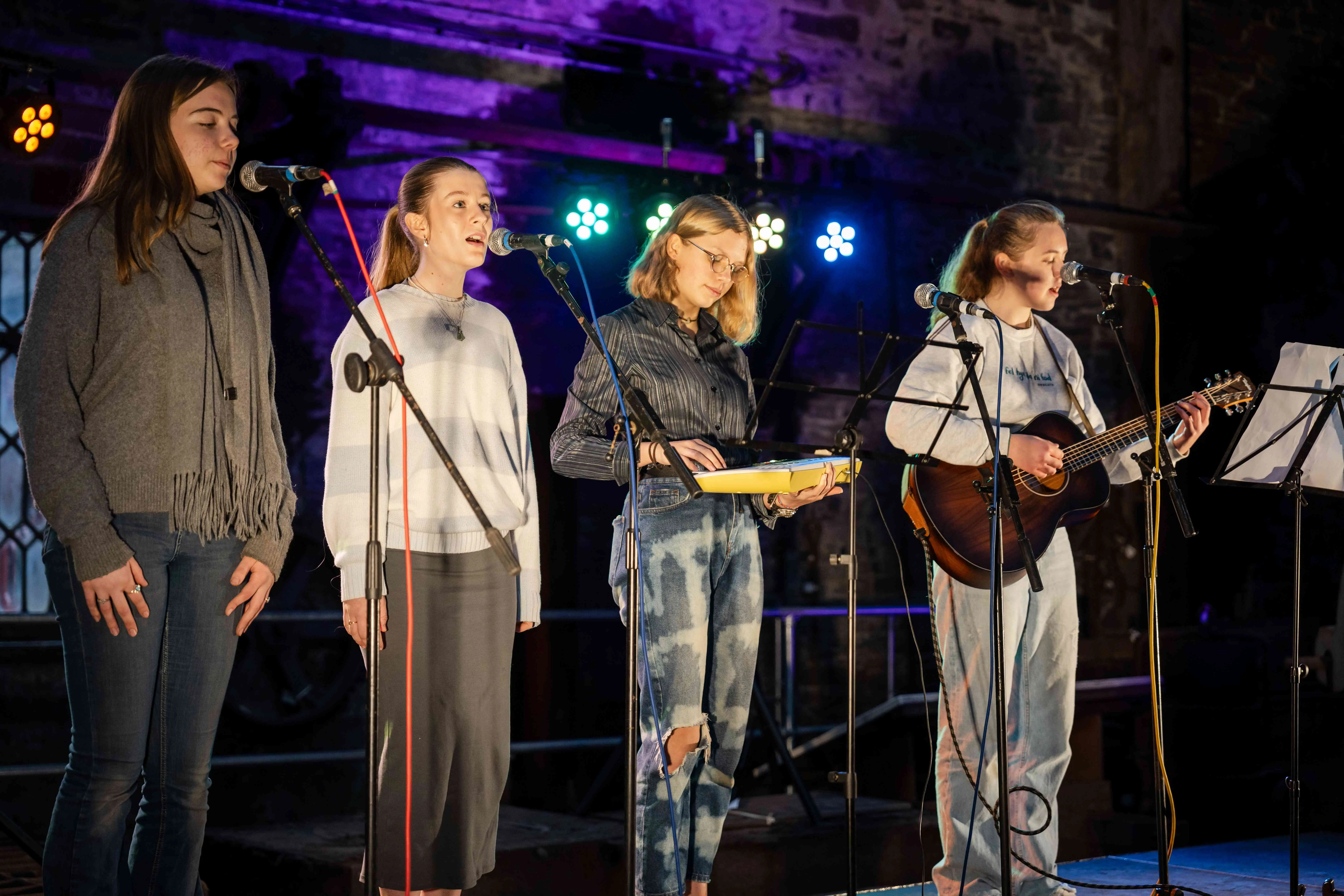
We're looking for freelancers to help deliver SBRAGIO, an exciting music project as part of the redevelopment of the National Slate Museum. 

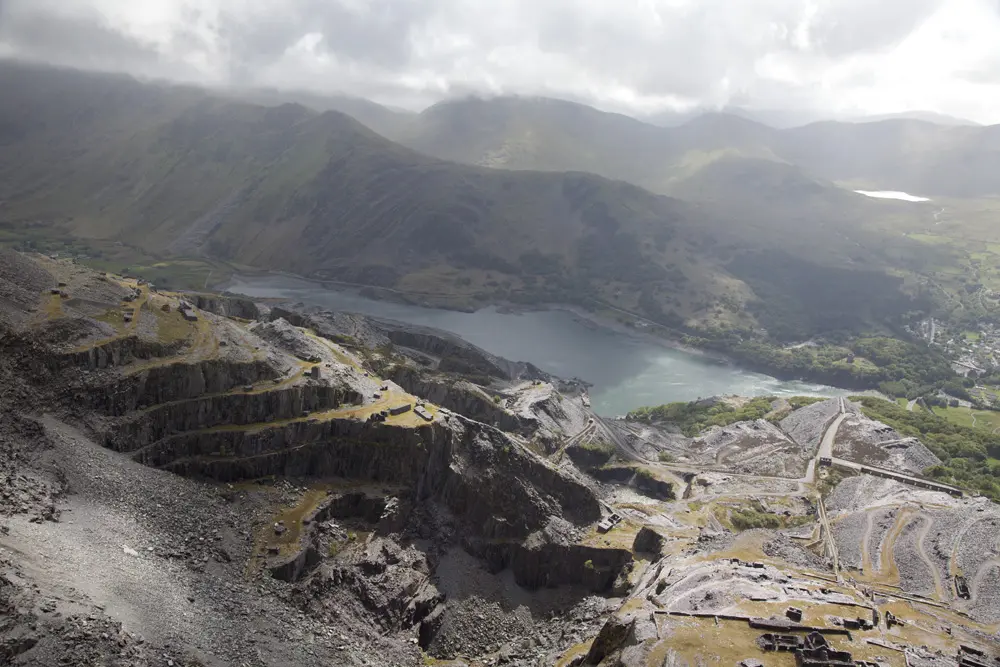
The National Slate Museum Redevelopment will protect, enhance and interpret the Museum’s unique site, while creating a UNESCO World Heritage Centre that supports traditional skills, learning and wellbeing. 

You will lead a project that brings people together to work with sound and music in ways that reflect the history, landscape and living stories of the local community. This is an opportunity to collaborate, experiment and create new work that will become part of the Museum’s redevelopment. The project will engage and inspire communities and visitors, connecting people with the remarkable story of the slate industry and the internationally significant landscape it has shaped. 

Chloe Ward, Engagement Manager said:  

"We're looking to create new musical works co-created with local target communities, to be used to retell the story at the National Slate Museum.  The project will also mean coordinating and contributing to a special event celebrating the work at the end of the project, such as a concert or festival. Those appointed will be responsible for recruiting and working with communities, developing creative ideas that respond to the Museum and its history and leading a collaborative, inclusive and engaging process to create the final outputs."

Timeline

  • The project will begin as soon as possible after appointment. While there is some flexibility, we hope this creative project will conclude towards the end of 2026. 
  • Final elements may be delivered in early 2027, but no later than the end of March 2027. 

 Costs  

  • There are three separate funds of £3,000 available, covering three different elements of the project. 
  • When preparing a budget or outline proposal, please note that the £3,000 must cover all fees, travel, subsistence and any materials. 
  • A separate budget is available to cover translation services and accessibility-related costs. 
  • Amgueddfa Cymru reimburses freelance travel expenses at 25p per mile. 

Language

  • It is essential that people can participate in both Welsh and English. Therefore, all facilitation and community engagement activities must be delivered bilingually. Preference will be given to expressions of interest from Welsh speakers or those who demonstrate an understanding of this requirement. 
  • You must be able to comply with Amgueddfa Cymru’s Welsh Language Standards, available here

Copyright

  • Amgueddfa Cymru will retain copyright and ownership of all outputs.

Expression of Interest  

Please provide written proposals of no more than 2 A4 pages, or a short video or voice recording of under 5 minutes 

Your submission should include: 

  • Relevant experience demonstrating how you have creatively engaged with communities. 
  • Information about your creative practice and your ideas for the project, including what you would aim to achieve and who you would work with. 
  • An outline of your costs, including your daily fee. 
 
More details can be found in this document
 

Please send your expression of interest by email to:  chloe.ward@amgueddfacymru.ac.uk  before the 11/09/2026.  

Applications will be reviewed on an ongoing basis, and all applicants will be contacted no later than one week after the closing date. 

Music project call expression of interest (PDF)

Curating at St Fagans National Museum of History: What I've learned and why it matters

Ammah Holder, 30 July 2026

As part of the Wales REACH project, we’ve had the pleasure of collaborating with a range of people across Wales. Among these is Ammah, a Wales REACH Community Curator. Discover what Ammah has been working on as part of the project.

When Hywel Squires, Senior Engagement Coordinator at Amgueddfa Cymru, selected me as a Community Curator for the REACH project, I knew it was a rare opportunity.

Helping develop an exhibition at St Fagans National Museum of History, one of the UK's most respected living museums, isn't something you take lightly. It's also an experience that stays with you.

Why this work matters to me

My work as a curator comes from a simple belief: objects help people find connections across cultures and communities. That belief is also shaping something I'm building closer to home: Earthen Acres CIC, a community interest company through which I'm working towards opening a nature museum in South Wales. Everything I learn here feeds into that vision.

What I focused on

My curatorial interests kept returning to four areas:

Objects with meaning
Everyday items can tell powerful stories. I wanted to help present artefacts in ways that show how they were used, valued and passed on by real people.

Craft and hands
Traditional skills deserve recognition, as do the people who keep them alive. I wanted visitors to appreciate the time, care and expertise behind the objects on display.

Visitor voice
Museums work best when people feel part of the conversation. I explored ways for visitors to share stories, contribute ideas and give feedback so their experiences become part of the wider story.

A lasting record
I was interested in how community voices can be recorded and preserved, becoming part of the museum's ongoing work rather than existing only for the duration of an exhibition.

The collection itself

I won't spoil what's coming, but getting access to the storehouses and seeing selected objects up close has been one of the highlights of my recent working life.

The harp collection at St Fagans stopped me in my tracks, and that was only a small glimpse of what is held across Amgueddfa Cymru's seven museums and five million objects.

Researching the histories of objects and seeing how knowledge is shared between different teams has been fascinating. Everyone I worked with was generous with their time, happy to answer questions, and keen to connect me with the right people. It's an approach to collaboration that I hope to carry into my own organisation.

Access and sustainability: small changes, real impact

Good museums keep listening to the people who use them. I suggested a number of practical changes, including reducing glare in some spaces, creating quieter zones, and providing waiting areas that still offer opportunities for engagement.

These are relatively modest adjustments, but they can make a significant difference to visitors' experiences.

Sustainability also featured in many conversations. Learning about how St Fagans manages its woodland and uses timber grown on site reinforced my view that museums can play an important role in demonstrating environmental responsibility through everyday practice.

How this team worked

The REACH exhibition team brought together people with different backgrounds, experiences and needs. Hywel worked hard to make sure everyone could contribute, making use of facilities already available at St Fagans, including quieter spaces, low-lit rooms, a prayer room, and flexibility in how people took part.

That thoughtful approach helped create an environment where people felt comfortable contributing their skills and ideas, and I think the exhibition is stronger because of it.

Looking ahead

This experience has given me a much clearer understanding of how museums operate. I've learned more about collections care, community engagement, sustainability and accessibility, and how these different areas connect with one another.

I joined the project as a community curator and leave it with a deeper appreciation of the people, knowledge and work that sit behind every exhibition.

If you'd like to get involved as a volunteer at Amgueddfa Cymru, please visit: Get Involved | Museum Wales or email: volunteering@museumwales.ac.uk.

Keep an eye out for others upcoming blogs, showcasing the amazing work that’s been happening across all our participating communities. 

Wales REACH is made possible with The National Lottery Heritage Fund. It is a partnership between thirteen organisations and is led by The Open University and Amgueddfa Cymru. It is funded with a grant from the National Lottery Heritage Fund. The current phase started in autumn 2024 and is scheduled to run until autumn 2026. 

Miners Fortnight

Ceri Thompson, 24 July 2026

“I remember Miners’ Fortnight when I was just a lad, I went to Barry Island and the weather always bad.”

Max Boyce ‘Ode to Barry Island’

Traditionally, the last week of July and the first week of August was known as ‘Miners’ Fortnight’. Between the 1940s and 1970s there was a mass exodus from the coalfields to the coast, especially the seaside towns of Barry and Porthcawl.

The miners had fought for holidays from the late 19th century. Between 1888 and 1898, a day’s holiday was secured by the Welsh miners’ leader, William Abraham (known by his bardic name Mabon). Known as ‘St. Mabon’s Day’ this holiday every month was designed to give the coal miner a day away from their usual heavy labour.  On these days large Eisteddfodau were held in places such as Blaenafon, Risca, and the Rhondda. This holiday had to be given up following the bitter coal strike and lockout of 1898 when the owners forced the men to give the day up.  Following this set back,  miners had to take unpaid leave, in fact, in 1924, a Government Report stated that ‘in no case apart from officials and clerical staff, is any payment to be made for holidays either public or otherwise in the mining industry.

In the 1920s and 1930s, it was usual for miners’ families to camp out in places like the dunes in Porthcawl.  They used large ex-Army tents and transported furniture from their houses for the length of the school holidays.  The husbands worked during the week and travelled down to their families on the weekend.

In 1938 a Holiday with Pay Act was passed by the government which gave employees a statutory right to paid holidays.  By the 1940s, miners were entitled to two weeks paid holidays. This occurred the last week of July and the first week of August and coal mines and factories would halt production for two weeks, however many men volunteered for essential safety and maintenance work and received extra pay for their sacrifice.

The two major resorts in south Wales were Barry and Porthcawl , as well as Aberavon Beach and Tenby, although Tenby was regarded as more ‘middle class’. In north Wales, miners occupied places such as Prestatyn. Families flocked to occupy every caravan and guest house in these resorts – Porthcawl was known as ‘Hiyabutt Bay’ because of the number of miners there on holiday. In these places there were fairgrounds, boxing booths, a beach and, in Barry, there was the famous Butlins Holiday Camp. As well as beaches and activities these places were connected to the coal field towns and villages by the same rail network that usually carried coal down to the docks.

By the 1970s there were as many factory workers as miners on the beaches and the holidays later became known as ‘Factory Fortnight’.

By the late 1970s, many families, often entire streets, swapped the Welsh resorts for Spanish ones although Porthcawl and Barry still catered for ‘day trippers’ as well as the more traditional beach holidays.

Although I had given up on a fortnight in Porthcawl by the 1970s, I still found the paid two weeks useful. As with many others, weddings were arranged for the end of July so that the happy couple could enjoy a two week honeymoon.

Ceri Thompson

Curator

Big Pit: national Coal Museum


Photographs © David Hurn / Magnum Photos / Amgueddfa Cymru - Museum Wales