Welsh love spoons
25 January 2024
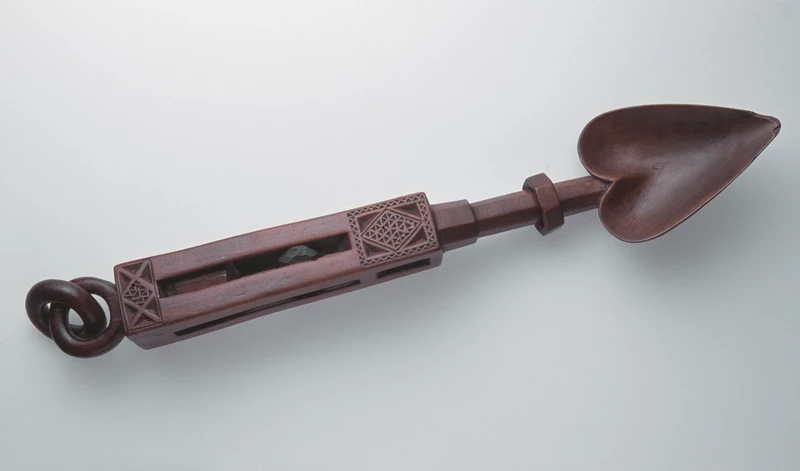
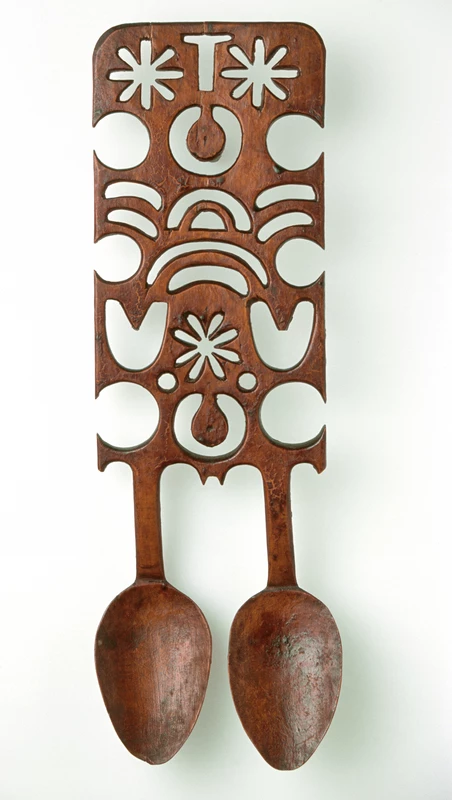
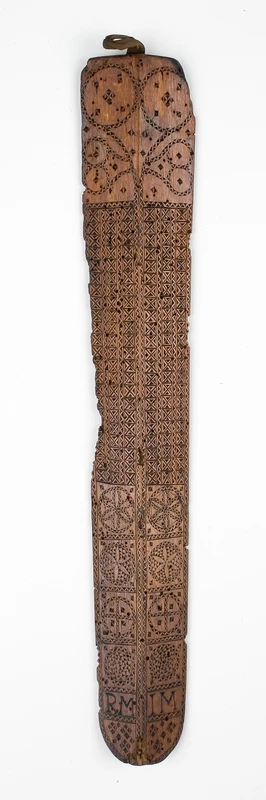
Although the exact origins of lovespoon-making in Wales are unclear, we know that such spoons would have been shaped with great care and devotion by their carvers. Lovespoons were given as a token of love and affection and each spoon was unique.
The lovespoon collection at Amgueddfa Cymru contains beautifully ornamented examples both historical and modern. It conveys the changing nature of the art through time and encompasses a wide variety of styles and designs all carefully handcrafted to the highest quality.
Presenting a decoratively carved spoon to a loved one as a token of affection has long been popular in Wales. From the Museum's oldest dated spoon of 1667 to contemporary examples by renowned present-day carvers, the calibre of the spoons is testimony to the makers' skill and devotion in creating objects intended to be treasured by their recipients.

Young men traditionally made a lovespoon from a single piece of wood, as a love token for their sweethearts.
Romantic gifts to maidens
Despite the lack of historical sources, it is generally believed that lovespoons were formerly crafted by male suitors and then presented as romantic gifts to the maidens they admired. The eighteenth- and nineteenth- century examples which form the basis of the Museums collection were driven by the emotion and passion of carvers who sought to produce works of art worthy of their beloveds.
The simplest of tools, such as small pocket knives, were traditionally used to to create the spoons, if possible, from a single piece of wood. Close-grain woods, such as sycamore, box and fruit woods were particularly popular.
Although the popularity of lovespoons has fluctuated over time, lovespoon carving has survived intact and continues thanks to a new breed of craftsmen determined to preserve the art.
Traditionally, lovespoons were given as romantic gifts, but today they are frequently given as gifts to commemorate events such as weddings, birthdays, anniversaries and christenings. Their function has significantly altered over time - particularly from the mid-twentieth century onwards when the fashion for mass-produced examples became increasingly prominent.
What do love spoons mean?
The symbolism on the spoons has also changed in recent years, with the introduction of Celtic and national emblems, such as daffodils and dragons, a means of expressing Welsh identity. This contrasts with the previously romantic sentiment, such as hearts, diamonds and wheel motifs.
Lovespoons continue to represent an expression of one's thoughts and emotions and carvers remain who honour the folk origins, either by creating spoons on commission or as presents for their family and friends.
Lovespoon carving is an ever-evolving craft and one which is sure to continue to delight and inspire for many generations to come.
Judging by the exquisite array of designs in the Museums collections, carvers have always felt free to decorate their lovespoons as they saw fit. Although each spoon is unique and often features initials or dates personal to the recipient, over time a series of symbols were employed to depict romantic thoughts and feelings. Such symbolism can, of course, be interpreted in many ways, and we can only imagine the true emotions of the carver as he prepared the spoon.
- Hearts
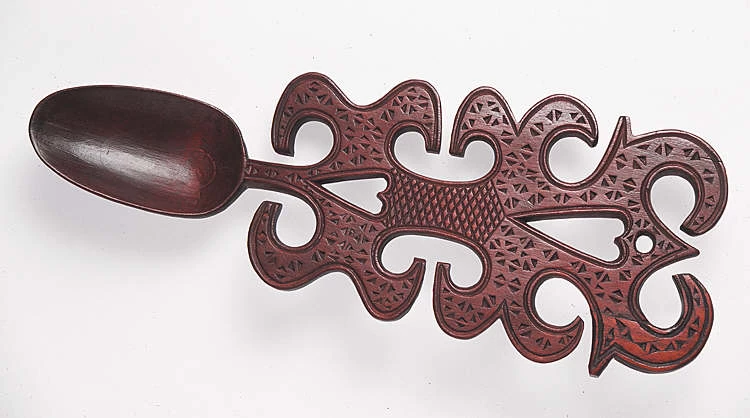
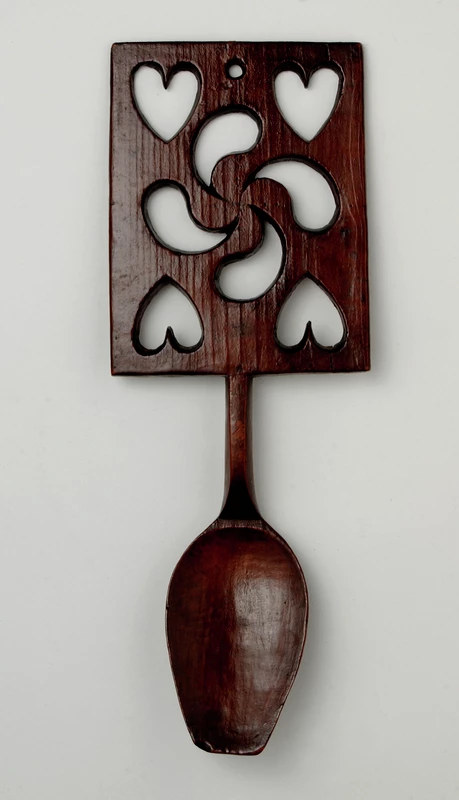
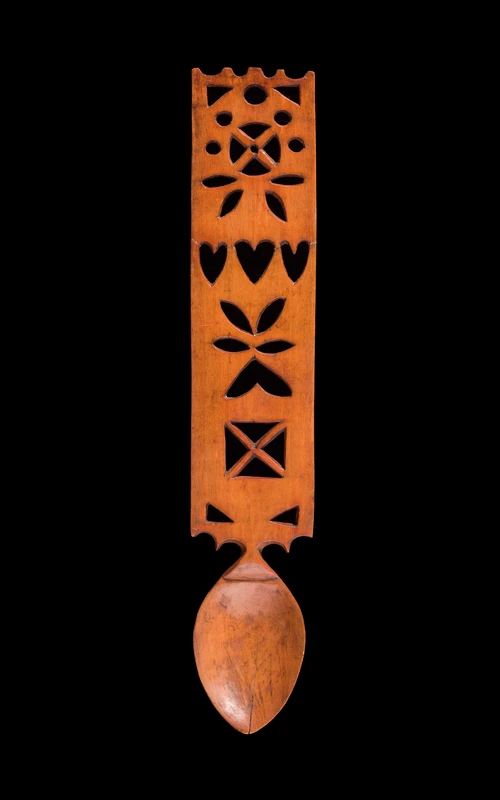
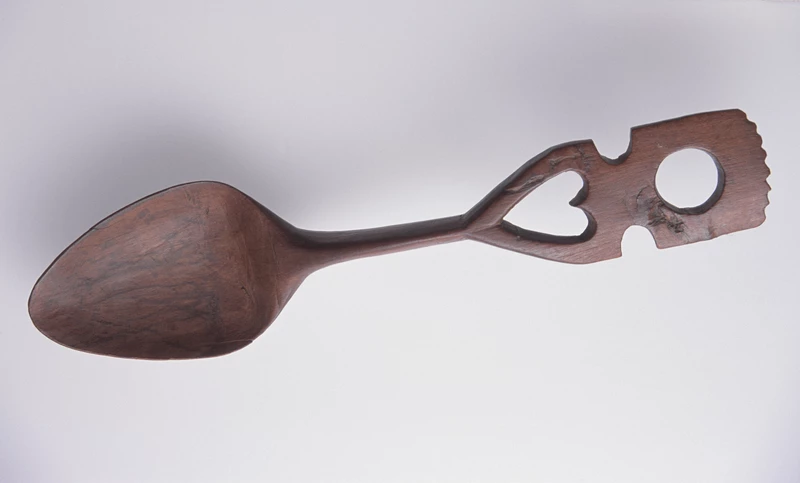
The heart is the universal symbol of love and is frequently seen on Welsh lovespoons. It is a sign of passion and strong emotion - surely signifying the carver's depth of feeling for his beloved. A lovespoon showing twin hearts might well indicate a mutual love between sender and recipient.
- Double bowls
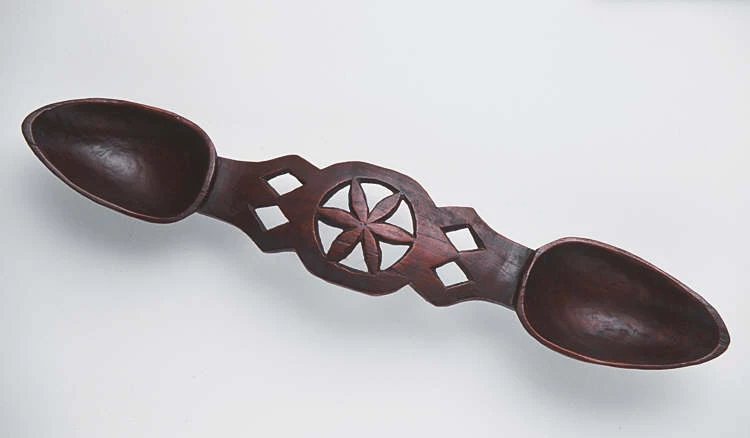
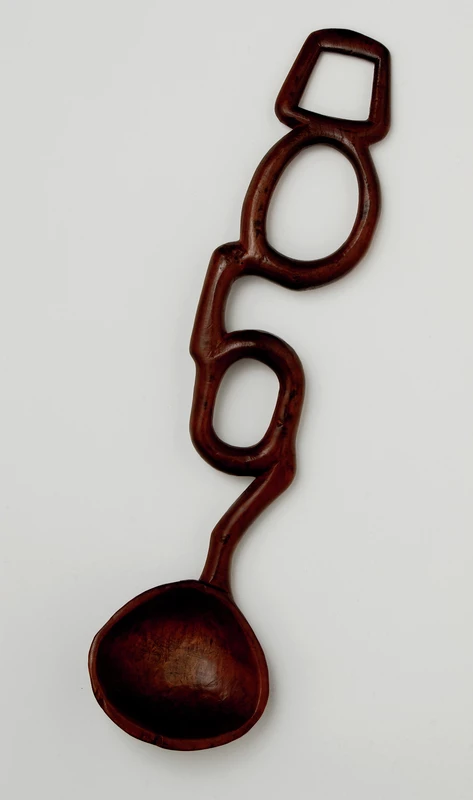
Occasionally, lovespoons are carved with two or more bowls, possibly to indicate the union of the souls when joined together, or perhaps the number of children desired.
- Comma or paisley shape
Often visible on historic Welsh lovespoons, this shape is said to represent the soul and deep affection.
- Balls in cage
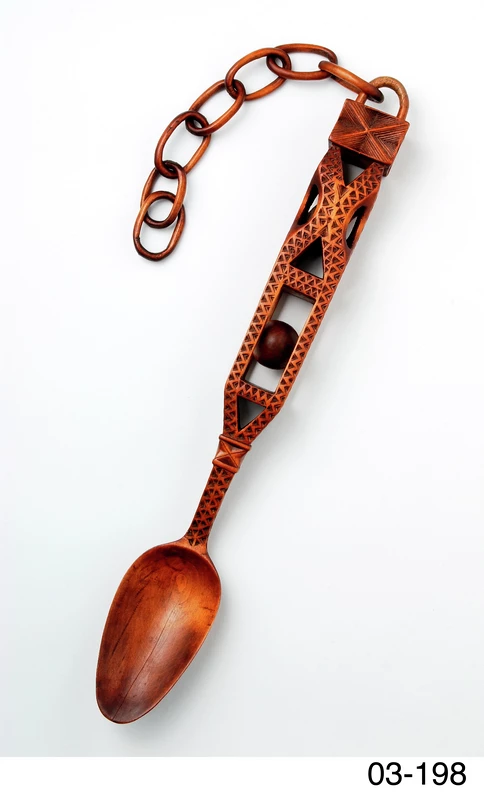
Balls carved within cages are commonly thought to represent the number of children desired by the carver, but could equally be a sign of a man held captive by his love.
- Chain links
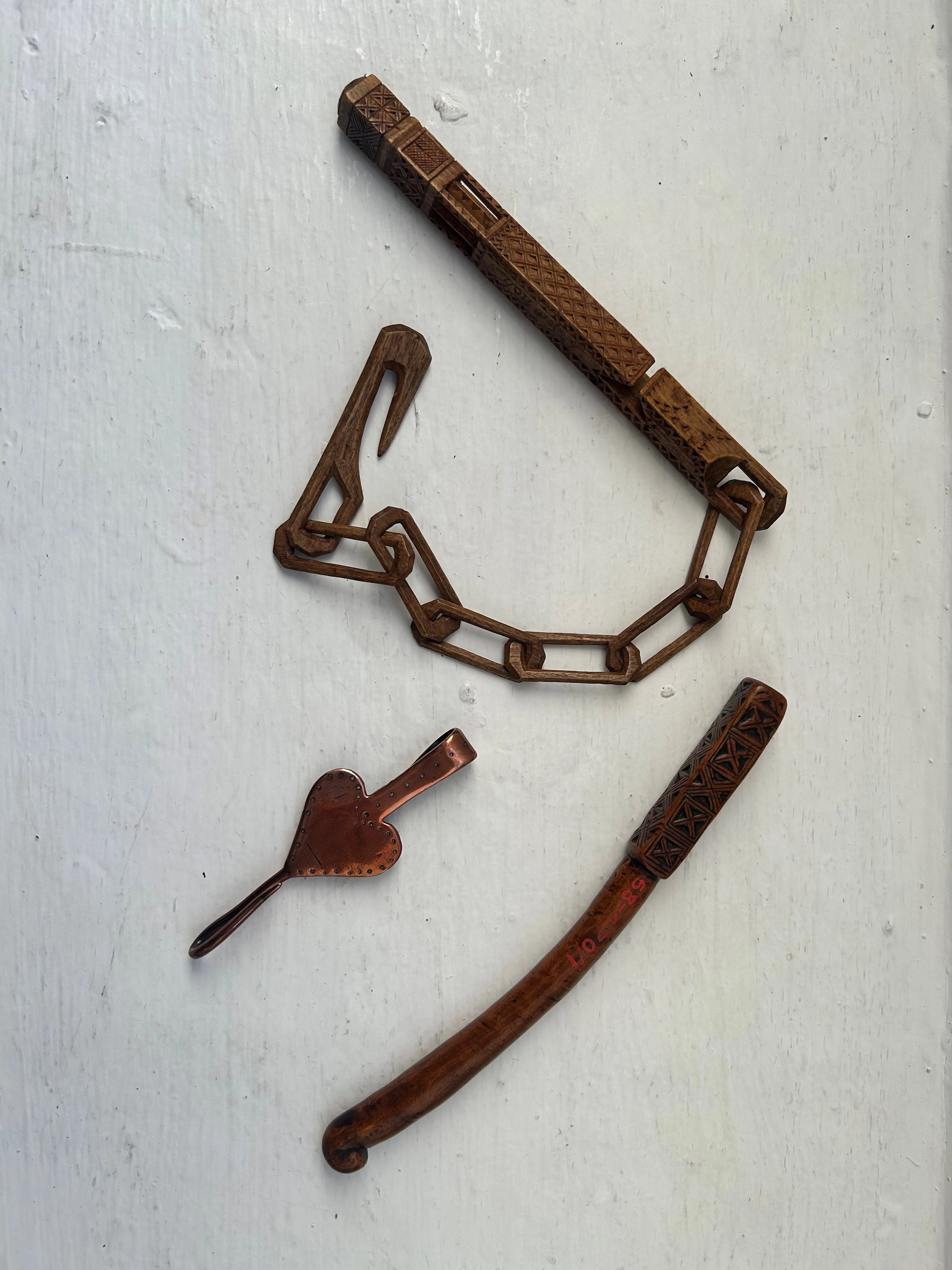
Generally considered to indicate loyalty and faithfulness, chain links might also symbolise a couple bound together in their love and loyalty.
- Diamonds
Diamonds are believed to represent a wish for prosperity and good fortune and a promise to provide well for a loved one.
- Keys and keyholes
In addition to the house images that sometimes appear on Welsh lovespoons appearing to represent domestic contentment, key and keyhole carvings are also used frequently, perhaps symbolizing security or, more romantically, the key to one's heart.
- Wheel
Wheel symbols often feature in Welsh lovespoons and are said to represent a vow by the carver to work hard and to guide a loved one through life.
Try your hand at designing your very own virtual lovespoon to send to a loved one.
Image Gallery: Welsh Lovespoons
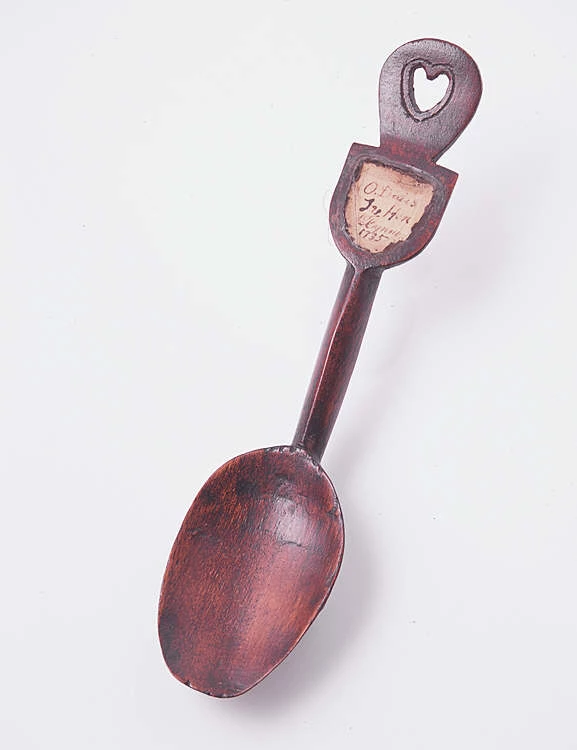
Lovespoon, with heart-shaped opening on handle
Lovespoon, with panel handle and geometrical designs
Lovespoon, inscribed 'MI 1721'
Lovespoon, with hearts and other geometrical designs
Lovespoon, with panel handle and covered with chip-carving
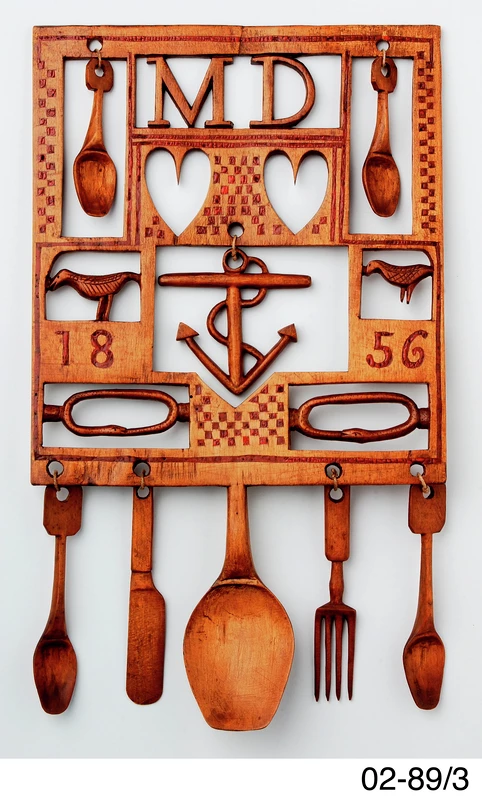
Two heavy lovespoons hanging from two-looped panel
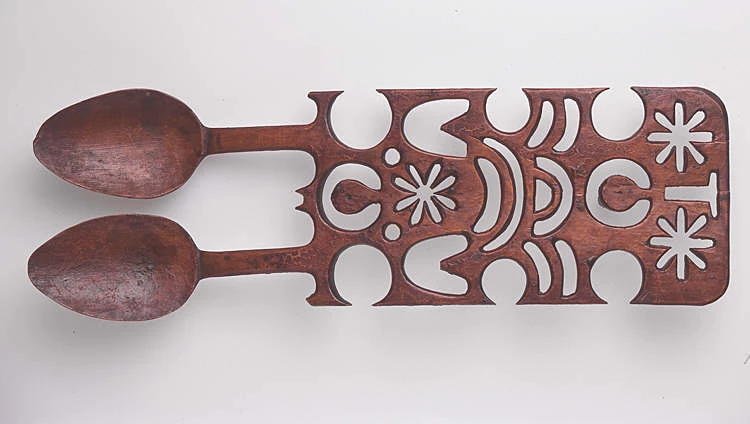
Lovespoon, with panel handle and two bowls
Lovespoon, with bowl at each end
Lovespoon, dated 1735
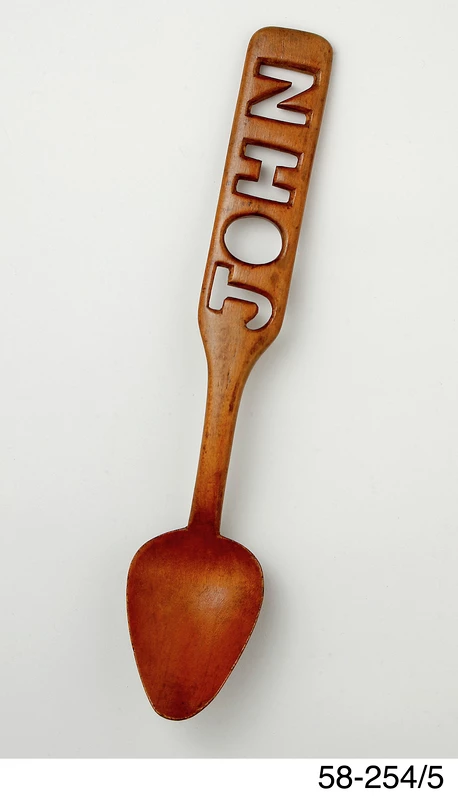
Lovespoon with narrow panel handle with the name 'John' in fretwork
Lovespoon, with handle carved to depict serpent and bird
Lovespoon with ridged stem and curved terminal
Inscribed wooden fork, 19th century
Lovespoon, with chip-carved handle fretted with various designs
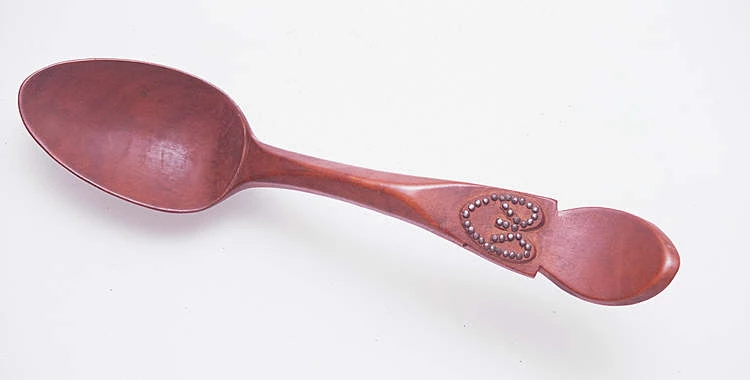
Lovespoon, with fretted heart devices and chip-carving