Collections & Research

Smoggy London

Catalena Angele, 14 April 2014

If you had been visiting London last week you would have noticed it was very smoggy, as if you were looking at everything through a dirty cloud! But what exactly is smog, and how is it different to fog?

What is fog?

Fog is a cloud on the ground! It is a natural part of the weather. It is lots of very tiny water droplets floating in the air. Fog helps plants by providing moisture and does not harm you if you breathe in.

What is smog?

Smog is a kind of air pollution. Smog is created when fog mixes with smoke and chemical fumes from cars and factories. Some of the chemicals in smog are toxic – this means poisonous! It is harmful to plants and animals and can be dangerous if breathed in.

The recent smog in London is a mixture of fog and pollution and a third ingredient – sand from the Sahara desert! The Sahara desert is a huge desert in Africa. Some of the desert sand is very, very small, like dust. Sometimes wind storms sweep up the dust and blow it thousands of miles to the UK. It’s amazing how far it travels!

Unfortunately, this mixture of fog and pollution and desert dust means that the London smog is not good for your lungs, and has made some people ill. Smog is one very good reason why we should all try to reduce air pollution!

So what can you do to help reduce air pollution?

Think about air pollution… What causes it? Can you think of 3 things you can do to reduce it? Why not talk about it in class and then click here to check your answers.  

Find out more information about smog click here. To see more picture of smoggy London click here.

Your comments, my answers:

Glyncollen Primary School: Sorry we were late again. We had a busy week as we are going to Llangrannog. We have had great fun doing this investigation. We can't wait to find out who has won the competition. We are going to tell the year3 class about it as they will be doing it next year. Thank you Professor Plant. Yr. 4. Prof P: Hope you had fun at Llangrannog! I am so glad you have enjoyed the investigation Glyncollen. Thank you so much for taking part!

Ysgol Clocaenog: Pen wedi disgyn ffwrdd! Athro'r Ardd: Wedi colli ei ben!

Gladestry C.I.W. School: Although the flowers were open earlier in the week, they have closed up again at the drop in temperature. Prof P: I can tell that you have learnt a lot about your planrs Gladestry, well done!

Many thanks,

Prof P


Collecting Seaweeds in Ireland

Katie Mortimer-Jones, 10 April 2014

By Kath Slade

The marine team are back from their fieldwork to West of Ireland with lots of specimens to sort through, including seaweeds. The timing of fieldwork was chosen to coincide with several very low tides, allowing us to sample species lower down the shore, which are less adapted to long periods out of water. We still had limited a time to sample around low water (approx. 2 hours).

The lower shore holds many of the red seaweeds, such as Sea Beech (Delesseria sanguinea), Fine-Veined Crinkle Weed (Cryptopleura ramosa) and Bonnemaison’s Hook Weed (Bonnemaisonia hamifera).

Immediately after collection, there was a fair amount of processing to do, as seaweeds don’t last long out of their natural habitat on the shore. Many were floated out in trays of seawater in order to spread all of the fronds (“leaves”) out, before being transferred and pressed onto conservation grade cotton paper. The specimens were stacked together, and between each layer we had blotting paper to soak up the water. The stacks of seaweed were then placed into large plant presses, just like those used for flower pressing. Each day the blotting paper was changed to remove as much water as possible. When we returned to the Museum, we placed the plant presses in drying machines to speed up the process and prevent the seaweeds from rotting.

Some seaweeds are difficult to identify from external characters alone. For these species, small portions were collected and placed into silica gel. This dries the seaweed much quicker than pressing so that the DNA is better preserved enabling molecular work to be carried out at a later date. Others were preserved in formalin, which removes the colour of the seaweed but preserves the cell details and the seaweed’s 3D structure. Further identification work, will now be carried out back at the Museum.

All this preparation allows us preserve the seaweeds for future scientific studies. The specimens go into the Welsh National Herbarium (plant collections) at the Museum, and each provides evidence of what seaweeds are present at a particular locality at a particular time. The pressing process is so effective that specimens keep for hundreds of years.

Fieldwork in Co. Mayo - Update

Katie Mortimer-Jones, 8 April 2014

The team are now back from the West Coast of Ireland and the trip has proven to be really successful. The team continued to sample around Corraun, near Achill Island, north Clew Bay for several days, although the weather did turn. They are now processing the samples collected back at National Museum Cardiff. The seaweed samples are carefully dried and pressed, bristleworm and shell specimens are removed from the formaldehyde fixative and then placed into alcohol, and the DNA samples are placed into the freezer. Once processed the specimens will become part of the Museum Collections, and will contribute greatly to the research of the Natural Sciences department.

TOP 10 garden birds

Catalena Angele, 7 April 2014

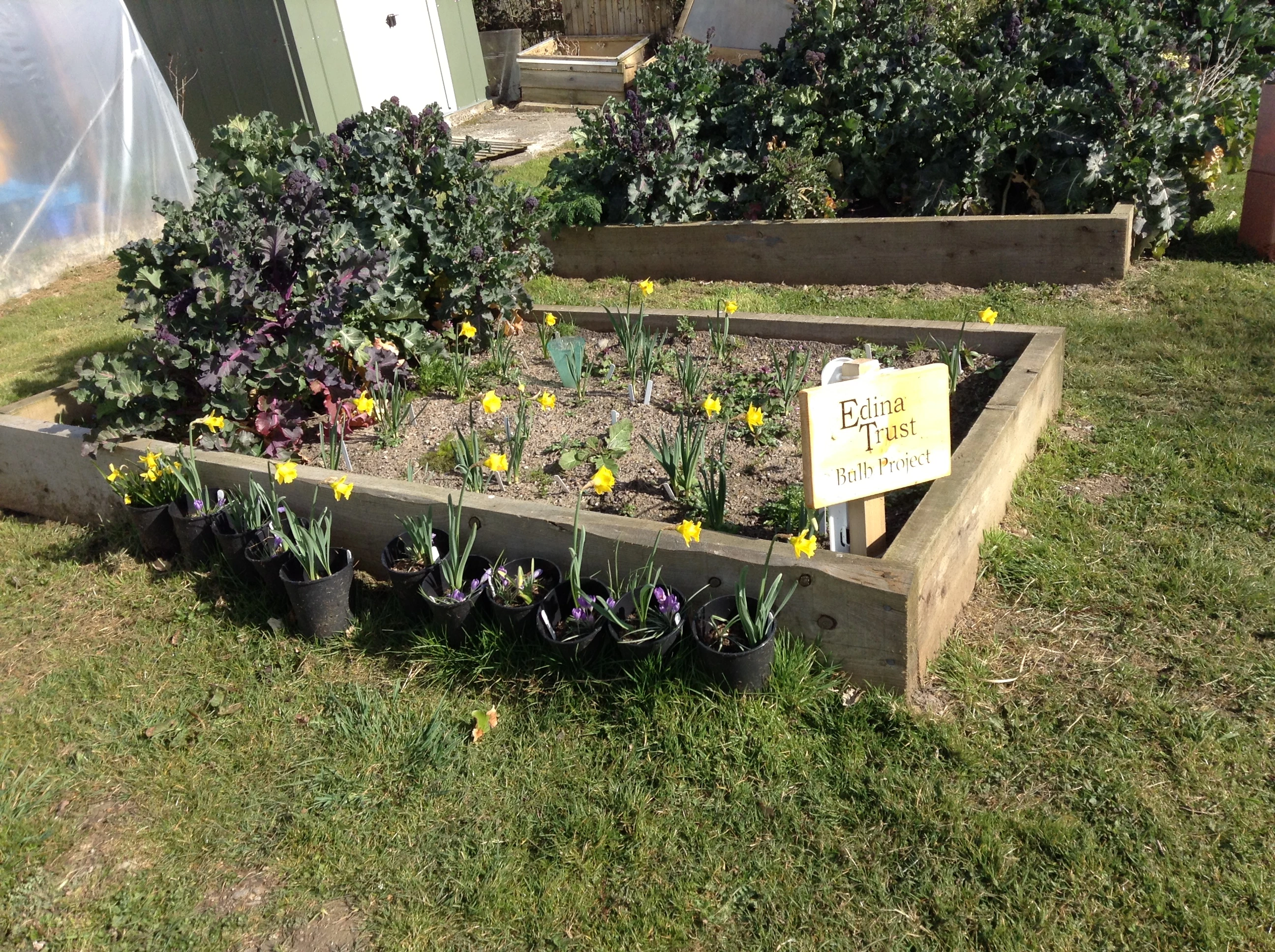
Hi bulb buddies!

Big Garden Birdwatch results

Which are the TOP 10 most common birds in your garden? Nearly half a million people helped the RSPB (Royal Society for Protection of Birds) with the Big Garden Birdwatch 2014. They counted over 7 million birds! Did you help? If not then maybe you can do some bird spotting and join the Big Garden Birdwatch next year? To find out which birds were in the TOP 10, click here

Which schools have had their first flowers?

Trellech Primary School in Wales, and Britannia Community Primary School in England sent their first flower records. Well done and thank you to these schools!

One of my colleagues her at National Museum Cardiff sent me this photo of daffodils growing in her garden, can you see anything strange about them? The photo is a little fuzzy but if you look closely you will see that some of the stems have two or even three flowers! How unusual! Have you had any unusual plants?

Thank you to SS Philip and James CE Primary School for sending me this lovely photo of all their flowers, don’t they look wonderful? In the third photo you can see that they also had some unusual flowers - some of their daffodils did not fully open. This is very interesting, can you think of any reasons why they might not have opened? Did this happen to your flowers?

Daffodil man!

Would you like to see a funny photo of Daffodil man? Click here. His real name is James and he is wearing a suit of daffodils to raise money for charity! Well done daffodil man!

Your comments, my answers:

Prof P: I had lots and lots of comments from Dallas Road Community Primary School so I thought I would put them all on the blog this week, thank-you all for sending me your messages! Congratulations to all of you, even if your flower did not grow, was stepped on, got broken or died, you are ALL Super Scientists! Prof P.

Dallas Road Community Primary School: 

I think it didn't open because the daffodil was hovering over it and so it didn't get enough sun and rain. :(

I think my daffodil was in the shade so it did not open.

Someone cut its head off

It didn't open because somebody stepped on it

It died

Someone broke the bud off

Mine did not open!!!!!!!!!!!!!!!!!!!!!!!!!!!!!!!!!!!!!!!!

!!!!!!!!!!!!!!!!!!!!!!!!!!!!!!!!!!!!!!!!!!!!!!!!!!!!!!!!!!!!!!!!!!!!!

!!!!!!!!!!!!!!!!!!!!!!!!!!!!!!!!!!!!!!!!!!!!!!!!!!!!!!!!!!!!!!!!!!!!!

My Bulb disappeared

It was a bit floppy so we did not get chance to tie it up. But it is still open.

I am quiet sad my daffodils have not opened but they are growing so I will believe that soon they will and they are really tall.

My daffodil is growing very tall but it is a bit floppy.

My crocus is beautiful some of them are starting to die but still i'm happy because some are still growing and some have opened and some of them are fully beautiful i'm really happy about every crocus. My crocus's are quiet tall some are small as well

my crocus is really beautiful i have got another 3-4 crocuses opening i really enjoy seeing my plant grow.

My crocus has flowered well and is growing quite tall which is good and happy about it all.

I did not get a daffodil so it did not grow.

Daffodil has broke and I had to tie it up.

My plant head fell off. I haven't seen it since so I don't know if it has grown back.

My daffodil didnt open. I dont think mine had enough sunlight

Prof P: Culross Primary School sent me messages to tell me they had named their flowers, thanks Culross! Here are some of the names they gave their Daffodils and Crocuses: Danny, Dafty, Crocy, Abby, Croaky, Dave, Chris, Cassy, Ceeper, Bob, Jim.

Many thanks,

Prof P

On fieldwork in County Mayo

Jennifer Gallichan, 2 April 2014

Six members of Natural Sciences staff are currently on fieldwork in Co. Mayo, Ireland. After attending the 2 day Porcupine Marine Natural History Conference at the Ryan Institute, National University of Ireland Galway they set off for Co. Mayo for 5 days of intertidal fieldwork. Their primary interests are in marine bristle worms (polychaetes), bivalve shells (molluscs) and seaweed.

After setting up a temporary laboratory the scientific team have spent the last two days visiting several shores in Clew Bay and Blacksod Bay — following in the footsteps of those who carried out the historic 'Clare Island Survey' in the early 1900s. Samples are being processed for both morphological and DNA work contributing to the Museum's collections and research programme. Many live animals and algae are being photographed. Today the team is setting off to Corraun, near Achill Island, north Clew Bay. They will be joined by Fiona Crouch of the Marine Biological Association UK, who has been extending her 'Shore Thing' community science programme to Ireland (as ShorTIE).

Further updates to come, but for up-to-date news follow us at https://twitter.com/CardiffCurator