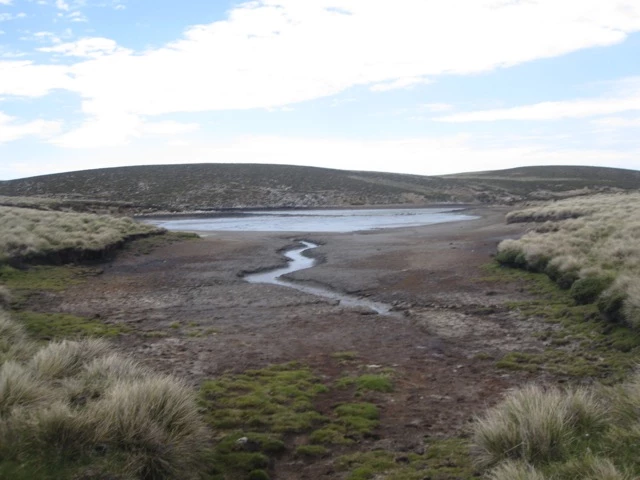
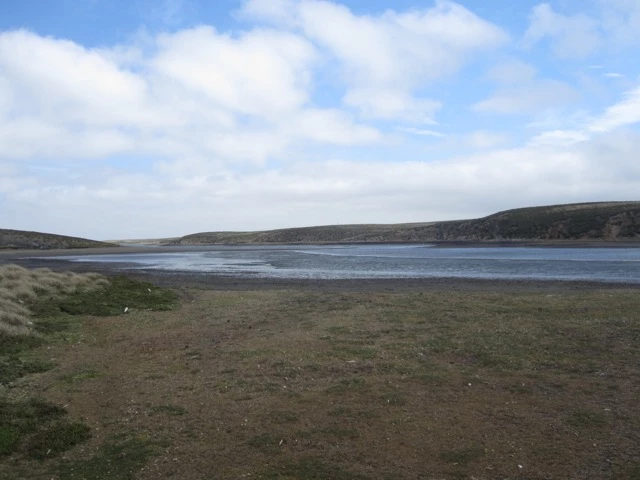
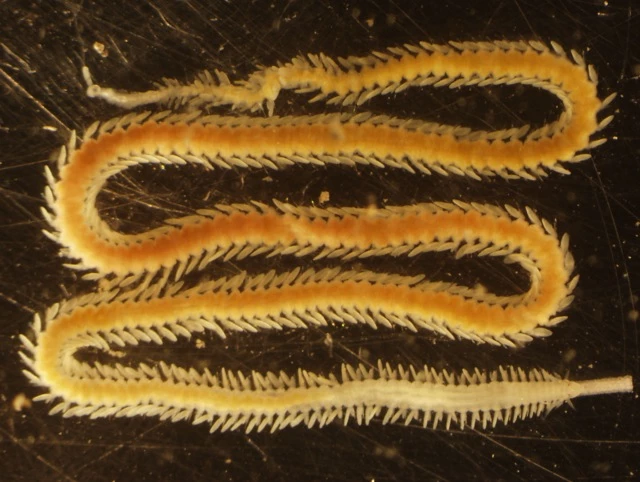
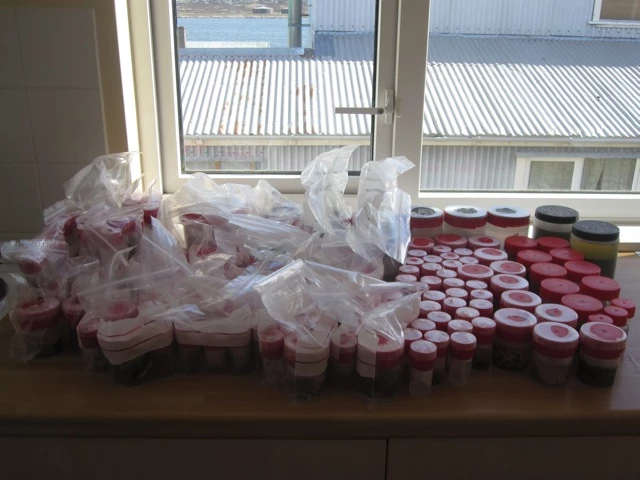
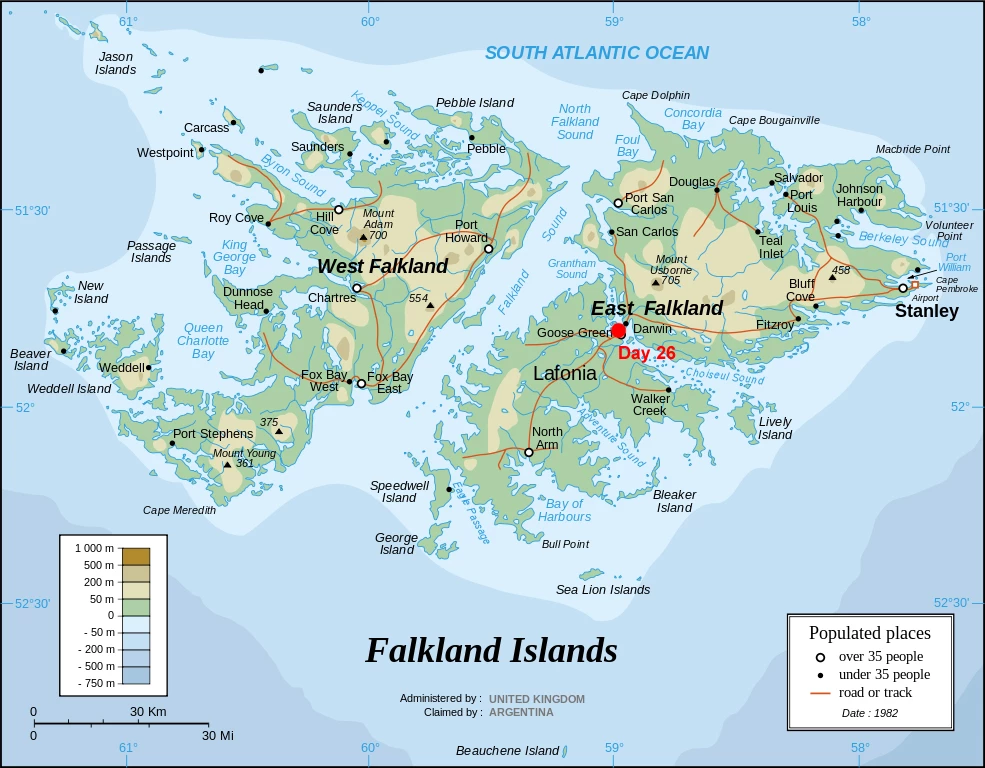
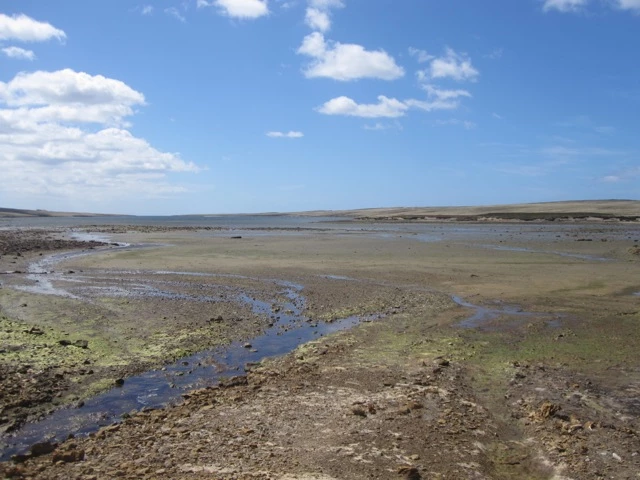
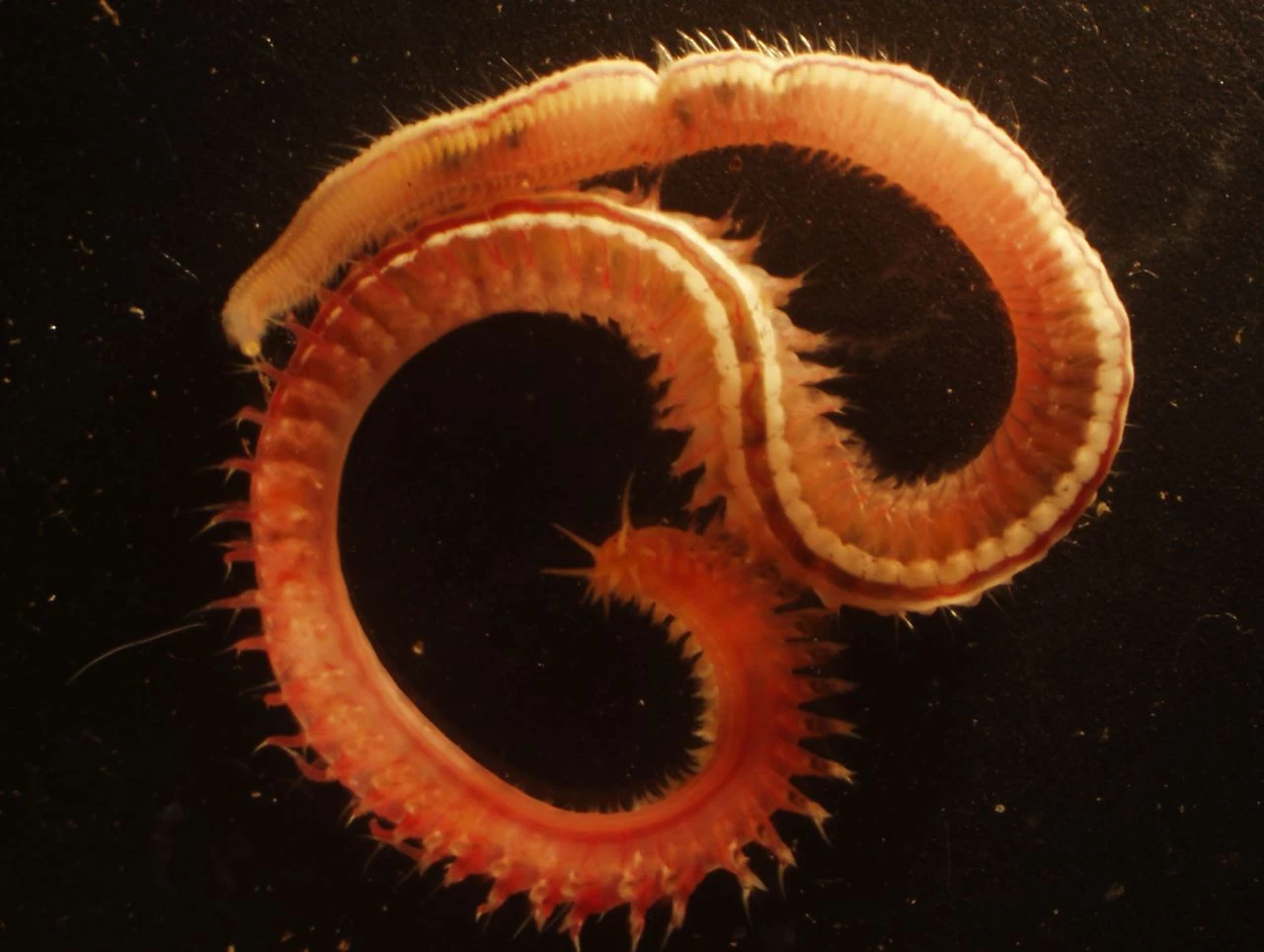
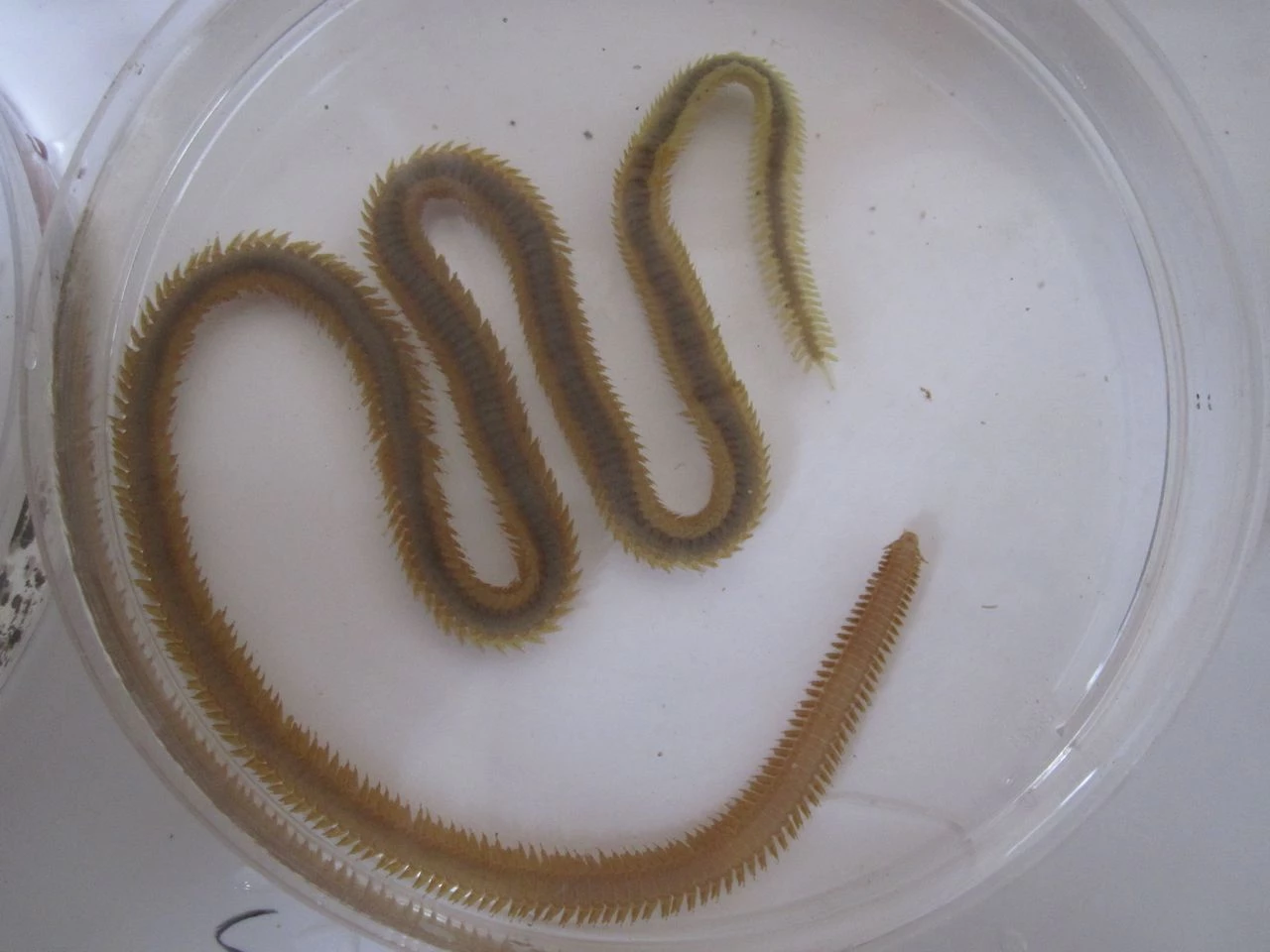
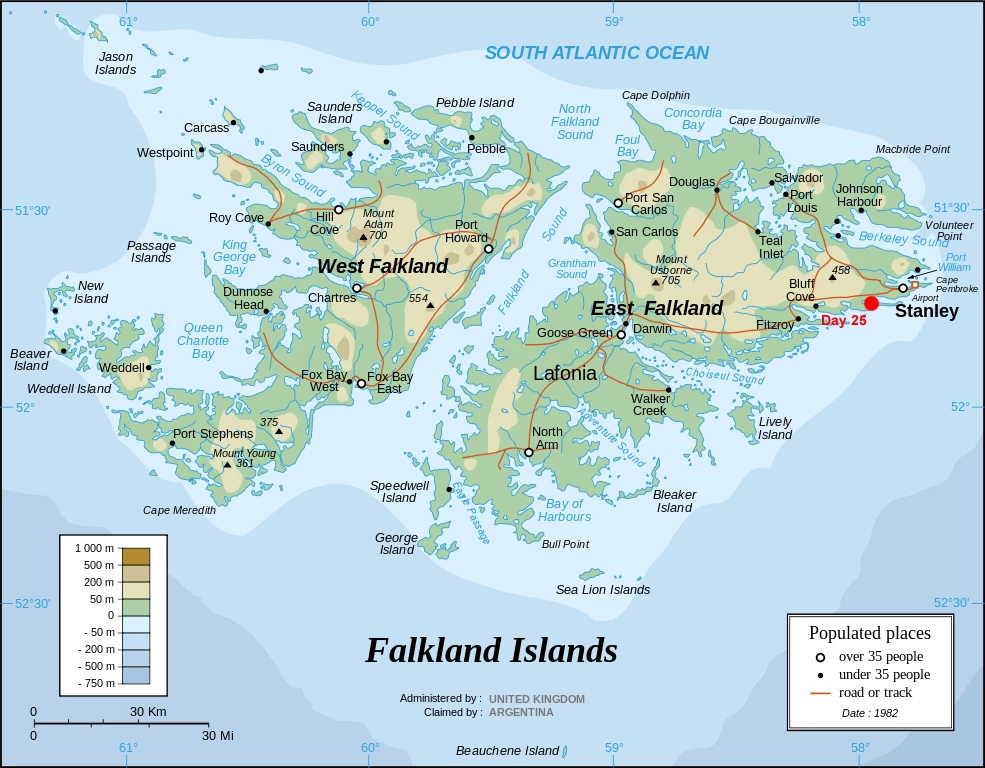
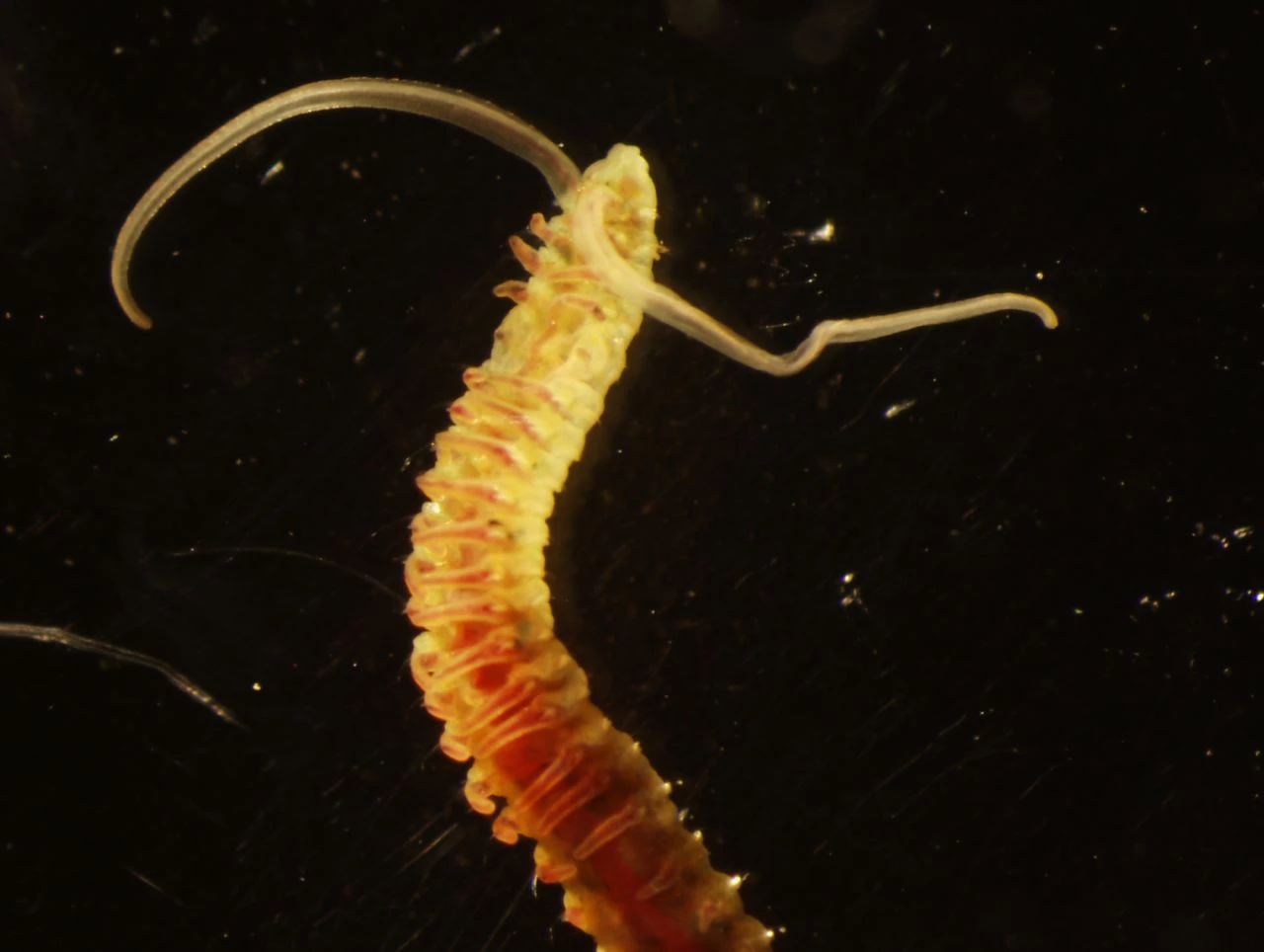
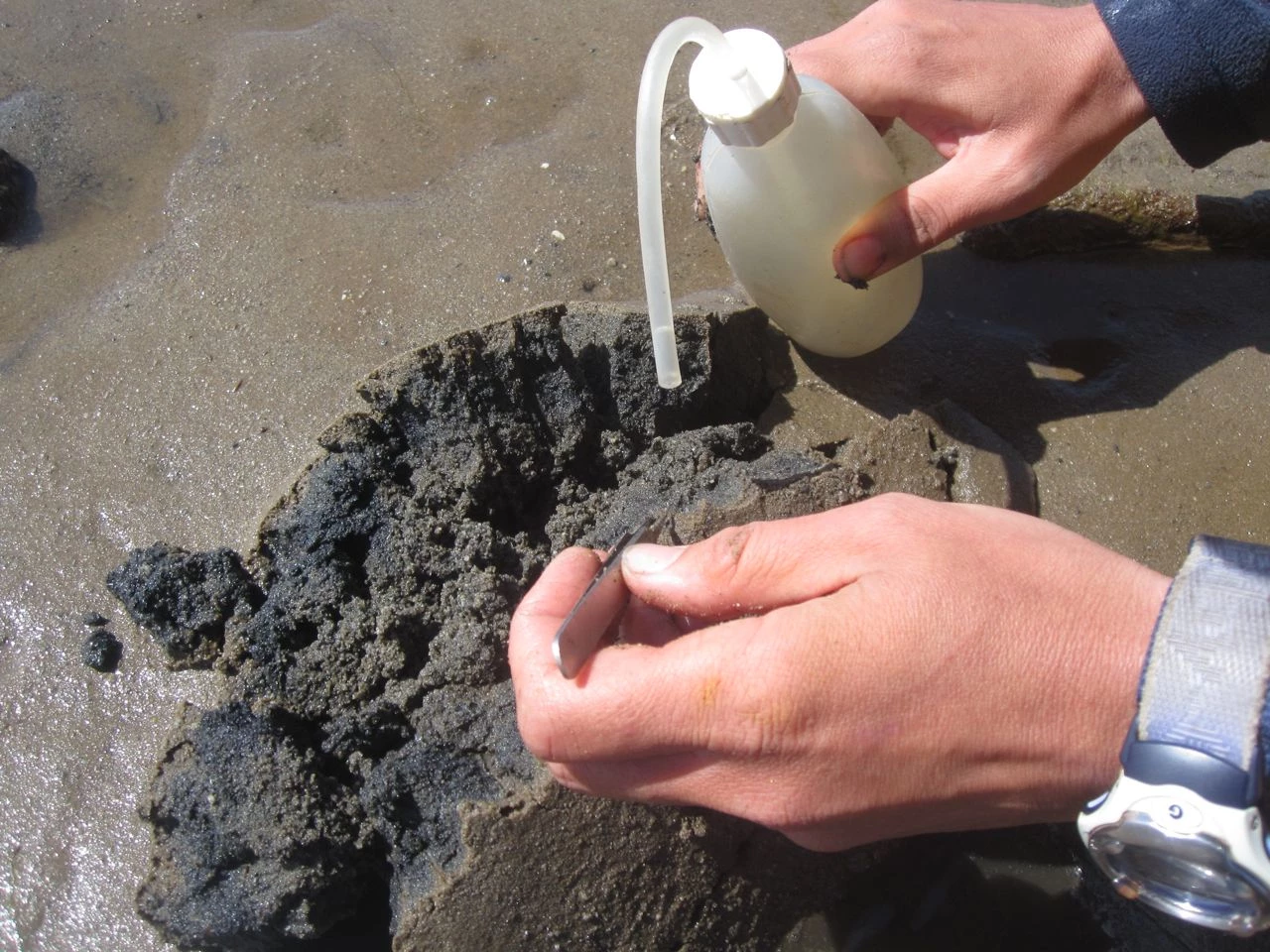
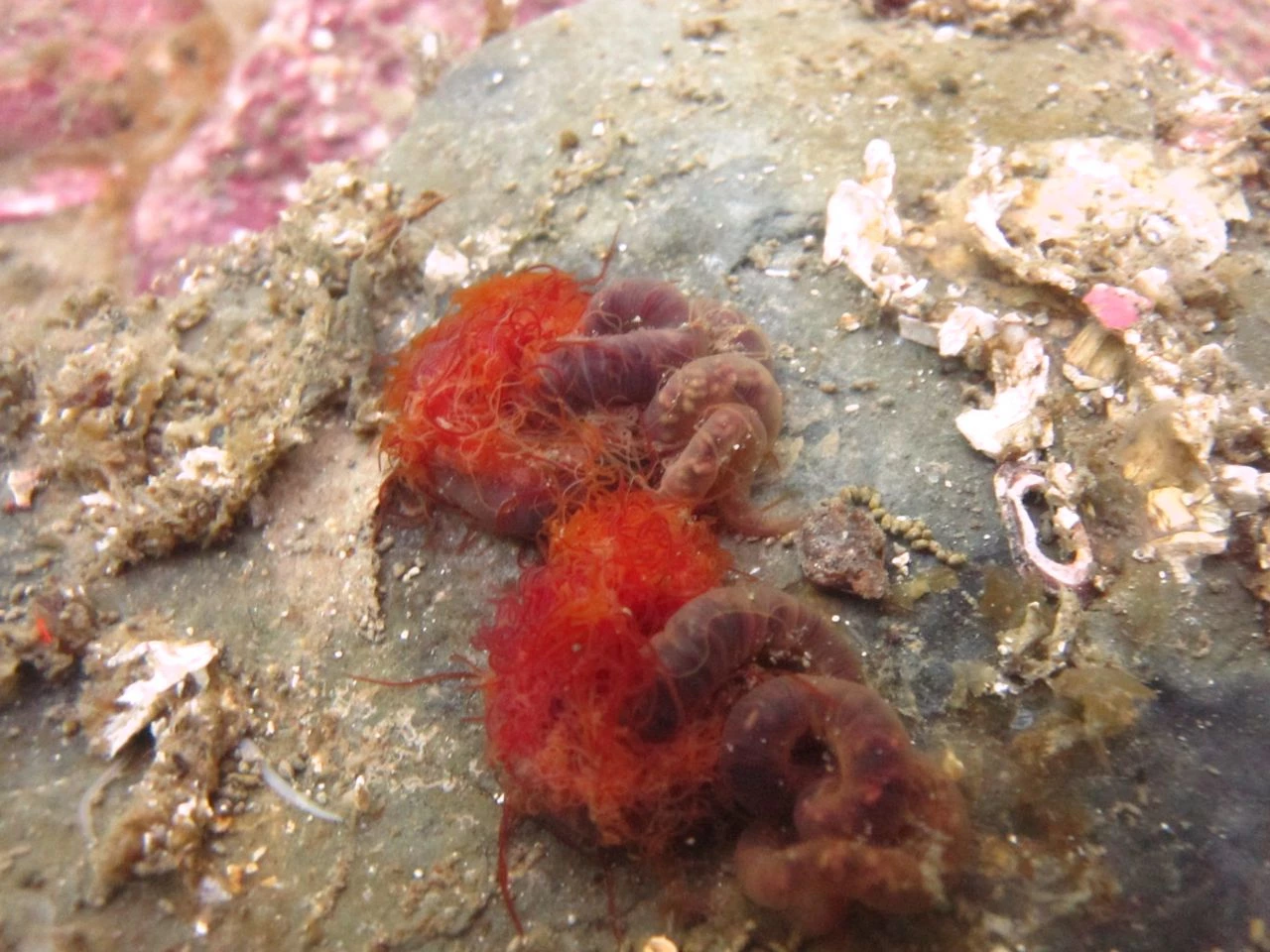
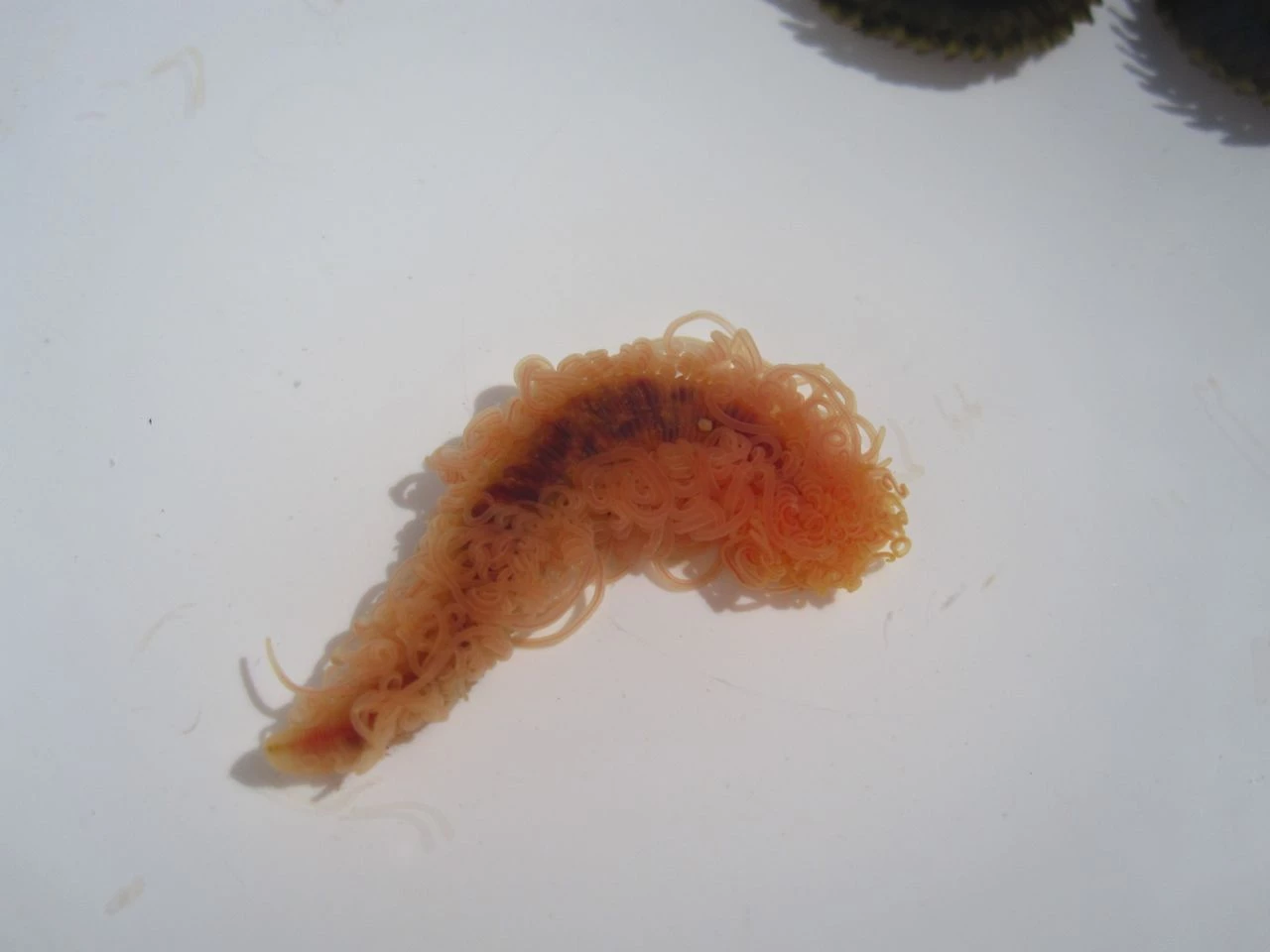
Polychaete research in the Falklands by Teresa Darbyshire - day 22 Peter Howlett, 6 December 2011 My first public talk (photo 1) is now out of the way. Quite a relief actually. It was meant to be a ‘community talk’ so a general introduction to who I was and why I was there really. Having it towards the end of my visit also meant that I was able to include more interest in the form of a map showing where I had been sampling as well as photographs of some of the animals I have collected. Adding all of these at the last minute does not lower your stress levels. It did add a bit more relevance though than using some of the stock photos I have of UK animals which was what I had in there first of all.It wasn’t a large audience but I am not the most natural or confident of speakers and the addition of Falkland Islands TV filming the talk did not bolster my confidence any. Feedback was good though and comments included being pleasantly surprised at how interesting it actually was. Always good to hear!I have another to do at the Fisheries department next Monday which will be to a more scientific audience and therefore a bit more technical about the worms themselves. Hopefully that will be considered surprisingly interesting too.I was on my second borrowed car this morning which enabled me to get out for the morning tide. I had wanted to go back out to the shore by the Lady Elizabeth, not far away, as the last time I had gone down only just before low tide and had not had much time to sample and then of course found lots of interesting animals. Unfortunately today was a neap tide that stayed about half a metre higher than when I had been there previously. As this shore shelves very gently, this meant that the sand bars I particularly wanted to get out to remained stubbornly underwater. I still managed a little digging through the few inches of water to get some animals and also did more on the high shore than I had previously but it still felt disappointing.On the way back I also decided to stop by the marina which had a patch of sandy mud that looked interesting. However, the nearby sign that declared the area believed to be free of mines but that one might get washed ashore from elsewhere put me off digging. Can’t imagine why. Instead I went across to the other bank of the inlet which was rocky (nowhere for stuff to wash ashore) and dragged in some shallow Macrocystis kelp to look at the holdfast (photo 2). I had a brief thought that it might have attached itself to a landmine that was being washed ashore but luckily this was not the case and I spent 10 minutes pulling it apart and shoving it in a bucket which it only just fitted into (it was only a baby holdfast in comparison to those offshore). I did wonder how exactly I was going to deal with this monster back at the lab as holdfasts require a lot of time painstakingly going through each piece to pick off the animals. These structures are a habitat feature of their own with a large community of animals generally associated with them that makes it essential to sample them. The answer came in the form of 6 very large pots which the holdfast was duly separated and pushed into for a later date. That is probably going to be at least a week’s work on its own!The samples from the Lady Elizabeth turned out to be more successful than expected when I found several specimens of Spiophanes (photo 3), a worm I had only had a badly mashed glimpse of before, so this was very pleasing.All in all another successful day. I have hired a car from tomorrow for a few days which will get me around to my last few shore visits and then hopefully I will get the chance for a bit more diving at the weekend. Still finding new stuff though so there must still be lots more out there to find!
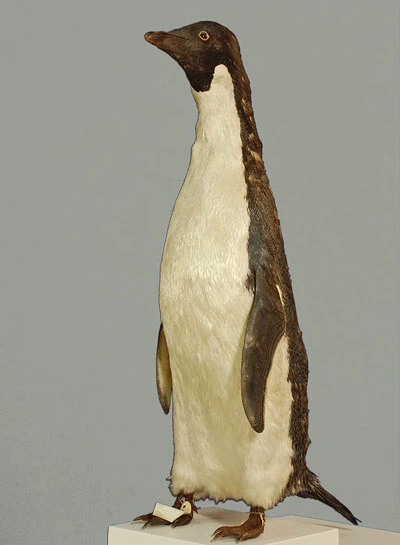
Tom Sharpe's Antarctic Diary 2011-12-06 John Rowlands, 6 December 2011 Friday 18 NovemberIt’s just over a hundred years since Captain Scott’s ship, the Terra Nova, sailed from Cardiff for Antarctica.Scott designated Cardiff the home port of his ship because of the support his expedition received from Cardiff and South Wales. Last year we put together a little exhibition bringing together a range of objects from our collections to commemorate the departure of the expedition on 15 June 1910.On 17 January 1912, Scott and his four companions reached the South Pole only to find that he had been beaten, by a month, by a Norwegian team led by Roald Amundsen. The fate of Scott’s Polar Party is well-known: all five died on the return journey. But there was much more to Scott’s expedition than the attempt on the Pole. It was a major scientific expedition, studying the geology, biology, meteorology and physics of Antarctica and its glaciers.We’re planning another exhibition, , opening in January 2012, to look at the Welsh links with Scott’s expedition and the scientific work undertaken on it. We’re part of a national series of exhibitions and events to mark the centenary of the expedition. I’ve been working on this exhibition for some months now, but about four weeks ago my preparations took an exciting turn when I was invited to join a trip to the Ross Sea in Antarctica, with the intention of visiting Scott’s expedition base hut.We sailed a week ago from Lyttleton in the South Island of New Zealand, the same port from which Scott sailed in 1910. Two days ago, we entered the pack ice of the Ross Sea. Each winter, the continent of Antarctica doubles in size as the sea around it freezes. I’m on a Russian icebreaker. We’ve been following leads - strips of open water between the ice floes - and where necessary forcing our way through the thicker floes. We do this by ramming into the ice, then reversing a few hundred metres before ploughing full ahead into the floe and hopefully breaking through. Breaking our way through the ice feels very much like being in the central seats of a 747 in bad turbulence, but much noisier.We’ve been making good progress, initially through thin first year ice (formed this last winter) and then into an area of open water called a polynya. But today we’ve slowed. The pack ice we’re in now is much thicker, over a metre thick in places. This is multi-year ice, built up over several winters. At 70oS, we’re now well south of the Antarctic Circle and in continuous daylight. Here the sun will not set for some months.Some of the ice floes are forced together by the pressure of tides and currents and today we found ourselves caught between two floes. This pressure caused the floes to close behind us, and for a while we were trapped in the ice. Even with all engines on full power, we could neither advance or reverse. But just as we were beginning to decide who we would eat first, the ice floes parted and we were released from their grip!All around us there is nothing but sea ice to the horizon in all directions. The ice surface is not smooth, but broken by the jagged lines of pressure ridges and the occasional enormous tabular iceberg frozen into the pack ice. It looks lifeless. There are no other human beings as far as the eye can see. But life is here. This morning an orca, a killer whale, popped up to take a look at us; minke whales show their fins through the open water of the leads; and crabeater seals bask on the ice floes. Clusters of Adelie penguins rush around on the ice while, in contrast, a stately Emperor penguin stands tall and imperious on the edge of a floe.There is no environment on earth to compare.
Polychaete research in the Falklands by Teresa Darbyshire - weekend dive report Peter Howlett, 5 December 2011 Yes it was a good sign! The weather this weekend has been what every diver dreams of, light if any wind, flat seas and warm. Do I dare complain that the risk of sunburn was too high having already fallen foul of the strong rays here several times? No, just don’t forget the suncream!5am was a very early wake up call on Friday but I don’t think anyone regretted it. We headed over to Egg Harbour which, as I am used to now, required a long drive on gravel followed by an off-road track, when one was available, or a general ‘it’s over that way’ decision on driving over unmarked territory. This time however, we were towing a RIB as well, not something you normally contemplate off-road! To be fair though, this RIB is on a double-axled trailer with tyres the same size as the cars. It too seemed to bump happily along and over the rough ground although even the four wheel drive needed help once on a steep slope (photo 1).We were staying at Egg Harbour house (photo 2), a strange sight as you approach it sitting on its own on the hillside with absolutely no other sign of civilisation around it. Still, it was very comfortable, with its own jenny and water pump for amenities and peat burning aga to keep us warm in the evening.But what about the diving I hear you ask? The diving was all virgin territory as this area was unsurveyed and new to all there. I’ll admit that the life was not as prolific as at Cochon Island, however the kelp was also not as thick and the bottom was very light. Although the visibility was similar to before, the light made everything seem clearer (photo 3). Most of the dives were on rocky seabeds with the rocks of varying sizes across the sites, some easy to turnover in my hunt for worms some not so. Sometimes turning over a rock produced a surprise, as much for me as undoubtedly for the stunned octopus that stubbornly clung to the rock as it guarded its eggs (photo 4)! Starfish of many different sizes and shapes abound but the pretty picture award went to this whelk (photo 5).As for the worms there were many different ones for me to collect. I was particularly happy to find this pectinarid (photo 6), a group I had not collected here up to this point. There were several to be found on the dive lying on the seabed which on this dive had lots of sandy sediment between the rocks. This animal builds a very neat cone-shaped and slightly curved shell, shown in the photograph with the animal next to it. On another dive was a different sort of paddleworm to the one I collected around Cochon with very nice colours (photo 7).As for the other wildlife, we had a brief visit by some Commerson’s dolphins as we arrived at the launching site on Friday afternoon and then on Saturday we had some friendly and some not so friendly sealions (photo 8). The photo also shows just how flat and almost glassy the water was by then. I unfortunately had the not so friendly ones. They were very curious at first although you don’t notice them so much when you’re head down in the sand and rocks, just the occasional flicker in the light as shapes pass above your head. Then you get the nudge. Then you feel something on your head and look up to find a whiskered face in yours. It was when the jaws started nibbling and more around my head that I became concerned particularly as it combined with a bit more force behind it! It was nearly time to come up though and I was happy to do so.I was also able to do some shore sampling between dives at a couple of sites which kept me busy and all added to a very productive weekend. I was not the only busy one though as all the surveyors had their own reporting sheets to fill in between dives (photo 9). Again, more new sites completed for the team here.A long drive back Sunday afternoon felt like a shame to all there, with the good weather still persisting. Long may it last (or at least for another week please).
Polychaete research in the Falklands by Teresa Darbyshire - day 18 Peter Howlett, 2 December 2011 This was an odd ‘in between’ kind of day. With no car to get around I was very limited in my options of what to do. I got a lift over to the Fisheries department this morning and spent a few hours putting notes together of the animals I’ve found so far and the sites I’ve been to. I also managed to put names to some of species by going through relevant papers I had.Eventually I put together what pots and chemicals I needed to take with me on this weekend’s dive survey and walked back into Stanley. This was actually very pleasant as the weather at that point was warm and sunny and the wind seemed to be dropping off. On my way I passed a Night Heron (photo 1) at the water’s edge, the first I have seen not sitting still on a nest. Apparently they are generally most active at night, hence the name! All very tranquil.The low tide was late afternoon today and rather than waste it without a car, I decided to sample a different site along the edge of Stanley. This similarly involved a nice walk along the water’s edge deciding which spot to dig up. By this point, the usual strong wind had become a gentle breeze and the water was unusually still, it all made a nice change.Stanley is a long, stretched out town, so walking along the front takes a while. There’s not a great deal of change along the shore but I picked a spot just short of the wreck of the Jhelum (photo 2), an old wooden sailing ship condemned and left to rot all the way back in 1871!This site was slightly different to the one we first sampled over two weeks ago. The stones embedded in a coarse sand were covered underneath in the tubes of the same terebellid worm we found on day 1. Although these worms were the same, there were lots of others in the sand to pick out as well and I am hopeful that some of these may be different. Again, being car-less meant no going back to the lab to look at my catch under the microscope. I had to content myself with sorting them out in the flat instead.Plans are underway to hire a car next week to get me mobile again for my last week of sampling which will be great. As for tomorrow, we are leaving at 6am for Egg Harbour on the edge of Falkland Sound between East Falkland, where I am now, and the other main island, West Falkland, where we will be diving for the next few days. Hopefully, the still evening is a good sign of the weather we will get.
Polychaete research in the Falklands by Teresa Darbyshire - day 17 Peter Howlett, 1 December 2011 I’m halfway through my trip. Two weeks from now, at the time I’m writing this, I should be back in my own bed. It’s a strange thought.My intention to do another pre-breakfast orca vigil this morning failed as I woke to to the sound of wind and rain at 5.30. I wasn’t that dedicated and so went back to sleep. Still, after breakfast, with a couple of hours before my flight back, I headed out with a last hope. As I reached the beach I thought I saw a black fin in the water….no it was five! I spent the next hour and a half happily watching a pod of orcas patrolling outside the sheltered pool that the seal pups play in (photo 1). The occasional squall blew through leaving me very damp and the strong wind made standing up difficult but it was worth staying. My camera’s not good enough to get really good shots from the distance I was at but I did what I could. Sadly, I didn’t get to see any seal-munching though, ah well.The flight back was bumpy and the landing was my first experience of approaching a runway sideways but ended smoothly. The flight also afforded good views of the islands from the air (photo 2) The afternoon was spent editing two talks I am due to give here, one to a general public audience and one, slightly more technical, to the staff at the Fisheries department. Now that I have had a couple of weeks here and have some photographs of the worms I have been collecting, I was able to add a bit more local relevance to the presentations.Sadly, the night before I went diving last week, the owner of the car I was borrowing returned and retrieved it. I now have to work on finding an alternative in order to do more shore sampling. Still ,we are off on a new dive survey on Friday morning and I have plenty to do at the lab tomorrow to keep me going until then.Not much to report today so I thought I might add a few words on life out here for those who are interested.Before I flew out, several friends voiced doubt and some concern about the availability of various supplies out here. In some cases you might have thought I was flying out to a third world country! Just in case though I was careful to pack some essentials. A small jar of marmite and some chocolate. Well, let’s face it, toiletries were bound to be available. I am happy to report however, that supply levels are good and marmite, the rating standard, is indeed available. Even my Green & Blacks milk chocolate can be replaced.Groceries are generally quite expensive. However, as the two main supermarket brands stocked are Sainsbury and Waitrose it’s difficult to judge how much of the expense is the brand and how much the shipping!Fresh fruit and vegetables are expensive and not available in a large variety but frozen and tinned varieties are easy to stock up on. Fresh meat is mostly beef or mutton of varying cuts and both are cheap, very good quality and very tasty. In terms of other kinds of non-food supplies its difficult to know what’s available. From what I’ve heard though most are bought via Amazon!People are all very friendly and in that typical island style, everyone knows everyone and where they live. If you need to know where someone lives or their phone number, if you ask someone on the street then they will probably know!As mentioned before, 99% of all cars on the road are 4x4s and most of these are landrovers. Speed limit is 25mph around town and 40mph everywhere else for very good reasons. It’s only around Stanley that smooth roads exist. Outside of town, roads are just gravel and only go to the main settlements. Beyond that there are just tracks that require the 4x4. I’ve heard several stories of accidents and none are between cars, all involve coming off the road. I won’t be speeding anywhere! Fingers crossed I’ll get some transport sorted though so I can trundle off somewhere new soon.