: Department of Archaeology & Numismatics

Festival of Archaeology 2023

David Howell, 1 September 2023

Portable Antiquities Scheme Cymru – Engaging Audiences 

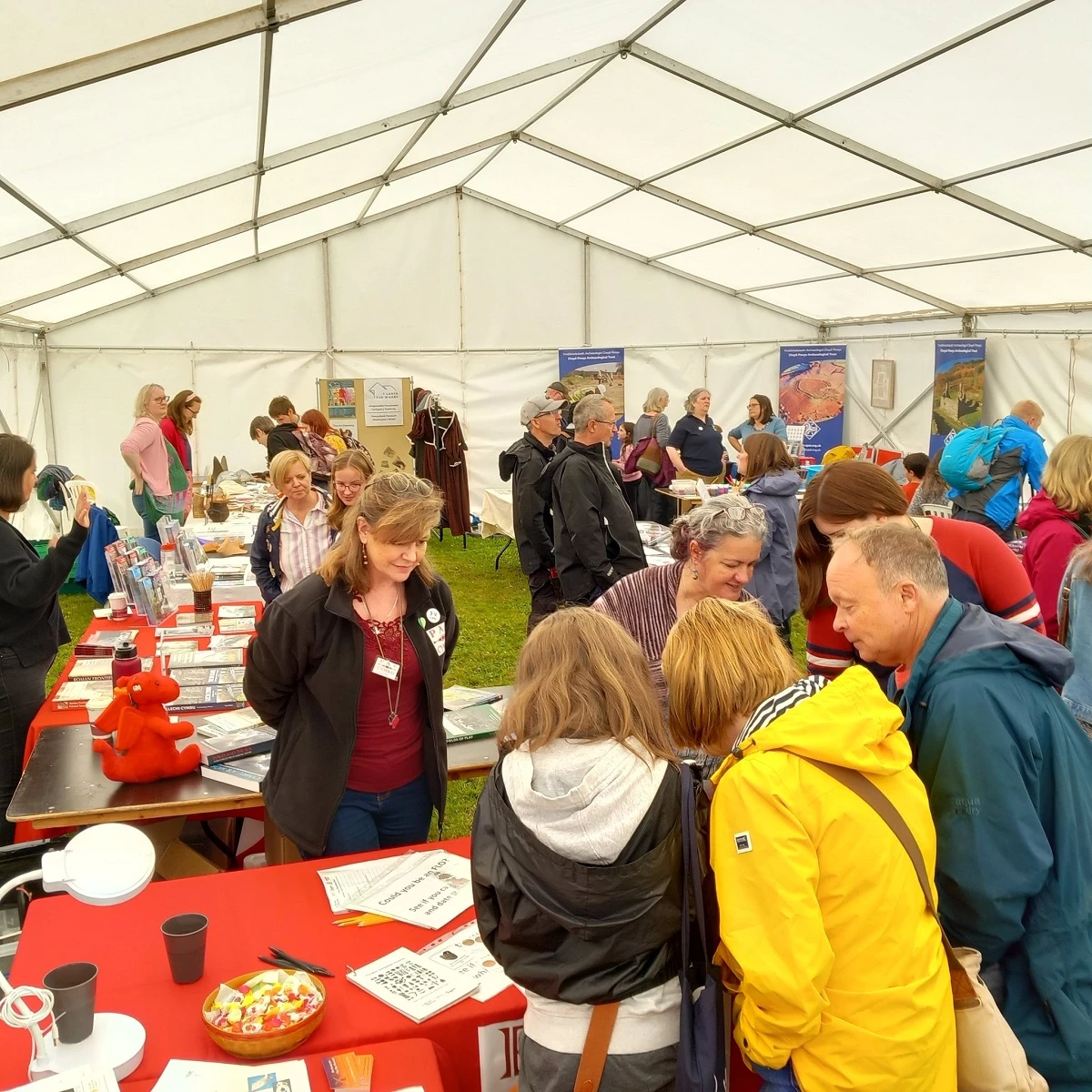
A group of people looking at filled tables within a marquee, the tables include books and leaflets  and in the background there are organisational pop ups
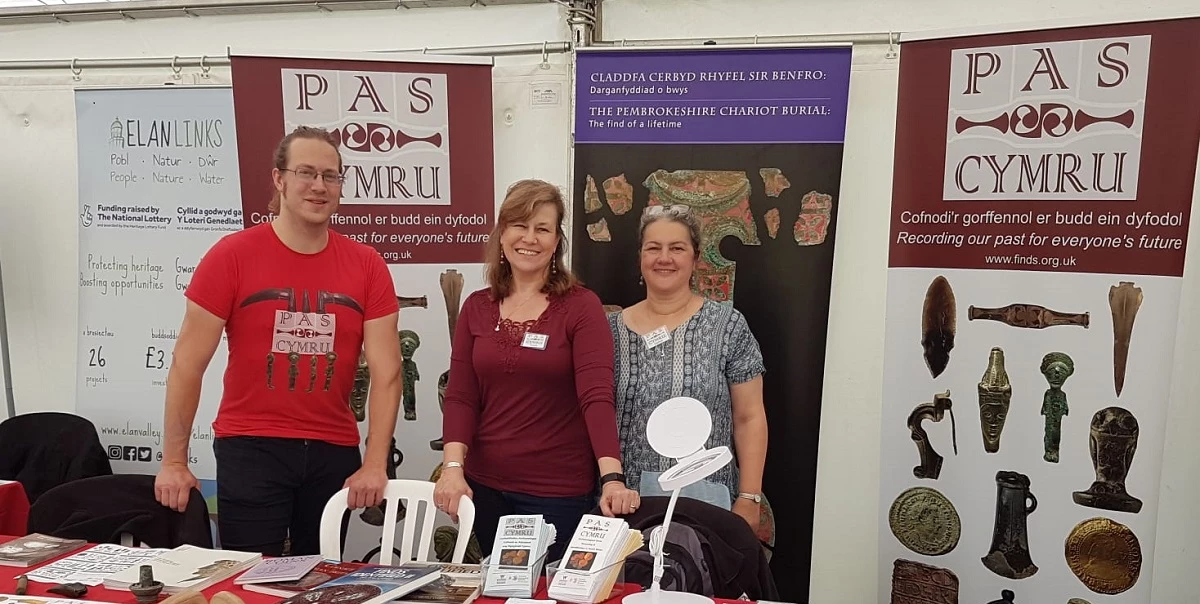
Three people smiling at the camera, they're stood infront of pop up banners with the words 'PAS Cymru' ond them and infront of a table with leaflets and and objects
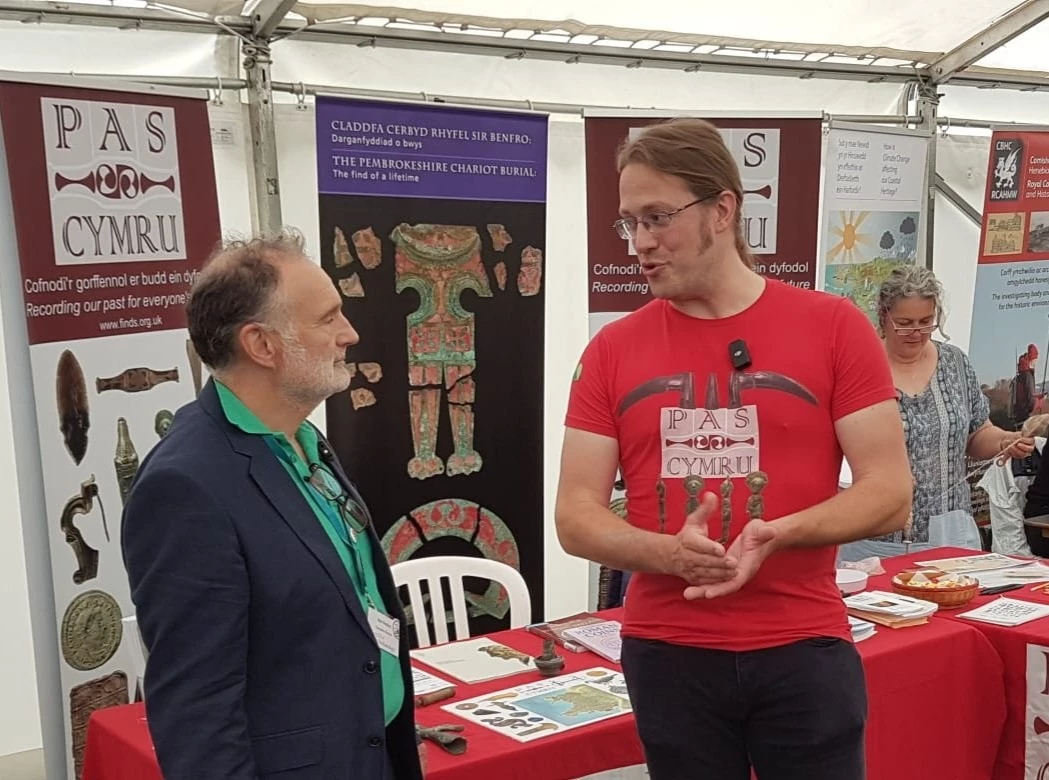
A man in a red tshirt with the words 'Pas Cymru' is stood talking to another man in a blue jacket and green tshirt. They're stood in a marquee and in font of a table with maps on it.

In late 2022, the Portable Antiquities Scheme in Wales (PAS Cymru) established a pioneering engagement role, designed to raise the profile of the scheme and enhance relationships with finders across the country. While PAS has consistently focused on community engagement, the scope of this new role was without precedent and has presented the scheme in Wales with significant opportunities.

Currently Wales has four part-time Finds Liaison Officers (FLOs). FLOs can be reached in Cardiff, Swansea and Wrexham, with important recording support provided by Dyfed and Gwynedd Archaeological Trusts in the southwest and northwest of the country. This network gives us a good, but imperfect, reach across Wales; the creation of the PAS Engagement role has allowed for targeted efforts in parts of Wales where access to PAS staff is more challenging. 

Starting in November of 2022, PAS Cymru began contributing to and hosting a series of public-facing engagement activities, focused on strengthening connections with members of the wider community invested in archaeology and heritage. Where possible, these engagements were developed in association with key partners, namely finder communities and local museums. 

As PAS remains a voluntary scheme, we are dependent on the goodwill of our partners, but that goodwill can only begin with an awareness of our existence. PAS Cymru pop-up events have allowed us to significantly enhance visibility, promoting the work it generates, within geographies which have historically been difficult to access. Thanks to Bangor, Carmarthen and Narberth museums, over the last year PAS Cymru has been seen and accessed by finders who would otherwise have to travel significant distances to be able to have face-to-face interactions with FLOs. 

A strong working relationship with museums throughout Wales is critical for the successful recording of archaeological material found outside of a research context. Where cultural heritage institutions have confidence about who to direct finders towards, pathways can be established ensuring everyone invested in their local heritage, knows how and where finds can be reported. During early autumn 2023 and winter 2024, museums in Carmarthenshire and Pembrokeshire will host exhibitions exploring the work of PAS Cymru, creating additional opportunities to embed an awareness of the scheme within local museums and their audiences. 

In additional to the established practice of FLOs attending detecting club meetings, PAS Cymru is also working closely with metal detecting clubs and individuals, inviting finders to attend pop-up events in local museums, and also to contribute towards them. As a consequence, PAS Cymru and detectorists have shown a unified front to wider audiences, strengthening a shared message of best practice in relation to detecting. In the Spring of 2023, PAS Cymru was invited by members of the detecting community to participate in one of their public-facing events in mid-Wales. This was a significant moment for us to share in their collective enthusiasm for the historic environment, while offering reflections on best practice and recording, with an audience who might otherwise never have known about the scheme. 

The engagement role has proven to be very rewarding and has been received with high levels of positivity. Local museums have been enthused by the potential of widening audiences through the presence of PAS Cymru in their own events calendars, while detectorists have been proactive in supporting the engagement scheme in Wales, attending and promoting events, and pushing the narrative of responsible detecting. The potential of these partnerships has only been scratched, and we are looking forward to seeing how these dynamics can grow, to the benefit of our shared archaeological assets, as we move further through the year.  

VE Day: Medals of Heroism, Service and Sacrifice

Alastair Willis, 5 May 2020

Victory in Europe Day or VE Day commemorates the Allied victory over Nazi Germany. The United Nations also marks the 8th-9th May for all countries as a “time of remembrance and reconciliation for those who lost their lives during the Second World War”.

On 8th May 1945, the War in Europe ended. After almost six years of bloody conflict, Nazi Germany had finally been defeated. By the end of the Second World War – which lasted another four months in the Pacific – more than 60 million soldiers and civilians had been killed, including more than 15,000 Welsh people. The National Museum Wales’ collection of Second World War medals attests to the incredible heroism and sacrifice of Welsh servicemen and civilians between 1939 and 1945. In this article, we will present some of the medals from the war in Europe and share with you the stories of their recipients.

British servicemen were eligible for eight campaign stars (a retrospective ninth was added in 2012) and two service medals. Extraordinary acts of bravery or service by service personnel or civilians were rewarded with gallantry medals.

Petty Officer William John James (Royal Navy), Cardiff

Petty Officer William John James, served on HMS Galatea, a Royal Navy light cruiser that operated in the Atlantic and Mediterranean until it was torpedoed and sunk by a German U-Boat off Alexandria in December 1941. James and over 460 of the crew were killed; only around 100 sailors survived. His medals were awarded posthumously and given to his family after the end of hostilities and were accompanied by a condolence slip from the Admiralty.

W.J. James’ medals (from left to right): The Naval General Service Medal with the Palestine 1936-1939 clasp, The 1939-1945 Star, The Atlantic Star, The Africa Star and The War Medal

W.J. James’ medals (from left to right): The Naval General Service Medal with the Palestine 1936-1939 clasp, The 1939-1945 Star, The Atlantic Star, The Africa Star and The War Medal.

Condolence slip accompanying W.J. James’ medals.

Condolence slip accompanying W.J. James’ medals.

Reverend Ivor Lloyd Phillips (Army), Kilgetty

These medals were awarded to the Reverend Ivor Lloyd Phillips, a military chaplain who served with the 102 (Pembroke Yeomanry) Field Regiment, Royal Artillery in Tunisia and Italy.

Rev. I.Ll. Phillips’ medals (from left to right): the Military Cross, The 1939-1945 Star, The Africa Star with 1st Army clasp, The Italy Star, The Defence Medal and The War Medal with a bronze oak leaf demonstrating that Phillips had been “Mentioned in De

Rev. I.Ll. Phillips’ medals (from left to right): the Military Cross, The 1939-1945 Star, The Africa Star with 1st Army clasp, The Italy Star, The Defence Medal and The War Medal with a bronze oak leaf demonstrating that Phillips had been “Mentioned in Despatches”.

Phillips was awarded the Military Cross, which was at the time the second highest military decoration after the Victoria Cross. The recommendation for the award says “He has carried out his duties in a completely selfless and devoted manner… his work has been unremitting and he is held in very deep esteem by all ranks… Never deterred by any considerations of enemy shelling, he has always shown complete disregard for personal safety. He always hurries to the spot where casualties have occurred and his presence and work with them… has always been the greatest inspiration to others”

He later became Archdeacon of Newport.

Rev. Phillips.

Rev. Phillips.

Rev. Phillips’ Army Chaplain’s Badge.

Rev. Phillips’ Army Chaplain’s Badge.

Rev. Phillips donated his medals to the National Museum Wales in 1991.

Sergeant Glyn Griffiths (Royal Air Force), Llandudno

Griffiths (right) and other members of his squadron on a Hurricane.

Glyn Griffiths (right) and other members of his squadron on a Hurricane.

Born in Llandudno in 1918, Sgt Griffiths was an RAF fighter pilot who flew Hawker Hurricanes as part of 17 Squadron during the Battle of Britain, from July to October 1940. He destroyed at least six enemy aircraft and possibly as many as 15. He was awarded the Distinguished Flying Medal for his actions. Following the Battle of Britain he became an instructor and later flew operationally with 4 Squadron. Returning from a sortie over France, he and his wingman collided over their base and Griffiths was forced to bail out. He suffered severe burns, which ended his wartime service.

Sgt Griffiths medals (from left to right): Distinguished Flying Medal, The 1939-1945 Star with Battle of Britain clasp, The Atlantic Star, The Defence Medal, The War Medal, Croix de Guerre (Belgium), Order of Leopold II (Belgium)

Sgt Griffiths medals (from left to right): Distinguished Flying Medal, The 1939-1945 Star with Battle of Britain clasp, The Atlantic Star, The Defence Medal, The War Medal, Croix de Guerre (Belgium), Order of Leopold II (Belgium).

Sergeant William Herbert Evans (RAF), Cardiff

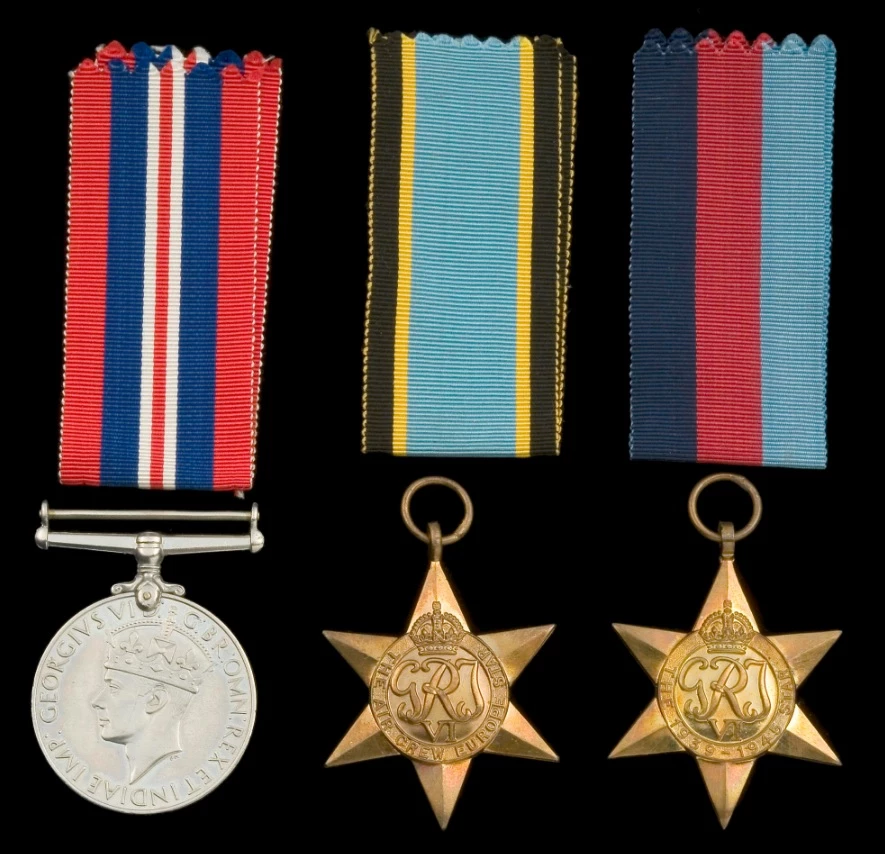
Sgt Evans was the navigator of a Halifax bomber in 78 Squadron. He was killed on 31st August 1943, when his aeroplane was shot down during a 600-aircraft raid on the German cities of Mönchengladbach and Rheydt. His medals were issued posthumously.

Sgt Evans’ medals (from left to right): The War Medal, The Air Crew Europe Star, The 1939-1945 Star

Sgt Evans’ medals (from left to right): The War Medal, The Air Crew Europe Star, The 1939-1945 Star.

Sgt Evans’ medals were donated to the National Museum by his family.

Benjamin Lewis Aylott (Police), Pontarddulais

London-born Aylott had served in the Royal Navy during the First World War before moving to Pontarddulais. At the outbreak of the Second World War he joined the Glamorgan Constabulary as a War Reserve Constable. He was awarded the King's Police and Fire Services Gallantry Medal for apprehending an armed army deserter on 27th December 1943.

B.L. Aylott’s King's Police and Fire Services Gallantry Medal

B.L. Aylott’s King's Police and Fire Services Gallantry Medal.

B.L. Aylott and his family following his investiture by King George VI at Buckingham Palace.

B.L. Aylott and his family following his investiture by King George VI at Buckingham Palace.

His medals were donated to the museum by his son Terry Aylott in 2011.

Thomas William Keenan (Civilian), Cardiff

On the night of 2nd-3rd January 1941, over 100 German aircraft attacked Cardiff. Keenan, watchman at a fuel depot, used his hat to remove an incendiary bomb from the top of a tank containing 300,000 gallons of petrol. His hands were badly burned, but the fuel tank was saved. He was awarded the George Medal for his bravery. Among his medals are two from the First World War that Keenan had received as a result of serving in the Machine Gun Corps.

T.W. Keenan’s medals (left to right): George Medal, British War and Victory Medals (WW1), The Defence Medal, 1939-1945

T.W. Keenan’s medals (left to right): George Medal, British War and Victory Medals (WW1), The Defence Medal, 1939-1945.

Keenan’s medals (reverse).

Keenan’s medals (reverse).

Gordon Love Bastian (Merchant Navy), Barry

Eynon Hawkins (Royal Navy), Llanharan

These Albert Medals were awarded to G.L. Bastian and E. Hawkins for saving life at sea.

Born in Barry, Bastian was a Second Engineer officer on the S.S. Empire Bowman, which was torpedoed on 31st March 1943. His Albert Medal was awarded for “exceptional bravery, strength and presence of mind” in saving two men from the ship’s flooding stokehold.

Hawkins, a Royal Navy Able Seaman from Llanharan, was serving as a gunner aboard a defensively armed merchant vessel that was torpedoed and set on fire on 10th January 1943. According to the London Gazette (29 June 1943), “Hawkins, with the greatest coolness and courage, organised a party of survivors in the water until they were later picked up by one of H.M. ships. Twice he swam to the assistance of other survivors who were in difficulties, himself receiving burns in the face as he pulled them to safety.”

Albert Medals of G.L. Bastian and E. Hawkins

Albert Medals of G.L. Bastian and E. Hawkins.

Albert Medals of G.L. Bastian and E. Hawkins.

Albert Medals of G.L. Bastian and E. Hawkins.

Both medals were donated to the National Museum by their recipients.

Elizabeth Harriet Edwards (Civilian), Cardiff

The British Red Cross Society awarded the medal below to Hetty Edwards for proficiency in First Aid. Edwards was the Librarian of the National Museum of Wales between 1931 and 1970. During the Second World War, she volunteered as a nurse for the British Red Cross Society.

Read more about Hetty Edwards:

Part One

Part Two

Part Three

E.H. Edwards’ Proficiency in Red Cross First Aid Medal

E.H. Edwards’ Proficiency in Red Cross First Aid Medal.

Victory in Europe Day

5 May 2020

VE Day marks the occasion in 1945 when the Allied forces accepted Nazi Germany's surrender, bringing an end to the Second World War in Europe.

Here you can learn more about Wales during the Second World War through objects from the collection.

Sgt Evans’ medals (from left to right): The War Medal, The Air Crew Europe Star, The 1939-1945 Star

Sgt Evans’ medals (from left to right): The War Medal, The Air Crew Europe Star, The 1939-1945 Star.

The National Museum Wales’ collection of Second World War medals attests to the incredible heroism and sacrifice of Welsh servicemen and civilians between 1939 and 1945.

Read More


Following food rationing in 1940, clothes rationing came into force in June 1941. The main reason was to reduce the need for raw materials and to redirect labour to war work.

Read More

 
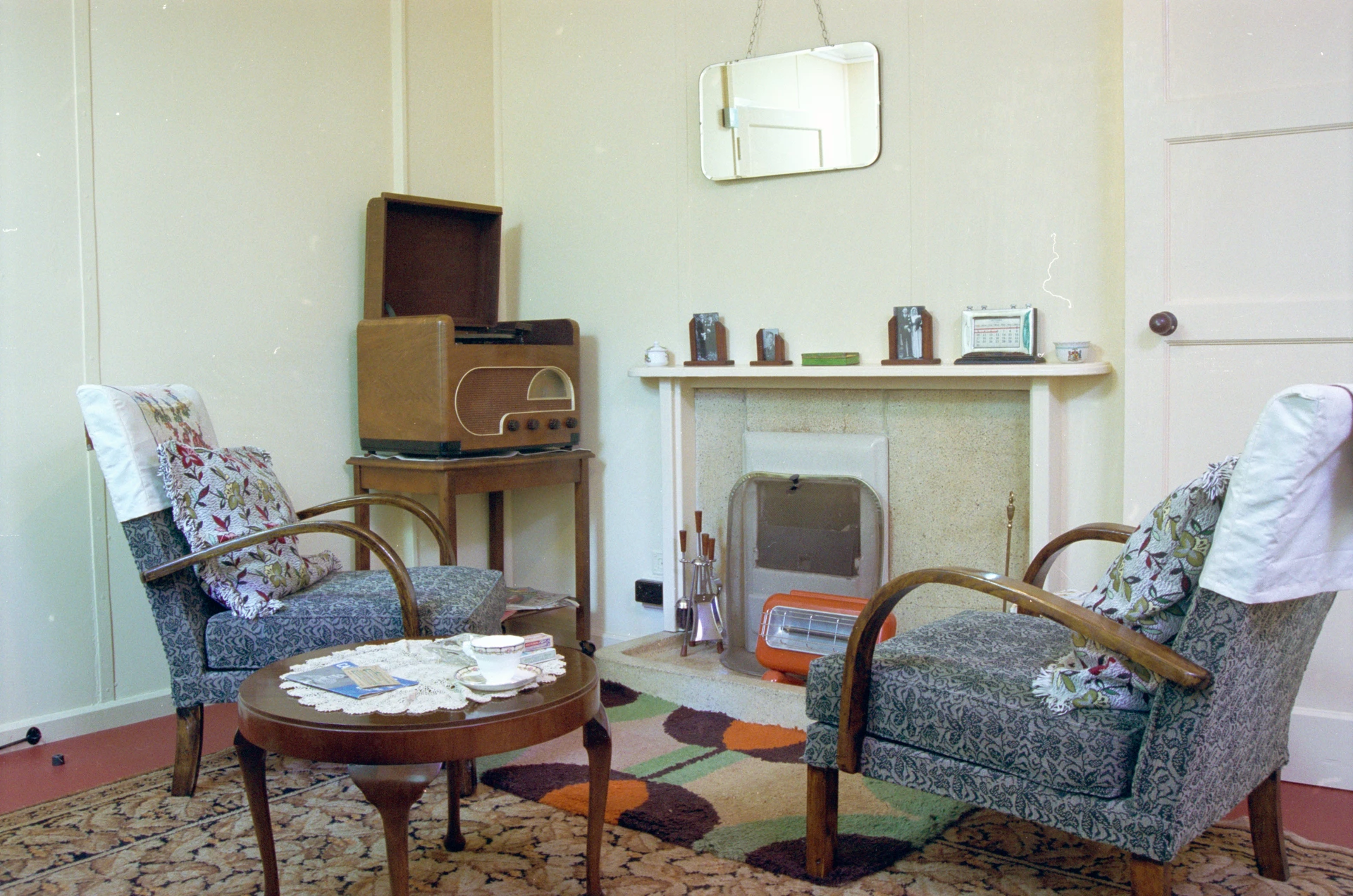
Utility fireside chairs in the Prefab living room, St Fagans National Museum of History

Utility fireside chairs in the Prefab living room, St Fagans National Museum of History

In 1941, the Board of Trade designed a collection of furniture of simple design that could be produced cheaply, which was referred to as ‘utility furniture'.

Read More


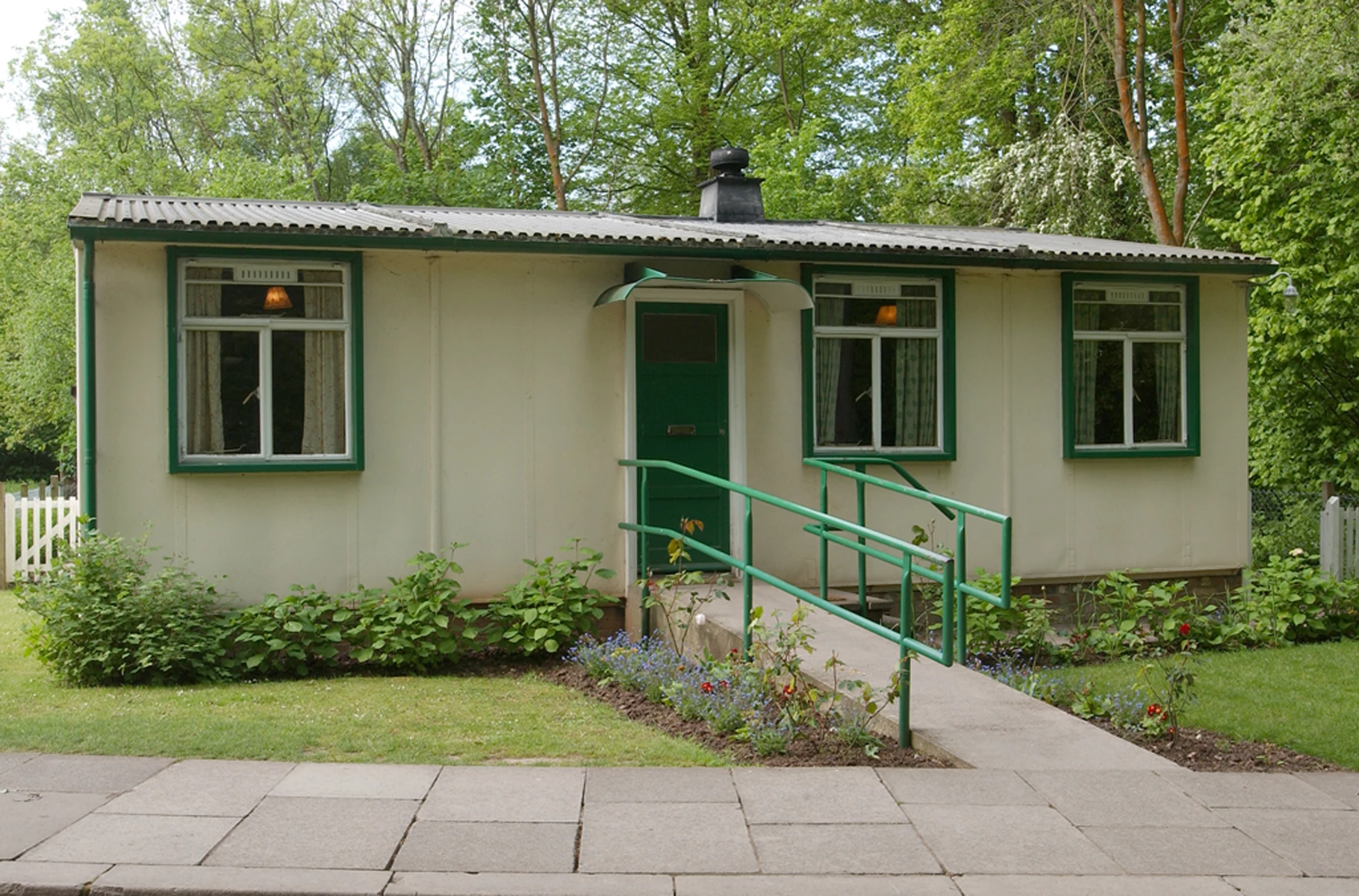
Thousands of British homes were destroyed by bombing during the Second World War. They could not be replaced immediately because of the shortage of builders and materials.

Read More


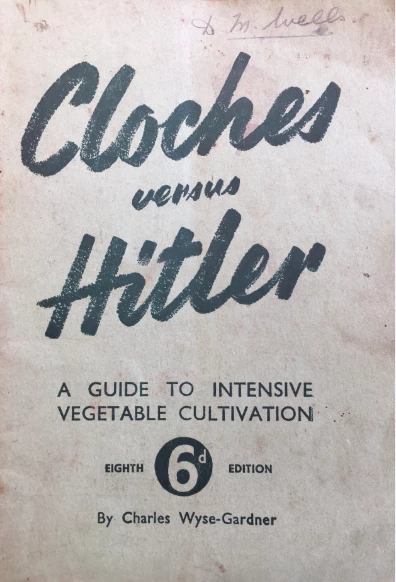
Some have drawn similarities between our current situation and the Second World War – long queues outside shops, empty shelves and rationing of items in our supermarkets.

Read More