: Department of Social & Cultural History

Ordinary heroes in extraordinary times

Sioned Williams, 3 April 2020

The current health crisis has prompted a call for volunteers to support the NHS and plans are underway to convert large venues into field hospitals.

Over a century ago, similar preparations were taking place all over Britain in anticipation of the outbreak of the First World War. In 1909 the British Red Cross Society had joined forces with the Order of St John to form the Voluntary Aid Detachment scheme. Detachments (known as VADs) were to provide support and services to military hospitals. They were organized at county level and members included men and women who carried out a range of voluntary positions.

The first VAD in Wales was formed at St Fagans, Cardiff in November 1909. At that time, Countess Plymouth from St Fagans Castle was the President of the Glamorgan branch of the British Red Cross Society. Soon after, detachments were formed across Wales, bringing the total to 32 by September 1910. From thereon the work started in earnest, recruting and training members and converting buildings into hospitals.

On 24 September 1910, over 200 men and women from the newly formed VADs in Glamorgan gathered at St Fagans Castle grounds. The main purpose of the day was to recruit more volunteers, particularly amongst young women. Demonstrations were also carried out on the day, such as how to treat patients in the field using first aid and only limited basic equipment. Such events became a regular occurance at St Fagans Castle in the years leading up to the war.

Detachments would meet at least once a month and members (also known as VADs) would gain experience by volunteering in hospitals. Women VADs were taught first aid, home nursing, hygiene and cooking while men were trained in first aid in-the-field and stretcher bearing. VADs had to pass exams to receive their first aid and home nursing certificates.

Some of the VADs were dispatched to hospitals across Britain but most would volunteer within their own communities, such as at St Fagans. Due to a lack of hospitals, all sorts of buildings were offered for use to the Red Cross – from village halls to mansions. These were converted into auxiliary hospitals of about 30 beds that would support a nearby military hospital. In 1916 Earl and Countess Plymouth of St Fagans Castle offered their large Banqueting Hall in the grounds of the Castle to be converted into an auxiliary hospital.

By the outbreak of the First World War in August 1914, the work of the VADs had ensured preparations were in place to deal with the first casualties returning from war. From thereon many more volunteers were recruited and trained. In all, 90,000 volunteers worked at home and abroad during the war, playing a crucial part in caring for the sick and wounded.

Over the coming weeks, we’ll be posting more about some of the volunteers who worked at the St Fagans VAD Red Cross hospital.

John Dillwyn Llewelyn — Welsh Pioneer Photographer

Mark Etheridge, 21 April 2015

The John Dillwyn Llewelyn Collection at Amgueddfa Cymru – National Museum Wales contains some of the earliest images ever taken in Wales. The collection comprises of approximately 850 photographic prints (mainly salted paper), 230 Calotype paper negatives and 160 Collodion glass negatives. It also includes some documents and photographic equipment. As well as negatives and prints taken by the Llewelyn family, the collection also contains many prints by other photographers (including some by Calvert Richard Jones and Roger Fenton) that were collected by the family.

All the photographs and negatives from the John Dillwyn Llewelyn Collection can be viewed on Amgueddfa Cymru’s Collections Online catalogue.

John Dillwyn Llewelyn (1810 – 1882)

John Dillwyn Llewelyn was born at The Willows, Swansea on 12 January 1810. The family had lived at Penllergare (four miles north of Swansea) since 1817, however on coming of age John inherited this estate from his maternal grandfather and took on the additional surname Llewelyn. It was at Penllergare where many of the photographs in this collection were taken in the 1850s.

On 18th June 1833 John married Emma Thomasina Talbot, the youngest daughter of Thomas Mansel Talbot of Margam and Penrice. Importantly Emma was first cousin to the pioneer photographer William Henry Fox Talbot who contended with Daguerre in 1839 for the title of inventor of photography, and who invented the negative process.

He died on 24 August 1882 at Atherton Grange, his London home, and is buried with his wife Emma at Penllergare.

Collodion glass negative of John Dillwyn Llewelyn, c.1853

Collodion glass negative of John Dillwyn Llewelyn, c.1853

Collodion glass negative showing the south front of Penllergare House, 1858

Collodion glass negative showing the south front of Penllergare House, 1858

Scientist, Botanist & Astronomer

John was from a very wealthy background, his father Lewis Weston Dillwyn managed the family-owned Cambrian Pottery in Swansea. This meant he was in the very lucky position of being able to pursue his interests in science, botany and astronomy without having to work.

He was a gifted amateur scientist and a member of the Royal Institution of South Wales. He built an orchid house and observatory (which still stands) in the grounds at Penllergare .

Salted paper print showing a vase of roses on the porch at Penllergare House, 1850s

Salted paper print showing a vase of roses on the porch at Penllergare House, 1850s

Calotype paper negative of the observatory at Penllergare, 1850s

Calotype paper negative of the observatory at Penllergare, 1850s

Pioneer Photographer

With such an interest in science, and with his wife’s family connections to Fox Talbot it seems natural that John took up photography almost from its inception in 1839. However he wasn’t very successful at this point with either Talbot’s process or Daguerre’s. Unable to overcome some of the technical difficulties he gave up and didn’t return to photography until the early 1850s. Most of the collection the Museum holds dates from the 1850s.

He was a founder member of the Photographic Society of London (which later became the Royal Photographic Society), and in 1853 he attended the inaugural meeting. He exhibited regularly in the early exhibitions of the Society as well as in Dundee, the Manchester Art Treasures exhibition and Paris exhibition in 1855.

John was especially talented at capturing fleeting moments, such as waves, cloud movement and steam. At the Paris exhibition in 1855 he was awarded a silver medal for his ‘Motion’ series, a series of four images - breaking waves in Caswell Bay, sailing ship off Caswell, the steamer JUNO blowing off steam at Tenby, and clouds over St. Catherine’s, Tenby.

This Collodion glass negative is from the ‘Motion’ series showing the steamer JUNO at Tenby, c.1855

This Collodion glass negative is from the ‘Motion’ series showing the steamer JUNO at Tenby, c.1855

Collodion glass negative showing John with his calotype camera in 1853

Collodion glass negative showing John with his calotype camera in 1853

This photograph was made using the Oxymel process. It was taken on 15 March 1858 at 1pm with an exposure of 15 minutes. It shows Swansea from St. Thomas, and sailing vessels can be seen in the background.

This photograph was made using the Oxymel process. It was taken on 15 March 1858 at 1pm with an exposure of 15 minutes. It shows Swansea from St. Thomas, and sailing vessels can be seen in the background.

Invention of the Oxymel Process

His invention of the Oxymel process in 1856 was a development of the collodion process which used a solution of acetic acid, water & honey to preserve images. This meant that glass negatives could be prepared in advance and exposed in the camera as required. As a result landscape photographers no longer needed to carry around portable laboratories and darkroom tents. The Illustrated London News in 1856 wrote that:

“The plates may be prepared at home and a boxful taken out and think of this ye tourists, as you travel along and a fine prospect meets your eye you have nothing to do but to stop your carriage, get out your camera, and in a few minutes you may secure a picture, drawn by Nature herself, that would have taken you hours to sketch."
Salted paper print showing John with all the apparatus needed to take a collodion negative

Salted paper print showing John with all the apparatus needed to take a collodion negative

Is this the first ever photograph of a snowman taken in Wales? This photograph was taken about 1853/54 and is probably by Mary Dillwyn or Thereza Llewelyn.

Is this the first ever photograph of a snowman taken in Wales? This photograph was taken about 1853/54 and is probably by Mary Dillwyn or Thereza Llewelyn.

The Llewelyn Family

John and Emma had seven children, six of whom survived into adulthood. Various members of the family seem also to have been interested in photography. His daughter Thereza took a number of the images, and we know that both Thereza and John’s wife Emma also helped print some of his photographs. John’s youngest sister Mary Dillwyn was also an early photographer, and is generally regarded as the first woman photographer in Wales.

This photographs shows the Llewelyn children having a picnic on the Goppa near Swansea in 1855. It is one of a series of photographs of the children taken by John on the 23rd September each year for his wife’s birthday.

This photographs shows the Llewelyn children having a picnic on the Goppa near Swansea in 1855. It is one of a series of photographs of the children taken by John on the 23rd September each year for his wife’s birthday.

The Historic Photography Collection

Further Reading

Penllergare A Victoria Paradise by Richard Morris, 1999.

The Photographer of Penllergare A Life of John Dillwyn Llewelyn 1810-1882 by Noel Chanan, 2013.

Working Abroad - Welsh Emigration

9 February 2010

Welsh industrial emigration: The legacy

In the nineteenth and twentieth centuries, millions of people across the world moved to different countries looking for work. They wanted to improve their lives, try new working practices, or have adventures in different lands.

Many people left Wales and took traditional Welsh industrial skills with them. Some helped create continuing economic success in the countries they moved to. Some made huge fortunes, finding fame. Others led more quietly successful lives, settling down and raising families. Some returned to Wales after time abroad, others were never to see this country again.

Here we look at the various industries from Wales that supplied workers and expertise around the world. What were those industries and skills? Where did the workers go? What values and traditions did they take with them? What impact did their leaving have on the country they left behind?

Welsh coal mine, Kentucky

Welsh coal mine, Kentucky

Coal

"Wales experienced a spectacular boom in coal mining in the late 19th and early 20th centuries. The world looked to the Welsh mining industry for expertise and advice."

[see more]

Burra Burra copper mine, 1874.

Burra Burra copper mine, 1874.

Copper

"The world of copper smelting was led by Wales in the 19th century. The works around Swansea and Holywell supplied over 50% of the world's copper."

[see more]

 
John Davies of Talsarnau, Gwynedd, with his brother and friend seeking gold during the Australian Gold Rush

John Davies of Talsarnau, Gwynedd, with his brother and friend. They are seeking gold in Queensland, Australia in the 1880s

Gold

"Gold has been mined intermittently in Wales for thousands of years, but the industry never employed huge numbers of workers. Despite this, many Welsh emigrants joined the famous 'Gold Rushes' of the 19th century."

[see more]

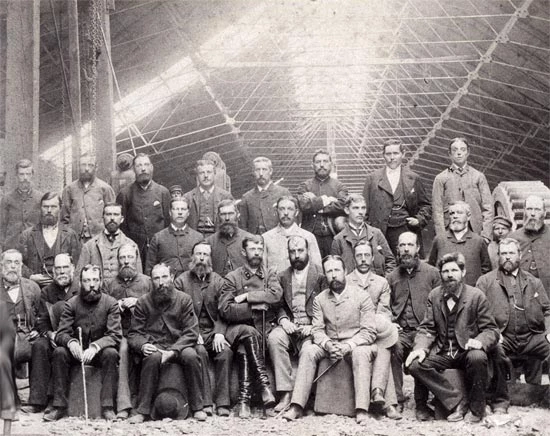
Welsh workers in the ironworks at Hughesovka

Welsh workers in the ironworks at Hughesovka, John Hughes is second from the right in the front row

Iron

"Wales was at the forefront of the development of the iron industry in Britain and it is therefore not surprising to find Welsh people leading the industry across the world in the nineteenth century."

[see more]

 
Bangor, Pennsylvania

Bangor, Pennsylvania

Slate

"Slate was used in Europe as a roofing material. Welsh slate was exported across the world for prestigious building projects. The discovery of slate deposits in different countries became one of a number of economic factors that influenced Welsh workers to move to those areas."

[see more]

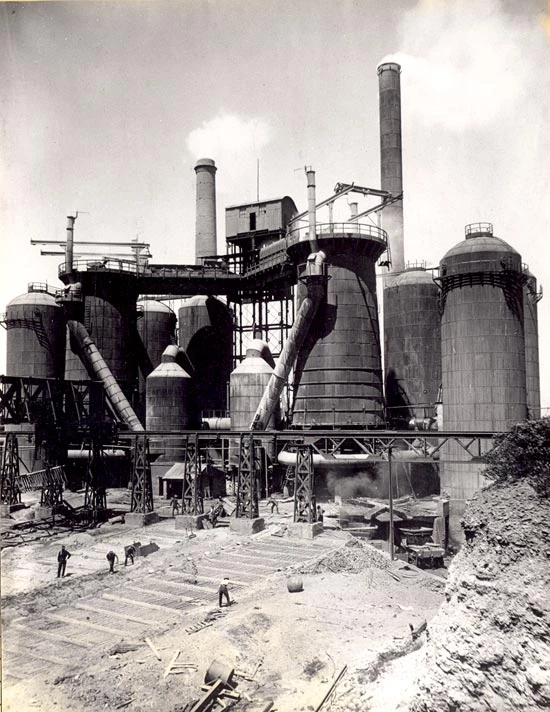
Lithgow Steelworks, New South Wales, Australia, 1920s

Lithgow Steelworks, New South Wales, Australia, 1920s

Steel

"Iron working centres often adapted themselves to the creation of steel, a stronger, more versatile material. Unsurprisingly Welsh workers played an important part in this change."

[see more]

 
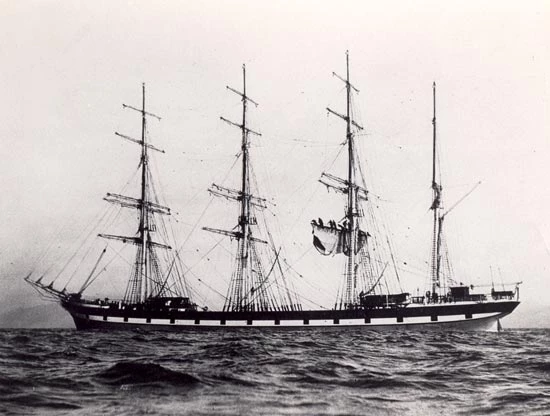
<em>Metropolis</em> built for William Thomas in 1887
Metropolis

built for William Thomas in 1887

Shipping

"Wales has a 1,200km (750 mile) coastline and a long tradition of seafaring. Welsh sailors travelled around the world, exporting Welsh goods and importing raw materials for industry. Welsh shipping lines were among the best-known in maritime trade and the company owners were amongst the richest."

[see more]

Quarrying stone, Randolph, Wisconsin

Quarrying stone, Randolph, Wisconsin

Metal Mining

"Wales has a 1,200km (750 mile) coastline and a long tradition of seafaring. Welsh sailors travelled around the world, exporting Welsh goods and importing raw materials for industry. Welsh shipping lines were among the best-known in maritime trade and the company owners were amongst the richest."

[see more]

 
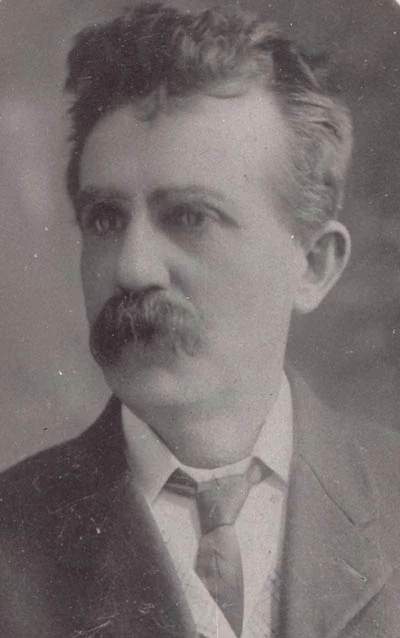
John Williams

John Williams

Tinplate

"The manufacture of tinplate was another area where Wales held a virtual monopoly in the world. South Wales accounted for over 80% of world production in the early 1890s."

[see more]

Morgan C. Jones, (on the right), nephew of Morgan Jones and working for the same company

Morgan C. Jones, (on the right), nephew of Morgan Jones and working for the same company

Other Industries

"Not all Welsh people worked in the 'traditional' heavy industries of Wales of course. Many worked in other industries and many transferred the skills they learnt in mines, foundries and works to other places of work."

[see more]

 
Cartoon from the Western Mail, 1928

Cartoon from the Western Mail, 1928

Migration Patterns

"Not everyone who left Wales for a new life abroad stayed away. Many people returned home for various reasons. This is called back migration."

[see more]

Breaker boys in Pennsylvania.

Breaker boys in Pennsylvania. Many Welsh boys in the USA began work in this way at an early age.

Radicalism

"Welsh industrial workers came from areas that had well organised unions. They had a reputation for standing up for their rights, safe working conditions and decent pay."

[see more]

 
Old Saron Church, the first Welsh church in Minnesota, 1856

Old Saron Church, the first Welsh church in Minnesota, 1856

Welsh Culture

"Like many emigrants, Welsh people took their culture with them to the new countries. In a strange, new place, keeping the songs, stories, languages and traditions of home alive helped emigrants to deal with the unfamiliarity."

[see more]

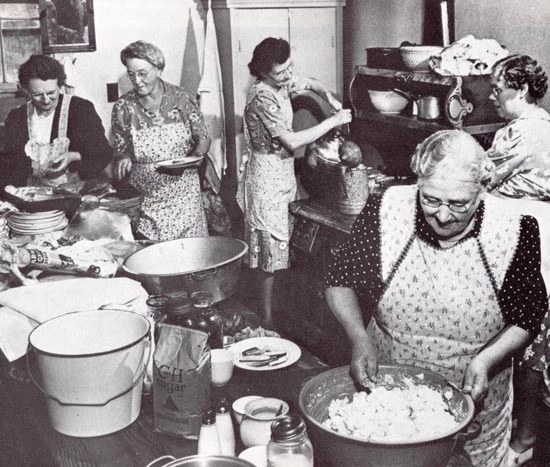
 Preparing food for a Gymanfa Ganu (singing festival), Peniel Church, Pickett, Wisconsin,1946.

Preparing food for a Gymanfa Ganu (singing festival), Peniel Church, Pickett, Wisconsin,1946.

Women

"The majority of industrial workers were men but women of course formed an important part of migrant communities."

[see more]

 
California, USA

California, USA

Place names

"It was common for emigrants of all nationalities to name their new settlements after places in their home countries. This provided a sense of identity and a link with home."

[see more]