: Secrets Uncovered

Sourcing the Stonehenge Bluestones

Richard Bevins, 21 February 2012

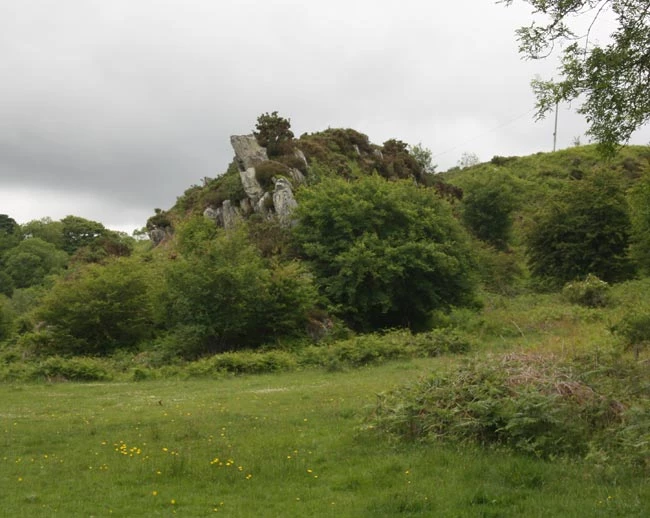
Pont Saeson, June 2011.

Pont Saeson, June 2011.

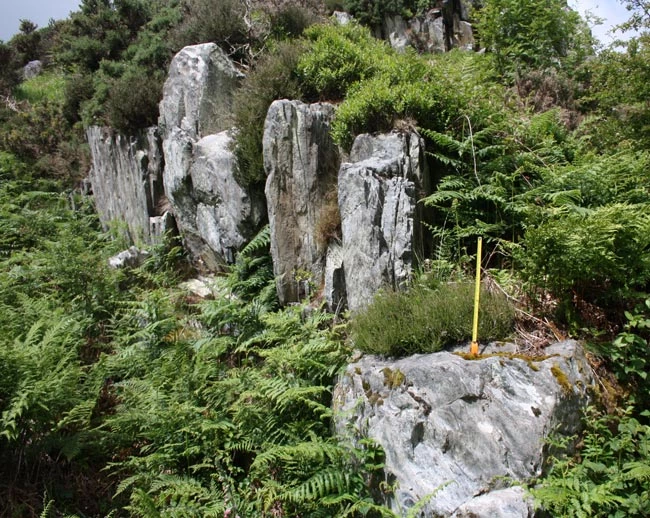
Close up of the outcroppng rocks, Pont Saeson, June 2011.

Close up of the outcroppng rocks, Pont Saeson, June 2011.

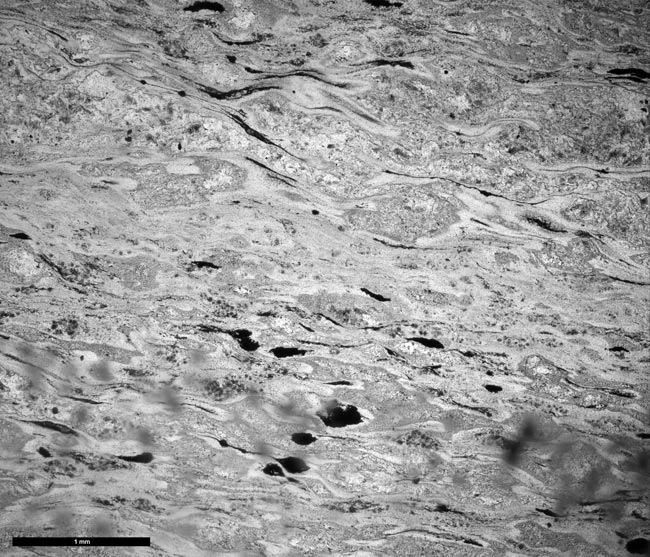
Microscopic view of the newly identified match to the Stonehenge bluestones

Microscopic view of the newly identified match to the Stonehenge bluestones

The source of the Bluestones at Stonehenge has long been a subject of fascination and controversy. One type was traced to north Pembrokeshire in the early 1920s, but now geologists at Amgueddfa Cymru and University of Leicester have directly matched another type to a different part of north Pembrokeshire. Will this provide us with more ideas about how the stones might have been transported to Stonehenge?

The Stonehenge monument

Stonehenge, on Salisbury Plain, is one of the world's most iconic ancient monuments. It is designated as a UNESCO World Heritage Site, and it is as recognisable worldwide as sites such as Machu Picchu in Peru and the Xian Terracotta Warriors in China.

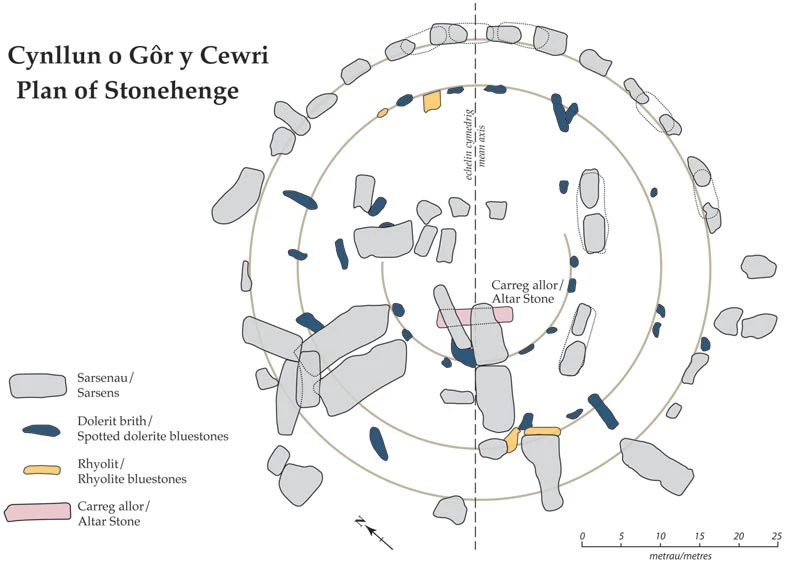
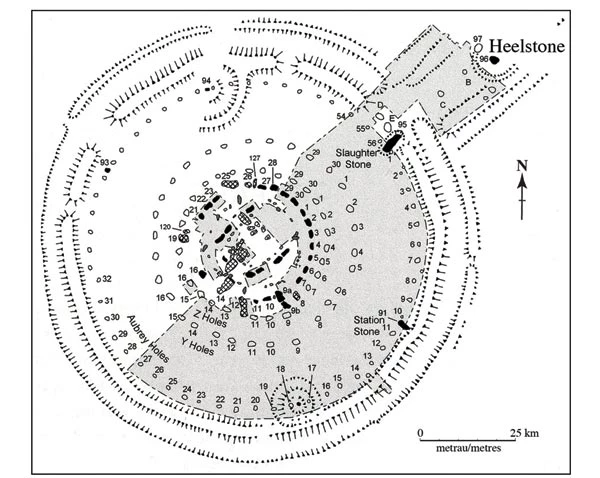
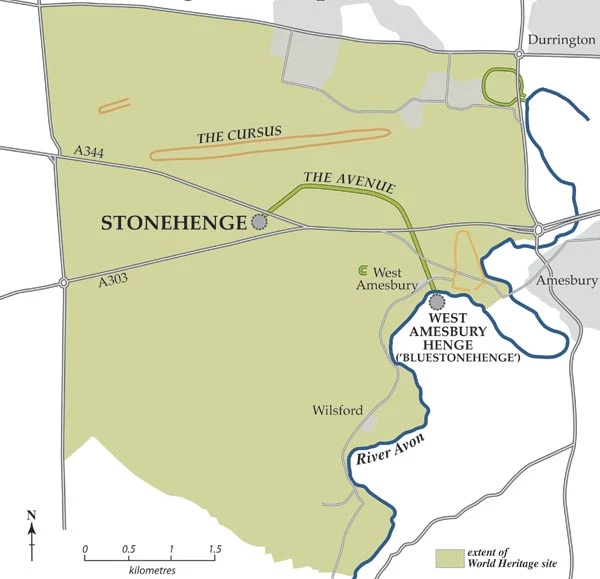
Stonehenge is a complex site. It is best known, of course, for the standing stones, which comprise the Outer Circle, the Inner Circle, the Inner Horseshoe and the Heel Stone and, within the structure, the so-called Altar Stone. Surrounding the stone circle are further structures, identified by mounds and ditches, and a series of 'holes' thought to have held standing stones of more henges. These holes, known as the Aubrey Holes, are important because they contain debris (or 'debitage' as some archaeologists call the material) whose lithology is not represented among the current standing stones. However, the current Stonehenge monument is only a part of a broader range of contemporary features, including the Avenue, the Cursus and the recently identified West Amesbury Henge (known as Bluestonehenge). Collectively, these comprise the Stonehenge Landscape.

The large stones that form the Outer Circle are known as 'Sarsens'. They are hard, resistant sandstones thought to have been collected from the local Salisbury Plain environment. The sources of the smaller stones that form the Inner Circle, the Inner Horseshoe and the Altar Stone, known as the 'Bluestones', are 'exotic' to the Salisbury Plain area. For many years their source baffled eminent Victorian investigators such as Maskelyne, Cunnington, Teal and Judd. This is the so-called Bluestone lithology.

The Bluestones

In 1923, however, H.H. Thomas from the Geological Survey published a paper in The Antiquaries Journal in which he claimed to have sourced the spotted dolerite component of the Bluestones to hilltop rock outcrops, or 'tors', exposed in the high Preseli, to the west of Crymych in west Wales. Specifically, he thought that the tors on Carn Meini and Carn Marchogion were the likely source outcrops. He went on to speculate about how humans had transported the stones to Salisbury Plain, favouring transport across land rather than a combined land and sea journey.

Not all the Bluestone stones standing today at Stonehenge, however, are spotted dolerites. Four of them are ash-flow tuffs, of either dacitic or rhyolitic composition. Debris recovered from the Aubrey Holes, as well as various archaeological excavations at Stonehenge and the Stonehenge Landscape, comprise spotted dolerite and more, and very different, dacitic and rhyolitic Bluestone material.

Map of the Preseli area showing the research area, and the proposed origins of the Bluestones

Map of the Preseli area showing the research area, and the proposed origins of the Bluestones

Plan of Stonehenge

Plan of Stonehenge

Plan of Stonehenge

Plan of Stonehenge showing archaeological detail

The Stonehenge landscape

The Stonehenge Landscape

Recent discoveries

In 2009 Amgueddfa Cymru, in collaboration with Dr Rob Ixer, University of Leicester began new petrological investigations. Examination of debris from the Cursus Field, adjacent to the Cursus, showed the presence of samples identified as being ash-flow tuffs, with tube pumice, crystal fragments and lithic clasts in a fine-grained recrystallized matrix. These were broadly similar to the four dacitic and rhyolitic standing stones, yet showed key differences. Also present were samples that had previously been informally called 'rhyolite with fabric'. This lithology is defined by a very well-developed fabric, present on the millimetre scale. This distinctive rock texture has led Museum scientists to identify the source of the rock to Pont Saeson, in the low ground to the north of Mynydd Preseli.

Vaporising the Bluestones

To test this match further, quantitative evidence has been acquired by analysing the composition of tiny, micron-sized zircon crystals from Stonehenge and Pont Season rhyolite samples, using a technique known as 'laser ablation inductively coupled plasma mass spectrometry' at Aberystwyth University.

The technique is to focus a very high-power laser beam, with a diameter of only 10 microns, onto the zircon crystals (themselves no larger than 100 microns) and 'ablate' them — essentially vaporizing them — so that after analysis the zircon crystals are peppered with small craters. The vapour generated by this process is then analysed in the mass spectrometer, which reveals the chemistry of the zircon crystals. This was the first time zircon chemistry had ever been used to provenance archaeological material.

As well as zirconium (and the closely related element hafnium) the crystals contained detectable concentrations of a range of elements including scandium, tantalum, uranium, thorium and the rare earth elements, and the analyses from the two sample sets proved to be near identical, providing a geochemical 'fingerprint'.

This result is of considerable significance, and was published in 2011 in the internationally recognised Journal of Archaeological Science.

In June 2011 more detailed sampling identified the outcrop known as Craig Rhos-y-felin near Pont Saeson as the source of the majority of the rhyolite debris recovered during excavations at Stonehenge and the vicinity.

The results from these latest excavations were published in the journal Archaeology in Wales in December 2011.
Francsesco Guardi's View of the Palazzo Loredan

Anne Pritchard, 6 September 2011

Partially restored image of <em>View of the Palazzo Loredan dell'Ambasciatore on the Grand Canal, Venice</em>

Partially restored View of the Palazzo Loredan dell'Ambasciatore on the Grand Canal, Venice

Ultra-violet light shows areas of previous retouching

Ultra-violet light shows areas of previous retouching

This small painting by Francesco Guardi depicts in exquisite detail the embassy of the Holy Roman Empire in Venice.

It is set amid the bustle of daily life on the Grand Canal. Washing hangs from balconies, Gondoliers take their boats to and fro, and finely dressed diplomats peer from windows and promenade on the quayside.

Among the many figures a gentleman in a blue coat — probably the ambassador himself — stands at the entrance to the palazzo grandly holding a gold sceptre. Above him hangs the imperial crest of the powerful regime which for centuries dominated most of central Europe.

Guardi is renowned as one of the great eighteenth century Venetian landscapists known as veduta painters. His works were highly popular and influential among the British artists and collectors who visited Venice on their Grand Tour.

This work is a fine example of his mature technique. It combines the detailed precision mastered under the influence of the artist Canaletto with an increasingly expressive use of brushwork, atmosphere and light.

Cleaning of the painting by the museum's conservators has revealed the stunning luminosity of these original effects.

When this painting initially entered the museum's collection, the brilliance of Guardi's technique was not fully visible. The top layer of varnish which covered the painting had severely discoloured, turning brown with age. Excessive retouching of the sky area had also been carried out, made visible under ultra-violet light.

The museum's conservator cleaned the paint surface, removing the old varnish and previous restorations. Tiny black spots in the paint, initially thought to be dirt, were found to be granules of pigment. Similar spots can be seen in other works by the artist, who would have ground and mixed his own paints.

With the full clarity and radiance of Guardi's original work revealed, the painting was re-varnished and placed on display.

Before and after cleaning

Museum conservators have been busy cleaning the image, here is a before and after view of the image:

View of the Palazzo Loredan dell'Ambasciatore on the Grand Canal, Venice [before cleaning]

View of the Palazzo Loredan dell'Ambasciatore on the Grand Canal, Venice [before cleaning]

View of the Palazzo Loredan dell'Ambasciatore on the Grand Canal, Venice [after cleaning]

View of the Palazzo Loredan dell'Ambasciatore on the Grand Canal, Venice [after cleaning]

Keeping evil at bay: Concealed garments

Elen Phillips, 9 August 2011

Beneath the floorboards

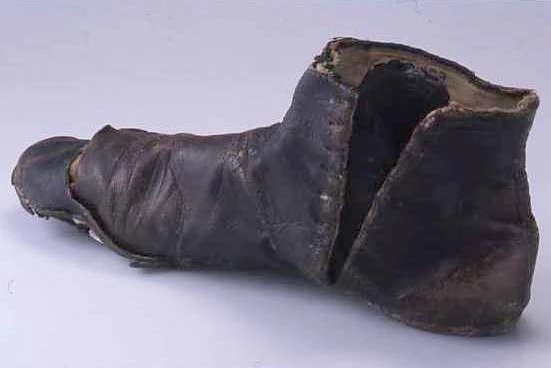
Adult's left boot, used as lucky charm under floorboards at Old Gwernyfed, Felindre, Brecon.

Adult's left boot. 9 button fastening at side (buttons missing). Used as lucky charm under floorboards at Old Gwernyfed, Felindre, Brecon.

Renovating an old house? Stay alert! Who knows what you'll find beneath the floorboards or behind the walls. You might discover a deliberately concealed garment, hidden by a previous occupant to bring good luck and fertility to the home. These concealments are called 'caches' — a term deriving from the French word 'cache', meaning 'to hide'. St Fagans National History Museum has collected several caches over the years. Each new find provides a valuable insight into this little known but widely practiced folk custom.

Hidden shoes

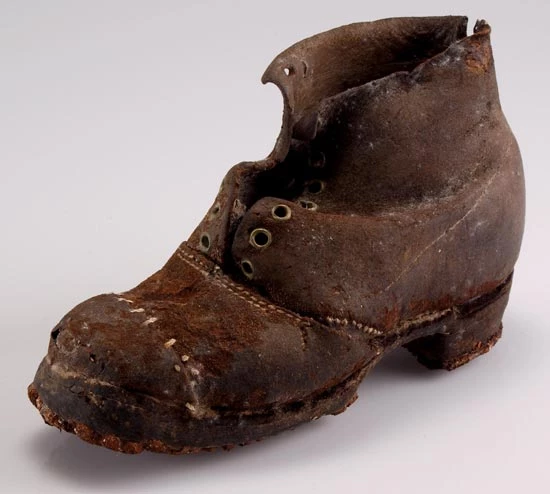
A leather shoe found behind a fireplace at Ty Cerrig, Llanfachreth, in March 1994

A leather shoe found behind a fireplace at Ty Cerrig, Llanfachreth, in March 1994

The most frequently found hidden garments are shoes. They are usually discovered near chimneys or fireplaces, but rarely are they found in pairs. Children's shoes are the most commonly found garments. This mid 19th century leather shoe was discovered in 1994 behind a fireplace in a stone built house in Llanfachreth. The owners found four other shoes in the same location, each well-worn and in a degraded condition. They almost certainly belonged to a family unit of two parents and three children.

Chimneys and fireplaces were probably chosen as hiding places because they served as the main focal point in most homes — a source of heat and comfort and an important place to congregate as a family. Shoes were also hidden under floorboards, around doorways and below staircases. Some considered these places to be the weakest part of a building, where evil spirits and witches would enter. Shoes were placed in these areas in order to trap or corner potential evil.

A concealed corset

A fragment of a mid-18th century corset found in a wall during restoration work to a thatched cottage in Pontarddulias

A fragment of a mid-18th century corset found in a wall during restoration work to a thatched cottage in Pontarddulias

Although shoes are the most frequent finds, other types of garments have also been discovered — for example, hats, jackets and breeches. This fragment of a corset was found in a thatched cottage in Cae Cerrig Road, Pontarddulais. It was discovered in 2002 lying in soil behind a thick wall to the side of the fireplace. Dating from the mid 18th century, it is roughly heart-shaped and is constructed from three layers: an outer layer of buff coloured wool, a stiffening layer of whalebone strips and a linen lining. Evidence of silk stitching remains in some areas. In its original condition, this fragment would have formed the front panel of the corset, covering the chest and abdomen.

What should you do if you find a concealed garment? If possible, avoid excessive handling and contact your local museum for further guidance. Remember to take plenty of photographs or drawings of the garment in its found location. Above all, stay vigilant — that heavily worn 'rag' could be a piece of history!

Secrets of the ammonites

Cindy Howells, 26 February 2010

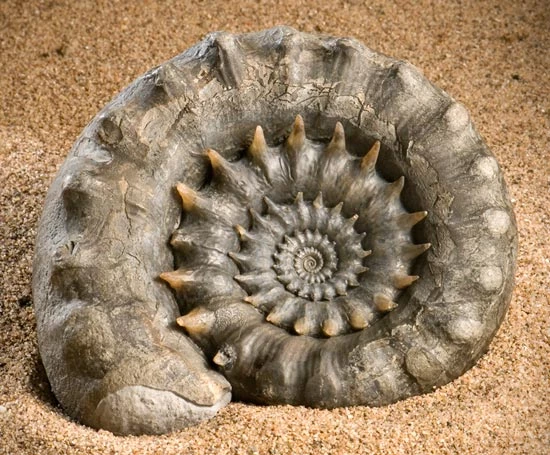
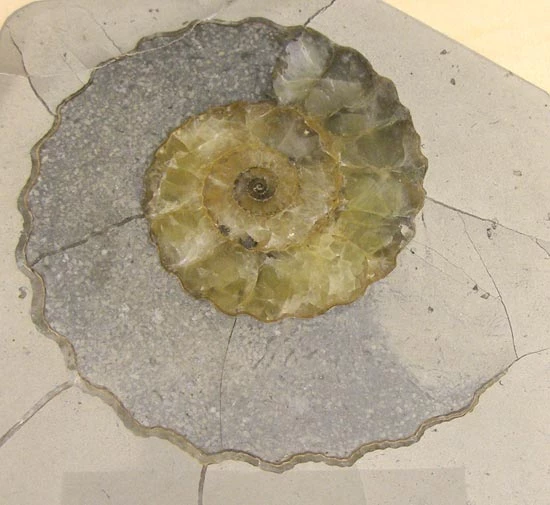
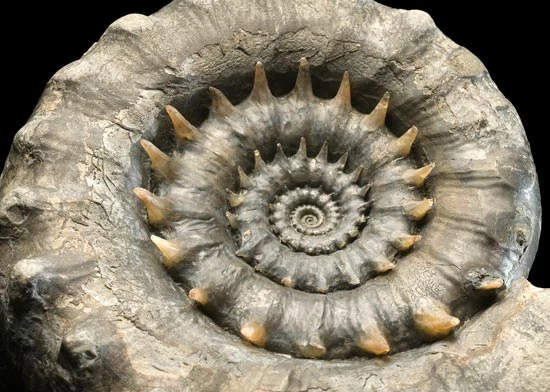
The prepared specimen revealing the delicate spines

The specimen after preparation, revealing the delicate spines

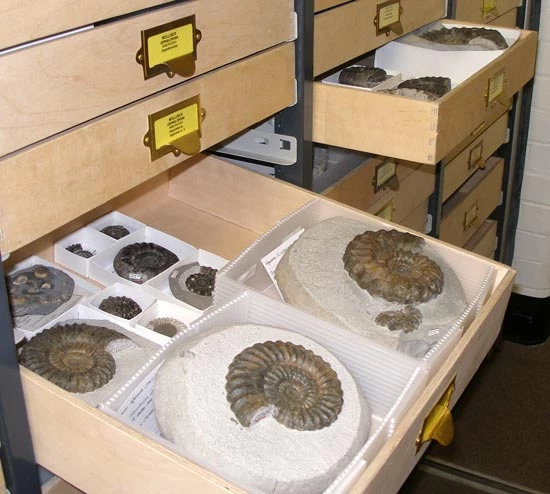
Ammonites in the collections at Amgueddfa Cymru

Ammonites in the collections at Amgueddfa Cymru

Darn o'r amonit sy'n dangos y siambrau

Section through an ammonite showing the chambers

Underside of the prepared specimen

Underside of the prepared specimen

The prepared specimen revealing the delicate spines X2

Delicate spines on the inner whorls. Similar spines would originally have been present on the outer part of the ammonite as well, but these had been worn away by erosion

Scientists have managed to dissolve the rock surrounding the fossil of a 190-million-year-old ammonite, revealing, for the first time its intricate pattern of spines.

When you pick up a fossil on a beach it is often broken or eroded. You might discard it because it is poorly preserved or incomplete. But most fossils are found partially concealed in rock, and in these cases they can carry hidden secrets.

One such ammonite fossil had been lying in a drawer in the Geology Department at the Museum for 50 years. It is part of a collection of almost 6,000 fossils donated by James Frederick Jackson in 1960.

James Frederick Jackson

Jackson lived in a small cottage at Charmouth near Lyme Regis, and spent his spare time collecting rocks and fossils around the Dorset coast. From 1914 to 1919 he worked at the Museum, and over his lifetime he donated almost 21,000 specimens.

Palaeontologists regularly consult the Jackson collection because it contains a complete and valuable record of Dorset's Jurassic fossils. A few years ago, one such researcher noticed that a particular ammonite was unusual. However, much of it remained concealed in rock, which needed to be carefully removed by specialists to reveal the fossil.

A year of preparation

After a year of painstaking work, the specimen was finally returned to the Museum to take pride of place in the collections. The limestone sediment had been completely removed with a solution of weak acid and, for the first time, the detail of delicate spines on the inner whorls could be seen. Similar spines would originally have been present on the outer part of the ammonite as well, but these had been worn away by erosion.

The specimen features in a recently published monograph of the Palaeontographical Society, in a series devoted to the scientific description and illustration of British fossils, under the formal scientific name of Eoderoceras obesum (Spath).

Ammonites

Ammonites lived in the Mesozoic Era (251-65.5 million years ago) and were marine animals related to the Nautilus. They swam in the sea, preying on smaller marine animals. They usually had a spiral shell which could be from 5mm to 2m across. Their shells could be smooth, ribbed or knobbly, or even spiny. They lived in the outer whorl of their shell, while the inner part consisted of gas-filled chambers used for buoyancy. You can often see an intricate pattern on the surface of ammonite shells, which marks the division between each chamber. All these features are used by palaeontologists to identify different species of ammonites.

The Museum has large and scientifically important collections of ammonites, mainly from south-west Britain. They are a valuable tool in helping scientists understand the geology and palaeontology of Britain.

The sound of the Neanderthals

Elizabeth Walker, 14 May 2009

Reconstruction painting showing an Early Neanderthal Man.

Reconstruction painting showing an Early Neanderthal Man.

<em>Neanderthal</em> performance, National Museum Cardiff

The first live performance of Neanderthal at the National Museum Cardiff, February 2009.

Neanderthal remains dating back 230,000 years have been found at Pontnewydd Cave, Denbighshire in Wales. The teeth and stone tools provided the inspiration for composer Simon Thorne to create a soundscape, Neanderthal, to play in the galleries at Amgueddfa Cymru to bring otherwise silent displays to life

Neanderthals were an evolutionary dead-end, although modern humans such as ourselves shared a common ancestor with them some 600,000 years ago. They have the same inner ear and vocal structures as us, and therefore had the ability to create and hear sounds. It is possible, however, that Neanderthal brains worked in very different ways from ours. The links between different parts of the brain might not have been as fluid as they are in ours. They might not have been able to form language as a way to communicate.

Neanderthals might have had a better capacity than us to communicate and to express themselves through song. The soundscape Simon has created is based on the voice and recordings of natural sounds recorded during a visit to Pontnewydd Cave. These include the drips from the cave roof and the river flowing in the valley bottom. The sounds a Neanderthal heard would have included the communication of animals and bird song. Neanderthals would have made sounds themselves too. These would have included the chipping of stone tools; when flint is knapped (or struck) an unflawed nodule rings with a bright sound and the knapper knows whether the flint is suitable for making the flakes needed to create a stone toolkit. Neanderthals could use their voices; perhaps they sang their way through their landscapes and used sound to communicate to one another while hunting.

Neanderthal is pure imagination. However, it is based on science and helps to bring an otherwise silent museum display to life in new and exciting ways.

Article by: Elizabeth Walker, Curator of Palaeolithic and Mesolithic Archaeology

The Neanderthal soundscapes:


Download
  • [1mb, MP3]


Download
  • [64kb, MP3]