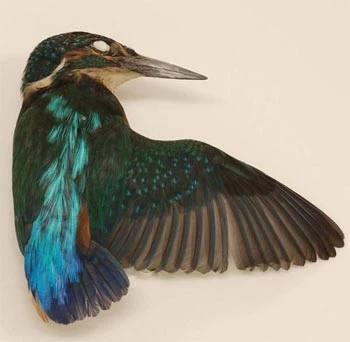
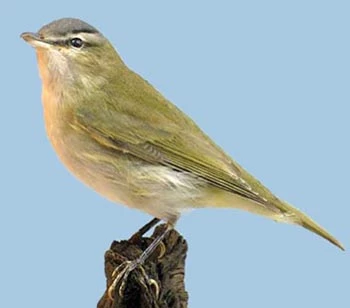
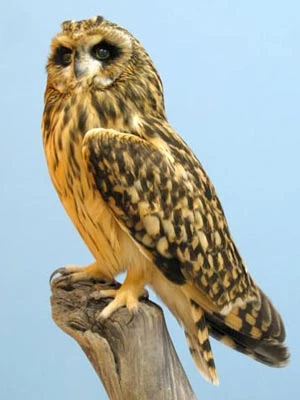
Frozen in time: the National Bird Collection at Amgueddfa Cymru 12 June 2007 Kingfisher: one of the new freeze-dried bird specimens Red-eyed Vireo: a rare migrant from North America killed at Bardsey lighthouse Dotterel: a scarce migrant in Wale, killed at Bardsey Lighthouse Short-eared Owl: a scarce breeding bird and winter visitor to Wales, killed by a car One of the founding collections of Amgueddfa Cymru back in 1915 was the Cardiff Museum's collection of birds. These were displayed in cases, along with their nests and eggs in small dioramas of their habitat. This collection continued to form a major part of the Museum's galleries until as recently as 1992. Over the years, the Museum has become a centre for many bird studies, such as the Red Kite — in conjunction with the Royal Society for the Protection of Birds (R.S.P.B.) and the Countryside Council for Wales (C.C.W.) Deep freeze Today, Amgueddfa Cymru has large-capacity freeze drying facilities in order to preserve new additions to the collections. Specimens are frozen in a vacuum chamber at about -20°C. Under these conditions the frozen water in the specimen is forced out as a vapour rather than becoming a liquid. This leaves the specimen completely dried out and, importantly, its shape and size are more or less unchanged from when it was living. Freeze-drying is also a much simpler procedure than skinning - the traditional method of preserving most museum specimens. The birds are arranged to allow the plumage detail on the wings and tail to be examined. This determines the age and sex of specimens. The collection is aimed at field ornithologists and artists alike and adds to the existing skin collections at the Museum. Bardsey Island The primary source of specimens for this collection is Bardsey Island, off the Lleyn Peninsular, North Wales. Birds migrating at night need clear skies to find their way, should it become cloudy or foggy they can become disorientated and under these conditions are attracted by the light from the lighthouse on the island. They circle or fly down the beams of light and are killed hitting the tower. The island warden checks the base of the tower every morning and any casualties are picked up and frozen before being transferred to the Museum in Cardiff. The focus is on British birds but also includes some rare species from around the world. These and other casualties received from the public are used for display and education, encouraging a deeper interest in birds and making people look harder at their surroundings. The collection is used to highlight current biodiversity and environmental issues, including raising awareness of the effects climate change and loss of habitat can have on birds migrating between Britain and Africa.
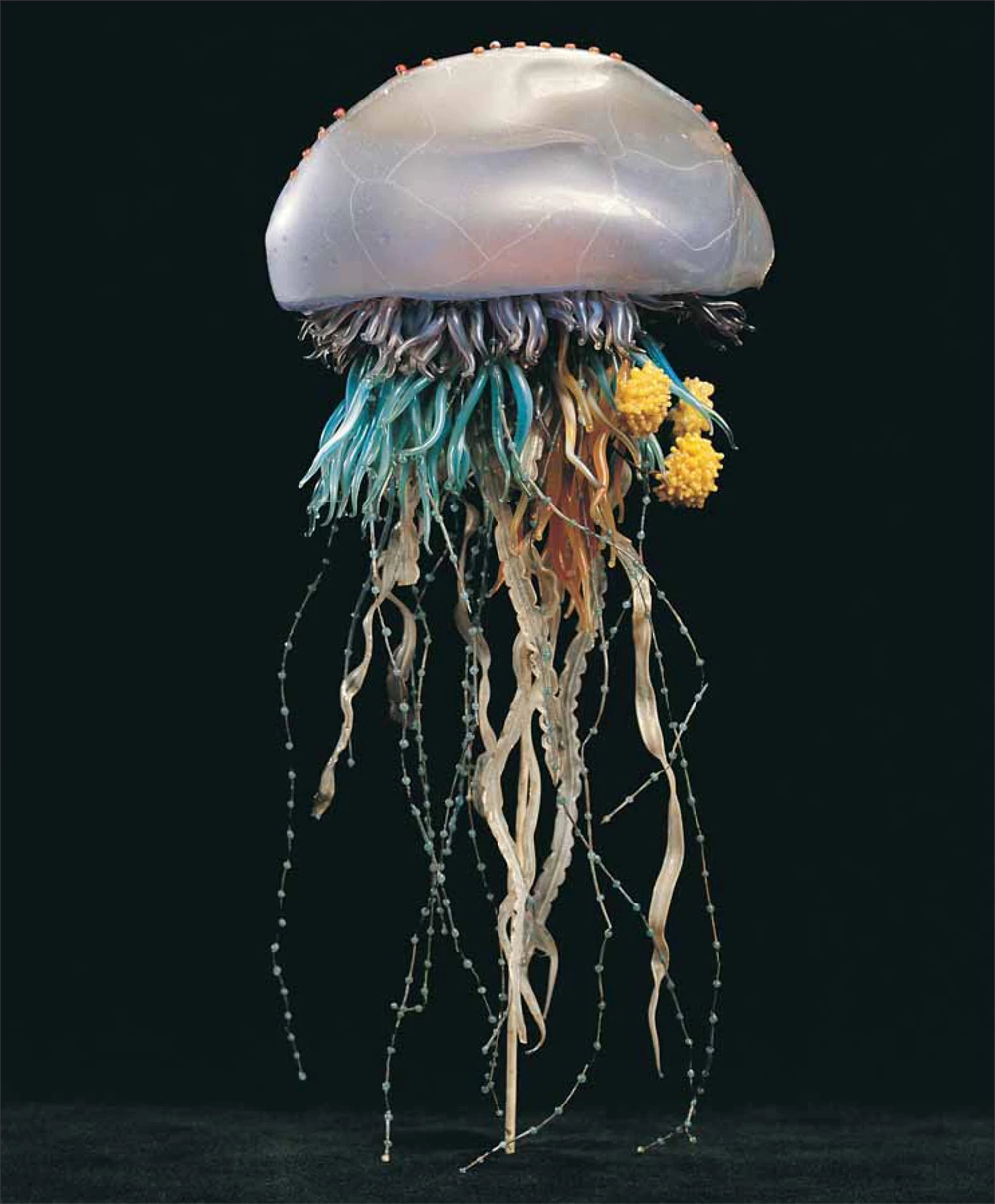
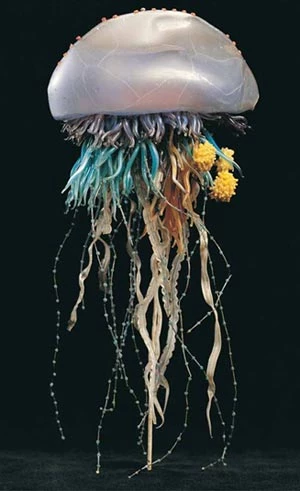
Portuguese Man-of-War Navigator 21 May 2007 A colourful model of the Portuguese Man-of-War sea creature - Physalia arethusa. Portuguese man-of-war Navigator The Portuguese man-of-war is actually not a single animal, but a 'siphonophore', an animal made up of a colony of organisms working together. Use the links below to navigate around the Portuguese man-of-war and discover more about this remarkable creature. The float Polyps anchoring the tentacles Tentacles The float The man-of-war floats on a gas-filled, blue to pink, translucent body called a 'float'. Above this there is a crest (only a few inches tall) that acts like a sail, moving the animal across the seas. It is the sail that gives the man-of-war its name, because it resembles old Portuguese warships. Polyps anchoring the tentacles Clusters of polyps anchor the tentacles under the float. There are 3 types of polyps: dactylozooid (that find and catch prey with poisonous stingers called nematocysts), gonozooid (that reproduce), and gastrozooid (that digest food, like a stomach). Tentacles The coiled, stinging tentacles can be up to 50m (165 feet) long.
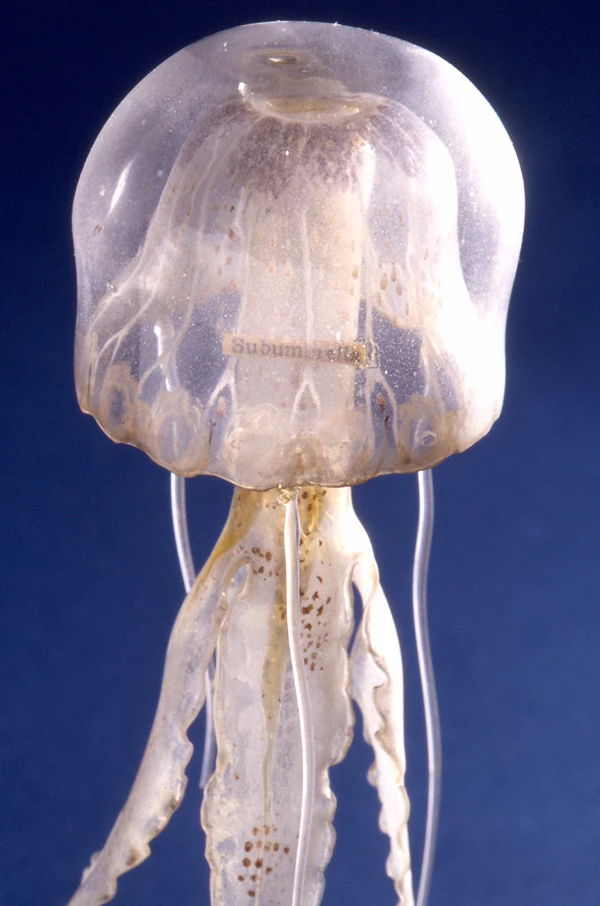
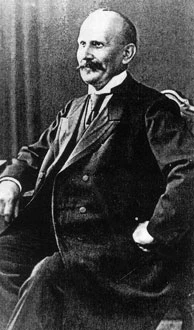
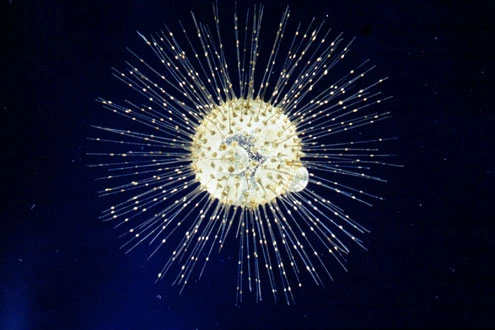
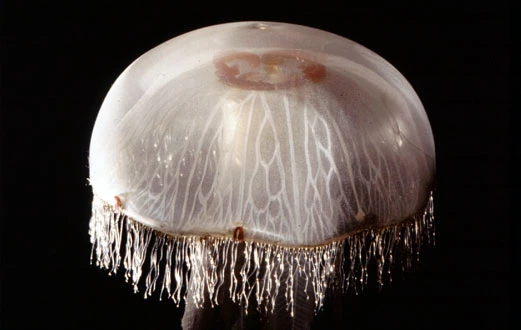
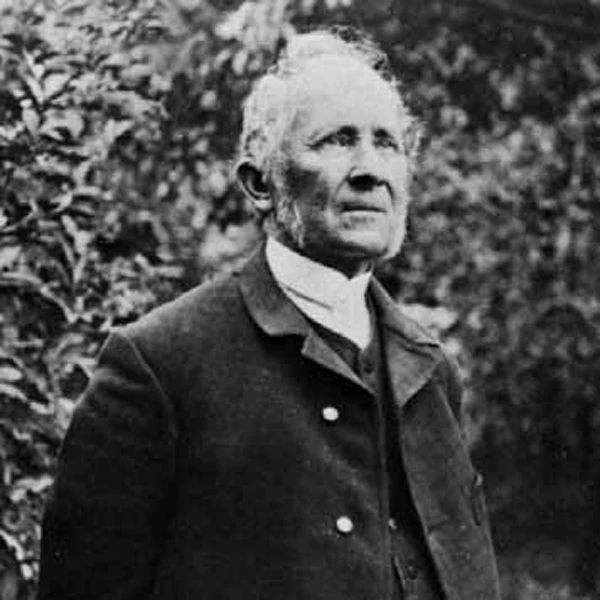
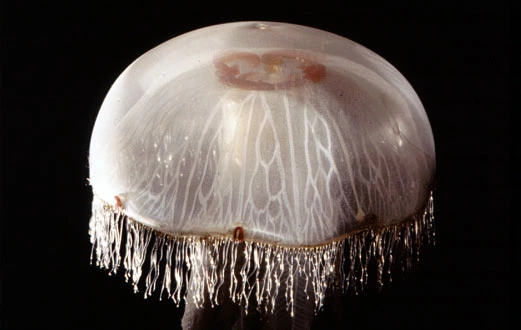
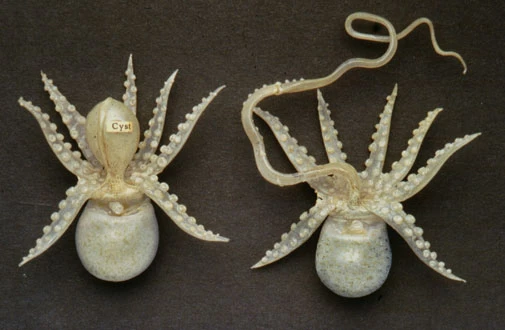
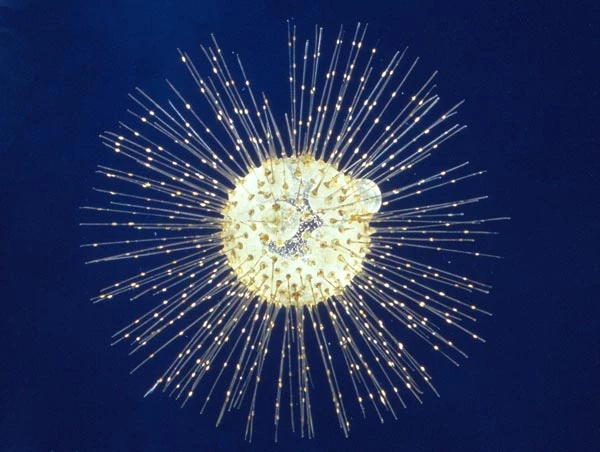
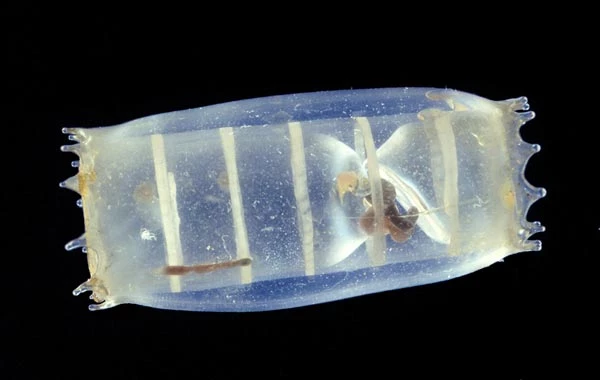
Spectacular glass sea creatures of the deep 16 May 2007 Rudolf Blaschka c 1913. Image courtesy of the Botanical Museum, Harvard University, Cambridge, MA. A colourful model of the Portuguese Man-of-War sea creature - Physalia arethusa. Actinophrys sol Argonauta argo Aurelia aurita Doliolum mulleri Amgueddfa Cymru holds a remarkable collection of beautifully detailed glass models of sea creatures made, in the latter half of the 19th century, by the uniquely skilled glass-worker and naturalist Leopold Blaschka. Plants and animals for new museums The second half of the 19th century was a time of great scientific discovery. New museums were opening to the public with their galleries displaying plants and animals from across the globe. For many groups of animals this was easily done. Birds, mammals, reptiles and even fish could be skinned and mounted to produce lifelike representations. But what about soft-bodied animals, such as jellyfish and sea anemones, which were preserved in spirit? Their colours quickly faded and their shapes became distorted. The German glass-worker and naturalist Leopold Blaschka devised a solution to this problem. Together with his son, Rudolf, he established a successful business supplying glass models, mostly of marine animals, to museums worldwide during the latter half of the 19th century. Leopold Blaschka Leopold Blaschka was born in 1822 in Bohemia, now the Czech Republic. The Blaschka family, originally from Venice, were skilled workers in decorative glass, and Leopold showed artistic skill from an early age. Soon after leaving school, he joined his fathers' business crafting ornaments from metal and glass. Leopold experimented with making glass models of flowers. Later, in 1863, he made models of sea-anemones which were exhibited in the Dresden Museum, Germany. These attracted the attention of curators of natural history museums who ordered sets of anemone models. Soon Leopold added models of jellyfish and snails to his repertoire. His son Rudolf was by this time working with him. The Blaschkas were keen to keep up with the demand from museums. An early catalogue dating from 1871 listed nearly three hundred models. By 1888 the catalogue published by Henry Ward, their American agent, listed seven hundred! The Blaschkas relied on illustrations in books as sources of reference for the glass animals. Many of the models are three dimensional representations of animals that they never saw in reality. However, in later years they increasingly based models on observations of real animals, either during field trips or from live specimens in specially built aquariums in their house. Their early work was described in their catalogues as 'decoration for elegant rooms'. Comparison between early and later models made in the 1880s shows a distinct tendency towards scientific accuracy and away from the more showy earlier style. Complex structures The models varied greatly in complexity and their construction. Component parts were made from both clear and coloured glass, using a combination of glass blowing and lamp working techniques. Other materials were also used where appropriate. Fine copper wires reinforced or attached delicate tentacles and gills, and painted paper cleverly represented internal structures. They also made use of the actual shells of snails to which the modelled glass bodies of the animals were attached. Production of the glass animals ended in 1890 when they were offered an exclusive contract to supply plant models for the Botanical Museum of Harvard University in the United States. Leopold died in 1895, at the age of seventy-three. Rudolf continued working single-handedly until he retired in 1936. He died three years later at the age of eighty-two. By that time their collection consisted of 847 life-sized model plants and over 3,000 enlarged flowers and anatomical sections. Their plant models remain on display at Harvard University to this day, attracting over 100,000 visitors annually. The Glass model collection held at Amgueddfa Cymru were acquired in two batches. One hundred and thirty eight models were purchased from the Blaschkas by the old Cardiff City Museum in 1890. A further sixty two models came to the museum in 1927 from the Science Museum in South Kensington, London. Examples range from the early 'showy' forms, to more scientifically accurate examples of jellyfish and sea anemonies. View a selection of these remarkable glass models held at Amgueddfa Cymru
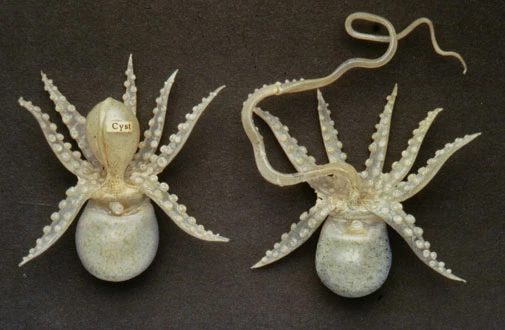
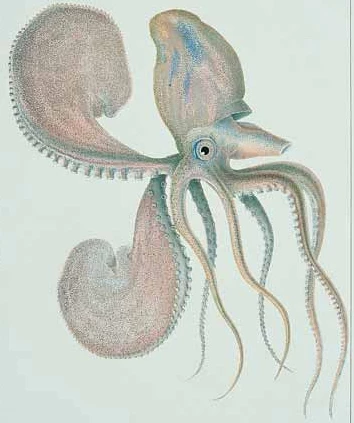
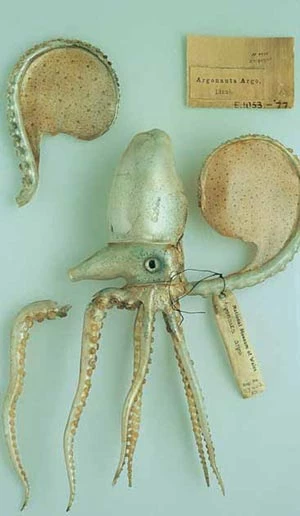
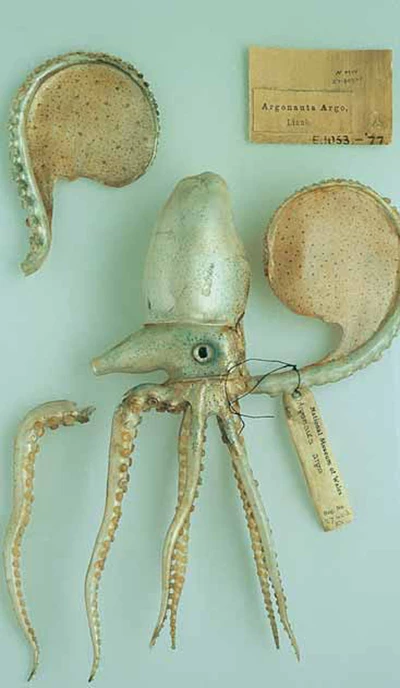
Repairing the irreplaceable - Conserving the Blaschka glass models 16 May 2007 Leopold Blaschka, about 1895. Image courtesy of The Botanical Museum, Harvard University, Cambridge, MA. Rudolf Blaschka, about 1895. Image courtesy of The Botanical Museum, Harvard University, Cambridge, MA. A source picture of the Paper Nautilus (Argonata argo) model. A broken Paper Nautilus model. The Paper Nautilus model after conservation. Amgueddfa Cymru holds around 200 beautifully detailed glass models of sea creatures created by Leopold and Rudolf Blaschka. Made in the latter half of the 19th century, these intricate and extremely fragile items have been subject to years of open display and poor storage conditions, causing them to become damaged and dirty. Irreplaceable works of art These beautiful glass representations of marine animals were originally developed as educational models. Now they are now considered to be works of art, with a value that makes them irreplaceable. Conserving the Blaschka models is fraught with difficulties. Given their age and complexity, great care has to be taken before attempting to clean or repair the models. The accumulation of decades of dirt, and damage from past repairs must be rectified without damaging or altering the original model. The first stage of any conservation project is to understand what the object represents, and then to understand how it is made. The Blaschka models are an intricate blend of glass, paint and textured coatings that have been put together to show the textures and colours of the animal in life. Shifting decades of dirt Firstly, a suitable way of cleaning the models had to be found, then methods had to be developed for removing previous repairs. Finally, where required, the models needed to be repaired. The models proved to be very difficult to clean. Surface paint had been applied to many of the specimens to add texture and colour. These had attracted surface dirt over the years, which was very hard to remove. A range of solvents and cleaning solutions were carefully tested. Whilst water (with a non-ionic detergent) proved effective for removing the dirt, the surface paint was soluble and was in danger of being washed away. Eventually white spirit was found to shift the dirt without damaging the original surface paints. Removing past repairs Many of the specimens, especially the cephalopods, had become repeatedly broken and repaired over time. Many of these repairs were now discoloured or failing. Some parts, for example tentacles, had been re-attached in the wrong place. The older repairs tended to use animal glue that could easily be softened in water, but this required care where the surface paint was present as this was water soluble. Other glues were dissolved by acetone. Once the old glues had been removed, the models then had to be reassembled. Re-repairing correctly The glass used to manufacture most of the models was very thin and brittle. Some of the collection had been broken into numerous pieces, and, in the past, detached pieces were fitted back in the wrong place. Firstly, any new repairs made to the models needed to be reversible in the future. Epoxy resin based adhesives were quickly ruled out due to their strength, lack of reversibility and long-term stability problems. The consolidant, Paraloid B-72TM, was chosen because it is a stable material that remains reversible and can be removed if required. It is also forms a weak repair that will fail before the glass, reducing the chances of damaging the models further. This material is also slightly visible in certain lights, allowing future curators of the collection to identify previous conservation work. The conservation work was developed to improve the visual appearance and integrity of the models, without further altering the original structure. The Blaschkas' glass models are an important collection, which is still used today. The work carried out on the collection will help ensure its continued survival for future generations to enjoy.
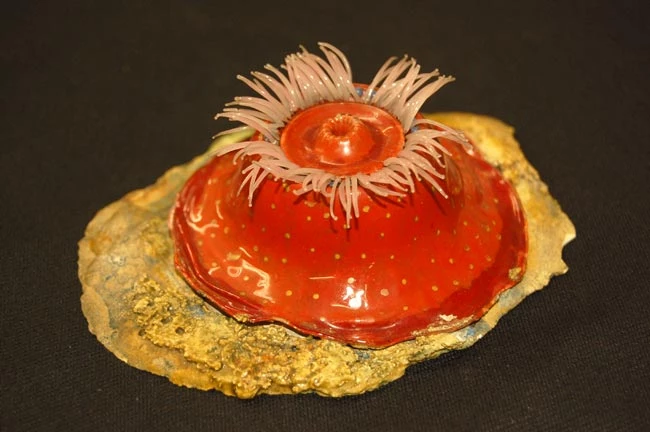
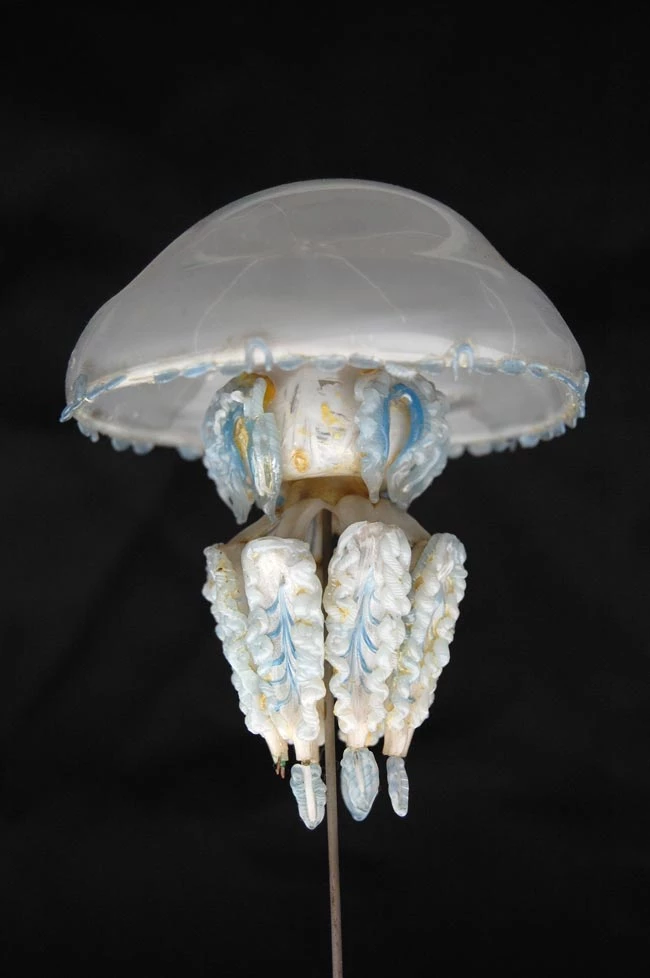
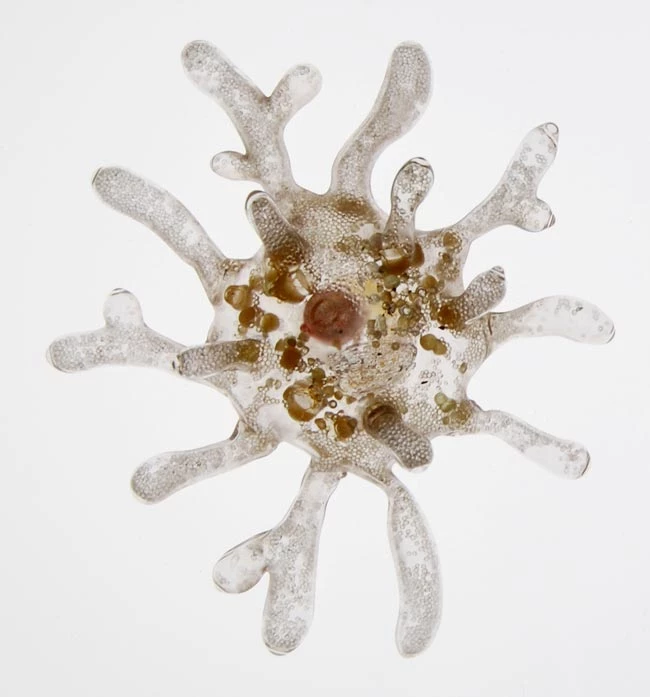
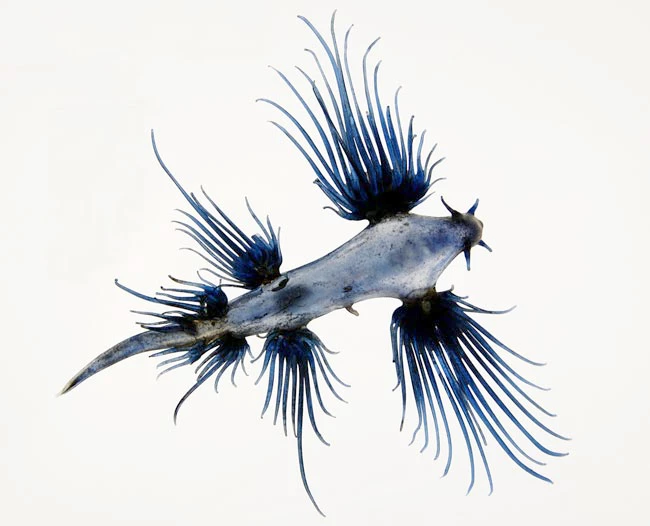
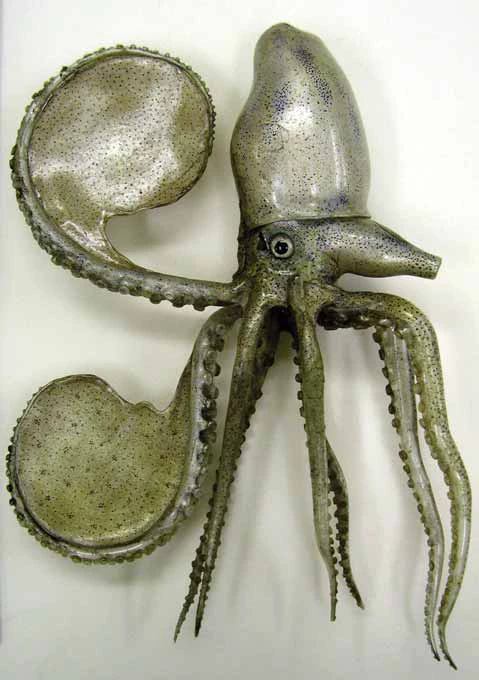
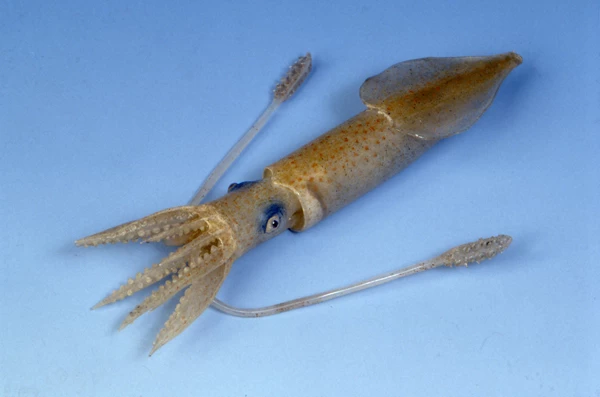
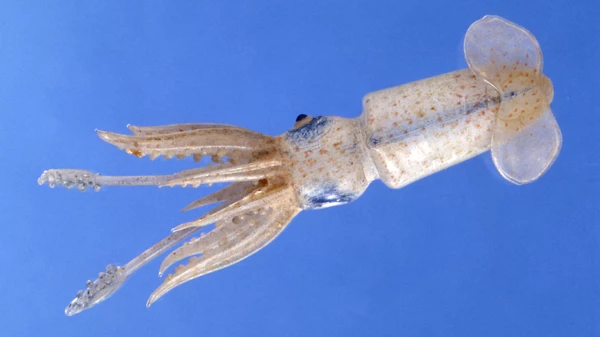
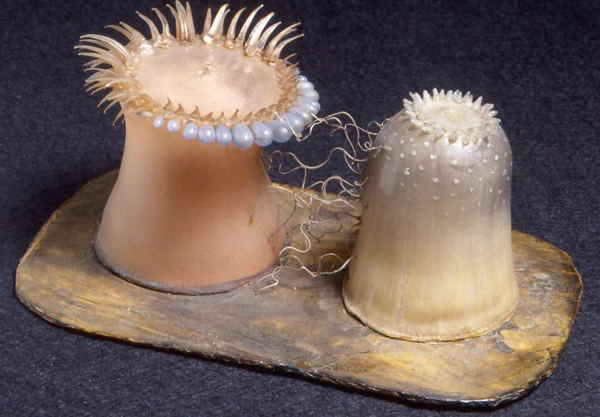
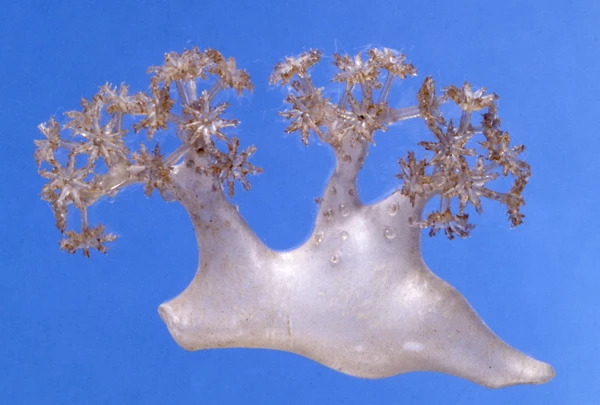
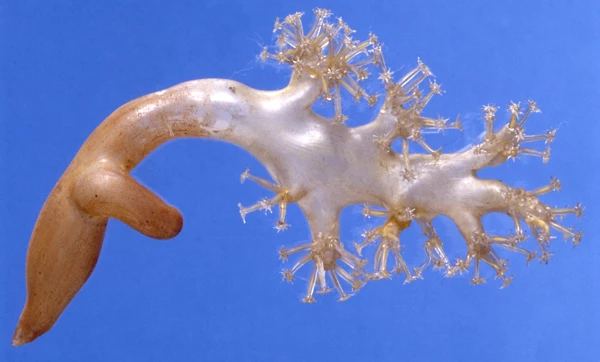
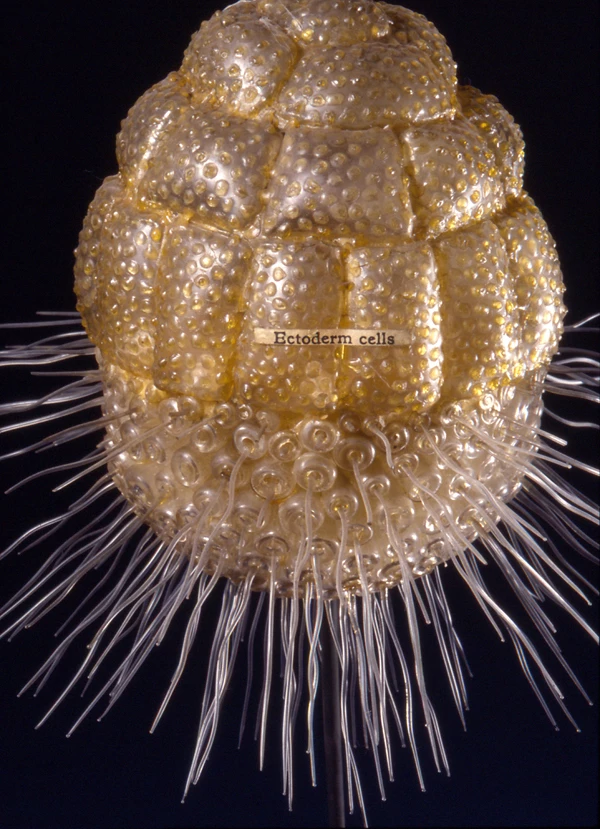
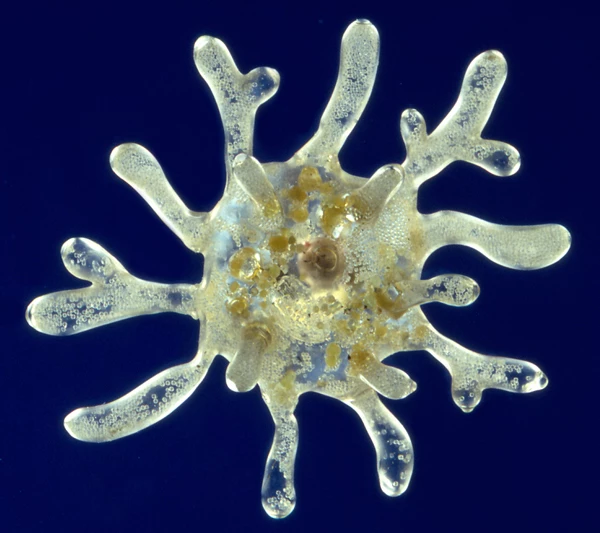
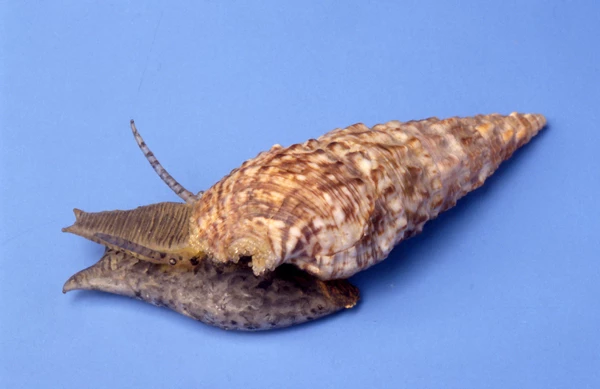
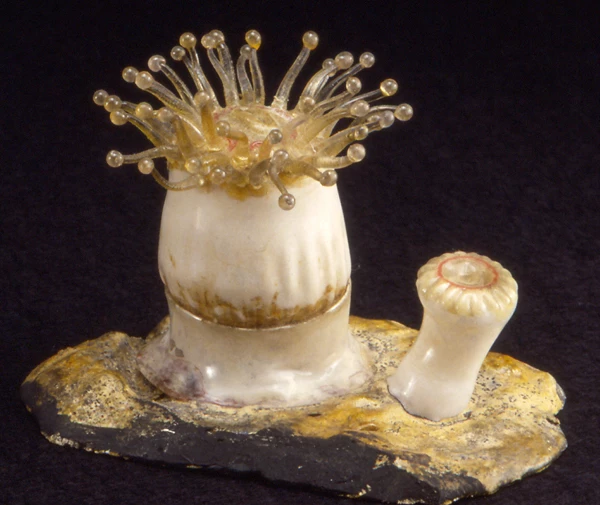
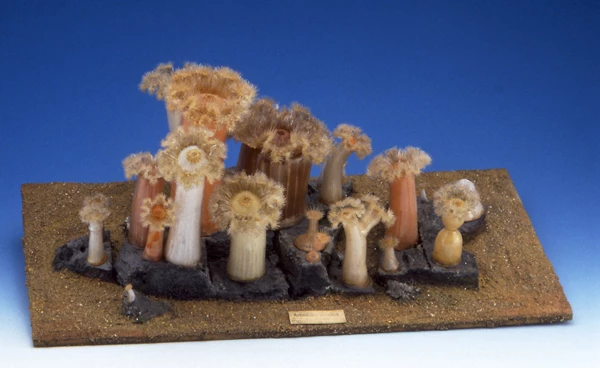
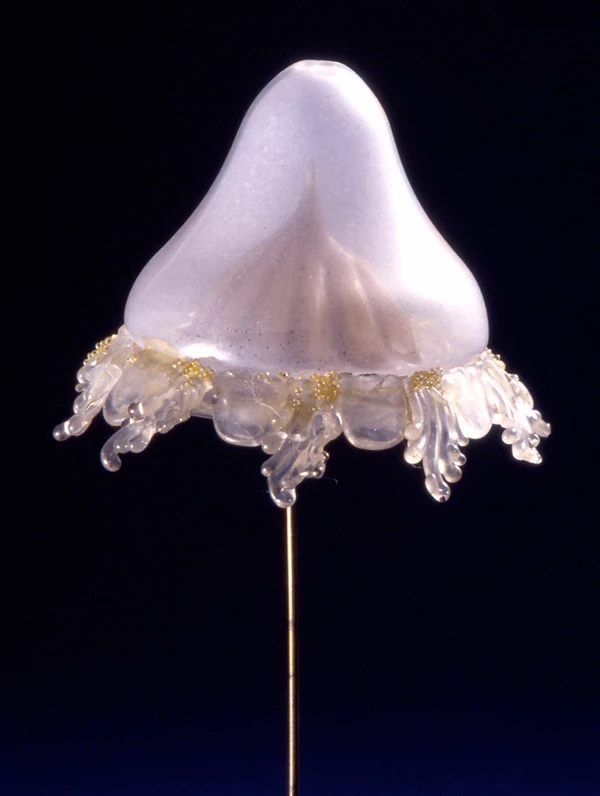
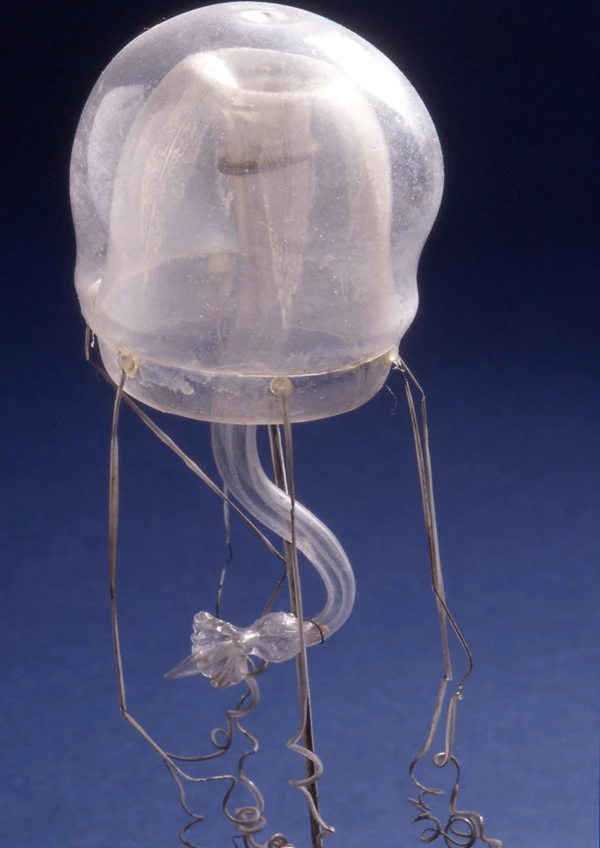
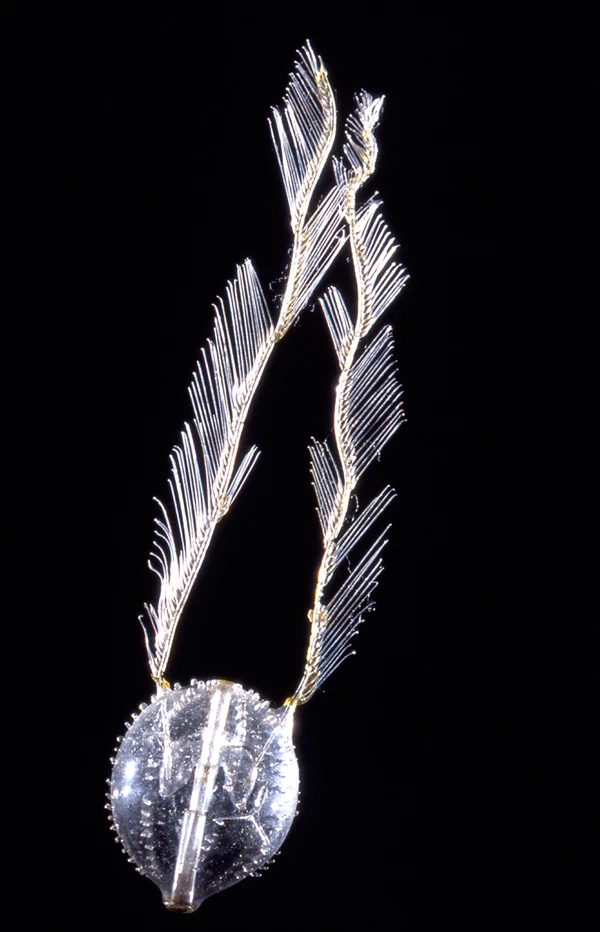
Sea creatures of the deep - the Blaschka Glass models 15 May 2007 During the late 19th century, Leopola Blaschka (1822-1895) and his son Rudolf (1857-1929) produced beautifully detailed glass models of bizarre sea creatures for natural history museums and aquaria all over the world. Their work has been hailed as: “an artistic marvel in the field of science and a scientific marvel in the field of art.” Today, the Blaschkas seem remarkably contemporary: working as they did on the cusp of design, craft, art and industry. Click the thumbnails below to view larger images from a selection of these remarkable glass models held at Amgueddfa Cymru. Blaschka glass models Actinia mesembryanthum Synapta mammillosa Rhizostoma cuvierii Amoeba roteus Glaucus longicirrhus Life size 'moon jellyfish', or common jellyfish Aurelia aurita. Life sized paper nautilus Argonauta argo Highly magnified model of a single cell radiolarian (Actinophrys sol). Diameter: 200mm (including spines). Life sized Tunicate (Doliolum mülleri). About 70mm long. Original illustration of Female Paper Nautilus (Argonata Argo) from which the model was made. Female Paper Nautilus (Argonata Argo) after repair. Length: 225mm. Height: 150mm. Female Paper Nautilus (Argonata Argo) before repair. Length: 225mm. Height: 150mm. Life sized squid (Loligo marmorae). Length: 145mm. Life sized squid (Loligo alessandrini). Length: 85mm. Sea anenomies displaying a territorial dispute. Here S. troglodytes fires stinging cells at A. mesembryanthemum who has ventured too close. This behaviour was observed first hand in the aquaria at the Blaschka's home. Base: 180x110mm. Height: 80mm. Life sized soft coral (Xenia umbellata). About 80mm high. Life sized soft coral (Paralcyonium elegans). About 130mm across. Highly magnified model of the development stage of a sponge (Sycandra raphanus). Diameter: 100mm Highly magnified model of single cell amoeba (Amoeba proteus). Diameter: 120mm. Life sized model of marine snail (Cerithium vulgatum) with glass body fitted in real shell. Length: 90mm. Enlarged tube-dwelling marine worm (Sabellaria alveolata). Length: 230mm. A 'sea gooseberry' or 'comb jellyfish' (Pleurobranchia rhododactyla). Length: 205mm. Jellyfish (Pelagia cyanella). Diameter of bell: 60mm. Height: 180mm. Two Devonshire cup corals (Caryophyllia smithii), one expanded, one contracted. Height: 100mm. Actinoloba dianthus, Plumose Anenome - varieties of forms and growth stages. Base: 300x575mm. Height: 250mm. Life sized 'Sea Wasp' jellyfish (Charybdea periphyllum) Width: 60mm. Height: 50mm. 'Colonial jellyfish' (Apolemia uvaria). Width: 45mm. Height: 180mm. Jellyfish (Carmarina hastata) Diameter of bell: 80mm. Height: 110mm. An intricate model of a Portuguese Man-of-War (Physalia arethusa) The 'float' is about 55mm wide by 90mm long. Total height: 240mm. There are about two hundred tentacles made of thin coloured glass, supported and attached by fine copper wires.