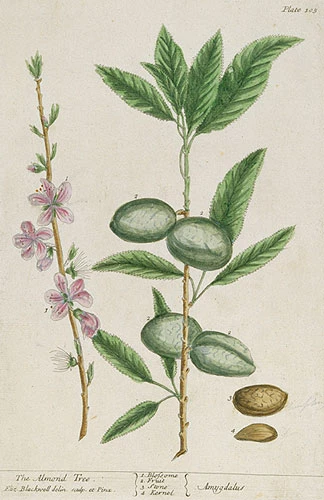
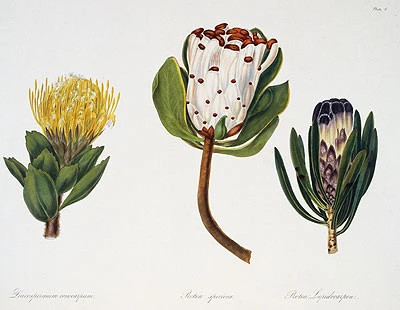
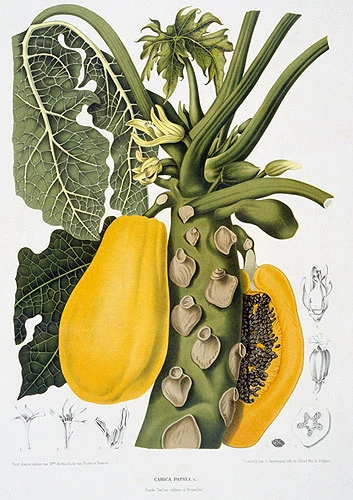
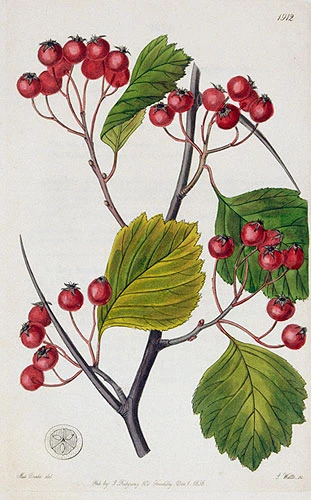
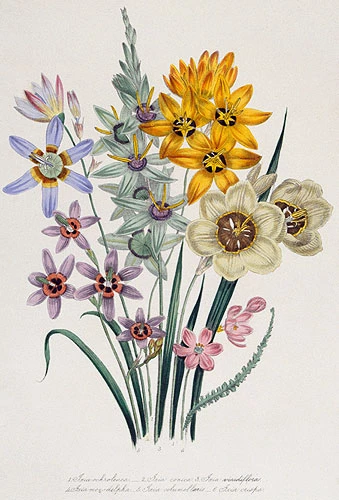
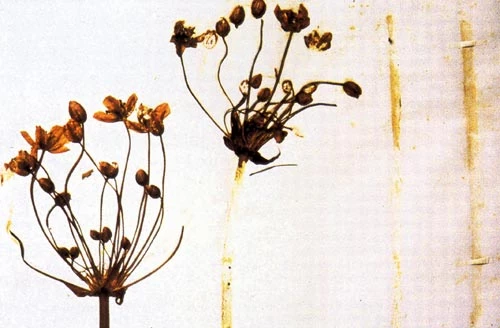
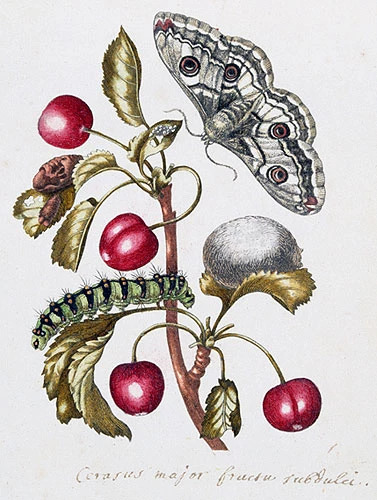
A passion for plants: botanical illustration by women artists 16 June 2007 Maria Sibylla Merian'Raupenbucher' (Book of Caterpillars) - 1679 Cerasus Major Elizabeth Blackwell'The Curious Herbal' 1737-39 Prunus Amygdalus Lady Arabella RoupellProtea Berthe Hoola van NootenCarica Papaya Miss Sarah Anne DrakeCrateagus Macrantha Jane Webb LoudonRomulea (Sand Crocus) The Museum's collection of botanical illustrations consists of more than 9,000 prints and drawings. Many of the works in the collection have fascinating and courageous stories linked to them. In particular, there are stories of the women artists who took part in scientific discovery. A combination of neglect and dismissal of these women artists has undermined their achievements and their contribution to the science and art of botanical illustration. Women's role in botanical illustration It was sometimes thought that botanical illustration was only for women with time on their hands, who dabbled in a spot of watercolours before ordering afternoon tea! This might have been true for some, but not all. Several intrepid and independent women emerged as accomplished botanical illustrators. The 17th century Maria Sibylla Merian (1647-1717) was one of the finest botanical artists of her time. From an early age, Maria was interested in insects and caterpillars, and the plants on which they fed. It is believed that her uncle had a silk factory that led to her fascination in the life cycle of the silk worm. In 1679, she published the first of three volumes on European insects illustrated with her own engravings. Her careful and deliberate portrayal of insect and host plant together established a precedent in scientific literature. After 17 years of marriage, Maria left her husband and joined an exclusive sect called the Labadists in a castle in the Netherlands. In 1698 Maria sold her collection to fund an expedition to study and describe insects in their native habitat. For two years she devoted all her time to discovering and drawing many new plants and insects. Eventually she returned to Europe due to ill health and was working on some drawings when she died of a stroke aged seventy. The 18th century Elizabeth Blackwell (1700-1758) was recognised as an accomplished artist. Her husband was sent to debtors prison for two years after he opened a print shop in London without the required apprenticeship. Looking for a way to save them from their financial difficulties, Elizabeth was encouraged by Sir Hans Sloane, President of the Royal Society, to produce a definitive herbal of medicinal plants. Elizabeth embarked on this major project, engraved her own images on copper plates and then hand-coloured the prints herself. This prodigious task was entitled A Curious Herbal. The first volume included 500 plates and was published in 1738. Although her drawing is not exceptional, it was an excellent record for its time and its success lay in fulfilling a need for identification. The 19th century The Victorian era was a time of great progress. The expansion of the British Empire meant that many new and exotic plants were being sent to Britain. Upper class women often published books anonymously, since it was considered shameful to link a woman's name to any commercial venture. An excellent illustration of this point is an 1849 book entitled Specimens of the Flora of South Africa by a Lady . This 'Lady' was visiting South Africa with her husband and to amuse herself she painted the exotic flora of the region. She published the volume anonymously until it became known the author was Lady Arabella Roupell. Berthe Hoola van Nooten (fl. late 1800s) also published her work to make ends meet. Her husband died while they were travelling in Java, leaving her alone to bring up two daughters. In 1863, she published The fruits and flowers of Java, which has vibrant and strong illustrations. In accordance with the social traditions of the day, Berthe writes an apologia in the introduction, explaining she has been forced to utilize her talents as a botanical artist as a buffer against 'penury and a refuge in sorrow.' This is an illuminating insight into the expectations and status of women in the 19th century. Miss Sarah Anne Drake (1803-1857) became an accomplished botanical artist and produced an enormous body of work. Her specialism was orchids and she contributed magnificent plates to Bateman's Orchidaceae of Mexico and Guatemala — one of the most famous orchid books ever published. Perhaps the most esteemed results of her career were the 1,100 splendid plates she executed for Sydenham Edwards' Botanical Register. The Australian orchid 'Drakea' is named in her honour. Jane Webb Loudon (1807—1858) was orphaned at the age of 17. In order to support herself, she wrote a novel set in the 21st century called The Mummy. This caught the attention of John Loudon, a well-respected landscape gardener who Jane later married. Finding many of her husband's gardening books too technical, she wrote Instructions in Gardening for Ladies (1840) in clear simple language. This book proved extremely popular, selling more than 20,000 copies. She went on to write The Ladies Flower-Garden in 1840 and Botany for Ladies in 1842. Anna Maria Hussey's (1805—1877) most important work was Illustrations of British Mycology, published in 1847-9 in two volumes. The book includes a series of colour plates accompanied by biological information and general commentary, blending science, anecdote and literary reference. The puffball Husseia is named in her honour.
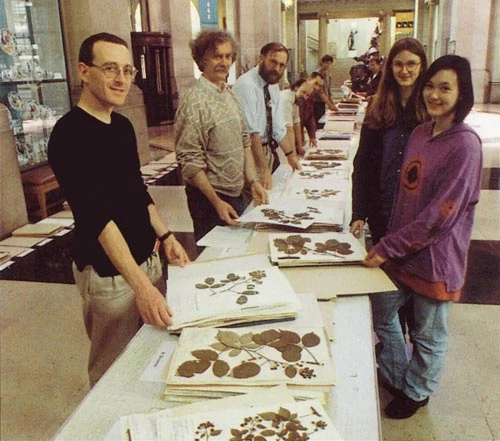
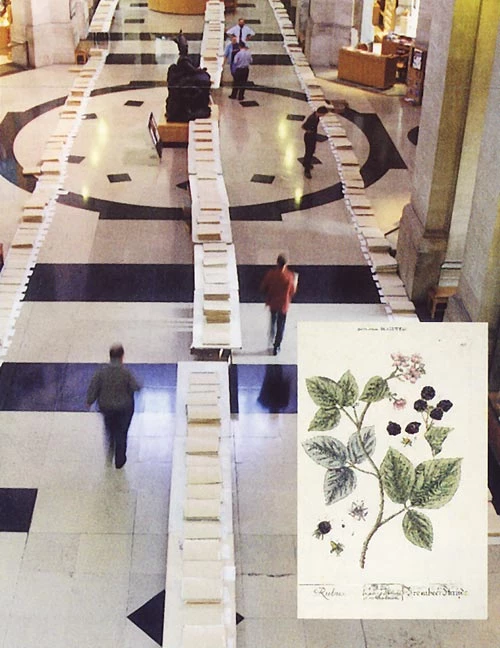
Brambles, blackberries, jam and jargon 12 June 2007 Bramble Jam - botanists sorting the collection during the reorganisation. Bramble specimens laid out along the length of the Main Hall of the National Museum, Cardiff. The bramble collection held at Amgueddfa Cymru is recognised as a major scientific reference tool for the study and naming of plants worldwide. The Bramble and Blackberry or Rubus collection held in the Museum herbarium is one of the major British reference collections for naming plants. The collection holds 15,000 specimens and includes all of the 325 species known from Britain and Ireland. As the classification of brambles is being revised continuously, the management, conservation and continued use of the collection is of utmost importance. Brambles are a particularly difficult group of plants to identify as there are often only small differences between each species and bushes of different species often grow tangled together, making the gathering of individual species very difficult. Due to the sheer number of species of bramble in Britain, many specimens in the collection remain unnamed. When a new species is discovered, the specimen that is used to identify the species in which it belongs is known as a type specimen. Type specimens are vitally important for solving identification problems and the Museum collection contains type specimens of at least 100 species. There is also a significant historical aspect to the collection as it contains the personal collections of several important collectors from the late 19th to the early 20th century. European specimens are also of value and through these it has been discovered that a number of French and German bramble species have remained undetected in the British Isles until very recently. It is hoped that the European specimens could be of future use linking some as yet unnamed specimens in the herbarium to continental species.
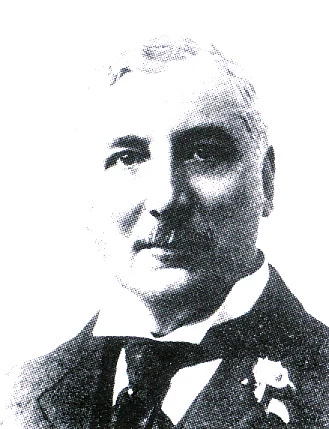
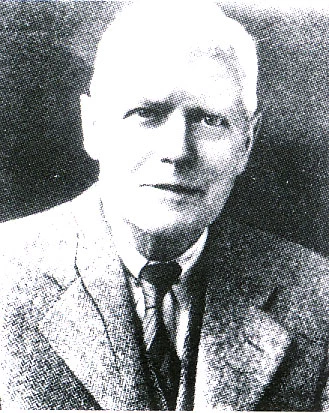
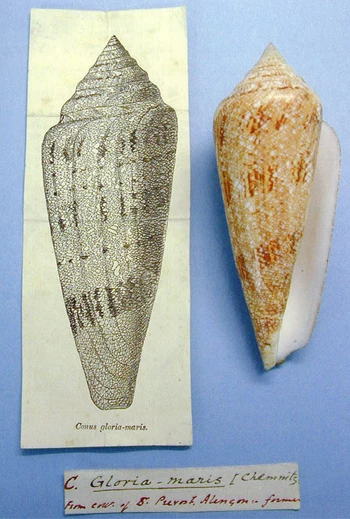
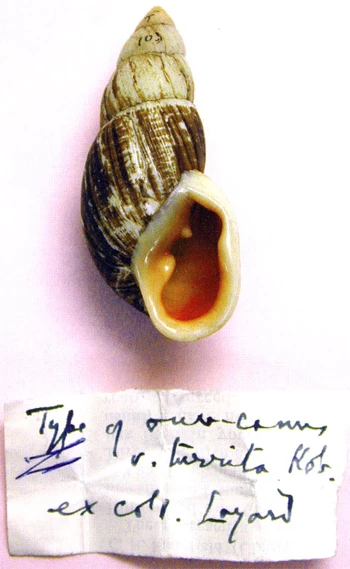
One collection - 786,000 shells - Cataloguing and curating the Melvill-Tomlin shell collection 12 June 2007 James Cosmo Melvill. John Read le Brockton Tomlin. Melvill's greatest prize specimen of Conus gloriamaris. Placostylus from Layard. When the Melvill-Tomlin collection of molluscs was received by Amgueddfa Cymru in 1955, it was the second largest shell collection in private hands in the world. The collection, begun by James Melvill in 1853 and passed to John Tomlin in 1919, represented all regions of the world and contained nearly half of all mollusc species known. Melvill described and named over 1000 species new to science. Tomlin continued to add important specimens from across the world until his death in 1954. On Tomlin's death in 1954, the Museum received the entire collection, his library and papers. Tomlin's allegiance with Amgueddfa Cymru is thought to have developed whilst teaching at Llandaff Cathedral School in Cardiff. Housing the collection The collection arrived in mahogany cabinets, but is today housed in a mobile storage racking system allowing the whole collection to be organised in a standard, systematic sequence, providing easy access to any taxonomic researcher working on the collection. Long and slow curation Modern documentation is achieved by entering information into a computer database, but in the past information was hand-written into large registers. Between 1978 and 1994, museum staff and volunteers verified, labelled, and secured specimens in the collection. The information on the collections was then published for taxonomists around the world for further study. If the process had continued in such a way, then a full inventory would have taken another thirty years. Computer databases completes the 'first' inventory In 1995, a computer database was purchased allowing many people to enter data at the same time. Over twenty staff and volunteers have since been involved in making an inventory of the collection. Since work begun in 1978, the first inventory has now been completed and any enquiries can now be answered accurately in minutes, rather than days or weeks. The first inventory has been completed and any enquiries can now be answered accurately in minutes, rather than days or weeks. Over 786,000 shells have been added to the database. New to science Within this collection, there are thousands of very important specimens that are referred to as 'types'. These are the specimens that were new discoveries to science when collected, and were usually described, illustrated and named by the collector. With many older collections, it is only the detective work of museum curators and taxonomists around the world that can help to verify this information. An electronic inventory makes this task much easier by making the entire database of a collection available to taxonomists worldwide.
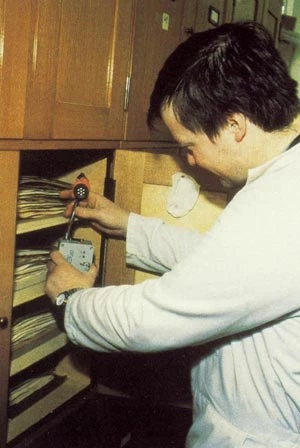
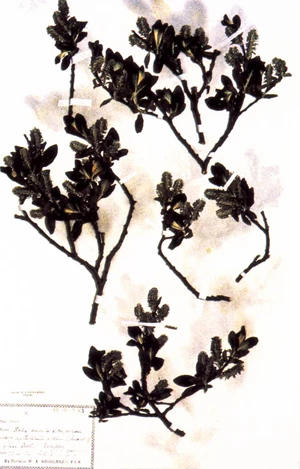
Moth Balls and Arsenic, Booklice and Silverfish - Hazards of the Museum Herbarium 12 June 2007 Specimen showing attack by biscuit beetle. Testing for mercury vapour levels inside the herbarium cupboards. An example of pesticide discolouring. Research showed that this specimen had been treated with arsenic, mercury and barium - substances harmful to both specimen and health. Amgueddfa Cymru house over quarter of a million dried plant specimens from all over the world, some dating back to the 18th century. Toxic pesticides applied to these specimens over the years can cause damage to the specimens and be a risk to those working with them. Pesticides are applied to the specimens to overcome pests such as booklice, biscuit beetle and silver fish. Natural history specimens have always been vulnerable to attack from pests, which can be devastating to a botanical collection, as important details, or even whole specimens, can be lost. Some types of pesticides used in the past are now known to be harmful and toxic. Handling the collections could present a health risk, especially as the quantity and nature of chemicals used in the pesticide were unknown. Small samples of the Museum's herbarium sheets were analysed to detect the chemicals present within one sample. For example, if mercury and arsenic had been applied to a herbarium sheet then this would identify the two metals in one test. It was discovered that the most frequently used chemicals were carbon disulphide, mercuric chloride, methyl bromide, naphthalene, paradi-chlorobenzene and pyrethroids. Mercury High levels of mercury were found within the paper samples and immediate precautions were taken for handling specimens. Mercury can be absorbed through inhalation, absorption and ingestion and its effects can result in reduced fertility, possible genetic mutations, shakes, reduced vision, serious personality changes and even brain damage. The herbarium air quality was monitored for mercury vapour and each site tested had readings well below the recommended health and safety standard. Individuals were monitored by attaching the monitoring instruments directly to their clothing. Moth Balls and Arsenic Although it is difficult to measure arsenic accurately, it was discovered on most of the specimens tested. The presence of naphthalene was detected on all samples, which was as expected. Moth balls, made from naphthalene, were only removed from herbarium cupboards in the 1980s. The project successfully identified the hazardous chemicals and metals present within the pesticide residues and through continued monitoring of air quality and staff, work can now continue within the herbarium without risk. Following the tests, a database was generated detailing specimens, pesticide, contaminants and risks to both health and the specimens, which has since been used to help identify hazards in herbariums from other botanical institutions.
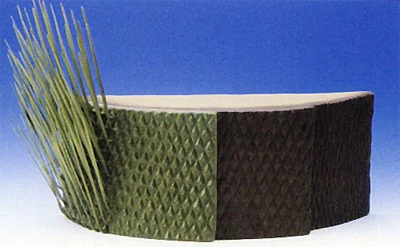
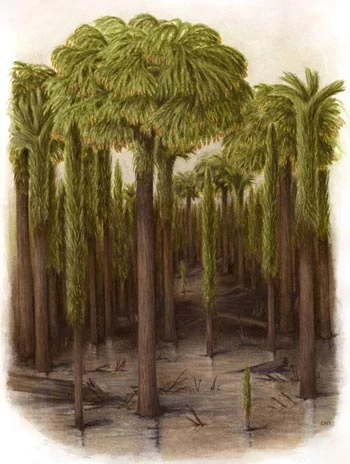
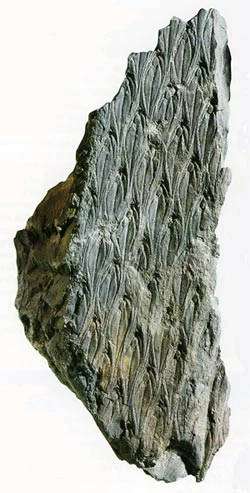
Wales's tropical rainforests 12 June 2007 Wax model of a cone from the Late Carboniferous giant club mosses. Wax model of a section of trunk from the Late Carboniferous giant club mosses. View over the late Carboniferous coal forests, showing the giant club mosses of the backswamp. Lepidodentron aculaetum fossil. Today, rainforests cover much of the tropics and there are large icecaps at the poles. An essentially similar arrangement has existed for the last 3 or 4 million years, but back in time, conditions were quite different to what we find today. 3-4 million years may seem a long time but, in the context of the 4700 million years of Earth's total history, it is not. If we look deeper into geological time, such as when dinosaurs roamed the Earth, conditions were quite different to what we find today. In only one other time in our geological past have conditions been similar to today's, with extensive polar ice and tropical rainforests &mdsh; what geologists refer to as Late Carboniferous, 300 years ago. We are of course no longer in the tropics, having drifted north to temperate latitudes. However, 300 millions years ago Wales was positioned right on the equator and was largely covered in lowland tropical swamp-forests. The dominant plants of these ancient swamps were giant club mosses. Club mosses still live today, as very small plants (hence the 'moss' part of their name), but these ancient forms were up to 40 metres high. Despite their size, they were not strictly trees, as their trunks were made up of soft cork-like tissue, not wood. This allowed the plants to grow extremely quickly, growing to their full size in as little as 10 years. The club mosses were not long-lived plants: they would grow to their mature size, reproduce (by spores, not by seeds as in most of today's trees) and then die. The colossal amount of dead plant-debris produced meant that the mud and silt in which they grew became very acidic, hindered the rotting of the plant tissue. The result was the build-up of thick peat deposits, which subsequently changed into the coal that has been mined in the coalfields of both north and south Wales. The Carboniferous tropical forests were one of the most powerful terrestrial 'sponges' in geological history for drawing carbon out of the atmosphere and burying it underground. By looking at how these forests changed in size (and thus how much carbon they extracted from the atmosphere) and comparing it with changes in the size of the polar icecaps, we can get a much better idea of how atmospheric carbon and global temperatures match up. One particular marked reduction in the size of the forests appears to have coincided with a shrinking of the icecap. To understand these global changes properly, we need to understand the causes and exact timing of the changes to the forests. To do this, we need to look carefully the changes in the composition of the vegetation as preserved in the fossil record and the changes in the geographical extent of the forests. The pioneering 19th century geologist Charles Lyell coined the expression, 'the present is the key to the past'. However, the message that the Late Carboniferous geological record is telling us is that the past may in fact be the key to understanding the present.