Museum Advent

Katie Mortimer-Jones, 19 November 2018

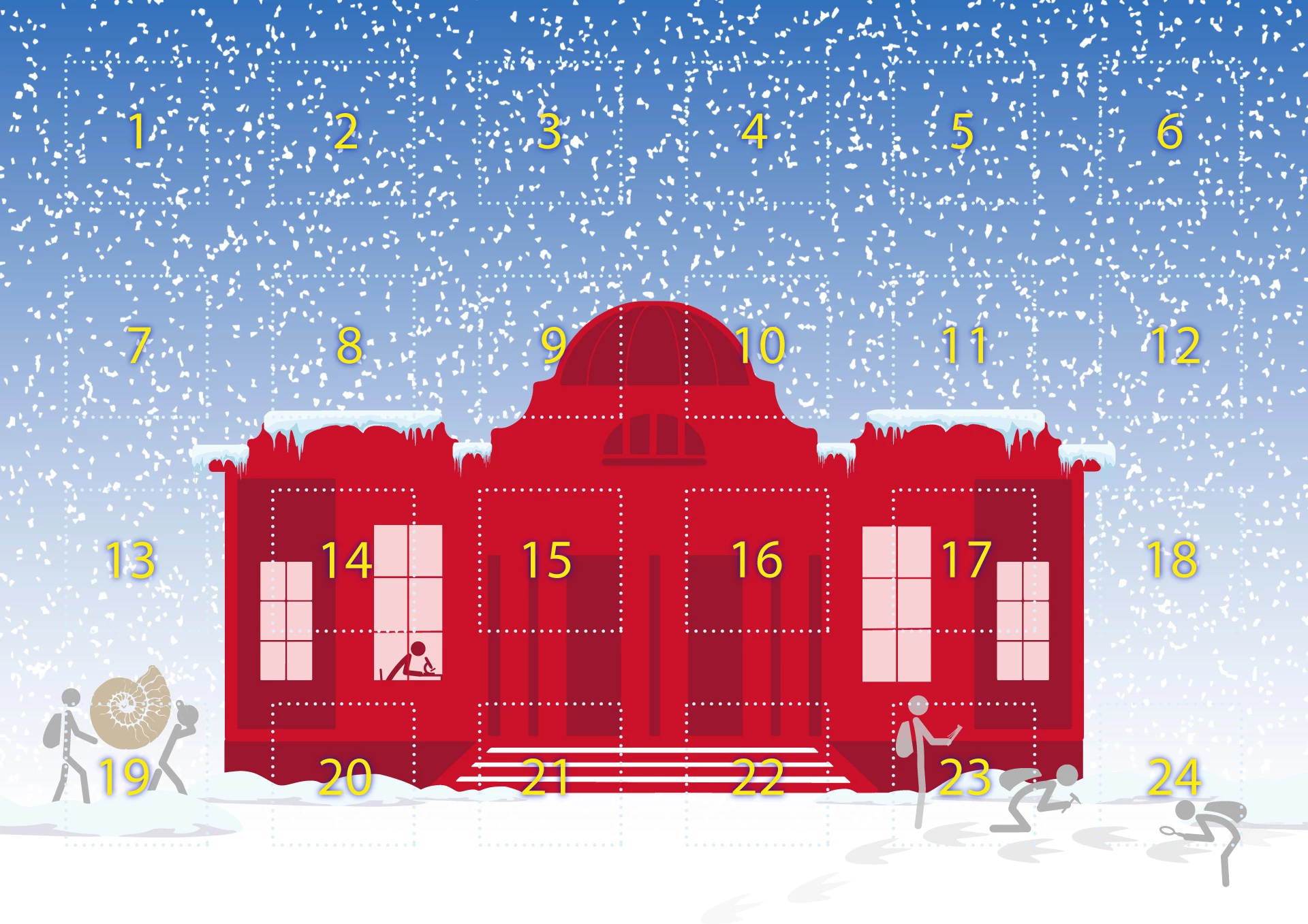
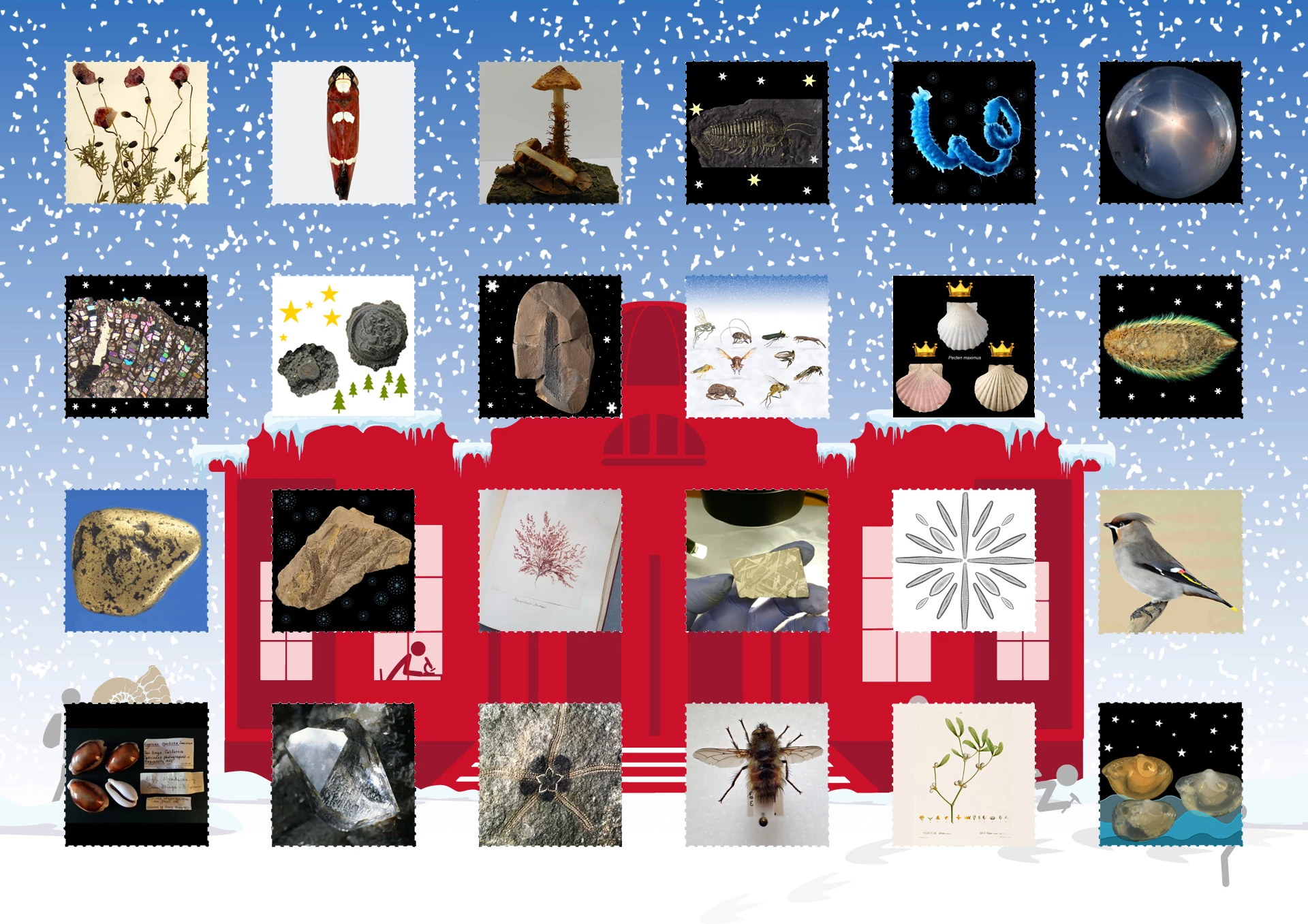
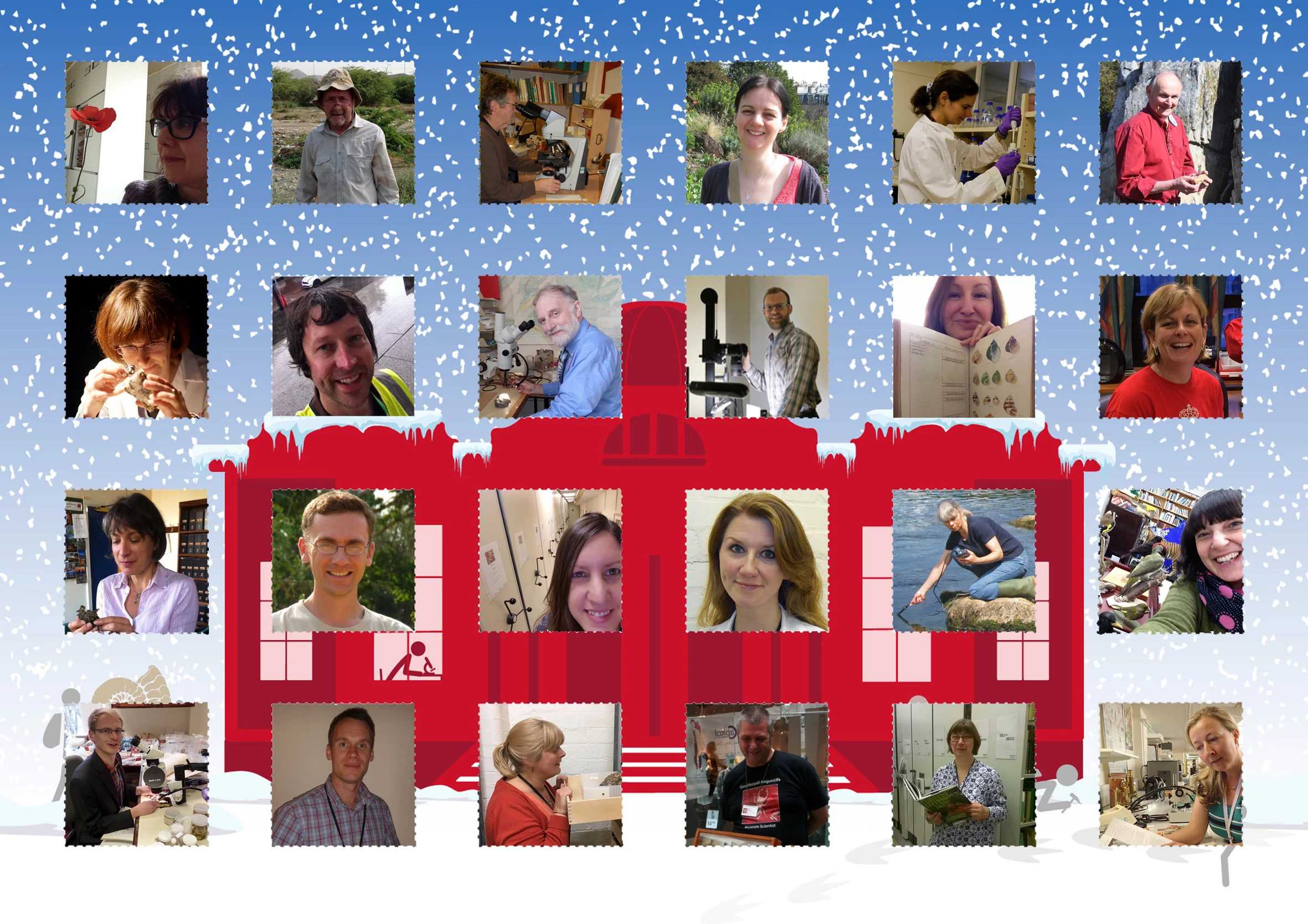
We are busy preparing our Natural History #MuseumAdvent calendar and we couldn't resist sharing with you a sneak preview! This year the backdrop for the calendar is a snowy National Museum Cardiff. Each of our 24 natural science curators and scientists have selected one of their favourite objects from the collections to showcase each day. The advent calendar will feature on the @CardiffCurator Twitter account, so why not tune in each day and see what natural science specimen or object is behind each door. The calendar will feature plants, insects, sea worms, shells, fossils, minerals, seaweed and diatoms to name but a few. Once we have opened all of the doors, we will reveal the curators behind the favourite objects.

Remember to take weather records

Penny Dacey, 7 November 2018

Hi Bulb Buddies!

I hope you all enjoyed your half term holidays!

I want to say a big thank you for all your hard work on planting day. You helped to plant over 17,000 bulbs across the country! And from the photos I’ve seen, it looks like you all had a great time doing it!

Weather records started on 5th November. There is a resource on the website with more information on weather records. I’ve attached this here in case you haven’t already seen it! This resource helps you to answer important questions, such as ‘why rain fall and temperature readings are important to our investigation into the effects of climate on the flowering dates of spring bulbs’!

Use your Weather Chart to log the rain fall and temperature every day that you are in school. At the end of each week, log into the Spring Bulbs website to add your weekly readings. You can also leave comments or ask questions for me to answer in my next Blog!

Let me know how you get on! You can share photos with me via email or Twitter.

Keep up the good work Bulb Buddies!

Professor Plant

Welsh National War Memorial

Jennifer Evans, 6 November 2018

The Library archive holds material that brings vividly to life the early history of the Museum and of life in and around Cardiff during the early 20th century. As we approach the centenary of the end of the First World War, we take a look at the efforts to create a Welsh National War Memorial.

The movement to establish a national memorial in Cardiff was instigated by the Western Mail in October 1919. A committee was established to oversee the project with the then Lord Mayor, G. F. Forsdike, at its helm. The fund closed in 1921 having raised £27,500 and a commission to design the monument was offered to Sir Thomas Brock, designer of the Victoria Memorial outside Buckingham Palace. However, Brock’s original design, although considered “very beautiful and imposing” [1], proved to be too expensive and he died before submitting a further proposal. Therefore in 1924 the committee invited a select group of architects to submit designs in a limited competition. The winning design was by Ninian J. Comper, acknowledged today as one of the last of the great Gothic Revival architects [2].

The committee wanted to place the memorial on a circular plot of land directly in front of City Hall. The Library holds original drawings that show the proposed site. They are signed by A. Dunbar Smith who, along with his partner Cecil Brewer, designed our very own National Museum Cardiff building.

At some point someone decided to get creative and produce a photo-collage to illustrate how it might look. We have a number of A3 sized photographs of the view in front of City Hall, with a photograph of a model of the memorial cut out and slotted into place to show it in situ. We don’t know who the creative was, but it obviously did the trick, as the next stage was to build a life sized frame of the monument in position.

We hold photographs showing it in place and partly covered in canvas to represent its solid form. However, this had the opposite of the intended effect by prompting both the Museum and City Hall to object [3]. One would have to agree with them looking at how close the formidable sized memorial would have been to these buildings.

So, our mystery creative got to work again with another collage showing the memorial in a different location. This photograph, taken from Queen Street looking towards Cathays Park, has a cut out of the model glued into place in Friary Gardens. Frustratingly, this location was objected to by the Marquess of Bute because it had been specified in the documents of transference of Cathays Park to the city, that no buildings would be erected on that site [4].

Thankfully by August 1925 the present site in Alexandra Gardens was chosen and Comper was finally instructed to proceed with the work. This commenced in March 1926 and was completed by early 1928, with construction carried out by E. Turner & Sons.

Newspaper cuttings report that the ceremony of unveiling and dedication was carried out by the Prince of Wales on 12 June 1928 in front of nearly 50,000 people. One report tells how the Prince was given a Welsh lesson by David Lloyd George in the train on their way down from London so that he might deliver part of his speech in Welsh [5].

Photo: By kind permission from the Western Mail

Other items of interest held concerning the memorial and the First World War can be found online here.

References

  1. Welsh National War Memorial Official order of service at the ceremony of unveiling and dedication by H.R.H.  The Prince of Wales on June 12th 1928. Cardiff: Western Mail, p.8.
  2. Symondson, A. & Bucknall, S. 2006. Sir Ninian Comper: an introduction to his life and work with complete gazetteer. Reading: Spire Books, p.198.
  3. Welsh National War Memorial Official order of service at the ceremony of unveiling and dedication by H.R.H.  The Prince of Wales on June 12th 1928. Cardiff: Western Mail, p.10.
  4. Gaffney, A. 1998. Aftermath: Remembering the Great War in Wales. Cardiff: University of Wales Press, p.45.
  5. Amgueddfa Cymru - National Museum Wales Library cuttings file [Daily Chronicle 15/06/28].

Lava medallions - Souvenirs from a volcano

Andrew Haycock, 22 October 2018

Lava medallions and coins in lava from Mount Vesuvius, Italy

The National Museum Wales Petrology (Rock) collection comprises 35,000 specimens, with many interesting rock samples from across Wales and the wider World. In the drawers of the Italian collection, alongside the pumice, volcanic ash and obsidian are these curious rocks.

NMW 15.133.GR.1 - Vesuvius, 1834. ‘note with specimen 'medallion struck in lava when it was in a hot and pasty condition’ (front)

What are lava medallions?

They are called lava medallions, medals or tablets, and along with coins embedded in lava they were probably first produced in the mid-18th Century when the ‘Grand Tour’ become fasionable among the wealthy elite of Europe.  Taking in European cities like Paris, Rome, Venice, Florence and Naples, the ‘students’ would travel with a tutor on a Grand Tour to learn about languages, geography, culture, art and architecture. When passing through Naples, the volcano of Mount Vesuvius (Vesuvio) became a must see stop on the tour. Forget postcards, fridge magnets and selfies, the take home souvenir of the day was the lava medallion!

People have long been fascinated by destructive power of Mount Vesuvius, the volcano had lain dormant for centuries before the famous eruption in 79 A.D. when the Roman cities of Pompeii and Herculaneum were destroyed. Over the last two thousand years, the volcano has erupted many times. Between eruptions, Vesuvius can lie almost dormant for long periods of time before erupting violently once again. Volcanoes the world over that erupt in this explosive style after long periods of dormancy are known as Vesuvian eruption volcanoes.

How were lava medallions made?

To make a lava medallion, molten lava would have been retrieved (by some very brave individual with a long stick!) from a recent lava flow or lava close enough to the surface that was accessible and still hot enough to be malleable. It was then moulded, pressed with a stamp, or embedded with a coin, cooled in a bucket of water and sold to a passing grand tourist.

The French Revolution in 1789 marked then end of Grand Tours as they were known, but with the advent of the railways in the early 19th Century and the beginnings of mass tourism, these distinct souvenirs once again became popular take-home keepsakes, and they were produced in their thousands.

Over the years many of these medallions and lava coins have found their way into museum collections across the world. They often depict kings, Roman Emperors, famous scientists or events. All of the medallions and coins in the AC NMW collection date from the 19th Century, and originate from Mount Vesuvius, but examples in other collections have originated from Mount Etna, Sicily.

If you would like to know more about lava medallions, please contact Andrew Haycock via:

https://museum.wales/staff/665/Andrew-Haycock/

NMW 15.133.GR.1 - Vesuvius, 1834. Note with specimen 'medallion struck in lava when it was in a hot and pasty condition’.

Planting Day

Penny Dacey, 19 October 2018

Hello Bulb Buddies,

It's planting day for schools in Wales, England and Northern Ireland! Schools in Scotland will be planting next Friday.

Click here for activities and resources that will help you with this part of the project and with looking after your bulbs over the coming months! 

These resources will help you on planting day:

  • Adopt your Bulb (an overview of the care your Bulbs will need)
  • Planting your Bulbs (guidelines for ensuring a fair experiment)

And these activities are fun to complete:

  • Bulb Adoption Certificate
  • Make Bulb Labels

It's important that you read these as they contain important information! For example, do you know to label your pot so that you know where the Daffodil and Crocus are planted?

Remember to take photos of your planting day to enter the Planting Day Photo Competition!

Keep an eye on Professor Plant's Twitter page to see photos from other schools.

Best of luck Bulb Buddies! Let us know how you get on!

Professor Plant & Baby Bulb