A new world of worms - beginning a Professional Training Year at the museum

Kimberley Mills, 4 August 2017

Walking up to the stunning building that is the National Museum of Wales on the first day of my placement in July, I readied myself for new experiences in the world of marine invertebrate research! I am a Cardiff University student studying zoology and have always been fascinated with the sea, from giant whales to microscopic plankton. However, the weird and wonderful world of marine invertebrates particularly sparked my interest after being offered the chance to study a family of mysterious bristle worms (polychaetes) called Magelonids; perhaps fittingly, commonly called shovelhead worms because of the presence of their flattened heads.

The intention of this year is to learn more about these burrowing animals so a better understanding of their behaviour, ecology and anatomy can be reached. Hopefully, with these aims, a relatively unknown organism can become more accessible and recognised to everyone.

There are many questions to explore, for example, some species of Magelonidae possess abdominal pouches, which the function of is unknown. Why would they need these conspicuous structures? Also, very little is known about how these worms reproduce. It is unknown as to whether they reproduce once (semelparity) or have multiple reproduction events (iteroparity). Furthermore, do they reproduce at the same time in a kind of mass-spawning event?

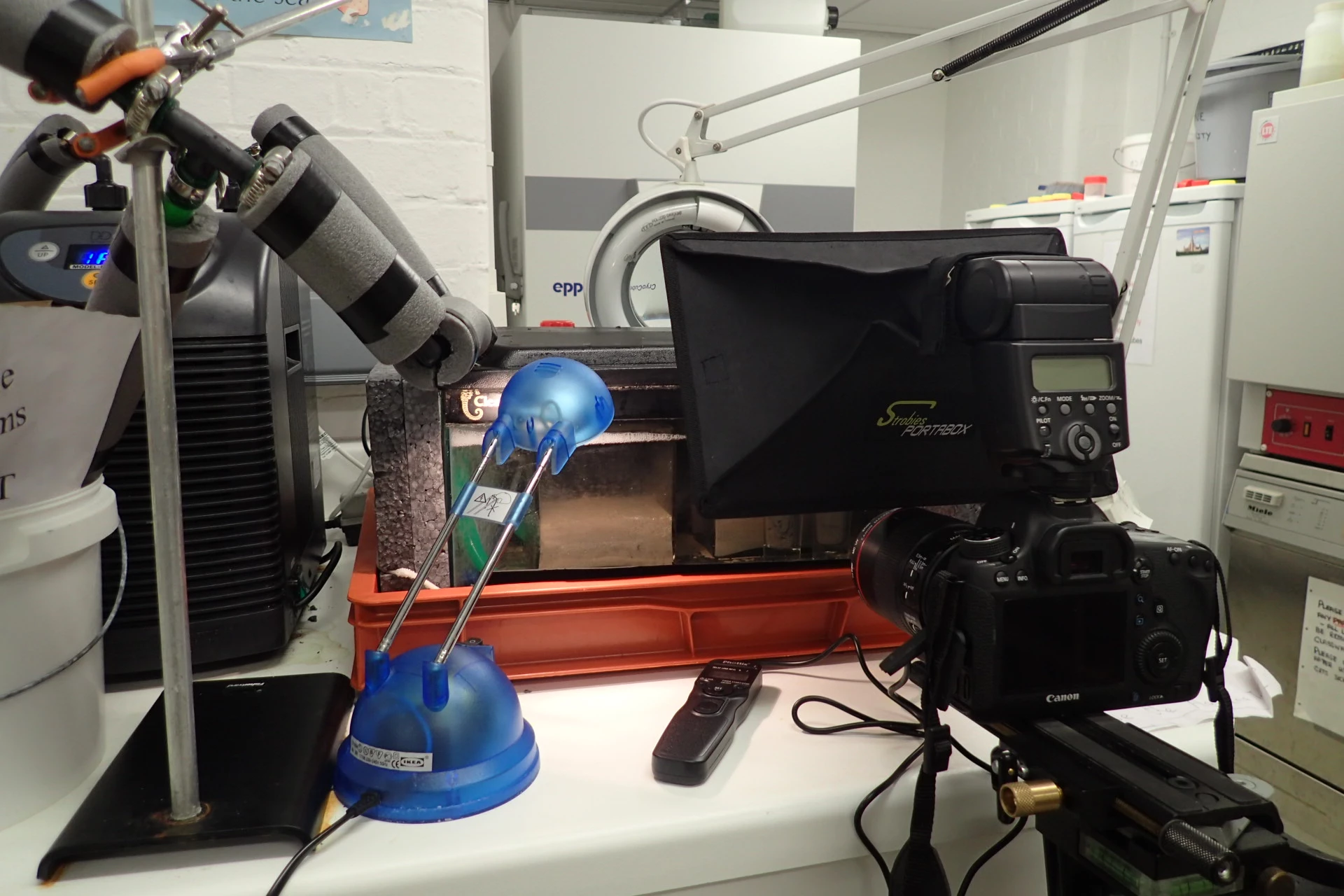
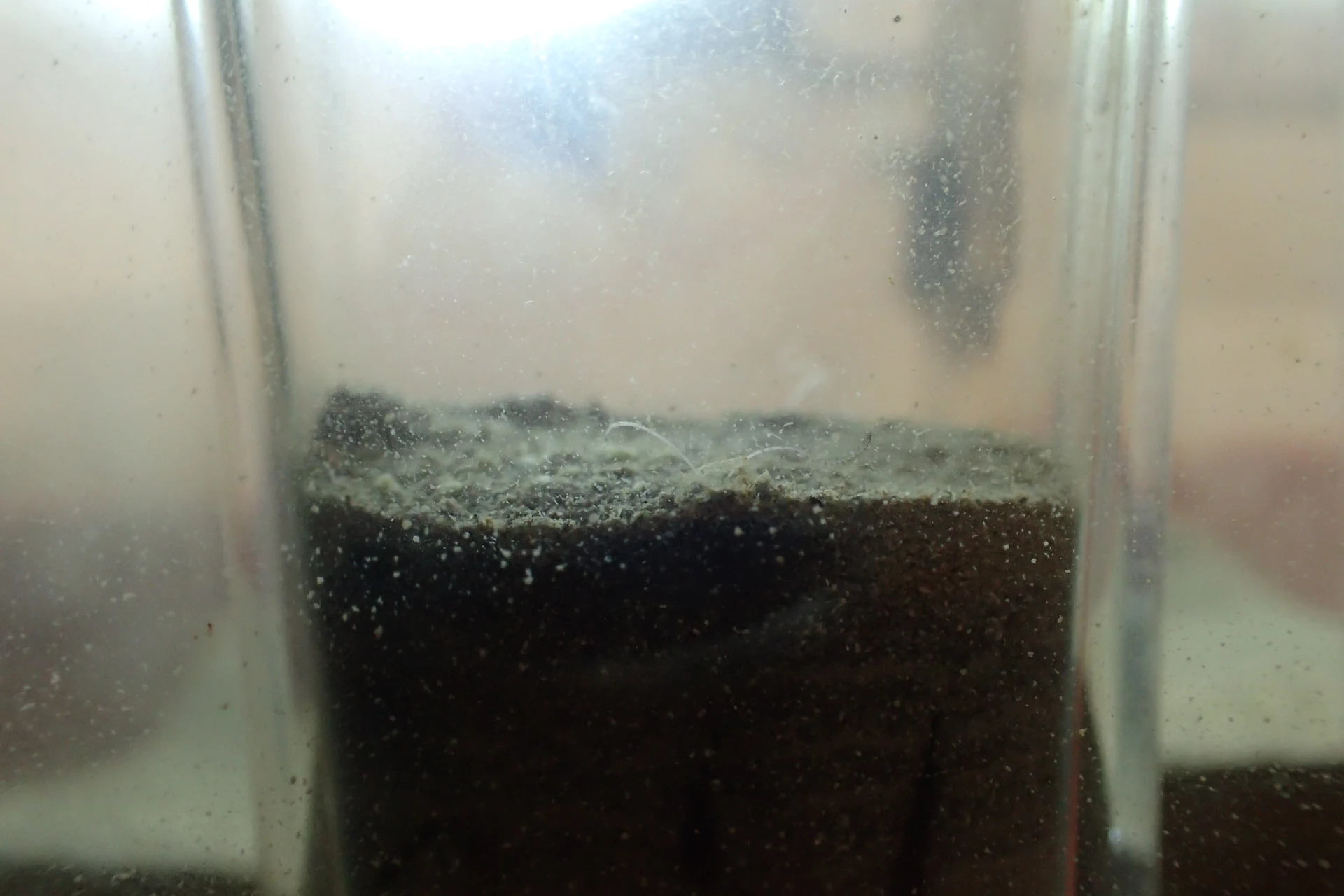
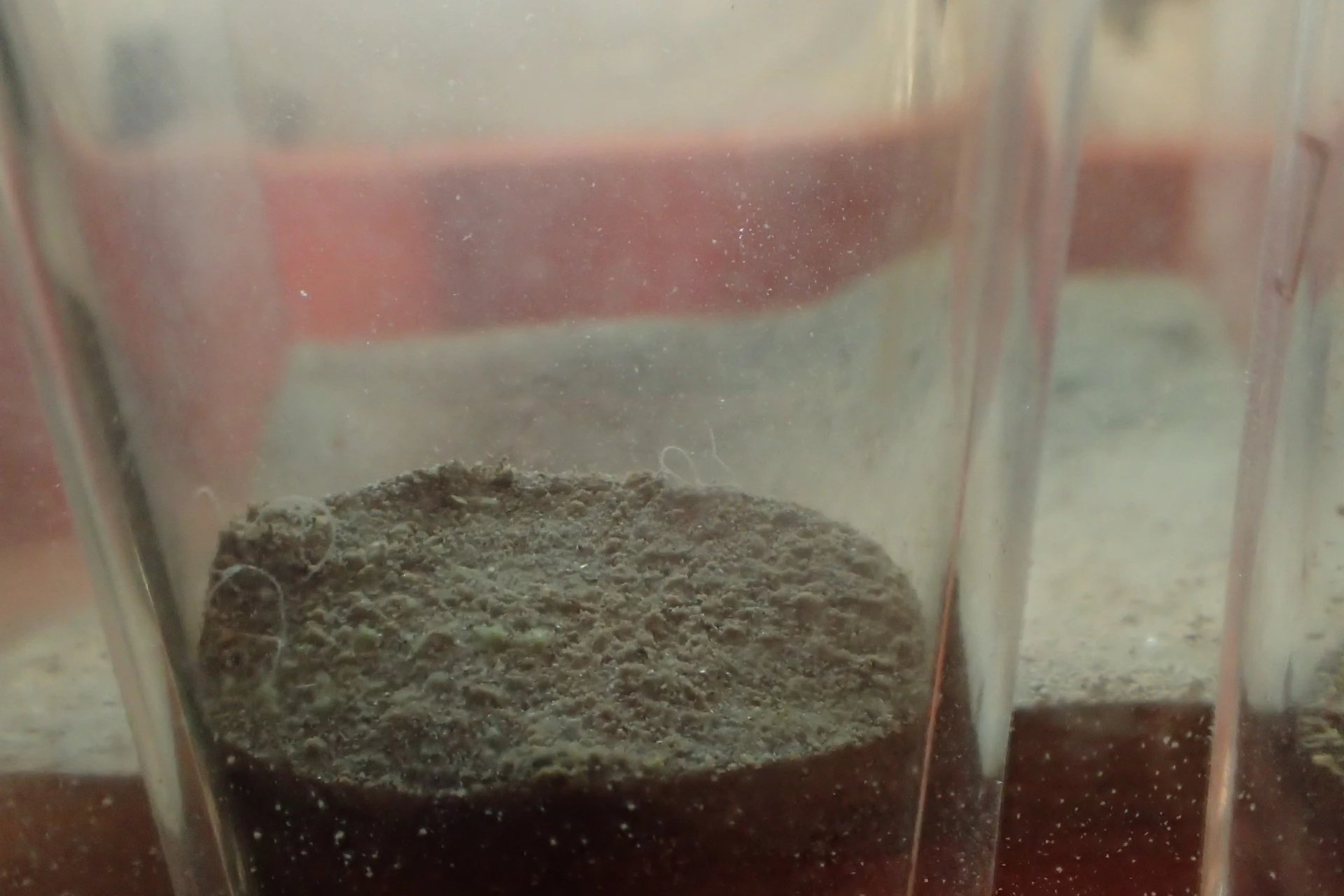
 I will tackle these kinds of questions by observations of live specimens in the museum lab with the aid of time-lapse photography for overnight observations. By examining the worms in a tank with conditions similar to in their natural environment, variables such as movement in tubes, responses to food, timings of different behaviours, and hopefully, with a bit of luck, reproduction or pouch function can be reviewed.

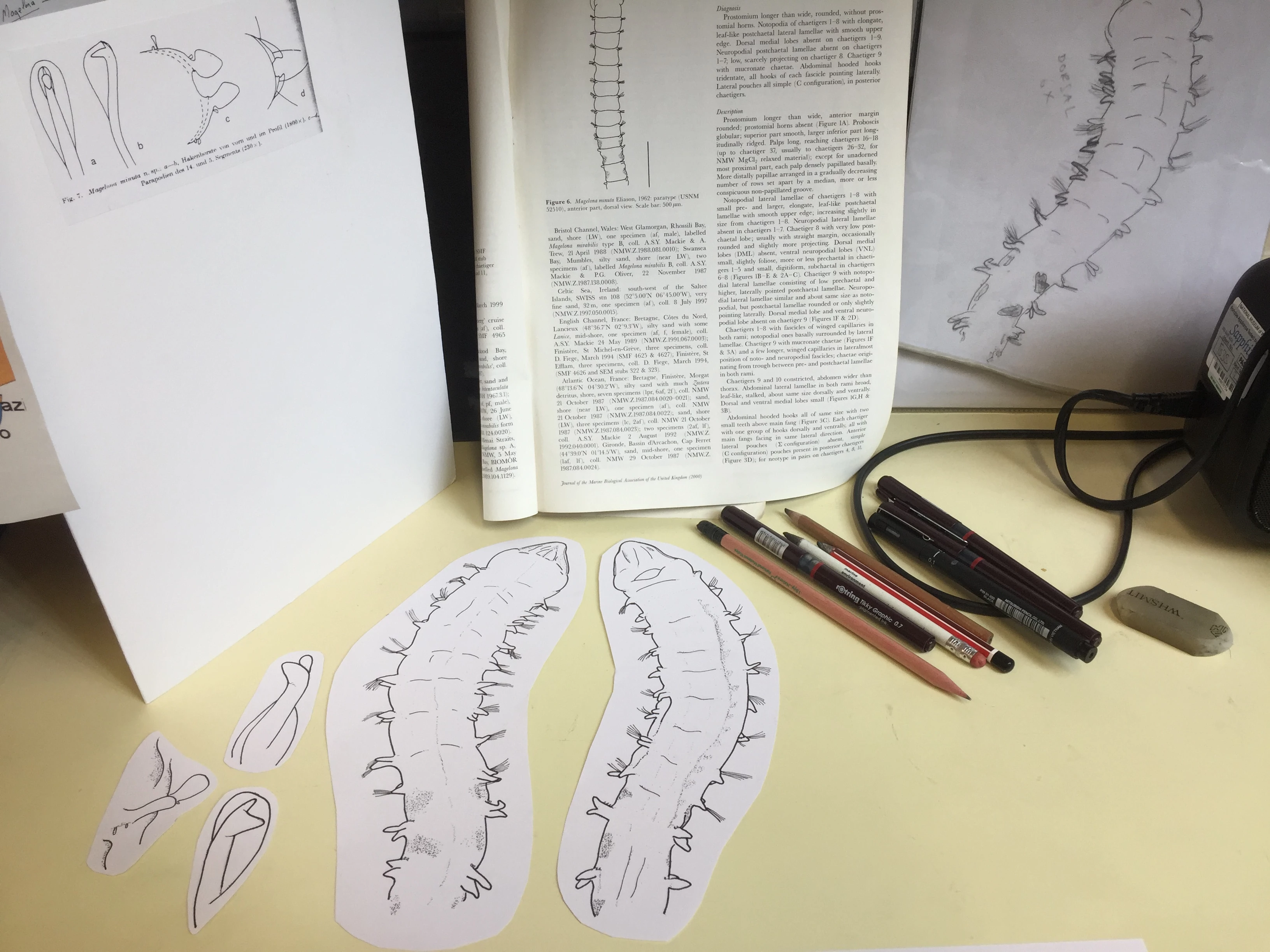
Additionally, I will use previous research in conjunction with museum specimens of the family to help me not only try to answer these uncertainties, but also to develop other skills, such as scientific drawing and taxonomy. By viewing specimens under the microscope, a camera lucida can be used to help draw an outline of the desired subject. This template can then be utilized to fill in details of the species, which is helpful to get a clear and simple view of the animal’s morphology.

It has been an interesting and exciting first few weeks here and I am eager to carry on observations and delve deeper into gaining a better understanding of the marine world. Thus, opening up opportunities for us to perceive these secretive and fascinating animals in a different light entirely.

Day of Archaeology at Amgueddfa Cymru National Museum Wales

Sian Iles and Matthew Guiseppe Knight, 28 July 2017

Happy Day of Archaeology everyone!

Today, the 28th July 2017, is the annual online event in which archaeologists from across the country blog about archaeology. The idea is to showcase the diversity of the subject and highlight what individuals are doing on and around this day.

This year we’ve badgered people from across the museum to contribute posts on who they are and how they engage with archaeology through their various research and projects and on a daily basis.

We have been amazed by the positive response, not just from within History and Archaeology but from a whole range of disciplines. The topic of posts thus ranges from prehistoric Cardiff to botany to archaeological curation to snails! It really shows how broad and varied archaeology truly is, beyond the traditional view of woolly jumpers, beards, and whips (though it has been known!)

These posts are all hosted on the external site: www.dayofarchaeology.com and links to blogs from our staff are listed below and will be added to throughout the day.

We hope you enjoy!

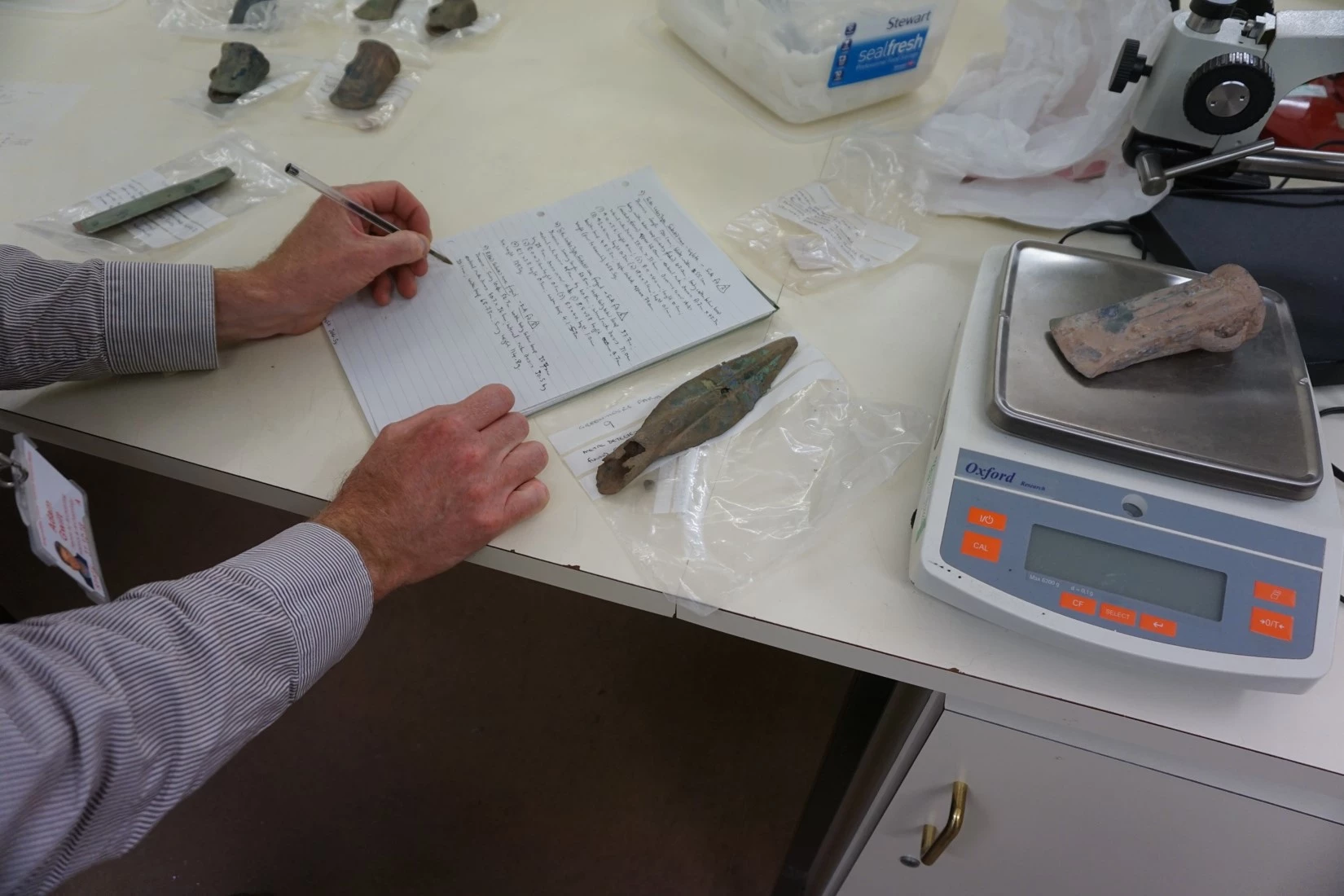
Adam Gwilt – An Archaeological Curator’s Day / Diwrnod ym mywyd Curadur Archaeolegol

Dr. Rhianydd Biebrach – The Saving Treasures: Telling Stories Project

Dr. Ben Rowson – Snails at Snail Cave, and elsewhere in Wales

Jonathan Howells - From Housing to History and Archaeology

Kristine Chapman - Rare Books from the National Museum Wales Library

Sarah Parsons - Photographing Archaeology

Dr. Heather Pardoe – Harold Augustus Hyde’s Contribution to Welsh Archaeology

Dr. Elizabeth Walker – Contemplating and communicating the Palaeolithic landscapes of Wales

Sian Iles – Marvellous medieval tiles-public engagement at Amgueddfa Cymru-National Museum Wales

Matt Knight – A Day in the Life of an Archaeology Intern / Diwrnod ym mywyd Archaeolegydd preswyl


School's Out for Summer!

Hywel Couch, 28 July 2017

With the school summer holidays once again upon us, it is time for the Learning Department at St Fagans National Museum of History to once again look back at the year that was and begin the preparations for September. There certainly won't be much time to put our feet up this summer!

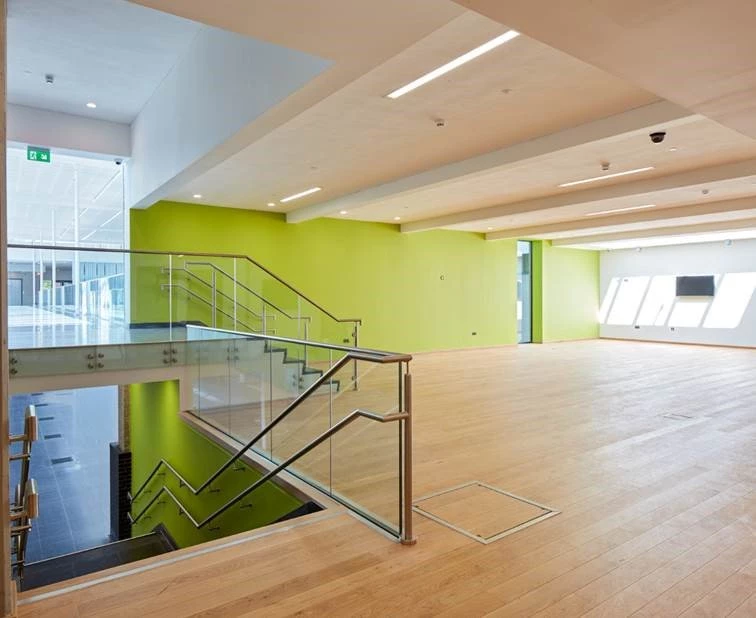
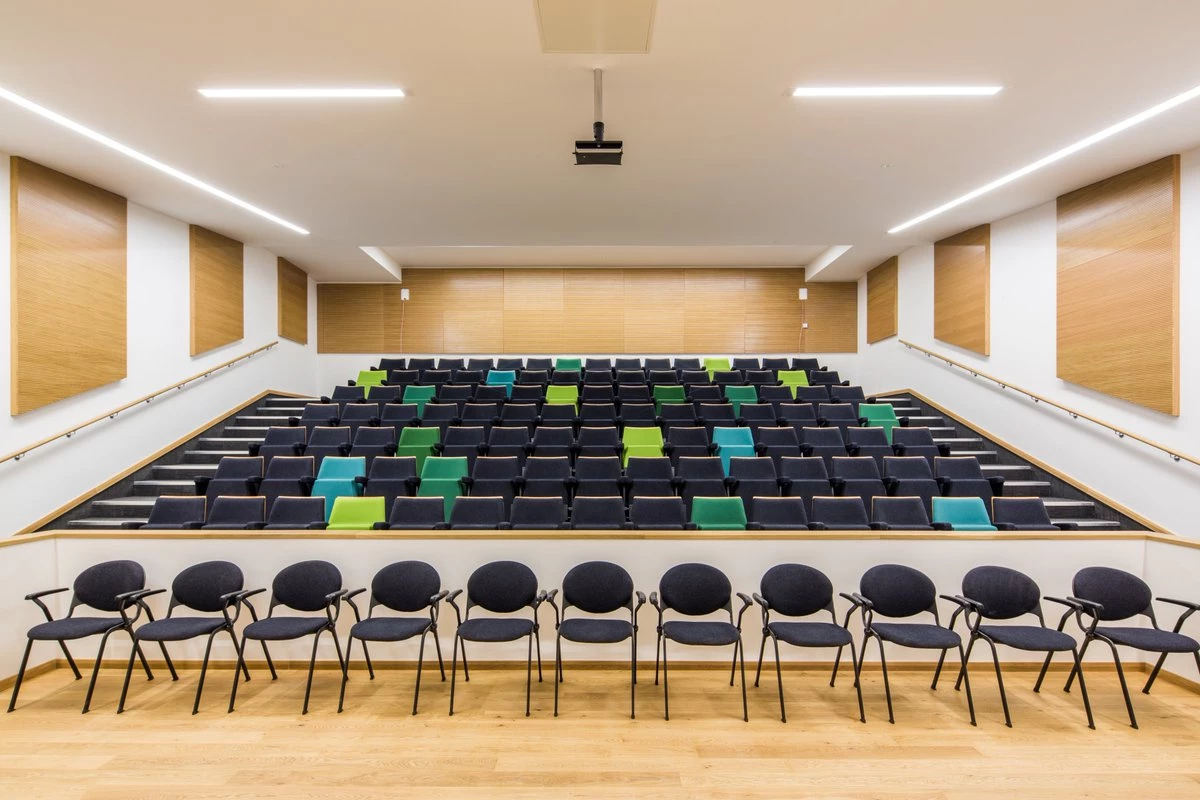
This is a very exciting time for the team here. With the newly redeveloped main building now open, September will see us welcoming schools to the brand new Weston Centre for Learning. This will give us a dedicated reception desk for group visitors as well as two new learning studios, a lecture theatre and a fantastic sandwich room. We really can’t wait for September to arrive so we can begin to show off these spaces to schools!

With new spaces, come new opportunities. With space having been at a premium during the redevelopment process, it has been hard for us to increase our offer for schools. However, from September onwards, we will be running a range of new workshops for schools, as well as seeing the return of another, much loved session.

Discussions with teachers as part of our Formal Learning Forum have led us to increase the workshops that we offer that complement each other. This allows schools to book more than one workshops for groups, filling their visits with activities linked to the curriculum. For information of workshops available for Foundation Phase and Key Stage 2 groups, please visit the learning pages of the website. They can be found here: https://museum.wales/stfagans/learning/

As we are eager to show off the new Weston Centre for Learning, we are hosting an open evening for Primary School Teachers in September. The open evening will be an opportunity for teachers to explore the new spaces and familiarise themselves with the new spaces as well as meet the ever so friendly learning team! We will also showcase the workshops we run for schools so teachers can be sure of what they are booking. The open evening is taking place on September the 20th, and booking information can be found here: https://museum.wales/stfagans/learning/teachers/

We don’t want to wish the summer away, but we can’t wait to get started again in September. Hopefully we will see you then!

Swansea - ‘City of Sanctuary’

Ian Smith, 27 July 2017

Wales is culturally diverse from three hundred years of industrial heritage and a history of people coming here for work in mining and quarrying, dock yards, heavy industry. Lately jobs in tourism, modern industry and students coming to study at our universities make us a melting pot of cultures. Indeed, my grand-father came to Swansea from the Faroe Islands (Danish) and my wife’s grand-father came from Holland, both to work on the docks around 1910. As economic migrants – they came here to earn more money and have a better life, they were not refugees.

They stayed, married Welsh girls and raised families. The street I grew up on, Prince of Wales Road in the Hafod, Swansea there lived people from Italy, Ireland, Scotland, Poland and England, and the bottom of the street was known as ‘Jews Row’ where Jews from all over the world lived. As children we just thought this was normal and every street in the UK was just like ours.

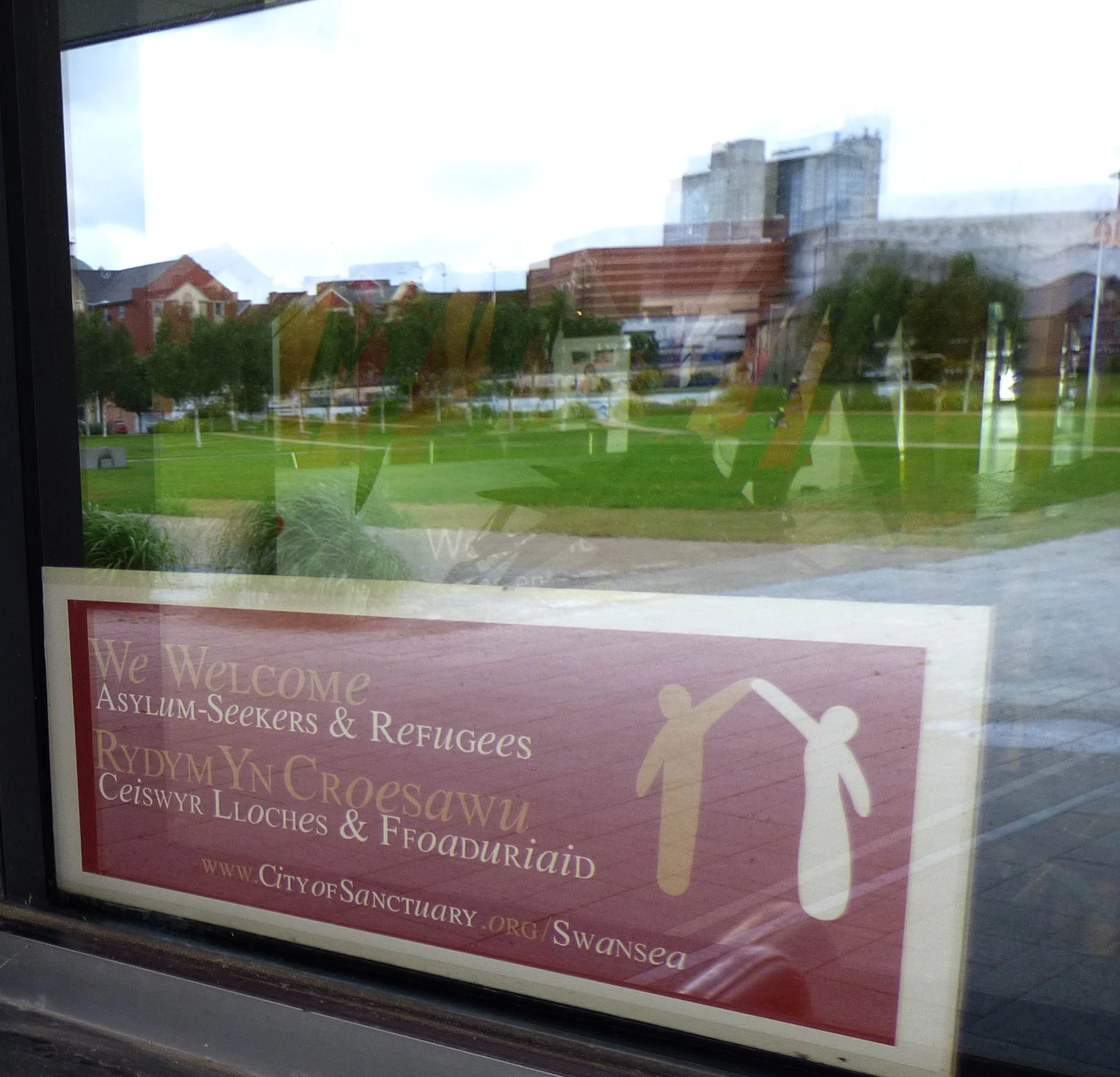
Unsurprisingly with this background, Swansea became a ‘City of Sanctuary’ in 2010, the second one in the UK after Sheffield.

Part of my job is in the Public History Team for Amgueddfa Cymru. This means we actively seek out different groups and individuals in the community and gather their stories and history. Through my job I have met people who have been displaced from their homeland for various reasons and are seeking safety and shelter.

So, when last May (2017), I attended ‘Asylum Seeker and Refugee Awareness’ training at the Waterfront Museum as part of our staff training, I thought I was fairly clued up about the subject.

The training was delivered by a lady working for Swansea City of Sanctuary and another lady who was an asylum seeker and she told us about her personal experiences.

It’s strange, we see stuff on the TV and news and read stories in the papers and get a picture in our heads about a situation but very often is only half a story. Learning factual numbers and hearing personal testimony made me realise how far off the mark I was, how little I knew.

For instance, we were asked to rank the top ten countries of the world in order of which ones take the most refugees. As a group we managed to name one or two correctly.

The top ten are: Turkey, Pakistan, Lebanon, Iran, Ethiopia, Jordan, Kenya, Uganda, Congo and Chad.

Surprised? I was. The UK, Germany or France don’t make the top ten even though I was convinced they would as it seems to make headlines on a regular basis in our media. The biggest refugee camp in the world is in Kenya with around 200,000 people living in it!

We learned what the difference is between an asylum seeker and a refugee. Both are displaced persons – they have had to leave their country of origin for lots of different reasons; war, religious beliefs, persecution or sexual orientation.

An asylum seeker is a person who is fleeing persecution in their home country, has come to the UK and made themselves known to the authorities. They then exercise their legal right to apply for asylum. If they are granted asylum here then they have ‘refugee’ status.

I found out that many of these desperate people are brought to Europe and the UK by traffickers and quite often they have no idea which country they are in. Most are stripped of belongings and passports so have no way of proving who they are, their age and marital status etc. when questioned by the authorities.

After assessment and a screening interview, if the person becomes an asylum seeker they then have to wait until their case is further assessed to get refugee status or be rejected. At any time during this process people can be subject to detention, deportation or destitution. Destitution means having no recourse to public funds, having no money and nowhere to live.

Asylum seekers are dispersed all over the country and are given free accommodation in private lettings. They are not allowed to work. They receive a maximum of £36.95 a week - £5.28 a day for food, toiletries, everyday needs and travel. As asylum seekers have to regularly sign in at an immigration office which can be some distance from where they live, a day’s money can be used up in bus fares.

The application process can take years for a person to get a decision on refugee status and the onus is on the asylum seeker to prove persecution of an ongoing threat and not a one off occurrence.

For many this period in limbo can very difficult. The lady we spoke to told us to imagine you suddenly found yourself in somewhere like China and couldn’t speak the language or understand the culture. Finding your way around and doing simple tasks is almost impossible. For example, she told us her and her two young children were placed in a house in Swansea on a cold January day. The house was cold, it had central heating but she had never seen central heating controls before and didn’t know how to work it. This lady was a psychologist in her own country but her qualifications are useless in the UK. She told us that even with all these problems she felt safe here, which was all she wanted for her family.

After the process is completed and refugee status is granted, as refugees they have the right to work and apply for family reunification. From March 2017, cases can be reviewed after five years to see if the threat to the person is still ongoing or if it is possible to be returned to their country of origin.

If refugee status is not granted there are a number of avenues for appeal but ultimately if status is not granted then the person can be deported.

After listening to the trainer and hearing the stories of asylum seekers I was left with a helpless feeling inside me. Every story we heard made me think ‘what if that was me and my family?’ and how grateful we would be to find somewhere to feel safe. The biggest point I took away from the morning was: Refugees are just people like you and me who had jobs, housing, education and good standards of living, suddenly taken away from them through no fault of their own. They just need the chance to start over again without fear.

At the end of 2016 there were 2,997 asylum seekers in Wales, 0.09% of the population.
The Artists in Residence programme at St Fagans

Sian Lile-Pastore, 20 July 2017

History, Art and Play

St Fagans National Museum of History is renowned for its historic installations - from a

medieval church to a tailor's shop, bakehouse and terraced houses .

The museum has long been an inspiration to artists, who have used and responded to the museum site, its collections and archives over the years.

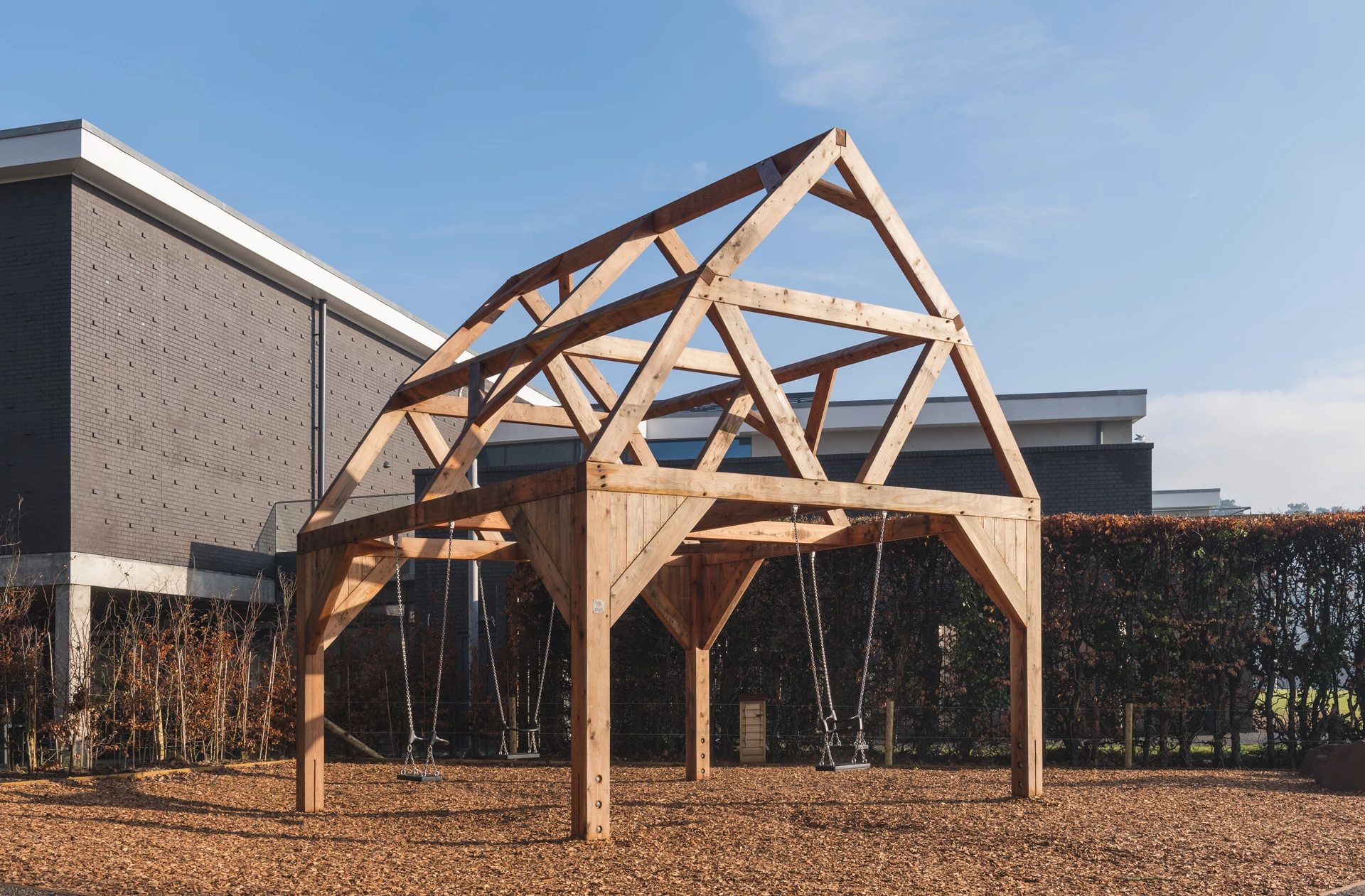
Recently, we have created more opportunities for artists to use the museum in innovative ways, through an Artists in Residence programme. Thanks to the generous support of the Heritage Lottery Fund in Wales and the Arts Council of Wales, the Artist in Residency programme provides opportunities for artists to develop their work, as well as developing new experiences for visitors - such as the children's play area, by the artist Nils Norman.

Yr Iard play area St Fagans - Nils Norman

Detail from Yr Iard, an artist-led play area at St Fagans

For 2017 and 2018 we are really excited to be working with Owen Griffiths, Sean Edwards with research support from Louise Hobson. Their brief is to investigate how visitors navigate the museum site.

Artists in Residence at St Fagans

Nils Norman, 2015-16

As part of the

redevelopment of St Fagans National Museum of History , there was a need for new play area. We wanted the play area to be unique and bespoke to the site and to encourage creative play. We invited the artist Nils Norman to spend time at the museum as a resident artist and to create a design for the new play area as well as some ideas for creative play around the site.

Nils is a London based artist who has worked on numerous projects dealing with play and urban design, he is the author of four publications and is also a Professor at the Royal Danish Academy of Art and Design, Copenhagen, Denmark where he leads the School of Walls and Space. See more of Nils' work.


Birdscreens - Nils Norman

Imogen Higgins

“Being on a residency at St Fagans has enabled me the freedom to explore the potential of community arts independently.

This freedom has allowed me to expand on ideas that play to my strengths and interests. Additionally, it has given me the chance to work in a more focused way and to a specific brief.

I have also had to experiment with creative ways of gathering information, which I am sure will be a great advantage in my career as a community artist.”

Imogen Higgins is a recent ceramics graduate based in Cardiff was is interested in community arts and engagement and her task was to work with local groups to feed into the design of the playground.

Imogen began her workshops by looking at patterns in the collections and on site, investigating patchwork quilts, medieval tiles and the paving patterns in the Italian garden and also researched play grounds and creative play around Cardiff.

She worked with two local groups as part of the project – students from Woodlands High School and parents and children from Ysgol Gynradd Hywel Dda. You can read more on Imogen's project blog.


Workshop - Imogen Higgins

Fern Thomas

“Over recent years my practice has increasingly explored historical narratives, documents and archives. I am drawn to exploring lost objects, hidden narratives or knowledge, and imagining the layers of history one place can offer.

I was therefore very excited about the potential of this residency, with the specific opportunity to explore the archives of St Fagans.”

Fern Thomas is a Swansea-based artist whose work is rooted in research and she is also interested in folklore and folk magic. Her remit was to undertake research for the play area and information about her research and work can be foundFern's website.

“The residency itself has been key in helping me shape new territory within my practice, helping me clarify my interest in archives and Welsh history, which I intend to take further into future works and research.”


Fern Thomas

Melissa Appleton

“I set out to sample the site and to create a palette of fragments - a space of collisions – between the domestic, the spiritual, the everyday, the otherworldly. Gathering structures, plants, windows, patterns, objects, rocks, tools and doorways, I planned to rework these into a shifted, yet familiar, landscape. In essence, I set out to evolve a parallel St Fagans, with one foot in this world and one in another.” (interview with CCQ, 2015)

Melissa Appleton's work usually manifests outside of the gallery walls and combines constructed environments, live events, sound and other materials into an expanded form of sculpture. During her residency in 2015 Melissa worked with the site close-up and at a distance, collaborating with Mighty Sky (Swansea) to film the site using a drone and Cardiff Met to map parts of the site using a 3D scanner. As a result of this and interviews with museum staff, Melissa gathered a palette of elements that included a man on beach conjuring mackerel through song; a triskelion (an ancient symbol depicting three hares with ears intertwined); a triple harp; window frames made from recycled aircrafts; a figure of death scratched into a headpost and the ghost of a naked coracle man furiously paddling across a river. Melissa plotted an apocryphal masterplan for the museum, drawing on St Fagans' evolution which has been shaped by desires and dreams of different curators and staff over the last fifty years.

As the residency progressed Melissa became interested in the ‘listening studio and laboratory’ (the recording studio and sound/video archive) which inhabited the edge of the museum redevelopment (underway at the time), seemingly unchanged since the 1960’s – caught between the awaited future expansion and the present day. Melissa is now working with Bedwyr Williams (also artist-in-residence in 2015) on a speculative project to tour the sound and video archive across Wales in a vehicle which reimagines the curator's original caravan.


Melissa Appleton

James Parkinson

“I set out to look into the architectural histories of the Museum and the process of recording, relocating, and rebuilding. I wanted to explore areas across the site where fragments of original and replicated elements had been fused to produce a believable whole. I was interested in how this process is central to the museum’s creation and continual development but also challenges the notion of the historic monument being fixed and immobile.”

James Parkinson is a Bristol based artist whose work uses processes of material translation to re-code notions of space, object, and body. During the residency James spent the majority of his time with Museum conservators and staff from the Historic Buildings Unit. Since completing the residency, James has continued to work and develop ideas informed by his time at St Fagans.

“During the residency I was able to develop a series of texts by transcribing interviews I conducted with conservators who describe techniques used to excavate a series of wall paintings. I am interested in recirculating the conditions of artefact and monuments in the museum’s collection through writing, and tracking the effect of this process of translation. Allowing these voices into my practice is a substantial moment and going forward I’m really excited at the possibilities of bringing these texts into proximity with other areas of my work.”

More about the artist's work: James Parkinson


Around Anything, 2015, James Parkinson

That's the Original - James Parkinson

Claire Prosser

Claire Prosser is a visual artist, writer and performer. During her residency at St Fagans she worked with museum attendants, craftspeople, gardeners and cleaners to look at the small, every day, repetitive, subconscious movements that people make as part of their jobs – the way the museum attendants use their hands to turn the key in the locks of the historic buildings, the movements the clog maker uses as he sews or cuts leather. At the end of the residency Claire ‘scored’ a performance entitled ‘If Movement was an Object’ that was then performed for the public by herself and Expressions Dance Company.

“When I was spending time with these members of staff, I realised that what I was more interested in was not necessarily the technical movements and skilled work, but the necessary, subconscious, idiosyncratic movements that each person would adopt. [….]These movements, are human, necessary and ordinary. They happen because of the time spent in the space, they happen because over time people naturally become familiar with a space. They are of the person that is there in that location, at that time every single day. These people are just as part of the space as the space is a part of them. What happens if these movements are taken elsewhere? Do they fit? Just like an object that fits in a certain space, can a movement be moved and refit?”


Claire Prosser

Claire Prosser

Bedwyr Williams

Bedwyr Williams Bedwyr Williams represented Wales in the Venice Biennale in 2015 and is currently one of the shortlisted artists for Artes Mundi. During his residency at St Fagans, Bedwyr spent a lot of his time in the sound archives as well as walking around the site filming and taking photographs. He is still considering ways to use his research in his work, but did make a short film whilst at St Fagans, which has since been exhibited as part of his show at the Whitworth in Manchester.

Since presenting his work at Artes Mundi 2016, Bedwyr was awarded the The Derek Williams Trust Prize, and through the Trust's generosity, his work, 'Tyrrau Mawrion' is now part of the national collections.


Read more about the

St Fagans 'Making History' Redevelopment or browse the art collection of Amgueddfa Cymru - National Museum Wales.