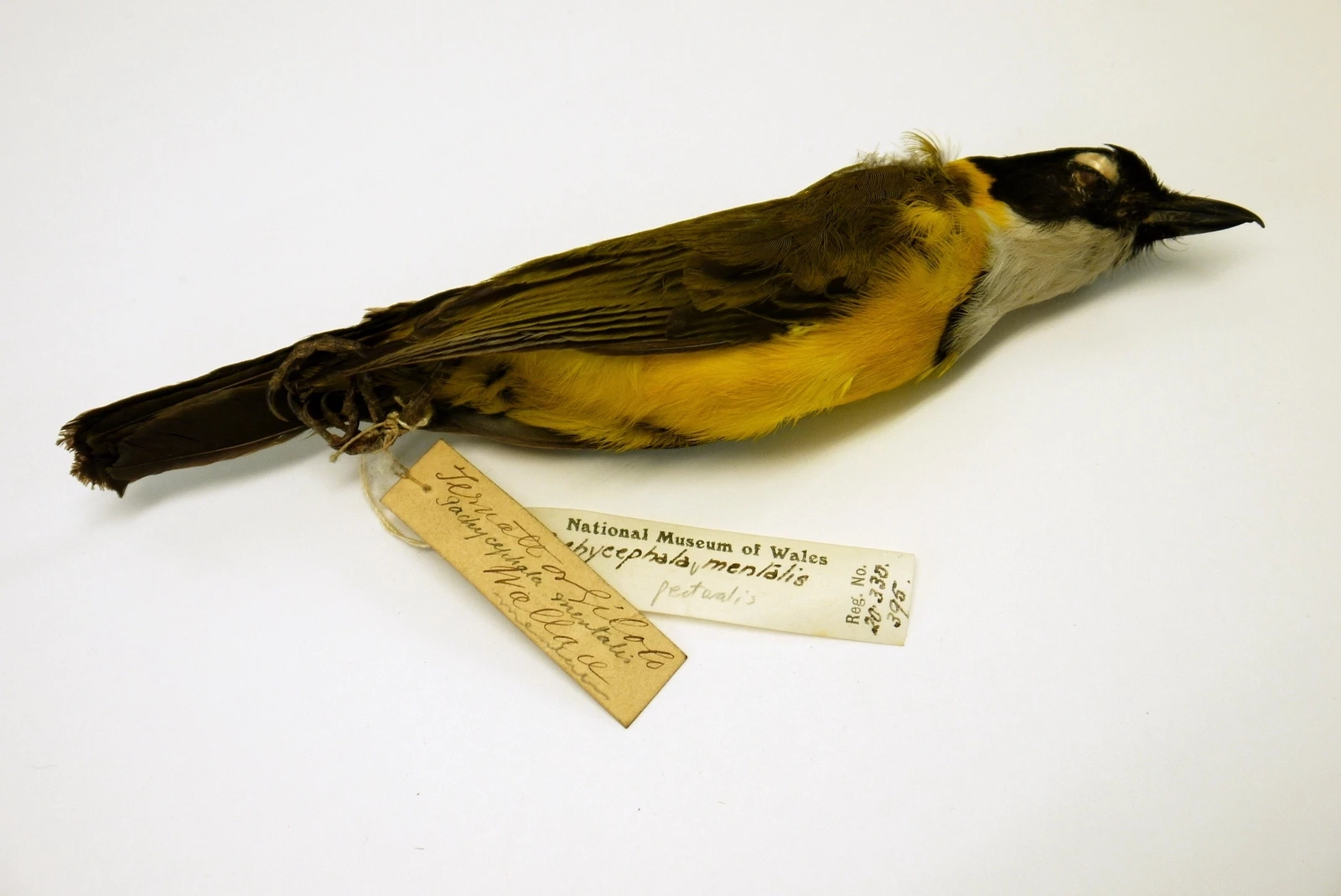
There are many reasons for undertaking a museum collections review.The main aim is often to establish the present state of a collection – level of documentation, physical location of specimens and object, as well as their storage and conservation requirements. One objective of the Welsh Museums Federation’s Linking Natural Science Collections reviews is to establish what kinds of collections are distributed across museums in Wales. This information will then be used to enable improved management of natural science collections on a national level, as well as facilitating better use of these collections. Due to the scope of the project and resource limitations, only about 20% of Welsh natural science collections are going to be reviewed – those members of the Welsh Museums Federation which are also accredited museums. This is bringing Welsh institutions one step closer to a Distributed National Collection.
A number of natural science collections reviews have recently been undertaken in various parts of the UK, largely stimulated by the Museum Association’s programme Effective Collections to improve the understanding and use of stored collections. This programme is supported by a grant scheme to enable collections reviews with expert help.
The overview presented here is fairly comprehensive but does not claim to be complete; if I have not mentioned other review projects please get in touch and let me know as I may not be aware of, or do not have sufficient information on them. While there are many similarities between these projects, each had its own starting point and aims. Accordingly, the methods vary between projects.
Plymouth Museum
Plymouth City Museum and Art Gallery undertook a review of their spirit collection in 2009 to increase skills of curatorial staff, make recommendation for improved use of and access to the collections and to promote the collections. Specialist consultants assessed the collection. The methodology applied utilized the University College London’s Collections Review Toolkit to assess condition, documentation information, potential use and significance.
University College London
University College London carried out a review of their varied collections of 380,000 objects between 2007 and 2009. The primary objective was to survey aspects of collections care, use and significance with a view to inform future management of the collections and developing them as a resource for teaching, research and public engagement. The review also considered the historical significance and their relationship with UCL. The result is a clear and accurate picture of the contents of the collections, where and how they are housed, and to what degree there are integrated into the work of the university.
West Midlands
The Regional Geology Stewardship assessed geological collections held in the West Midlands between 2009 and 2012. Now, the West Midlands Biological Collections Review aims to create a snapshot of the biological collections held in 55 institutions (including educational institutions and historic houses, but prioritising accredited museums) - their significance, condition and current usage, and to offer practical advice with managing and using them. At each institution the curator will fill in a form adapted from the Significance 2.0 framework of the Collections Trust and the RAW Collections Care Healthcheck. The project is managed by the Curator of Natural Sciences at Birmingham Museums Trust who will also provide training for collections that are at greatest risk and have greatest untapped potential.
Royal Albert Memorial Museum
The review at Royal Albert Memorial Museum (RAMM) was even more ambitious, as they reviewed almost one million objects during 2011-13. The entire – and very diverse – collection was divided into 122 review groups of related or connected material. This was preceded by entering each item from the collection in an electronic database (which had taken almost ten years to complete). A two-stage review then assessed the significance of objects to inform future use of the collection: a macro-level review from the perspective of a non-expert to determine significance and potential, and an in-depth assessment involving external subject specialists, peer review or public consultation. The review methodology was based on a hybrid version of the Renaissance East Midlands ‘Reviewing Significance Framework model, which itself draws upon the Collections Council of Australia’s ‘Significance 2.0 framework, and University College London’s ‘Collections Review Rubric. This uses a grid to determine importance in a structured way and can then be used to aid planning for future collections projects, use and interpretation. The review method can also identify gaps in the collections where future collecting programmes can be focussed.
North West England
Five museums in the North West (The Beacon in Whitehaven, Penrith and Eden Museum, Keswick Museum, Stockport Museum Service and Touchstones, Rochdale took part in a natural science collections review because they hold relatively large collections, but have no natural science curator; subject specialist consultants where therefore used. The objective was to find ways that the museums could work together to increase understanding about the collections, and to give guidance on the storage, use, and scientific and cultural value of the material held. The review highlighted scientifically important specimens and an extensive educational potential of the collections.
Horniman Museum
The Horniman Museum’s Bioblitz review was completed this year (2013), followed by Geoblitz. This reviewed a collection of 250,000 natural history and 175,000 geological specimens within 12 months by employing subject specialists to assess each specimen. The idea was to assign relative significance levels to specimens to facilitate planning a programme of future collections management, research, conservation and the use of the collection. Significance criteria were historic, scientific, rarity/uniqueness and public engagement; specimens rated in a number of these categories, serving several roles, now make up the core of the collection. The process of the review itself was also recorded, via Twitter, a blog and photographs; this helped facilitate conversation with user groups to determine future uses of the collection.
Gwynnedd Museum / Bangor University
Gwynedd Museum & Art Gallery and Bangor University departments recently carried out condition surveys of their diverse collections (natural history, geology, ceramics, art, furniture etc). The aim was to get a better idea of the nature and scope of each collection, and also to be able to prioritise any work needed in the areas of collections management and care, documentation, and conservation. External reviewers provided a condition report and a prioritisation of future work required. This has already resulted in a funding application for a Collections Officer post to improve collections management, care and access; the long-term aim is to accredit these collections.
Doncaster Museum
Doncaster Museum Service undertook a review of their natural history collection (379,000 specimens) between 2010 and 2013 to determine collections development needs and to improve access to and promote the use of the collection. The Taking Stock reviewadhered to the Museum Association’s ‘Disposal Toolkit and used consultants if internal expertise was not available. C.I.R.C.A, the latest element of Taking Stock, has been instrumental in refining and developing the approaches to reviewing collections. This methodology is now being retrospectively applied to the internal and Effective Collection advisory reviews, to facilitate decisions on collections development.
Linking Collections in Wales
The ‘Linking Natural Science Collections in Wales’ project is currently reviewing collections in 20 museums across Wales with the help of specialist curators from Amgueddfa Cymru - National Museum Wales. Levels of importance (local, regional, national, international) are being assessed as well as the type of value of specimens or review groups (scientific, historic, aesthetic, social, educational, rarity). Recommendations will then be made on potential uses (science, education, pubic engagement, none). The reviews are scheduled to be completed by early Summer 2014 and the results will be made available publicly via Peoples’ Collection Wales. Landmark specimens discovered during the reviews will be showcased to the public in a touring exhibition from Autumn 2015. This will be one way for people to explore our Distributed National Collection.
Facebook: https://www.facebook.com/LinkingCollectionsWales