My Year with Amgueddfa Cymru
, 12 October 2026
About one year from the start of my role as an Amgueddfa Cymru Producer (ACP). I’m now at the end of my time with the museum, and I’ve been asked to reflect on the experience.
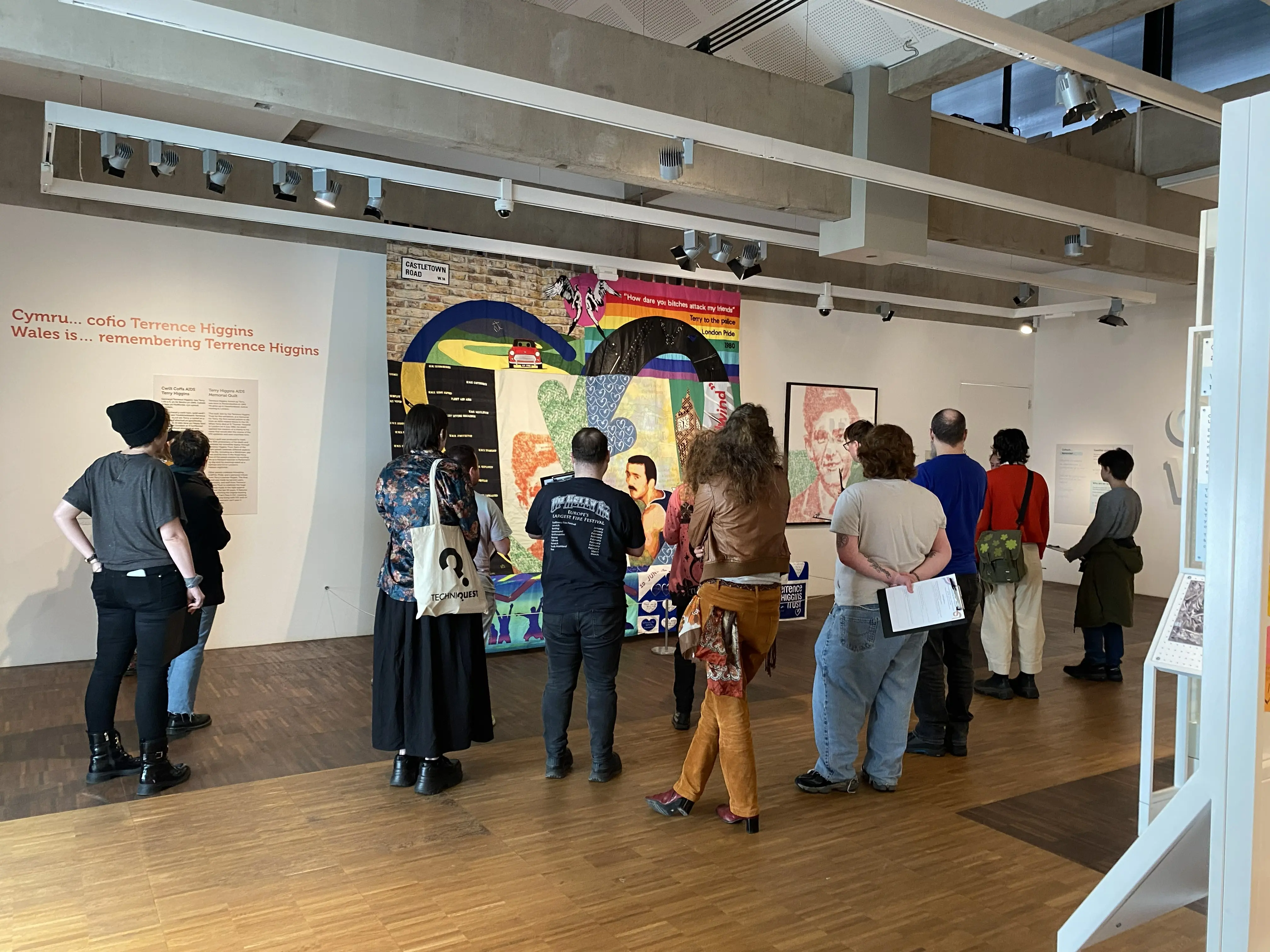
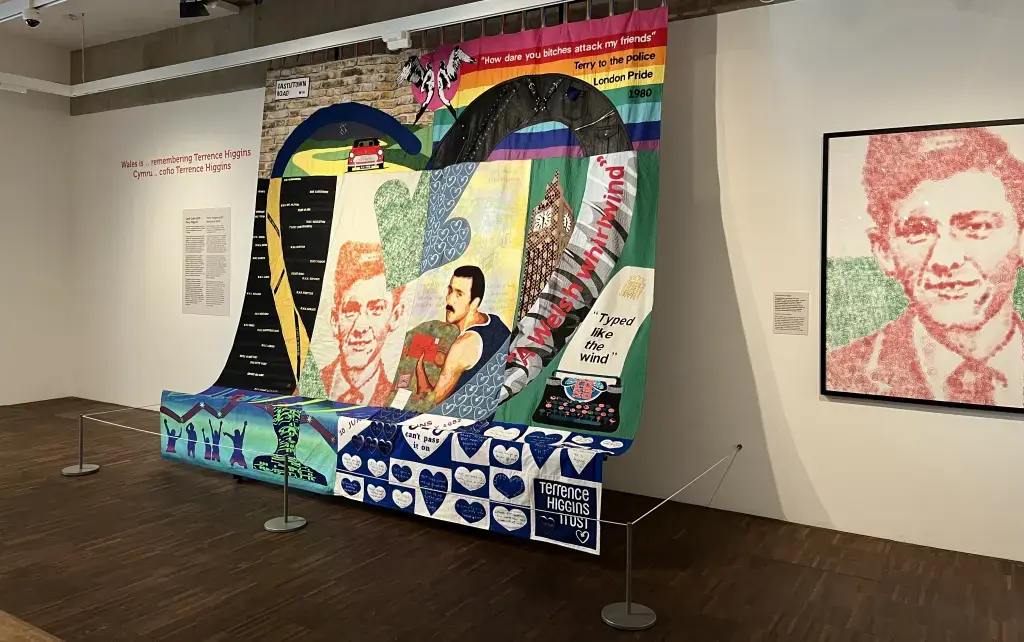
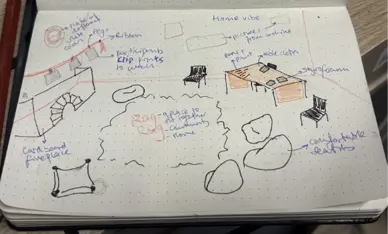
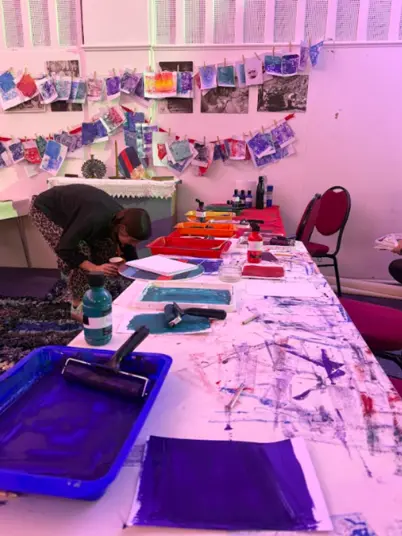
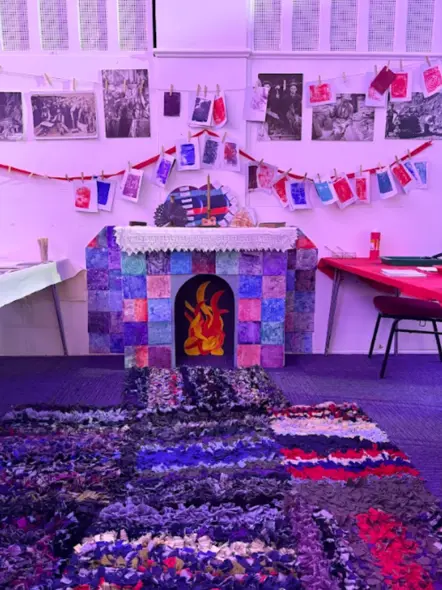
My work with the museum started in June 2025 with a workshop before pride (there’s a whole blog post about that too, which you can find here). After that first workshop was delivered, I wanted to try and construct a workshop of my own. One that allowed people to see more of the Queer Welsh history that the museum has to share. My early research into the Amgueddfa Cymru’s online collections catalogue revealed a whole host of things that can’t all be displayed all of the time. I was exceedingly lucky that when I asked if I would be able to plan, and just maybe deliver this workshop, that Amgueddfa Cymru said yes.
The first step was to decide what I wanted to be able to offer people. After visiting St Fagans National Museum of History with a friend a few months earlier I realised that I wanted to make people feel at home. This idea came about through the Rhyd-y-car Terrace Houses. Quite often I find it’s easy to feel detached from these spaces, as though they only reflect other people. Typically, I notice a focus on the family home in museums, but the married heterosexual 2.4 kids and a dog kind of life has never reflected my own situation. It’s important to remember also that this nuclear family structure is a fairly modern invention, and one that has always been aspirational. People wanted it exactly because it’s not the life that they were actually living.
With the idea of home in mind, I set about researching. I drew a lot of inspiration from Sara Ahmed’s Queer Phenomenology as well as Mike Parker’s On the Red Hill: a very different — and much easier to read — book about two gay couples living in Wales. Reg Mickisch and George Walton moved to Wales after meeting in London and living in Brighton together. They ran a couple of BnBs, and at their deaths they left their home Rhiw Goch to Parker and his partner. The book engages with these ideas of finding and making a home, and the return to nature after living in the city. Photos of Reg and George on their various cycling holidays, and at their wedding, can be accessed through the Amgueddfa Cymru’s online collection.
Both books led me to be guided by the idea of orientation, as it relates to locating yourself and things, but also sexual orientation. What is it that we are drawn towards? Who are we drawn towards? Where do we find ourselves attracted towards? This gave the workshop its semi-guided structure. At each stop on the tour, I allowed people to wander off and come back having found their own way around. This meant that everyone had a different experience of the site and latched on to different objects and stories. In an ideal world we would have had longer to allow people to discuss because it was fascinating to compare and see what each person related to their own experience. I was surprised by the fact that multiple people felt drawn towards the clock recovered from the Aberfan disaster in the Wales Is gallery, an object that I personally hadn’t given much thought to.
I was lucky that previous ACPs had made a self-guided queer tour booklet that I was then able to adapt into the route that we took on the day. Using most of the buildings and objects that they had picked out I did some research on the history and relevance of each stop. From here I came up with two lots of questions, one for artefacts inside the gallery spaces, and one for the buildings outside. My goal was to allow people to pick something without much conscious thought and then to examine that thing, and why they had been attracted towards it.
For objects I wanted people to examine if they had made any assumptions about who might have owned or used that thing, and what those assumptions might be based on. Then there was a more personal side of questioning, are there in museums that you recognise from your own life or your family? Are there things that you would want in your home, or clothes that you would want to wear? Does it speak to the life that you lead now, or the life that you want to lead?
The questions for buildings were more inspired by Ahmed’s Queer Phenomenology and thought about where we imagine queer history happening. For me the idea of the public toilet and the toll house were particularly interesting because of their use as transitional spaces. Neither of them are places to rest in, to take time and get in touch with yourself. They are defined by their function before leaving becomes necessary. They suggest a brief respite, but they can never be permanent stops. I wonder if the instability of these spaces has left an effect on the queer mind?
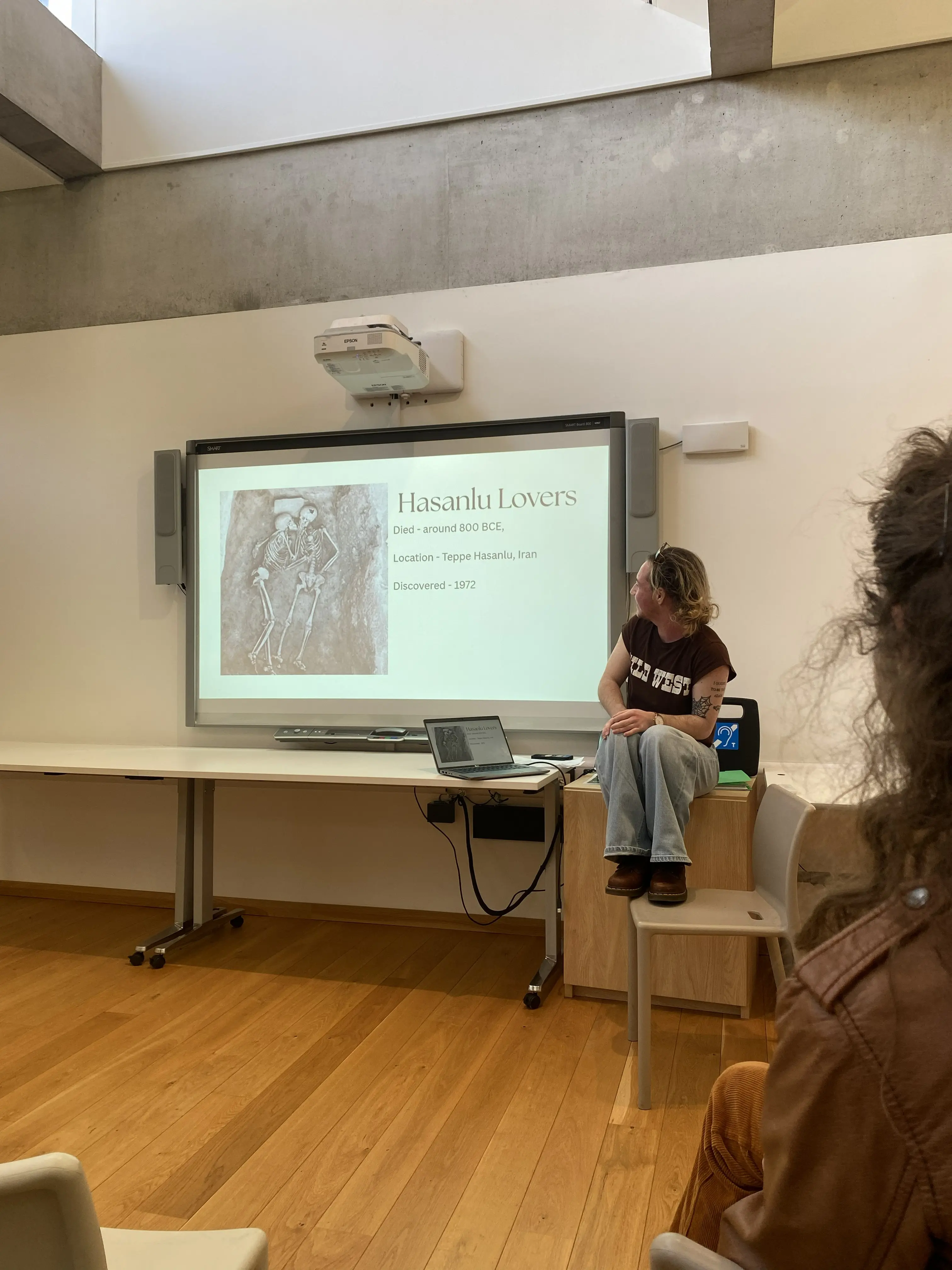
While we had to navigate the temporary closure of the Gweithdy and the inaccessibility of the workmen’s institute I tried to touch on these in a presentation before we went exploring. It was a blend of information from the museum and the sources that had informed my planning and way of thinking for the day, however the key takeaway was this: People often make heterosexual assumptions. Perhaps deliberately, but often it is the only option that they know how to consider. However just because the heterosexual (or indeed cisgender, or male, or white) assumption might be the standard or most likely, it isn’t always verifiable or true. In cases where we do not know with certainty, where we might never know the truth, a queer interpretation might be no less astute than a normative one. The point is not to change or rewrite history, but to consider the rich inner lives of people that are now lost to us.
Overall, I am hugely grateful to Hywel and Amgueddfa Cymru for allowing me to bring this workshop from an idea I had on a wooden bench in front of a fireplace, to an actual workshop attended by friends and strangers (and newborn lambs) on a beautiful spring day. I also have to thank everyone that attended for taking a chance on my queer little workshop and bringing their experiences and thoughts to the group. Even when people didn’t speak, having people willing to show up and get involved was a pleasure and a privilege that I won’t forget.