: Keeping and caring for collections

A Victorian fossil mystery

5 July 2007

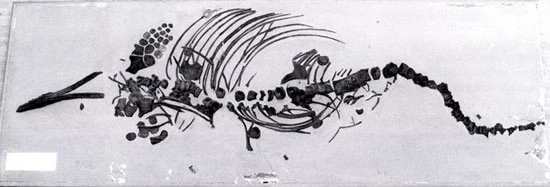
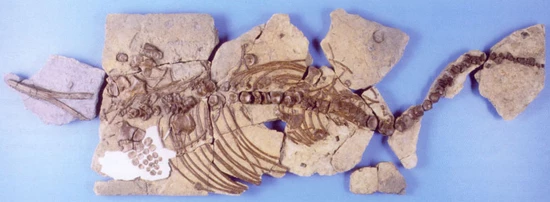
The ichthyosaur specimen before conservation (1750 mm by 720 mm by 70 mm)

The ichthyosaur specimen before conservation (1750 mm by 720 mm by 70 mm)

Ichthyosaur after conservation

Ichthyosaur after conservation showing head from separate individuals, and paddle bones set in plaster

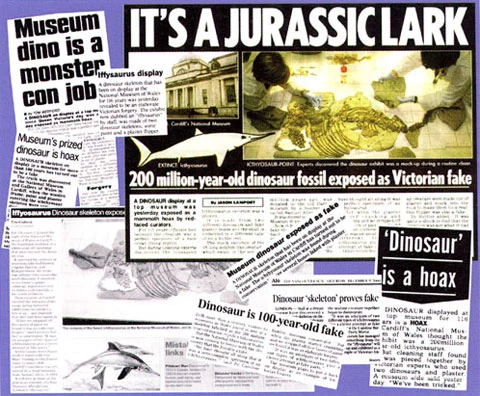
Press coverage of the story

Press coverage of the story

Routine conservation of the fossil collections at Amgueddfa Cymru, revealed a specimen that, on first examination, appeared to need a small amount of remedial work. What was to have been a small job turned into a major conservation project which attracted international media interest.

The ichthyosaur

The specimen in question is an ichthyosaur, a marine reptile that lived during the Mesozoic Era, 65-200 million years ago - the same time as the dinosaurs. They are similar to dolphins, with large eyes and distinctive long jaws with sharp teeth and limbs modified into paddles.

The specimen was donated to the old Cardiff Museum in the 1880s and subsequently became part of the National Museum collections. It was originally mounted in plaster with a surrounding wooden frame and then both the plaster and the specimen were painted.

The specimen was restored several times during the twentieth century, and this included new plaster and repainting. A label identified the species as Ichthyosaurus intermedius, collected from Street, Somerset, and described the skeleton as 'the greater part of a small individual preserved with but little disturbance of the bones' — a statement later found to be rather inaccurate.

A detailed investigation of the specimen was undertaken and extensive damage was discovered, with cracks running through it. The plaster and wooden mount were in poor condition so the decision was made to remove all restoration and paint, and to get back to the original skeleton and rock. It was not a decision made lightly because we knew that the whole appearance of the specimen was going to be radically altered.

Revealing the specimen

Removal of the paint layers revealed that the missing ends of the ribs had been moulded in plaster and then painted to match the rest of the specimen, giving the false impression of actual bones.

Study of X-rays taken of the specimen revealed an inconsistency in one section of the spine of the fossil; a dark shadow surrounded the bones. When the paint from this area was removed, it became clear that a channel had been carved in the rock and individual loose bones had been fixed into it with plaster.

Beneath the paint it was discovered that the bones of the single preserved front paddle were also set in plaster. Holes in the surrounding rock suggest areas from which bones may have been removed before being relocated, but it is possible that some bones had been taken from other specimens.

The biggest surprise came when the paint was removed from around the jaw; the rock was a totally different colour and type to the rest of the skeleton. Not only were there at least two individuals involved, but further study proved that the head and body were two entirely different species of icthyosaur! This was a specimen that had been considerably altered by the Victorian preparators.

Re-displaying the conserved fossil

Although the specimen was made up of two different species, it was decided that the head and the body should be kept together as originally intended. The plaster surrounding the paddle and a part of the ribs made from plaster were also left intact. A new light-weight support system was built. Instead of being displayed simply as a museum specimen, this ichthyosaur will be used to highlight the techniques used by some Victorian enthusiasts to 'restore', display and present fossil specimens and how painstaking conservation work today revealed the true nature of our specimen.

Intense media interest was sparked when the Museum announced a public talk on the conservation of the specimen. This resulted in the story being covered in the national and international press in addition to television, radio and the internet, and included a live interview with ABC Radio in Australia!
A new lease of life for Cambrian Railways Coach No.238

4 July 2007

The coach before work began

The coach before work began

The interior of the main part of the coach

The interior of the main part of the coach

The completed coach

The completed coach

A 19th-century railway coach has been at the centre of one the largest conservation and reconstruction programmes undertaken by Amgueddfa Cymru.

19th-century passenger railways

At the end of the 19th century, Cambrian Railways covered much of mid-Wales. Unlike the lines in south Wales, whose main purpose was to carry iron and coal from the valleys the short distance to the coast, Cambrian Railways provided long-distance passenger services. They connected coastal resorts such as Aberystwyth to the large cities of Liverpool, Manchester, Birmingham and London.

Quality and luxury

In comparison to today's trains, passenger coaches in the 19th century were quite complicated. Coach No.238 had a small luggage compartment at one end, then two first-class compartments and four third-class compartments. There were three toilets, one allocated to first-class use only. To make sure there was no mixing of classes, the corridors for first and third-class compartments were on opposite sides of the coach.

Coach No.238 was built in Birmingham in 1895 to very high standards, its original plans stating: “Interior panelling of polished sycamore framed with walnut wood and gold lined”.

From luxury coach to hollow shell

The coach entered service in 1895 and was used mainly between Aberystwyth and Manchester before finally being withdrawn in 1939. During the Second World War it was converted into a wireless van. Later it was put into storage before being transferred to Amgueddfa Cymru in 1991 by which time the coach was essentially a hollow shell.

The Museum decided to restore one first-class and one third-class compartment at either end of the coach, with the rest of the space to be used for groups of visitors. A special canopy was constructed to house the coach, allowing the restoration to go ahead even in bad weather.

Restoration of the coach

Work began with re-roofing the coach, then replacing the floor with 'tongue and groove' planks. The first-class compartment was found to have one set of planks laid at 45 degrees to the body of the coach, with a top layer laid at 90 degrees to the lower layer. Apparently this gave a quieter ride for the first-class passengers. Next to be renewed were the external panelling and mouldings, then the internal partitions and seat frameworks, all following the original plans. Such was the attention to detail that the metal brackets supporting the luggage rack were copied from an original with replicas being made in the brass foundry at the National Slate Museum in Llanberis.

The coach originally had 14 coats of paint; fortunately, modern paints do not require such methods. The lower half of the coach is finished in Cambrian Green, with an original sample of paint used to produce the appropriate shade.

Finishing touches

The coat-of-arms of the Cambrian Railway Company and the Prince of Wales feathers provided the finishing touches. These were taken from originals that were photographed, scanned and laser printed to provide identical copies.

The glory of this coach will serve as a reminder of the halcyon days at the beginning of the 20th century when people travelled from all over England to visit Cardigan Bay.

Stunning plant portraits donated

12 June 2007

Common Fritillary

Common Fritillary (Fritillaria meleagris) by E.F. Crowley.

Common primrose

Common primrose (Primula vulgaris) by E.F. Crowley.

Botany was a popular and fashionable activity in 18th and 19th century Britain. It was a safe recreation for women of leisure in the middle classes and was encouraged as an exercise that taught moral and religious lessons and prevented idleness.

In April 1927, two months after King George V officially opened the National Museum of Wales, Miss Gwendolen Crowley of Eastbourne wrote to the new museum's Keeper of Botany offering a collection of 200 botanical watercolour drawings.

Included with Miss Crowley's drawings were similar paintings by her mother, Mrs Curtis Crowley, her sister, Marion and an aunt, Mrs E. F. Crowley, bringing the total number of watercolours donated to 367.

Some years before, Gwendolen and Marion had started a Botanical Painting Club to illustrate as many wild flowers as possible and this collection was the result of that interest.

An inscription on the back of one of Marion's paintings of a Grape Hyacinth (Muscari comosum) states,

"Known also as Tassel-Hyacinth. See Curtis's Botanical Magazine."

This reference alludes to William Curtis (1746-1799), who taught at the Chelsea Physic Garden in London. Curtis wrote one of the earliest illustrated floras in England, Flora Londinensis (1775-87), which includes all the wild flowers growing within 10 miles of London.

Part of the work undertaken by the Museum is to maintain and conserve these delicate illustrations. The drawings have all been cleaned with vinyl erasers, stored in polyester envelopes to prevent abrasion and acid migration, before being rehoused in archival boxes designed specially for delicate material. The paintings are all original watercolours, measuring approximately 25cm by 18cm.

Moth Balls and Arsenic, Booklice and Silverfish - Hazards of the Museum Herbarium

12 June 2007

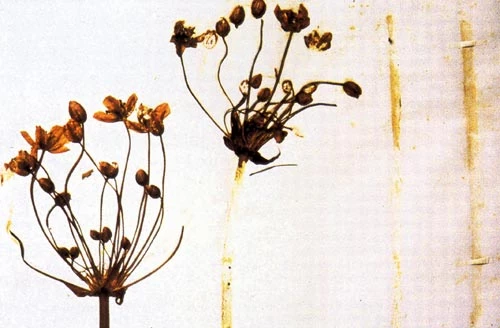
Specimen showing attack by biscuit beetle.

Specimen showing attack by biscuit beetle.

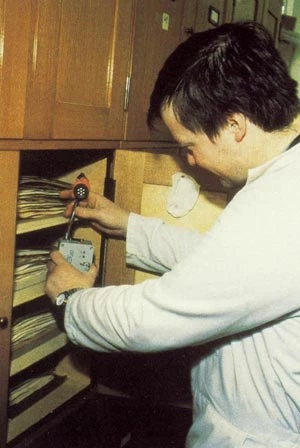
Testing for mercury vapour levels inside the herbarium cupboards.

Testing for mercury vapour levels inside the herbarium cupboards.

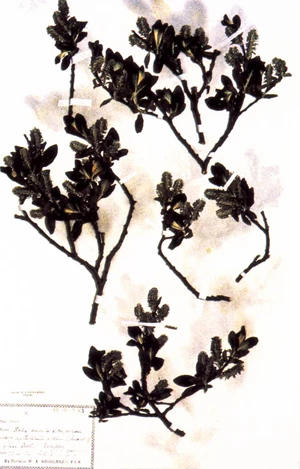
An example of pesticide discolouring.

An example of pesticide discolouring. Research showed that this specimen had been treated with arsenic, mercury and barium - substances harmful to both specimen and health.

Amgueddfa Cymru house over quarter of a million dried plant specimens from all over the world, some dating back to the 18th century. Toxic pesticides applied to these specimens over the years can cause damage to the specimens and be a risk to those working with them.

Pesticides are applied to the specimens to overcome pests such as booklice, biscuit beetle and silver fish. Natural history specimens have always been vulnerable to attack from pests, which can be devastating to a botanical collection, as important details, or even whole specimens, can be lost.

Some types of pesticides used in the past are now known to be harmful and toxic. Handling the collections could present a health risk, especially as the quantity and nature of chemicals used in the pesticide were unknown.

Small samples of the Museum's herbarium sheets were analysed to detect the chemicals present within one sample. For example, if mercury and arsenic had been applied to a herbarium sheet then this would identify the two metals in one test.

It was discovered that the most frequently used chemicals were carbon disulphide, mercuric chloride, methyl bromide, naphthalene, paradi-chlorobenzene and pyrethroids.

Mercury

High levels of mercury were found within the paper samples and immediate precautions were taken for handling specimens. Mercury can be absorbed through inhalation, absorption and ingestion and its effects can result in reduced fertility, possible genetic mutations, shakes, reduced vision, serious personality changes and even brain damage.

The herbarium air quality was monitored for mercury vapour and each site tested had readings well below the recommended health and safety standard. Individuals were monitored by attaching the monitoring instruments directly to their clothing.

Moth Balls and Arsenic

Although it is difficult to measure arsenic accurately, it was discovered on most of the specimens tested. The presence of naphthalene was detected on all samples, which was as expected. Moth balls, made from naphthalene, were only removed from herbarium cupboards in the 1980s.

The project successfully identified the hazardous chemicals and metals present within the pesticide residues and through continued monitoring of air quality and staff, work can now continue within the herbarium without risk.

Following the tests, a database was generated detailing specimens, pesticide, contaminants and risks to both health and the specimens, which has since been used to help identify hazards in herbariums from other botanical institutions.

Repairing the irreplaceable - Conserving the Blaschka glass models

16 May 2007

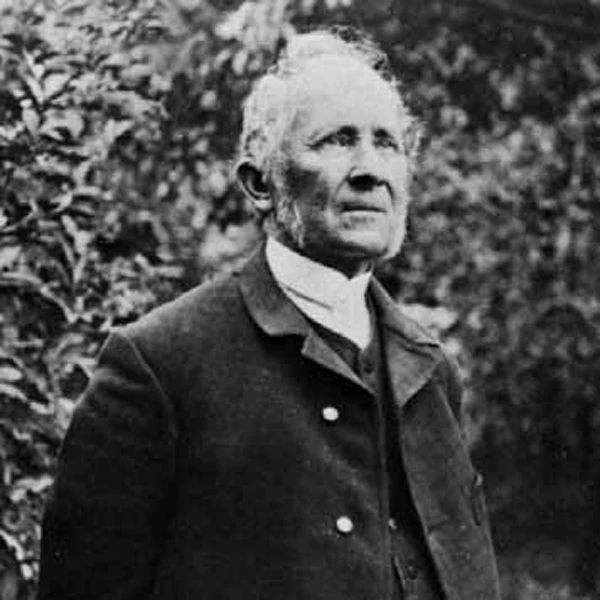
Leopold Blaschka, about 1895. Image courtesy of The Botanical Museum, Harvard University, Cambridge, MA.

Leopold Blaschka, about 1895. Image courtesy of The Botanical Museum, Harvard University, Cambridge, MA.

Rudolf Blaschka, about 1895. Image courtesy of The Botanical Museum, Harvard University, Cambridge, MA.

Rudolf Blaschka, about 1895. Image courtesy of The Botanical Museum, Harvard University, Cambridge, MA.

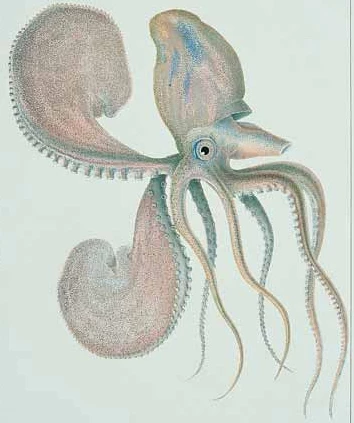
A source picture of the Paper Nautilus (Argonata argo) model.

A source picture of the Paper Nautilus (Argonata argo) model.

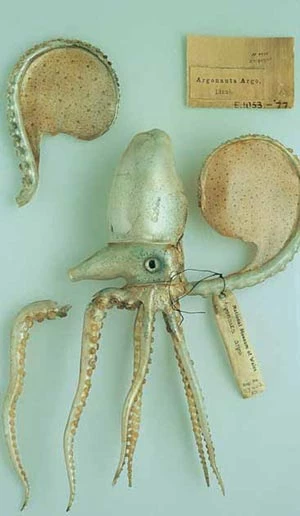
A broken Paper Nautilus model.

A broken Paper Nautilus model.

The Paper Nautilus model after conservation.

The Paper Nautilus model after conservation.

Amgueddfa Cymru holds around 200 beautifully detailed glass models of sea creatures created by Leopold and Rudolf Blaschka. Made in the latter half of the 19th century, these intricate and extremely fragile items have been subject to years of open display and poor storage conditions, causing them to become damaged and dirty.

Irreplaceable works of art

These beautiful glass representations of marine animals were originally developed as educational models. Now they are now considered to be works of art, with a value that makes them irreplaceable.

Conserving the Blaschka models is fraught with difficulties. Given their age and complexity, great care has to be taken before attempting to clean or repair the models. The accumulation of decades of dirt, and damage from past repairs must be rectified without damaging or altering the original model.

The first stage of any conservation project is to understand what the object represents, and then to understand how it is made. The Blaschka models are an intricate blend of glass, paint and textured coatings that have been put together to show the textures and colours of the animal in life.

Shifting decades of dirt

Firstly, a suitable way of cleaning the models had to be found, then methods had to be developed for removing previous repairs. Finally, where required, the models needed to be repaired.

The models proved to be very difficult to clean. Surface paint had been applied to many of the specimens to add texture and colour. These had attracted surface dirt over the years, which was very hard to remove.

A range of solvents and cleaning solutions were carefully tested. Whilst water (with a non-ionic detergent) proved effective for removing the dirt, the surface paint was soluble and was in danger of being washed away. Eventually white spirit was found to shift the dirt without damaging the original surface paints.

Removing past repairs

Many of the specimens, especially the cephalopods, had become repeatedly broken and repaired over time. Many of these repairs were now discoloured or failing. Some parts, for example tentacles, had been re-attached in the wrong place.

The older repairs tended to use animal glue that could easily be softened in water, but this required care where the surface paint was present as this was water soluble. Other glues were dissolved by acetone. Once the old glues had been removed, the models then had to be reassembled.

Re-repairing correctly

The glass used to manufacture most of the models was very thin and brittle. Some of the collection had been broken into numerous pieces, and, in the past, detached pieces were fitted back in the wrong place.

Firstly, any new repairs made to the models needed to be reversible in the future. Epoxy resin based adhesives were quickly ruled out due to their strength, lack of reversibility and long-term stability problems. The consolidant, Paraloid B-72TM, was chosen because it is a stable material that remains reversible and can be removed if required. It is also forms a weak repair that will fail before the glass, reducing the chances of damaging the models further. This material is also slightly visible in certain lights, allowing future curators of the collection to identify previous conservation work.

The conservation work was developed to improve the visual appearance and integrity of the models, without further altering the original structure. The Blaschkas' glass models are an important collection, which is still used today. The work carried out on the collection will help ensure its continued survival for future generations to enjoy.