The rarest plants in Wales
1 April 2009

Scientists at Amgueddfa Cymru have been researching the possibility that the Perennial Centuary (Centaurium scilloides) colonised Britain by sea.
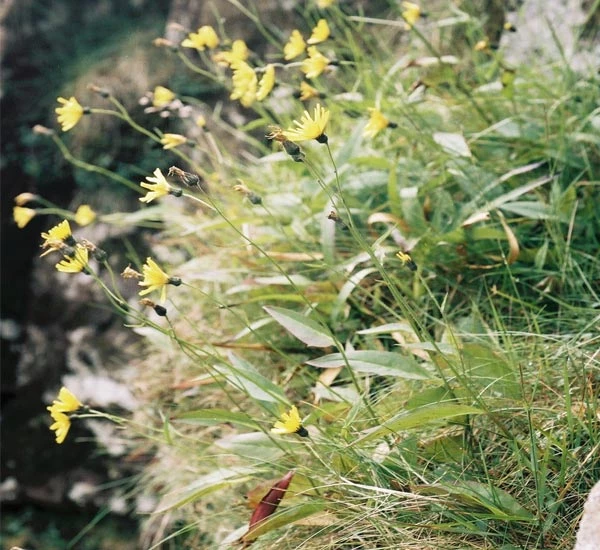
For its size, Wales has a rich flora. The variation in rock types and landscapes from the limestones of the Gower Peninsular to the mud-stones and volcanic rocks of Snowdonia support many different and special plants. Wales is home to a number of rare plants. Some rare species are endemic to Wales and occur nowhere else in the world, such as Ley's Whitebeam or the Black Mountain Hawkweed. Other rare plants occur elsewhere but in the British Isles only occur in Wales, such as the Snowdon Lily or Yellow Whitlow Grass. Others are rare on an international basis, such as Perennial Centaury or Wild Asparagus.
The Welsh Rare Plants Project aims to help conserve threatened Welsh plants by providing a firm scientific basis for their conservation. The advice is provided by collecting information on the size and location of rare plant populations, assessing threats to their survival, collecting ecological information, analysing genetic variation and making recommendations for habitat management.
It is a joint project between Amgueddfa Cymru — National Museum Wales and the National Botanic Garden of Wales, with part funding from the Countryside Council for Wales.
Click on the thumbnails below for information on each rare plant:
Rare Plants Project
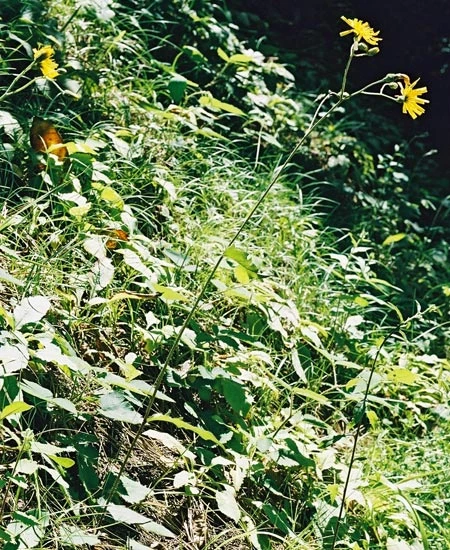
Hieracium radyrense, Radyr Hawkweed
Radyr Hawkweed is a very rare Welsh endemic, recorded from two sites in Glamorgan. In Radyr in 1998, a total of nine plants were found in one garden where it grows on grassy banks and lawns, often in shade. It was not found at the type locality of Radyr Quarry, near where it was last seen in 1985.
Neither the species nor the sites have any legal protection, and it could be under significant threat of survival in the long term from inappropriate gardening. Seed has been sent to the Millennium Seed Bank, and plants are being cultivated at National Botanic Garden of Wales. The work has been carried out in collaboration with Cardiff County Council.
Download publication: http://archive.bsbi.org.uk/25_4_HutchinsonHieracium.pdf
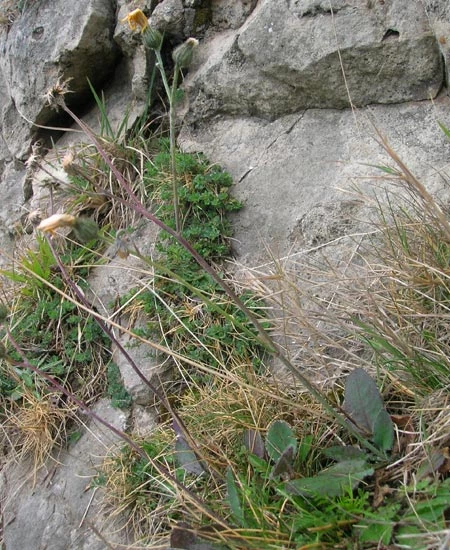
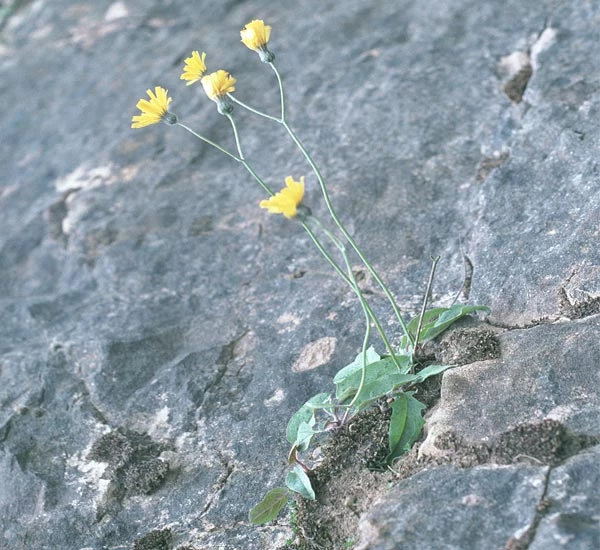
Hieracium pseudoleyi, Purple-flushed Hawkweed
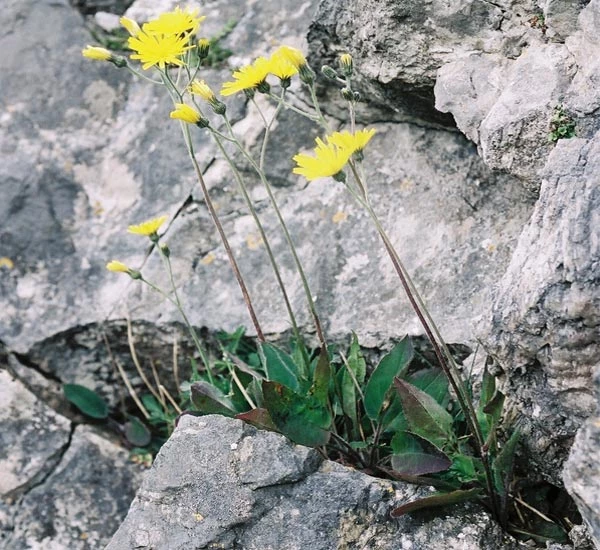
Reviews of historical data were combined with field surveys to assess the status of H. pseudoleyi, a rare endemic of North Wales. It has been recorded historically in three sites, and there are doubtful or erroneous records from four sites. In 2006, 798 plants were found on the Great Orme and 53 plants on the Little Orme. It was not refound at another site. It occurs on limestone rocks and in crevices in open vegetation. Under the IUCN (2001) threat criteria it is probably best regarded as 'Vulnerable'.
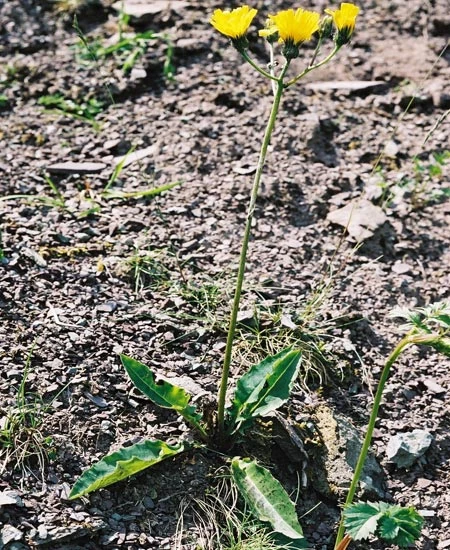
Hieracium neocoracinum, Craig Cerrig-glaisiad Hawkweed
This is a very rare, endemic plant, confined to Craig Cerrig-gleisiad National Nature Reserve in the Brecon Beacons (V.c. 42), Wales. It was first found in 1895 and has occurred in at least two places within Craig Cerrig-gleisiad. In 1975, its population was estimated to be 60 plants in one population. Field surveys in 2003 revealed 147 plants at the same place, and it was not refound in the second site but one plants was refound there in 2007. The population increase is probably due to colonisation of bare ground created by a landslip, and relaxation of grazing. Seed was collected for the Millennium Seedbank, and it is being cultivated at the National Botanic Garden of Wales.
Download publication: http://archive.bsbi.org.uk/25_3_RichHieracium.pdf
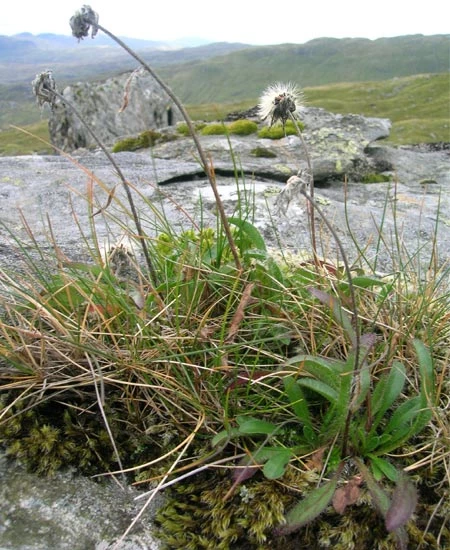
Hieracium holosericeum, Beautiful Hawkweed
Hieracium holosericeum, Beautiful Hawkweed, is a British endemic alpine plant which is widespread and locally frequent in the Scottish Highlands but occurs more rarely in southern Scotland, the Lake District and Snowdonia.
Historical records indicated between five and seven sites in Snowdonia, and it was locally abundant in at least some of those. Field surveys in 2000 and 2002 revealed only three remaining sites, but several more sites have come to light since. The most likely cause of the decline is over-grazing. The shyness of flowering in the wild may be a consequence of sub-optimal climatic conditions, and longer-term there may be significant implications for its survival from global warming. It does not grow well in cultivation.
Hieracium asteridiophyllum, Llangattock Hawkweed
Llangattock Hawkweed is a rare endemic species confined to cliffs around Craig y Cilau National Nature Reserve, Brecon in South Wales. In June 2000 surveys were carried out of the entire populations to assess its requirements for conservation. 512 plants of were found. Compared with population sizes in the National Nature Reserve in 1975, fewer of H. asteridiophyllum were found but the differences are probably due to the problems of recording. It is 'Critically Endangered' under the I.U.C.N. criteria, but is probably not at significant risk. Seeds have been sent to the Millennium Seed Bank, and plants are being cultivated at National Botanic Garden of Wales.
Download publication: http://archive.bsbi.org.uk/2409Rich.pdf
Sorbus minima, Least Whitebeam
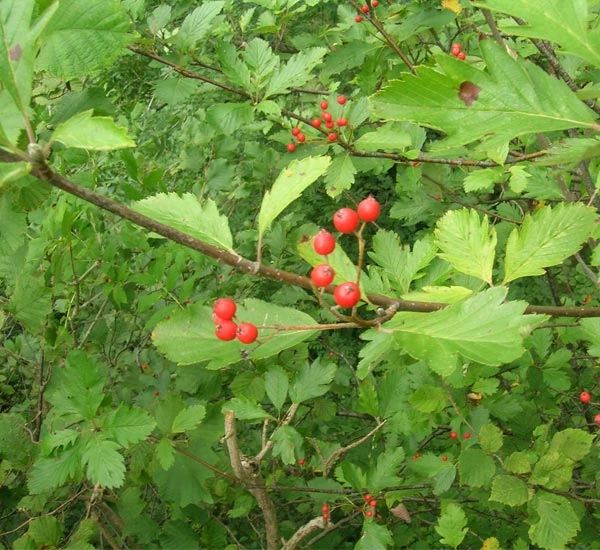
Sorbus minima is a very rare Welsh tree, endemic to the Llangattock escarpment in the Brecon Beacons. It was first found by Augustin Ley in 1893 'in great abundance' at Craig y Cilau, where 744 trees were counted in 2002, and also at Blaen Onneu where it appears to have been destroyed by quarrying. One tree is also known at Craig y Castell and 27 at Cwm Claisfer. Quarrying of the Llangattock Quarries has probably also reduced the Craig y Cilau population markedly; populations on the quarried areas are c. 40% of those on intact cliffs. None-the-less it is regenerating and spreading back, and with time may recover its former population size. It is believed to have arisen as a cross between Mountain Ash (S. aucuparia) and possibly the Rock Whitebeam (S. rupicola). It is poorly fertile.
Download publication: http://archive.bsbi.org.uk/25_4_WelshSorbus.pdf
Sorbus leyana, Ley's Whitebeam
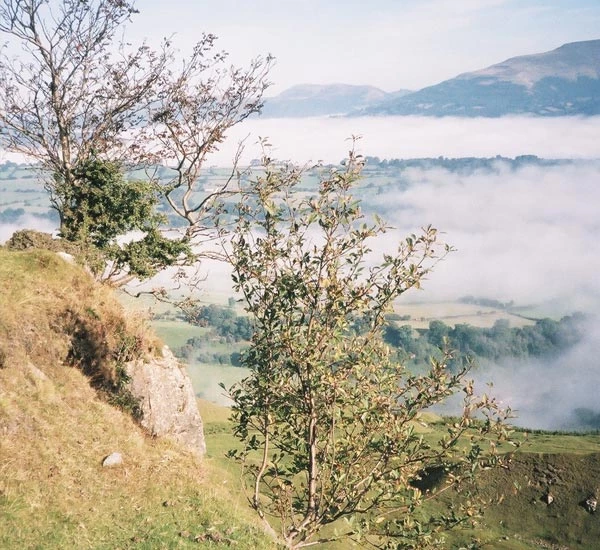
This species is only found in the wild in South Wales, on two steep limestone cliffs in the Brecon Beacons where it was first discovered in 1896. The total known population in the wild is probably no more than 16 adult trees. In August 1998 it was described as "Britain's rarest tree" and placed it in the highest category of threat: a "Critically Endangered" species. National Botanic Garden of Wales has collections in cultivation from a number of wild trees in the Brecon Beacons either as seedlings or grafted collections. Further research is being carried out into its genetic variation in collaboration with the Royal Botanic Gardens, Kew.
Download publication: http://archive.bsbi.org.uk/25_4_WelshSorbus.pdf
Sorbus leptophylla, Thin-leaved Whitebeam
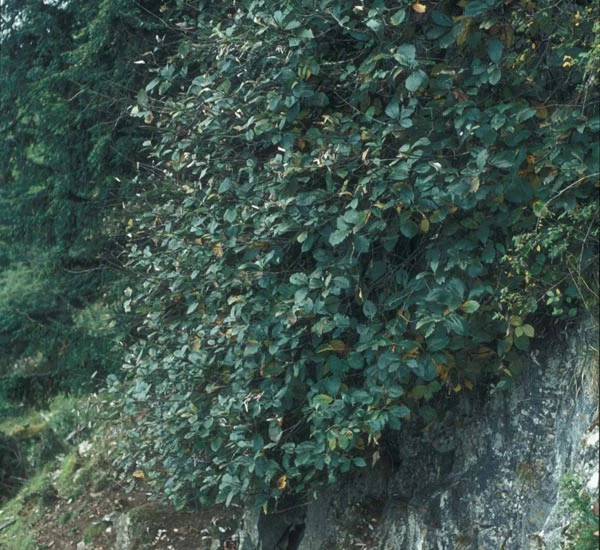
Thin-leaved Whitebeam was first described by E. F. Warburg in 1952, and is known from only two in the Brecon Beacons, Craig Rhiwarth (29 trees) and Craig y Cilau (45 trees). It is thus a very rare Welsh endemic.
It occurs on Carboniferous Limestone and volcanic rocks, usually rooted directly into crevices, or occasionally on small ledges. Like other whitebeams it varies in fruit production, 1999 being a poor year and 2000 and 2002 being good years. Most fruits contain 2 or 3 large seeds which are highly fertile. Trees previously referred to this species from Craig Breiddan in Montgomeryshire are to be described as a new species.
Download publication: http://archive.bsbi.org.uk/25_4_WelshSorbus.pdf
Hieracium tavense, Black Mountain Hawkweed
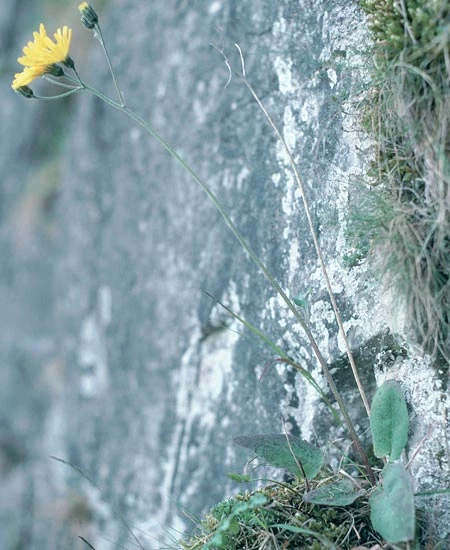
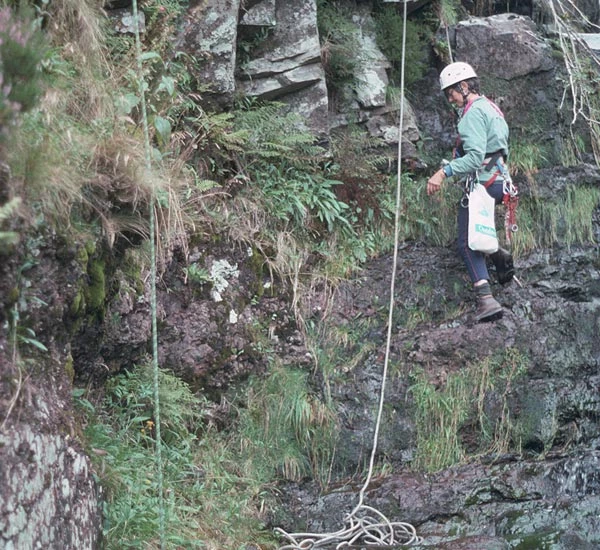
Black Mountain Hawkweed, is a very rare species endemic to Wales. It is restricted to one site in the Upper Tawe Valley, Brecon. It grows on base-rich ledges of a where thirteen plants were counted by climbing in 1998. The only real threat to its survival is a rock fall. Seed has been deposited in the Millennium Seed Bank, and it is being grown in cultivation at National Botanic Garden of Wales.
Download publication: http://archive.bsbi.org.uk/Wats23p311.pdf
Hieracium snowdoniense, Snowdonia Hawkweed
Snowdonia Hawkweed is a rare Welsh endemic restricted to Snowdonia. It was known historically from seven sites in Snowdonia, but it was last seen in 1967. After a number of unsuccessful searches it was feared extinct, but finally in July 2002 one plant was refound on a steep, north-facing, rocky cliff. Seeds were collected and 26 seedlings are now being cultivated at the National Botanic Garden of Wales.
Download publication: http://archive.bsbi.org.uk/2438Rich.pdf
Hieracium riddelsdellii, Riddelsdell's Hawkweed
Riddelsdell's Hawkweed is a very rare, Welsh endemic plant, confined to the western Brecon Beacons. It was first found in 1899. Field work in 2003-4 revealed about 870 plants in three localities, and it has either been lost naturally or destroyed in another three sites. Seed has been deposited in the Millennium Seed Bank and it is being cultivated at the National Botanic Garden for Wales.
Download publication: http://archive.bsbi.org.uk/Wats26p139.pdf
Hieracium pachyphylloides, Carboniferous Hawkweed
A review of historical data combined with field surveys were out to assess the status of H. pachyphylloides, which is endemic to the Wye Valley. It has declined from six sites to one site, and is 'Critically Endangered' under the IUCN threat criteria. The main threats are rock climbing, closure of woodland canopies and spread of alien plants.
Hieracium linguans, Tongue Hawkweed
Hieracium linguans, Tongue Hawkweed, is a very rare endemic Welsh species. It was first found in 1898 by A. Ley in the Brecon Beacons, Wales. The historical herbarium and literature records were somewhat confusing, but indicate three localities in the Tawe Valley. In 1999 and 2000, only one population of 80 plants was found, and it was not refound in the other two localities. It is a perennial which flowers in July-August, and regenerates readily from wind-dispersed seeds. Seed has been deposited in the Millennium Seed Bank and it is being cultivated at the National Botanic Garden for Wales.
Download publication: http://archive.bsbi.org.uk/Wats23p517.pdf
Hieracium cyathis, Chalice Hawkweed
Hieracium cyathis, Chalice Hawkweed, is a rare British endemic recorded from eight sites in Somerset and Brecon. Between 2000 and 2002 its sites were surveyed to establish its current status and determine its need for conservation. A total of 1304 plants were found in 8 sites. It is probably extinct in Carmarthenshire, has declined markedly at Cheddar Gorge, and may have declined at Craig y Cilau. Field, cultivation and genetic investigations of its variation give little support for the suggestions that plants from the Mendips differ from those in Brecon.
Download publication: http://www3.interscience.wiley.com/journal/119394264/abstract
Hieracium cillense, Craig y Cilau Hawkweed
Craig y Cilau Hawkweed, is a rare endemic species confined to cliffs around Craig y Cilau National Nature Reserve, Brecon in South Wales. It was first found in the 1890s and named as a variety, and was later raised to species status. In 1975, 253 plants were reported from the NNR. In June 2000, 204 plants were found. The decline might be due to differences in recording, or may be real and attributable to sheep grazing. However, another 263 plants were found in an extension of the population to the east outside the NNR. Seeds have been sent to the Millennium Seed Bank, and plants are being cultivated at National Botanic Garden of Wales.
Download publication: http://archive.bsbi.org.uk/2409Rich.pdf
Hieracium cambricogothicum, Llanfairfechan Hawkweed
Hieracium cambricogothicum has been recorded from four, disjunct localities in England, Scotland and Wales but a review of its status by Sawtschuk & Rich (2006) indicated that it was only known with certainty from its type locality in Llanfairfechan (V.c. 49), and doubt exists about the identification of material from Kent (and possibly Forres in the absence of a specimen). No plants were refound in 2004 or 2006 and, sadly, it is currently regarded as extinct in the wild.
Hieracium cacuminum, Summit Hawkweed
This is a rare endemic Welsh hawkweed which has been confused with H. siluriense. A review of the records and fresh field work showed that 240 plants are known in three sites; it was not refound in three other sites. It occurs on Old Red Sandstone cliffs and rocks in the Brecon Beacons. It is 'Endangered' under the IUCN Threat Criteria.
Hieracium cambricum, Welsh Hawkweed
Hieracium cambricum, Welsh Hawkweed, is a rare species endemic to Wales. Its three known sites were surveyed in 1998. It is probably extinct at Treorchy due to a rock fall. 38 plants were refound at Llangollen (the first time it has been recorded since 1907) and on the Great Orme, the population is estimated to be c. 300 plants. Seed has been deposited in the Millennium Seed Bank, and it is being grown in cultivation at National Botanic Garden of Wales.
Download publication: http://archive.bsbi.org.uk/Wats23p305.pdf
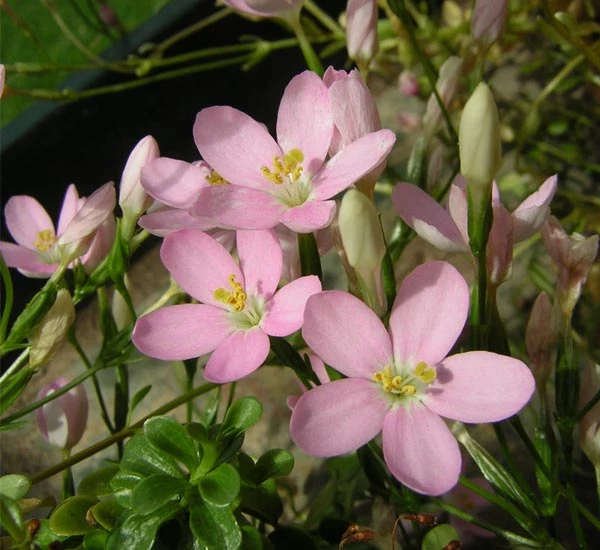
Centaurium scilloides - Perennial Centuary
Centaurium scilloides, Perennial Centaury, is a western European endemic with a very restricted distribution in the Azores, Portugal, Spain, France, England and Wales. To date, data have been compiled to provide the first distribution map of this species, field studies have been carried out on its ecology and its genetic variation is being investigated.
Download publications:
http://archive.bsbi.org.uk/25_4_RichCentaurium.pdf
http://archive.bsbi.org.uk/Wats25p275.pdf
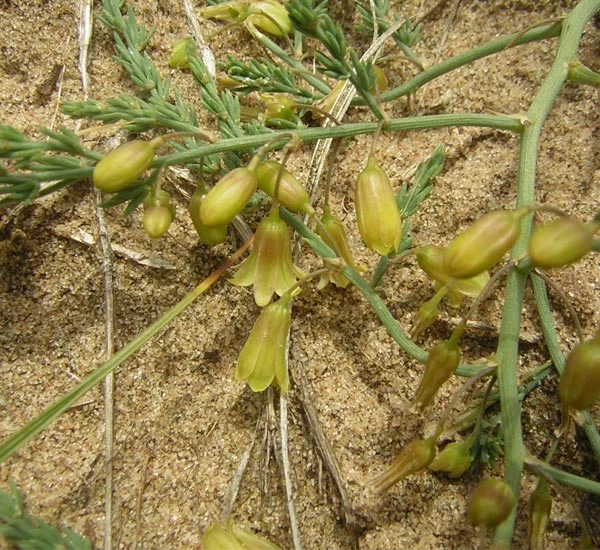
Asparagus prostratus, Wild Asparagus
Asparagus prostratus is a Red Data Book species and is listed as a Priority Species under the UK Biodiversity Action Plan. Historical records have been researched and collated with recent field surveys for Britain. It has been recorded from at least 34 sites but has not been recorded recently in six sites (18% decline). It is extinct in West Sussex and Anglesey and is on the verge of extinction in Dorset. Of the 28 extant populations, nine have fewer than ten plants and only three sites have more than 100 plants.
Download PDF Publication: http://archive.bsbi.org.uk/2414Rich.pdf
Request Publication