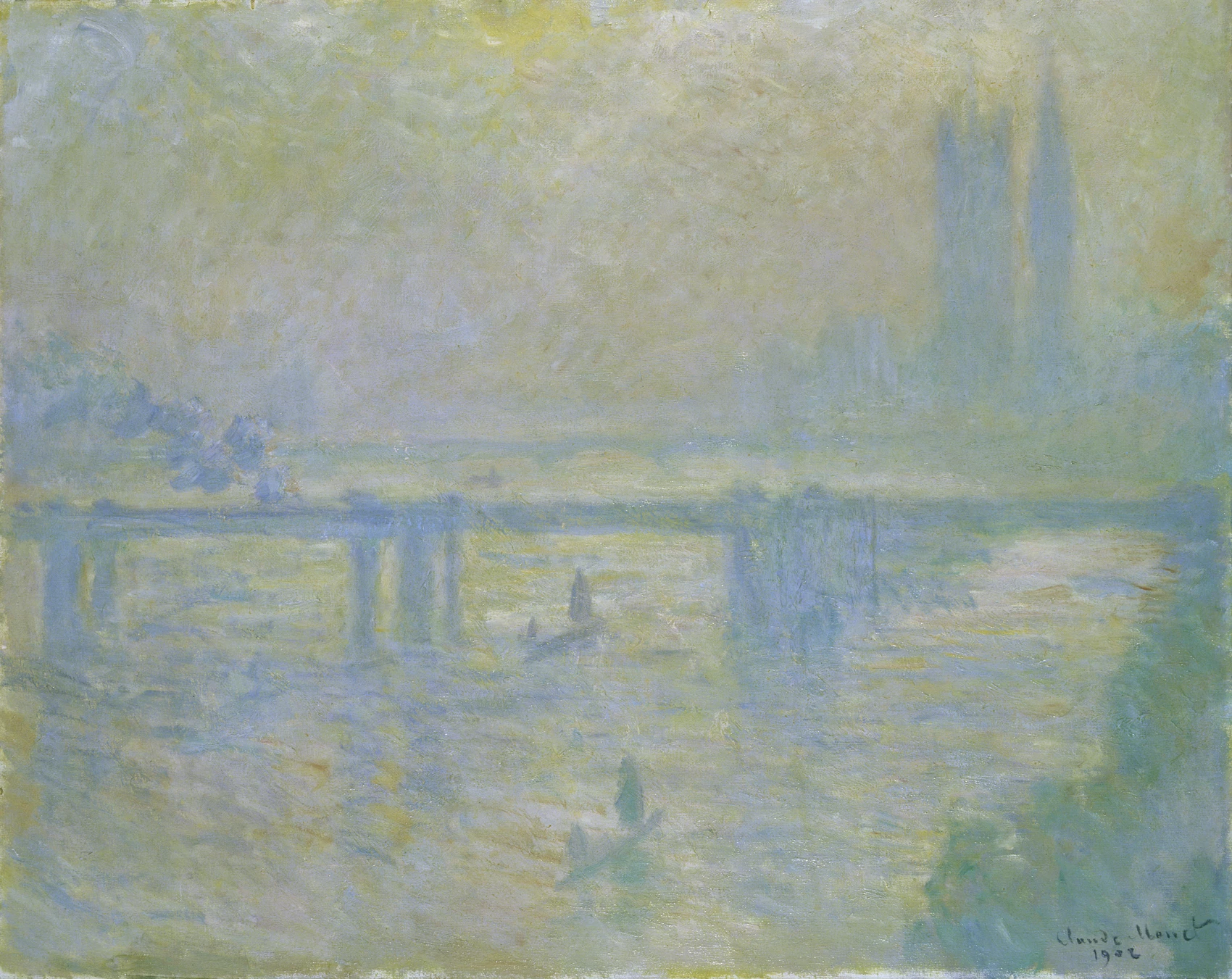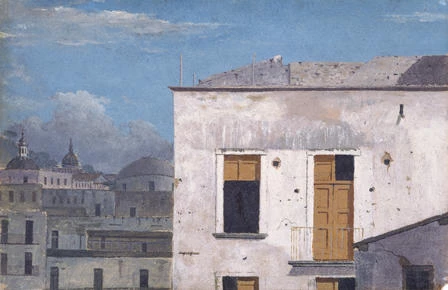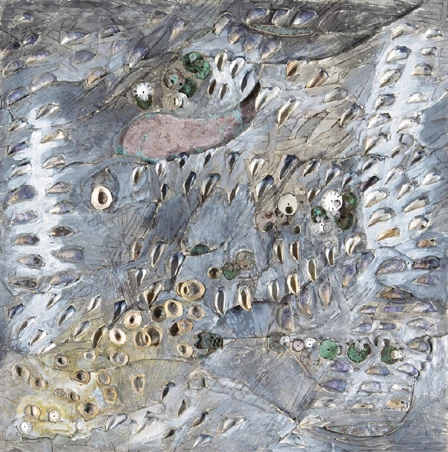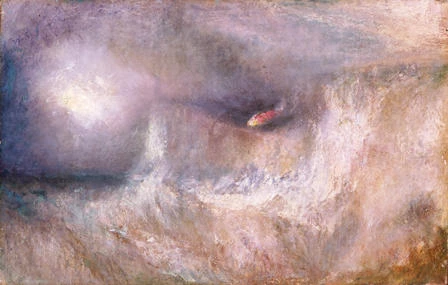
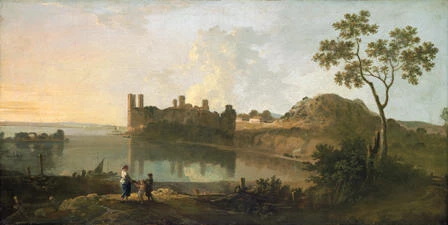
A Fake in Our Galleries? 29 June 2016 Caernarvon Castle by Richard Wilson Claude Monet, Charing Cross Bridge, 1902 Thomas Jones' 'Buildings in Naples', 1782 'The Sea's Edge', Arthur Giardelli, 1990 The Beacon Light, J.M.W. Turner A Missing Masterpiece We are always learning more about our collections at National Museum Cardiff - whether it's about the lives of fascinating sitters, uncovering hidden portraits under layers of paint, or more about the artists' journeys. This month, however, we're putting your know-how to the test - to see whether you can spot an impostor in our collection. Throughout July, we will be replacing one of our works of art with a fake, as part of Sky Arts' competition and tv show: Fake! The Great Masterpiece Challenge. Can you find the fake? We're appealing to armchair art detectives everywhere, to visit National Museum Cardiff and find the fake. A copy has been made of a great work of 'British Landscape' painting, and will be hanging in our galleries throughout July. Once you've decided which one of our works isn't quite what it seems, place your vote online - all will be revealed on Sky Arts later this year, and unveiled in a special exhibition. The Art Collections at Cardiff We have over a thousand works of art on display at National Museum Cardiff - from our famous impressionist collection, to contemporary works, installations and applied art. Entry is free, so visit us this month to find the fake. To make things a little easier, we're focussing on our landscape collections. Here are some of its highlights and hidden gems: The Golden Age of the Picturesque At National Museum Cardiff, you'll find works by master landscape painter Richard Wilson - whose amazing ability to capture scenes bathed in Mediterranean light led him to be known as the 'Father of British Landscape'. You will also find a portrait of this artist, at work by his easel, in our Historic Art galleries - painted by his contemporary, Anton Mengs. Different Perspectives: Cityscapes and Nocturnes As the landscape changes over time, so have artists' techniques and perspectives. No bigger than a picture postcard, Thomas Jones' urban scenes, painted ahead of their time in the 1780s, show snapshots of the backstreets and roofs of Naples. Jones' work appears alongside studies of nature in our Paintings from Nature gallery. Italy's cities appear in our Art in Britain around 1900 galleries, with Venice featuring often in works such as Sickert's 'Palazzo Camerlenghi', his 'Palazzo Eleanora Duse' - and Whistler's Nocturne: Blue and Gold, showing the Piazza San Marco. Painting Light In our galleries, you'll find an extensive collection of Impressionist works, from Dorothea Sharp's open-air scenes and Monet's famous Waterlilies, to post-impressionist masterpieces such as Cézanne's 'The François Zola Dam'. Arguably one of the UK's most famous artists, J.M.W Turner was a precursor of the impressionist style - capturing the bluster and chaos of a storm in works such as 'The Beacon Light', or golden sunrises and seascapes in 'The Morning After the Storm'. Three of Turner's lesser-known works, branded as 'fakes' in the 1950s, were studied in detail and recently confirmed as a genuine. These works are now proudly on display in our Victorian Gallery, alongside works by pre-raphaelite Dante Gabriel Rossetti and miniature maquettes of one of Cardiff's most famous landmarks, the castle's Animal Wall. Wales's Inspiring Landscape The Power of the Land: The Welsh Landscape gallery tells the story of Wales' changing landscape, and the way it has inspired painters, sculptors and travellers over the centuries. From the eighteenth century artists began to explore Wales in unprecedented numbers. Today Wales is still attracting artists, re-interpreting the places and paintings of the past, looking at the land in new ways. From Kyffin Williams' wild mountains to Cardiff's industrial docks, you'll find them in this beautiful circular gallery. Related Events If you'd like to take a closer look at the collection, we have free guided tours every Wednesday and Saturday at 12.30pm. Take a look at highlights including works by Cézanne, L.S Lowry, Richard Wilson and J.M.W. Turner, with our friendly gallery guides.
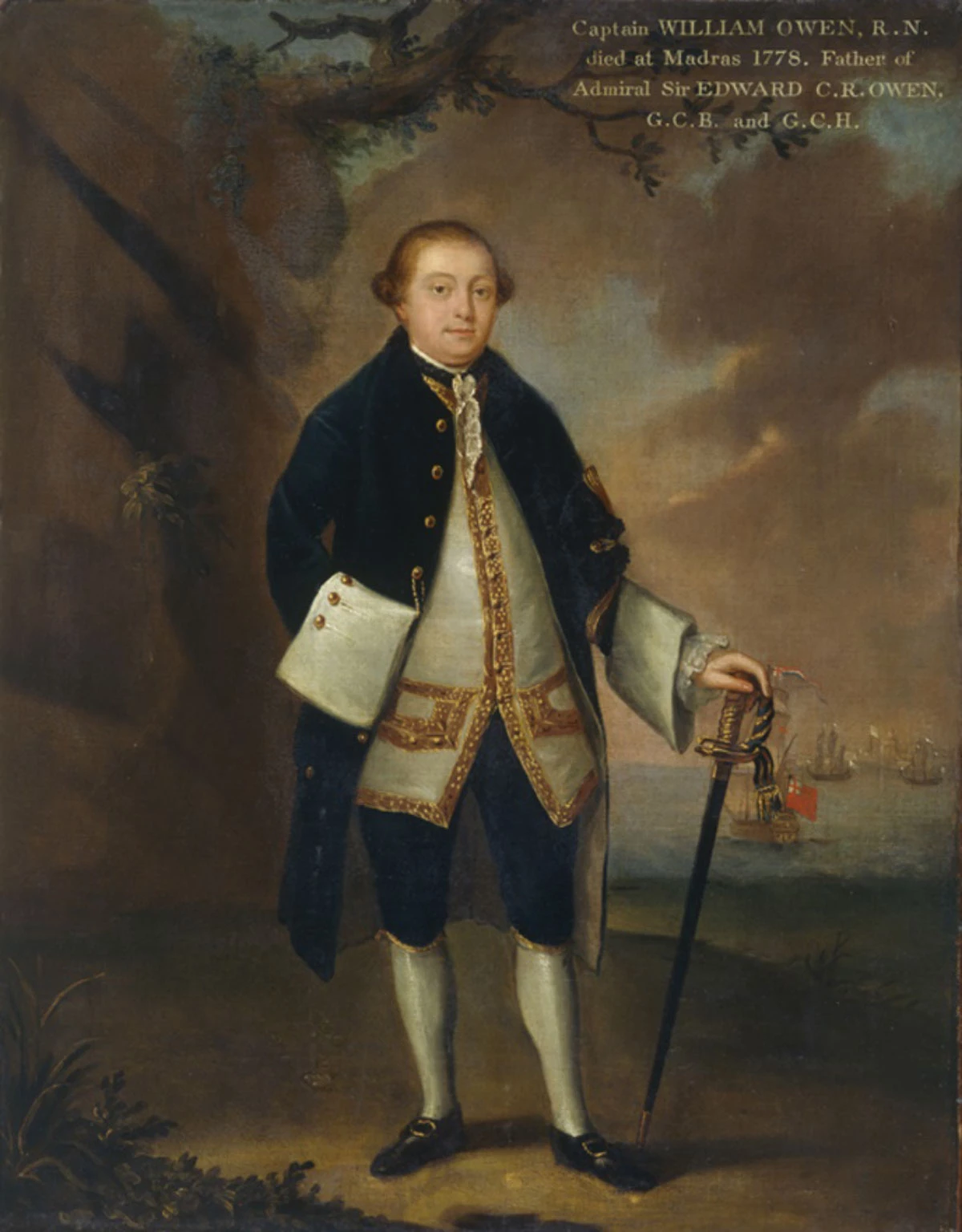
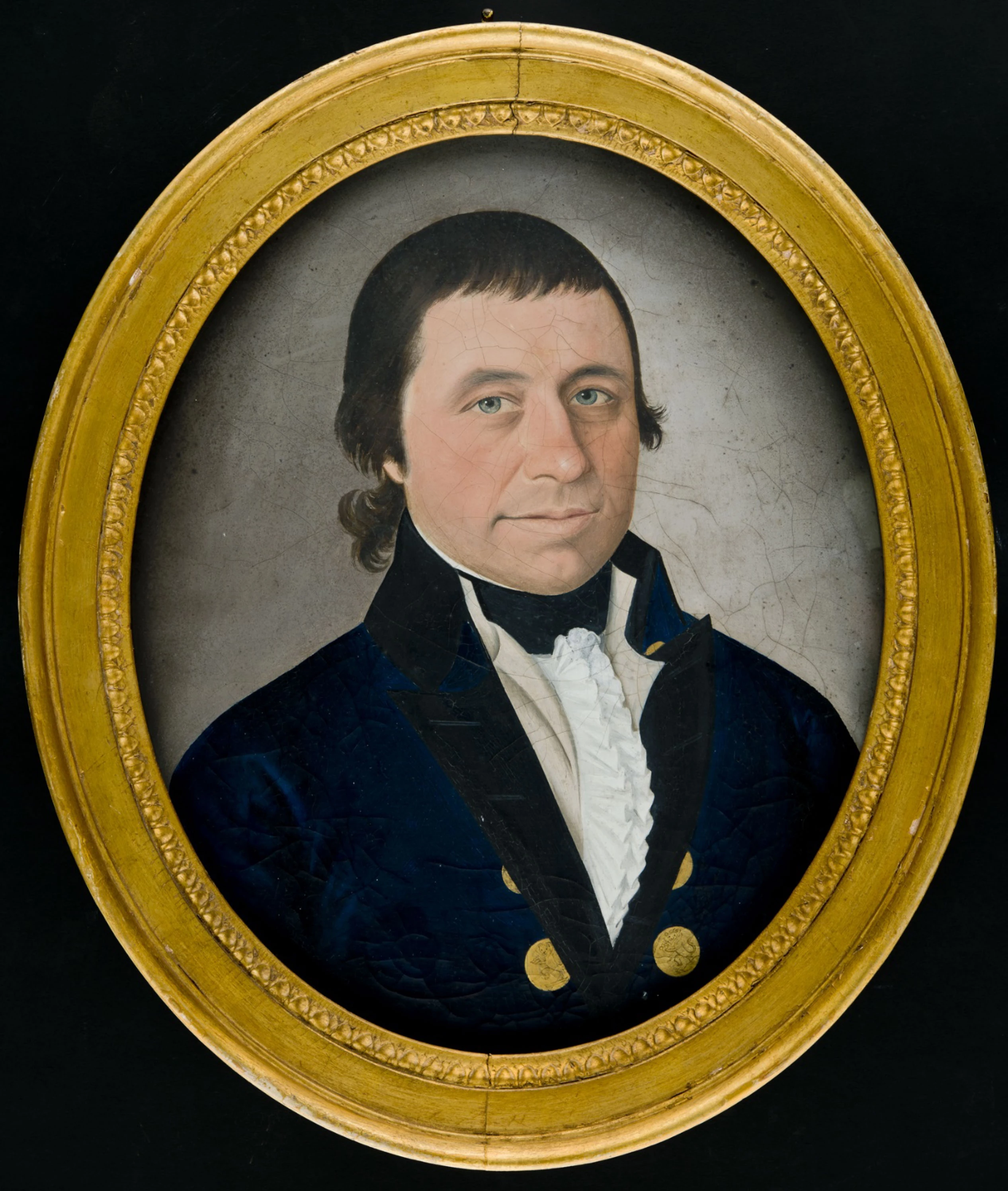
Welsh participation in the development of Britain’s maritime empire Oliver Fairclough, 27 November 2015 Two portraits illustrate Welsh participation in the development of Britain’s maritime empire. One of these, a small full-length measuring 54.5 x 42.6 cm, was painted around 1764. Its subject is William Owen (1737-1778). The other was made in Canton, China, perhaps in 1791, and is of John Jones (1751-1828), a Captain in the service of the East India Company. William Owen William Owen (1737-1778) William Owen came from a Montgomeryshire gentry family, the Owens of Cefyn-yr-Hafodau. Life at sea was dangerous, and progress up the career ladder was difficult and required influence as well as talent. However, it was a socially appropriate career for a gentleman, it required little investment, and there was the remote possibility of making a fortune from prize money. Families had to persuade a Captain to accept their son on board as ‘a young gentleman’ to build up the six years’ service needed to qualify as a Lieutenant. William’s father obtained a recommendation to the Secretary of the Admiralty who placed the boy with his son-in-law. William served in West Africa and the West Indies, before sailing for India in 1754. He was to be in India for a hectic seven years, while Britain was at war with France. William fought on land at the Battle of Plassey as well as at sea, being wounded with a musket ball. William, who was promoted Lieutenant in 1758, also took part in the blockade of the French base of Pondicherry and was again wounded in an attack on two French ships in the harbour. In his portrait, Owen is wearing the uniform of a Lieutenant in the Royal Navy (pattern of 1748-1767). Part of his right arm is missing, as he explains in an account of his services: ‘on the night of 7 Oct 1760 he [was] ordered to cut out the French ships La Baleine and Hermoine from under the guns of Pondicherry, … [when] he had the misfortune to have his right arm shot off … by a Cannon Ball’. Owen went on half-pay when the war ended in November 1762. Promotion in the Navy was slow in peacetime and in 1766 he accompanied Lord William Campbell, newly appointed as governor, to Nova Scotia. Campbell granted him an island in Passamaquoddy Bay (between New Brunswick and Maine). By 1771 there were seventy-three settlers on Owen’s island. As Britain and Spain then appeared close to war, he returned to England. However it was not until 1776 that he was recommissioned and ordered to India. Promotion followed and he was made Commander into the sloop HMS Cormorant. William did not live to see the end of that war as he was killed in a drunken accident in Madras in October 1778. John Jones John Jones (1751-1828) The subject of the other portrait, John Jones was born in Swansea in August 1751. He came from a middle-class family, and was apprenticed a merchant seaman in the West India trade, He then served on the East India Company’s ship Queen, on a voyage to Madras and China in 1770-1772. On his return he joined the Royal Navy. In 1773 Britain was at peace, and he probably did so in the hope of improving his social as well as his professional status. He was less obviously officer-class than William Owen, and served as a Master, the warrant officer responsible for navigation, before being commissioned Lieutenant in 1782 at the end of the American War. He was now out of a job and re-joined the East India Company which he served for the next fifteen years. He was 1st Mate on the Carnatic in 1786-7, and of the Deptford in 1787-9. He was then appointed Captain of the East Indiaman Boddam, making three voyages to China in 1791-2, 1793-4 and 1800-1. His private ledger survives for his first voyage in the Boddam and reveals that he invested £11,000 in goods to be sold in Madras and Canton including a pack of fox hounds, making a personal profit of nearly £4,000. He was then able to invest £7,500 in Chinese goods in Canton, which would have sold for a further profit in London. His portrait was painted by Guan Zuolin, a Chinese artist active in Canton between 1770 and 1805. He worked in a flat, clear-cut European style using oils thinned with water. In 1794 Jones bought St Helen’s House, overlooking Swansea bay, which was rebuilt for him as a neo-classical villa by the architect William Jernegan. A view of about 1800 shows it set in its own parkland, grazed by Jones’s horses, cattle and sheep. Here he passed a comfortable retirement until his death in a carriage accident in 1828. St Helen’s House
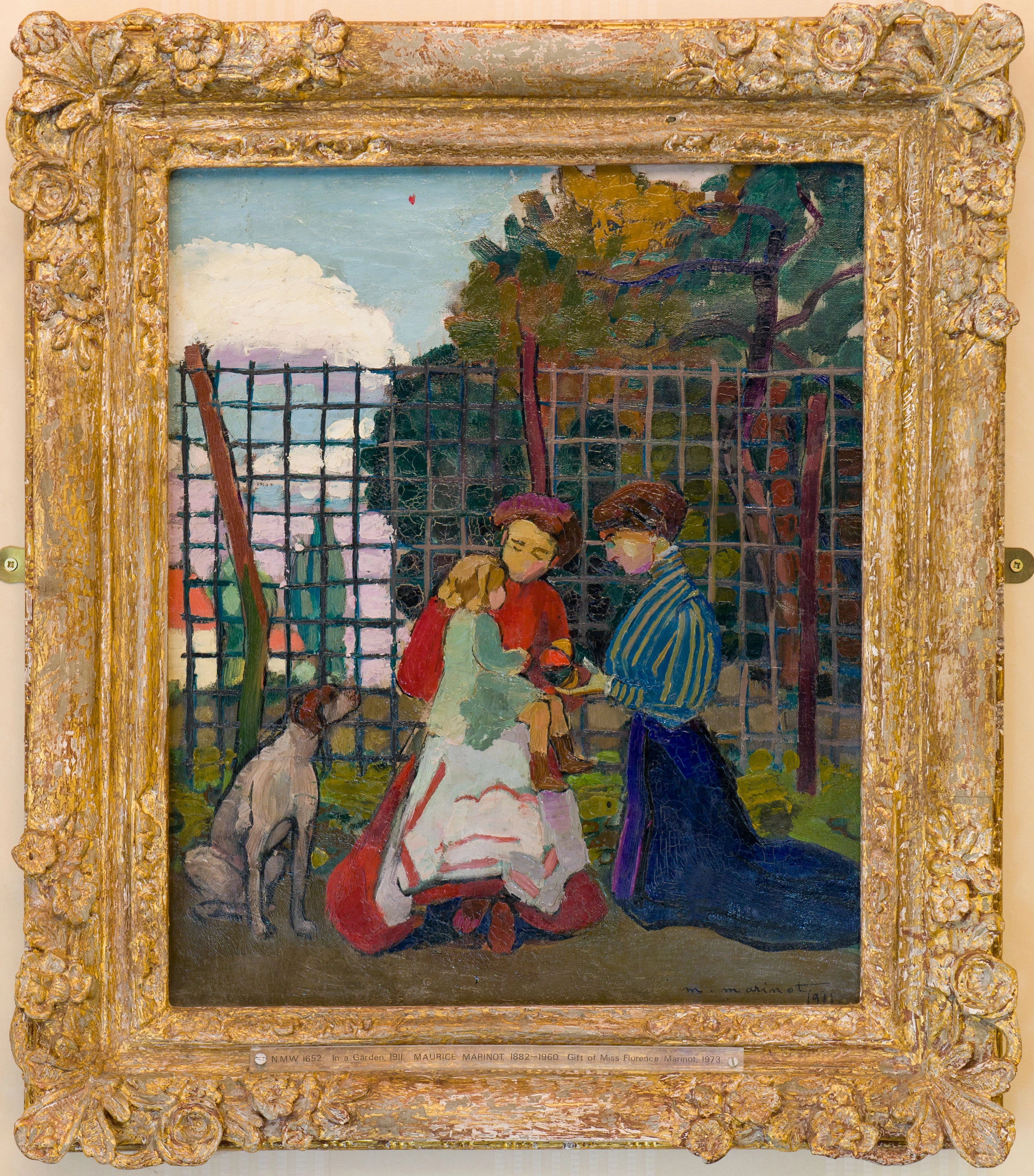
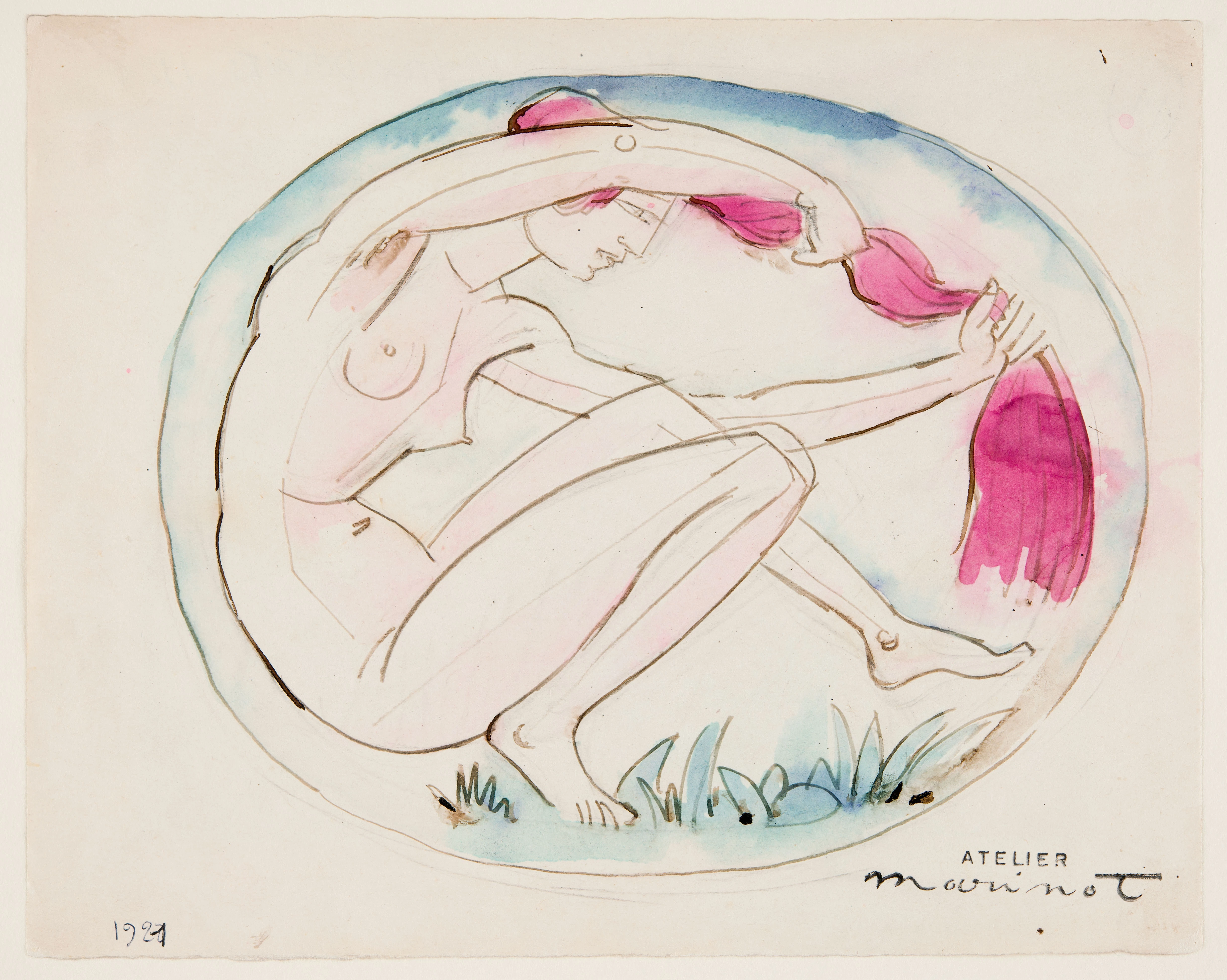
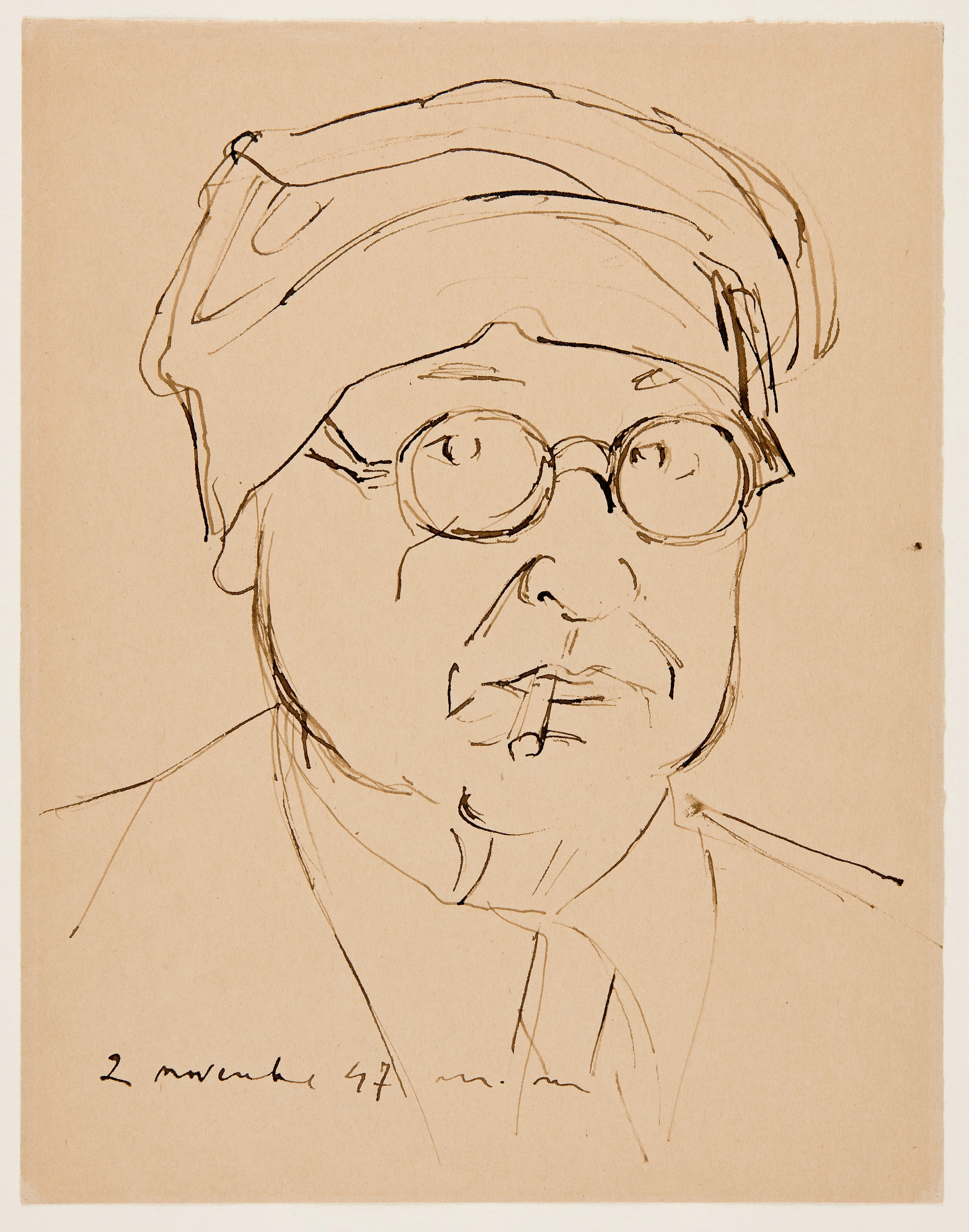
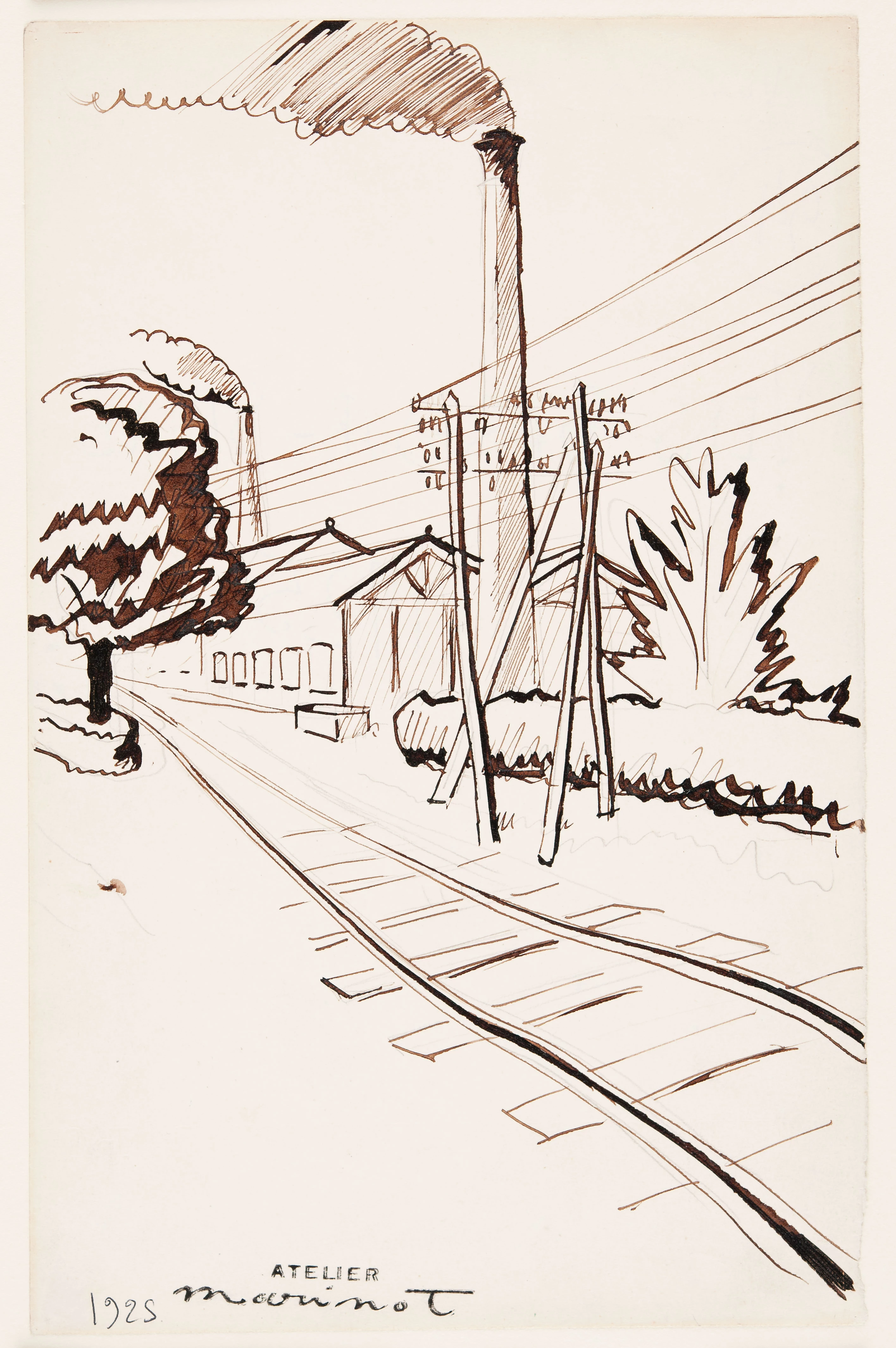
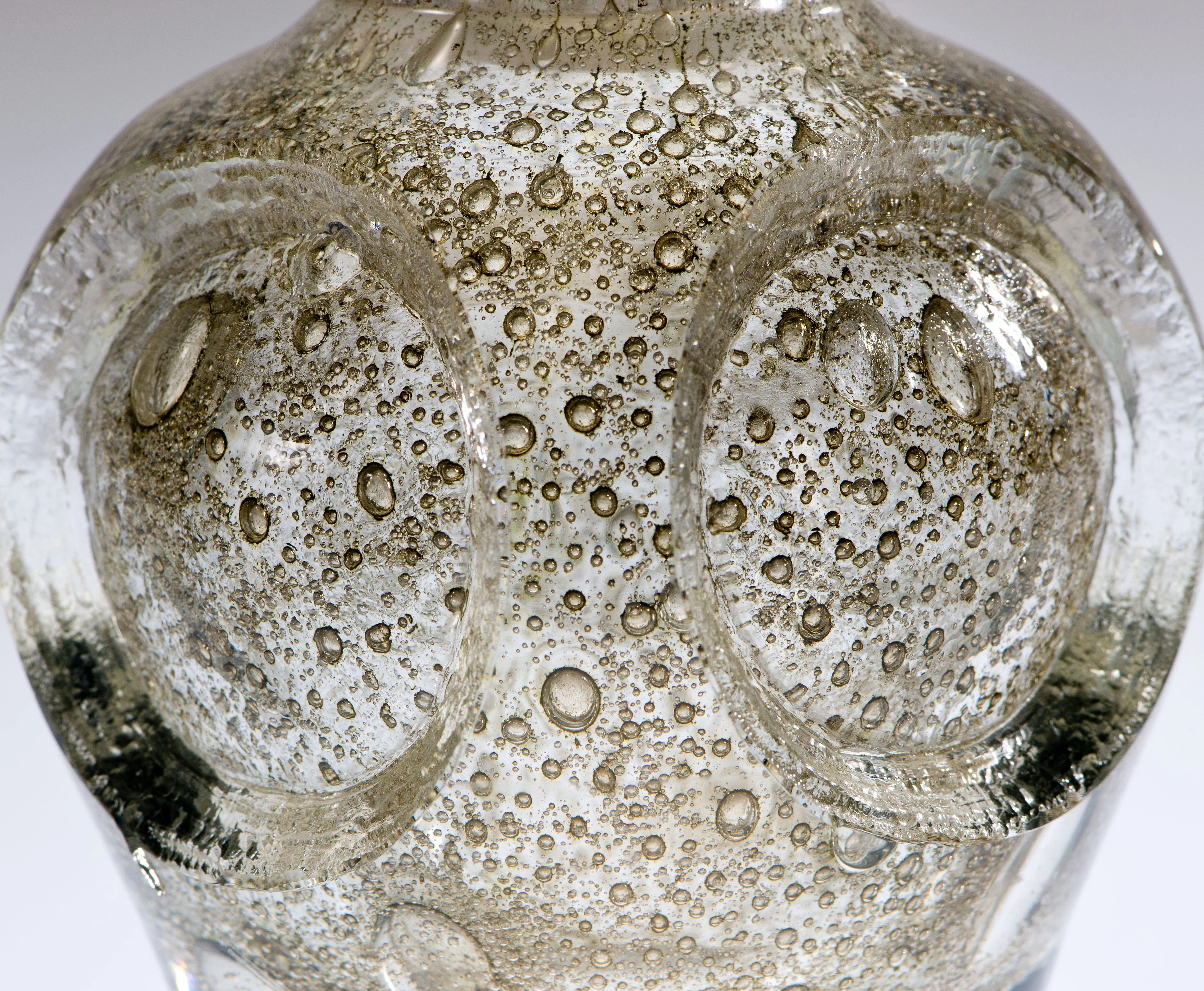
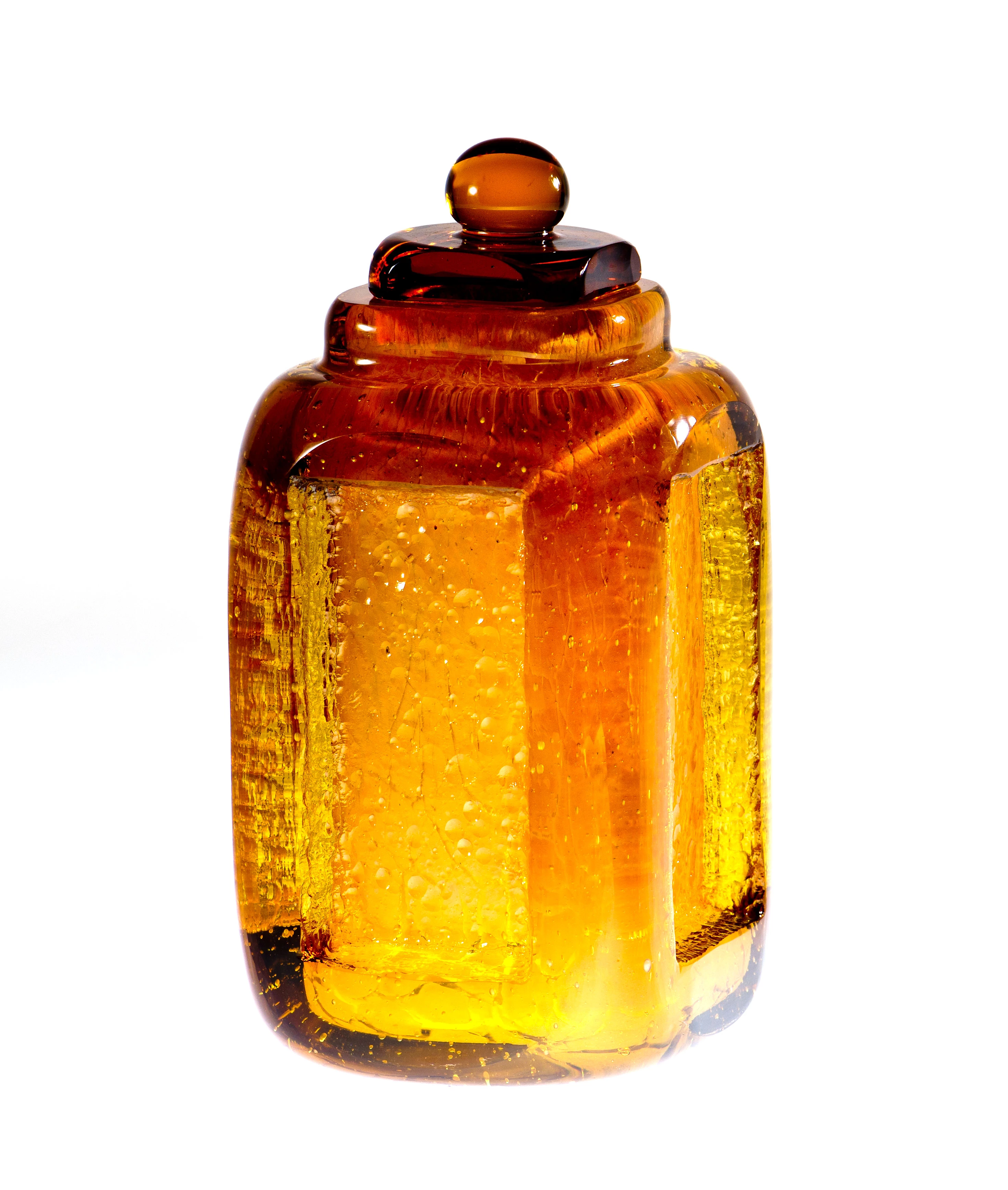
Heat, Smoke and Tears - The work of Maurice Marinot Rachel Conroy, 19 November 2015 'I have never seen anything so beautiful, so precious and at the same time so simple' (André Derain) In a Garden, 1908, oil on canvas. (DA007037) Design for enamelled decoration, 1921, watercolour, ink and pencil on paper. (DA008188) Maurice Marinot (1882-1960) is one of the most important glassmakers of the twentieth century. He was a pioneer in the development of glass as an art form. In 1944, a munitions truck exploded outside of his studio, destroying a lifetime of work and making his glass very rare. Marinot was born in Troyes, south-east of Paris and began his career as a painter. He enrolled at a prestigious Paris art school, but was expelled for being a ‘dangerous non-conformist.’ At the 1905 Salon d’automne in Paris, his paintings were shown alongside those by artists such as Matisse and Derain. Critics attacked the exhibition for its riot of colour, coining the term ‘fauves’ (‘wild beasts’) to describe the artists. In 1911 Marinot visited the glassworks of his old school friends, Gabriel and Eugène Viard, at Bar-sur-Seine. He was immediately captivated. Desperate to learn the secrets of glassmaking, Marinot persuaded the Viards to give him a work space and tools. He initially drew on his experience as a painter, decorating pieces made by others with vibrant enamels. By the early 1920s, he was sufficiently skilled to begin creating and exhibiting his own glass. Self portrait, 1947, pen and ink on paper. (DA008196) Near Bar-sur-Seine, 1925, pen ink and pencil on paper. (DA006752) "To be a glassman is to blow the transparent stuff close to the blinding furnace…to work in the roasting heat and the smoke, your eyes full of tears, your hands dirtied with coal-dust and scorched" (Maurice Marinot, 1920). Marinot made unique works, entirely by hand, that he considered as creative and meaningful as painting or sculpture. His glass is dense, bold and highly experimental, with an emphasis on form and constant interest in the effects of light. Working in glass provided Marinot with the opportunity to extend his exploration of colour – from delicate, opaque pinks and rich purples, to lucid greens and shimmering metallic. Taking inspiration from nature, his objects can seem as if they are cut from a block of melting ice, carved from granite or filled with murky pond water. Marinot’s career in glass was intense and very successful, yet relatively brief. In 1937 failing health and a catastrophic fire at the glassworks meant he stopped making after 26 years of experimentation. His extraordinary achievements continue to influence glass artists today. In 1973 Florence Marinot, the artist’s daughter, gifted works to Amgueddfa Cymru. Florence chose to donate them to this Museum due to the strength of its collection of modern French paintings. Only three other collections in the UK and Ireland hold work by the artist: the Victoria and Albert Museum, New Walk Museum in Leicester and the National Gallery of Ireland. Detail of a bottle, 1929, bubbled and acid-etched glass. (DA008203_05) Bottle and stopper, 1929, acid-etche, crackled and cased glass. (DA008205_03) With thanks to Dr P. Merat for permission to reproduce images of work. All images © Dr P Merat.
Chinese Jades at Amgueddfa Cymru Penelope Hines (Temporary Curator of Applied Art), 14 September 2015 Jade is a tough translucent material that can be made into ornaments, ceremonial weapons and ritual objects. For more than 7 millennia Jade has had a high cultural significance in China and throughout history craftsman used innovative design, technical skills to produce a great variety of objects from diverse categories in jade. The Material The Chinese term for jade "Yu" can be used to reference to any stone of beauty or value; such as agate or turquoise, which possess the five following values: Smooth texture Hardness Dense structure Translucency Variant hues However when we discuss the term "Jade" (particularly in a western museum) we are specifically discussing either of two different minerals; nephrite and jadeite. The mineral jadeite arrived relatively late to china (around the end of the 18th century) therefore the majority of what is considered to be a Chinese jade is nephrite. Jades of Amgueddfa Cymru All animals carved during the Ming and Qing dynasty came with auspicious meanings and good wishes directed to the viewer. The majority of the collection at National Museum Cardiff are such objects. Duck (NMW A 50761) This duck looks as if it is swimming. The lotus on its back and in its back are to bring the owner good fortune. Combination of the simple forms and fine details makes it typical of the late Ming period. Buffalo (NMW A 50764) Buffalo were used in houses to repress evil spirits. However due to it role pulling a plough it has also become a symbol of spring and agriculture. Those lying with their head tuned could indicate the world being at peace. Swan / Goose (NMW A 50767) We are unsure whether this is a swan or a goose, in ancient Chinese culture the swan was the heavenly version of a goose, though both are sacred animals. Lion (NMW A 50787) Lions aren’t native to china but became known through the spread of Buddhism. Usually in jade they are represented in the manner of a dog. Though more commonly they are seen in porcelain and at rest. This is a good example of jade as a material being used as a display of wealth. Water Dropper (NMW A 50777) The water dropper was used to support the treasures of the studio such as the brush, ink, paper and ink stone. These pieces were used as early as the 13th century however were for more widely known during the Ming and Qing period. The collection of Chinese jade in Europe was scarce before the 19th century. Really it seems to have started after the exhibition of jades at the crystal palaces great exhibition. The first pieces to enter the collection were for the turner house collection presumably acquired by the galleries 1st patron John Pike Thomas in the 1800’s. Primarily though, they come from the David Bertram Levinson bequest in 1967. Little is known about the provenance of the jade but it’s likely they are all from the 1800s and 1900's. Article written up from talk given on Chinese Jades, 15th May 2015. Bibliography Books Lin, J C S. The Immortal Stone: Chinese Jades from the Neolithic Period to the Twentieth Century. The Fitzwilliam Museum, (Scala Publishers, 2009). Wilson, M. Chinese Jades, (V&A Publications, 2004). Articles/ Chapters Nichol, D. 2010. Chinese Jade from the National Museum of Wales Collection. National Museum of Wales Geological Series No 2x, 000pp. Websites Amgueddfa Cymru Art Collection Online
John Dillwyn Llewelyn — Welsh Pioneer Photographer Mark Etheridge, 21 April 2015 The John Dillwyn Llewelyn Collection at Amgueddfa Cymru – National Museum Wales contains some of the earliest images ever taken in Wales. The collection comprises of approximately 850 photographic prints (mainly salted paper), 230 Calotype paper negatives and 160 Collodion glass negatives. It also includes some documents and photographic equipment. As well as negatives and prints taken by the Llewelyn family, the collection also contains many prints by other photographers (including some by Calvert Richard Jones and Roger Fenton) that were collected by the family. All the photographs and negatives from the John Dillwyn Llewelyn Collection can be viewed on Amgueddfa Cymru’s Collections Online catalogue. John Dillwyn Llewelyn (1810 – 1882) John Dillwyn Llewelyn was born at The Willows, Swansea on 12 January 1810. The family had lived at Penllergare (four miles north of Swansea) since 1817, however on coming of age John inherited this estate from his maternal grandfather and took on the additional surname Llewelyn. It was at Penllergare where many of the photographs in this collection were taken in the 1850s. On 18th June 1833 John married Emma Thomasina Talbot, the youngest daughter of Thomas Mansel Talbot of Margam and Penrice. Importantly Emma was first cousin to the pioneer photographer William Henry Fox Talbot who contended with Daguerre in 1839 for the title of inventor of photography, and who invented the negative process. He died on 24 August 1882 at Atherton Grange, his London home, and is buried with his wife Emma at Penllergare. Collodion glass negative of John Dillwyn Llewelyn, c.1853 Collodion glass negative showing the south front of Penllergare House, 1858 Scientist, Botanist & Astronomer John was from a very wealthy background, his father Lewis Weston Dillwyn managed the family-owned Cambrian Pottery in Swansea. This meant he was in the very lucky position of being able to pursue his interests in science, botany and astronomy without having to work. He was a gifted amateur scientist and a member of the Royal Institution of South Wales. He built an orchid house and observatory (which still stands) in the grounds at Penllergare . Salted paper print showing a vase of roses on the porch at Penllergare House, 1850s Calotype paper negative of the observatory at Penllergare, 1850s Pioneer Photographer With such an interest in science, and with his wife’s family connections to Fox Talbot it seems natural that John took up photography almost from its inception in 1839. However he wasn’t very successful at this point with either Talbot’s process or Daguerre’s. Unable to overcome some of the technical difficulties he gave up and didn’t return to photography until the early 1850s. Most of the collection the Museum holds dates from the 1850s. He was a founder member of the Photographic Society of London (which later became the Royal Photographic Society), and in 1853 he attended the inaugural meeting. He exhibited regularly in the early exhibitions of the Society as well as in Dundee, the Manchester Art Treasures exhibition and Paris exhibition in 1855. John was especially talented at capturing fleeting moments, such as waves, cloud movement and steam. At the Paris exhibition in 1855 he was awarded a silver medal for his ‘Motion’ series, a series of four images - breaking waves in Caswell Bay, sailing ship off Caswell, the steamer JUNO blowing off steam at Tenby, and clouds over St. Catherine’s, Tenby. This Collodion glass negative is from the ‘Motion’ series showing the steamer JUNO at Tenby, c.1855 Collodion glass negative showing John with his calotype camera in 1853 This photograph was made using the Oxymel process. It was taken on 15 March 1858 at 1pm with an exposure of 15 minutes. It shows Swansea from St. Thomas, and sailing vessels can be seen in the background. Invention of the Oxymel Process His invention of the Oxymel process in 1856 was a development of the collodion process which used a solution of acetic acid, water & honey to preserve images. This meant that glass negatives could be prepared in advance and exposed in the camera as required. As a result landscape photographers no longer needed to carry around portable laboratories and darkroom tents. The Illustrated London News in 1856 wrote that: “The plates may be prepared at home and a boxful taken out and think of this ye tourists, as you travel along and a fine prospect meets your eye you have nothing to do but to stop your carriage, get out your camera, and in a few minutes you may secure a picture, drawn by Nature herself, that would have taken you hours to sketch." Salted paper print showing John with all the apparatus needed to take a collodion negative Is this the first ever photograph of a snowman taken in Wales? This photograph was taken about 1853/54 and is probably by Mary Dillwyn or Thereza Llewelyn. The Llewelyn Family John and Emma had seven children, six of whom survived into adulthood. Various members of the family seem also to have been interested in photography. His daughter Thereza took a number of the images, and we know that both Thereza and John’s wife Emma also helped print some of his photographs. John’s youngest sister Mary Dillwyn was also an early photographer, and is generally regarded as the first woman photographer in Wales. This photographs shows the Llewelyn children having a picnic on the Goppa near Swansea in 1855. It is one of a series of photographs of the children taken by John on the 23rd September each year for his wife’s birthday. The Historic Photography Collection Further Reading Penllergare A Victoria Paradise by Richard Morris, 1999. The Photographer of Penllergare A Life of John Dillwyn Llewelyn 1810-1882 by Noel Chanan, 2013.