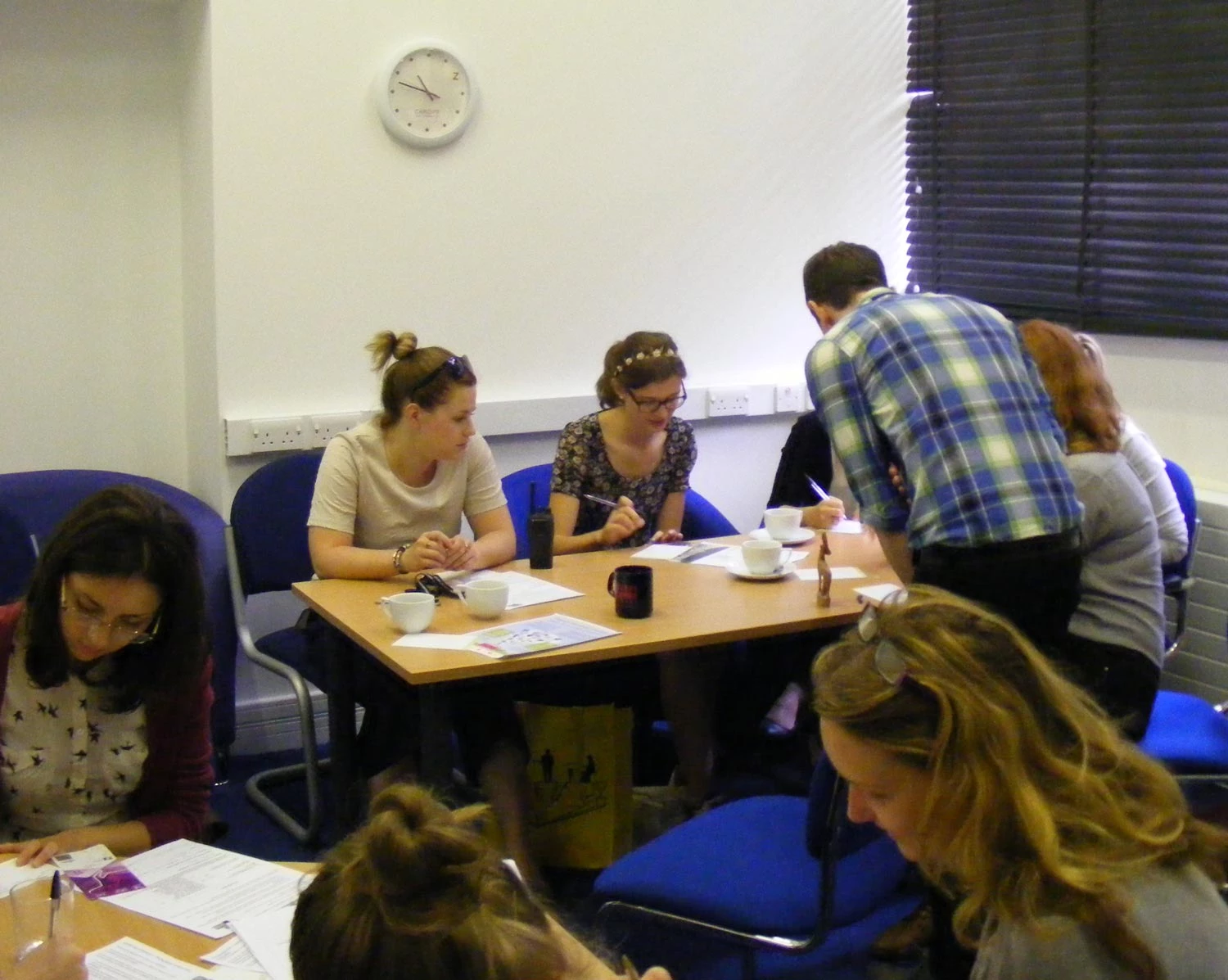
#fflachamgueddfa #popupmuseum Heledd Fychan, 2 September 2014 Hello again!Over the weekend, amidst the armed police and large NATO wall, the second pop-up museum workshop was held. The aim of these workshops is to find content for the pop-up museum being created at the Museums Association Conference in October and as part of the Welsh Museums Festival. The pop-up is being created with staff from the Cardiff Story Museum, Amgueddfa Cymru- National Museum Wales and the Heritage Lottery Fund with content coming from anyone who has a story to tell about Cardiff.This time around we tried a different approach and held drop in sessions rather than a 2 hour workshop… Sadly it was a bit of a quiet day. Despite that, we did get some great stories. We heard from a busker who hadn’t been to Cardiff on a Saturday for 20 years but was back for a wedding, and from a man who remembered coming to Cardiff for work and ended up being a regular at the Vulcan pub.The problem we found with the drop in session is that people did not have objects and if they did, they were not prepared to leave them. This meant that at the end of the 2 hours, we didn’t have a pop-up museum, just a collection of stories. You live and learn!The next session is going to be on a Thursday evening, 11th September between 6 and 8pm at Cardiff Story Museum so you can come along and do some late night shopping or have a nice dinner afterwards. We’ll be holding it as a 2 hour workshop again so we have a great looking museum at the end of it.We hope you can make it to one of our future sessions.Contact Arran Rees on Cardiffstory@cardiff.gov.uk or 02920 788334 to find out more.
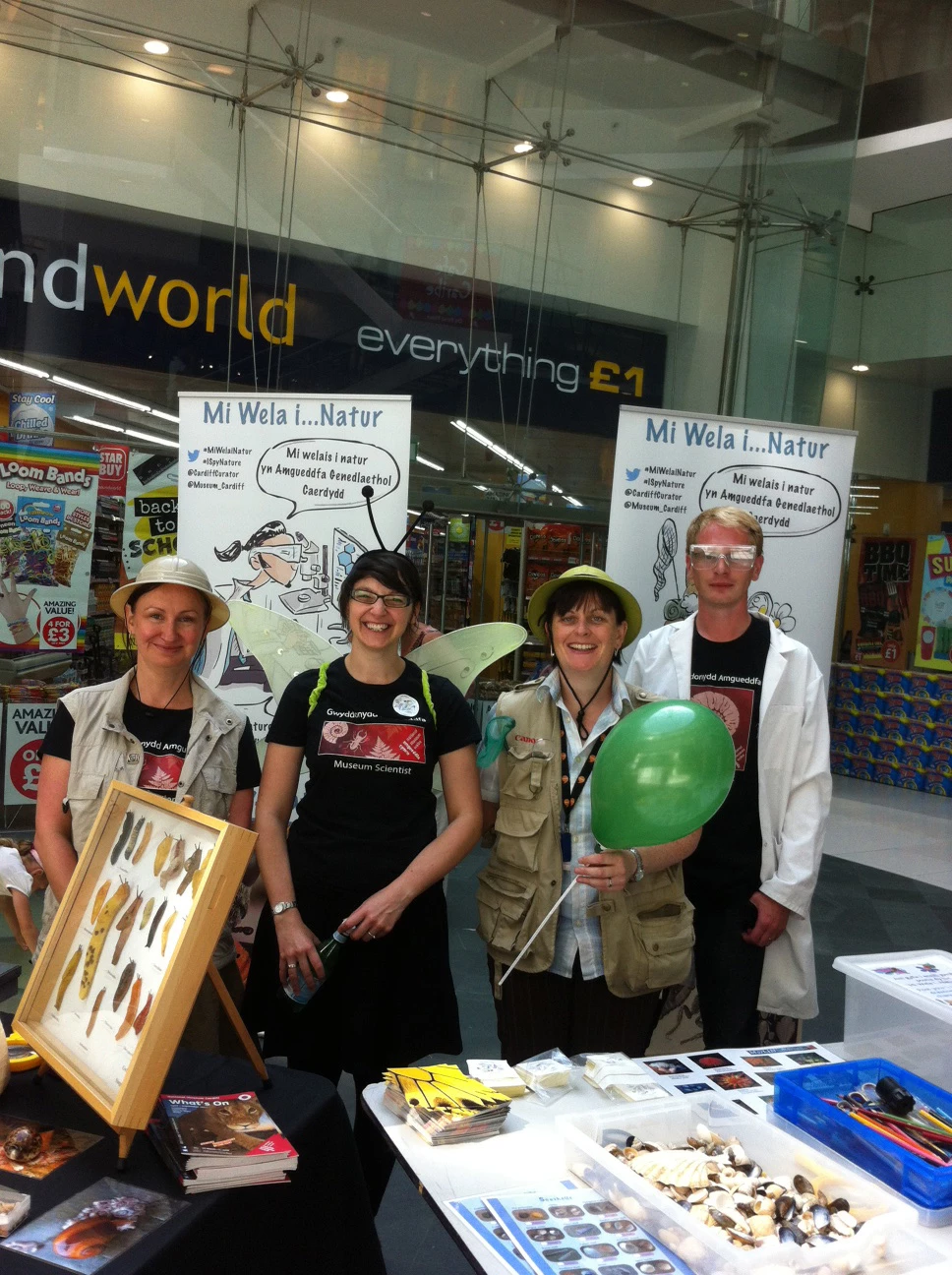
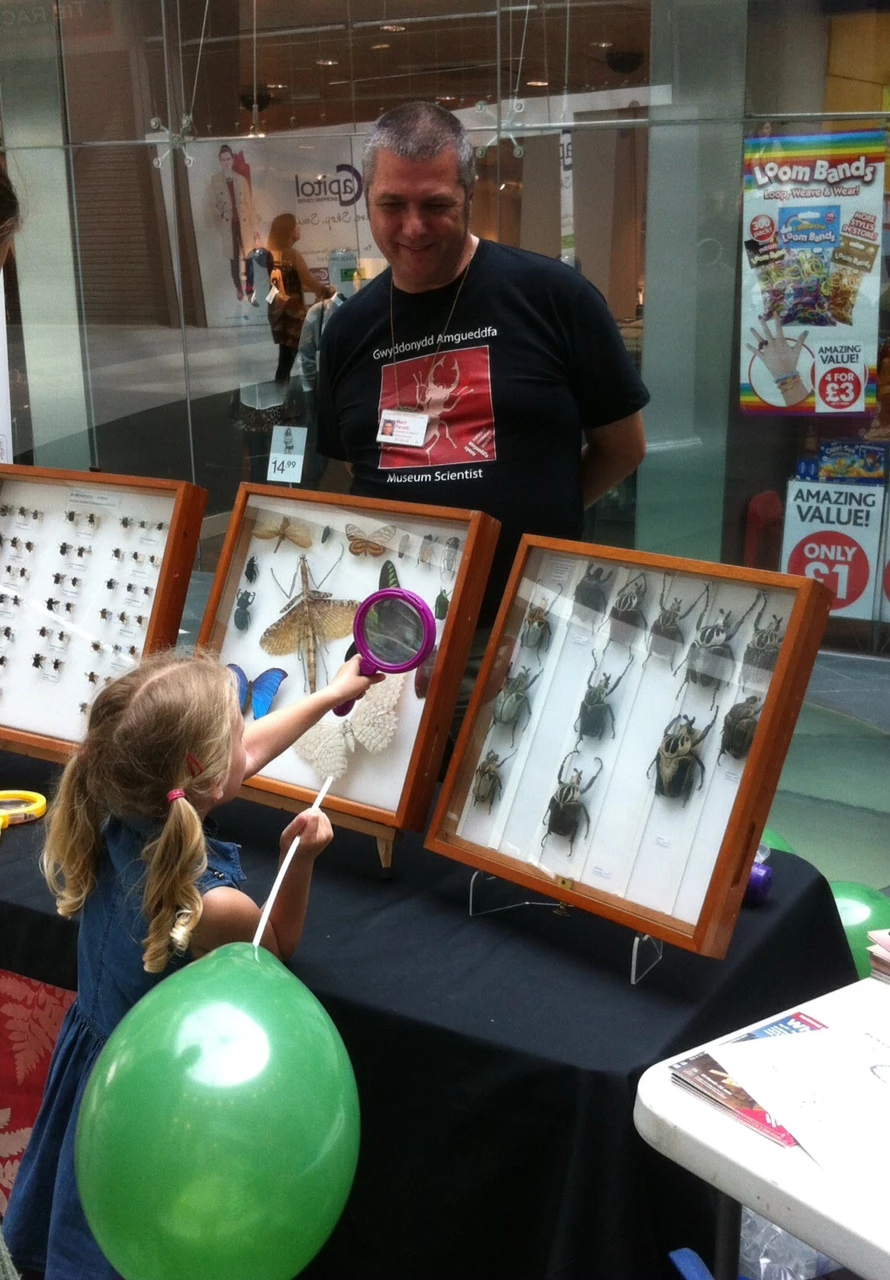
Shells, Scorpions and Shopping Centres Sara Huws, 20 August 2014 I started out writing a long meandering post about galleries, but what I came to say is this: I've really enjoyed the I Spy Nature exhibition at National Museum Cardiff, which runs until April 2015. Each time I've gone down to see it, the place has been full of families, conversations, and children dressed up as bugs and scientists, hopping from display to display. I snapped the picture below at one of our interactive stations, only just avoiding the lunchtime rush (and sticking out my elbows to maintain our younger visitors' privacy!) I Spy... Nature gives you a chance to see the world as seen through the eyes of a bat, a scientist, or a fly. Provided you're under 10, you can even to dress up like one as you explore the creepy-crawly specimens, 3D printed corals, interactive quizzes and activities. The giant, interactive microscope screen mentioned in David's post can be found in a beautiful cabinet of slides. For those of you who prefer 'the real thing', there's also a working laboratory microscope, with a spinning table of fascinating slides to choose from.The I Spy... team have also been taking the show outside to different places, bringing their amazing collection with them. For example, here's @CardiffCurator with a curious object at the Eisteddfod: Mae @CardiffCurator wedi denu lot o sylw gyda'i chragen enfawr ar stondyn @AmgueddfaCymru yn yr @eisteddfod heddi! pic.twitter.com/cxsOTVhg7r — Gareth Bonello (@ghbonello) August 7, 2014 The I Spy... pop-up museum will be, er, popping up, for one last time this summer. Catch them at the Capitol Centre in Cardiff between the 28th and 30th of August. In amongst the handbags, sandwiches and end-of-season sales, you'll find scorpions, creepy-crawlies and a seashell that's bigger then your head. Pop down to see them between 11am and 3pm to see what you can spy! We are here @Capitol_Cardiff with our pop up #IspyNature exhibition Come and meet our scientists @Museum_Cardiff pic.twitter.com/3YikdnBPfp — Cardiff Curator (@CardiffCurator) July 24, 2014
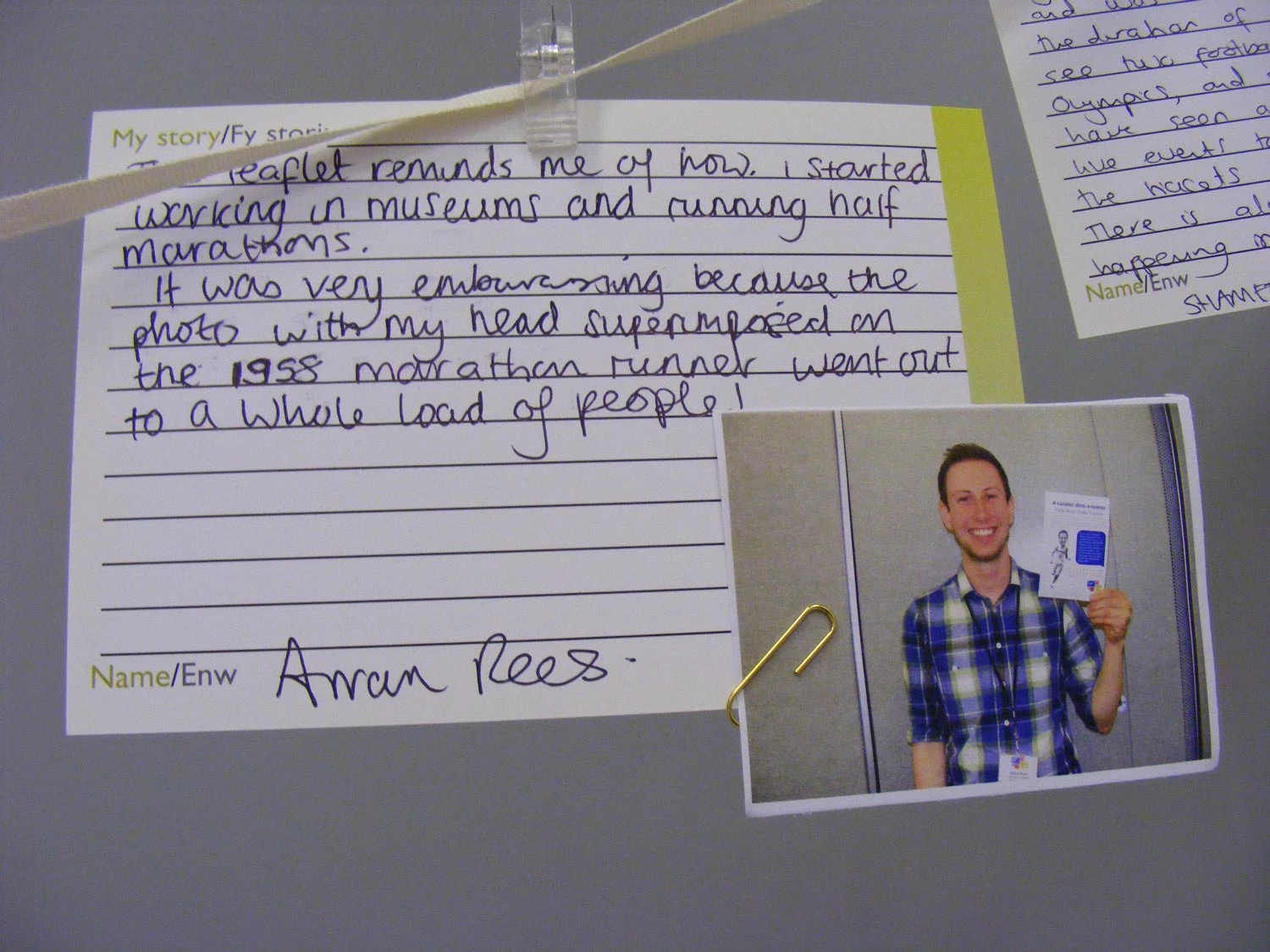
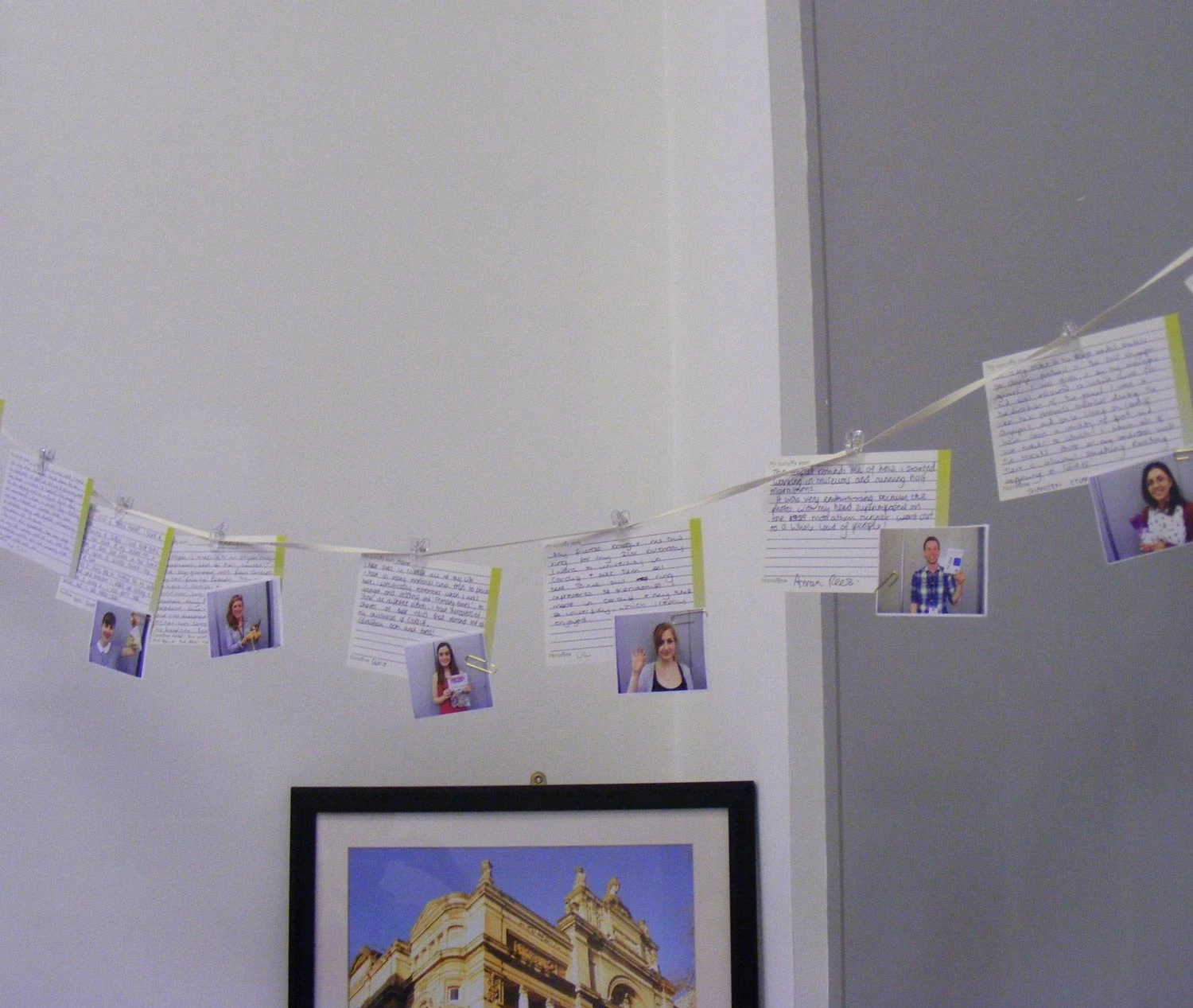
What’s your Cardiff Story? Sioned Hughes, 18 August 2014 #fflachamgueddfa #popupmuseumThe first workshop to create content for the pop-up museum at the Museums Association Conference in October at the Wales Millennium Centre was held today at the Cardiff Story Museum. Staff from the Cardiff Story Museum, Amgueddfa Cymru- National Museum Wales and the Heritage Lottery Fund came together with a group made up of National Museum Wales and Cardiff Story Youth Forum members and volunteers to test the processes that are needed to create a pop-up museum.Participants agreed that using Cardiff as a theme was a good idea. What is your Cardiff story? Or what does Cardiff mean to you? provides opportunities for people to give their opinion about Cardiff – the capital city of Wales, whether they’ve visited before or not. It includes those who are Cardiff born and bred and those who’ve stepped off the train for the first time; delegates at the Museum Association conference and families visiting the Wales Millennium Centre as part of the Welsh Museums Festival.A conveyer belt of museum processes was set up with everyone taking turns to write text, photograph their object, be photographed themselves and be filmed talking about their Cardiff story. In one hour, we created a mini museum in its most basic form. 12 objects, 8 stories, 7 voxpops, and 12 photographs all saying something different about Cardiff and what it means or has meant to the participants today or in the past.Arran Rees, Curator of collections at Cardiff Story kicked off the session by showing his chosen object and sharing his Story. Everyone joined in and within 30 minutes, a variety of different objects ranging from Welsh cakes to a fossil revealed something about Cardiff. One participant used Welsh cakes to show her fondness of the stall in Cardiff Market and how she identified with Cardiff and Wales by getting to like Welsh cakes even though she hated dried fruit. Another object was a ring that was a symbol of friendship and good times at Cardiff University. Another contributor told of her experience as a performer in the Cardiff Mardigras in 2013. Everyone wanted to read other people’s stories and the objects inspired discussion about Cardiff – good and bad, past and present. The session was incredibly useful. The group confirmed that a broad theme is better, more inclusive and has more potential to inspire diverse responses than something too specific. Simple low tech methods work, and can be used to create interest and discussion – even when technology lets you down.Now that the method has been tested and some ideas put into practise, we are ready for the next workshop. This will be an open workshop again at the Cardiff Story, 30 August 11am – 1pm. Come along and share what Cardiff means to you.Contact Arran Rees at the Cardiff Story for more details:Cardiff cardiffstory@cardiff.gov.uk02920 788334
I-Spy Micrarium Touch Screen (VADU part II) David Thorpe, 12 August 2014 There is an exhibition showing at National Museum Cardiff called: I-Spy…Nature (until April 2015). One of the touch screens (picture 1) focuses on a selection of diverse, interesting and beautiful biological and geological slides from the Museum’s Natural History Collections. This blog is about the small aspects of the touch screen that I was involved with; plain and simple. Resources & Outlines One general overview image of 36 slides 12 very high resolution images of some of those slides 27 inch touch screen Complement an actual Micrarium, which would be displayed neatly above the touch screen Incorporate a Victoriana style Target audience: young folk FlourishesThe high resolution slide images were always the prize, therefore it seemed obvious to sort out the zoom features first. Using the Javascript version of Zoomify (other javascript frameworks are available) gave us a good foundation to work on. We just needed to tap into their Zoomify Javascript code a little, then add our own layer of Javascript and graphical flourishes to make the design fit in with the exhibition outlines. All the controls were laid out in plain sight, hopefully to reduce any learning curve when approaching the interactive; and since the touch screen is quite large (27 inches) we had the space. Five additional features were added to the zoom screen (picture 4): Zoom controls Navigation controls Home button Information button Change language (English/Welsh) n.b. where possible I tried to avoid using words to describe button functions, hence why the home button is only an image, but this idea fell down a little when it became clear you couldn’t avoid a word or two to help the visitor work out what specimen they were observing.Into the Arms of a MicroscopeOnce or twice someone may have caught me saying things like: “Plagioclase Feldspar” or “Olivine”. Anyhow, part of the fun with looking at slides is the process of selecting a new slide, I thought so anyway - you were never sure what would be on the other side of the glass. I wanted to avoid the conventional method of changing between images, which is usually to include a ‘next’ and ‘previous’ button; so tried to incorporate some of my vague science memories with a quick reconnaissance mission (picture 5) to see the microscope that was being prepped for the exhibition. Since there were 36 lower resolution images on the home screen, but twelve high resolution images on the slide selection screen, it gave some space to move a simple microscope stand into view, which provided the excuse to animate the microscope arms and float the slides back and forth. The iris transition between the microscope slide view and the zoom view is loosely based on the idea of looking down a microscope eyepiece. Intermittent ContactThe interactive was built on HTML and Javascript with animations mainly driven by CSS. Due to the amount of images used in this interactive (up to 120MB), the project was exported from Amgueddfacms CMS into a standalone ZIP file then installed onto the exhibition PC - this improves the interactive response times, since it doesn’t have to wait for any image files to download over a network connection. We’ve been using Firefox for a while as its platform independent and has neat little add-ons (R-Kiosk and Block Site). In this case, the operating system is Windows 7, with a locked down user account which only has access to Firefox and the touch screen drivers. Usually we use Google Analytics to record button events, to give us an indication of how much the interactives are being used, but Google Analytics is designed to work with regular domain websites, which is not the case when running locally from simple hard drive files - therefore the button events are recorded by the web server listening to AJAX calls from the kiosk. Video Demo:I've included a short demo video for posterity:
#popupmuseum 30 July 2014 A partnership between the Cardiff Story Museum, Amgueddfa Cymru- National Museum Wales and the Heritage Lottery Fund is seeking to create a pop-up museum steered completely by members of the public who have something to say about Cardiff.The themes, content and display will be decided by the public and will be created and displayed at the Wales Millennium Centre from the 9 to 12 October. Anyone in the locality will be able to come and either see or help put it together, and will also have the opportunity to put their own object or story on display!Over the next two months we will be hosting a number of workshops for people to see how they can become involved, and to find out how a pop-up museum can actually work.The workshops will be held at the Cardiff Story Museum on: Saturday 30th August, 11am – 1pm Thursday 11th September, 6pm – 8pm Saturday 27th September, 11am – 1pm We will be blogging and tweeting throughout the creation of the pop-up, so you can get involved wherever you may live and keep up to date with the progress and some of the stories being shared by Cardiffians and anyone with a Cardiff story to tell. #popupmuseum