Collections & Research

The Pin Lifting Challenge. Excavating Roman objects from a soil block

Penny Hill, 24 January 2012

Everything has now been recorded, so the next step is to lift the pins! The decorative pins were once attached to an organic material, possibly leather, this has now gone, replaced by soil and once the soil has been removed there will be nothing holding the pins together. So the challenge is to lift and conserve the pins in such a way to preserve the original fish scale pattern and any dimensions of the group, which may help identify this mystery object in the future.

A bit of a challenge, so I decided to lift only small sections at a time, which does mean breaking up the largest surviving section unfortunately, but I should be able to reconstruct this later.

In the first image you can see that some of the pins are facing up and some facing down, indicating that the material the pins were once attached to was folded, this has perished leaving the pins in this position. So now it’s not just a mystery object it’s also a layered mystery object! Oh joy!

On the next image, outlined in white, is the first section to be tackled; I thought I’d start with the smallest and simplest first! The upper surface of the pins is faced up with Japanese tissue and adhesive. Once dry I excavate round and under the section then lift and turn it over.

Not as straight forward as I thought as something new appears, not just pins, but a disc headed stud. The x-ray also reveals the remains of a chain, plus a line of dome headed studs

On cleaning, the chain can clearly be seen attached to the stud and would have once been suspended from it, possibly linking up to another stud elsewhere on the armour. There are also enough dome headed studs running in a line to suggest they were part of a deliberate pattern. The remains of a tinned surface and therefore white metal finish survive on the upper surface of the stud and at the end of the pin there is a washer or rove identical to that on the plaque featured on the previous blog. So there is a good chance that they were once part of the same object, but again it’s too early to be sure.

The disc and pins are now cleaned and preserved, in the last photo they are laid out as they were in the ground. The dome headed pins were in direct contact with the disc suggesting they were on the same layer as the stud, which was facing downwards in the soil and attached to something folded under the layer with fish scale pins, which were facing up. Hope that makes sense!

Now to tackle the next section and I have a feeling that this may be full of surprises as well.

Tom Sharpe's Antarctic Diary Sunday 4 December 2011

John Rowlands, 17 January 2012

Sunday 4 December 2011

A bright, clear, sunny morning gave us our first good look at Macquarie Island, its straight steep eastern side plunging into the sea. On the shore we could see a beach packed with King penguins.

We had hoped to take the zodiacs out to cruise amongst the swimming Kings but a southerly wind was too strong and the swell too big for safety. But the Kings came to us instead. They are curious birds, and hundreds of them swam all around the ship.

Soon it was time to leave and we set off along the eastern side of Macquarie and out into the Southern Ocean. Once well out of sight of land, we were accompanied by several pairs of light-mantled sooty albatross which soared alongside our ship.

Below, skimming the waves, flashes of blue were Antarctic prions, while farther out, the huge white wingspan of a wandering albatross swept back and forth low above the water.

Monday 5 December 2011

It's going to take us two full days at sea to our next landfall, at Hobart in Tasmania, where my Antarctic journey will end. So all day today we've been rolling back and forth in the swell of the Tasman Sea and we've another day of it to go.

This is the time to look back on where we've been and what we've seen. A visit to Antarctica is always special, but this visit to the Ross Sea has been truly extraordinary. It's a difficult place to get to - we had to break our way through 900 miles of pack ice to reach 77o 50° South - and the landscape is like no other. It's one of those places where you find it hard to believe that you are really there.

It's been an amazing and moving experience to visit the century-old huts of the Scott and Shackleton expeditions, and one can only be in awe of their achievements, not just in their exploration of new lands but in the scientific work they did here, often in the severest conditions.

Having been to their expedition bases and to some of the sites they visited, I'm looking forward to re-reading the accounts of their expeditions, and especially that of Scott's last expedition, the centenary of which will be marked next year with a number of events in the UK.

I'm sure that much of what I've seen and experienced on this trip deep below the Antarctic Circle will enhance our forthcoming exhibition,

Captain Scott:South for Science

, and the activities we have planned around it. But for now, it's back to the rolling sea.

Tom Sharpe's Antarctic Diary Sunday 27 November 2011

John Rowlands, 9 January 2012

Sunday 27 November 2011

We’ve been slowly breaking through heavy pack ice as we travel around Ross Island to see the Ross Ice Shelf. But we’ve the view of the volcanoes of Ross Island, including Mount Erebus, which has made up for it.

We saw a rocky headland at the eastern end of Ross Island - Cape Crozier, the site of an Emperor penguin rookery, famous as the destination of The Worst Journey in the World. Edward Wilson, Birdie Bowers and Apsley Cherry-Garrard of Scott’s last expedition sledged the 60 miles from the other side of the island in the intense cold and 24 hour darkness of the Antarctic winter to collect Emperor eggs, believing that these would shed light on the evolutionary relationships between reptiles and birds. The journey was an epic one, with temperatures down to -60oC. It was so cold, their teeth cracked. Their tent blew away and they nearly died. Cherry-Garrard’s book is a classic of Antarctic exploration literature.

Passing Cape Crozier, ahead of us loomed the huge white cliff of the Great Ice Barrier, the edge of the Ross Ice Shelf. Discovered by James Clark Ross in 1841, it is one of the great natural wonders of the world. A vertical wall of floating ice rising 30 metres above the surface of the sea (and about 270 metres below), the edge of the ice shelf extends for 600 km. The ice shelf itself is enormous - a mass if floating ice the size of France.

Strong winds were blowing off the top of the ice shelf today, carrying snow in great sweeps down the face of the ice cliff. James Clark Ross saw it as a formidable barrier to southward travel.

Thursday 1 December 2011

The Ross Ice Shelf is about as far south as you can take a ship on this planet, so from here the only way to go is north. Our original plan was to head towards the west coast of the Ross Sea for some landings on the mainland, but the sea ice is way too thick.

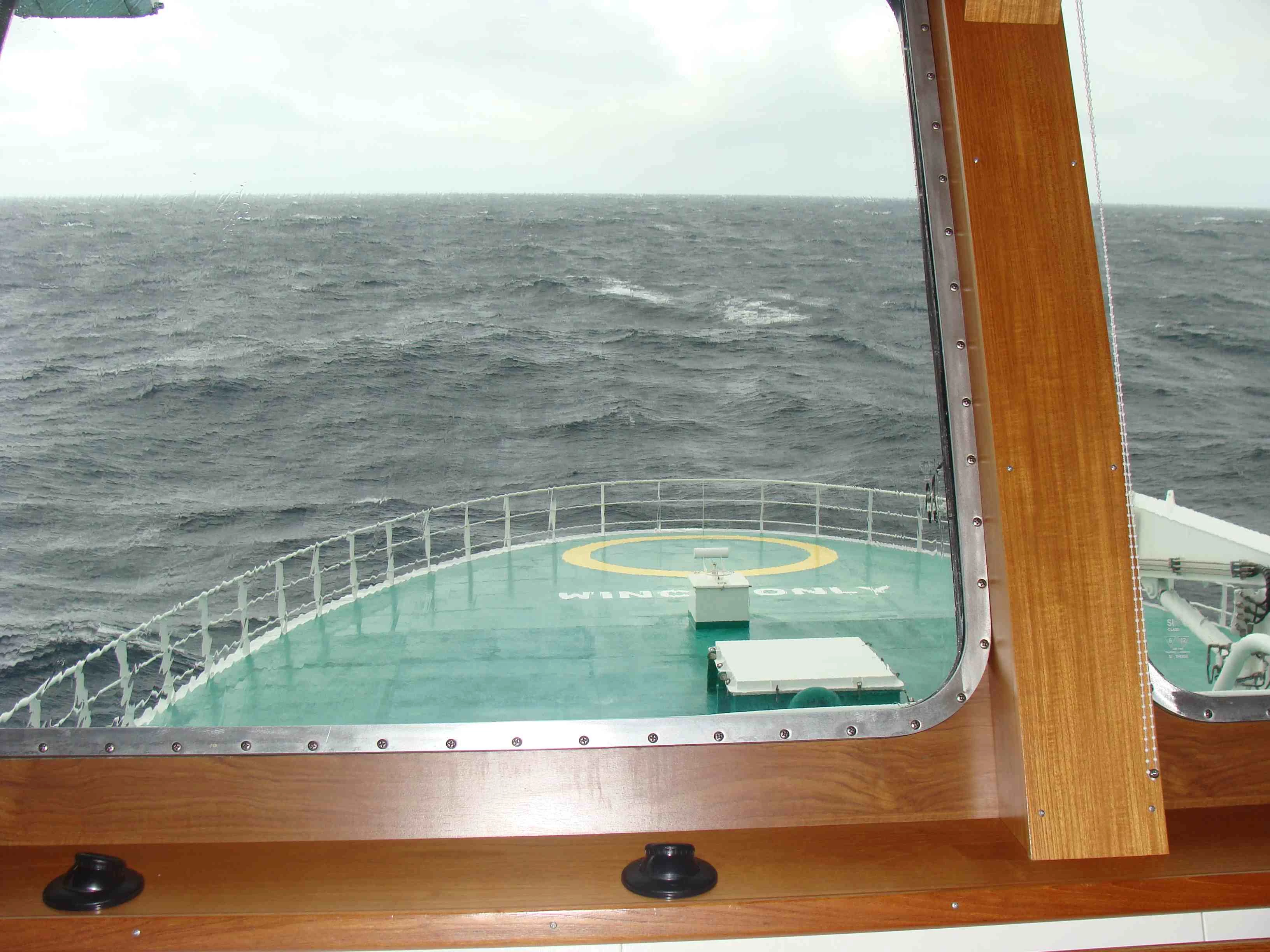
Down by the Ice Shelf, we were in a large area of open water, but the current in the Ross Sea carries the ice clockwise and it has piled up against the west coast. So instead we’re heading out of the Ross Sea. We’ve spent three days breaking through the pack ice and broke into the open water of the Southern Ocean last night. It was foggy and snowing this morning. We’re now about 570 miles from Macquarie Island and skirting the eastern side of a deep low pressure system. The waves in that low are about 8 metres high, but here they are only 5 metres or so. Around us, albatrosses wheel in the wind.

These days at sea are times for lectures and other activities. This morning I lectured on the links between Wales and Antarctica and the support Scott’s expedition received from Cardiff and Wales. There was a lot of interest in our planned exhibition and a number of people have expressed an interest in coming to see it. Some are even thinking of coming from the US and combining visits to the exhibitions in London and Cardiff, which would be great.

Saturday 3 December 2011

We’ve not been on land since last Saturday. We spent three days breaking ice in the Ross Sea and another three in the rolling waters of the Southern Ocean.

It’s not been quite as calm as it was on the way south. We’ve been rolling at about 30o and pitching as well, so we’ve had an uncomfortable time being thrown about. But now land is in sight. We’re sailing along the coast of Macquarie Island. It’s in the middle of nowhere, a sliver of land in the vast southern ocean.

It’s a cold, grey, damp and foggy day. We landed near the northern end of the island at an Australian research station and staff there showed us around their facilities, which, being an Australian base, includes not only a bar, but a brewery. The station is surrounded by a sturdy fence to keep out the elephant seals, big, heavy, noisy, smelly animals that would flatten anything and everything. Outside the station, they are everywhere. The geology around here is fascinating. The island is a slice of ocean floor which has been uplifted along the boundary between the Australian and Pacific plates.

After lunch we landed at a bay on the island’s east coast on a beach crowded with King penguins and the much smaller Royal penguins with their bright yellow crests. Walking through the surf along the shore, with penguins come in and out of the water around my feet was a special experience. A short walk north along the shore took us to a colony of King penguins where it was hard to believe that the comical, dumpy, brown, fluffy ‘okum boys’ which are the immature Kings would eventually turn into such beautiful adult birds. At the back of the beach, a penguin highway busy with Royals led uphill to a huge, noisy, densly packed throng of many thousands of the birds, some with tiny chicks at their feet.

Unearthing more mystery objects from a soil block lifted during excavations at the Roman site of Caerleon

Penny Hill, 6 January 2012

The second significant object in the same block as the pins (highlighted in the previous blog in this series) is an unusually shaped bronze sheet decorated with a stud depicting a human head. The head is wearing what appears to be a Phrygian cap. This type of soft, conical shaped hat with the top flopping forward was originally associated with people from the eastern part of the Roman Empire.

The head, cast in solid bronze, measures from ear to ear about 2cm. Soil and debris obscure the detail but I can see under this the features of a face peeking through, including large almond shaped eyes and curly hair poking out from under the cap. Looks a bit of a mischievous character to me!

The bronze sheet is an odd shape too; the edges are damaged and eroded in places. I’ve indicated with a black line the surviving edges I can be sure of. The damage on the other edges means unfortunately that they may not reflect the original dimensions of the object.

The sheet is not flat either, these bends and folds in the metal look like they were made in antiquity as the original patina is still smooth and undamaged around these areas. If the metal had been bent after the green patina was formed then this fragile surface would have cracked and flaked off revealing the metal below. So was this metal sheet originally wrapped round something more three dimensional? Difficult to say at this stage, it is also possible it got damaged in antiquity when flung on a pile of other armour and scrap, before it finally got buried. It’s amazing such delicate objects have survived at all!

When the sheet was lifted and turned over, four metal pins were found protruding out of the back. One, in the middle, belonged to the decorative stud; the pin had been punctured through the sheet to secure it. The three smaller pins are part of the sheet, created during the original casting by the looks of things.

Where the metal had been lifted there was a dark stain in the soil, probably the only evidence we will ever have that an organic material was once present. Among this there were fragments of a small doughnut shaped object. On further examination its original location could be identified as it was dislodged when the plate was lifted. The object lined up with the central stud and is in fact a washer or rove associated with securing items to leather. Two other tiny roves were found and all 3 have now been reattached to the pins at the back of the sheet. These now give us an indication of the thickness of the original backing material, which is about 3mm. The possible association with leather links this object to the pins lying near by. These were also applied to a flexible backing like leather; therefore there is a strong possibility that these artifacts were part of the same object, but more work has to be done to establish this.

Tom Sharpe's Antarctic Diary Thursday 24 November 2011

John Rowlands, 5 January 2012

Thursday 24 November 2011

This morning we landed by helicopter on the beach at Cape Bird on the northwestern side of Ross Island and hiked north to an Adelie penguin rookery, with perhaps 70,000 pairs of birds.

Much smaller than Emperors, these are feisty little beasts, the most southerly breeding penguin in the world. It’s always entertaining to watch them carrying pebbles to add to their stone nests, squabbling with one another, and waddling back and forth across the ice to the water. On previous trips to Antarctica I’ve seen two Adelies go at one another with a scary degree of fury.

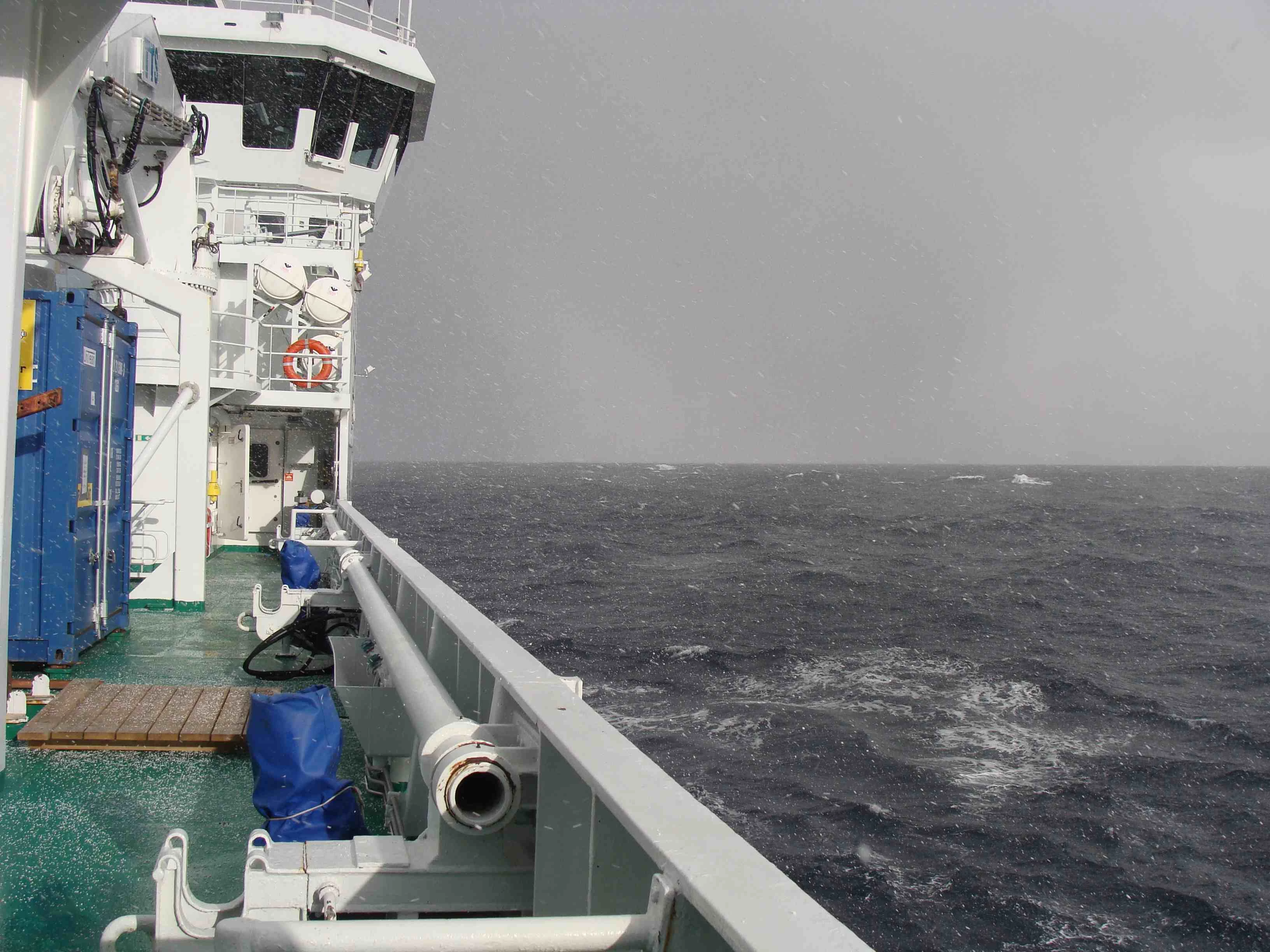
While we were watching the Adelies, it started to snow and we witnessed a real Antarctic scene as the black backs of the penguins turned grey and then white. The wind grew stronger and visibility dropped, so we had to abandon our landing and get everyone back to the ship.

Friday 25 November 2011

We’re now the furthestmost south ship on earth, and have the weather to prove it. Our plans today were a visit to see the facilities at the large US McMurdo Station and New Zealand’s Scott Base. Also here is the hut from Scott’s first expedition in 1902. But the weather wasn’t on our side. It’s been blowing a blizzard all day (well it is summer here, after all) with the windchill temperature down to -40, the temperature at which the Celsius and Fahrenheit scales meet.

The ship is covered in snow, the wind plastering it to the superstructure. But during a brief lull in the storm this evening, we did get a view of a partial solar eclipse, which was a great bonus. We’re staying here tomorrow to see if the weather improves enough to fly the helicopters.

Saturday 26 November

By this morning the blizzard had died down, but the wind was still too strong for the helicopters to fly. We waited all morning, then just as the ship was pulling away the wind dropped just enough. So it was a quick dash to get changed and grab a sandwich, then out to the helideck for a 20 minute flight south to the site of the hut from Captain Scott’s first expedition.

The hut is situated at the end of a long peninsula at the southern end of Ross Island. It was convenient not only for Scott’s Discovery expedition of 1902-04 but also for later Scott and Shackleton expeditions. The interior contains artefacts from all of these, most notably from the Ross Sea party of Shackleton’s Imperial Transantarctic Expedition of 1914-16. Seals killed by Shackleton’s men nearly 100 years ago lie on the verandah on top of sails from Scott’s ship. Seal blubber inside still drips oil onto the floor. Their last meal can still be seen in the frying pan.

Next to the hut is the large US base of McMurdo Station. Looking like a frontier mining town, it’s not the most attractive site in Antarctica, but it is an important staging post for the scientific field parties heading out on the ice. A short distance away is the New Zealand Scott Base which fulfills a similar role and also provides facilities for the Antarctic Heritage Trust who have been conserving the historic huts.

The view today was spectacular, across the fast ice to the high ice covered mountains of the Royal Society Range.