Hidden Splendour Sara Huws, 23 June 2011 Good morning. I can't stop long as there are many tasks to carry out this morning: light the incense, set up the processional cross, chalice and paten and get into 1520s costume. That itself is no mean feat, and I got up early to braid my hair medieval-style today, too. One of the Tudor Group showed me how when they were here over Easter, and she made it look really simple! I haven't quite got the hang of it, but it looks medieval enough. I hope to be up to speed for our Tudor Fashion event next month, so practice makes perfect. Meanwhile, I am preparing a film of last year's re-enactment for the gallery's 1500-1700 exhibition. Some of my favourite Tudor objects from our collection are on display, including both surviving Rood figures from pre-reformation Wales. The Cemmaes (Kemeys) Rood was found hidden in a wall in the 1850s. Not much is known about how it came to be there. What is certain is that it's a very, very rare artefact relating to Wales' religious past. Rood figure detail Conservator and all-round Renaissance lady Penny Hill has worked on the sculpture, and will be joining us on Saturday to tell us more about this mysterious object. An expert on pigments and the colour of the past, Penny will be looking at the sculpture's links to places and people beyond the small parish where it was found. Natural pigments used in the decoration of sculptures I hope you'll join us on Saturday, 2pm, in Oriel 1 at St Fagans. More information is available, Monday to Friday, on 029 20 57 3424
New Natural History Galleries Peter Howlett, 22 June 2011 At long last all the natural history galleries are now open again at National Museum Cardiff. You can see old favourites such as the Humpback Whale and the world's largest recorded Leatherback Turtle but there is also something new.We have created a new gallery which is an introduction to marine biodiversity - or life in the sea. The gallery has over 100 new marine specimens on display with a focus on marine invertebrates rather than fish and you will also find specimens of seaweeds, an often neglected group when it comes to museum displays.Nearly all the specimens have been displayed in indvidual cases which allows you to get up close and marvel at the intricate design of some of these beasts (and algae!). We have reserved the 3 large cases to display heavy or fragile specimens. Two have displays of some of our fantastic Blaschka glass models. The detail in these models has to be seen to be believed and all the more amazing is they were made over 100 years ago.So if you are in Cardiff and have an hour free why not pop in and have a look at the new galleries.
Discovered in Time, at Hay Mari Gordon, 9 June 2011 Finally, only a year or so later, we launch fab new archaeology book Discovered in Time. We had a lovely event on the Hay Festival programme - pretty small in scale, but all the more enjoyable for it.I knew the author, Mark Redknap, was a bit nervous and I felt suitably guilty. But I also knew he'd be great. He's articulate, knowledgeable, engaging and can throw in a soupcon of humour - ideal speaker material.We'd pitched the event as a discussion on issues like who are we (museums) to decide what's 'treasure', or are we the natural authors of the national 'story', or de we hand over the 'voice' to communities (yes we do), and how do we relate to amateur archaeologists - all stuff I think is fascinating. Mark talked about those issues and illustrated them with some gems of stories related to various objects featured in the book. However the audience were also clearly drawn by the archaeology, and wanted some good old-fashioned archaeologists 'in the field' stories.BBC journalist Sian Lloyd was our host for the event and she brought a fresh face and a sound journalistic approach, keeping the whole event expertly on track. The Q&A at the end included questions ranging from 'what was your Howard Carter moment?', which Mark gently explained can happen many times either with discovering a new find or with a new discovery about an old find, as we keep studying the collections and applying new technology, to the role of science in archaeology - see point about new technology. (And, is archaeology itself a science? Hmmm...).I was really pleased that the audience comprised a healthy mixture of men and women, and all ages. What they had in common was that enduring fascination, which perhaps we all have, with the light objects that survive from antiquity can shed on our shared human past. And that, I hope, is just what our new book conveys.Discovered in Time is available now. Available in Welsh, Darganfod y Gymru Gynnar. Both just £14.99. Order online.
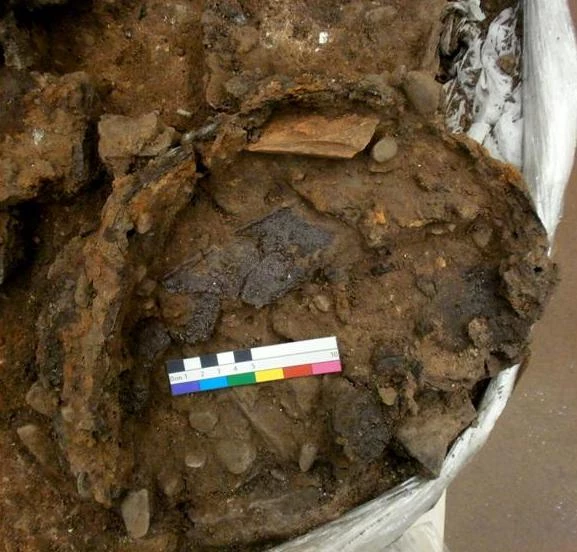
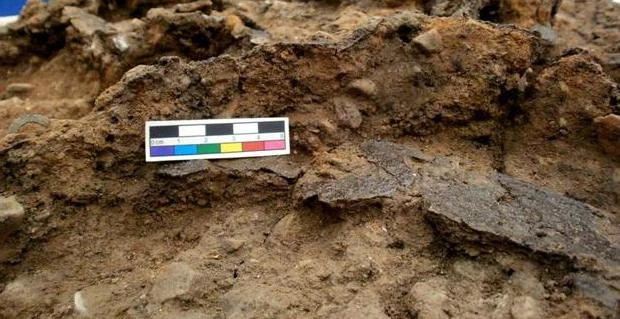
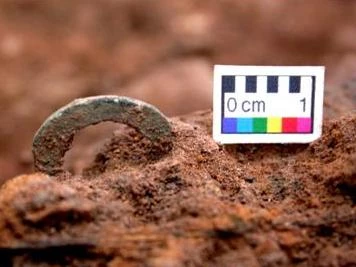
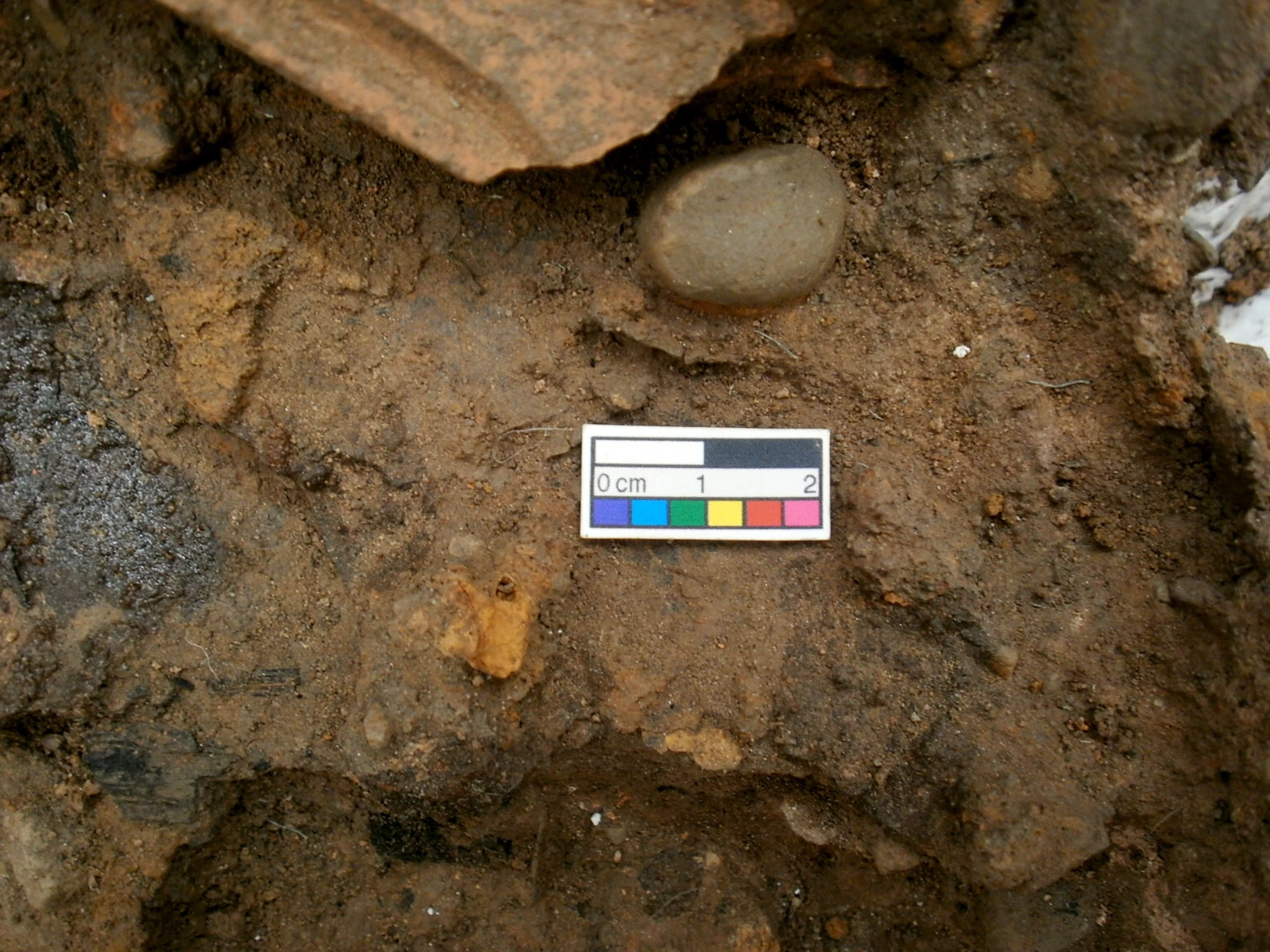
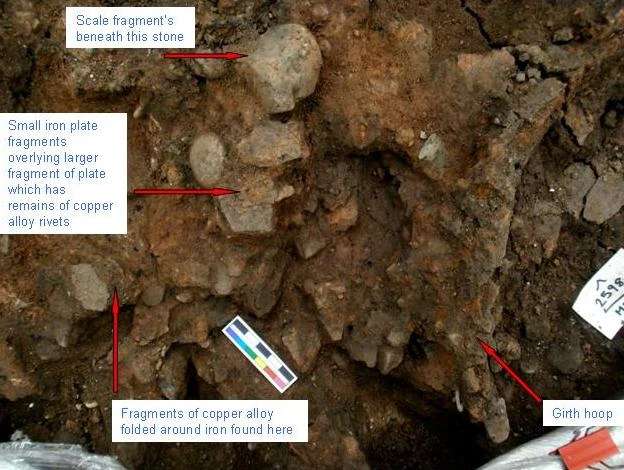
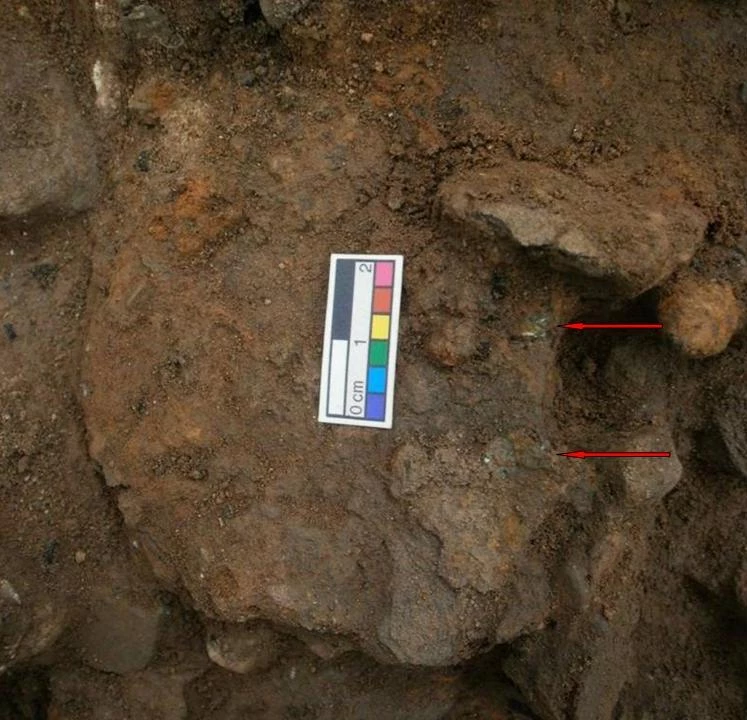
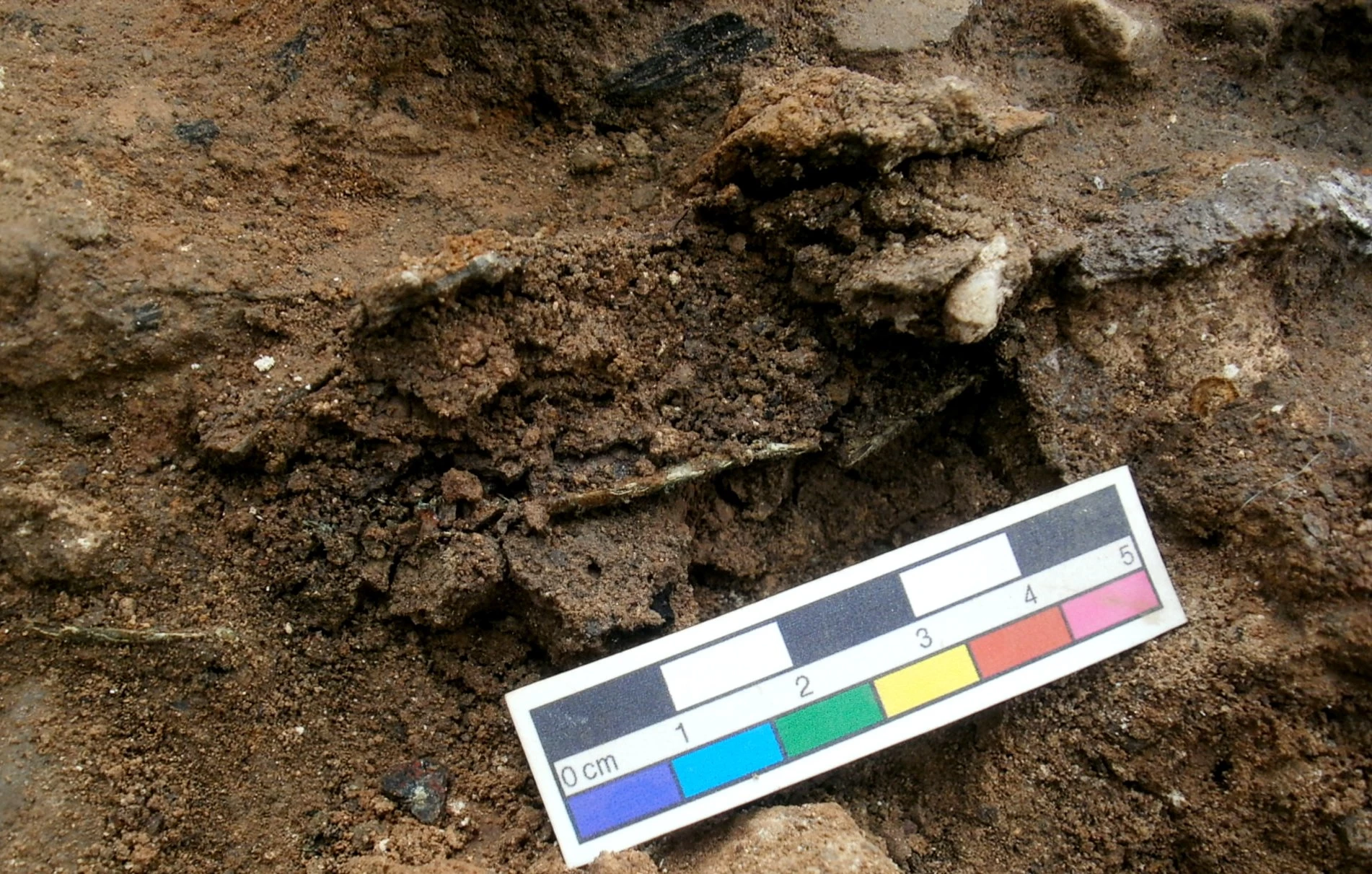
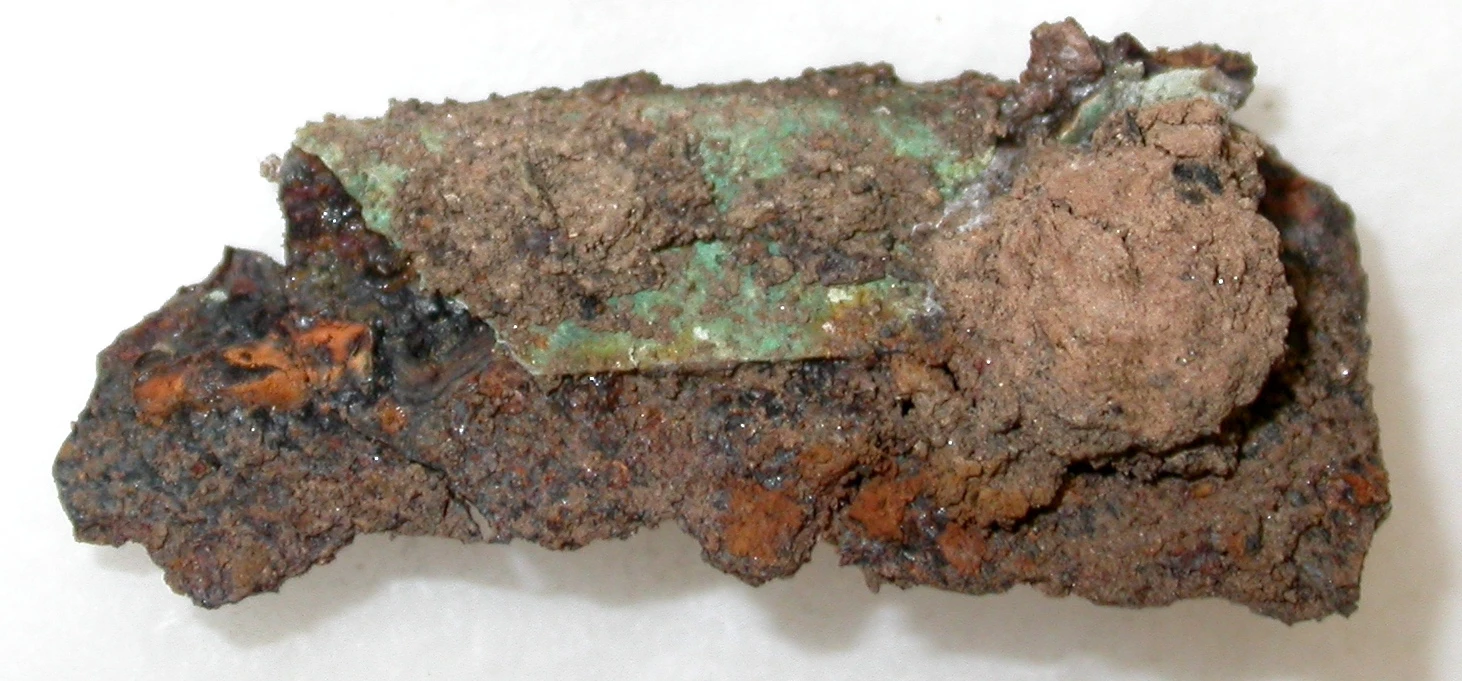
Taking Stock of the Block 1 June 2011 After documentation, the next step was to take stock of the overall condition of the block, and to make a preliminary inventory of the types of archaeological materials I could see. As can be seen in the birds-eye-view photograph, there are some large cracks running across the block: these most likely occurred during lifting and transportation from the site to the museum. Unfortunately, these extend through some of the exposed armour, and areas of thin, mineralized iron plate have broken. This kind of damage, whilst regrettable, couldn’t have been avoided. I wanted to keep the broken pieces in place for as long as possible, as the positioning of the remains is important to our interpretation of the events taking place in these two rooms of the warehouse. In order to ensure that fragments stayed together (at least for the interim) I used a wax-like substance called Cyclododecane, which I melted and brushed onto the artefacts. The Cyclododecane will eventually sublime altogether, and so I will not have to remove it later. In addition to the iron plates, there are also a range of other interesting artefacts visible on the surface of the block. There appears to be a scattering of copper alloy scale armour (see photograph for an example), which would also have been worn by a soldier. At the edge of the block is a large copper alloy stud, its use in antiquity currently unknown: it is not an artefact which has been associated with lorica segmentata. As the photograph shows, the copper has corroded considerably and is very thin. Scattered amongst these exciting finds are the usual types of artefacts found during archaeological excavations: pieces of red ceramic tile, fragments of pottery, bits of animal bone, and crumbly lumps of white plaster (from the building itself). Excavating the block will be both time consuming and challenging: I have selected a number of small tools to use. I am unable to place a microscope over the block, and so will be using an optimizer (a visor with magnification lenses) instead- I do not want to miss any small artefacts or details during the excavation.
Conservation of Roman Armour- Opening the Block 10 May 2011 After wheeling the large block into the archaeological conservation laboratory, I began the task of removing the plaster bandages covering the top of the block.This proved a simple and satisfying job- the bandages were easily torn off in layers, revealing the Clingfilm barrier underneath. In order to reinforce the sides of the block, yet more bandages were wetted and wrapped around it.The next step in opening up the block was to peel back the Clingfilm. This had to be done very carefully, as I didn't want dust from the plaster covering the archaeological artefacts beneath. Pegs and bulldog clips were very useful in holding back the plastic layers neatly.After much anticipation, the armour was revealed. As I had not been present during removal of the armour from the fort, this was the first time I was able to see the lorica, and I was very impressed by the corroded remains. As I excavate the armour contained within this soil block, I have to document every individual feature, and the physical relationships between all the artefacts. This provides invaluable information for the archaeologists working on the project, who want to tell the story of Isca. This documentation process involves taking many photographs and making copious notes day by day; before I even begin to excavate the block using small hand tools, I drew a plan of the whole block, at a 1:2 scale. It was easiest to do this by laying string across the top of the block, and drawing it in sections. After all this preparation, I cannot wait to get started excavating the soil overlying the armour and other artefacts- though this will take a very long time.