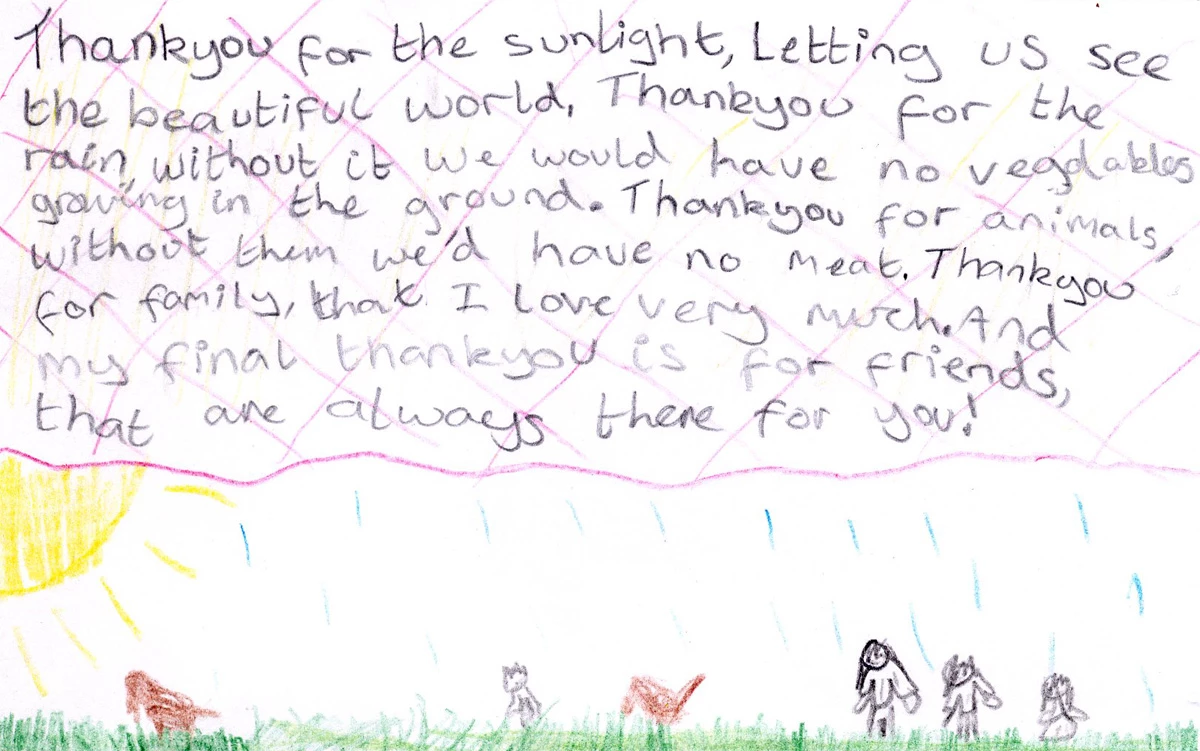
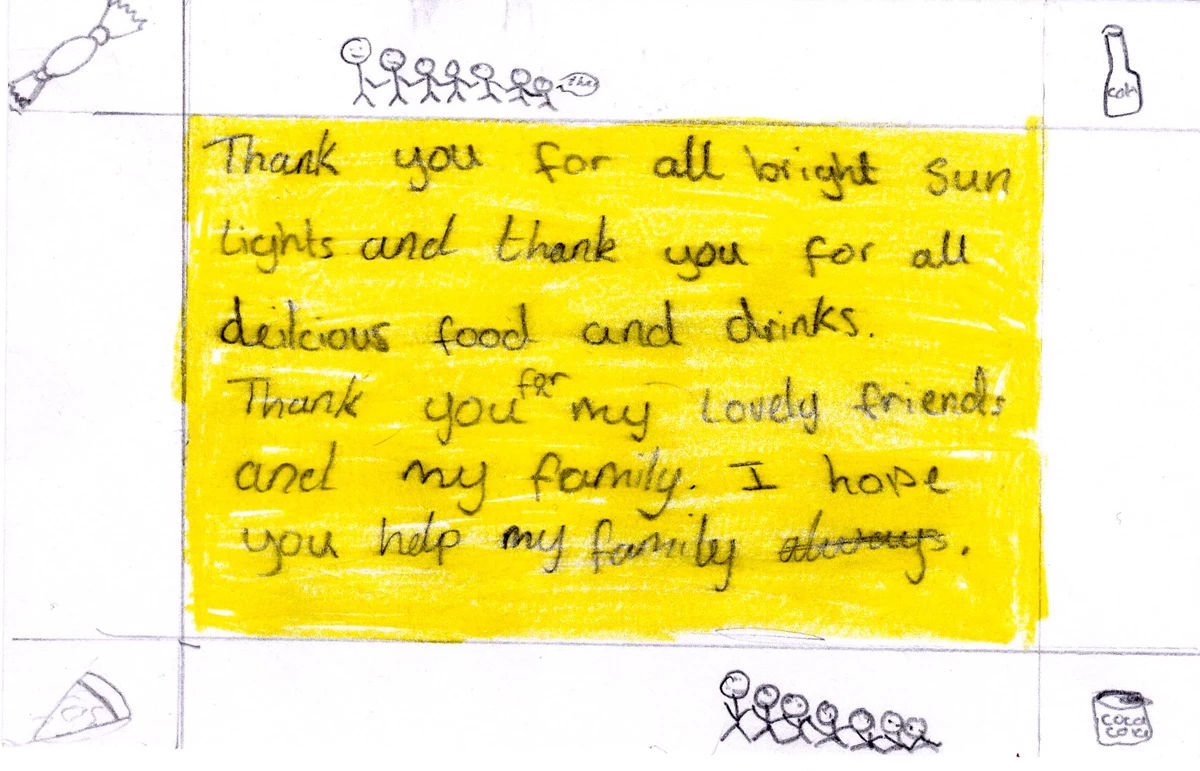
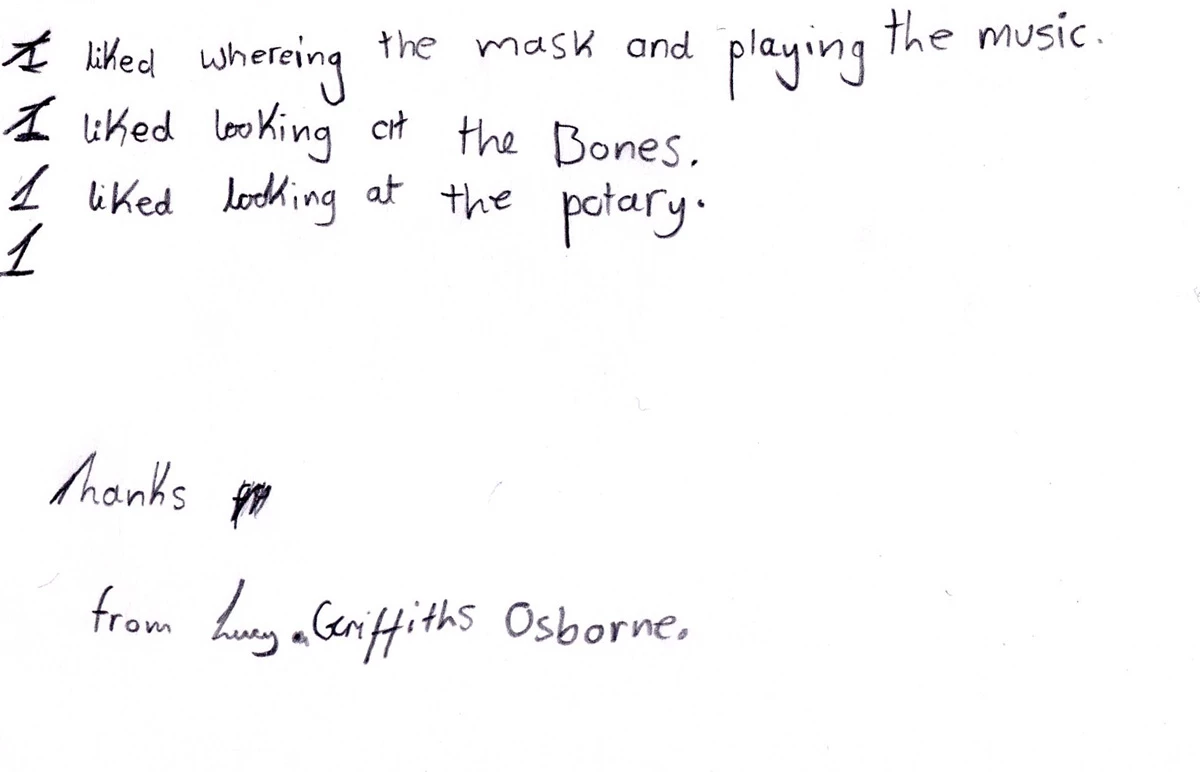
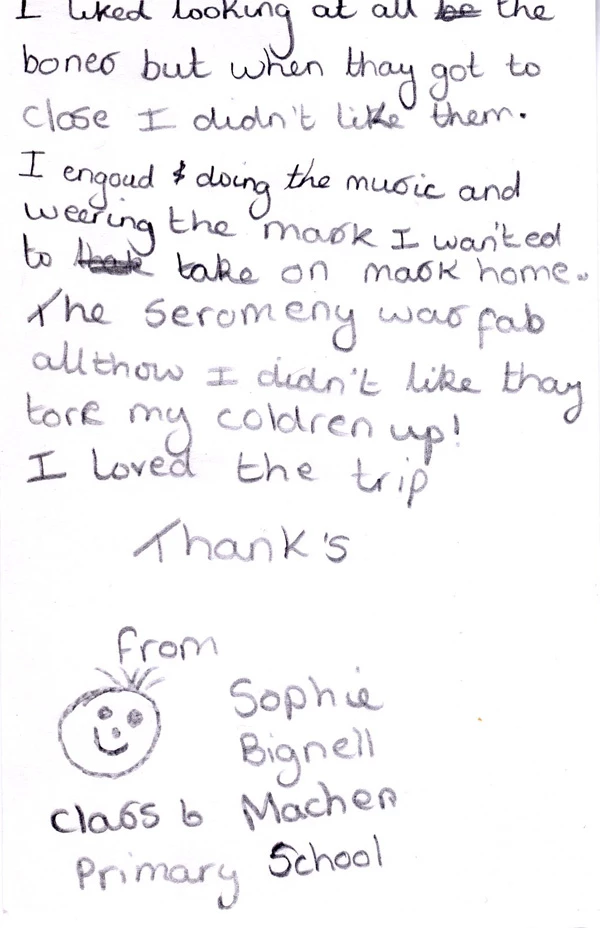
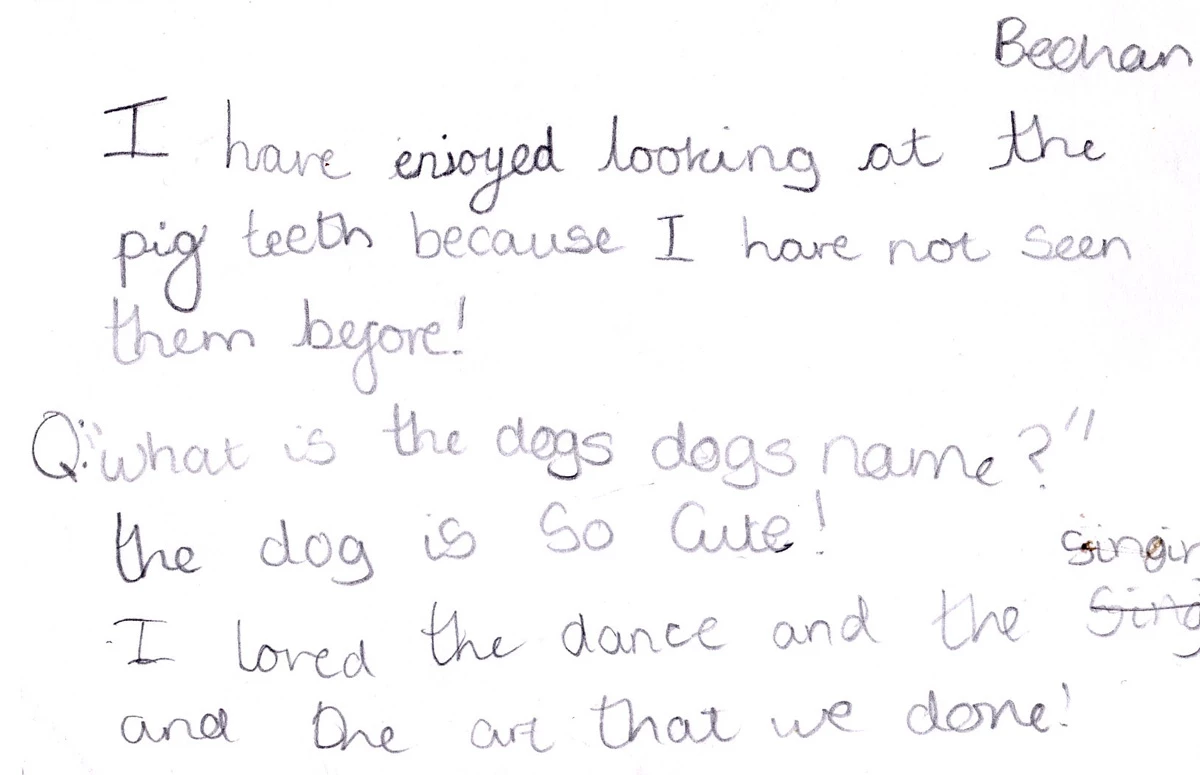
Two local schools make music in honour of their ancestors! 19 August 2008 The archaeological dig at Llanmaes was visited by two local schools from Llantwit Major. Pupils from both schools went in search of evidence of perhaps their ancestors from the Bronze Age and Iron Age.Llanilltud Fawr primary school composed music inspired by the idea that feasting festivals may have once taken place on the site. The unusually large size of the midden found on site seems to indicate that feasting and partying may have take place in Llanmaes during the Bronze Age and Iron Age. The children used this idea to inspire them to compose their own special feasting music. The pupils decided that the feats may have been full of ceremony and magic and so their magical music reflects these ideas.Download MP3: Sant Illtud Primary school composed their music inspired by the idea that acts of worship and celebration may have taken place in Llanmaes during the Bronze Age and Iron Age. Objects found in the midden may hint at some kind of ritualistic placing of them perhaps part of some sacred ceremony. The children certainly thought that this may have been why such a large midden had been unearthed containing so man valuable objects. Therefore their music is celebratory, spiritual, uplifting, and full of awe and wonder!Download MP3:
Piecing Together the Past Louise Mumford, 13 August 2008 In 2002, during building work at the Cathedral School, Llandaff, archaeologist Dr Tim Young discovered thousands of pieces of 14th century pottery in a deep ditch near the Bishop's Castle www.geoarch.co.uk/llandaff/index.html. The pottery is what's known as "wasters", pots that for various reasons have failed to make the grade and been thrown away after emerging from the kiln, which would have been nearby.The result is one of the biggest medieval jigsaws in Wales, fragments of green-glazed jugs, earthenware cooking pots and ridge tiles with crests like coxcombs, all mixed up and waiting to be sorted so that they can tell their tale. And sort them we did, for two days during NAtional Archaeology Week, on big tables in the main hall at National Museum, Cardiff: boxes of pottery, rows of foam-lined red plastic trays, staff from the Department of Archaeology & Numismatics and a constant stream of willing volunteers of all ages, patiently sorting the sherds; first separating the glazed and unglazed pieces, then hunting through the trays to find the bits of decoration, the fragments of rims and bases and handles which might just join together and allow us to learn something more about this extraordinary collection of pottery. Looking for pieces that fitted together was the best bit, a reward after some serious sorting!The workforce was wonderfully varied - students from the School of Modern Teaching in Kostalin, Poland, a British family from Sweden, another family from Ireland, a very young Norwegian boy who sorted a whole tray with the most astonishing concentration, local people pleased to have the opportunity to contribute to a local project, foreign visitors pleased to be handling a bit of Welsh history, parents, children, grandparents, grandchildren and even the occasional passing member of staff (no-one can resist a puzzle!). Some of the jug bases have an edging made with a thumb or finger, and sisters Vi Watts and Joan Coslett thought that it looked just like a pie-crust; they tried their thumbs for size (a perfect fit!), and liked the thought that theirs were the first thumbs that had rested there since the thumb of a potter in the 1300s.. Three school students on work experience deserve special mention - Charlie John from Cathays High, Sian Davies from Llanishen High and Emily Durbin from Stanwell. They were a great help, many thanks to you all!And at the end of two days, was there a proud row of complete pots, testament to all this hard work? Sadly, no. What would be a perfectly feasible task with the fragments of two or three pots mixed together becomes a very different prospect with the fragments of two or three hundred, all very similar. Although some joins were found, there will need to be further meticulous work behind the scenes before jugs, cooking pots and tiles rise again . If you can't wait for that, you can see two complete Vale Ware jugs in the Medieval section of the Origins Gallery!But at the end of two days, six huge boxes, all full to the top with neatly labelled bags - a fantastic effort. Many thanks to everyone who helped!
Putting the Iron into the Iron Age Louise Mumford, 17 July 2008 Over at St Fagans National History Museum, blacksmith Andrew Murphy and Celtic Village interpreter Ian Daniel, helped by Heulwen Thomas, set out to produce an iron object from ore. Can they really get the sword from the stone (or even a small pocket knife?)Ian takes up the story:Saturday: With the threat of rain looming, we started early to make the most of a dry spell; hoping the weather would remain kind we started on the base of the blomery. The day before, we had moved all of the tools and the great bellows to the village so we could concentrate on the construction. The building took most of the day, using a mud, hay and sand mix over a lightly-woven greenwood frame. By four o'clock, we had completed the structure, and lit a fire inside to speed the drying process; for the rest of the day, we fed the fire and hoped that it wouldn't rain too heavily in the night Sunday: The day of the smelt, and today we had some extra help from Hywel, Phillip and Craig, all of them museum assistants. The weather promised to be much better, which helped the outer wall of the bloomery to dry naturally. After lighting the fire, we got to work breaking up the heamatite ore into smaller pieces; all of us shared the job, with one person always working the bellows.Soon it was time to add the charcoal, then we built up the iron ore and charcoal in layers until it was full. Then it was mainly bellows work, and patching up the bloomery walls as they began to crack, which funnily enough, is a good sign!After four hours of bellows work, Andy checked the base of the bloomery by opening up the entrance of the tapping arch to see if any slag had formed, and tapped it to see if it had become molten. Soon, we extracted some of the slag and a large bloom of glowing iron, which we cooled in water After it cooled down, we examined it, and there seemed to be a strong possibility that we had produced Iron - I must admit, it was a very proud moment for me to have taken part in this, and everyone seemed pleased at the result. When it had cooled enough, we were able to show it to the visitors, whose interest had been growing throughout the day. Many of them came back more than once to see our progress, which was nice.So all in all, a very successful day!
Putting the Iron into the Iron Age continued... Louise Mumford, 17 July 2008 More from Ian:Monday: Following yesterday's success, we created a new bloom. The bloomery was acting differently today, possibly due to the difference in humidity, and the fact that it had dried out more. Again it was a success, although the bloom separated into three pieces. Today I was able to combine my work with school parties with the iron smelting, giving the children a chance to see how the iron objects in the Celtic Village were made. Andrew was able to work one of the smaller blooms into pieces of iron
Welcome to the National Archaeology Week (NAW) blog! Louise Mumford, 15 July 2008 Every year, National Archaeology Week is co-ordinated by the Council for British Archaeology, an educational charity working throughout the UK to involve people in archaeology and to promote the appreciation and care of the historic environment for the benefit of present and future generations. There are events all over England and Wales, and some in Northern Ireland and Scotland, and there is a full list on their website at www.nationalarchaeologyweek.org.ukThis is what the CBA says about the event:"National Archaeology Week is your unique chance to discover and explore the archaeological heritage of the United Kingdom. During this nine day event, which will run from 12th-20th July, you can take part in excavation open days, hands-on activities, family fun days, guided tours, exhibitions, lectures, ancient art and craft workshops and much, much more".This year, we have events in all of those categories at National Museum Wales, and if you can't get to any of them, hopefully you can get a flavour of them through this blog.And if you were there, and want to know what happened after you left, this is your chance to find out!Did the bloomery actually produce any iron? Did we manage to reconstruct any medieval pots?Read on....