Collections & Research

Behind the scenes

Katie Mortimer-Jones, 12 October 2015

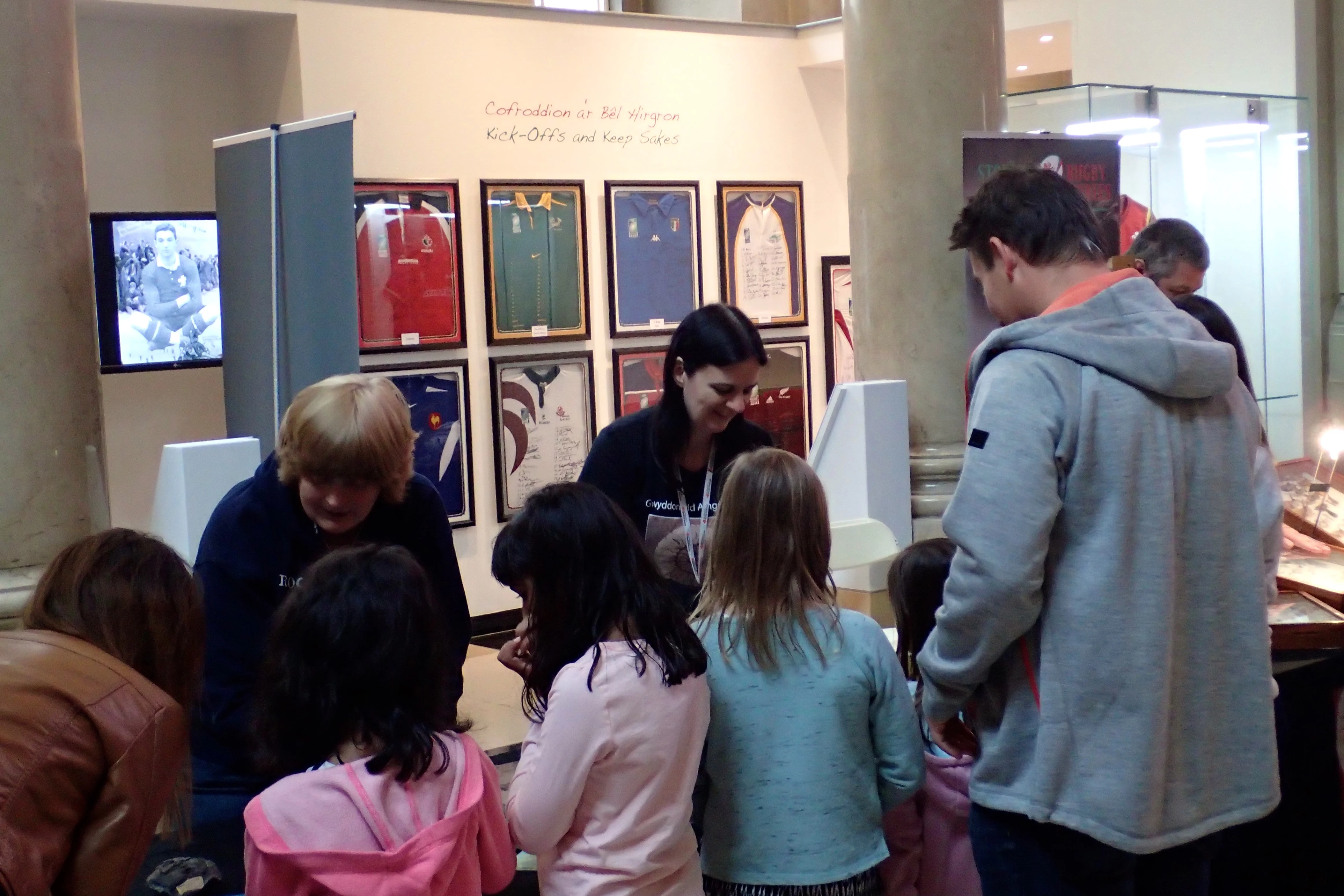
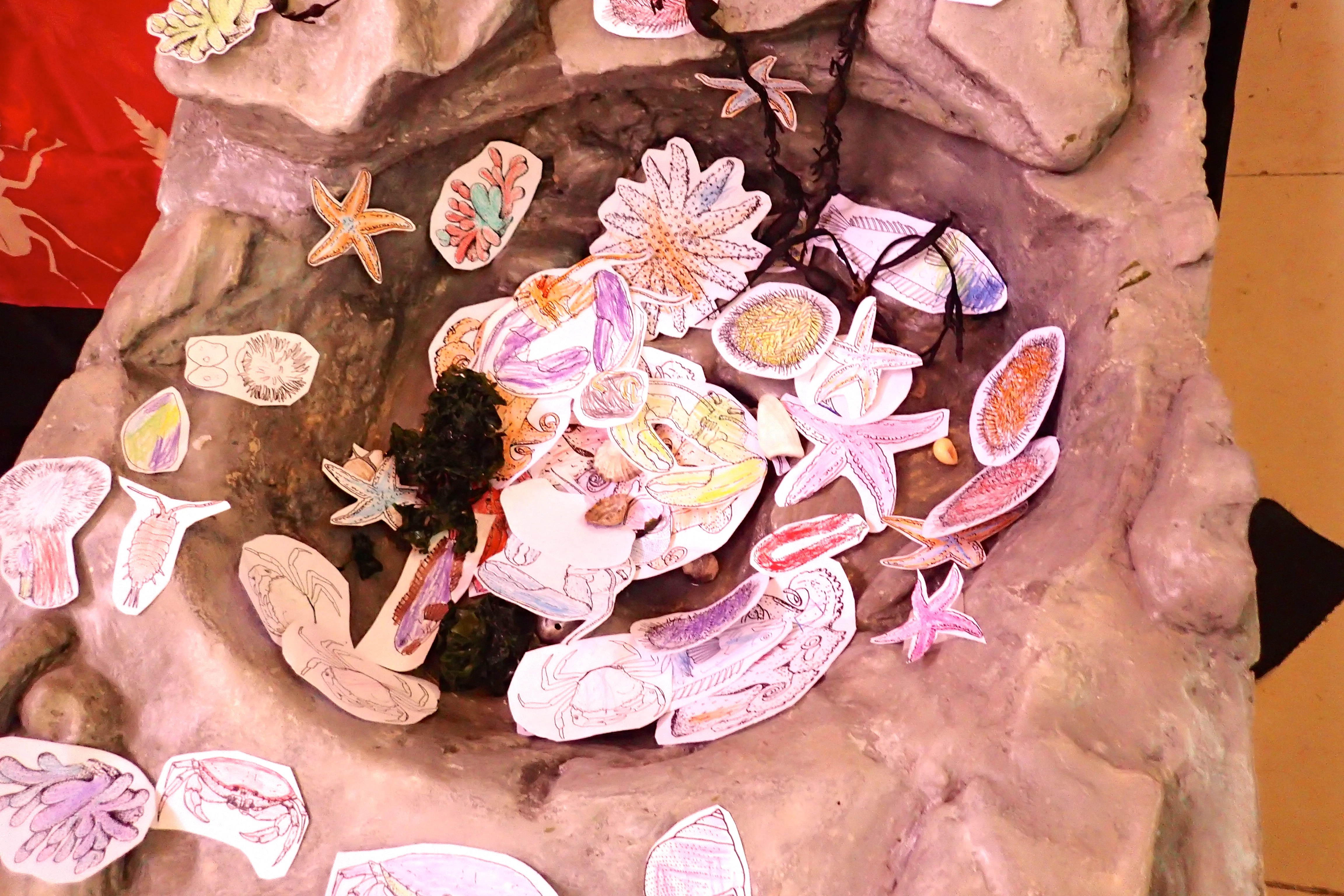
We were joined this Saturday by three of our I Spy…Nature drawing competition winners and their families. The winners were shown around the shell, marine invertebrate and vertebrate collections as part of their special behind the scenes tour by museum curator Katie Mortimer-Jones. The tour started in the fluid store, where we keep our fluid preserved specimens such as marine bristleworms, starfish, crabs, lobsters and fish specimens. The competition winners saw some of our oldest fluid preserved specimens in the collections – Octopus, squid and cuttlefish specimens worked on by the very first director of the museum, William Evans Hoyle. Next on to the shell collections, one of the largest collections at the museum. Our visitors looked through draws of molluscs, spying Giant Clams, abalone shells and Giant African Land snails. Lastly the tour finished up in the Vertebrate store where we keep some of the Museum’s taxidermy and skeleton specimens. On display were several fox specimens, a crocodile, sheep and fish specimens that will be on display in a house next weekend as part of the ‘Made in Roath Festival’. After the tour, the winners were given their prizes of natural history goodies from the Museum Shop.

Astudio Cymunedau Cymru - Cynhadledd er cof am Trefor M. Owen

Elen Phillips, 12 October 2015

Ar 21 o Dachwedd, rydym yn cynnal cynhadledd undydd yma yn Sain Ffagan er cof am y diweddar Trefor M. Owen. Cynhelir y gynhadledd ar y cyd â Chymdeithas Cyn-Fyfyrwyr Prifysgol Cymru: Adran Ethnoleg ac Astudiaethau Gwerin.

Bu Trefor Owen yn Guradur yr Amgueddfa Werin o 1971 tan ei ymddeoliad yn 1987. Roedd yn awdurdod cydnabyddedig ar arferion gwerin Cymru, ac fe ystyrir ei gyfrol Welsh Folk Customs yn un o astudiaethau pwysicaf y maes. Fel ei ragflaenydd, Iorwerth C. Peate, astudiodd gyfuniad o ddaeryddiaeth ac anthropoleg ym Mhrifysgol Cymru, Aberystwyth. Un arall o raddedigion yr ysgol ddeallusol hon oedd Alwyn D. Rees. Mae eleni yn nodi 65 mlynedd ers cyhoeddi ei gyfrol arloesol Life in a Welsh Countryside – arolwg gymdeithasegol o bentref Llanfihangel yng Ngwynfa.

Dyma ragflas o raglen y gynhadledd:

10:30 – 11:30            

Yr Athro Rhys Jones: Astudio cymunedau Cymreig mewn oes ôl-dirogaethol

11:30 – 12:30             

Yr Athro M. Wynn Thomas: Cofio Alwyn D. Rees

2:15 – 3:00                

Tecwyn Vaughan Jones: 'Prin ddau lle’r oedd gynnau gant’: Hanes Trefor M. Owen

3:15 – 4:15                

Dr Eurwyn Wiliam: Trefor M. Owen: Curadur ac Ysgolhaig

Mae croeso cynnes i bawb fynychu’r gynhadledd yn rhad ac am ddim. Bydd cyfleusterau cyfieithu ar y pryd ar gael hefyd. I gofrestru neu am ragor o fanylion, cysylltwch â fi drwy ebost os gwelwch yn dda: elen.phillips@amgueddfacymru.ac.uk


Making History with Ysgol Clywedog

Elen Phillips, 9 October 2015

I’m back at my desk in St Fagans having just had one of those ‘I love my job’ kind of weeks. On Wednesday, I spent the day with an amazing group of Year 10 students from Ysgol Clywedog in Wrexham, gauging their opinions on devolution and its impact on Wales since 1997. Heavy-going stuff for 14 year olds? Think again!

With my colleagues Owain and Richard, I met the students at Wrexham County Borough Museum bright and early on Wednesday morning for an action-packed day of researching, questioning and debating. The aim of the day was to produce a film of the students discussing devolution and what it means to them as teenagers living in Wrexham today – a town which voted ‘no’ in 1997. We took a banner from the collection with us as a springboard for debate. This banner – made for the ‘yes’ campaign by the artist Mary Lloyd Jones – will be displayed in one of the redeveloped galleries here at St Fagans in the near future, along with contemporary voices from Ysgol Clywedog.

To kick-start the discussion, we asked the students to do a little background research. Some trawled the web using i-pads, while others accessed local newspapers stored on microfilm in the museum’s archive. Headlines and articles from the Wrexham Leader gave a snapshot of the debate at a local level – 44.3% of voters in Wrexham were in favour of devolution, while 55.7% were against. The Year 10 researchers were not surprised by the ‘no’ vote in Wrexham. This prompted a lengthy discussion about their identities as young people in north-east Wales, living so close to the border with England. Interestingly, eight out of the nine participants would have voted ‘yes’ in 1997 had they been eligible to vote.

We then moved on to analysing the banner. Without any prompts or contextual information, we asked the students to jot down their initial reactions and emotions on viewing it for the first time. Comments varied from questions about its design to its usage and meaning. In the afternoon, we filmed two group discussions, with the students directing questions to each other. This took on the feel of an informal Question Time, without the cheering and heckling! We were so impressed with the energy and enthusiasm of the students, it’s going to be a real challenge to edit the finished product.

A huge thank you to Thomas, Jess, Edan, Pedro, Morgan, Elise, Matthew, Lucy and Harry from Ysgol Clywedog for taking part in the project. We can’t wait to see the film on display. Our thanks also to Wrexham Museum for hosting and supporting the workshop. Diolch yn fawr iawn i bawb.

#YesForWalesBanner #MakingHistory

#BanerIeDrosGymru #CreuHanes

A Window into the Industry Collections - September 2015

Mark Etheridge, 29 September 2015

The South Wales Miners’ Eisteddfod started in 1948 in Porthcawl, and Amgueddfa Cymru has a number of programmes for various years in the collection. This copy is for the Eisteddfod held in October 1971, and has been donated recently. The Porthcawl Eisteddfod was made world famous in 1957 when the famous US actor, singer and Civil Rights Movement leader, Paul Robeson made a famous broadcast. In 1938 Paul Robeson had been in Wales filming 'The Proud Valley'. This film introduced him to the miners of the Rhondda, and he was invited to sing at the South Wales Miners’ Eisteddfod. In 1950 Robeson had been denied a passport to travel abroad. Still wanting to appear at the Eisteddfod he used the transatlantic telephone cables to transmit his concert from New York to an audience of miners and their families in the Grand Pavilion at Porthcawl. It was a gesture of international solidarity. There is a copy of this recording made on 5th October 1957 in the museum's collection.

This pocket watch and protective snuff tin has been donated this month, and was used by the donor at Cwmtillery Colliery in the late 1970s. A protective case was a common way for mineworkers to protect their watches from dust and knocks. In this case a new use has been made for the snuff tin. We have other protective watch cases in the collection that were speciffically made for that purpose. The pocket watch shown is an example of a pocket watch in a protective brass and glass pocket watch case, which was known as a turnip. This watch was owned by Mr Evan Weston who was killed in the explosion at Universal Colliery, Senghenydd, 14 October 1913.

The final object this month is this real photograph postcard showing the officials of Meiros Colliery, Llanharran in 1920. Meiros Colliery probably opened in the 1880s, and closed about 1938.

Mark Etheridge
Curator: Industry & Transport
Follow us on Twitter - @IndustryACNMW

Fragile? Art & Craft Workshops for People Living With Dementia

Jennifer Dudley, 24 September 2015

Teacups & Memories

The Exhibition: Fragile?  

Fragile? is an exhibition of contemporary ceramics at National Museum Cardiff, showcasing the beauty and variety of contemporary ceramics practice. The exhibition explores the artistic and expressive possibilities of clay as a material, including the contradiction between two of its innate qualities – durability and fragility. The exhibition includes items from the National Museum’s collection, shown alongside exciting new ceramic installations made especially for this exhibition.  

Dementia-friendly workshops – Free! But limited availability so please book in advance

On October 1st we will be running a day of free workshops for people living with dementia and their carers, with activities inspired by the Fragile? exhibition. The workshops will be relaxed and friendly. No previous experience is required for any of the activities. Tea and biscuits will be provided and chatting is encouraged! Some sessions may be photographed, so that we have a record of our activities, but you can always ‘opt out’ of being photographed. 

Workshop schedule 

Explore the exhibition, 11am-1pm. Maximum 10 people - please book in advance

In the morning, we will take a spotlight tour of some objects in the Fragile? exhibition. You will not be given a full tour of the whole exhibition as it is quite large! There will be tea, cake, and music with different ceramic items available for you to touch, hold and chat about. A family member, friend or helper is very welcome to attend with you.

Lunch, 1 – 2pm.  Maximum 20 people – please book in advance

We would love for you to join us for lunch if you have taken part in either or both of our sessions. Family members, friends and helpers are also invited.

Teapots and Clay pots, 2pm-4pm. Maximum 10 people – please book in advance

In this fun, hands-on session led by artist Jess Midgley, you can have a go at modelling and pattern making with clay. A family member, friend or helper is very welcome to attend with you.

To enquire or book a place please email Jennifer.Dudley@museumwales.ac.uk