Good things come in small packages Christian Baars, 6 May 2015 Why are we concerned with boxes whose lids don’t close properly?This is not just curators and conservators being pernickety; we really do have very good reasons to make sure that every closed box stays shut.Museum collections contain a lot of valuable things that are easily perishable. Swords are made to be tough, but - believe it or not - even swords are not indestructible.Iron rusts when it gets wet. Iron also rusts because of moisture in the atmosphere. Other metals can corrode in much the same way. If we are not careful we would end up with merely a bag of rust!Therefore, we store all manner of sensitive objects (including cannonballs!) in what we call “micro-environments”. While many of our stores and galleries are air-conditioned, the humidity in the air is often too high to prevent these delicate objects from rusting.Micro-environments are boxes or plastic pouches that contain one or several objects, plus a chemical that regulates the humidity within the box or pouch. This chemical is silica gel – if you have ever bought an electrical item the packaging probably contained a little sachet saying “Do not eat!”. The little granules in this sachet are silica gel. It is very widely used to keep things dry. Including in museums.Once we have packaged our objects with silica gel we do not want moisture from the atmosphere to get into the box; that’s why we make sure the box closes properly. Only then will the objects be safe and dry, and ready for display or study.To read more about our collections care work, go to our Preventive Conservation blog.
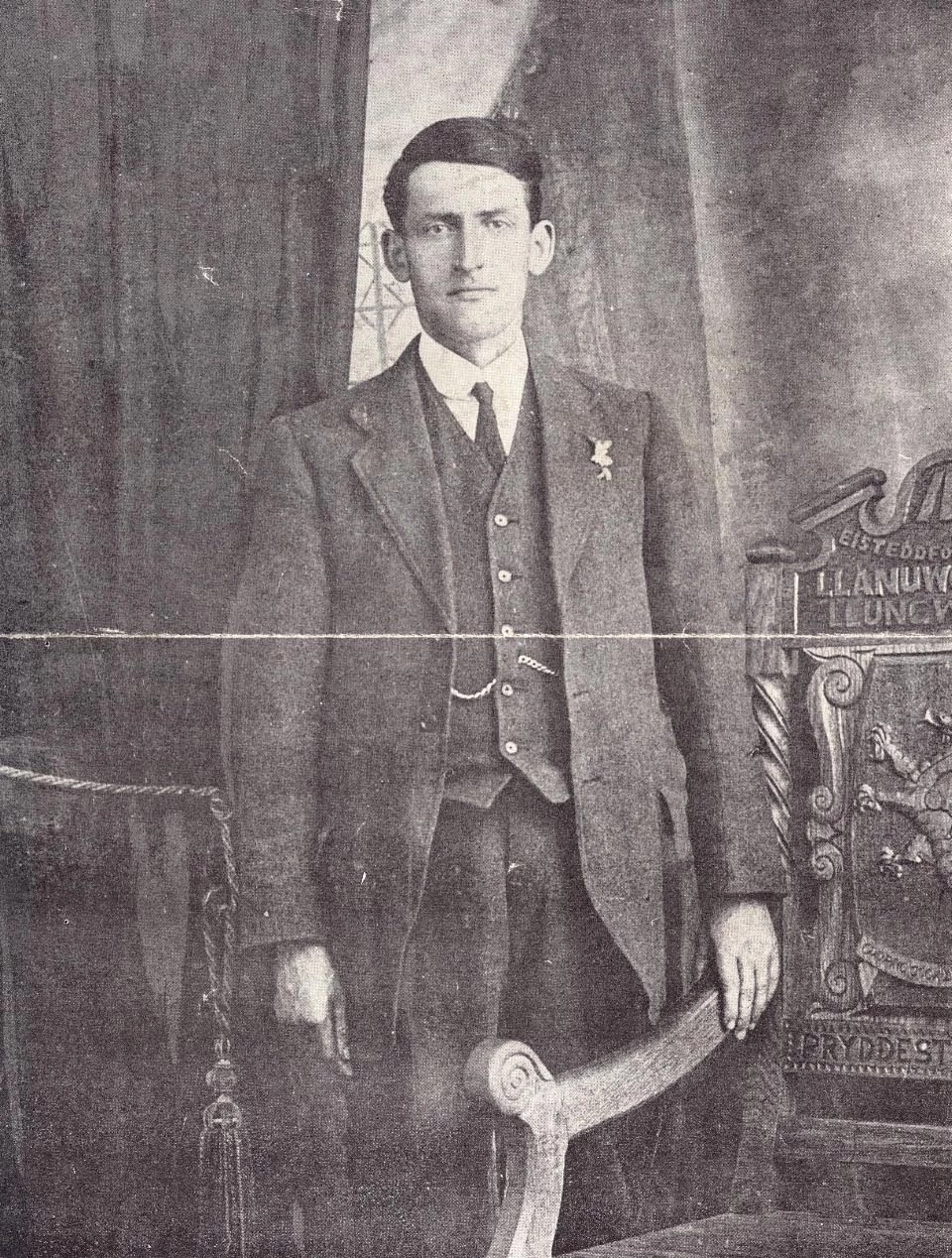
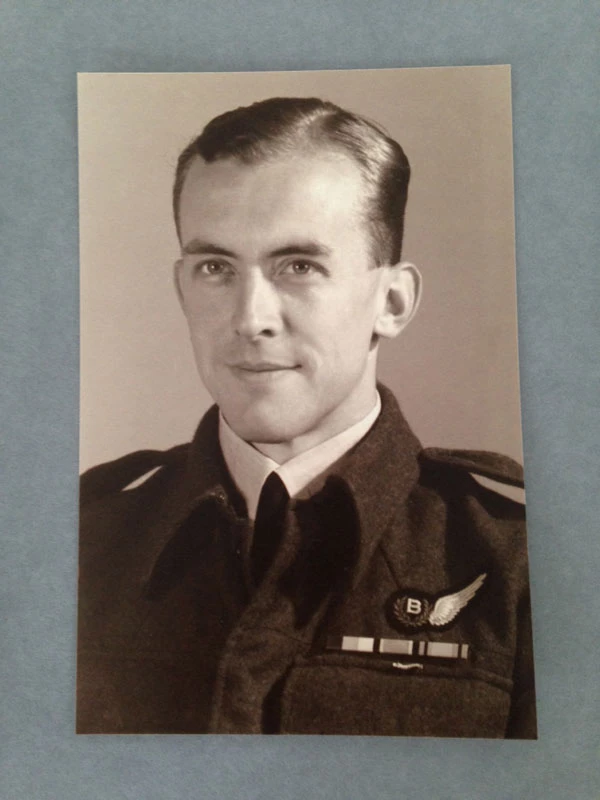
Owen Ladd – A Welshman lost on the Lusitania Richard Edwards, 5 May 2015 A hundred years ago today, on 7 May 1915, the British ocean liner the Lusitania was struck by a German torpedo off the Irish coast, on her homeward voyage across the Atlantic from New York to Liverpool. She sank within twenty minutes. 1,198 of the 1,959 passengers aboard, including children and crew, perished. This was seen as a ‘German crime against humanity’, and a verdict of ‘wilful and wholesale murder’ was pronounced against Kaiser Wilhelm II and his government. In Germany, a medal was struck to commemorate the event, a copy of which we have in the collection.Among those lost was a Welshman named Owen Ladd. He was born in 1882, the son of William and Phoebe Ladd, of Eglwyswrw in north Pembrokeshire. Owen had been educated at Llantood Board School and later became an apprentice watchmaker in Cardigan. He had also managed a shop in Pentre, Rhondda, for nine years.In 1911, he left Wales to join his older brother, David, who was an accountant in Winnipeg, Canada. Owen quickly became a prominent figure within the Welsh community there, serving as secretary of the St David’s Society as well as being a leading member of the Nassau Street Baptist Church. He also occasionally acted as adjudicator at local eisteddfodau.In 1915, Owen decided to return to Wales to visit his ageing parents and possibly enlist in the military. However, tragically, he lost his life on that fateful voyage aboard the Lusitania.On 12 May 1915, The Haverfordwest and Milford Haven Telegraph reported on ‘The Sinking of the Lusitania’ and mentioned Owen Ladd as missing. An eyewitness account of Owen’s final harrowing moments appeared in the north Pembrokeshire’s weekly – The County Echo on 20 May 1915. In 1977 the Museum acquired some diaries and papers from Owen’s relatives, including two letters written by Owen from Winnipeg, dated 8 March 1915 and 15 April 1915.“The reason of my delay in replying to your enquiry was that I've been contemplating paying a visit to the old land when I would call & see you & settle all matters. Now I've definitly [sic] decided & shall be sailing by the Lusitania from New York May 1st. therefore I hope to call & see about the end of May. of course if we encounter any German torpedoes you'll have to claim on the German Emperor.”(Extract from letter sent by Owen Ladd to Mr Francis, 15 April 1915)The collection also includes a telegram, which was despatched by his brother David in Winnipeg on 8 May 1915 enquiring as to Owen’s safety; a non-committal reply was received from Cunard’s in Liverpool later the same day. And a letter received by another of Owen’s brothers, Hugh Ladd of Eglwyswrw, from ‘The Cunard Steam Ship Company Limited, Queenstown’ dated 14 May 1915.The Owen Ladd collection is available to view online on the First World War Collections catalogue.
Adrian in the Amazon - final part Adrian Plant, 1 May 2015 Our expedition has now drawn to a successful close. Our collections of several thousand specimens have (mostly) been successfully exported from Ecuador and initial analysis of them has started. Entomological expeditions to remote areas are great fun of course. However the less glamorous but harder work comes later, involving months or years of detailed study during which new species are described, evolutionary trees constructed, and ecological or biogeographic conclusions etc. are developed.In the field there may be great excitement about finding a particular insect but to a scientist, the level of excitement can only grow as the real significance of the finding is revealed subsequently through painstaking study and reference to our already extensive collections. Already we have glimpses of results that might tell us more about how the insect fauna of the upper Amazon Basin came about. For example the unexpected presence of Cladodromia (a classic ‘Gondwanan’ genus) suggests there has been immigration from Patagonia whereas the high diversity of Neoplasta (which is essentially North American) hints at a south-bound migration along the Andes. On the other hand, an almost complete absence of Hemerodromia puzzles us as it is widespread in the lower Amazon so why didn’t we find it higher up? We suspect that the answer may be that it has only recently arrived in South America and is still spreading to Ecuador. Then again the unseasonal rains (due to a strong El Niño this year) may be a factor. Investigations continue.In the field, our successes were often hard-won; difficult slogging through trying terrain, inclement weather, frustrating officialdom and many other factors sometimes worked against us it seemed, and intermittent access to the internet made writing these blogs challenging at times. We have been very fortunate in that our expedition was entirely and well-funded by the Brazilian Government as a part of their noble and ambitious efforts to understand the biodiversity of the Amazon. Our own exertions will plug one significant hole in knowledge and contribute to greater appreciation of Amazon biodiversity.To read all of Adrian's entries, go to our Natural History Blog
Super Scientist Awards 2015 Penny Dacey, 1 May 2015 One hundred schools across the UK are to be awarded Super Scientist Certificates on behalf of Amgueddfa Cymru - National Museum Wales in recognition for their contribution to the Spring Bulbs - Climate Change Investigation.Huge Congratulations to all these schools!A big ‘thank you’ to every one of the 5,539 pupils who helped this year! Thank you for working so hard planting, observing, measuring and recording - you really are Super Scientists! Each one of you will receive a certificate and Super Scientist pencil, these will be sent to your school by mid-May. Many thanks to the Edina Trust for funding this project. Super Scientist Winners 2015Well done to our three winners for their consistent weather data entries! Each will receive a class trip of fun-packed nature activities.St. Brigid's School - WalesThe Blessed Sacrament Catholic Primary School - EnglandWinton Primary School - Scotland Runner's up:Betws Primary SchoolCarnforth North Road Primary SchoolCorsehill Primary SchoolSt. Laurence Primary SchoolSt. Michael's Primary SchoolSt. Paul's Primary SchoolWormit Primary School Highly commended schools:Balcurvie Primary SchoolCarnegie NurseryColeg Meirion DwyforColeg PowysEastfield Primary SchoolFairlie Primary SchoolFreuchie NurseryGibshill Children's CentreGreenburn SchoolHowwood Primary SchoolKeir Hardie Memorial Primary SchoolKilmory Primary SchoolMaes-y-Coed PrimarySS Philip and James CE Primary SchoolSt. Ignatius Primary SchoolSt. Peter's CE Primary SchoolWildmill Youth ClubYsgol Bro Eirwg Schools with special recognition:BancyfelinBickerstaffe CE Primary SchoolBinnie Street Children's CentreBrodick Primary SchoolCarstairs Primary SchoolCoppull Parish Primary SchoolDallas Road Primary SchoolDyffryn BanwEuxton Church of England Primary SchoolGarstang St. Thomas' CE Primary SchoolGuardbridge Primary SchoolHenllys CIW PrimaryKirkton Primary SchoolLlanharan Primary SchoolMorningside Primary SchoolNewport Primary SchoolOrchard Meadow Primary SchoolPittenweem Primary SchoolRhws Primary SchoolRivington Foundation Primary SchoolSacred Heart Primary and NurseriesSkelmorlie Primary SchoolStanford-in-the-Vale CE Primary School St Athan PrimarySt Mellons Church in Wales Primary SchoolTrellech Primary SchoolWoodlands Primary SchoolYnysddu Primary SchoolYsgol Bryn GarthYsgol DeganwyYsgol HiraddugYsgol Syr John RhysYsgol Clocaenog Schools to be awarded certificates:Abbey Primary SchoolAlbert Primary SchoolArkholme CE Primary SchoolBaird Memorial Primary SchoolBalshaw Lane Community Primary SchoolChapelgreen Primary SchoolChrist Church CP SchoolChryston Primary SchoolColinsburgh Primary SchoolDarran Park PrimaryFintry Primary SchoolGlencoats Primary SchoolHafodwenogKilmacolm Primary SchoolKings Oak Primary SchoolLlanishen Fach C.P SchoolMossend Primary SchoolOur Lady of Peace Primary SchoolPreston Grange Primary SchoolSaint Anthony's Primary SchoolSilverdale St. John's CE SchoolSt. Nicholas CE Primary SchoolSt. Philip Evans RC Primary SchoolSwiss Valley CP SchoolThorn Primary SchoolTongwynlais Primary SchoolTorbain Nursery SchoolTownhill Primary SchoolYsgol Bryn CochYsgol Glan ConwyYsgol Iau Hen GolwynYsgol Nant Y CoedYsgol PencaeYsgol Rhys PrichardYsgol Tal y BontYsgol TreferthyrYsgol Y PlasGlyncollen Primary SchoolRougemont Junior School Thank you for all your hard work Bulb Buddies,Professor Plant
Adrian in the Amazon - part 9 Adrian Plant, 30 April 2015 Back to civilization again - the regional capital of Loja, a small town nestled under forested Andean slopes and home to the regional Ministry of Environment where we must go once again, to obtain permission to move the samples we have collected back to Quito.Unlike our previous brush with officialdom in Tena (our samples from there still have not been released!... but we have some local support to ensure that they eventually will be), the officials in Loja were helpful, polite and efficient! We had allowed 2 days to process the permissions in Loja, but in the event, we received our permits within 30 minutes, leaving us the best part of 2 days to explore the town and sample the local culture and cuisine.Meanwhile, here are some more photos from our time in the field.To read more about Adrian's travels, go to our Natural History blog page