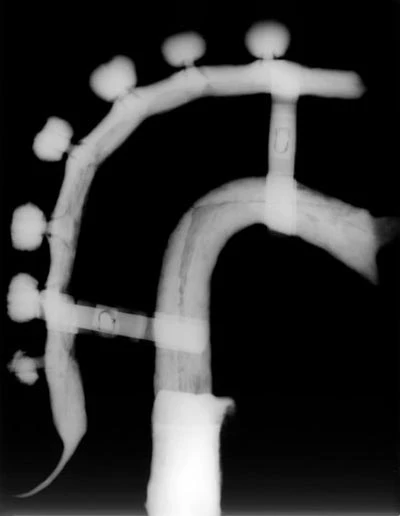
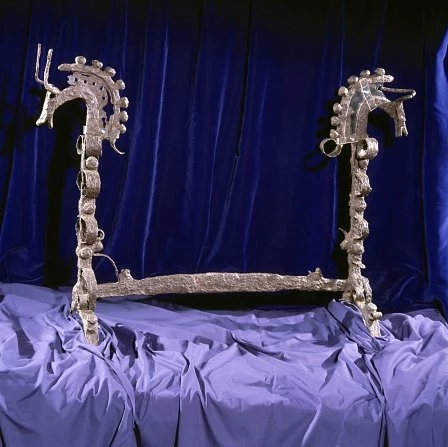
Stunning ironwork firedog uncovered in farmer’s field 4 May 2007 The Capel Garmon Firedog (Conwy). Firedogs are decorated stands used to contain wood burning in a fireplace. This fine example has heads and crests shaped to resemble aspects of both a bull and a horse. Detail showing one of the heads on the firedog. The head may have represented a mythical creature recounted in the tales of warriors or an emblem of the tribe or community of its owners. X-ray of one of the heads on the Capel Garmon Firedog. This X-ray shows the complex way in which the firedog was constructed. (The horizontal and vertical struts are modern supports added to stabilize the head). Experimental iron smelting has shown the amount of time and skill that would have been involved in the production of the Capel Garmon Firedog. This iron stand with two opposing horned animal heads is known as the Capel Garmon Firedog, and was made by a master craftsperson of the Celtic Iron Age. An offering to the gods Found in 1852, the firedog was uncovered in a field at Carreg Goedog Farm, Capel Garmon (Conwy). It lay on its side, with a large stone placed at each end, and was deeply buried. Its careful placing and unbroken state suggest that it was deliberately placed as an offering to a god of the pagan Celtic world. This fits into a long-established tradition of depositing metalwork in Wales’s lakes, rivers and bogs during the Bronze and Iron Ages. One of a pair Originally one of a pair, the firedog would have sat next to a hearth at the centre of a timber or stone round-house. This hearth would have been a natural focus for eating, feasting and discussion and the firedog would have been on view to be admired by all. Recent X-raying of the firedog, together with an attempt to replicate the artefact by a modern blacksmith, has shown that its maker was a master craftsperson, highly skilled in shaping and working iron. Magical process It has been estimated that the Capel Garmon Firedog may have taken one person over 3 years to make, from the gathering of raw materials, through the smelting of the ore to the finishing of the artefact. This transformation of iron ore into metal was probably viewed as a magical process by the Celts, and blacksmiths would have been given great respect for the powers that they wielded. Dating the Capel Garmon Firedog is difficult - there were no archaeologists to record the excavation. However, since the Capel Garmon find, similar firedogs have been discovered in south-east England, in the graves of Iron Age chieftains. In addition to the firedogs, these burials were accompanied by grave goods, all of which can be dated to between 50BC and AD75 - the Late Iron Age. It therefore seems likely that the Capel Garmon firedog was also buried around this time. Iron was first used in Wales at around 750BC. From 300BC onwards iron tools, weapons and brooches became increasingly common on hillforts, settlements and in hoards. However, the scale and quality of the Capel Garmon Firedog sets it apart from these objects. Despite all the discoveries that have been made in the past 150 years, it remains one of the most important pieces of early decorative ironwork to have been found in Britain. Background Reading Celtic art, reading the messages by M. Green. Published by Weidenfeld & Nicholson (1996). 'Firedogs in Iron Age Britain and beyond' by S. Piggott. In The European community in later prehistory: studies in honour of C. F. C. Hawkes by J. Boardman, M. A. Brown and T. G. E. Powell, p245-70. Published by Routledge & Kegan Paul (1971). 'The Capel Garmon Firedog' by C. Fox. In The Antiquaries Journal, vol. 19, p446-8 (1939).
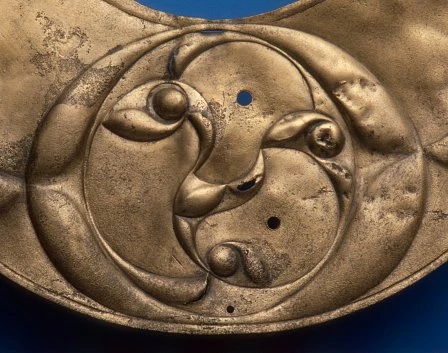
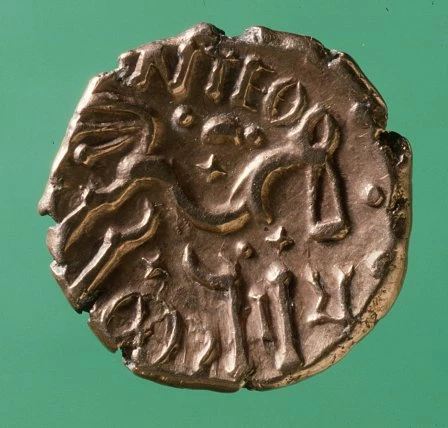
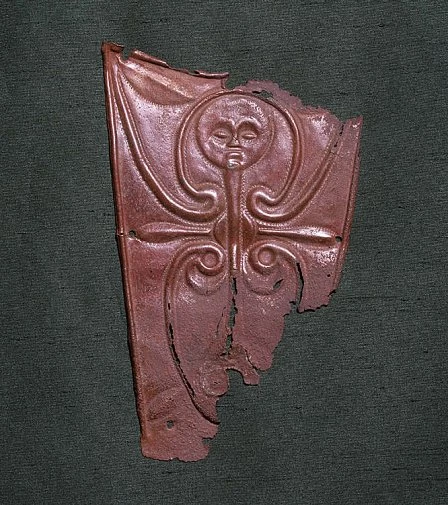
Celtic Art in Iron Age Wales 3 May 2007 Crescentic plaque from Llyn Cerrig Bach, Anglesey. Celtic coin from Tintern, Monmouthshire. Plaque from Tal-y-Llyn, Gwynedd, thought to date to the 1st century AD. Ox-head bucket fittings found at Little Orme, Conwy. Celtic Art Celtic art reflects the way Iron Age people interpreted the world around them. The designs they used help us understand how they viewed themselves, their environment and their gods. The Celtic art found in Wales is part of a much wider tradition in Britain and Europe, often called La Tène art, which developed during the Iron Age from about 500BC. The earliest example from Wales is the Cerrig-y-Drudion bowl which was found in 1924 in a stone-lined grave in the county of Conwy. It is one of the few decorated artefacts from Britain to date to the 4th century BC and was probably made by British craftsmen influenced by Continental traditions. Many more decorated objects are known from about 200BC, by which time Britain had developed its own distinctive style. British craftsmen continued to produce swords, daggers, spears, brooches and horse equipment, but also other objects such as tankards, mirrors and spoons. Symbolic designs Particular motifs and designs are introduced and often repeated, reinforcing their meaning. Archaeologists interpret these as symbolic and powerful with religious connotations. For example the three-fold character of the triskele (a three-legged design radiating from a centre) may represent the relationships between the living, the dead and the gods or the ongoing cycle of birth, life and death. The crescentic plaque from Llyn Cerrig Bach (pictured) is decorated with an elaborate triskele, each limb ending with a trumpet and raised circle that suggests a stylised bird head. Stylised representations of people and animals become more common after 100BC with faces often hidden within complex patterns. Human heads surrounded by a flowing plant-like design can be seen on plaques from the Tal-y-Llyn hoard while a variety of cows, horses, boars and birds adorn a wide range of other artefacts. Ox head escutcheons (bucket-fittings) have been found in Wales (pictured - the Little Orme (Conwy) hoard also contained two Roman trumpet brooches, indicating that this Celtic style continued in use after the Roman conquest), showing the stylised characteristics and flowing lines of native British artistic styles. Mythical beasts are also hinted at, for example in the imaginatively constructed horse-cow heads that ornament the Capel Garmon firedog. Celtic designs did not disappear with the Roman conquest, but continued to influence art. A bronze trulleus (saucepan) from Coygan Camp in Carmarthenshire was repaired with a sheet of metal sometime in the 3rd century AD. It was not decorated with a typical Roman design, but with a triskele motif, showing a continuing appreciation of Celtic art. Background Reading Early Celtic art in Britain and Ireland by Ruth and Vincent Megaw. Published by Shire Archaeology (1986).
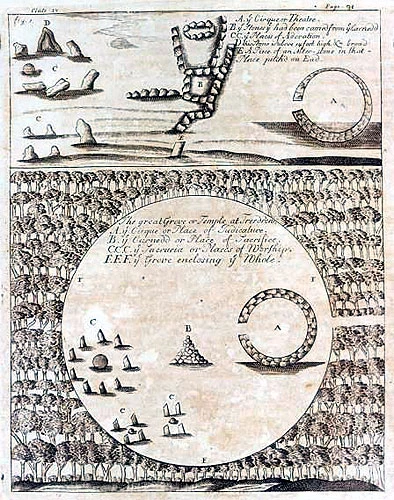
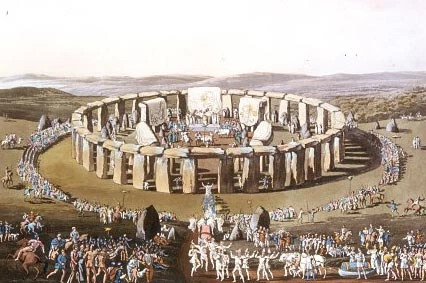
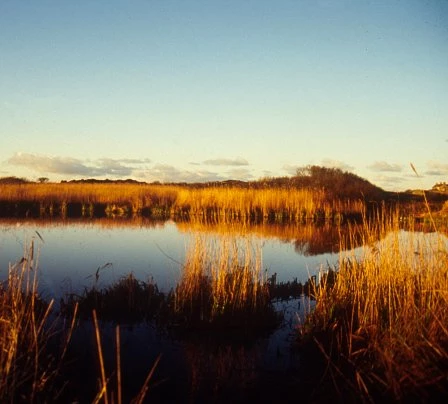
Ancient druids of Wales 3 May 2007 An Archdruid in his Judicial Habit from Costume of the Original Inhabitants of the British Isles (1815) by Samuel Rush Meyrick and Charles Hamilton Smith. The alleged Druidical Temple of Tre'r Dryw (Anglesey) - prepared by the Revd Henry Rowlands (1723) Early 19th-century speculation on how a Druidic ceremony might have appeared at Stonehenge. We now know that Stonehenge was built some 1,500 years before the first historical reference to the Druids. Llyn Cerrig Bach (Anglesey). A large quantity of Iron Age metalwork was found in this lake during 1943. [Image © Philip Macdonald.] Selection of metalwork found in Llyn Cerrig Bach, including slave chains, bent swords, tools and chariot equipment. Druids, the ancient priests of Britain and Ireland, have long intrigued and kindled the imagination of large popular audiences. The stereotypical image of the white robed wise man, carrying perhaps a golden sickle and mistletoe, or clasping a white staff, remains strong with us today, the outcome of many centuries of thinking and invention. Yet what evidence do we have for these powerful but elusive figures? Earliest mention of Druids comes during the 1st century BC, referring to druidae in Gaul (France) and Britain, who were wise men, observers of natural phenomena and moral philosophers. Similar to the druids were the bards (bardoi) - singers and poets, and diviners (vates), who interpreted sacrifices in order to foretell the future. Druids and bards were common in medieval Welsh and Irish texts, probably giving account of much earlier oral tradition, passed on by word of mouth. The visual appearance of druids - what they wore and what possessions they owned - is difficult to clarify. There are few illustrations or inscriptions of the time, whilst archaeology rarely provides certain answers. A druidic ceremony described by Pliny, in his Natural History, describes, a white robed druid climbing an oak tree to cut down mistletoe with a golden sickle. Hywel Dda In Wales, the roles and privileges of bards related to laws set down by Hywel Dda in the 10th century AD. During the 18th century, druids came to be seen as the ancestors of the bards, the praise poets, musicians and genealogists, who flourished in Welsh medieval society. Human Sacrifice A revival of interest in druids began during the Renaissance (14th to 16th-centuries), when translations of Classical Greek and Roman texts became widely available. A number of sources describe the druids as performing human sacrifice. Places of worship were described as isolated wooded groves and near sacred pools and lakes. According to one source, the druidic groves on Mona (Anglesey) had the blood of prisoners drenched upon their altars. Stonehenge Some accounts suggested that the stone circles at Avebury and Stonehenge had been druidic temples. Similarly, a number of megalithic monuments on Anglesey were thought as the temples and sacrificial altars of druids. However, with advances in archaeological understanding during the 19th century, it became clear that these monuments were built over 4,000 years ago, long before the appearance of druids. Nevertheless, modern druids and bards continue to meet within stone circles today. Celtic rituals of the Iron Age Archaeology does however provide evidence for the religious expression of Celtic Iron Age people. The tradition of offering gifts to the gods is well illustrated at the site of Llyn Cerrig Bach on Anglesey. Here, between 300BC and AD100, chariots, weapons, tools and decorated metalwork items were cast from a causeway or island into a small lake. Coincidentally, an account by the Roman author Tacitus vividly recounts the crushing of a druidic stronghold on Anglesey by the Roman army, leading some to infer that Llyn Cerrig Bach was a druidic site. Other instances of Celtic Iron Age ritual have also been identified. For example, a probable sacrificial victim preserved in peat has been found at Lindow Moss in Cheshire (England). Recently, the famous Cerrig-y-Drudion bowl , elaborately decorated in the Celtic or La Tène art style, has also been convincingly interpreted as a ceremonial crown. This and a number of other crowns and regalia, found with burials or in temples in Britain, may have denoted priestly office. In this prehistoric world, the power of the pagan Celtic gods was keenly felt, ever present and intermingled within everyday life. Anglesey The druids have long been associated with Anglesey in popular imagination. The historical evidence upon which this association is based is an account by the Roman author Tacitus, who wrote of the Roman conquest of Anglesey: "On the beach stood the adverse array [of Britons], a serried mass of arms and men, with women flitting between the ranks. In the style of Furies, in robes of deathly black and with disheveled hair, they brandished their torches; while a circle of Druids, lifting their hands to heaven and showering imprecations, struck the troops with such an awe at the extraordinary spectacle that, as though their limbs were paralysed, they exposed their bodies to wounds without an attempt at movement. Then, reassured by their general, and inciting each other never to flinch before a band of females and fanatics, they charged behind the standards, cut down all who met them, and enveloped the enemy in his own flames. The next step was to install a garrison among the conquered population, and to demolish the groves consecrated to their savage cults; for they considered it a pious duty to slake the altars with captive blood and to consult their deities by means of human entrails." (Translated by John Jackson, published by William Heinemann, 1951). Background Reading Druids by A. Ross. Tempus Publishing (1999). Exploring the World of the Druids by M. J. Green. Published by Thames & Hudson (1997). Shrines & Sacrifice by A. Woodward. Published by Batsford (1992). Tacitus: the annals By J. Jackson. Published by William Heinemann (1951). The Bog Man and the Archaeology of People by D. Brothwell. British Museum Publications (1986). The Druids by S. Piggott. Published by Thames & Hudson (1968).
Ancient druids of Wales 3 May 2007 An Archdruid in his Judicial Habit from Costume of the Original Inhabitants of the British Isles (1815) by Samuel Rush Meyrick and Charles Hamilton Smith. The alleged Druidical Temple of Tre'r Dryw (Anglesey) - prepared by the Revd Henry Rowlands (1723) Early 19th-century speculation on how a Druidic ceremony might have appeared at Stonehenge. We now know that Stonehenge was built some 1,500 years before the first historical reference to the Druids. Llyn Cerrig Bach (Anglesey). A large quantity of Iron Age metalwork was found in this lake during 1943. [Image © Philip Macdonald.] Selection of metalwork found in Llyn Cerrig Bach, including slave chains, bent swords, tools and chariot equipment. Druids, the ancient priests of Britain and Ireland, have long intrigued and kindled the imagination of large popular audiences. The stereotypical image of the white-robed wise man, carrying perhaps a golden sickle and mistletoe, or clasping a white staff, remains strong with us today, the outcome of many centuries of thinking and invention. Yet what evidence do we have for these powerful but elusive figures? The earliest mention of Druids comes during the 1st century BC, referring to druidae in Gaul (France) and Britain, who were wise men, observers of natural phenomena and moral philosophers. Similar to the druids were the bards (bardoi) - singers and poets, and diviners (vates), who interpreted sacrifices in order to foretell the future. Druids and bards were common in medieval Welsh and Irish texts, probably giving account of much earlier oral tradition, passed on by word of mouth. The visual appearance of druids - what they wore and what possessions they owned - is difficult to clarify. There are few illustrations or inscriptions of the time, whilst archaeology rarely provides certain answers. A druidic ceremony described by Pliny, in his Natural History, describes a white-robed druid climbing an oak tree to cut down mistletoe with a golden sickle. Hywel Dda In Wales, the roles and privileges of bards related to laws set down by Hywel Dda in the 10th century AD. During the 18th century, druids came to be seen as the ancestors of the bards, the praise poets, musicians and genealogists, who flourished in Welsh medieval society. Human Sacrifice A revival of interest in druids began during the Renaissance (14th to 16th centuries), when translations of Classical Greek and Roman texts became widely available. A number of sources describe the druids as performing human sacrifice. Places of worship were described as isolated wooded groves and near sacred pools and lakes. According to one source, the druidic groves on Mona (Anglesey) had the blood of prisoners drenched upon their altars. Stonehenge Some accounts suggested that the stone circles at Avebury and Stonehenge had been druidic temples. Similarly, a number of megalithic monuments on Anglesey were thought to be the temples and sacrificial altars of druids. However, with advances in archaeological understanding during the 19th century, it became clear that these monuments were built over 4,000 years ago, long before the appearance of druids. Nevertheless, modern druids and bards continue to meet within stone circles today. Celtic rituals of the Iron Age Archaeology does, however, provide evidence for the religious expression of Celtic Iron Age people. The tradition of offering gifts to the gods is well illustrated at the site of Llyn Cerrig Bach on Anglesey. Here, between 300BC and AD100, chariots, weapons, tools and decorated metalwork items were cast from a causeway or island into a small lake. Coincidentally, an account by the Roman author Tacitus vividly recounts the crushing of a druidic stronghold on Anglesey by the Roman army, leading some to infer that Llyn Cerrig Bach was a druidic site. Other instances of Celtic Iron Age ritual have also been identified. For example, a probable sacrificial victim preserved in peat has been found at Lindow Moss in Cheshire (England). Recently, the famous Cerrig-y-Drudion bowl, elaborately decorated in the Celtic or La Tène art style, has also been convincingly interpreted as a ceremonial crown. This and a number of other crowns and regalia, found with burials or in temples in Britain, may have denoted priestly office. In this prehistoric world, the power of the pagan Celtic gods was keenly felt, ever present and intermingled within everyday life. Anglesey The druids have long been associated with Anglesey in popular imagination. The historical evidence upon which this association is based is an account by the Roman author Tacitus, who wrote of the Roman conquest of Anglesey: "On the beach stood the adverse array [of Britons], a serried mass of arms and men, with women flitting between the ranks. In the style of Furies, in robes of deathly black and with disheveled hair, they brandished their torches; while a circle of Druids, lifting their hands to heaven and showering imprecations, struck the troops with such an awe at the extraordinary spectacle that, as though their limbs were paralysed, they exposed their bodies to wounds without an attempt at movement. Then, reassured by their general, and inciting each other never to flinch before a band of females and fanatics, they charged behind the standards, cut down all who met them, and enveloped the enemy in his own flames. The next step was to install a garrison among the conquered population, and to demolish the groves consecrated to their savage cults; for they considered it a pious duty to slake the altars with captive blood and to consult their deities by means of human entrails." (Translated by John Jackson, published by William Heinemann, 1951). Background Reading Druids by A. Ross. Tempus Publishing (1999). Exploring the World of the Druids by M. J. Green. Published by Thames & Hudson (1997). Shrines & Sacrifice by A. Woodward. Published by Batsford (1992). Tacitus: the annals By J. Jackson. Published by William Heinemann (1951). The Bog Man and the Archaeology of People by D. Brothwell. British Museum Publications (1986). The Druids by S. Piggott. Published by Thames & Hudson (1968).