: Ceramics, Sculpture & Craft

English Pottery at Amgueddfa Cymru

Andrew Renton, 6 January 2010

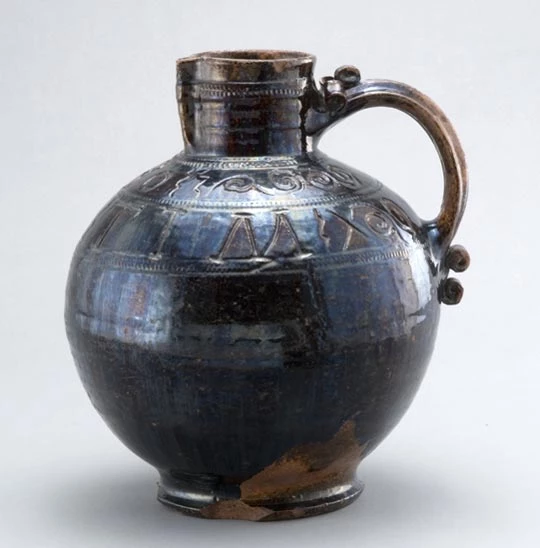
Incised earthenware harvest jug, made in Gestingthorpe, Suffolk, in 1680. Purchased 1904.

1: Incised earthenware harvest jug, made in Gestingthorpe, Suffolk, in 1680. Purchased 1904.

Amgueddfa Cymru boasts a magnificent collection of English pottery, the beginnings of which go back to the founding of the Museum. Generations of benefactors have ensured that the collection continues to thrive.

The former Cardiff Municipal Museum began collecting ceramics in 1882, aiming to develop the best collection of Welsh pottery and porcelain that it could. By 1895 the Museum believed "that these collections are now the best and most representative in existence", and began to shift its attention to other areas of interest, such as English and continental ceramics.

In 1896, Robert Drane became honorary curator. He was a passionate collector of Worcester porcelain, and had also selected the Museum's first acquisitions of Welsh porcelain.

The establishment of the National Museum of Wales

At this time, Cardiff Municipal Museum was also pushing the case for a national museum for Wales, and its own ambition to evolve into that new institution. In 1902 it talked of "the growing national character of its collections" and so began building its collection of English pottery.

Medieval to industrial

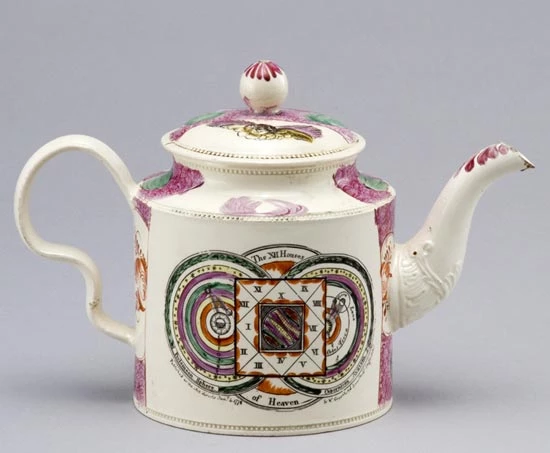
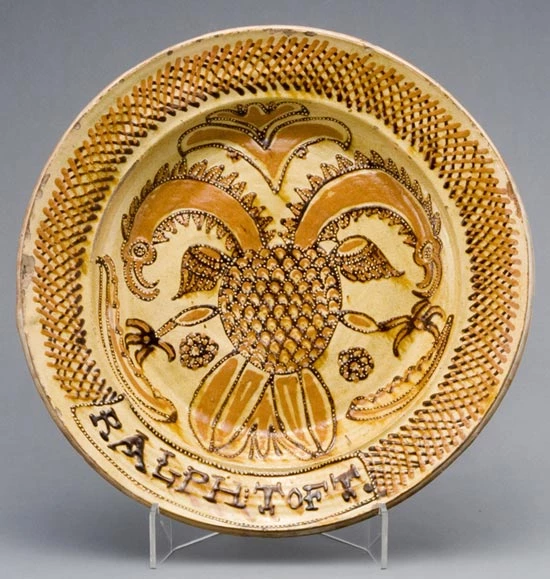
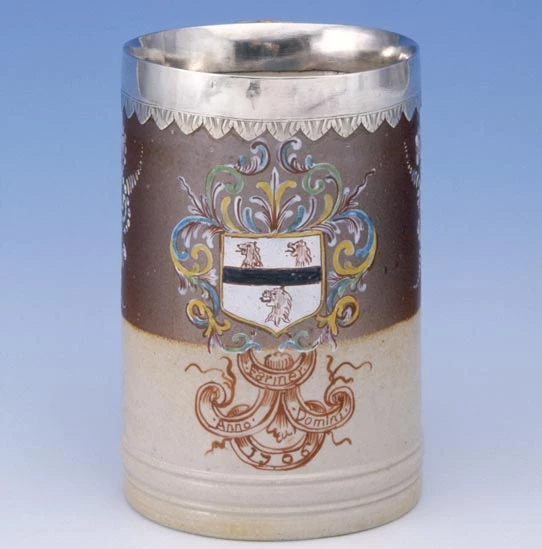
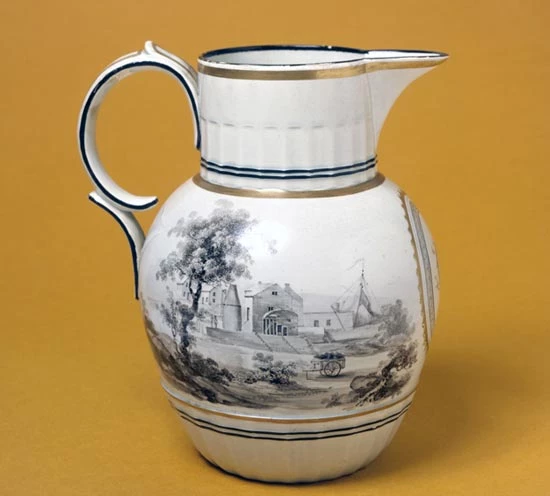
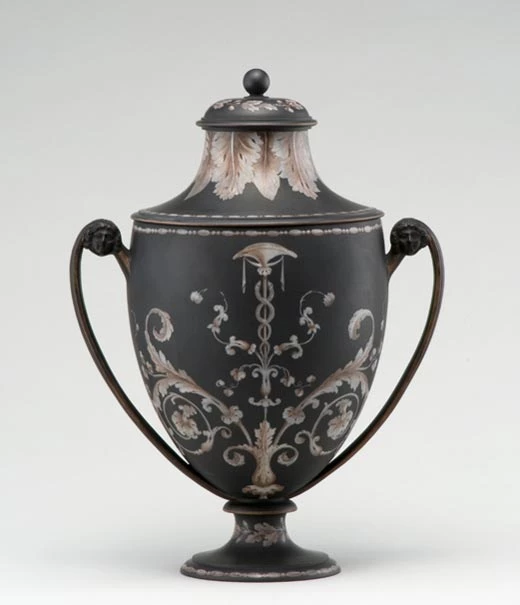
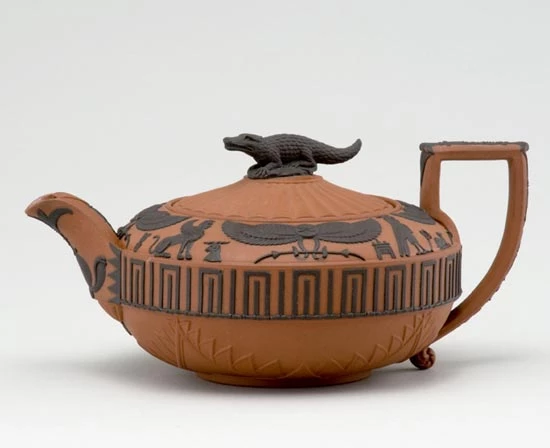
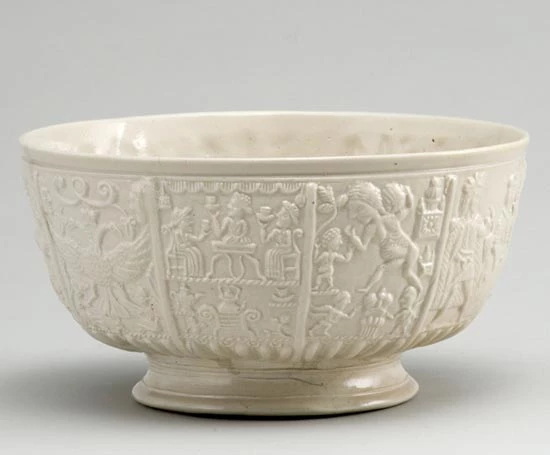
Taking charge of this new collecting priority, Drane quickly assembled much of the English pottery now at the National Museum. The full breadth of the English pottery tradition was represented, from late medieval wares to seventeenth- and eighteenth-century stoneware, slipware and delftware and industrially produced wares pioneered in Staffordshire from the middle of the eighteenth century. [Illustration 1-2]

Some outstanding objects included:

  • a rare and magnificent seventeenth-century slipware dish by Ralph Toft of Staffordshire [Illustration 3]
  • an important stoneware mug enamelled with the arms of Farmer and dated 1706 [Illustration 4]
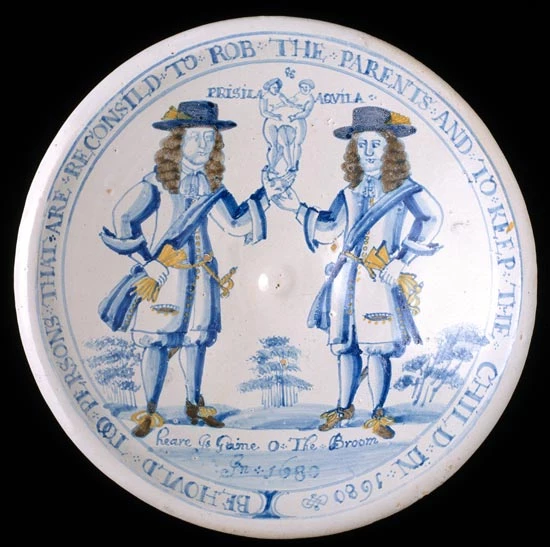
  • a remarkable Brislington delftware dish dated 1680, which exposes two Somerset squires who kidnapped a pair of conjoined twins to exhibit them as a money-raising venture. [Illustration 5]

The Museum's pride in its achievement was obvious. A report on the Brislington delftware dish in 1905 states 'Very few of these dishes are known to exist, and the Cardiff example is perhaps the best of them.'

Wilfred de Winton

The banker Wilfred de Winton was a supporter of the national museum campaign, and later donated his huge collection of porcelain.

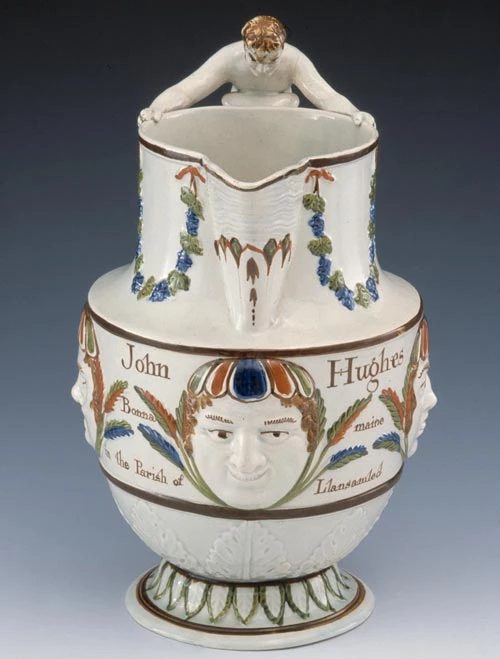
His gifts of English pottery included an amusing pearlware beer jug moulded with faces showing the progressive stages of drunkenness, its handle in the form of a merman peering into the jug. [Illustration 6-7] At the time this jug was thought to have been made at the local Cambrian Pottery, but is in fact one of many supposedly Welsh pieces in the collection that have proved to be English. [Illustration 8]

Ernest Morton Nance

In 1953 Ernest Morton Nance bequeathed his collection of Welsh ceramics. Nance was particularly proud of his 'Cambrian Pottery' jug. He believed that its painted views of a pottery were in Swansea. In fact, this jug was also most likely made at Ralph Wedgwood's Ferrybridge pottery in about 1800. [Illustration 9]

The collection continues to grow

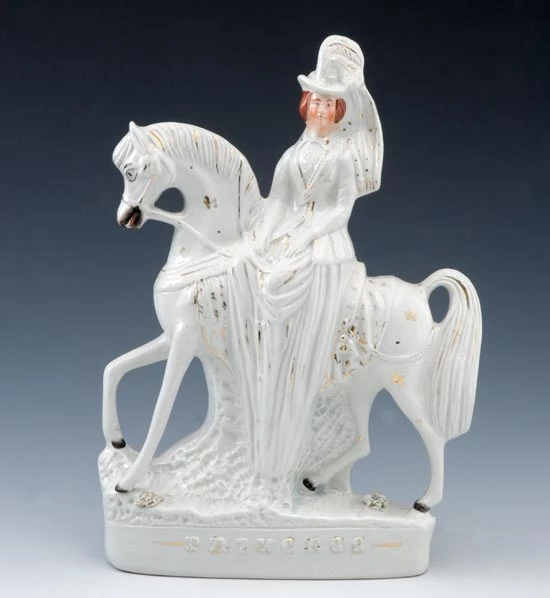
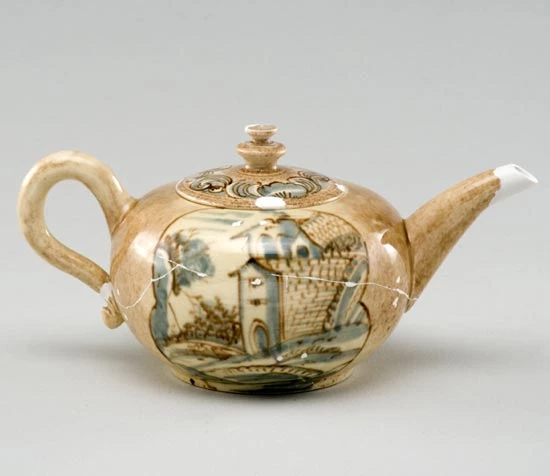
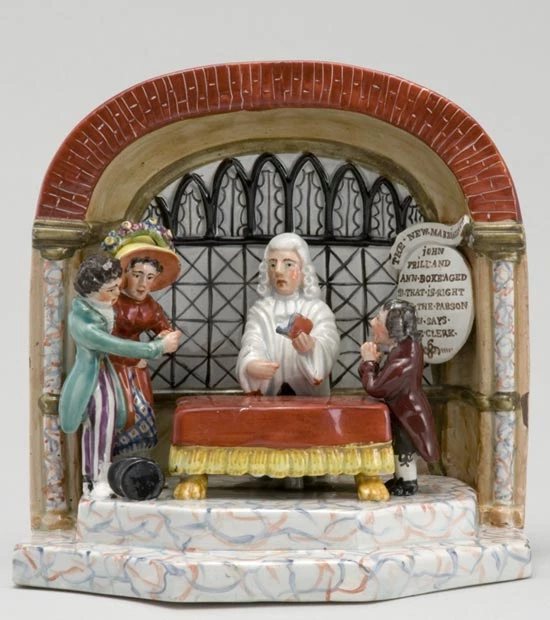
Generations of benefactors have ensured that the collection of English pottery continues to thrive. [Illustration 10] Bequests have brought in extensive collections of lustre pottery (Lord Boston, 1942), mid-nineteenth-century pot lids (Miss E. A. Nicholl, 1981) and Victorian Staffordshire figures (Mrs H. Hastings, 1995). [Illustration 11] In 1994 the gift of W. J. Grant-Davidson, a scholar of Welsh pottery, included interesting Staffordshire pottery, the highlight being an important early creamware teapot of about 1743 by Enoch Booth. [Illustration 12-14]

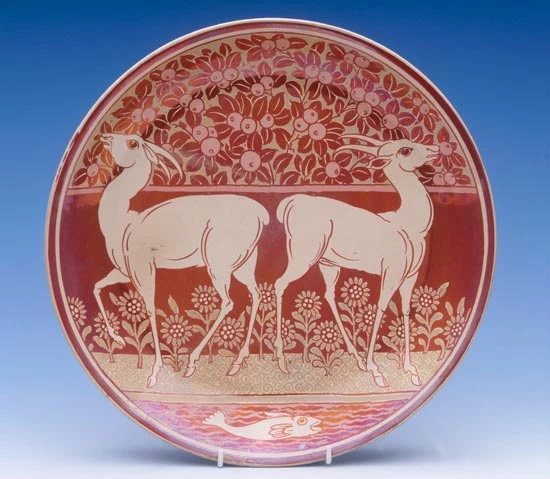
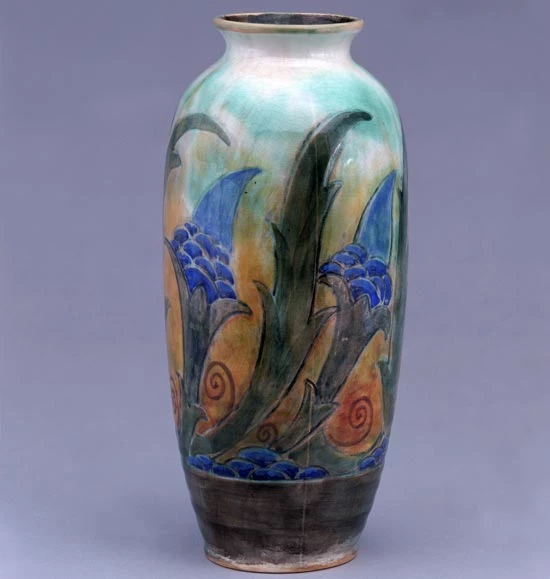
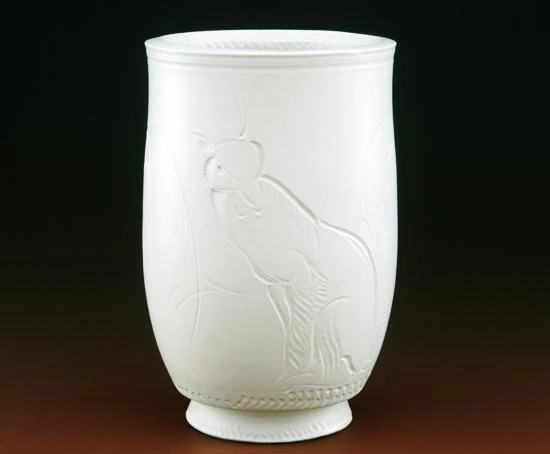
Amgueddfa Cymru also collects modern pottery, and has acquired such examples as a William de Morgan lustre dish and a Royal Doulton vase designed by Frank Brangwyn. [Illustration 15-16] Other modern pieces have come from the Museum's Outreach Collection, for example designs of the 1930s by architect Keith Murray for Wedgwood, and, in particular, from a generous gift from Mick Richards of an excellent collection of Susie Cooper's ceramics. [Illustration 17]

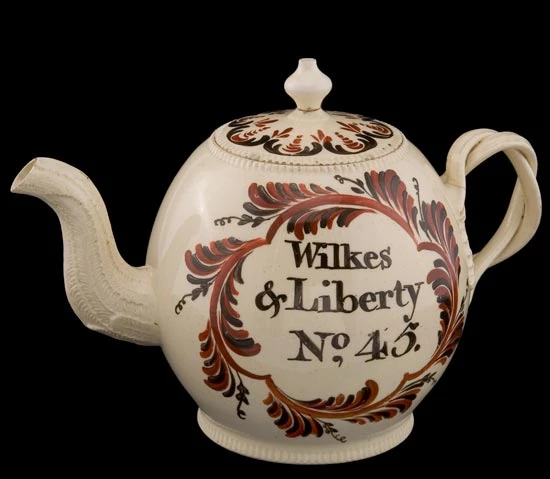
The collection is still growing, including acquisitions such as a creamware teapot of about 1765, which commemorates the radical politician John Wilkes. [Illustration 18]

Author: Andrew Renton, Head of Applied Art
Historical records of a forgotten era

23 October 2007

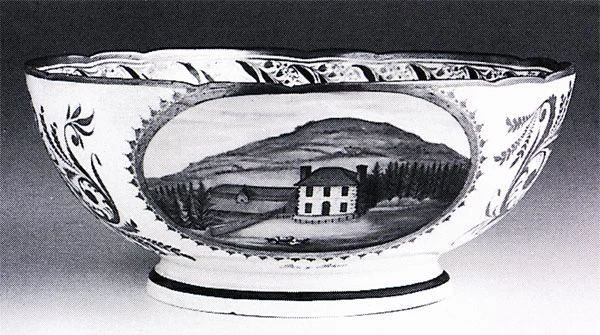
Nantgarw porcelain bowl painted with Pen-y-Rhos, 1821-3

Nantgarw porcelain bowl painted with Pen-y-Rhos, 1821-3

Bone china cup painted with the Pentwyn ironworks, c. 1835

Bone china cup painted with the Pentwyn ironworks, c. 1835

Landscape views have long been used to decorate cups, saucers, plates, bowls and jugs. Some have been scenes from the artist's imagination; others have been views of real places. Examples on display at National Museum Cardiff include views of Dolgellau and of the Vale of Neath on Nantgarw porcelain and a painting of Castel Gandolfo in Rome on an early 19th-century dish made at the Imperial Porcelain Factory in St Petersburg, Russia.

The porcelain painter usually worked from an engraving, but they could also work from memory or from an image that no longer survived, making the decorated piece itself a valuable and precise record of somewhere that might otherwise be forgotten.

Pen-Y-Rhos Farmyard, Nantgarw

One such important piece in Amgueddfa Cymru's collection is a large porcelain bowl. On the front of the bowl is an oval framed image of a house and barns flanked by trees, with a hill behind. This is inscribed 'Pen-y-Rhos'. On the back of the bowl is an image of a farmyard with cattle and poultry in the foreground.

Although the bowl doesn't have any identification marks, the paste, the heavy potting and the decoration are all characteristic of Nantgarw. Other evidence includes a fragment from an identical bowl, which was found at the site of the Nantgarw factory. The painter was probably Thomas Pardoe who worked at Nantgarw from 1821 until his death in 1823.

Pen-y-Rhos is a farm one mile from Nantgarw, on the outskirts of Caerphilly. In the early 19th century it was the home of Edward Edmunds. In 1814 he sublet the factory site, a cottage and land next to the Glamorganshire Canal to William Billingsley and Samuel Walker. In 1820 he sublet it again, this time to William Weston Young.

Three complete sets of dishes were thought to have been made at the factory for Edmunds and his family. None of these sets survive complete but they are thought to date from Billingsley's ownership of the pottery in 1817–19.

The Pen-y-Rhos bowl was not part of these sets but is of a later date. It may have been a gift from Young or Pardoe to Edmunds.

So as well as being a key documentary piece of Nantgarw porcelain, the bowl bears a rare view of a Glamorgan farmhouse in the 1820s.

Pentwyn Ironworks, south Wales valleys

If the Pen-y-Rhos bowl reveals a forgotten agricultural view, then this two-handled Staffordshire bone china bowl or cup reveals a forgotten industrial landscape. Dating from around 1835, this piece is decorated on the front with a view of Pentwyn Ironworks within a gilt frame. On the back is the name I Hunt Esq. ('Esq.', short for 'Esquire', was sometimes used in place of 'Mr').

The Pentwyn Ironworks were on the western edge of Abersychan, three miles from Pontypool in the south Wales valleys. The ironworks were established in 1825 and consisted of three blast furnaces built by the Hunt family. By 1839 the works were the property of the Pentwyn Company, but it is not known whether the Hunt family was still involved.

Before 1848 the Pentwyn Company passed to the firm of Williams & Co. and all the buildings were subsequently demolished. The image on this piece, which must have been commissioned for or by one of the Hunt family, is the only known view of this industrial site at that time.

The W. J. Grant-Davidson gift of Swansea and English pottery

5 July 2007

In 1994, forty pieces of pottery and porcelain were given to Amgueddfa Cymru.  They were the gift of W. J. Grant-Davidson a distinguished historian of the Welsh potteries. Amongst the collection were several unique and important items, manufactured in Swansea in the early 19th century.

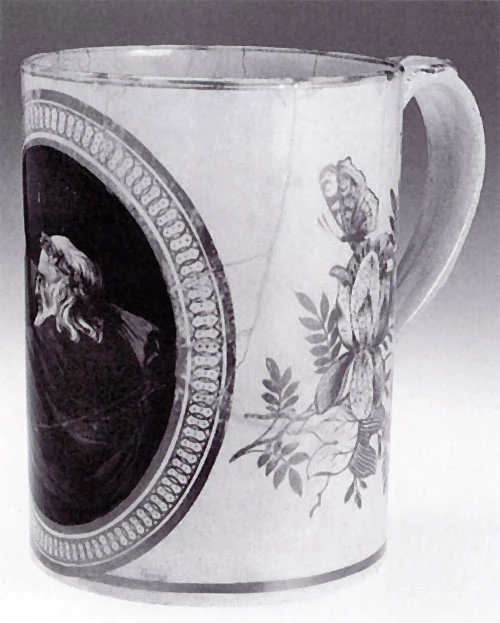
The Swansea earthenware tankard by William Weston Young.

The Swansea earthenware tankard by William Weston Young.

Generous gifts

One of the most interesting pieces is a large earthenware tankard. It was made at the Cambrian Pottery, Swansea, in the opening years of the 19th century. It is decorated with the head and shoulders of a druid. We can tell from the inscription that this was painted by William Weston Young (1776-1847). The decoration is unique, though Weston Young also painted a plaque with a druid cutting mistletoe (now in the Victoria and Albert Museum, London).

William Weston Young

William Weston Young worked at the pottery from 1803 until 1806 as a painter and as assistant to the owner, Lewis Weston Dillwyn. A land surveyor by profession, Weston Young was subsequently a partner in the Nantgarw China Works.

A pictorial puzzle

Other household items in the collection include a milk-pan, egg cups and a jug inscribed 'John Jinken 1793'. There is also a punchbowl decorated with a swan and a pike. This may have been made especially for the Pike family, who came from Dorset and shipped clay to Swansea. An image used as a pun like this is called a rebus.

Pioneer potter

Mr Grant-Davidson was also interested in English ceramics. There are ten examples from the mid 18th century in the collection he gave to the museum. As well as three fine Staffordshire stoneware teapots, there are two documentary pieces of Josiah Wedgwood's creamware. The collection includes one of the four known pieces of manganese decorated creamware, made by the potter Enoch Booth. Made in the first half of the 1740s, these may be the earliest examples of an earthenware body which is one of Britain's principal contributions to ceramic history.

Historian and collector

W. J Grant-Davidson was a distinguished historian of the Welsh potteries. He collected British ceramics from the late Middle Ages to the early 20th century. His best known publications are the article 'Early Swansea Pottery, 1764 - 1810' and the book ‘The Pottery of South Wales’. These feature many pieces from his collection.

Largest collection of south Wales porcelain in the world up for auction

16 May 2007

Auctions are usually fairly discreet affairs attended by a few dozen people. This was not the case in the sale of the late Sir Leslie Joseph's collection of Welsh pottery and porcelain held by Sotheby's in 1992. Over 2,000 objects were sold in some 900 lots and made in excess of £1.1 million. The success of the sale was no surprise, for this was the largest and richest collection of Swansea and Nantgarw porcelain in the world.

Sir Leslie Joseph

Porcelain collection.

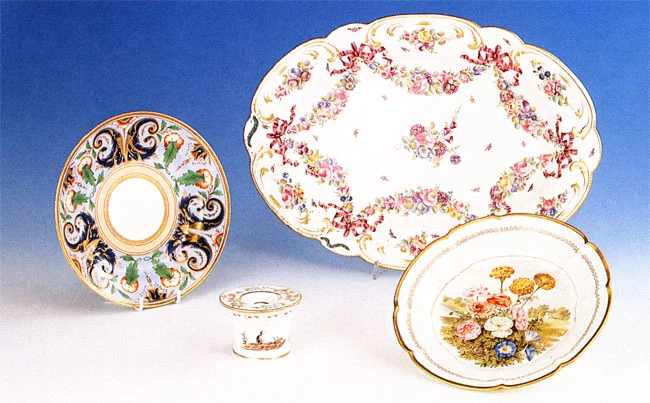
A Swansea porcelain plate from the Garden Scenery service, a large Nantgarw porcelain dish from the Vernon service, a Nantgarw porcelain inkwell, painted for Caroline Goodrich of Caerphilly, and a Swansea porcelain set pattern plate, all of c. 1816-25, and presented by the Friends of Amgueddfa Cymru.

Sir Leslie Joseph was born in Swansea and had a long business career, which saw him eventually becoming vice-chairman of the Trusthouse Forte group. He had bought his first piece of Welsh porcelain before the Second World War. In the 1950s he began to assemble a collection that would eventually fill the display cabinets that lined five attic rooms in his house near Porthcawl.

Nantgarw and Swansea ceramics

His aim was to secure examples of every shape and pattern made at the Swansea and Nantgarw potteries. Unlike many collectors he was prepared to buy damaged pieces if they helped him learn more about the variety of porcelain produced at the two factories. Over the years he built up a vast knowledge of Welsh ceramics and, in particular, of the script marks used on Swansea porcelain. In 1988 he published the book Swansea Porcelain: Shapes and Decoration with A.E. Jones, which is an invaluable record of that factory's achievements.

Sir Leslie, who served on Amgueddfa Cymru's Art Committee for several years, was very generous and allowed many collectors and scholars access to the collection and his vast knowledge.

The sale of the Joseph collection represented both a challenge and an opportunity for Amgueddfa Cymru. The Museum has the largest public collection of Welsh pottery and porcelain in the world, with over 3,000 pieces. In recent years the Museum has tried to make the ceramics collection as comprehensive as possible. There were many objects in the Joseph collection of interest to the Museum, but the budget meant that choices had to be made about which were more important to the collection.

Prices at the sale were very high. Amgueddfa Cymru acquired 33 lots, at a total cost of £98,000. Nearly a third of the costs were paid for by external grants, and the three most expensive individual pieces were paid by other buyers on behalf of the Museum.

A small number of other rare and beautiful objects were bought at a high cost. One was an ice-cream pail from the Gosford Castle service. This was a well-known Swansea dessert service decorated in London with botanical specimens. The Museum also purchased a Nantgarw plate, exquisitely painted with doves perched on the edge of a basin of water, also decorated in London.

The Welsh Ceramics Gallery, at National Museum Cardiff, is named the Joseph Gallery in memory of Sir Leslie, one of Amgueddfa Cymru's great benefactors.

The art of the Japanese Tea Ceremony

22 February 2007

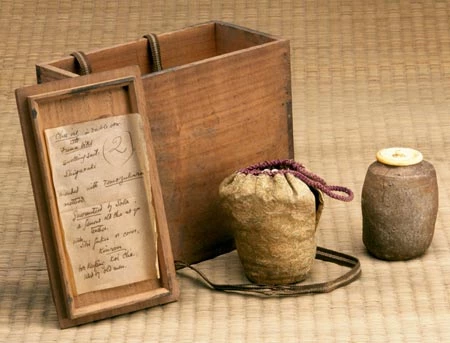
In 1915, several crates of textiles, lacquer, woodblock prints and utensils used for the Japanese tea ceremony (chanoyu), arrived at the Museum. These were sent from Japan by Bernard Leach, whose career as a potter was heavily influenced by his Japanese experiences. The items were previously undocumented and the purpose behind their acquisition was totally lost until 2001, when new archive discoveries made it possible to identify them.
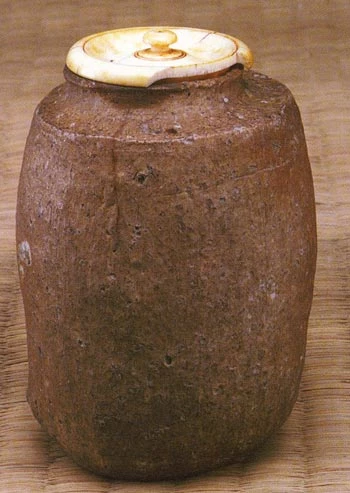
Chaire (tea jar), Shigaraki stoneware, probably late 16th century

Chaire (tea jar), Shigaraki stoneware, probably late 16th century

'...something unique'

When Bernard Leach first went to Japan he was a young artist just discovering Japanese pottery. However he was soon to become the pre-eminent British potter of the 20th century.

He did not doubt the value of the collection, describing it as 'something unique.' Taking advice from Japanese tea masters, he brought together objects of the type most valued in the Japanese chanoyu tradition, following principles established back in the 16th century. These dictate that the objects used should be simple and unpretentious, and contribute to the quiet sense of contemplation that a tea ceremony inspires.

The chaire (tea jar) sent by Leach displays these qualities perfectly. It is an example of the roughly made stoneware of Shigaraki, prized by tea connoisseurs since the 15th century. Guests would traditionally take pleasure in examining and praising such an object after the host had finished serving tea.

Recreating chanoyu

Chanoyu is an art of life, a highly ritualised act of hospitality. Objects are chosen, arranged and handled with meticulous care, so that the combination of objects and people, time and place, makes each ceremony a unique and unrepeatable occasion. Leach was insistent that this same regard was observed when the collection was displayed at the Museum in 1924.

Japanese traditions

Chanoyu objects collected by Bernard Leach

Chanoyu objects collected by Bernard Leach

When Leach was in Japan, the preservation of Japanese heritage was under considerable threat from rapid industrialisation and westernisation. Some saw the tea ceremony as a metaphor for traditional Japan, and Leach hoped that this acquisition could allow a better understanding between East and West.

In later life, Leach used his experience to act as a mediator between the cultural worlds of Western Europe and East Asia. However, we now know that the Japanese circles he moved in were themselves influenced by Western thinking and that his claims to have understood an authentic Japanese tradition should be treated with scepticism.

Nevertheless, Leach stands out as one of the key figures in the ongoing history of interaction between Europe and East Asia. It seems fitting that, just as these items are valued for their beauty and their antiquity, they are now also valued for their association with Leach himself.

Background Reading

Edmund de Waal, Bernard Leach (London: Tate, 1999);

Emmanuel Cooper, Bernard Leach: Life and Work (New Haven & London: Yale University Press, 2003);

Kakuzo Okakura, The Book of Tea (New York: Dover, 1964);

Paul Varley and Kumakura Isao (eds), Tea in Japan: Essays on the History of Chanoyu, (Honolulu: University of Hawaii Press, 1989)