: Research

Reproducing Roman Arrowheads

Evan Chapman, 14 September 2010

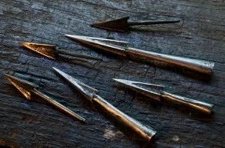
Roman arrowhead with three ribs from Dinorben, north Wales

Roman arrowhead with three ribs from Dinorben, north Wales

Roman arrowhead with four ribs from Caerleon, south Wales

Roman arrowhead with four ribs from Caerleon, south Wales

replica arrowheads

Replica arrowheads

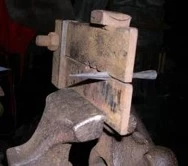
jig used to form a four-vane arrowhead

jig used to form a four-vane arrowhead

The Romans used many different types of arrowheads. The most characteristic had a series of vanes: the early type had three vanes, but by the 3rd century examples with four vanes are found. One possible reason for this change is that the four-vane type was easier to produce.

In 2008 St Fagans National History Museum hosted the World Field Archery Championship, and the Museum held a number of small exhibitions on archery. A number of replica Roman arrowheads were produced especially for the Roman archery display, to show what Roman arrowheads looked like when new.

Careful conservation work on some of the Museum's Roman arrowheads revealed enough original surface detail to help us work out how the Romans had made them. The Museum's blacksmith at St Fagans was keen to produce the replicas in the same way, and he experimented until he could produce copies that closely matched the originals.

This experimental work revealed that the four-vane type was easier and quicker to make, as the vanes could be formed in a jig. The vanes on the three-vane type, being more spread out, had to be individually hammered into shape. While doing this one vane tended to get in the way of working on another. Was this why four-vane types started to be produced?

If this is true, why did the Romans start off with three-vane arrowheads? Roman archery equipment was based on that developed in the Near East. There, the original metal arrowheads had been cast in bronze. The three-vane form of these bronze arrowheads was simply copied when iron arrowheads started to be made.

Further Reading

Andrew Murphy using the jig at St Fagans National Museum of History to recreate Roman arrowheads

Andrew Murphy, blacksmith at St Fagans National Museum of History using the jig to recreate Roman arrowheads

Bishop, M.C. & Coulston, J.C.N. 2006 Roman Military Equipment, from the Punic Wars to the Fall of Rome (Oxford: Oxbow Books)

Chapman, E.M. 2005 A Catalogue of Roman Military Equipment in the National Museum of Wales, BAR British Series 388 (Oxford)

Mineral identification at Amgueddfa Cymru

Amanda Valentine & Jana Horak, 7 December 2009

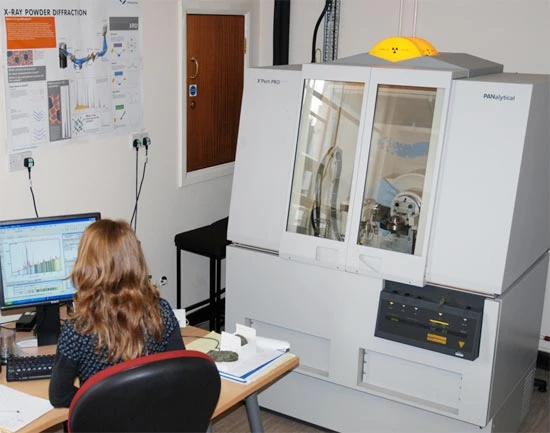
X-Ray diffraction machine

The X-Ray diffraction machine at the Museum

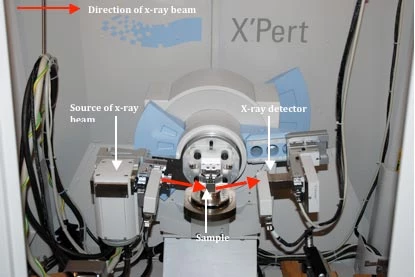
Passing of an X-ray beam through a rock sample from the source to the detector

Passing of an X-ray beam through a rock sample from the source to the detector

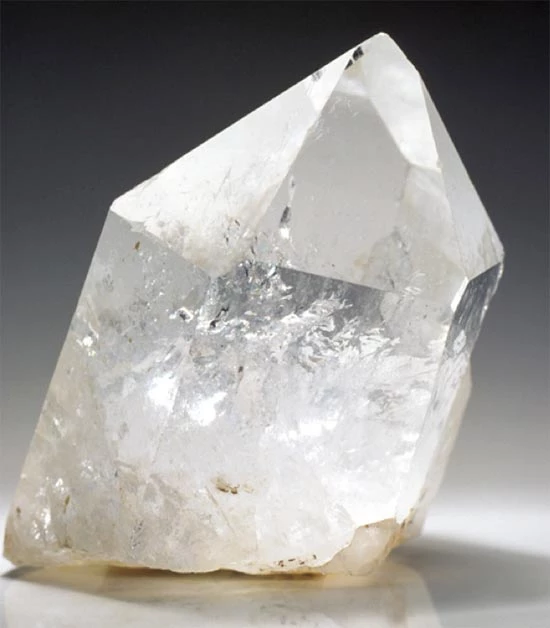
Quartz crystal

Quartz crystal

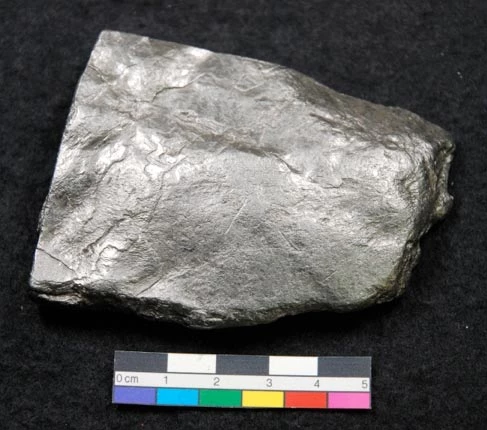
Graphite

Graphite

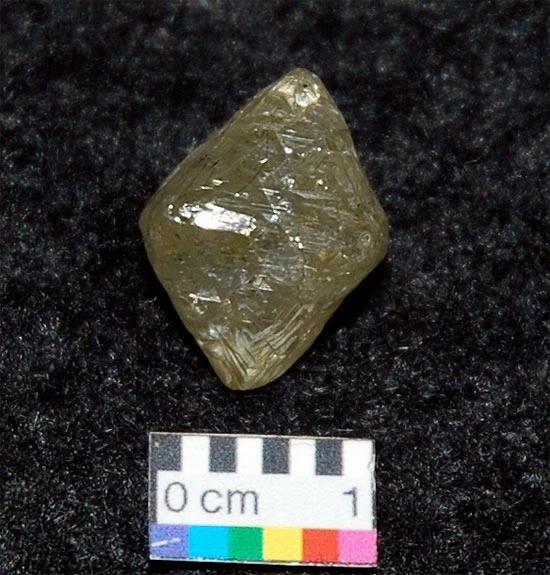
Diamond

Diamond

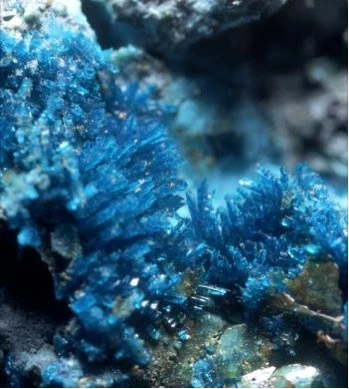
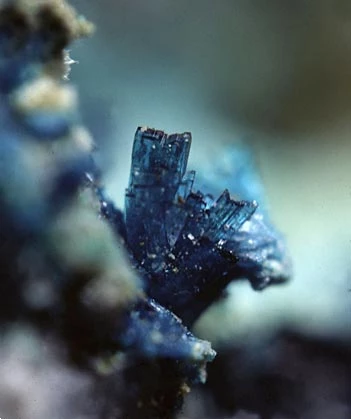
Langite

Langite

wroewolfeite

wroewolfeite

One of the activities of the Geology Department at Amgueddfa Cymru is to document all the minerals known in Wales. Minerals can be identified visually, but for a more definitive confirmation a process known as X-ray diffraction analysis (XRD) is used. This technique allows natural minerals and man-made crystalline materials to be 'fingerprinted' and compared to a database of known samples.

X-ray diffraction analysis

Most minerals are crystalline, which means they are made up of a regular framework of atoms creating a unique 'crystal lattice'.

When X-rays are passed through a mineral, the atoms cause the X-rays to be diffracted, or bent, into many directions. The resulting X-ray pattern can then be recorded to produce a 'fingerprint'. Because no two minerals have exactly the same arrangement of atoms, their 'fingerprints' (or lattices diffraction patterns) are unique. These patterns can therefore be used to identify the mineral.

To analyse a mineral by XRD a small sample, usually ground into a powder, is bombarded with X-rays. The data is recorded as a graph, called a diffractogram, which is a convenient form for viewing the result.

To identify the mineral, the result is compared with a database of patterns from thousands of known minerals.

An X-ray pattern of quartz showing its unique pattern

An X-ray pattern of quartz showing its unique pattern

Identical looking minerals

Visual identification is still important, as it is possible for two different mineral species to have the same chemical composition but look very different. For example, diamond and graphite (both pure carbon) have the same chemical composition, but are clearly different not only in appearance but also in hardness and crystal form.

On the other hand, langite and wroewolfeite are two chemically identical copper minerals that both form blue needles and are consequently difficult to tell apart visually. But because they have different crystal structures and therefore produce different diffraction patterns, XRD provides a quick and reliable method for distinguishing between them.

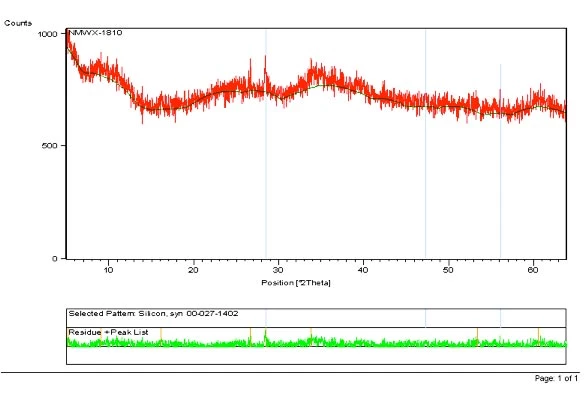
Some minerals don't have a regular crystal structure and therefore don't produce diffraction patterns. Known as 'Amorphous minerals', they cannot be identified by XRD.

A diffractogram pattern of an amorphous sample with no identifiable peaks

A diffractogram pattern of an amorphous sample with no identifiable peaks

The application of XRD

The technique is widely used in geology and also in a range of related disciplines. For example, it is used to identify minerals in artists' pigments and the composition of corrosion on archaeological artefacts. Conservators can then devise the appropriate treatment for museum specimens.

Tropical trilobites from frozen Greenland

Lucy McCobb, 5 August 2009

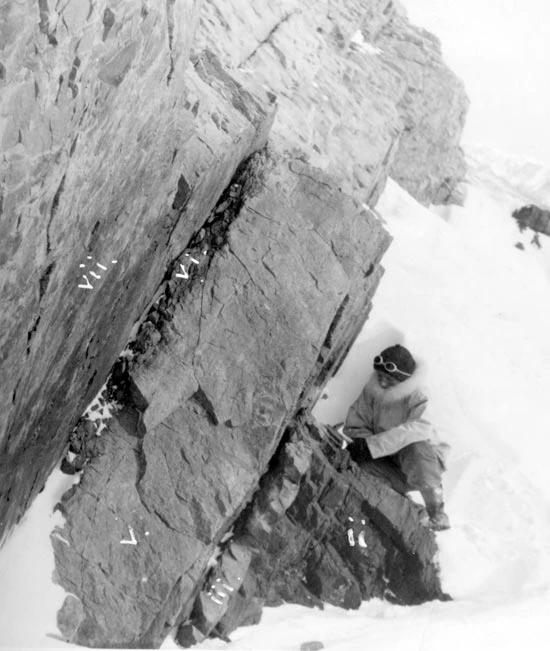
Collecting fossils in the snow

Collecting fossils in the snow. 1950s.

Aerial Photo of Greenland

Aerial Photo of Greenland: The fossils were collected from the area shaded in red.

Large fossilised eye

The large fossilised eye of Carolinites, a trilobite which swam in the open ocean searching for food.

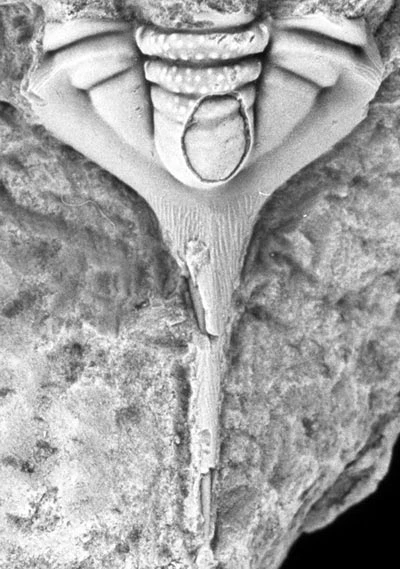
The tail of the trilobite <em>Acidiphorus</em> has an impressive spine.

The tail of the trilobite Acidiphorus has an impressive spine.

The Museum's extensive holding of fossils include a collection of Ordovician age (470-490 million years old) trilobite fossils from Greenland. Although the continent is now cold and icy, it was not always so.

British explorers in the icy north

Greenland is a very difficult place in which to study and collect fossils. Most of it remains ice-covered throughout the year, and rock outcrops are readily accessible only in coastal areas during the summer months.

Expeditions to explore the geology of Greenland began in the late nineteenth century, and continue to the present day. These have been organised by the Greenland Geological Survey, based in Copenhagen.

In the 1990s, the Museum was presented with a collection of Cambrian and Ordovician trilobites from central east Greenland made between 1950 and 1954 by Dr John Cowie, formerly of the University of Bristol, and a colleague, Dr Peter Adams.

Globe-trotting Greenland

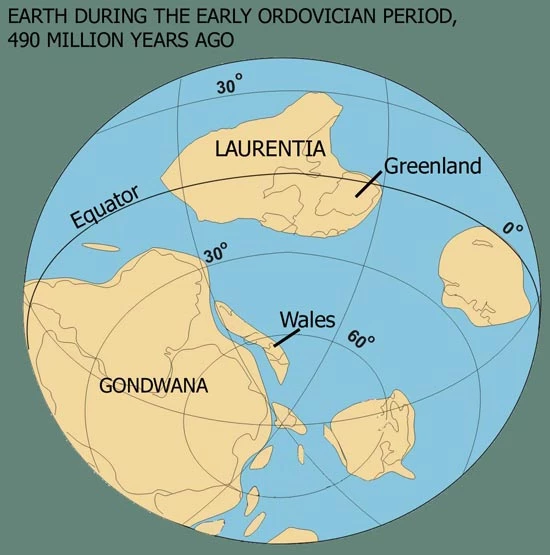
Today, we are familiar with Greenland as a cold, icy place, but this has not always been the case. The tectonic plates that make up the Earth's lithosphere have moved around throughout its history, and geologists have demonstrated that during the Ordovician Period Greenland lay close to the equator, and together with North America and Spitsbergen formed the ancient continent of Laurentia.

At this time, Wales lay far away in cool, high southern latitudes, close to the vast continent of Gondwana. The fossil faunas of the shallow Ordovician seas around Laurentia and Gondwana are very different, and no trilobite species is common to Greenland and Wales.

Earth during the early Ordovician Period, 490 million years ago

Earth during the early Ordovician Period, 490 million years ago

Tropical trilobites new to science.

The Ordovician trilobites of Greenland are preserved in limestone which accumulated on the floor of warm, shallow sub-tropical seas. Around forty different species have been identified in our Greenland collection, and several are new to science. Research has confirmed they are common to, or closely related, to those from other parts of Laurentia.

Features of different trilobite species provide clues as to how they lived. Most were probably benthic (living on the sea floor), and were either scavengers or deposit feeders. Others have features such as very large eyes, showing that they were pelagic (swimmers); such forms were widely distributed in the Ordovician oceans, and found in other tropical regions apart from Laurentia.

How coal cooled the climate 300 million years ago

Christopher Cleal, 1 June 2009

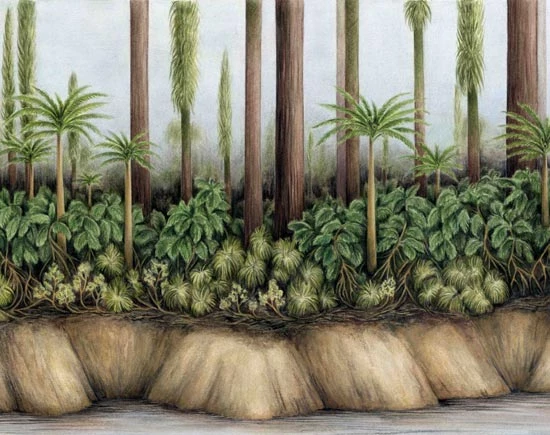
Reconstruction of the levee of a river that flowed through the tropical wetlands 300 million years ago

Reconstruction of the levee of a river that flowed through the tropical wetlands 300 million years ago. The plants growing on these levees are often found as fossils in the rocks associated with coals in Wales. Painting: Annette Townsend.

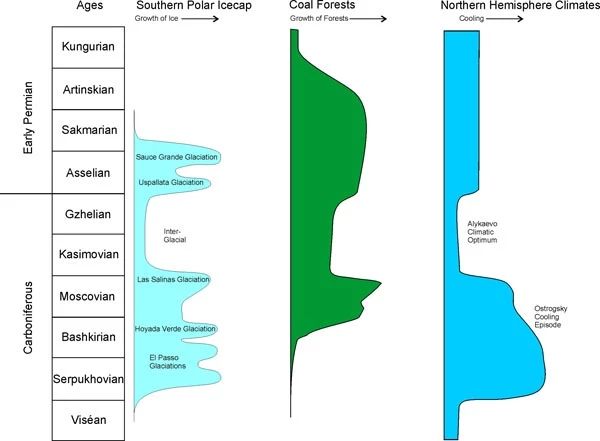
Coal Forests varied with time

A comparison of how the area of coverage of the Coal Forests varied with time with evidence of changing climate in late Carboniferous and early Permian times.

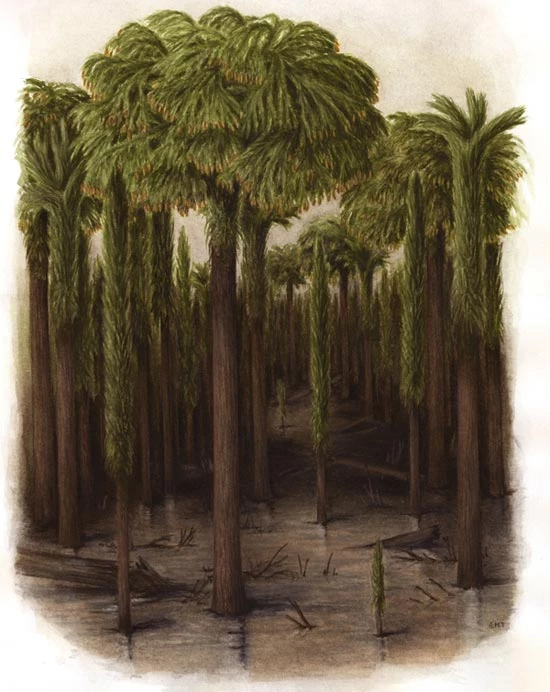
Reconstruction of giant lycophytes growing in tropical wetlands of Wales, about 300 million years ago.

Reconstruction of giant lycophytes growing in tropical wetlands of Wales, about 300 million years ago. Note that there are plants in different stages of their life-cycle. Painting by Annette Townsend.

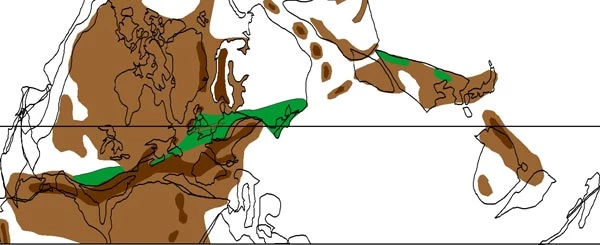
A map of the tropical lands about 300 million years ago

A map of the tropical lands about 300 million years ago, showing mountains (dark brown), lowlands (light brown) and wetlands where peat was being deposited (green).

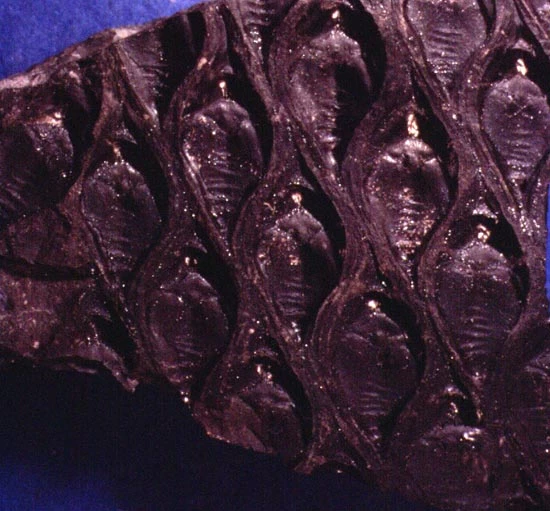
Bark from the trunk of a Late Carboniferous giant lycophyte

Bark from the trunk of a Late Carboniferous giant lycophyte, found at the Risca Colliery in south Wales. The diamond-shaped structures on the surface, which are about 1cm long and 0.5cm wide, are where the leaves were originally attached.

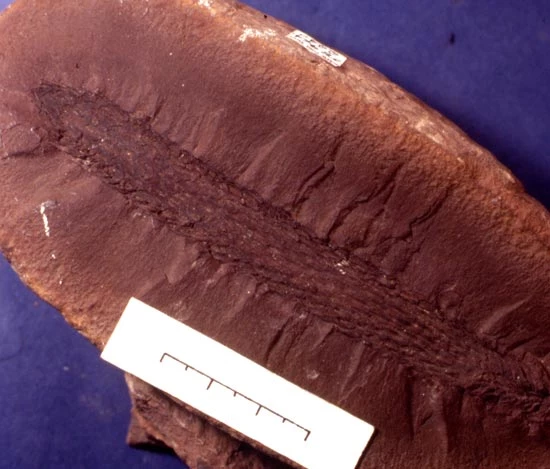
A cone from a Late Carboniferous giant lycophyte

A cone from a Late Carboniferous giant lycophyte, found in an ironstone nodule in south Wales. These cones produced spores. The scale is marked in centimetres.

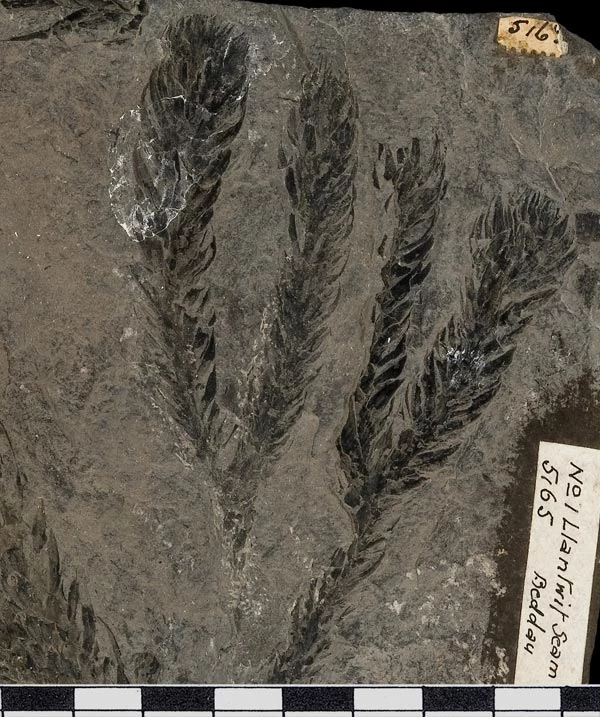
The leafy shoot of a giant lycophyte from the Upper Carboniferous Llantwit Beds of Beddau, south Wales.

The leafy shoot of a giant lycophyte from the Upper Carboniferous Llantwit Beds of Beddau, south Wales.

South Wales has the best-exposed coal-bearing rocks in Europe. Scientists at Amgueddfa Cymru are leading an international team of specialists investigating how the formation of this coal affected the composition of the ancient atmosphere.

What is coal?

Coal is what is left of peat when it has been compressed and heated, so that virtually all that remains is carbon.

The coalfields in Wales are the remains of part of a wetland forest that extended over large areas of the tropics, about 300 million years ago (the Late Carboniferous Period). These are known as the Coal Forests.

There is also evidence of extensive ice cover over much of the land around the southern pole at this time. This is in fact the only other time in the geological past, other than the last 2 million years or so, when there has been this combination of extensive tropical forests and polar ice. Looking at the Late Carboniferous world therefore provides valuable insights into how plants, climate and atmosphere might be interacting in our present-day world.

Plants of the Coal Forests

The Coal Forests were quite different from anything growing today. The main plants were tree-like lycophytes ('club mosses') that could grow up to 50m tall.

Unlike a modern tree, most of the trunk of these giant lycophytes did not consist of wood, but of soft cork-like tissue (periderm). This allowed the plants to grow to their full size in as little 10 years.

Also unlike modern trees, when these lycophytes had reached their full size, they reproduced by producing cones, and then died.

Life, death and carbon

Because these plants grew so quickly and then died, vast quantities of peat accumulated on the forest floor. This eventually formed the coal found in the coalfields of Wales and other parts of Europe, as well as North America and China.

All plants obtain carbon for growth from the atmosphere. These forests are thought to have been responsible for extracting nearly a hundred thousand-million tonnes (100 gigatonnes) of carbon from the atmosphere every year, and would have had a profound influence on the composition of the atmosphere during Carboniferous times.

The contraction of coal forests and global warming

The Coal Forests habitats remained essentially stable for about 10 million years. Then they contracted in size, probably due to changes in drainage patterns in the wetlands where they grew.

This coincided with a marked increase in global temperatures. Most notable was a significant contraction of the ice sheet in the southern polar regions, which has been recognized in the rocks of both Australia and Argentina.

It seems that the contraction of the Coal Forests caused the amount of carbon (as CO2) to build up in the atmosphere, and that this caused temperatures to increase through a greenhouse effect.

South Wales Coalfield

There are Late Carboniferous coalfields across Europe, North America and China. However, the South Wales Coalfield is particularly important as it shows one of the most complete successions of rocks in which the remains of the Coal Forests are preserved. It has also yielded an excellent fossil record of plants, as well as of animals including insects, spiders and freshwater molluscs.

It is also one of the few places in Europe where these rocks are exposed at the surface. In most other places, the geology of these coal deposits has to be investigated in underground mines — an increasingly difficult thing to do as mines are progressively closing.

The geological record of the South Wales Coalfield has therefore played an important role in developing our understanding of the evolution of the Coal Forests, especially through the work of Welsh geologists such as Emily Dix and David Davies in the 1920s and 1930s.

More recently, scientists at Amgueddfa Cymru have been investigating how the south Wales forests changed in composition with time. This has been done by looking at changes in species diversity in the plant fossil record, and at the evidence from pollen and spores extracted from the rocks.

This suggests that the Coal Forests were remarkably stable habitats for most of the time they existed in south Wales, at least until they contracted and caused the increase in global temperatures.

Further reading

  • Cleal, C. J. & Thomas, B. A. 1994. Plant fossils of the British Coal Measures. Palaeontological Association, London.
  • Cleal, C. J. & Thomas, B. A. 2005. Palaeozoic tropical rainforests and their effect on global climates: is the past the key to the present? Geobiology, 3, 13-31.
  • Thomas, B. A. & Cleal, C. J. 1993. The Coal Measures forests. National Museum of Wales, Cardiff.

When Antarctica went into the deep freeze

19 May 2008

Sampling ancient mud cores in Tanzania

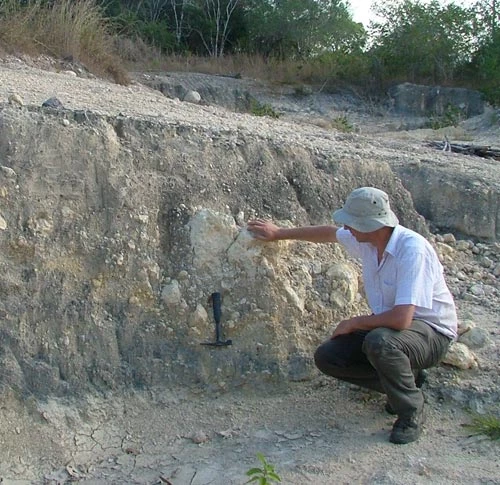
A member of the team looking at the top layer of sediment, deciding where best to sample to get different time intervals.

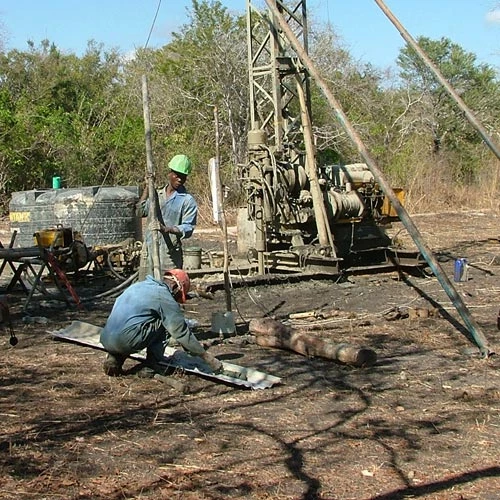
 Bringing up a core of mud from 34 million years ago

Bringing up a core of mud from 34 million years ago

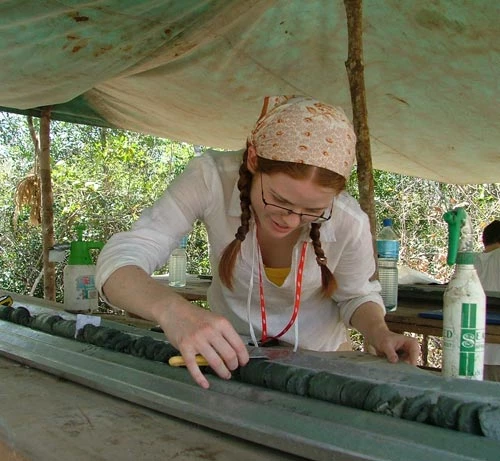
a scientist describing and sampling the core

After the core is brought up it is laid out for scientists to describe and take samples.

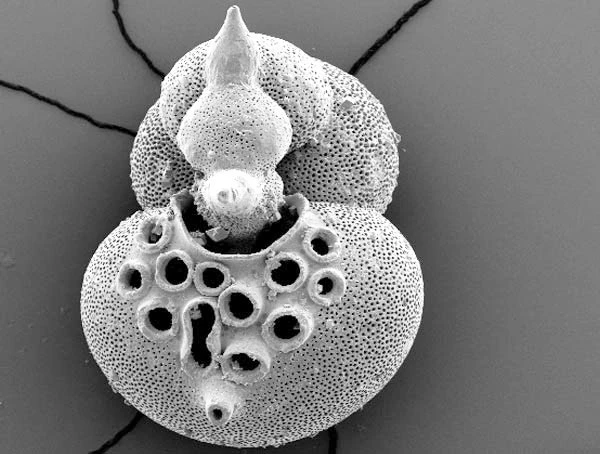
Extreme close up of the 35 million year old foram: Cribrohantkenina inflata.  discovered in the cores from Tanzania.

Extreme close up of the 35 million year old foram: Cribrohantkenina inflata. discovered in the cores from Tanzania. More images of these intricate forams can be seen in the 'Up close with Nature' gallery.

Scientists from Amgueddfa Cymru – National Museum Wales and Cardiff University have found new evidence of past climate change, which helps solve some of the mystery surrounding the appearance of the vast ice-sheet in Antarctica 34 million years ago.

Antarctica hasn't always been covered with ice – the continent lay over the south pole without freezing over for almost 100 million years. Then, about 34 million years ago, a dramatic shift in climate happened at the boundary between the Eocene and Oligocene epochs. The warm greenhouse climate, stable since the extinction of the dinosaurs, became dramatically colder, creating an "ice-house" at the poles that has continued to the present day.

Global cooling

Many climate scientists are involved in trying to figure out what caused this climate shift. This should tell us more about how the climate responds to major controls like changes in the Earth's orbit around the sun, and the concentration of greenhouse gases in the atmosphere.

Past climate changes can be recorded by studying tiny microfossils in layers of deep sea mud. Up until now, scientists found that the oceans appear to have warmed up during this big climatic shift. Their studies suggested that warming seemed to coincide with ice-sheets appearing in both Antarctica and the Arctic. This conflicting evidence, of warming seas while ice-sheets grew, doesn't fit in with computer simulations of the climate at the time; the computer models don't show ice to be present in the Arctic."

Tanzania drilling project

The solution to this icy puzzle has come from a surprising place – Tanzania in East Africa. The Tanzania Drilling Project team, including scientists from Amgueddfa Cymru and Cardiff University, have been recovering cores of ancient mud deposited on the seafloor millions of years ago (which has since been geologically uplifted into land).

The Tanzanian cores are special because large thicknesses of mud were laid down over a relatively short time, meaning that climate changes through time are seen in great detail. Also, beautifully preserved microfossils are found in the cores.

The Tanzanian cores provide the first really clear picture of how sea-level fall fits in with the climate shift.

Setting the record straight

The chemistry of the Tanzanian microfossils has been used to construct records of temperature and ice volume over the interval of the big climate switch. These new records show that the world's oceans did cool as the ice-sheets appeared, and that the volume of ice would have fitted onto Antarctica. So the computer simulations of climate and the past climate data now match up.

The focus now is to look for evidence of the ultimate cause of this global cooling. The prime suspect is a gradual reduction of CO2 in the atmosphere, combined with a 'trigger' time when Earth's orbit around the sun made Antarctic summers cold enough for ice to remain frozen all year round.

How it works

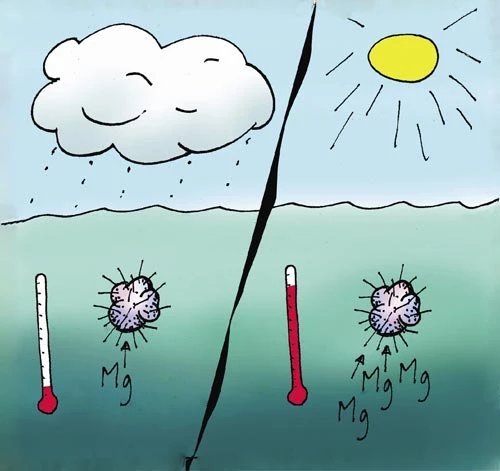
The shell chemistry of pin-head sized animals called forams can tell us how ocean temperatures changed through time. Forams are great tools for studying climates of the past, which helps us learn about the uncertainties of our future greenhouse climate.

1). Forams take chemical elements from the ocean into their shells, using more magnesium at warmer temperatures.

1). Forams take chemical elements from the ocean into their shells, using more magnesium at warmer temperatures.

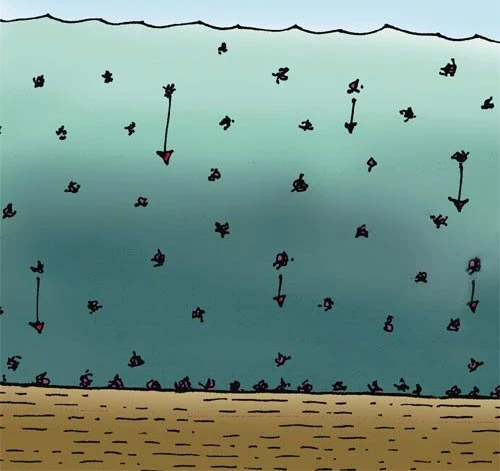
2). Dead forams fall to the sea floor and build up in layers of mud over millions of years.

2). Dead forams fall to the sea floor and build up in layers of mud over millions of years.

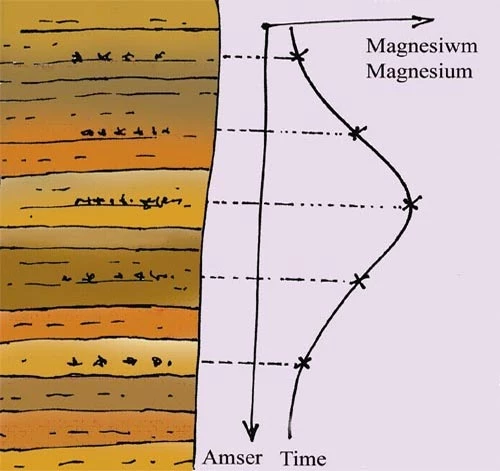
3). Today, going down through the mud layers is like going back in time.

3). Today, going down through the mud layers is like going back in time. If we can measure the magnesium content of forams going down through the mud, it gives us a record of how ocean temperature changed through time - more magnesium equals warmer temperature.

Further Reading

Lear, CH, Bailey, TR, Pearson, PN, Coxall, HK, Rosenthal, Y. Cooling and ice growth across the Eocene-Oligocene transition. Geology 36 (3), 251�254. 2008.

http://www.gsajournals.org/perlserv/?request=get-abstract&doi=10.1130%2FG24584A.1